





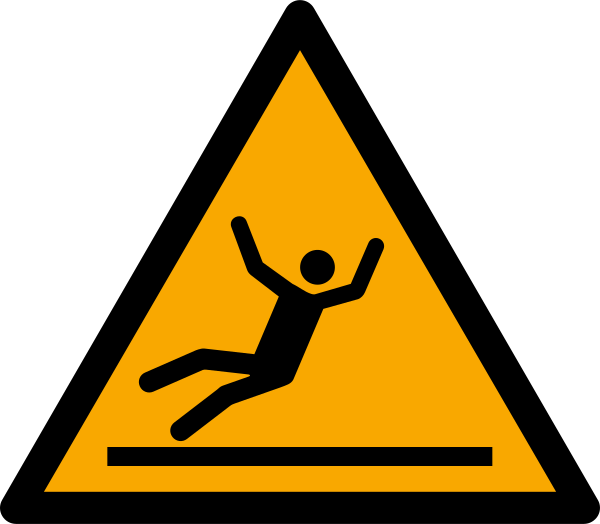
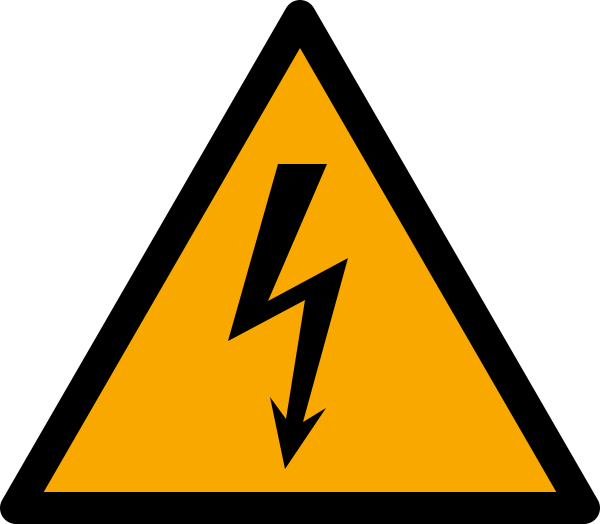
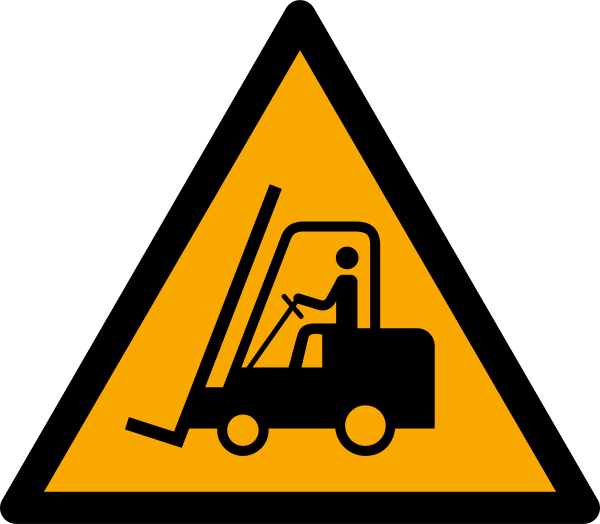
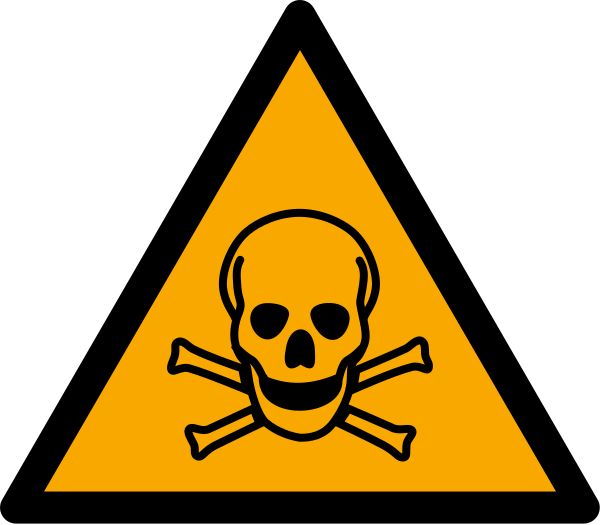
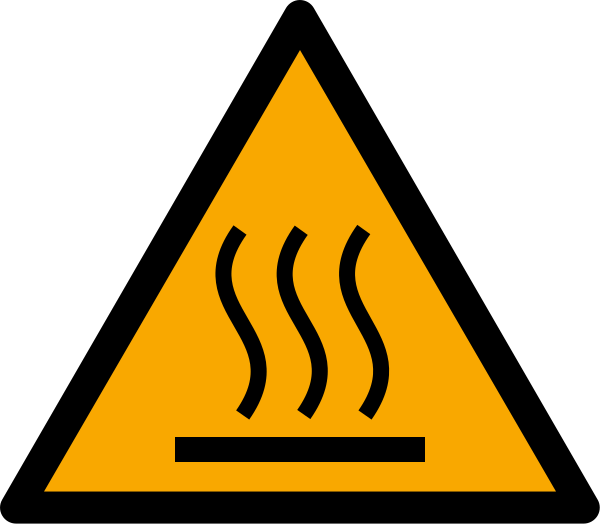
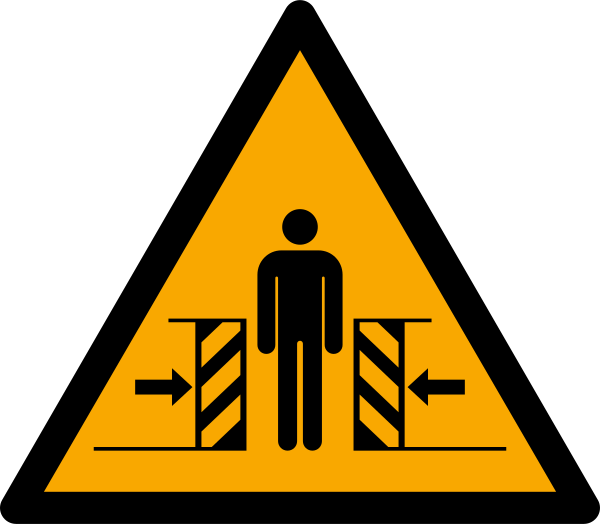
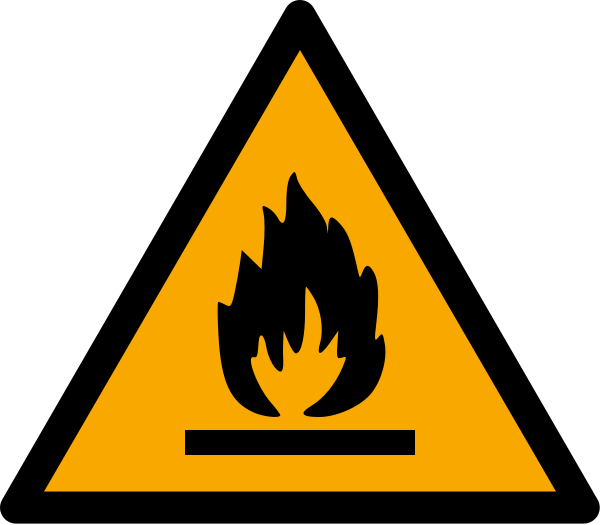
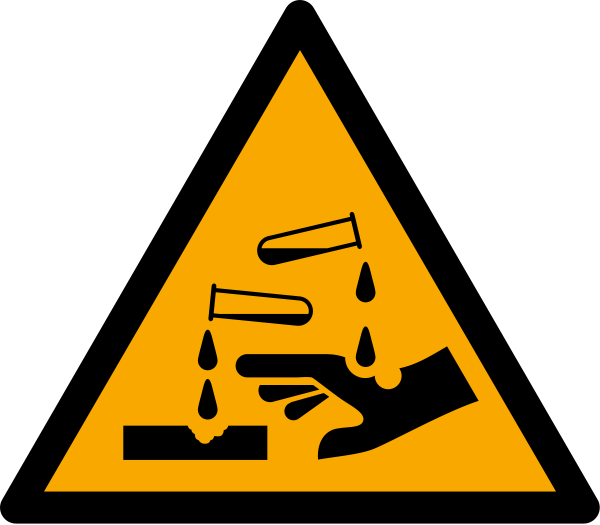
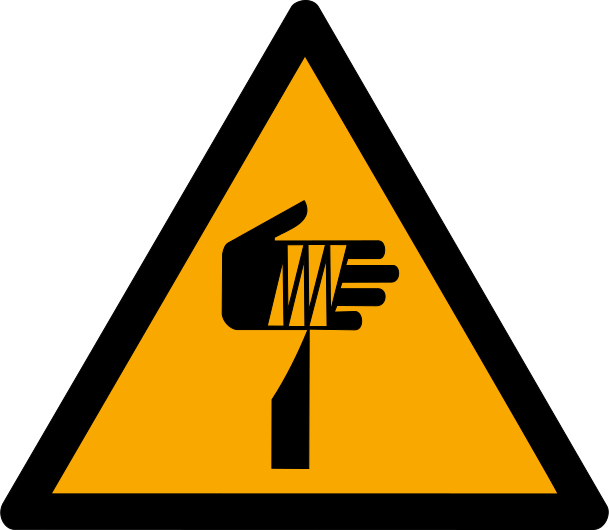

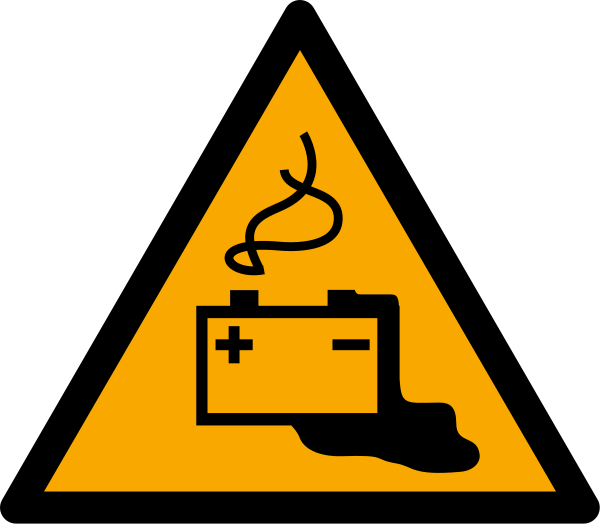
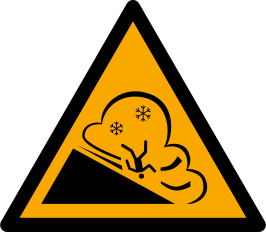














About This Hazard and Safety Signs Tool
This tool is designed for learning, testing, and printing 130 standardized international hazard, warning, chemical, and emergency safety signs. The database includes official symbols from ISO 7010, the United Nations GHS system, ADR transport placards, NFPA 704, and civil defence standards with practical safety protocols.
The platform provides two primary modes:
- Hazard Signs Quiz: An interactive test that presents a hazard sign alongside four answer options. Selecting an answer immediately reveals whether it is correct, displays the official safety rule and explanation, and tracks real-time statistics (progress, correct count, mistakes, accuracy percentage, and current streak).
- All 130 Signs Catalog (A4 / PDF): A searchable directory of all 130 symbols with real-time keyword/code filtering and 11 category filters. Clicking any sign opens a detailed modal with official safety guidelines and test samples. The built-in print engine formats either the entire catalog into an A4 print sheet or outputs a single full-page A4 warning sign suitable for posting in workplaces, workshops, or facilities.
The Brutal Physics Behind Industrial and Chemical Warning Signs
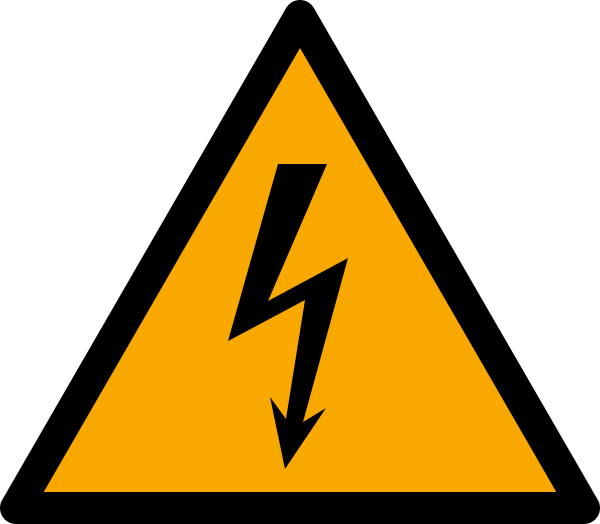
A real hazard sign is not an interior design suggestion crafted by a bored compliance consultant—it is a compressed equation of thermodynamics, electromagnetism, or cellular toxicology written in primary colors. When you walk past an ISO 7010 W012 (High Voltage) or IND-02 (Arc Flash) triangle on a transformer substation door, you are looking at Dielectric Breakdown physics. Air normally insulates at roughly 3,000 volts per millimeter. Cross that threshold—or drop a wrench across a 480V three-phase busbar—and the air ionizes into a conductive plasma channel. Copper terminals vaporize instantaneously at 19,000 °C (nearly four times the surface temperature of the Sun), expanding 67,000 times in volume within milliseconds. The resulting acoustic shockwave and molten metal shrapnel do not care how many online HR safety videos you clicked through at 2x speed.
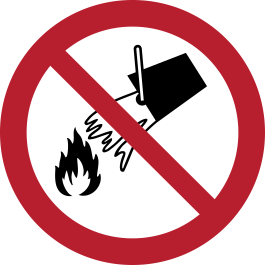
The same uncompromising laws govern chemical and fire prohibitions. Why does ISO 7010 P011 (Do Not Extinguish with Water) exist alongside ADR Class 4.3 (Dangerous When Wet)? Because pouring liquid water onto a 350 °C hydrocarbon grease fire—or onto metallic sodium, potassium, or magnesium—triggers violent phase-change thermodynamics and exothermic chemistry. Water flashes to steam with a 1:1,700 volumetric expansion ratio, atomizing burning oil into a microscopic aerosol mist that ignites all at once as a fuel-air fireball. On alkali metals or aluminum dross, water is stripped of its oxygen atoms, releasing pure hydrogen gas (H2) right inside an active ignition zone.
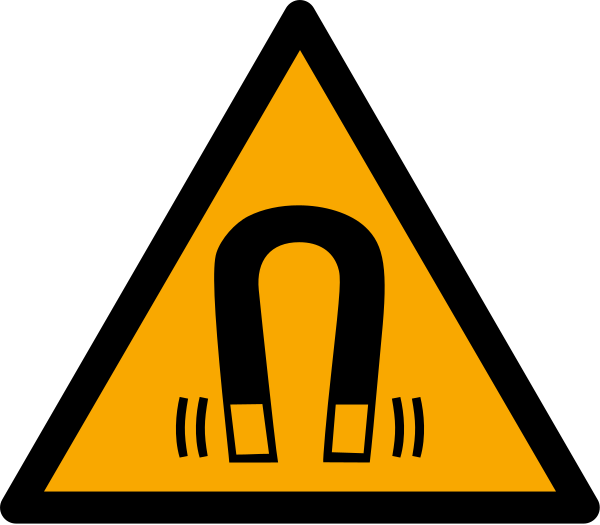
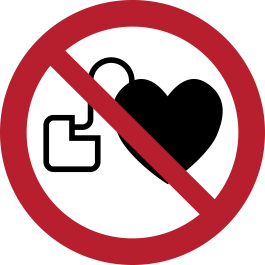
Even invisible fields obey strict mathematical boundaries. The ISO 7010 W006 (Strong Magnetic Field) and P007 (No Cardiac Pacemakers) signs outside an MRI bay warn of a 1.5 to 3.0 Tesla superconducting magnet that never turns off—not even at night. Because magnetic force scales with the spatial field gradient (∇B), a steel fire extinguisher or oxygen tank brought across the 5-Gauss line experiences ferromagnetic acceleration, turning into a 60 km/h ballistic missile aimed directly at the magnet bore, while Faraday eddy currents scramble implanted cardiac electronics.
Blood, Cesium-137, and Dow Chemical: How Hazard Symbols Were Born
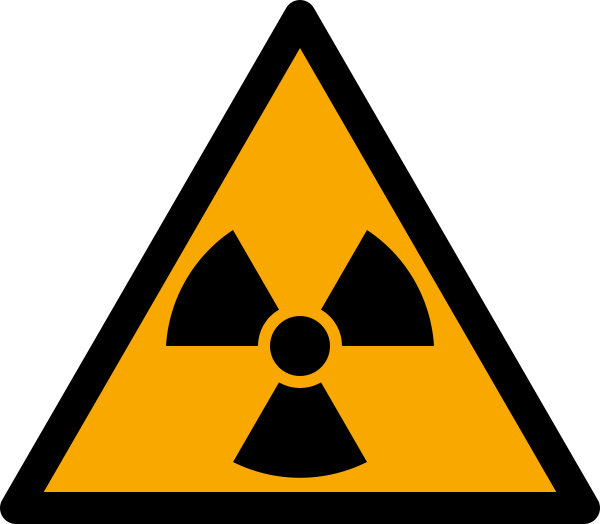
Every geometric curve in this 130-sign catalog was paid for in industrial accidents, radiation burns, and catastrophic misunderstandings. Take the classic trefoil for Ionizing Radiation (ISO 7010 W003). It was sketched in 1946 at the University of California, Berkeley Radiation Laboratory as a central atom radiating three beams of activity. Originally printed in magenta on a blue background simply because Prussian blue was cheap and magenta ink was lying unused in the print shop, physicists later standardized it to black on high-visibility yellow—the exact wavelength (~555 nm) where human photopic cone cells achieve peak contrast sensitivity in dim industrial corridors.
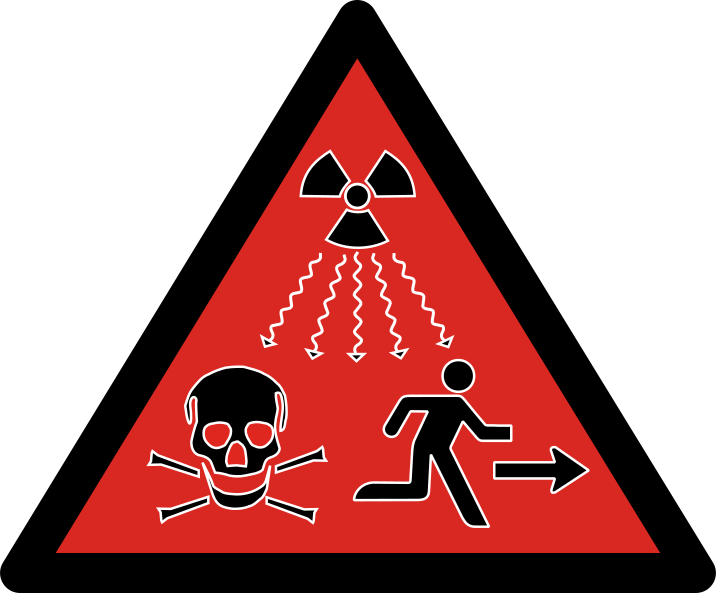
Yet by the late 1990s, the International Atomic Energy Agency (IAEA) realized the classic yellow trefoil had a fatal flaw. Scrap-metal scavengers in Goiânia (Brazil, 1987) and Tammiku (Estonia, 1994) found discarded medical teletherapy capsules, saw the three-bladed yellow trefoil, assumed it was a harmless electric fan or automotive part, and pried the lead shielding open—releasing lethal Cesium-137 (137Cs). In 2007, the IAEA and ISO introduced ISO 21482 (Lethal Radiation — Drop and Run): a blood-red triangle showing waves pouring from a source into a skull and crossbones, paired with a human figure sprinting toward an exit arrow. It requires zero literacy in any language to understand: drop the metal cylinder and run for your life.
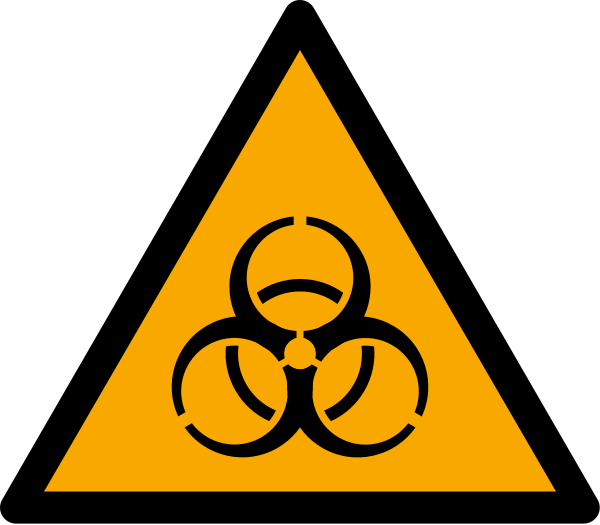
Equally calculating was the birth of the Biohazard symbol (ISO 7010 W009) in 1966. Before then, biological laboratories used everything from purple swallows to US Army triangles to mark anthrax and smallpox freezers. Dow Chemical engineer Charles L. Baldwin and NIH containment expert Robert S. Runkle designed six abstract geometric candidates and surveyed 600 people across the United States. The winning three-ringed symbol scored the lowest for prior association ("meaningless") and the highest for retention one week later ("memorable"), además of being symmetrical so stencil painters could never mount it upside down on a BSL-4 airlock door.
Decoding the Geometry: ISO 7010 vs. GHS vs. ADR Kemler vs. NFPA 704
If you forget the specific icon inside a sign during an emergency, the outer geometry and color code already tell you 80% of the survival protocol:
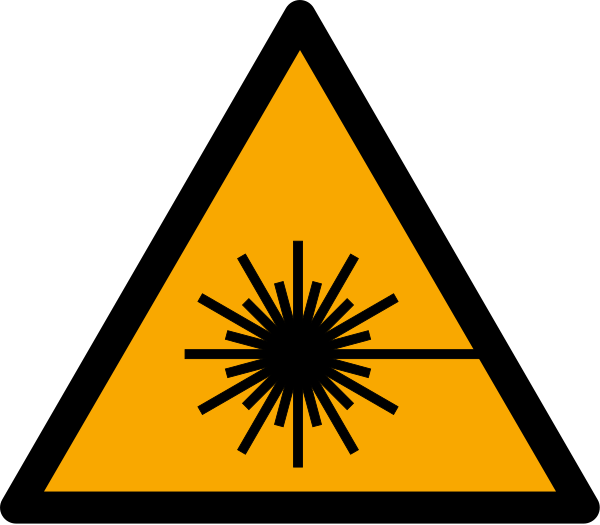
- Yellow Equilateral Triangle with Black Border (ISO 7010 W-Series): Pure hazard warning. Whether it shows a laser beam (
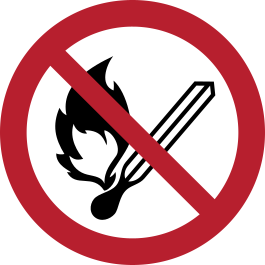
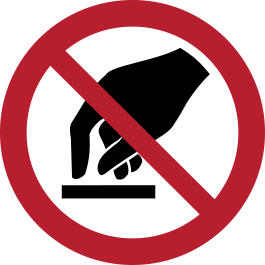
W004), cryogenic freezing (W010), forklift traffic (W014), or bull/cattle danger (W034), yellow triangles demand heightened situational awareness and perimeter caution. - Red Circle with 45° Diagonal Slash (ISO 7010 P-Series): Absolute prohibition. Touching live machinery (
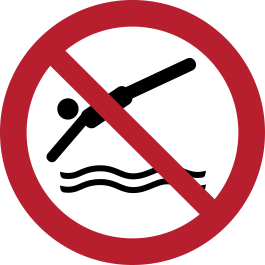
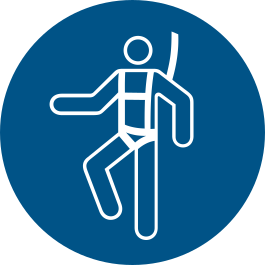
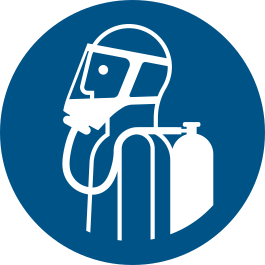
P010), striking an open flame near volatile vapors (P003), or diving into shallow water (P017) will result in immediate trauma. - Blue Circle with White Pictogram (ISO 7010 M-Series): Mandatory personal protective equipment (PPE) or action. You do not enter the zone without a respirator (
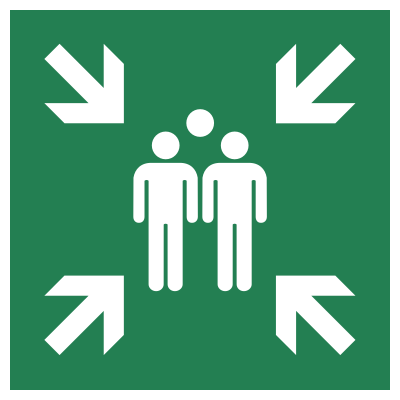
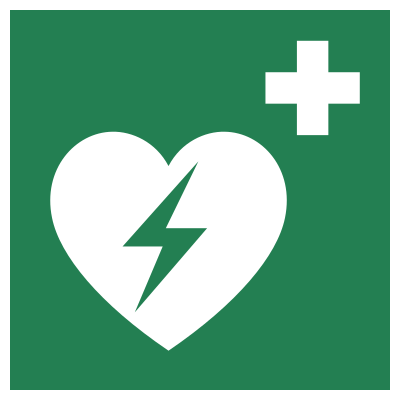
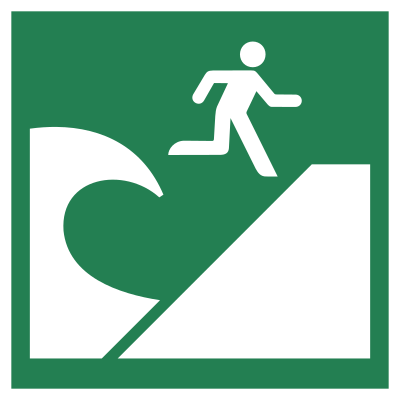
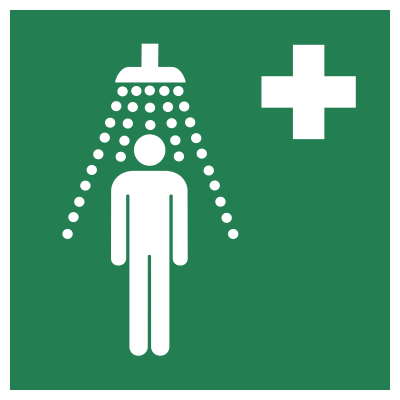
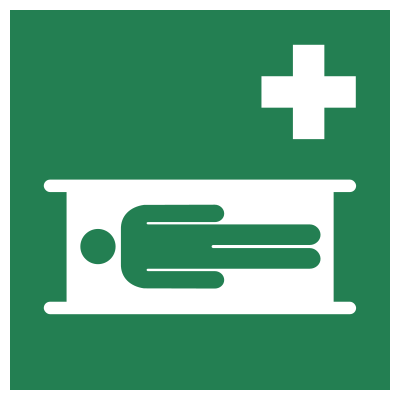
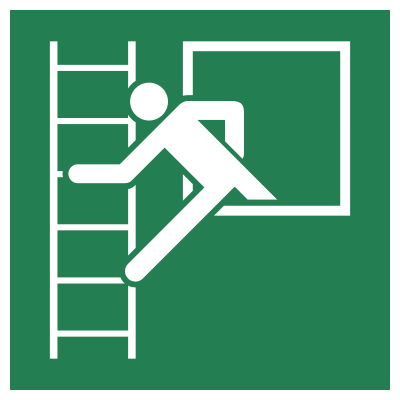
M004), safety harness (M018), SCBA breathing apparatus (M020), or hearing protection (M003). - Green Square or Rectangle (ISO 7010 E-Series & IMO/SOLAS): Life-saving escape and rescue infrastructure—emergency exits (
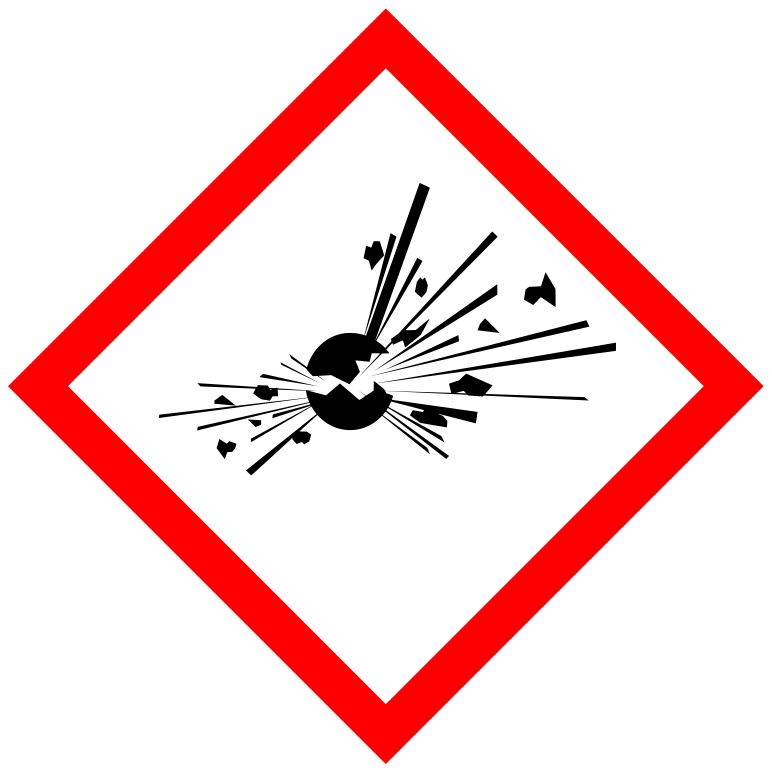
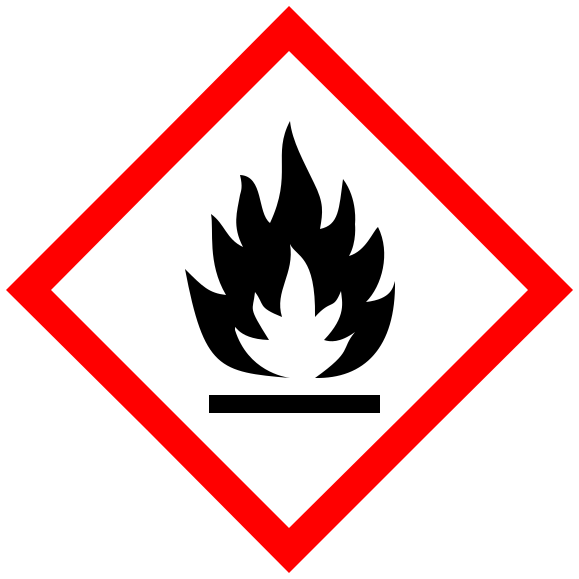
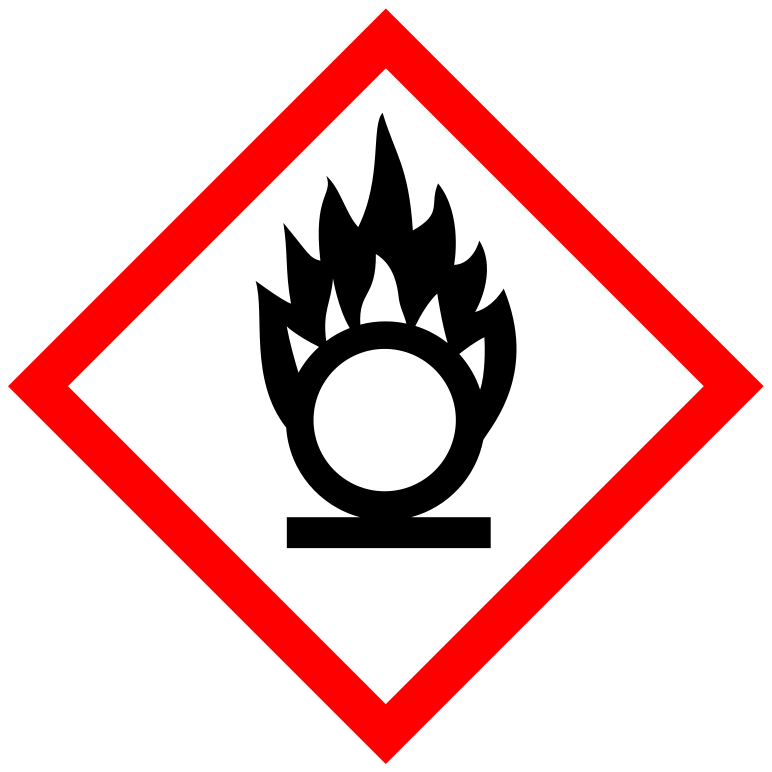
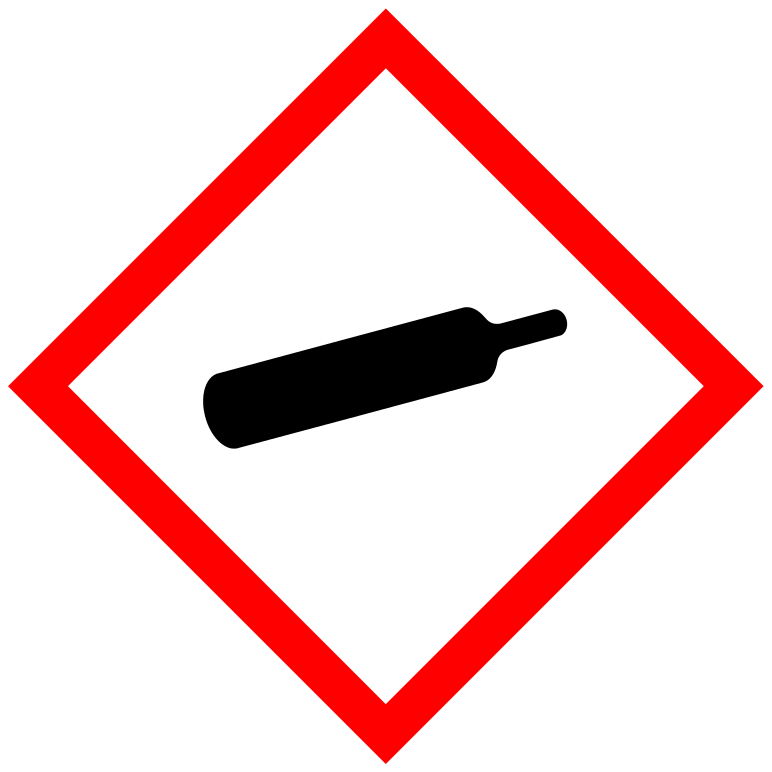
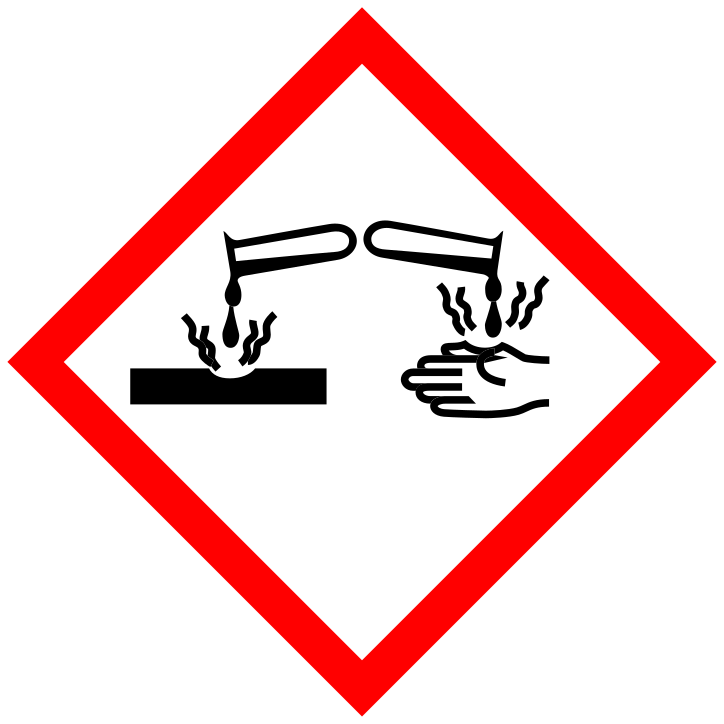
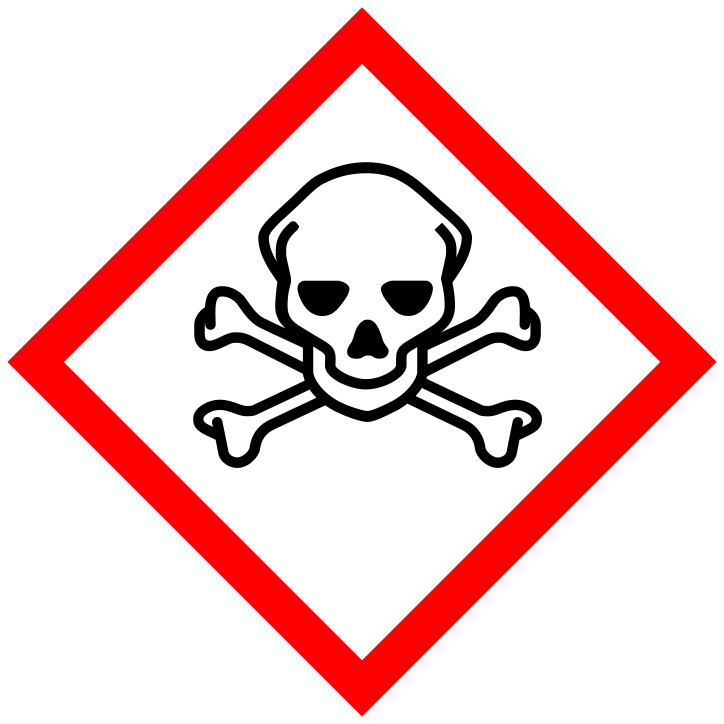
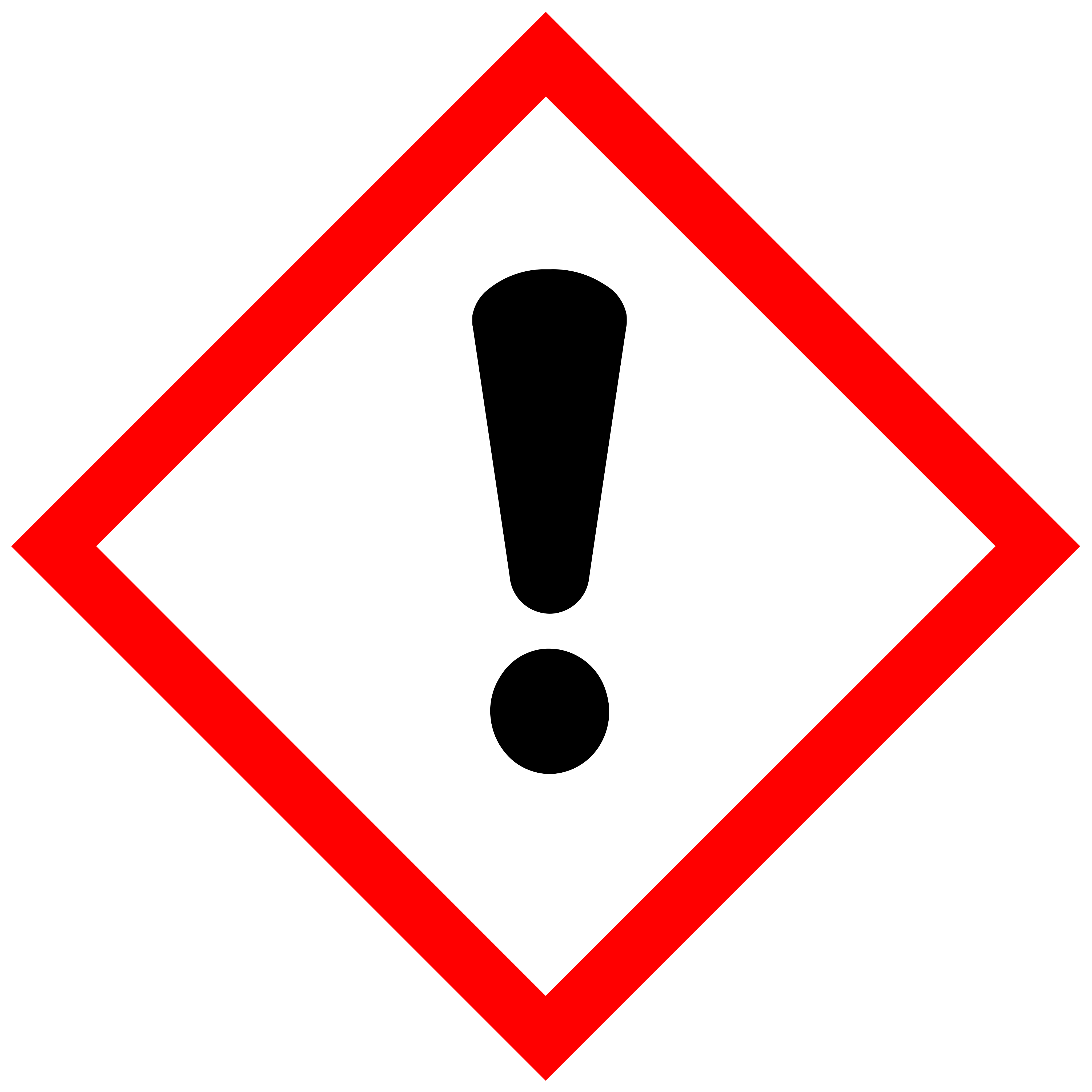
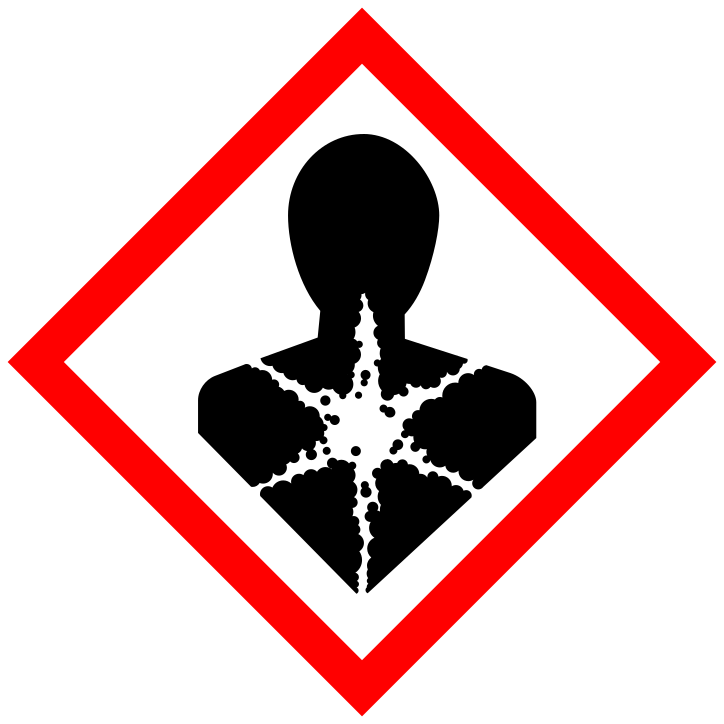
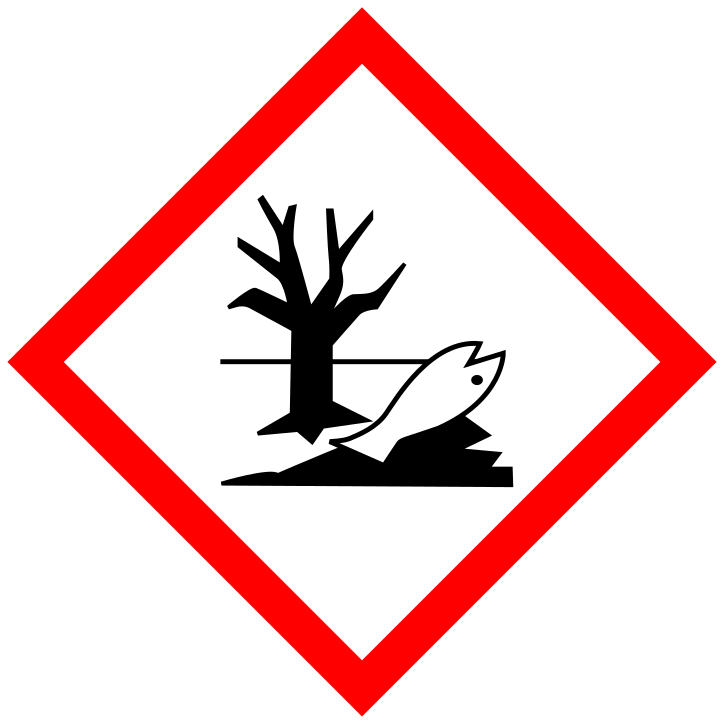
E001), AED defibrillators (E010), tsunami evacuation routes (E039), and marine lifeboat muster stations (IMO E002). - White Diamond with Red Border (GHS01–GHS09): United Nations Globally Harmonized System for chemical containers. Crucial distinction:
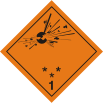
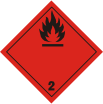
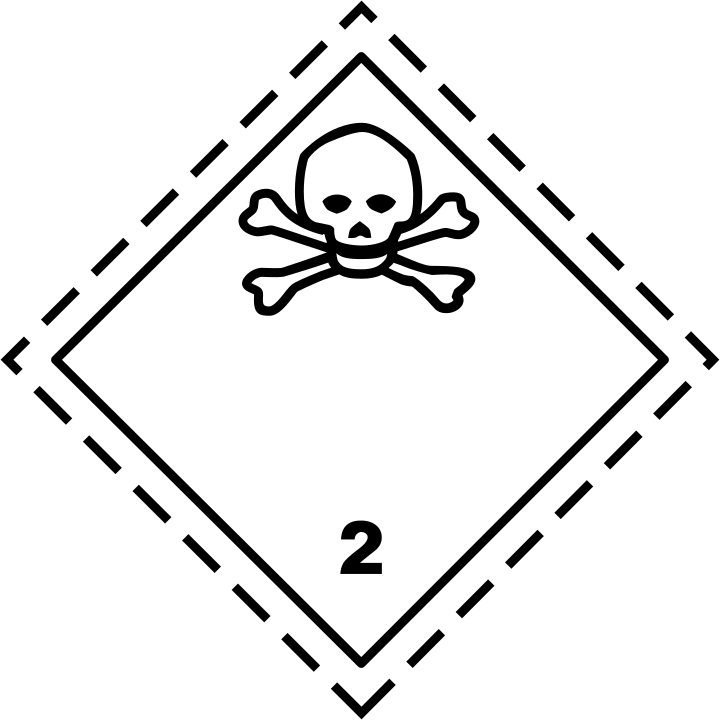
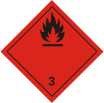
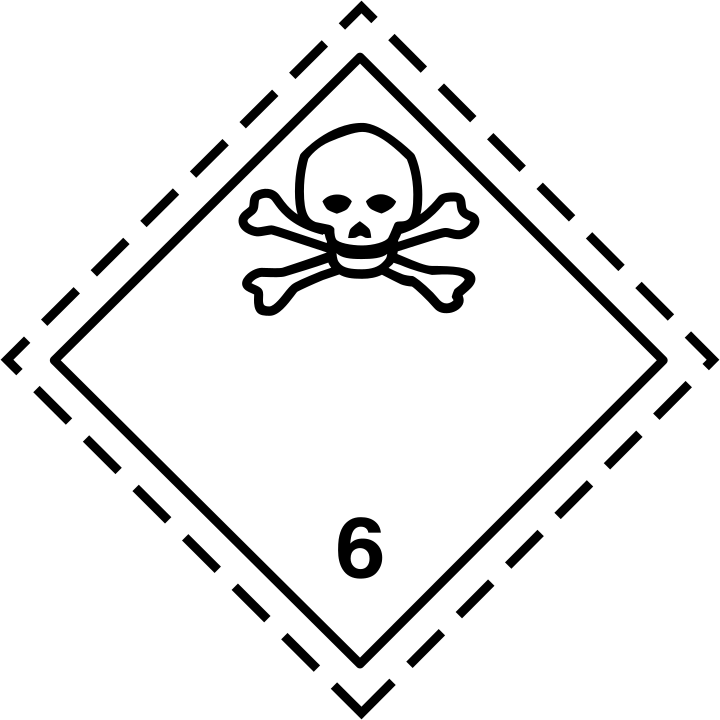
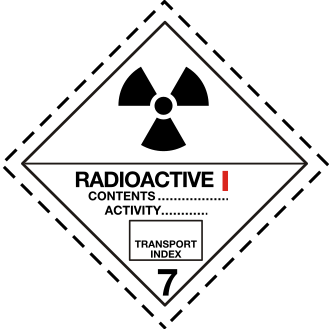
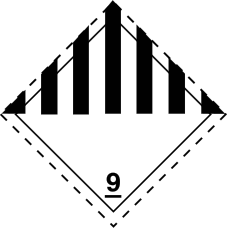
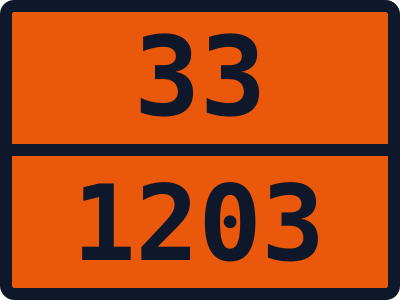
GHS06(Skull and Crossbones) means acute lethality from a single small dose, whereasGHS08(exploding chest silhouette, the "Health Hazard" starburst) warns of chronic or systemic catastrophes—carcinogens, mutagens, reproductive toxins (CMR), and fatal aspiration hazards like low-viscosity hydrocarbons filling the lungs. - Tilted Diamonds & Orange Plates (ADR Classes 1–9 & NFPA 704): Transport and firefighter tactical intelligence. On an European ADR orange tank plate (e.g.,
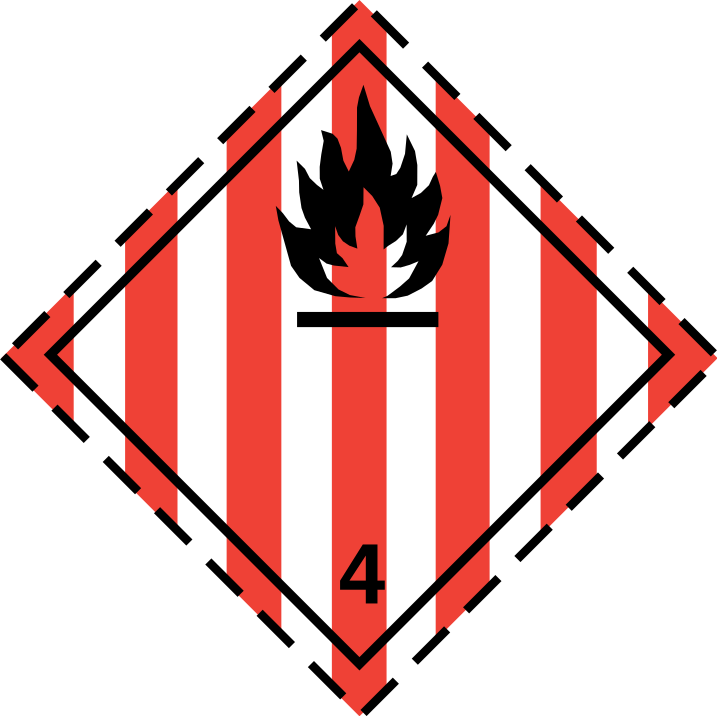
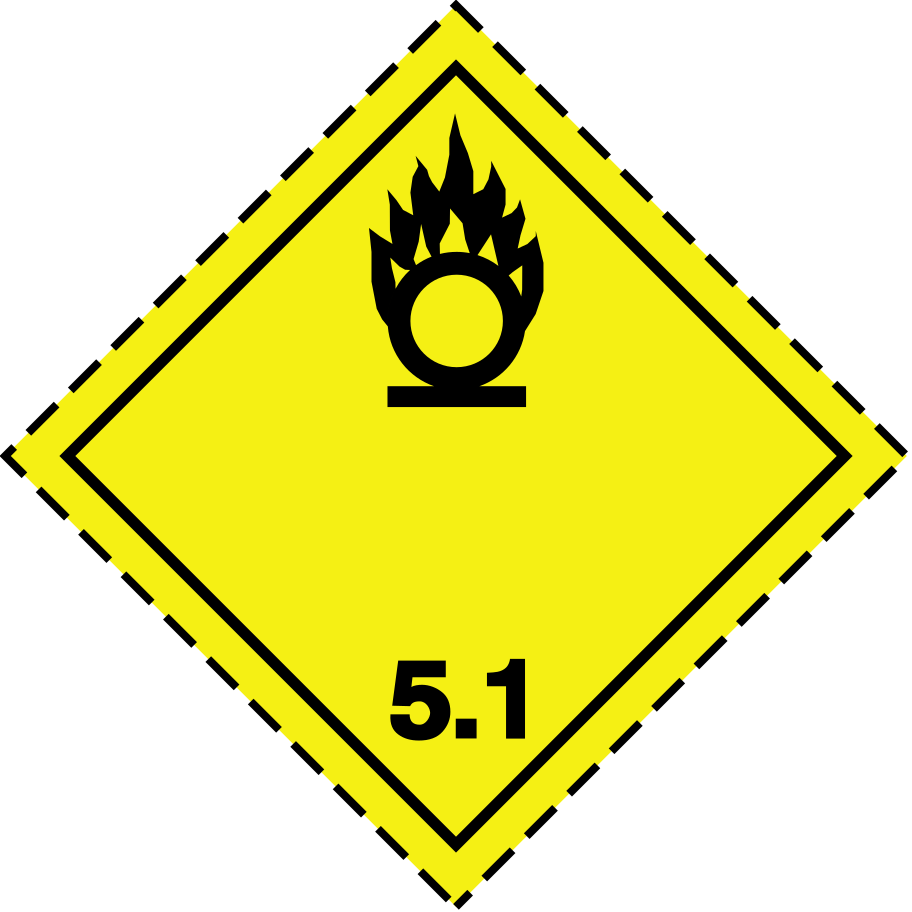
33 / 1203for petrol), the bottom four digits are the UN substance ID, while the top Kemler hazard number reveals the physics: doubling a digit (33) means highly flammable liquid; doubling66means very toxic; and a leadingX(e.g.,X423) warns firefighters that water contact will trigger a violent reaction. In North America, the four-color NFPA 704 Fire Diamond maps Health (Blue, left), Flammability (Red, top), Instability/Reactivity (Yellow, right) from 0 to 4, and Special Hazards likeWOX(oxidizer) in the bottom white quadrant.
Corporate Safety Theater vs. Real A4 Vector Field Readiness
Search the modern web for a simple High Voltage, Server Room Restricted, or Biohazard sign to print and tape onto a workshop cabinet, and you are immediately ambushed by commercial sign conglomerates. They serve you a blurry 200-pixel JPEG plastered with diagonal copyright watermarks and demand credit card details to ship you a piece of PVC plastic two weeks later—for standardized public-domain ISO geometry that engineers defined decades ago.
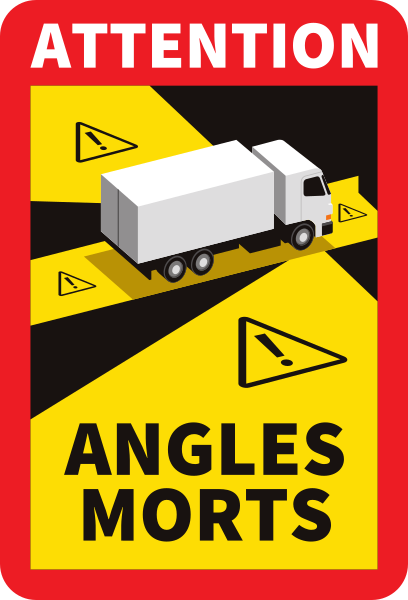
We built this dual-mode tool to eliminate that nonsense. Use the Hazard Signs Quiz tab to drill your brain on all 130 real-world survival scenarios—from why you never inflate an aviation life vest inside a flooding cabin (Archimedes buoyancy pins you to the ceiling above the underwater exit hatch) to recognizing rip currents, avalanche chutes, and French Angles Morts truck blind-spot stickers. Switch to the All 130 Signs (Print PDF) catalog tab to filter by category, inspect any symbol in high-resolution vector SVG, and print either a multi-page A4 field reference sheet or a full-page A4 warning poster with a single click—zero watermarks, zero sign-ups, and 100% offline reliability.