































About This Road Signs Tool
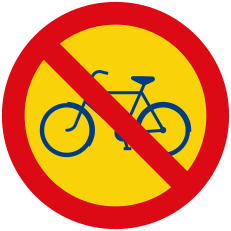
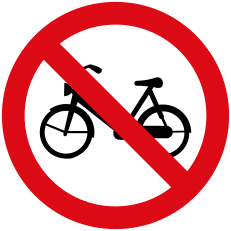
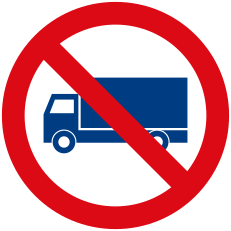
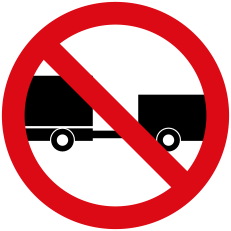
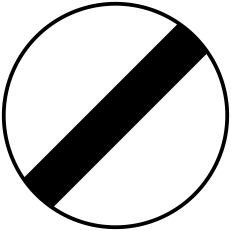
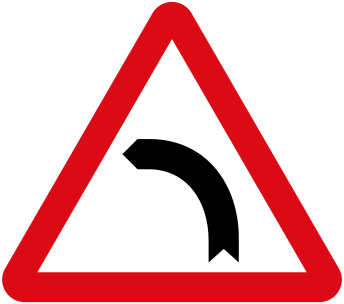
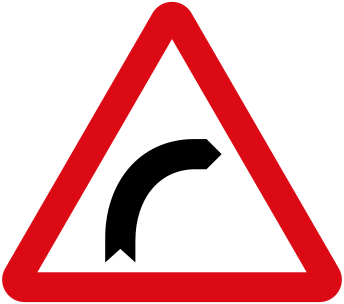
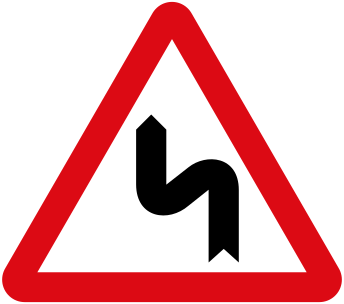
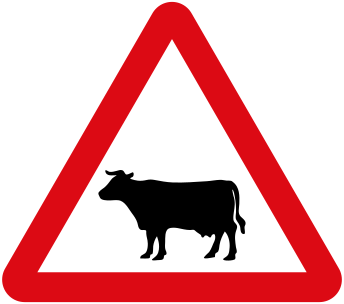
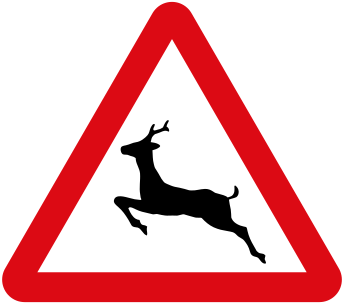
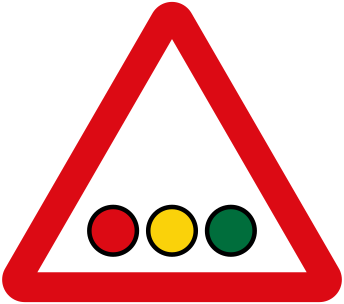
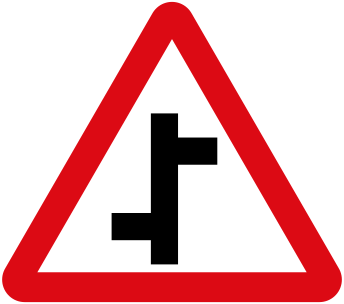
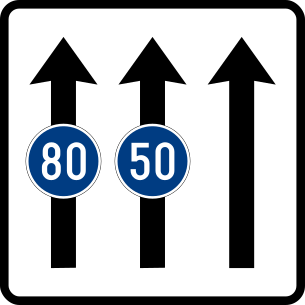
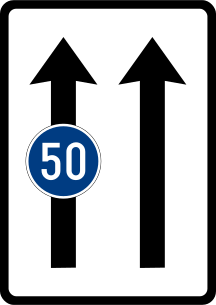
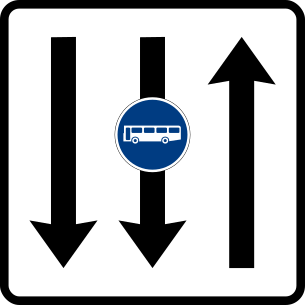
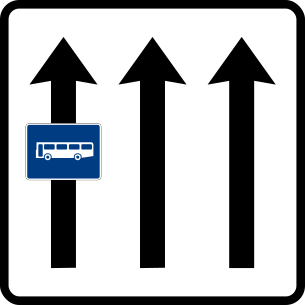
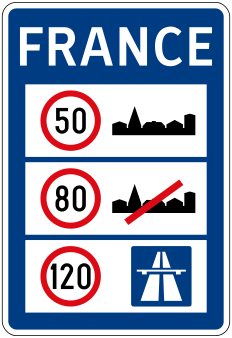
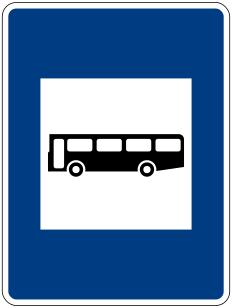
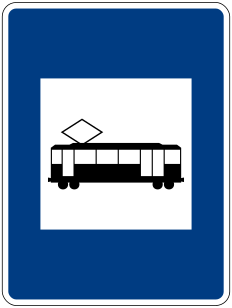
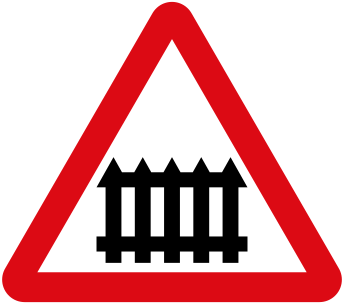
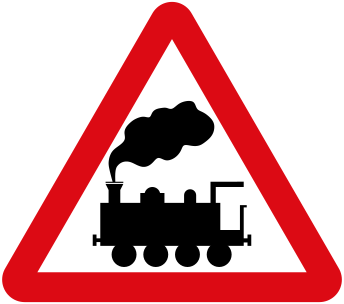
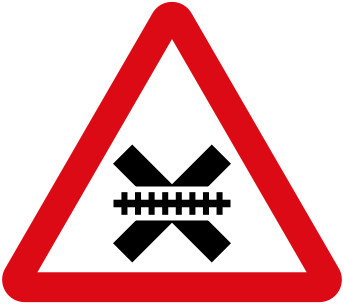
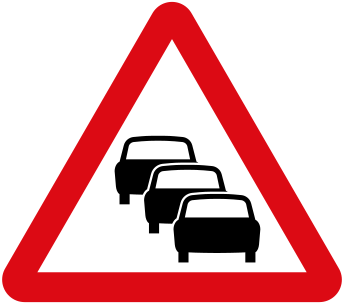
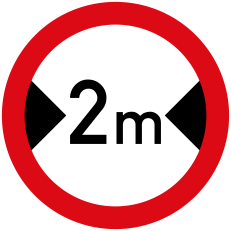
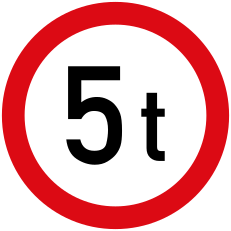
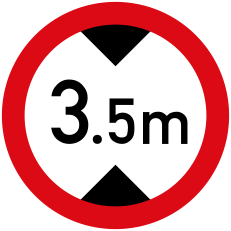
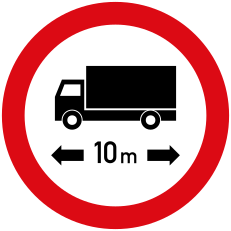
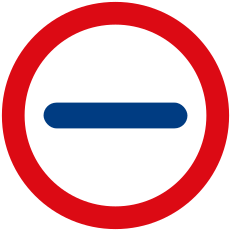
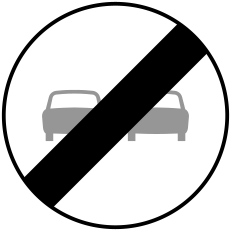
This tool is designed for learning and reviewing 135 standardized road signs governed by the Vienna Convention. The tool focuses strictly on the signs themselves and their official meanings—without extraneous road intersection diagrams or complex simulated traffic scenarios.
The platform provides two core modes:
- Road Signs Quiz: An interactive test that displays a road sign image alongside four possible meaning choices. Selecting an answer immediately reveals whether it is correct, displays a brief rule explanation, and keeps track of correct answers and mistakes.
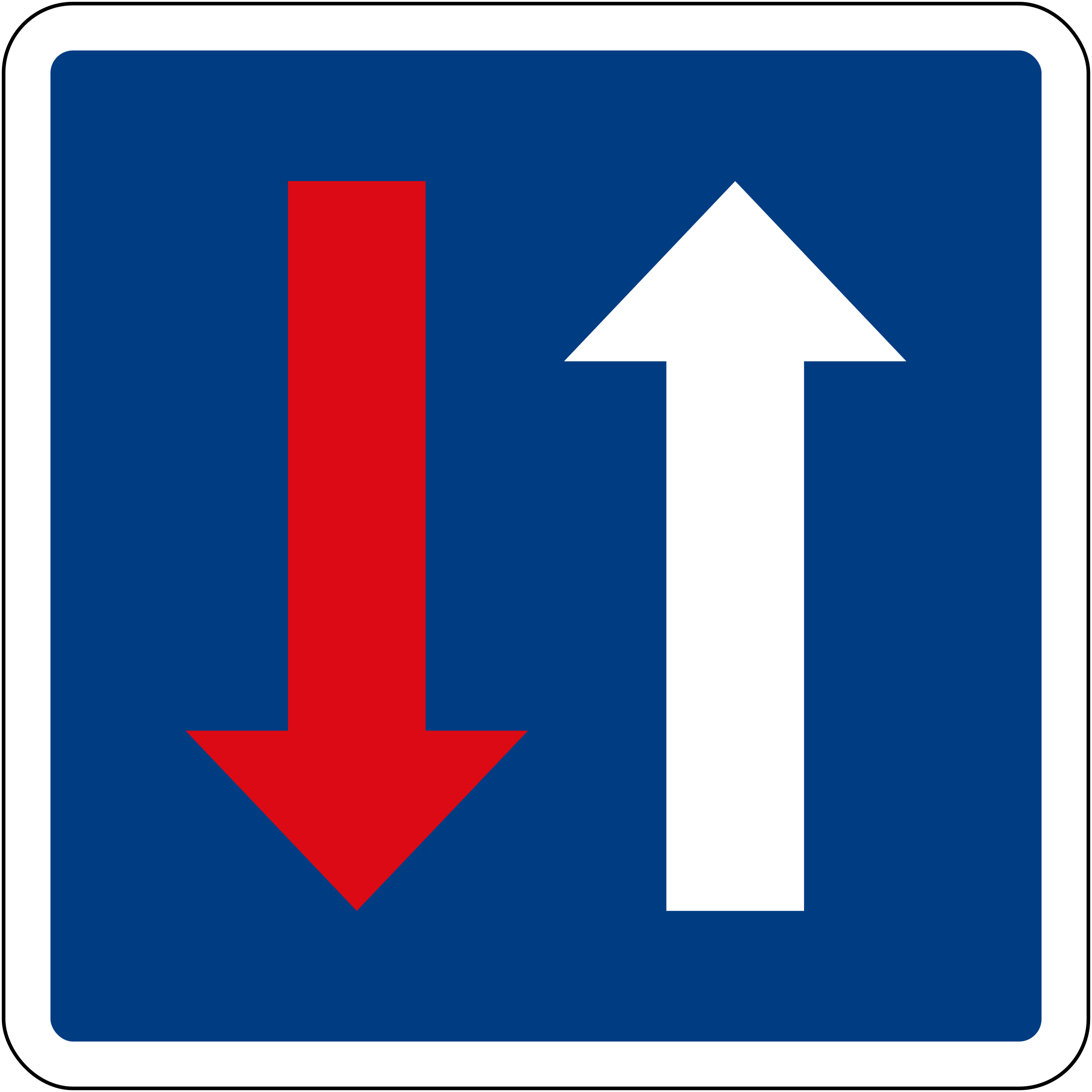
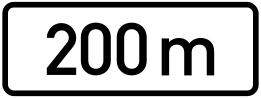
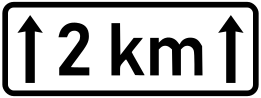
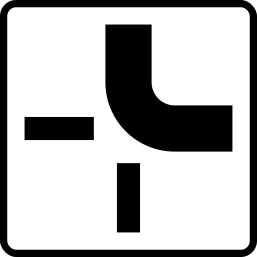
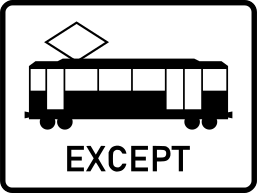
- All Signs Catalog: A complete, searchable directory of all 135 signs organized across standard categories (Warning, Priority, Prohibitory, Mandatory, Special Regulation, Information, and Additional Panels). It features live keyword and code search, category filtering, and an A4 / PDF print-ready layout for offline study.
Optical Physics of Highway Signs: 3M Diamond Grade and Retroreflection
A common misconception among beginner drivers is that road signs are simply painted metal plates illuminated by the headlights of approaching vehicles. In reality, an ordinary painted surface exhibits diffuse scattering (Lambertian reflectance): photons striking the surface scatter uniformly in all directions ($2\pi$ steradians), meaning less than 0.01% of the reflected light ever bounces back into the driver's eye cone at night.
Modern highway infrastructure relies on retroreflection, pioneered by 3M's microprismatic retroreflective sheeting (such as Diamond Grade DG3):
- Cube-Corner Microprisms: Instead of microscopic glass beads used in older Class 1 engineering-grade vinyl, modern Class 3 signs feature millions of microscopic three-sided corner cubes embossed onto acrylic resin. Each cube acts as an optical retroreflector: light enters, reflects off three mutually perpendicular surfaces in sequence, and is redirected back along its exact incident vector with over 60% optical efficiency.
- The Observation Angle ($\alpha$): The human driver sits roughly 0.6 to 1.2 meters above their vehicle's headlights. This vertical separation creates an observation angle ($\alpha$) between the headlight beam and the driver's sightline. Microprisms are engineered with deliberate internal facet angles of $89.98^\circ$ rather than a perfect $90.00^\circ$ to produce a narrow dispersion cone that targets the driver's retina rather than sending photons directly back into the headlight bulb.
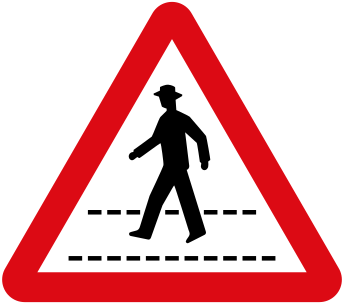
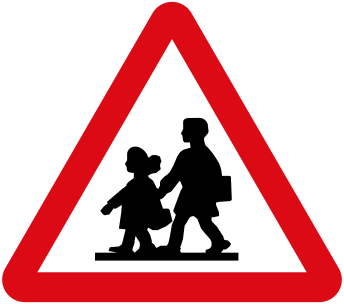
- Fluorescent Day/Night Chromaticity: High-risk warning signs (such as school crossings or pedestrian zones) utilize fluorescent pigments that absorb invisible solar ultraviolet radiation (300–400 nm) and re-emit it as visible yellow-green light (520–550 nm), creating a striking luminosity contrast even in dawn or twilight mist.
Kinematics of Sign Siting: Why Warning Signs Are Placed 50–100m or 150–300m Away
Traffic engineers do not plant warning signs at random roadside intervals. Siting distances are dictated directly by classical kinematics and neurobiology, governed by the total stopping distance formula:
$$d_{\text{total}} = d_{\text{reaction}} + d_{\text{braking}} = v \cdot t_{\text{perception-reaction}} + \frac{v^2}{2\mu g}$$
Where:
- $v$ is the vehicle's approach velocity in meters per second ($\text{m/s}$).
- $t_{\text{perception-reaction}}$ is the physiological perception-reaction time (PRT), standardized by AASHTO and European road authorities at 1.5 to 2.5 seconds for an alert driver.
- $\mu$ is the tire-pavement friction coefficient (typically $0.7$ to $0.8$ for dry asphalt, plummeting to $0.35$ on wet road and below $0.1$ on black ice).
- $g$ is standard gravitational acceleration ($9.81\text{ m/s}^2$).
At an urban speed of $50\ \text{km/h}$ ($13.89\ \text{m/s}$), a vehicle covers roughly $21\ \text{m}$ during reaction time alone, followed by $14\ \text{m}$ of dry braking—yielding a minimum safe warning distance of $35\ \text{m}$. Siting urban warning signs at 50–100 meters provides the necessary buffer for wet asphalt or split-second indecision.
On rural highways and motorways where velocities reach $90–120\ \text{km/h}$ ($25–33.3\ \text{m/s}$), reaction distance expands to $50–70\ \text{m}$ and braking distance expands quadratically to $80–130\ \text{m}$. Consequently, the Vienna Convention mandates out-of-town warning signs be placed 150 to 300 meters in advance of the hazard.
Morphology and History: Why the STOP Sign is an Octagon
Before the 1968 Vienna Convention on Road Signs and Signals, international highway signage was a chaotic patchwork of regional languages and disparate symbols. A French driver entering Germany or Italy could easily misread written warnings, with fatal consequences.
The Vienna Convention established an unambiguous geometric hierarchy categorized into eight standardized classes (A through H):
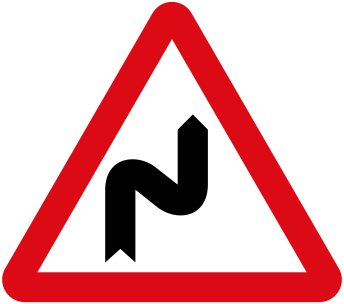
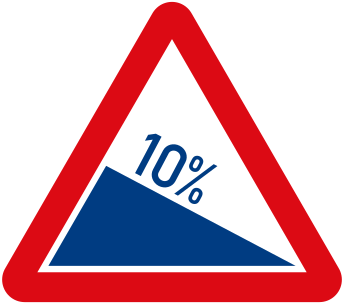
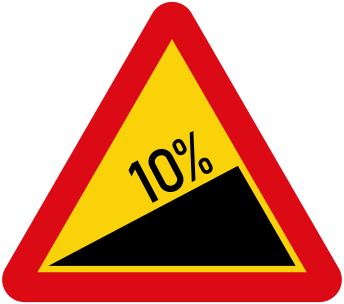
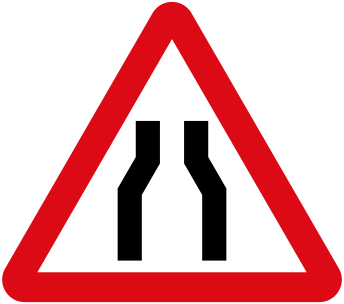
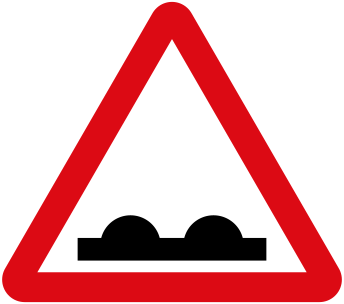
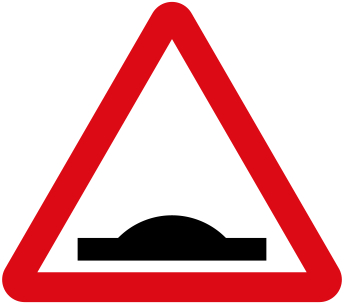
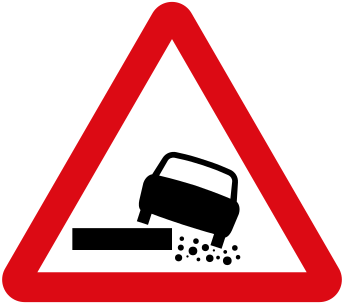
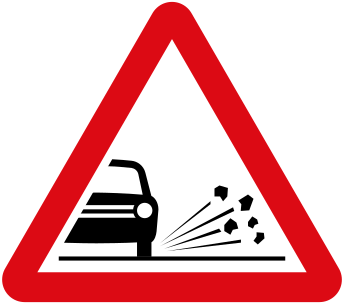
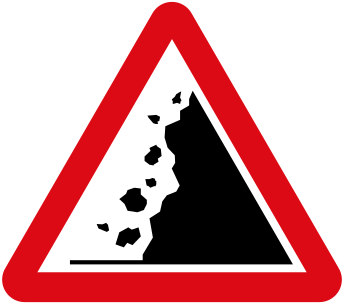
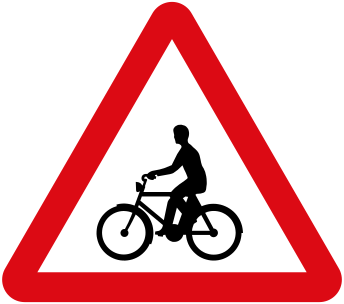
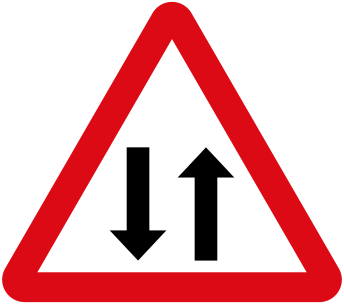
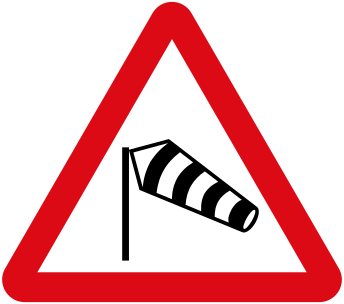
- Class A (Danger Warning): Equilateral triangles pointing upward with red borders. The upward apex directs human ocular fixation toward the center of the warning symbol.
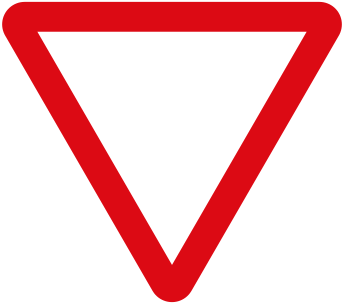
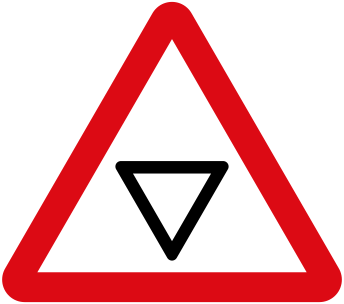
- Class B (Priority): Unique silhouettes designed for instant 360-degree identification. The STOP sign (B-02) is the only octagonal sign on the road, and the Give Way / Yield sign (B-01) is the only inverted triangle (pointing downward). Why? Because even if the front face of the sign is completely obscured by a blizzard or mud splatter, an oncoming or cross-traffic driver looking at the back of the sign can immediately recognize the unique shape and know whether the intersecting traffic has a mandatory stop.
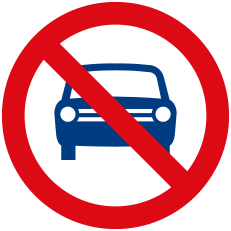
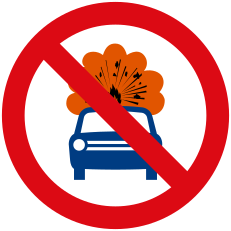
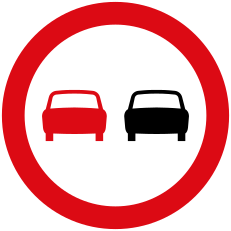
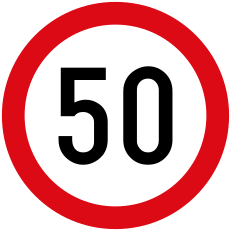
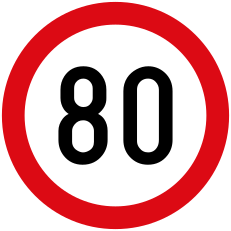
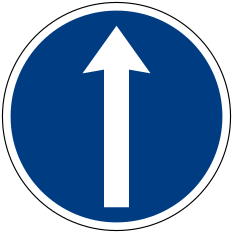
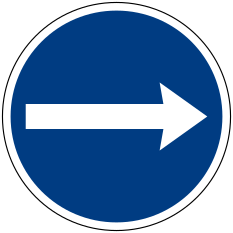
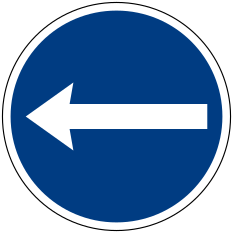
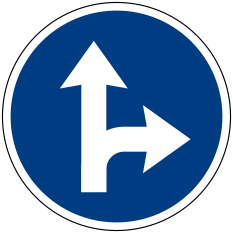
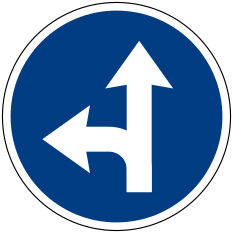
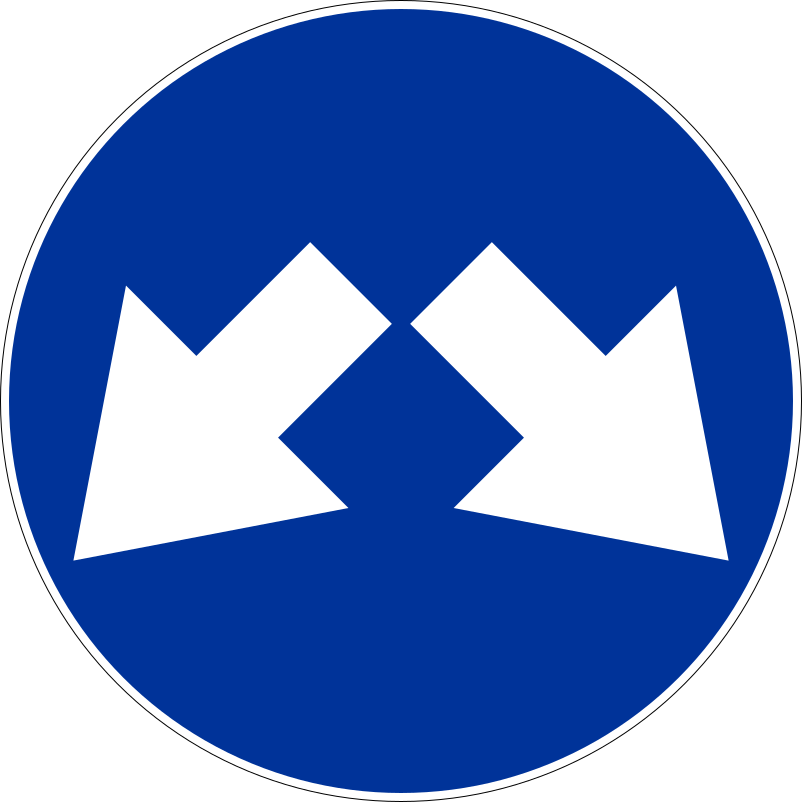
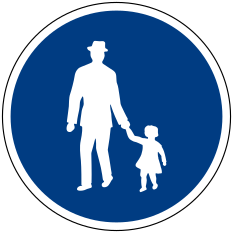
- Class C (Prohibitory) & Class D (Mandatory): Circular silhouettes. Red circular borders signify prohibitions or speed limits (Class C), while solid blue circular discs mandate specific actions or directional turns (Class D).
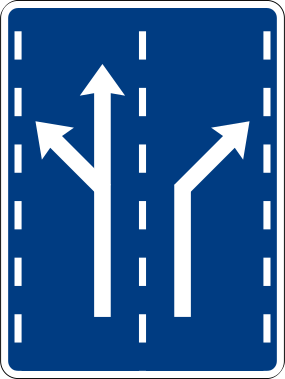
- Class E, F, G, H (Special Regulation, Service, Direction & Panels): Rectangles and squares delivering structural navigation, lane allocations, and auxiliary distance qualifications.