

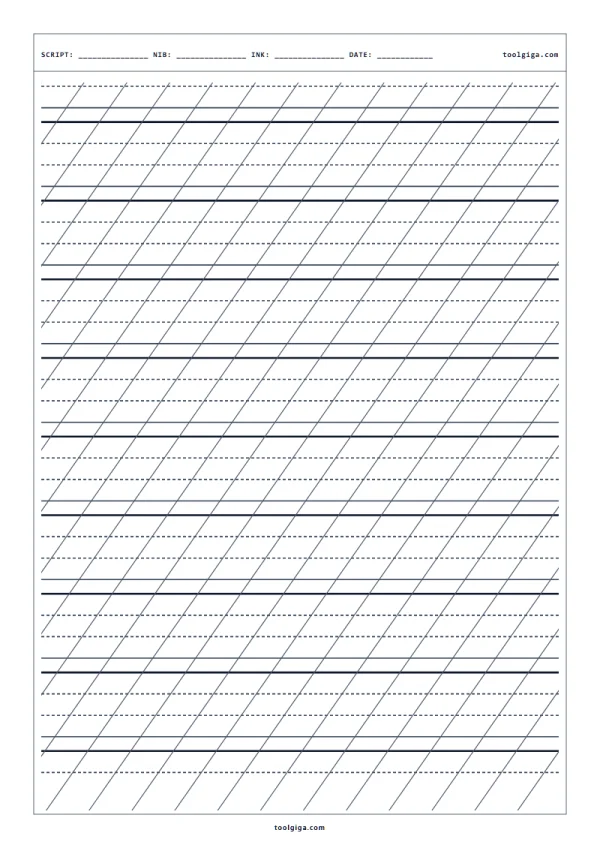
Italic & Chancery Calligraphy Guideline Generator (5° Slant)
The Italic and Chancery mode creates structured A4 vector ruling tailored for broad-edge nibs (such as Speedball C-series, Brause Bandzug, or Pilot Parallel pens). Because broad-edge calligraphy derives its stroke contrast from the fixed width of a flat chisel nib rather than downward finger pressure, its vertical proportions are measured in nib widths (commonly 4:5:4 or 3:5:3). This mode pairs generous x-heights with a gentle 5-degree forward slope (85 degrees from the horizontal baseline), giving your letters a brisk, upright rhythmic elegance.
Historical Fact: The Papal Chancery Script That Inspired Italic Type
Chancery cursive (Cancellaresca corsiva) emerged in 15th-century Renaissance Italy when humanist scholars sought a faster, more legible alternative to dense medieval Gothic blackletter. In 1522, papal scribe Ludovico Vicentino degli Arrighi published La Operina in Rome, the first printed woodblock manual teaching Italic handwriting. This swift diplomatic script directly inspired Venetian punchcutter Francesco Griffo around 1500 to cast the world's first slanted typographic font—which is why slanted text in modern word processors is still called Italic today.