
Alphabetical Letter Grids and Word-Building Logic Puzzles
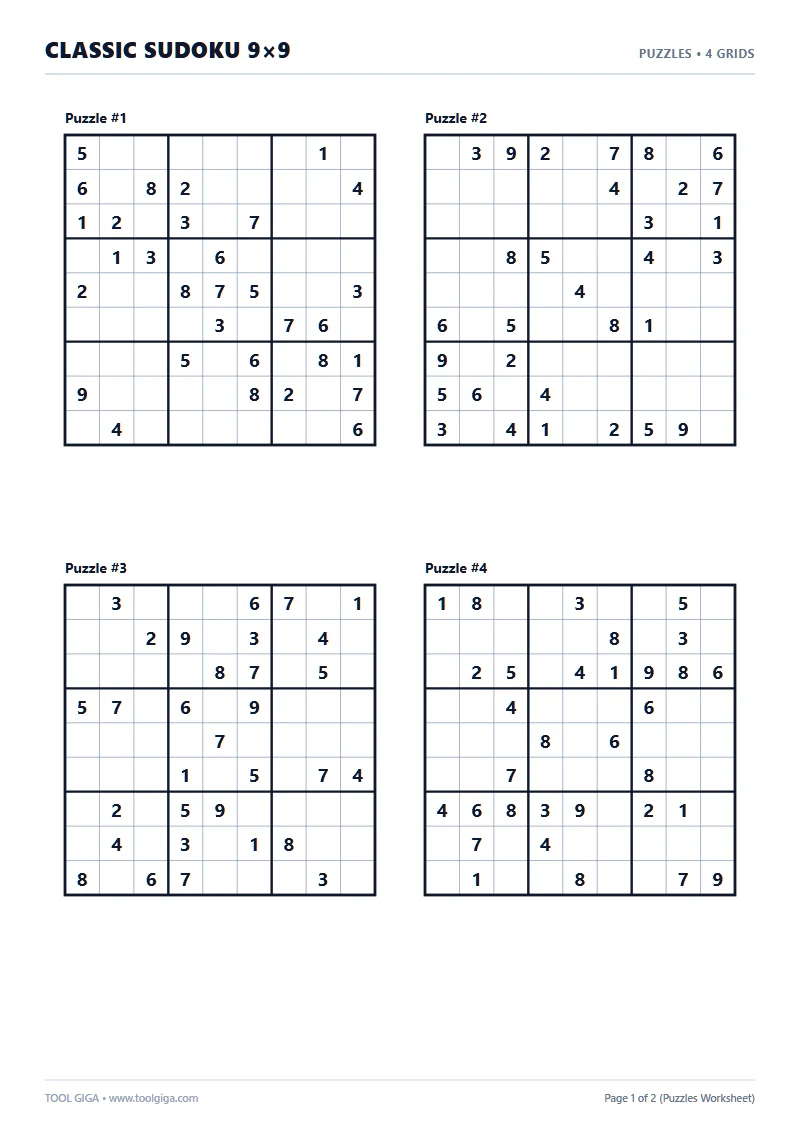
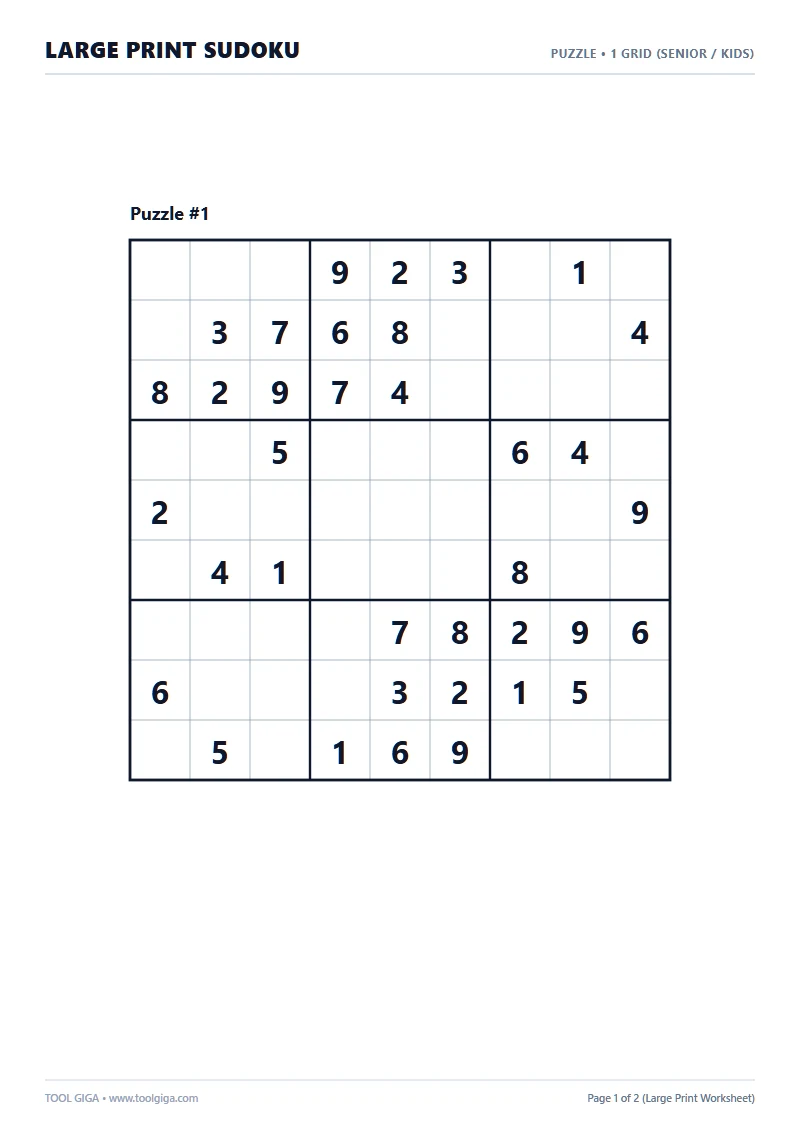
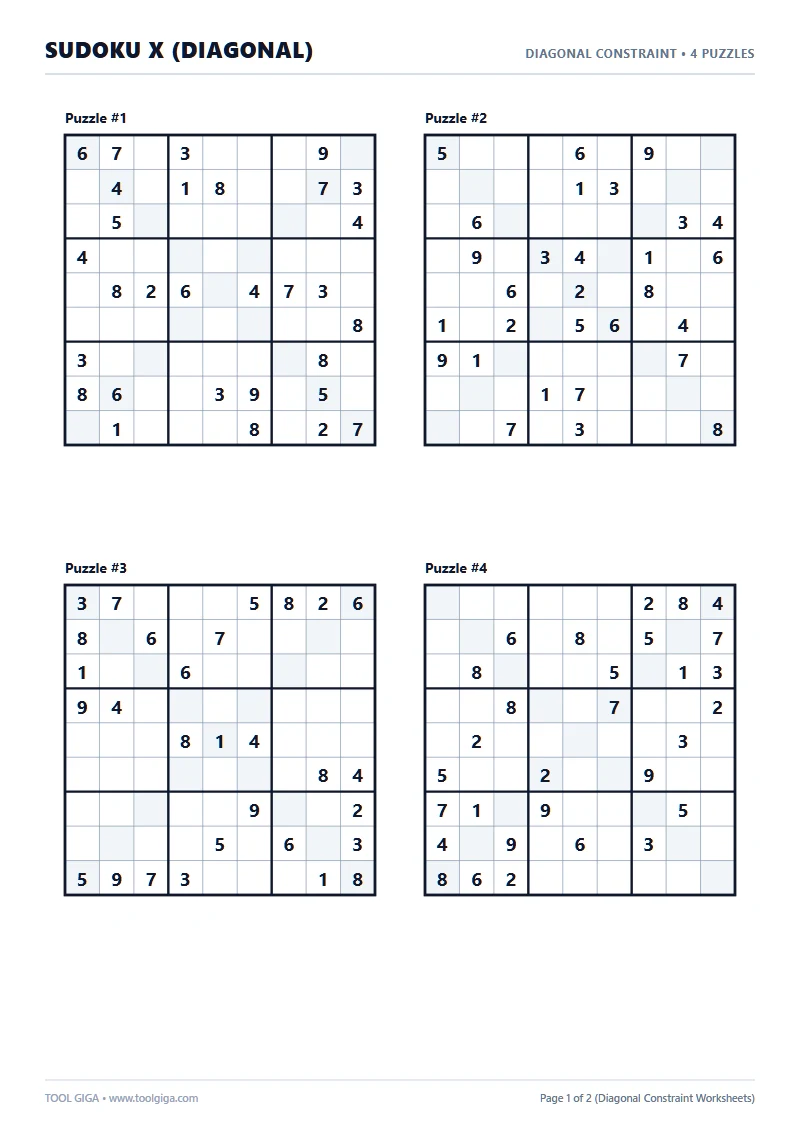
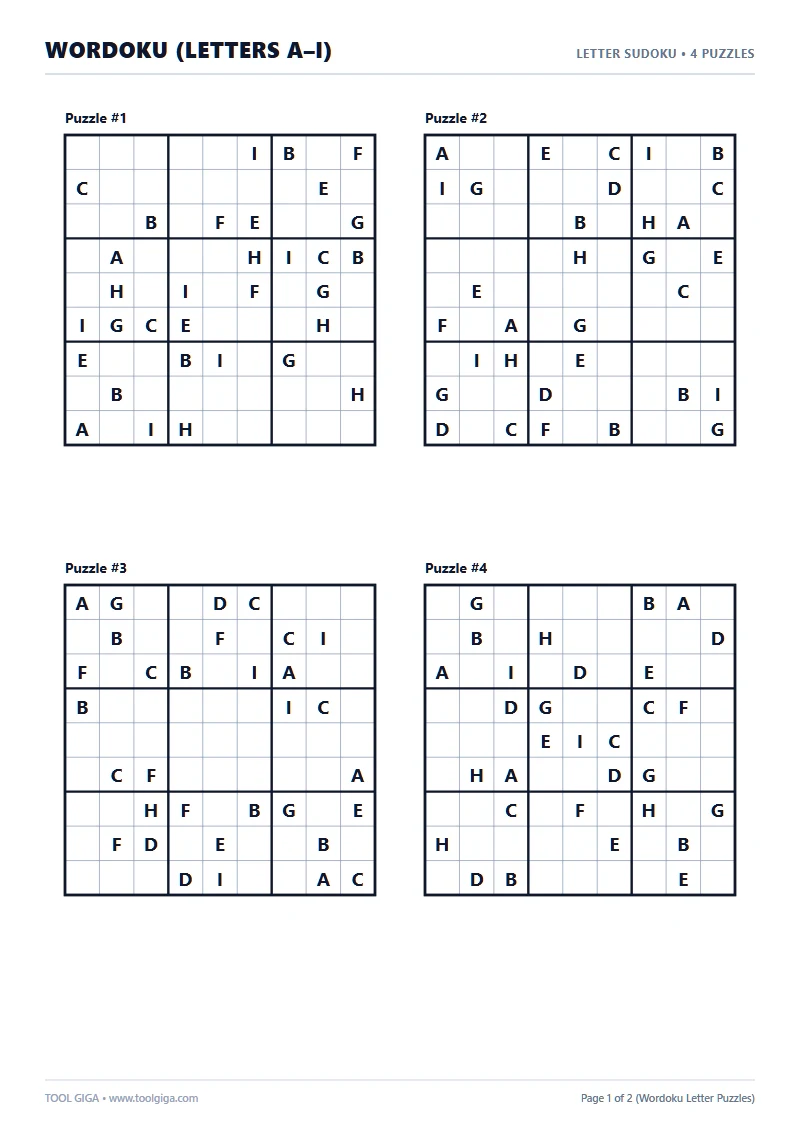
This Wordoku mode replaces the digits 1 through 9 with nine distinct uppercase letters—A, B, C, D, E, F, G, H, and I—to create engaging alphabetical logic worksheets. Just like numeric Sudoku, every horizontal row, vertical column, and 3x3 block must contain each of the nine letters exactly once. Printable in 1, 2, 4, or 6 grids per A4 sheet across four difficulty tiers, Wordoku is a favorite among language arts teachers, puzzle clubs, and learners who experience math anxiety when staring at dense blocks of numbers.
Why Changing Symbols Rewires Pattern Recognition in the Brain
From a mathematical standpoint, a 9x9 grid filled with the letters A through I is completely isomorphic to a grid filled with the digits 1 through 9. Yet cognitive neuroscience research reveals that switching from numerals to letters shifts how the human visual cortex scans for missing symbols: solvers often group letters phonetically or alphabetically and spot hidden singles differently than when scanning digits. Historically, when Dell Magazines first popularized the modern puzzle in New York in 1979 under the title Number Place, puzzle constructors quickly realized that any set of nine distinct glyphs—letters, geometric icons, or colors—could power the exact same deductive engine.