#30 · 3 strokes
 kǒu · U+53E3
口
Open mouth, opening, entrance
Kangxi Radical #30 口 (kǒu, "Mouth") is written with 3 calligraphic strokes. Originating in Shang Dynasty Oracle Bone (Jiǎgǔwén) and Zhou Bronze inscriptions (Jīnwén) to depict open mouth, opening, entrance, it serves as a foundational semantic classifier in the 1716 Imperial Kangxi Dictionary. Frequent compound Hanzi characters governed by this radical include: 叫 (jiào), 吃 (chī), 和 (hé), 唱 (chàng).
#31 · 3 strokes
 wéi · U+56D7
囗
Walled city boundary, complete enclosure
Kangxi Radical #31 囗 (wéi, "Enclosure") is written with 3 calligraphic strokes. Originating in Shang Dynasty Oracle Bone (Jiǎgǔwén) and Zhou Bronze inscriptions (Jīnwén) to depict walled city boundary, complete enclosure, it serves as a foundational semantic classifier in the 1716 Imperial Kangxi Dictionary. Frequent compound Hanzi characters governed by this radical include: 四 (sì), 回 (huí), 国 (guó), 图 (tú).
#32 · 3 strokes
 tǔ · U+571F
土
Mound of soil on the ground, land, territory
Kangxi Radical #32 土 (tǔ, "Earth") is written with 3 calligraphic strokes. Originating in Shang Dynasty Oracle Bone (Jiǎgǔwén) and Zhou Bronze inscriptions (Jīnwén) to depict mound of soil on the ground, land, territory, it serves as a foundational semantic classifier in the 1716 Imperial Kangxi Dictionary. Frequent compound Hanzi characters governed by this radical include: 地 (dì), 在 (zài), 城 (chéng), 场 (chǎng).
#33 · 3 strokes
 shì · U+58EB
士
Learned gentleman, scholar-official, ceremonial axe
Kangxi Radical #33 士 (shì, "Scholar") is written with 3 calligraphic strokes. Originating in Shang Dynasty Oracle Bone (Jiǎgǔwén) and Zhou Bronze inscriptions (Jīnwén) to depict learned gentleman, scholar-official, ceremonial axe, it serves as a foundational semantic classifier in the 1716 Imperial Kangxi Dictionary. Frequent compound Hanzi characters governed by this radical include: 壮 (zhuàng), 声 (shēng), 壶 (hú).
#34 · 3 strokes
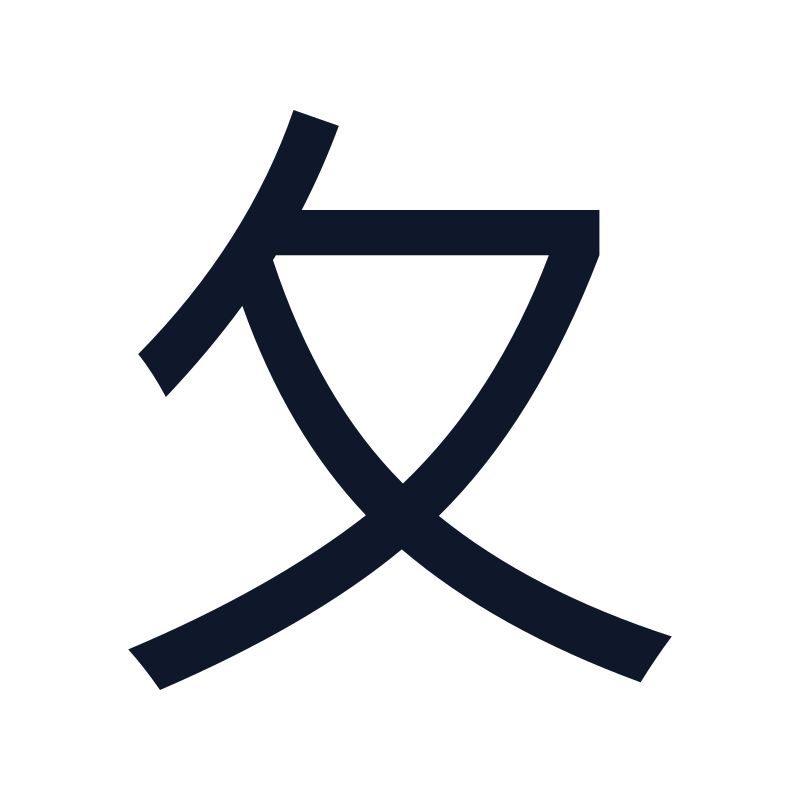 zhǐ · U+5902
夂
Foot stepping forward slowly, following behind
Kangxi Radical #34 夂 (zhǐ, "Go") is written with 3 calligraphic strokes. Originating in Shang Dynasty Oracle Bone (Jiǎgǔwén) and Zhou Bronze inscriptions (Jīnwén) to depict foot stepping forward slowly, following behind, it serves as a foundational semantic classifier in the 1716 Imperial Kangxi Dictionary. Frequent compound Hanzi characters governed by this radical include: 处 (chù), 备 (bèi), 复 (fù).
#35 · 3 strokes
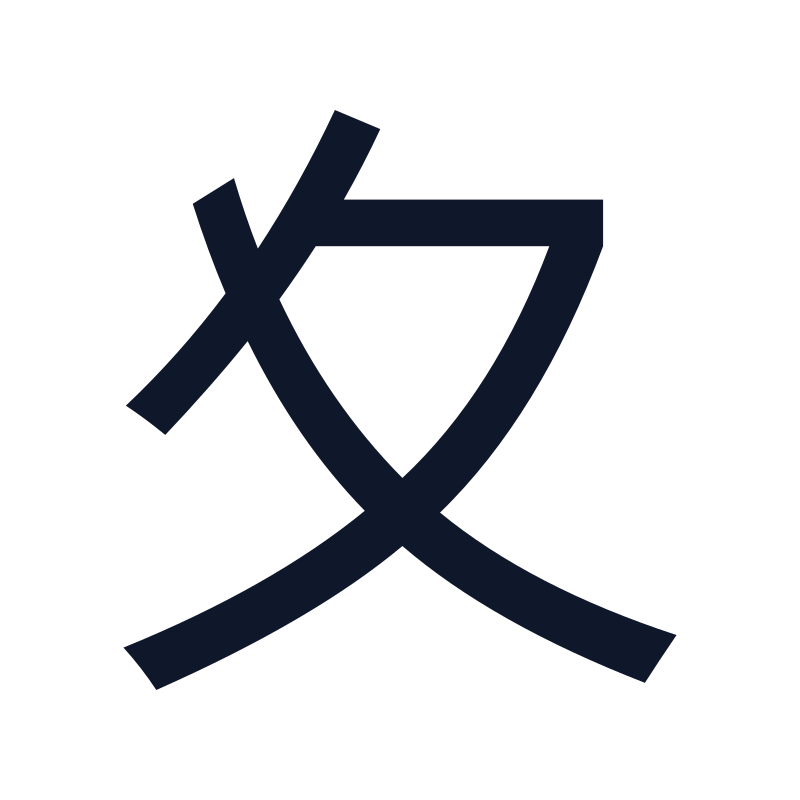 suī · U+590A
夊
Walking slowly with dragging feet
Kangxi Radical #35 夊 (suī, "Go Slowly") is written with 3 calligraphic strokes. Originating in Shang Dynasty Oracle Bone (Jiǎgǔwén) and Zhou Bronze inscriptions (Jīnwén) to depict walking slowly with dragging feet, it serves as a foundational semantic classifier in the 1716 Imperial Kangxi Dictionary. Frequent compound Hanzi characters governed by this radical include: 夏 (xià), 夔 (kuí).
#36 · 3 strokes
 xī · U+5915
夕
Crescent moon rising at dusk, nightfall
Kangxi Radical #36 夕 (xī, "Evening") is written with 3 calligraphic strokes. Originating in Shang Dynasty Oracle Bone (Jiǎgǔwén) and Zhou Bronze inscriptions (Jīnwén) to depict crescent moon rising at dusk, nightfall, it serves as a foundational semantic classifier in the 1716 Imperial Kangxi Dictionary. Frequent compound Hanzi characters governed by this radical include: 外 (wài), 多 (duō), 夜 (yè), 梦 (mèng).
#37 · 3 strokes
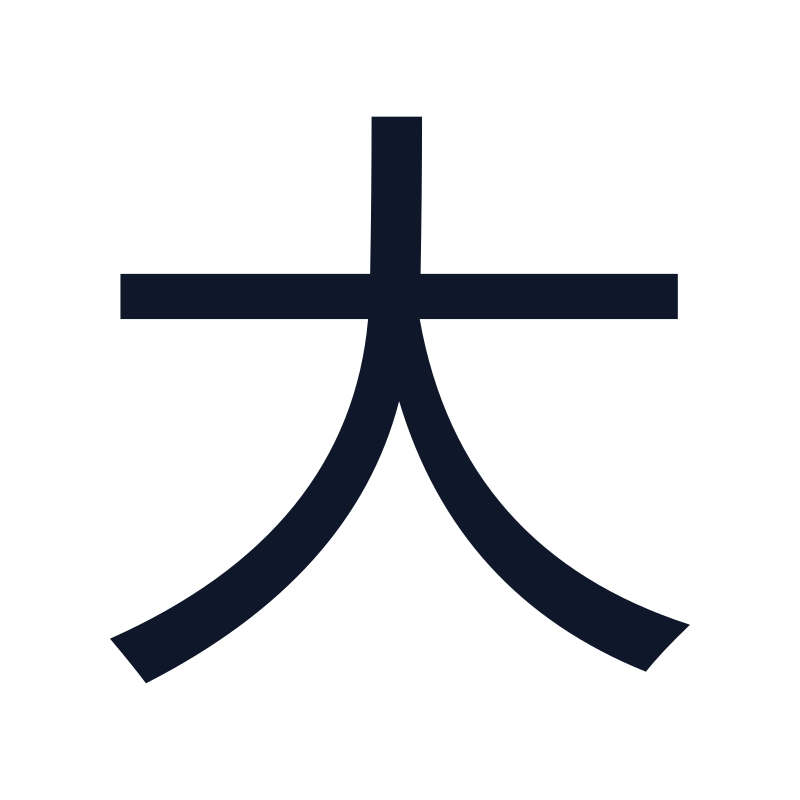 dà · U+5927
大
Person standing with arms and legs stretched wide
Kangxi Radical #37 大 (dà, "Big") is written with 3 calligraphic strokes. Originating in Shang Dynasty Oracle Bone (Jiǎgǔwén) and Zhou Bronze inscriptions (Jīnwén) to depict person standing with arms and legs stretched wide, it serves as a foundational semantic classifier in the 1716 Imperial Kangxi Dictionary. Frequent compound Hanzi characters governed by this radical include: 天 (tiān), 太 (tài), 夫 (fū), 奇 (qí).
#38 · 3 strokes
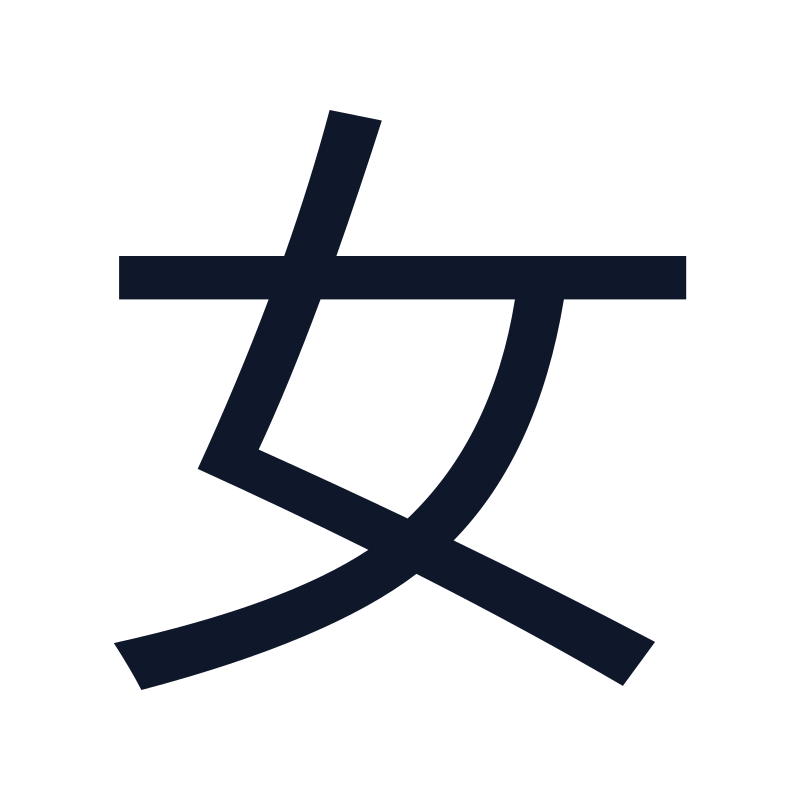 nǚ · U+5973
女
Graceful kneeling woman, feminine, maternal
Kangxi Radical #38 女 (nǚ, "Woman") is written with 3 calligraphic strokes. Originating in Shang Dynasty Oracle Bone (Jiǎgǔwén) and Zhou Bronze inscriptions (Jīnwén) to depict graceful kneeling woman, feminine, maternal, it serves as a foundational semantic classifier in the 1716 Imperial Kangxi Dictionary. Frequent compound Hanzi characters governed by this radical include: 好 (hǎo), 妈 (mā), 姐 (jiě), 姓 (xìng).
#39 · 3 strokes
 zǐ · U+5B50
子
Swaddled infant with outstretched arms, offspring
Kangxi Radical #39 子 (zǐ, "Child") is written with 3 calligraphic strokes. Originating in Shang Dynasty Oracle Bone (Jiǎgǔwén) and Zhou Bronze inscriptions (Jīnwén) to depict swaddled infant with outstretched arms, offspring, it serves as a foundational semantic classifier in the 1716 Imperial Kangxi Dictionary. Frequent compound Hanzi characters governed by this radical include: 字 (zì), 学 (xué), 孩 (hái), 孙 (sūn).
#40 · 3 strokes
 mián · U+5B80
宀
Gabled house roof, home shelter, domestic
Kangxi Radical #40 宀 (mián, "Roof") is written with 3 calligraphic strokes. Originating in Shang Dynasty Oracle Bone (Jiǎgǔwén) and Zhou Bronze inscriptions (Jīnwén) to depict gabled house roof, home shelter, domestic, it serves as a foundational semantic classifier in the 1716 Imperial Kangxi Dictionary. Frequent compound Hanzi characters governed by this radical include: 安 (ān), 家 (jiā), 室 (shì), 宝 (bǎo).
#41 · 3 strokes
 cùn · U+5BF8
寸
Thumb pulse point on the wrist, Chinese inch, rule
Kangxi Radical #41 寸 (cùn, "Inch") is written with 3 calligraphic strokes. Originating in Shang Dynasty Oracle Bone (Jiǎgǔwén) and Zhou Bronze inscriptions (Jīnwén) to depict thumb pulse point on the wrist, chinese inch, rule, it serves as a foundational semantic classifier in the 1716 Imperial Kangxi Dictionary. Frequent compound Hanzi characters governed by this radical include: 对 (duì), 导 (dǎo), 封 (fēng), 尊 (zūn).
#42 · 3 strokes
 xiǎo · U+5C0F
小
Three tiny grains of sand, minute, young
Kangxi Radical #42 小 (xiǎo, "Small") is written with 3 calligraphic strokes. Originating in Shang Dynasty Oracle Bone (Jiǎgǔwén) and Zhou Bronze inscriptions (Jīnwén) to depict three tiny grains of sand, minute, young, it serves as a foundational semantic classifier in the 1716 Imperial Kangxi Dictionary. Frequent compound Hanzi characters governed by this radical include: 少 (shǎo), 尖 (jiān), 尘 (chén), 尚 (shàng).
#43 · 3 strokes
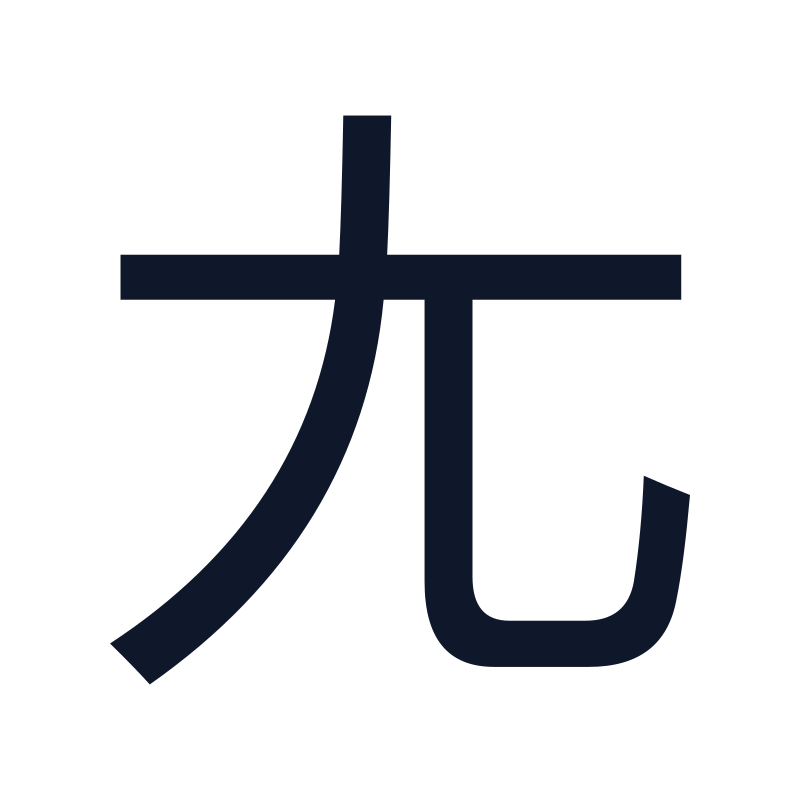 wāng · U+5C22
尢
Person with a bent or crooked leg
Kangxi Radical #43 尢 (wāng, "Lame") is written with 3 calligraphic strokes. Originating in Shang Dynasty Oracle Bone (Jiǎgǔwén) and Zhou Bronze inscriptions (Jīnwén) to depict person with a bent or crooked leg, it serves as a foundational semantic classifier in the 1716 Imperial Kangxi Dictionary. Frequent compound Hanzi characters governed by this radical include: 尤 (yóu), 就 (jiù), 尴尬 (gāngà).
#44 · 3 strokes
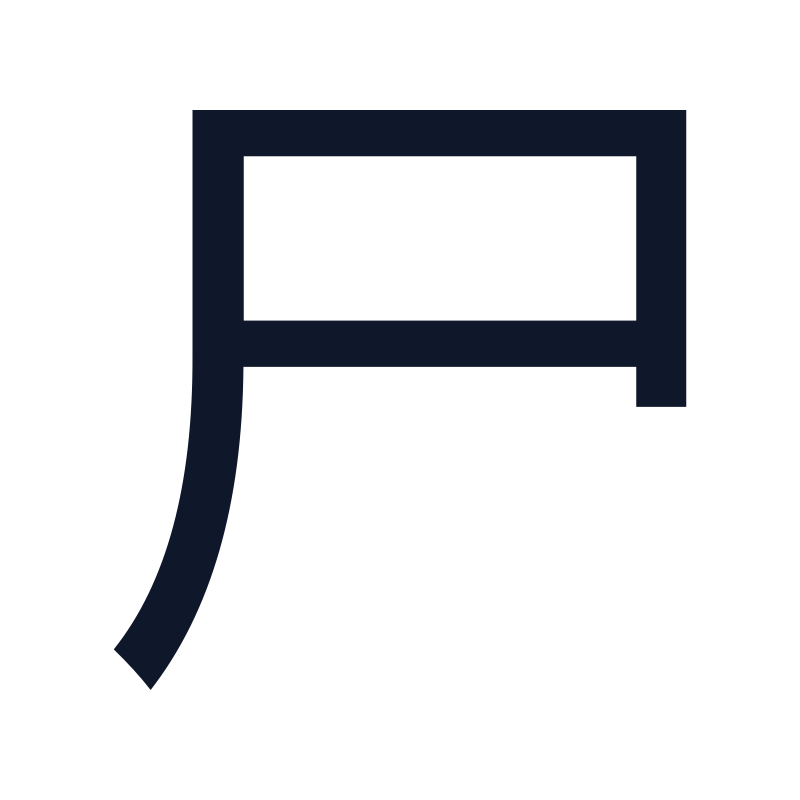 shī · U+5C38
尸
Seated or reclining human body, effigy
Kangxi Radical #44 尸 (shī, "Corpse") is written with 3 calligraphic strokes. Originating in Shang Dynasty Oracle Bone (Jiǎgǔwén) and Zhou Bronze inscriptions (Jīnwén) to depict seated or reclining human body, effigy, it serves as a foundational semantic classifier in the 1716 Imperial Kangxi Dictionary. Frequent compound Hanzi characters governed by this radical include: 尺 (chǐ), 局 (jú), 居 (jū), 屋 (wū).
#45 · 3 strokes
 chè · U+5C6E
屮
Young plant shoot breaking through soil
Kangxi Radical #45 屮 (chè, "Sprout") is written with 3 calligraphic strokes. Originating in Shang Dynasty Oracle Bone (Jiǎgǔwén) and Zhou Bronze inscriptions (Jīnwén) to depict young plant shoot breaking through soil, it serves as a foundational semantic classifier in the 1716 Imperial Kangxi Dictionary. Frequent compound Hanzi characters governed by this radical include: 屯 (tún), 逆 (nì).
#46 · 3 strokes
 shān · U+5C71
山
Three jagged mountain peaks rising skyward
Kangxi Radical #46 山 (shān, "Mountain") is written with 3 calligraphic strokes. Originating in Shang Dynasty Oracle Bone (Jiǎgǔwén) and Zhou Bronze inscriptions (Jīnwén) to depict three jagged mountain peaks rising skyward, it serves as a foundational semantic classifier in the 1716 Imperial Kangxi Dictionary. Frequent compound Hanzi characters governed by this radical include: 岁 (suì), 岛 (dǎo), 峰 (fēng), 崇 (chóng).
#47 · 3 strokes
 chuān · U+5DDB
巛
Flowing river currents between banks
Kangxi Radical #47 巛 (chuān, "River") is written with 3 calligraphic strokes. Originating in Shang Dynasty Oracle Bone (Jiǎgǔwén) and Zhou Bronze inscriptions (Jīnwén) to depict flowing river currents between banks, it serves as a foundational semantic classifier in the 1716 Imperial Kangxi Dictionary. Frequent compound Hanzi characters governed by this radical include: 州 (zhōu), 巡 (xún), 巢 (cháo).
#48 · 3 strokes
 gōng · U+5DE5
工
Carpenter's square tool, craftsmanship, labor
Kangxi Radical #48 工 (gōng, "Work") is written with 3 calligraphic strokes. Originating in Shang Dynasty Oracle Bone (Jiǎgǔwén) and Zhou Bronze inscriptions (Jīnwén) to depict carpenter's square tool, craftsmanship, labor, it serves as a foundational semantic classifier in the 1716 Imperial Kangxi Dictionary. Frequent compound Hanzi characters governed by this radical include: 左 (zuǒ), 巧 (qiǎo), 巨 (jù), 差 (chā).
#49 · 3 strokes
 jǐ · U+5DF1
己
Winding thread, personal identity, sixth stem
Kangxi Radical #49 己 (jǐ, "Oneself") is written with 3 calligraphic strokes. Originating in Shang Dynasty Oracle Bone (Jiǎgǔwén) and Zhou Bronze inscriptions (Jīnwén) to depict winding thread, personal identity, sixth stem, it serves as a foundational semantic classifier in the 1716 Imperial Kangxi Dictionary. Frequent compound Hanzi characters governed by this radical include: 已 (yǐ), 巳 (sì), 巷 (xiàng).
#50 · 3 strokes
 jīn · U+5DFE
巾
Hanging cloth kerchief, towel, textile
Kangxi Radical #50 巾 (jīn, "Turban") is written with 3 calligraphic strokes. Originating in Shang Dynasty Oracle Bone (Jiǎgǔwén) and Zhou Bronze inscriptions (Jīnwén) to depict hanging cloth kerchief, towel, textile, it serves as a foundational semantic classifier in the 1716 Imperial Kangxi Dictionary. Frequent compound Hanzi characters governed by this radical include: 市 (shì), 布 (bù), 师 (shī), 席 (xí).
#51 · 3 strokes
 gān · U+5E72
干
Forked defensive shield, dryness, stem
Kangxi Radical #51 干 (gān, "Dry") is written with 3 calligraphic strokes. Originating in Shang Dynasty Oracle Bone (Jiǎgǔwén) and Zhou Bronze inscriptions (Jīnwén) to depict forked defensive shield, dryness, stem, it serves as a foundational semantic classifier in the 1716 Imperial Kangxi Dictionary. Frequent compound Hanzi characters governed by this radical include: 平 (píng), 年 (nián), 幸 (xìng).
#52 · 3 strokes
 yāo · U+5E7A
幺
Tiny twisted silk skein, slender, young
Kangxi Radical #52 幺 (yāo, "Short Thread") is written with 3 calligraphic strokes. Originating in Shang Dynasty Oracle Bone (Jiǎgǔwén) and Zhou Bronze inscriptions (Jīnwén) to depict tiny twisted silk skein, slender, young, it serves as a foundational semantic classifier in the 1716 Imperial Kangxi Dictionary. Frequent compound Hanzi characters governed by this radical include: 幻 (huàn), 幼 (yòu), 幽 (yōu).
#53 · 3 strokes
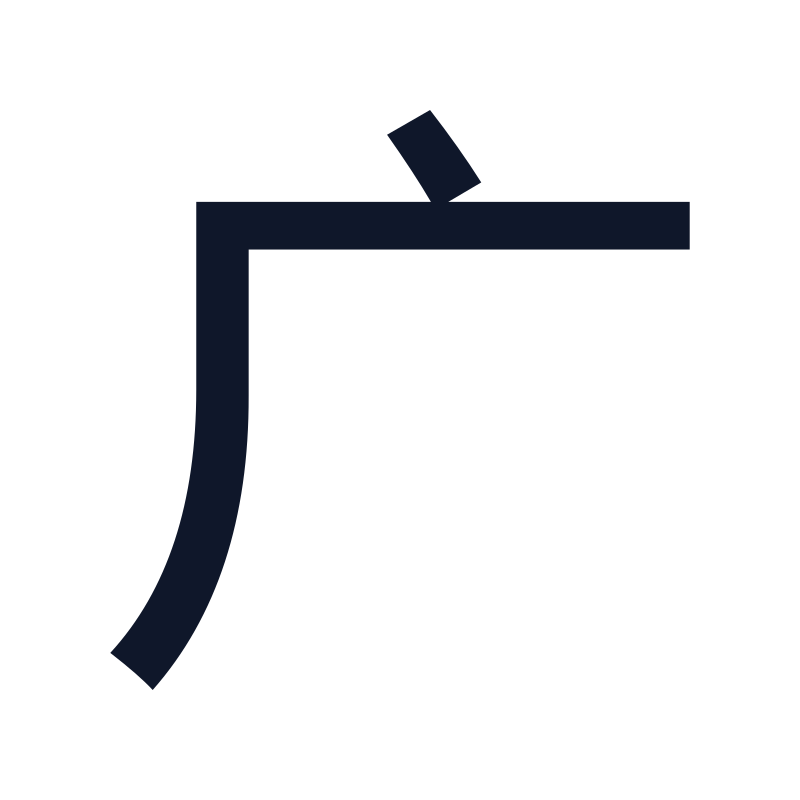 guǎng · U+5E7F
广
Sloping roof built against a cliff wall, wide
Kangxi Radical #53 广 (guǎng, "Dotted Cliff") is written with 3 calligraphic strokes. Originating in Shang Dynasty Oracle Bone (Jiǎgǔwén) and Zhou Bronze inscriptions (Jīnwén) to depict sloping roof built against a cliff wall, wide, it serves as a foundational semantic classifier in the 1716 Imperial Kangxi Dictionary. Frequent compound Hanzi characters governed by this radical include: 店 (diàn), 府 (fǔ), 度 (dù), 庭 (tíng).
#54 · 3 strokes
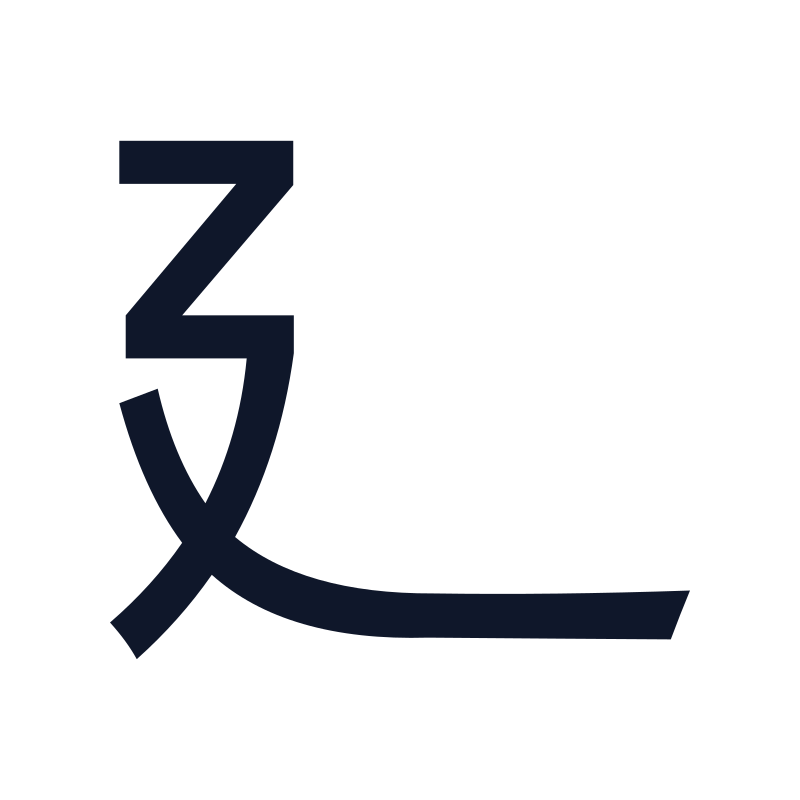 yǐn · U+5EF4
廴
Extended road journey, marching forward
Kangxi Radical #54 廴 (yǐn, "Long Stride") is written with 3 calligraphic strokes. Originating in Shang Dynasty Oracle Bone (Jiǎgǔwén) and Zhou Bronze inscriptions (Jīnwén) to depict extended road journey, marching forward, it serves as a foundational semantic classifier in the 1716 Imperial Kangxi Dictionary. Frequent compound Hanzi characters governed by this radical include: 延 (yán), 廷 (tíng), 建 (jiàn).
#55 · 3 strokes
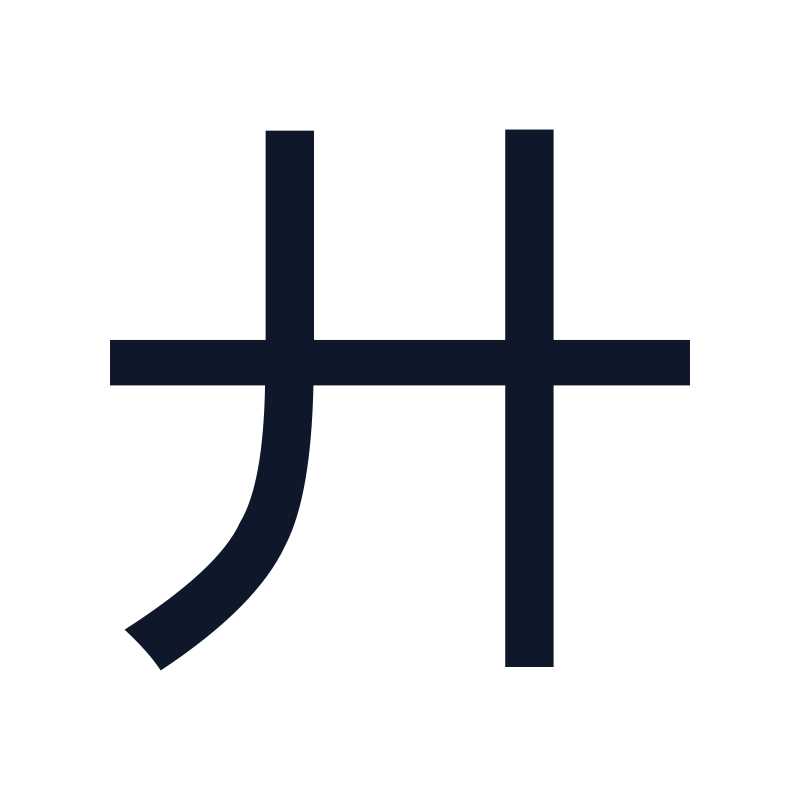 gǒng · U+5EFE
廾
Two hands raised together in respectful offering
Kangxi Radical #55 廾 (gǒng, "Two Hands") is written with 3 calligraphic strokes. Originating in Shang Dynasty Oracle Bone (Jiǎgǔwén) and Zhou Bronze inscriptions (Jīnwén) to depict two hands raised together in respectful offering, it serves as a foundational semantic classifier in the 1716 Imperial Kangxi Dictionary. Frequent compound Hanzi characters governed by this radical include: 开 (kāi), 异 (yì), 弃 (qì), 弄 (nòng).
#56 · 3 strokes
 yì · U+5F0B
弋
Hunting arrow attached to a retrieving cord
Kangxi Radical #56 弋 (yì, "Shoot") is written with 3 calligraphic strokes. Originating in Shang Dynasty Oracle Bone (Jiǎgǔwén) and Zhou Bronze inscriptions (Jīnwén) to depict hunting arrow attached to a retrieving cord, it serves as a foundational semantic classifier in the 1716 Imperial Kangxi Dictionary. Frequent compound Hanzi characters governed by this radical include: 式 (shì), 弑 (shì).
#57 · 3 strokes
 gōng · U+5F13
弓
Curved wooden archery bow, tension
Kangxi Radical #57 弓 (gōng, "Bow") is written with 3 calligraphic strokes. Originating in Shang Dynasty Oracle Bone (Jiǎgǔwén) and Zhou Bronze inscriptions (Jīnwén) to depict curved wooden archery bow, tension, it serves as a foundational semantic classifier in the 1716 Imperial Kangxi Dictionary. Frequent compound Hanzi characters governed by this radical include: 引 (yǐn), 张 (zhāng), 强 (qiáng), 弹 (dàn).
#58 · 3 strokes
 jì · U+5F50
彐
Pointed animal snout, pig's head
Kangxi Radical #58 彐 (jì, "Snout") is written with 3 calligraphic strokes. Originating in Shang Dynasty Oracle Bone (Jiǎgǔwén) and Zhou Bronze inscriptions (Jīnwén) to depict pointed animal snout, pig's head, it serves as a foundational semantic classifier in the 1716 Imperial Kangxi Dictionary. Frequent compound Hanzi characters governed by this radical include: 归 (guī), 当 (dāng), 录 (lù).
#59 · 3 strokes
 shān · U+5F61
彡
Three flowing strokes of hair, feathers, ornament
Kangxi Radical #59 彡 (shān, "Bristle") is written with 3 calligraphic strokes. Originating in Shang Dynasty Oracle Bone (Jiǎgǔwén) and Zhou Bronze inscriptions (Jīnwén) to depict three flowing strokes of hair, feathers, ornament, it serves as a foundational semantic classifier in the 1716 Imperial Kangxi Dictionary. Frequent compound Hanzi characters governed by this radical include: 形 (xíng), 彩 (cǎi), 影 (yǐng), 彬 (bīn).
#60 · 3 strokes
 chì · U+5F73
彳
Left foot taking a step at a crossroads
Kangxi Radical #60 彳 (chì, "Step") is written with 3 calligraphic strokes. Originating in Shang Dynasty Oracle Bone (Jiǎgǔwén) and Zhou Bronze inscriptions (Jīnwén) to depict left foot taking a step at a crossroads, it serves as a foundational semantic classifier in the 1716 Imperial Kangxi Dictionary. Frequent compound Hanzi characters governed by this radical include: 往 (wǎng), 待 (dài), 很 (hěn), 德 (dé).
#61 · 4 strokes
 xīn · U+5FC3
心
Human heart chambers, mind, emotion, spirit
Kangxi Radical #61 心 (xīn, "Heart") is written with 4 calligraphic strokes. Originating in Shang Dynasty Oracle Bone (Jiǎgǔwén) and Zhou Bronze inscriptions (Jīnwén) to depict human heart chambers, mind, emotion, spirit, it serves as a foundational semantic classifier in the 1716 Imperial Kangxi Dictionary. Frequent compound Hanzi characters governed by this radical include: 必 (bì), 思 (sī), 想 (xiǎng), 情 (qíng).
#62 · 4 strokes
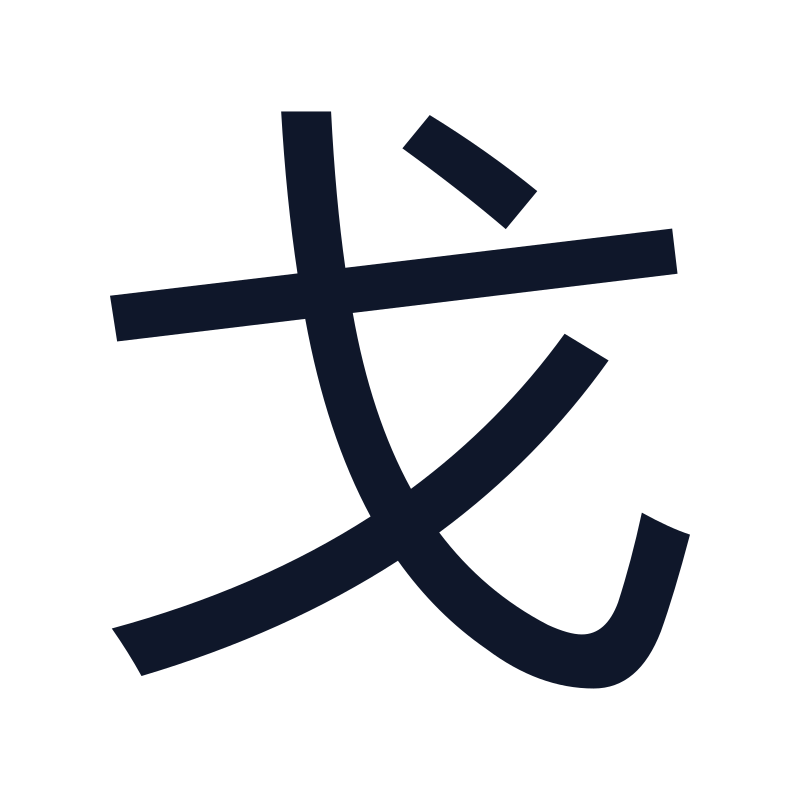 gē · U+6208
戈
Ancient bronze dagger-axe polearm, warfare
Kangxi Radical #62 戈 (gē, "Halberd") is written with 4 calligraphic strokes. Originating in Shang Dynasty Oracle Bone (Jiǎgǔwén) and Zhou Bronze inscriptions (Jīnwén) to depict ancient bronze dagger-axe polearm, warfare, it serves as a foundational semantic classifier in the 1716 Imperial Kangxi Dictionary. Frequent compound Hanzi characters governed by this radical include: 成 (chéng), 我 (wǒ), 战 (zhàn), 或 (huò).
#63 · 4 strokes
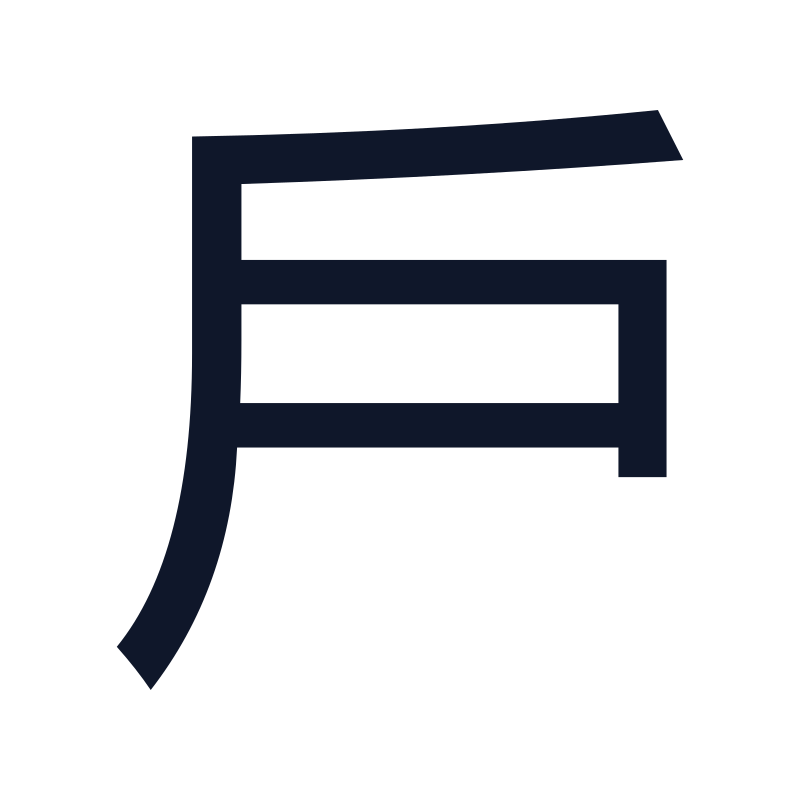 hù · U+6236
戶
Single-leaf wooden door, household family
Kangxi Radical #63 戶 (hù, "Door") is written with 4 calligraphic strokes. Originating in Shang Dynasty Oracle Bone (Jiǎgǔwén) and Zhou Bronze inscriptions (Jīnwén) to depict single-leaf wooden door, household family, it serves as a foundational semantic classifier in the 1716 Imperial Kangxi Dictionary. Frequent compound Hanzi characters governed by this radical include: 房 (fáng), 所 (suǒ), 扇 (shàn), 扉 (fēi).
#64 · 4 strokes
 shǒu · U+624B
手
Five-fingered human hand, action, skill
Kangxi Radical #64 手 (shǒu, "Hand") is written with 4 calligraphic strokes. Originating in Shang Dynasty Oracle Bone (Jiǎgǔwén) and Zhou Bronze inscriptions (Jīnwén) to depict five-fingered human hand, action, skill, it serves as a foundational semantic classifier in the 1716 Imperial Kangxi Dictionary. Frequent compound Hanzi characters governed by this radical include: 打 (dǎ), 找 (zhǎo), 把 (bǎ), 拿 (ná).
#65 · 4 strokes
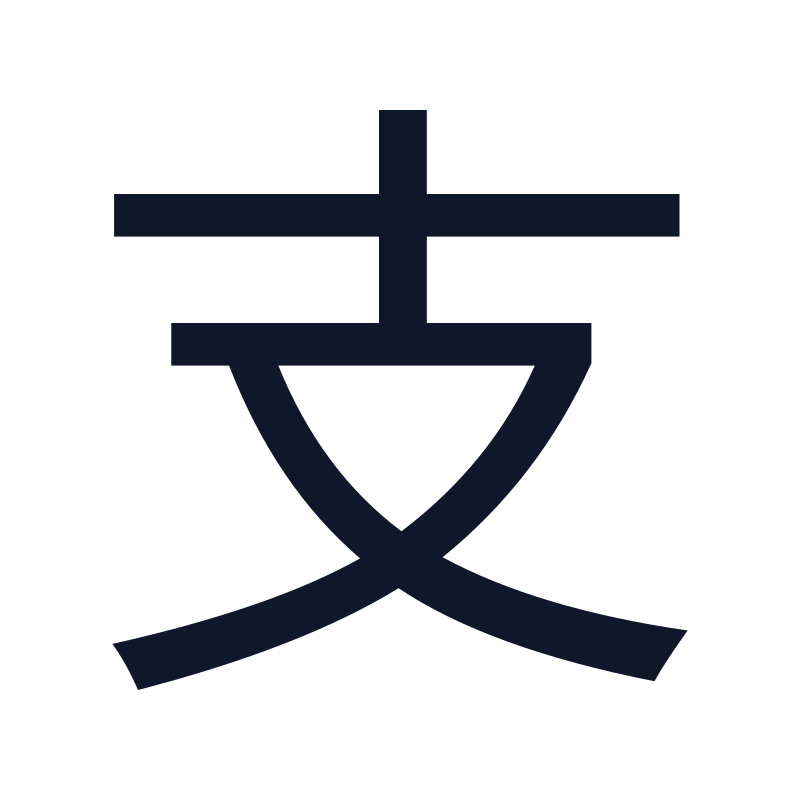 zhī · U+652F
支
Hand holding a bamboo branch, support
Kangxi Radical #65 支 (zhī, "Branch") is written with 4 calligraphic strokes. Originating in Shang Dynasty Oracle Bone (Jiǎgǔwén) and Zhou Bronze inscriptions (Jīnwén) to depict hand holding a bamboo branch, support, it serves as a foundational semantic classifier in the 1716 Imperial Kangxi Dictionary. Frequent compound Hanzi characters governed by this radical include: 支 (zhī), 技 (jì), 枝 (zhī).
#66 · 4 strokes
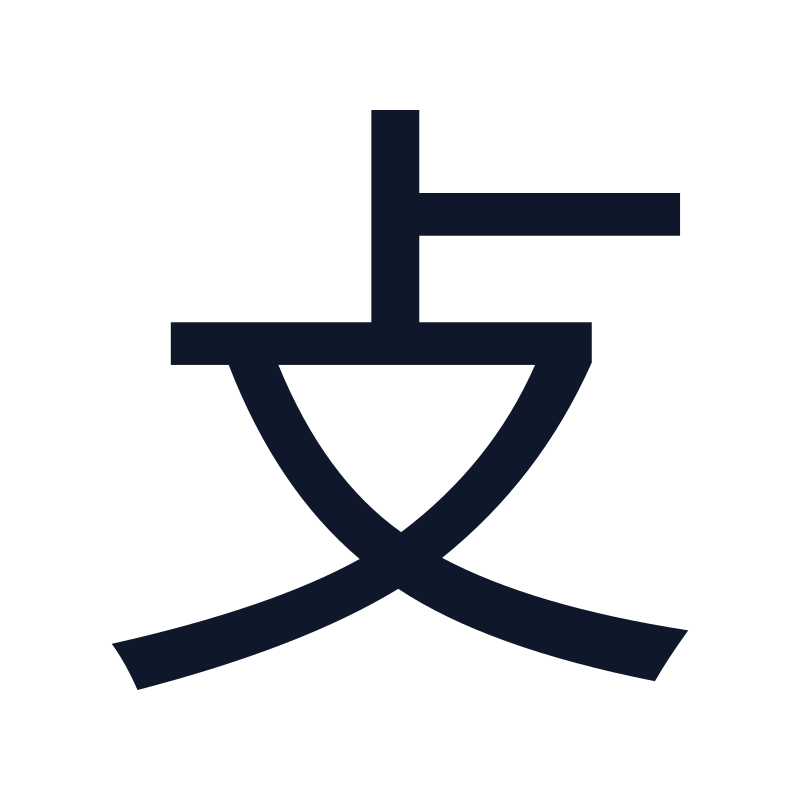 pū · U+6534
攴
Hand holding a light rod, tapping, governing
Kangxi Radical #66 攴 (pū, "Rap") is written with 4 calligraphic strokes. Originating in Shang Dynasty Oracle Bone (Jiǎgǔwén) and Zhou Bronze inscriptions (Jīnwén) to depict hand holding a light rod, tapping, governing, it serves as a foundational semantic classifier in the 1716 Imperial Kangxi Dictionary. Frequent compound Hanzi characters governed by this radical include: 收 (shōu), 改 (gǎi), 放 (fàng), 教 (jiāo).
#67 · 4 strokes
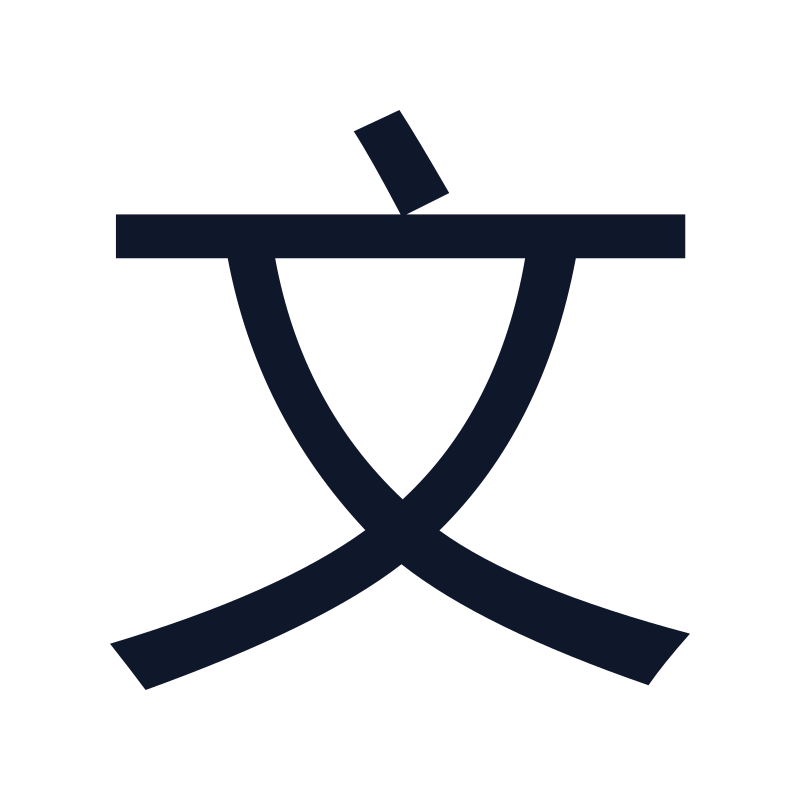 wén · U+6587
文
Intersecting strokes, written literature, civilization
Kangxi Radical #67 文 (wén, "Script") is written with 4 calligraphic strokes. Originating in Shang Dynasty Oracle Bone (Jiǎgǔwén) and Zhou Bronze inscriptions (Jīnwén) to depict intersecting strokes, written literature, civilization, it serves as a foundational semantic classifier in the 1716 Imperial Kangxi Dictionary. Frequent compound Hanzi characters governed by this radical include: 文 (wén), 斋 (zhāi), 斑 (bān).
#68 · 4 strokes
 dǒu · U+6597
斗
Long-handled ladle for measuring grain or wine
Kangxi Radical #68 斗 (dǒu, "Dipper") is written with 4 calligraphic strokes. Originating in Shang Dynasty Oracle Bone (Jiǎgǔwén) and Zhou Bronze inscriptions (Jīnwén) to depict long-handled ladle for measuring grain or wine, it serves as a foundational semantic classifier in the 1716 Imperial Kangxi Dictionary. Frequent compound Hanzi characters governed by this radical include: 料 (liào), 斜 (xié), 斟 (zhēn).
#69 · 4 strokes
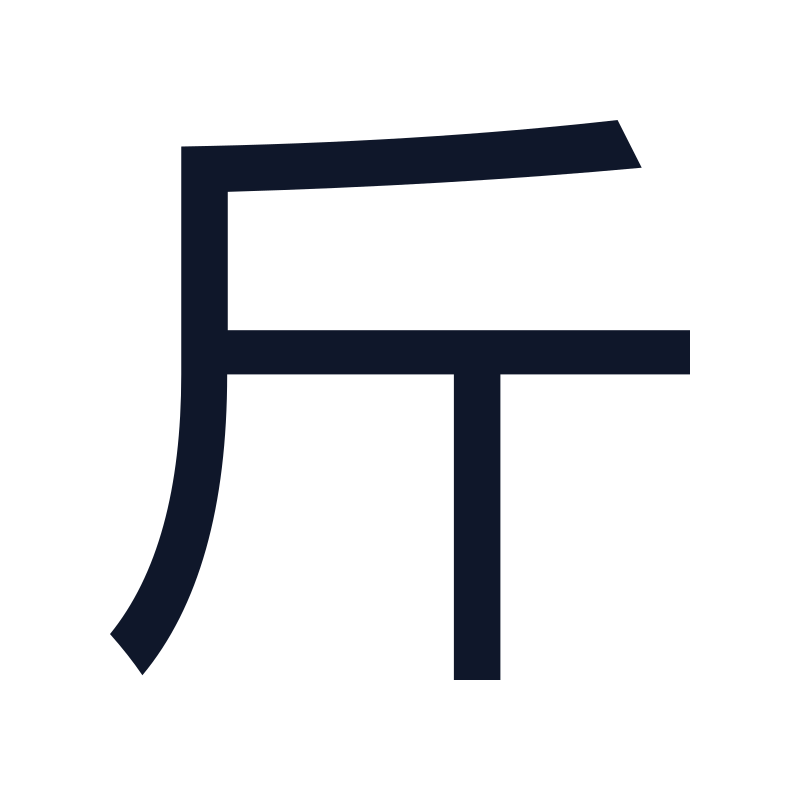 jīn · U+65A4
斤
Woodcutter's axe, catty weight measure (~500g)
Kangxi Radical #69 斤 (jīn, "Axe") is written with 4 calligraphic strokes. Originating in Shang Dynasty Oracle Bone (Jiǎgǔwén) and Zhou Bronze inscriptions (Jīnwén) to depict woodcutter's axe, catty weight measure (~500g), it serves as a foundational semantic classifier in the 1716 Imperial Kangxi Dictionary. Frequent compound Hanzi characters governed by this radical include: 斥 (chì), 斩 (zhǎn), 断 (duàn), 新 (xīn).
#70 · 4 strokes
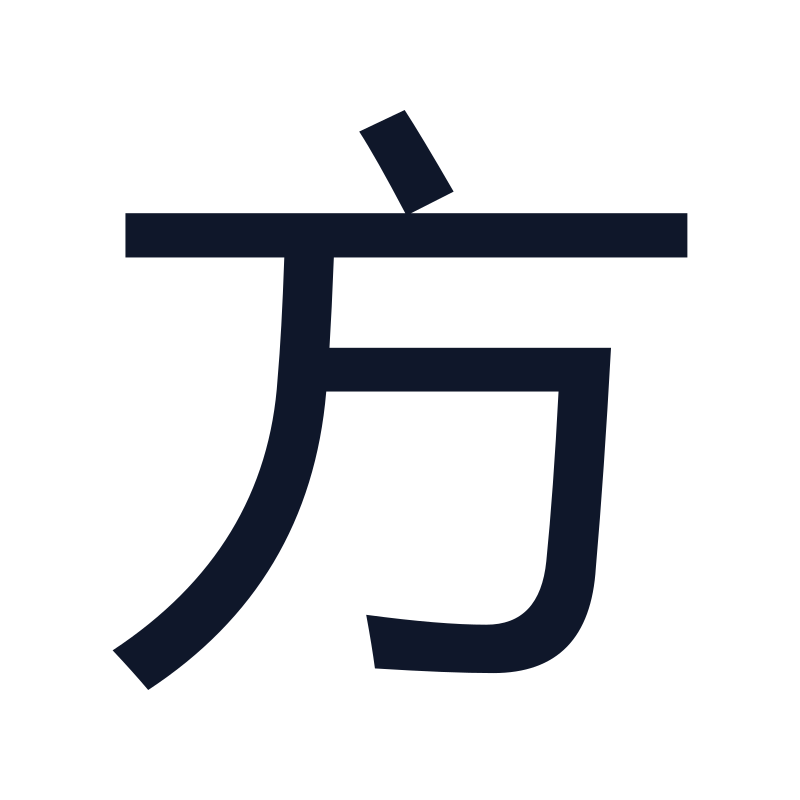 fāng · U+65B9
方
Square compass direction, place, method
Kangxi Radical #70 方 (fāng, "Square") is written with 4 calligraphic strokes. Originating in Shang Dynasty Oracle Bone (Jiǎgǔwén) and Zhou Bronze inscriptions (Jīnwén) to depict square compass direction, place, method, it serves as a foundational semantic classifier in the 1716 Imperial Kangxi Dictionary. Frequent compound Hanzi characters governed by this radical include: 施 (shī), 旁 (páng), 旅 (lǚ), 族 (zú).
#71 · 4 strokes
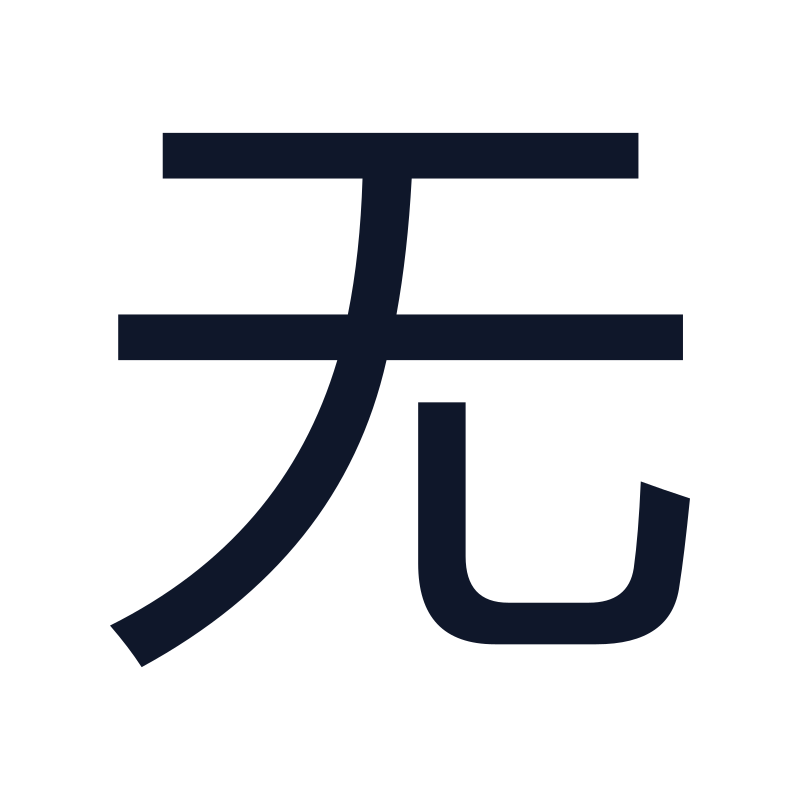 wú · U+65E0
无
Absence, emptiness, nothingness
Kangxi Radical #71 无 (wú, "Not") is written with 4 calligraphic strokes. Originating in Shang Dynasty Oracle Bone (Jiǎgǔwén) and Zhou Bronze inscriptions (Jīnwén) to depict absence, emptiness, nothingness, it serves as a foundational semantic classifier in the 1716 Imperial Kangxi Dictionary. Frequent compound Hanzi characters governed by this radical include: 无 (wú), 既 (jì).
#72 · 4 strokes
 rì · U+65E5
日
Solar orb in the sky, daytime, daily cycle
Kangxi Radical #72 日 (rì, "Sun") is written with 4 calligraphic strokes. Originating in Shang Dynasty Oracle Bone (Jiǎgǔwén) and Zhou Bronze inscriptions (Jīnwén) to depict solar orb in the sky, daytime, daily cycle, it serves as a foundational semantic classifier in the 1716 Imperial Kangxi Dictionary. Frequent compound Hanzi characters governed by this radical include: 明 (míng), 时 (shí), 早 (zǎo), 星 (xīng).
#73 · 4 strokes
 yuē · U+66F0
曰
Mouth exhaling spoken words, speech
Kangxi Radical #73 曰 (yuē, "Say") is written with 4 calligraphic strokes. Originating in Shang Dynasty Oracle Bone (Jiǎgǔwén) and Zhou Bronze inscriptions (Jīnwén) to depict mouth exhaling spoken words, speech, it serves as a foundational semantic classifier in the 1716 Imperial Kangxi Dictionary. Frequent compound Hanzi characters governed by this radical include: 曲 (qǔ), 更 (gèng), 曾 (céng), 最 (zuì).
#74 · 4 strokes
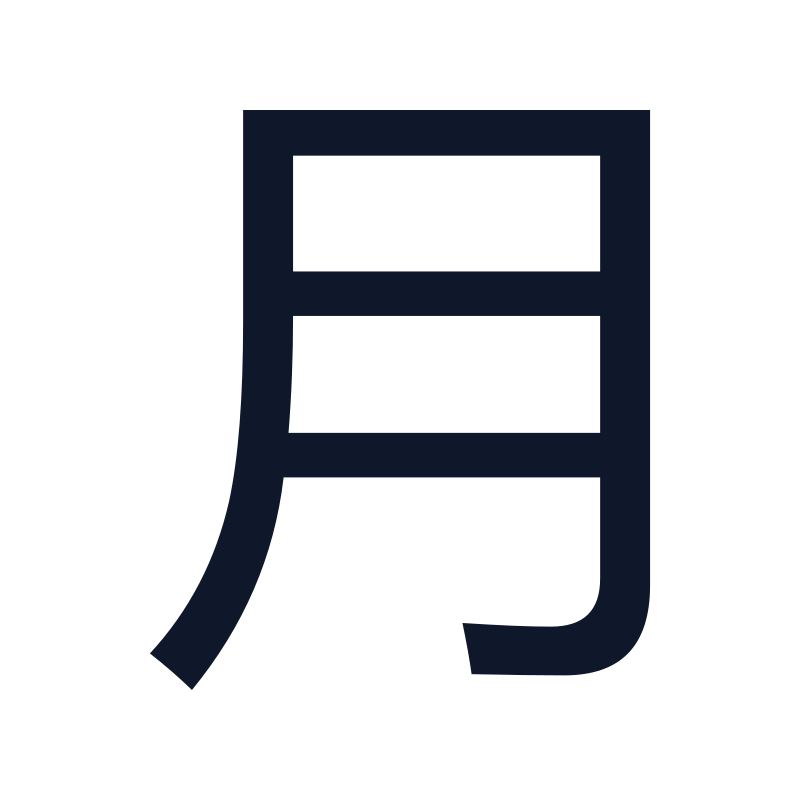 yuè · U+6708
月
Crescent moon, lunar month, night light
Kangxi Radical #74 月 (yuè, "Moon") is written with 4 calligraphic strokes. Originating in Shang Dynasty Oracle Bone (Jiǎgǔwén) and Zhou Bronze inscriptions (Jīnwén) to depict crescent moon, lunar month, night light, it serves as a foundational semantic classifier in the 1716 Imperial Kangxi Dictionary. Frequent compound Hanzi characters governed by this radical include: 有 (yǒu), 朋 (péng), 服 (fú), 期 (qī).
#75 · 4 strokes
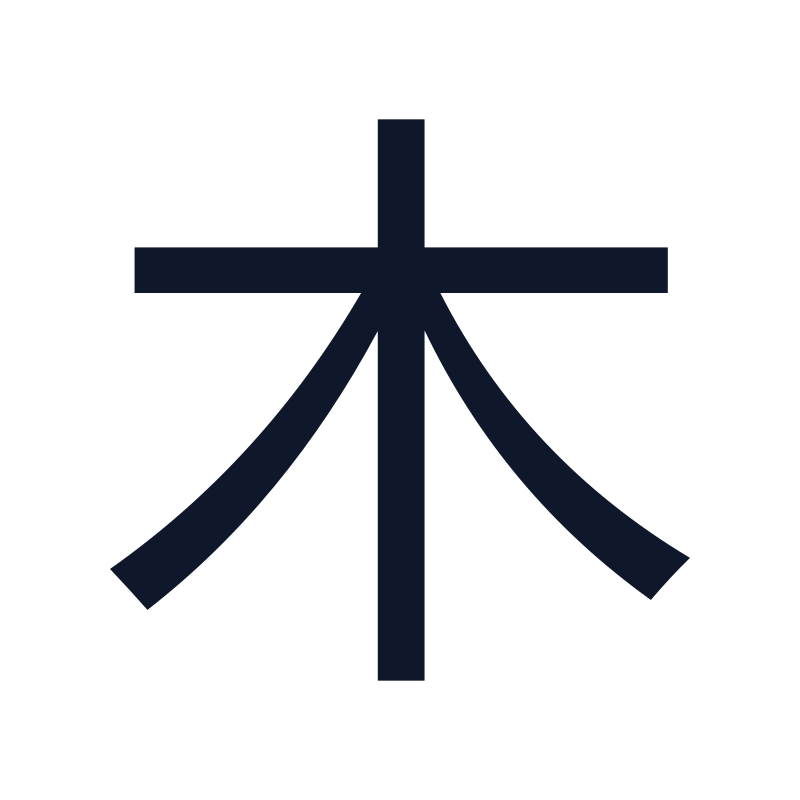 mù · U+6728
木
Tree with canopy branches above and roots below
Kangxi Radical #75 木 (mù, "Tree") is written with 4 calligraphic strokes. Originating in Shang Dynasty Oracle Bone (Jiǎgǔwén) and Zhou Bronze inscriptions (Jīnwén) to depict tree with canopy branches above and roots below, it serves as a foundational semantic classifier in the 1716 Imperial Kangxi Dictionary. Frequent compound Hanzi characters governed by this radical include: 本 (běn), 林 (lín), 森 (sēn), 树 (shù).
#76 · 4 strokes
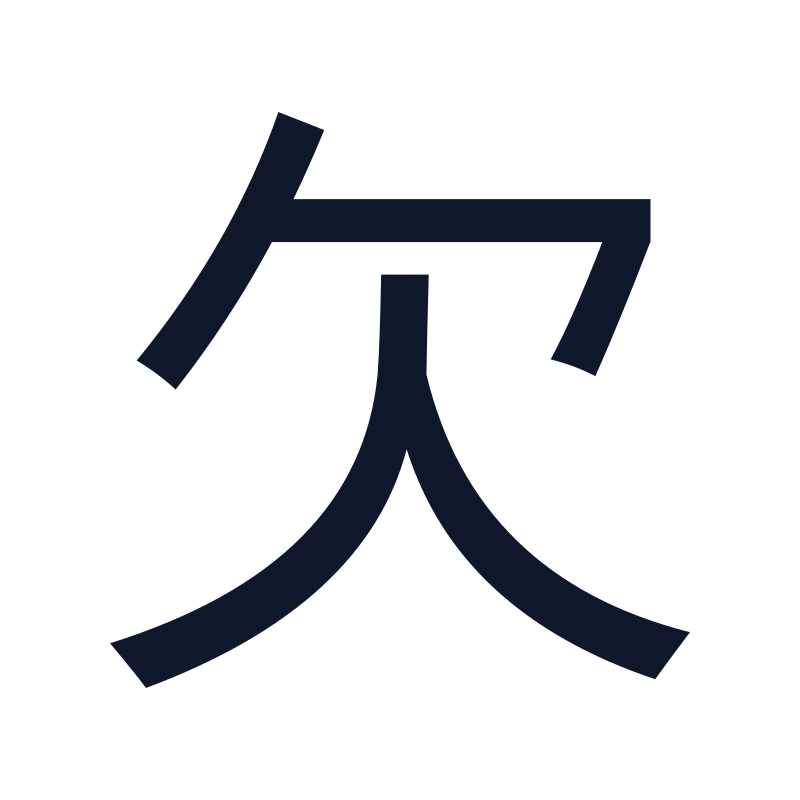 qiàn · U+6B20
欠
Person opening mouth to yawn, owing, lacking
Kangxi Radical #76 欠 (qiàn, "Lack") is written with 4 calligraphic strokes. Originating in Shang Dynasty Oracle Bone (Jiǎgǔwén) and Zhou Bronze inscriptions (Jīnwén) to depict person opening mouth to yawn, owing, lacking, it serves as a foundational semantic classifier in the 1716 Imperial Kangxi Dictionary. Frequent compound Hanzi characters governed by this radical include: 次 (cì), 欢 (huān), 歌 (gē), 欲 (yù).
#77 · 4 strokes
 zhǐ · U+6B62
止
Footprint resting on the ground, halt, cease
Kangxi Radical #77 止 (zhǐ, "Stop") is written with 4 calligraphic strokes. Originating in Shang Dynasty Oracle Bone (Jiǎgǔwén) and Zhou Bronze inscriptions (Jīnwén) to depict footprint resting on the ground, halt, cease, it serves as a foundational semantic classifier in the 1716 Imperial Kangxi Dictionary. Frequent compound Hanzi characters governed by this radical include: 正 (zhèng), 此 (cǐ), 步 (bù), 武 (wǔ).
#78 · 4 strokes
 dǎi · U+6B79
歹
Shattered bone fragments, decay, peril
Kangxi Radical #78 歹 (dǎi, "Death") is written with 4 calligraphic strokes. Originating in Shang Dynasty Oracle Bone (Jiǎgǔwén) and Zhou Bronze inscriptions (Jīnwén) to depict shattered bone fragments, decay, peril, it serves as a foundational semantic classifier in the 1716 Imperial Kangxi Dictionary. Frequent compound Hanzi characters governed by this radical include: 死 (sǐ), 残 (cán), 殊 (shū), 殖 (zhí).
#79 · 4 strokes
 shū · U+6BB3
殳
Hand brandishing a lance or club to strike
Kangxi Radical #79 殳 (shū, "Weapon") is written with 4 calligraphic strokes. Originating in Shang Dynasty Oracle Bone (Jiǎgǔwén) and Zhou Bronze inscriptions (Jīnwén) to depict hand brandishing a lance or club to strike, it serves as a foundational semantic classifier in the 1716 Imperial Kangxi Dictionary. Frequent compound Hanzi characters governed by this radical include: 段 (duàn), 殷 (yīn), 毁 (huǐ), 毅 (yì).
#80 · 4 strokes
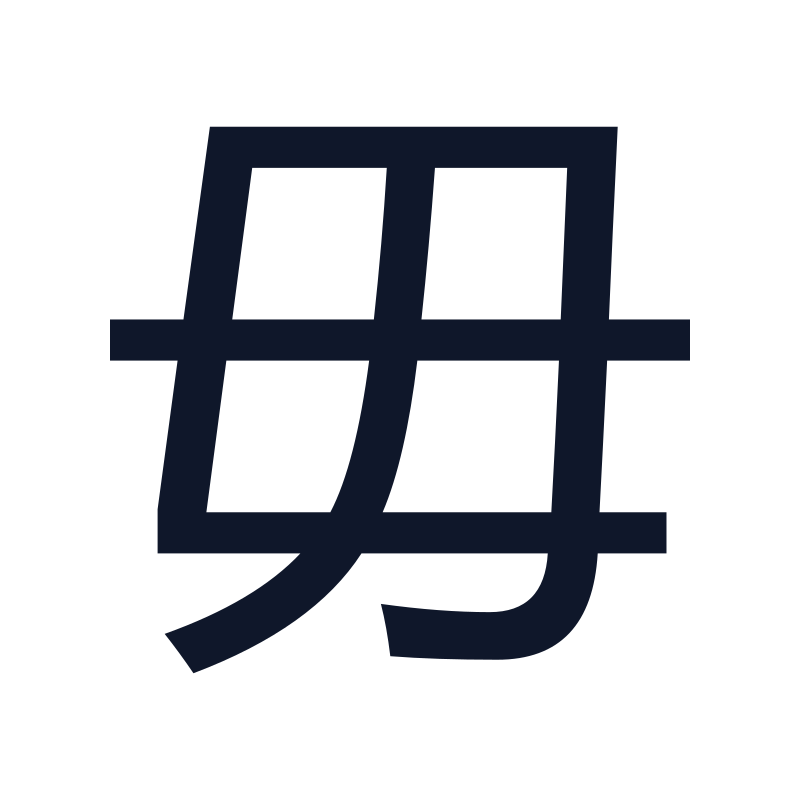 wú · U+6BCB
毋
Prohibition command, nurturing mother figure
Kangxi Radical #80 毋 (wú, "Do Not") is written with 4 calligraphic strokes. Originating in Shang Dynasty Oracle Bone (Jiǎgǔwén) and Zhou Bronze inscriptions (Jīnwén) to depict prohibition command, nurturing mother figure, it serves as a foundational semantic classifier in the 1716 Imperial Kangxi Dictionary. Frequent compound Hanzi characters governed by this radical include: 母 (mǔ), 每 (měi), 毒 (dú), 毓 (yù).
#81 · 4 strokes
 bǐ · U+6BD4
比
Two people standing side by side in comparison
Kangxi Radical #81 比 (bǐ, "Compare") is written with 4 calligraphic strokes. Originating in Shang Dynasty Oracle Bone (Jiǎgǔwén) and Zhou Bronze inscriptions (Jīnwén) to depict two people standing side by side in comparison, it serves as a foundational semantic classifier in the 1716 Imperial Kangxi Dictionary. Frequent compound Hanzi characters governed by this radical include: 毕 (bì), 毙 (bì), 毗 (pí).
#82 · 4 strokes
 máo · U+6BDB
毛
Fine animal hair, wool, down feather
Kangxi Radical #82 毛 (máo, "Fur") is written with 4 calligraphic strokes. Originating in Shang Dynasty Oracle Bone (Jiǎgǔwén) and Zhou Bronze inscriptions (Jīnwén) to depict fine animal hair, wool, down feather, it serves as a foundational semantic classifier in the 1716 Imperial Kangxi Dictionary. Frequent compound Hanzi characters governed by this radical include: 毫 (háo), 毯 (tǎn), 毡 (zhān).
#83 · 4 strokes
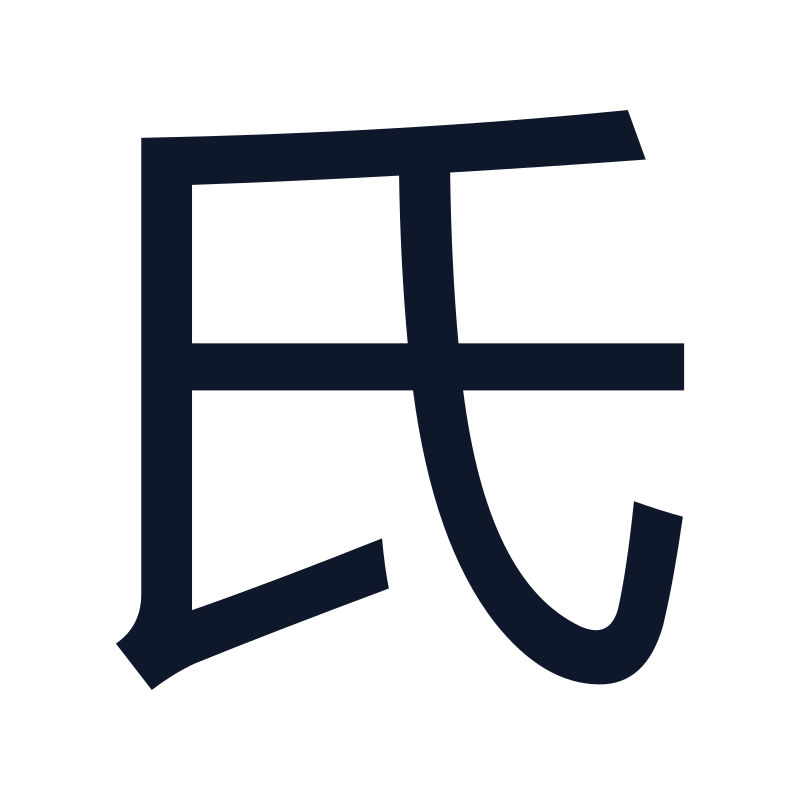 shì · U+6C0F
氏
Ancestral family lineage, clan surname
Kangxi Radical #83 氏 (shì, "Clan") is written with 4 calligraphic strokes. Originating in Shang Dynasty Oracle Bone (Jiǎgǔwén) and Zhou Bronze inscriptions (Jīnwén) to depict ancestral family lineage, clan surname, it serves as a foundational semantic classifier in the 1716 Imperial Kangxi Dictionary. Frequent compound Hanzi characters governed by this radical include: 民 (mín), 氓 (máng).
#84 · 4 strokes
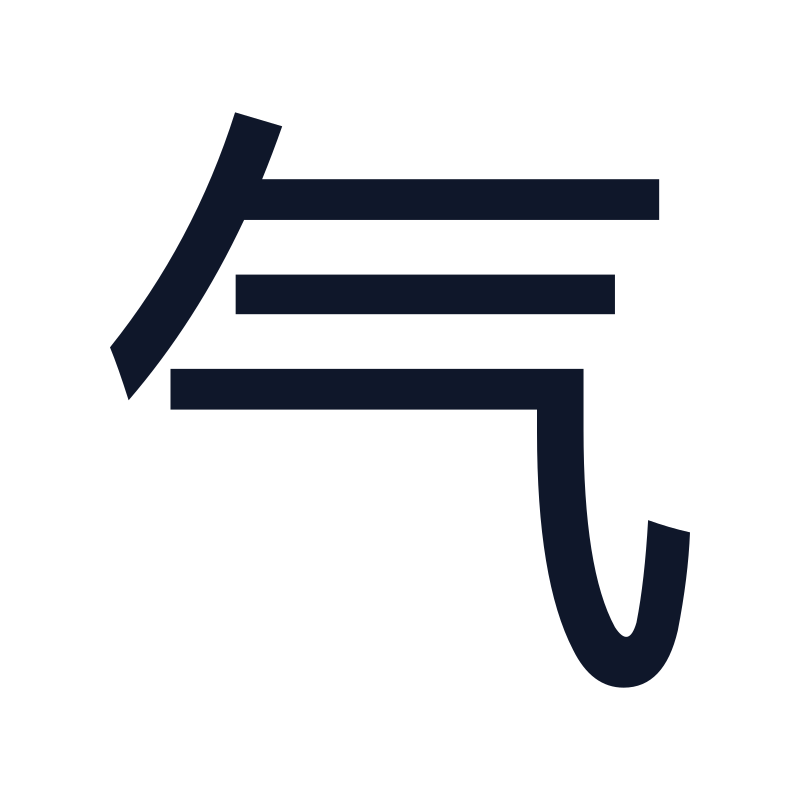 qì · U+6C14
气
Rising cloud vapors, breath, vital life force
Kangxi Radical #84 气 (qì, "Steam") is written with 4 calligraphic strokes. Originating in Shang Dynasty Oracle Bone (Jiǎgǔwén) and Zhou Bronze inscriptions (Jīnwén) to depict rising cloud vapors, breath, vital life force, it serves as a foundational semantic classifier in the 1716 Imperial Kangxi Dictionary. Frequent compound Hanzi characters governed by this radical include: 气 (qì), 氧 (yǎng), 氢 (qīng), 氛 (fēn).
#85 · 4 strokes
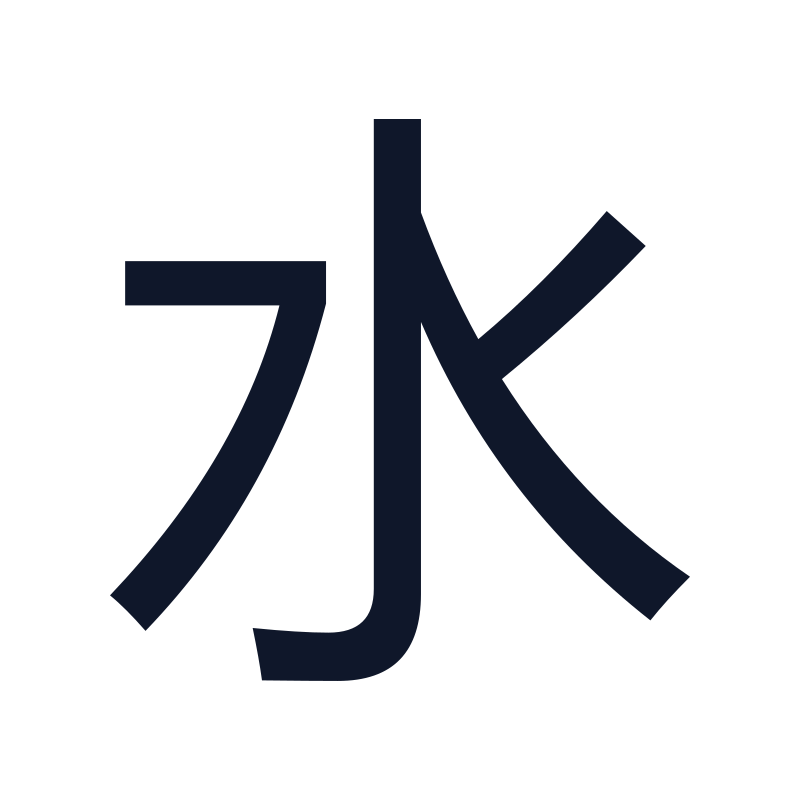 shuǐ · U+6C34
水
Flowing river stream with eddies, liquid
Kangxi Radical #85 水 (shuǐ, "Water") is written with 4 calligraphic strokes. Originating in Shang Dynasty Oracle Bone (Jiǎgǔwén) and Zhou Bronze inscriptions (Jīnwén) to depict flowing river stream with eddies, liquid, it serves as a foundational semantic classifier in the 1716 Imperial Kangxi Dictionary. Frequent compound Hanzi characters governed by this radical include: 河 (hé), 海 (hǎi), 湖 (hú), 洗 (xǐ).
#86 · 4 strokes
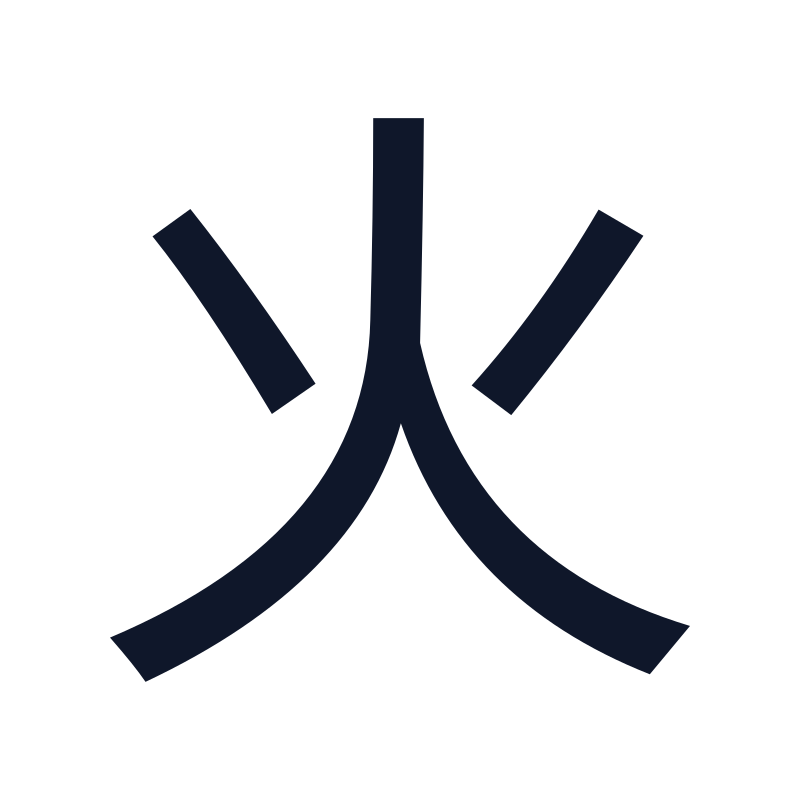 huǒ · U+706B
火
Blazing campfire flames rising upward, heat
Kangxi Radical #86 火 (huǒ, "Fire") is written with 4 calligraphic strokes. Originating in Shang Dynasty Oracle Bone (Jiǎgǔwén) and Zhou Bronze inscriptions (Jīnwén) to depict blazing campfire flames rising upward, heat, it serves as a foundational semantic classifier in the 1716 Imperial Kangxi Dictionary. Frequent compound Hanzi characters governed by this radical include: 灯 (dēng), 烧 (shāo), 热 (rè), 炎 (yán).
#87 · 4 strokes
 zhǎo · U+722A
爪
Hand reaching downward or bird talons gripping
Kangxi Radical #87 爪 (zhǎo, "Claw") is written with 4 calligraphic strokes. Originating in Shang Dynasty Oracle Bone (Jiǎgǔwén) and Zhou Bronze inscriptions (Jīnwén) to depict hand reaching downward or bird talons gripping, it serves as a foundational semantic classifier in the 1716 Imperial Kangxi Dictionary. Frequent compound Hanzi characters governed by this radical include: 爬 (pá), 爱 (ài), 爵 (jué).
#88 · 4 strokes
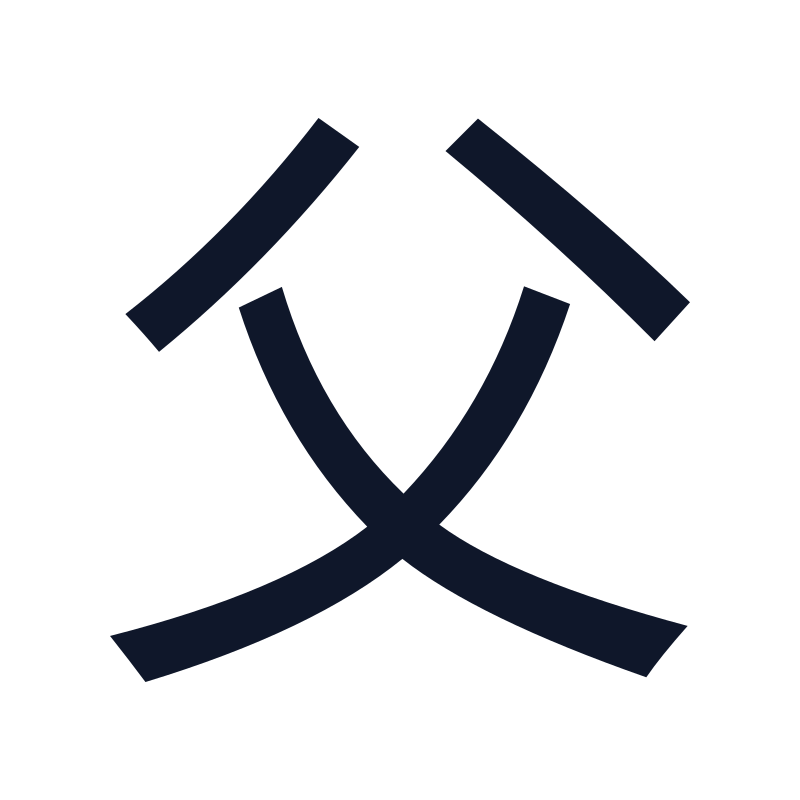 fù · U+7236
父
Hand holding a ceremonial stone axe of authority
Kangxi Radical #88 父 (fù, "Father") is written with 4 calligraphic strokes. Originating in Shang Dynasty Oracle Bone (Jiǎgǔwén) and Zhou Bronze inscriptions (Jīnwén) to depict hand holding a ceremonial stone axe of authority, it serves as a foundational semantic classifier in the 1716 Imperial Kangxi Dictionary. Frequent compound Hanzi characters governed by this radical include: 爸 (bà), 爷 (yé), 爹 (diē).
#89 · 4 strokes
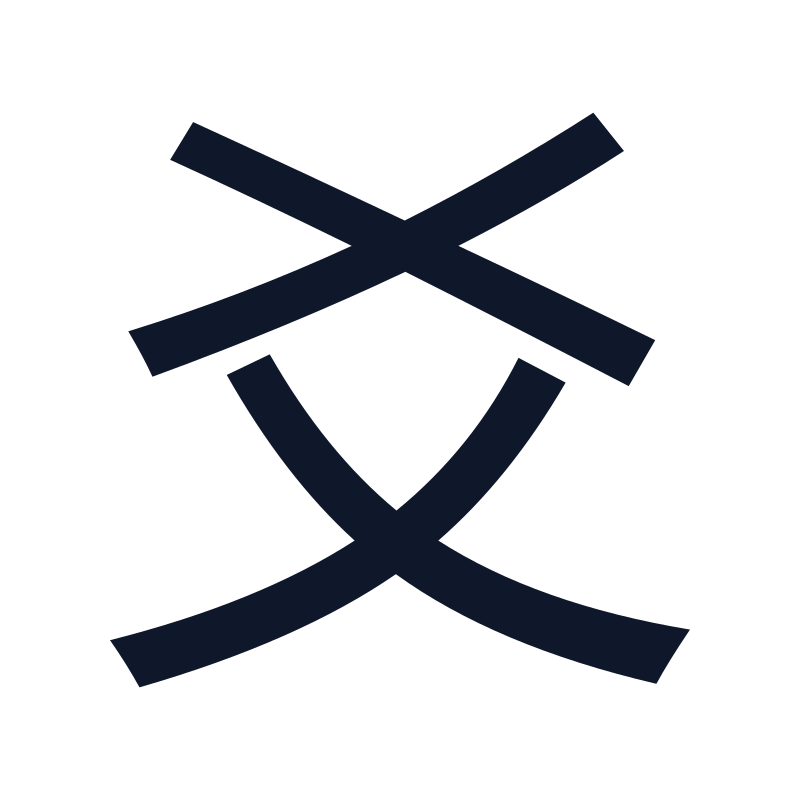 yáo · U+723B
爻
Intertwined bamboo tally sticks, I Ching lines
Kangxi Radical #89 爻 (yáo, "Trigrams") is written with 4 calligraphic strokes. Originating in Shang Dynasty Oracle Bone (Jiǎgǔwén) and Zhou Bronze inscriptions (Jīnwén) to depict intertwined bamboo tally sticks, i ching lines, it serves as a foundational semantic classifier in the 1716 Imperial Kangxi Dictionary. Frequent compound Hanzi characters governed by this radical include: 爻 (yáo), 爽 (shuǎng), 尔 (ěr).
#90 · 4 strokes
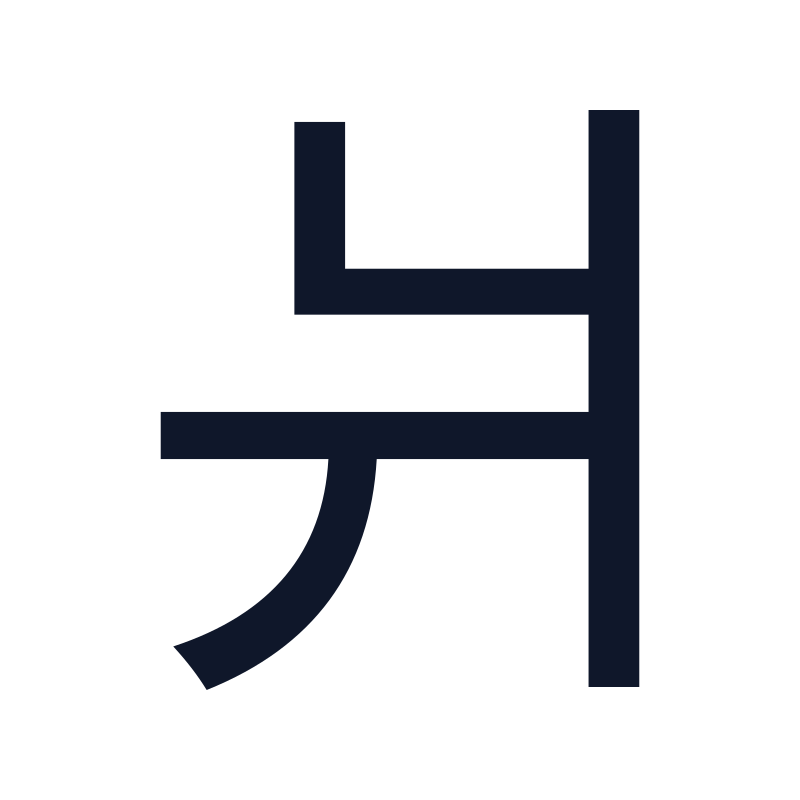 qiáng · U+723F
爿
Left half of a split tree trunk, wooden bed frame
Kangxi Radical #90 爿 (qiáng, "Split Wood") is written with 4 calligraphic strokes. Originating in Shang Dynasty Oracle Bone (Jiǎgǔwén) and Zhou Bronze inscriptions (Jīnwén) to depict left half of a split tree trunk, wooden bed frame, it serves as a foundational semantic classifier in the 1716 Imperial Kangxi Dictionary. Frequent compound Hanzi characters governed by this radical include: 床 (chuáng), 状 (zhuàng), 墙 (qiáng).
#91 · 4 strokes
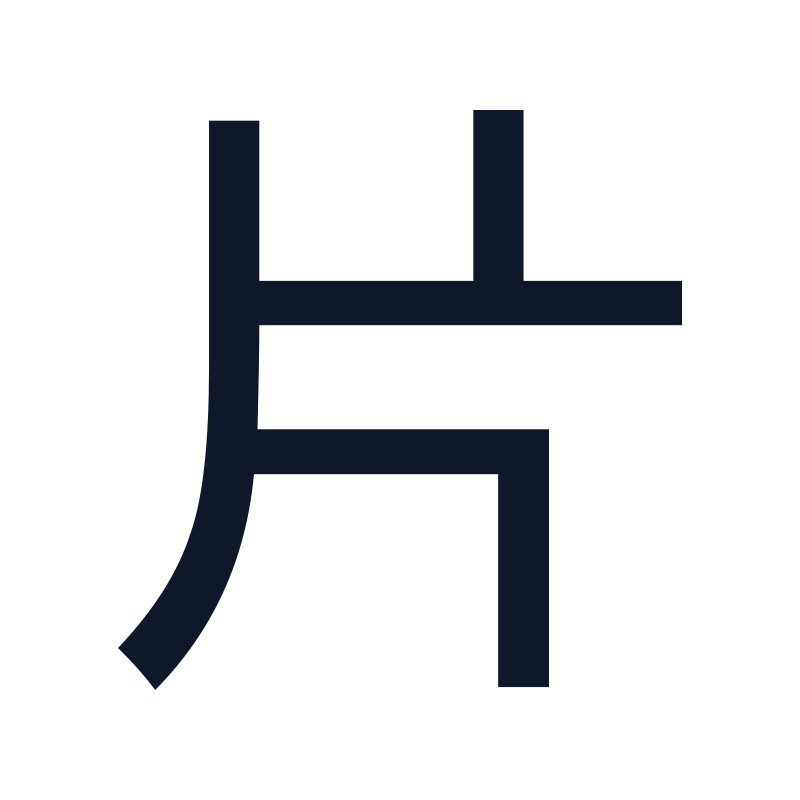 piàn · U+7247
片
Right half of a split tree trunk, flat tablet
Kangxi Radical #91 片 (piàn, "Slice") is written with 4 calligraphic strokes. Originating in Shang Dynasty Oracle Bone (Jiǎgǔwén) and Zhou Bronze inscriptions (Jīnwén) to depict right half of a split tree trunk, flat tablet, it serves as a foundational semantic classifier in the 1716 Imperial Kangxi Dictionary. Frequent compound Hanzi characters governed by this radical include: 版 (bǎn), 牌 (pái), 牒 (dié).
#92 · 4 strokes
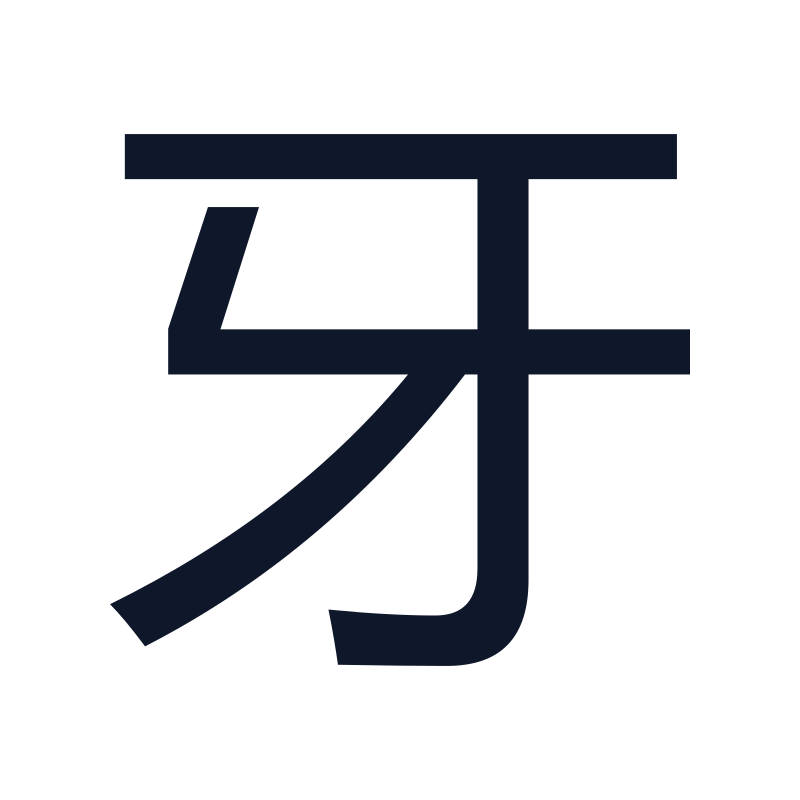 yá · U+7259
牙
Interlocking molar teeth or animal tusk
Kangxi Radical #92 牙 (yá, "Fang") is written with 4 calligraphic strokes. Originating in Shang Dynasty Oracle Bone (Jiǎgǔwén) and Zhou Bronze inscriptions (Jīnwén) to depict interlocking molar teeth or animal tusk, it serves as a foundational semantic classifier in the 1716 Imperial Kangxi Dictionary. Frequent compound Hanzi characters governed by this radical include: 牙 (yá), 邪 (xié), 穿 (chuān).
#93 · 4 strokes
 niú · U+725B
牛
Horned ox head, cattle, agricultural strength
Kangxi Radical #93 牛 (niú, "Cow") is written with 4 calligraphic strokes. Originating in Shang Dynasty Oracle Bone (Jiǎgǔwén) and Zhou Bronze inscriptions (Jīnwén) to depict horned ox head, cattle, agricultural strength, it serves as a foundational semantic classifier in the 1716 Imperial Kangxi Dictionary. Frequent compound Hanzi characters governed by this radical include: 牡 (mǔ), 物 (wù), 牧 (mù), 特 (tè).
#94 · 4 strokes
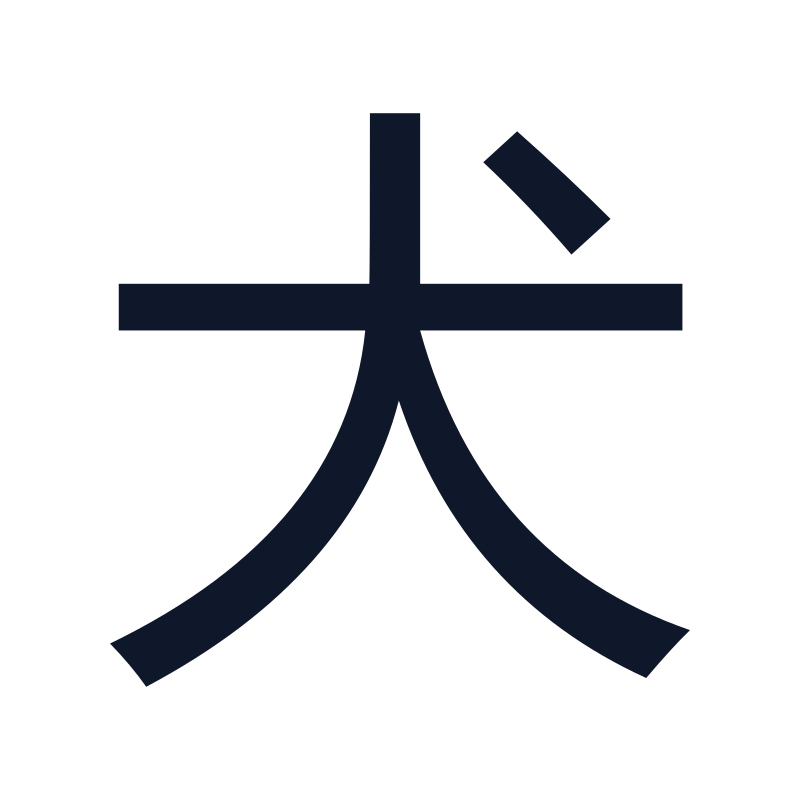 quǎn · U+72AC
犬
Alert hound with curled tail, canine
Kangxi Radical #94 犬 (quǎn, "Dog") is written with 4 calligraphic strokes. Originating in Shang Dynasty Oracle Bone (Jiǎgǔwén) and Zhou Bronze inscriptions (Jīnwén) to depict alert hound with curled tail, canine, it serves as a foundational semantic classifier in the 1716 Imperial Kangxi Dictionary. Frequent compound Hanzi characters governed by this radical include: 犯 (fàn), 状 (zhuàng), 猫 (māo), 独 (dú).
