#147 · 7 strokes
 jiàn · U+898B
見
Large eye mounted above walking legs, perception
Kangxi Radical #147 見 (jiàn, "See") is written with 7 calligraphic strokes. Originating in Shang Dynasty Oracle Bone (Jiǎgǔwén) and Zhou Bronze inscriptions (Jīnwén) to depict large eye mounted above walking legs, perception, it serves as a foundational semantic classifier in the 1716 Imperial Kangxi Dictionary. Frequent compound Hanzi characters governed by this radical include: 见 (jiàn), 观 (guān), 视 (shì), 觉 (jué).
#148 · 7 strokes
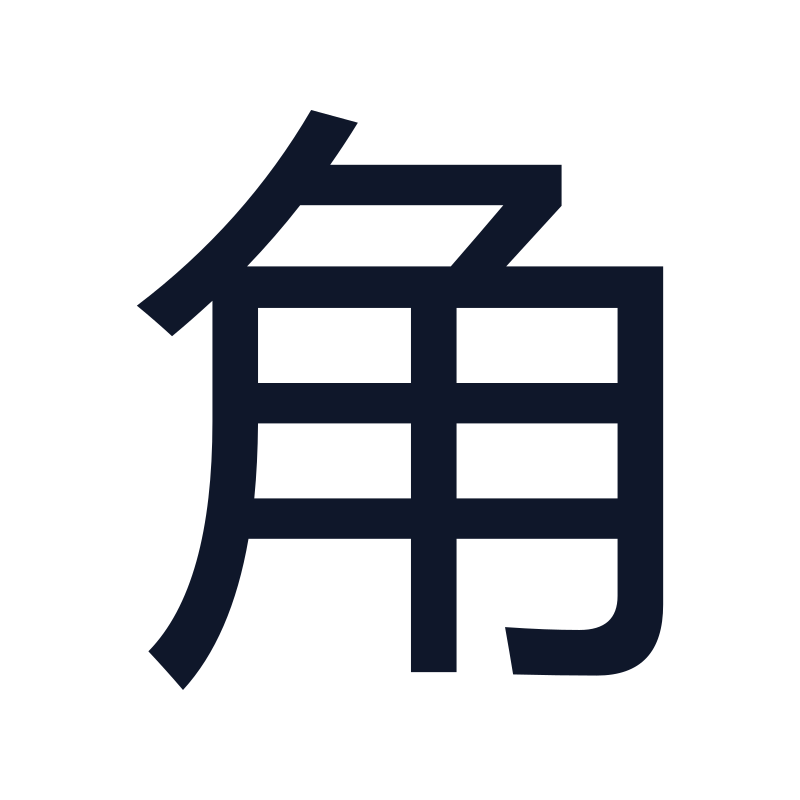 jiǎo · U+89D2
角
Ridged animal horn, corner angle, drinking horn
Kangxi Radical #148 角 (jiǎo, "Horn") is written with 7 calligraphic strokes. Originating in Shang Dynasty Oracle Bone (Jiǎgǔwén) and Zhou Bronze inscriptions (Jīnwén) to depict ridged animal horn, corner angle, drinking horn, it serves as a foundational semantic classifier in the 1716 Imperial Kangxi Dictionary. Frequent compound Hanzi characters governed by this radical include: 角 (jiǎo), 解 (jiě), 触 (chù).
#149 · 7 strokes
 yán · U+8A00
言
Sound waves rising from a speaking mouth
Kangxi Radical #149 言 (yán, "Speech") is written with 7 calligraphic strokes. Originating in Shang Dynasty Oracle Bone (Jiǎgǔwén) and Zhou Bronze inscriptions (Jīnwén) to depict sound waves rising from a speaking mouth, it serves as a foundational semantic classifier in the 1716 Imperial Kangxi Dictionary. Frequent compound Hanzi characters governed by this radical include: 言 (yán), 话 (huà), 说 (shuō), 读 (dú).
#150 · 7 strokes
 gǔ · U+8C37
谷
Mountain gorge widening into a river mouth
Kangxi Radical #150 谷 (gǔ, "Valley") is written with 7 calligraphic strokes. Originating in Shang Dynasty Oracle Bone (Jiǎgǔwén) and Zhou Bronze inscriptions (Jīnwén) to depict mountain gorge widening into a river mouth, it serves as a foundational semantic classifier in the 1716 Imperial Kangxi Dictionary. Frequent compound Hanzi characters governed by this radical include: 谷 (gǔ), 欲 (yù), 豁 (huō).
#151 · 7 strokes
 dòu · U+8C46
豆
High-stemmed ceremonial food vessel, legume bean
Kangxi Radical #151 豆 (dòu, "Bean") is written with 7 calligraphic strokes. Originating in Shang Dynasty Oracle Bone (Jiǎgǔwén) and Zhou Bronze inscriptions (Jīnwén) to depict high-stemmed ceremonial food vessel, legume bean, it serves as a foundational semantic classifier in the 1716 Imperial Kangxi Dictionary. Frequent compound Hanzi characters governed by this radical include: 豆 (dòu), 豌 (wān), 豉 (chǐ).
#152 · 7 strokes
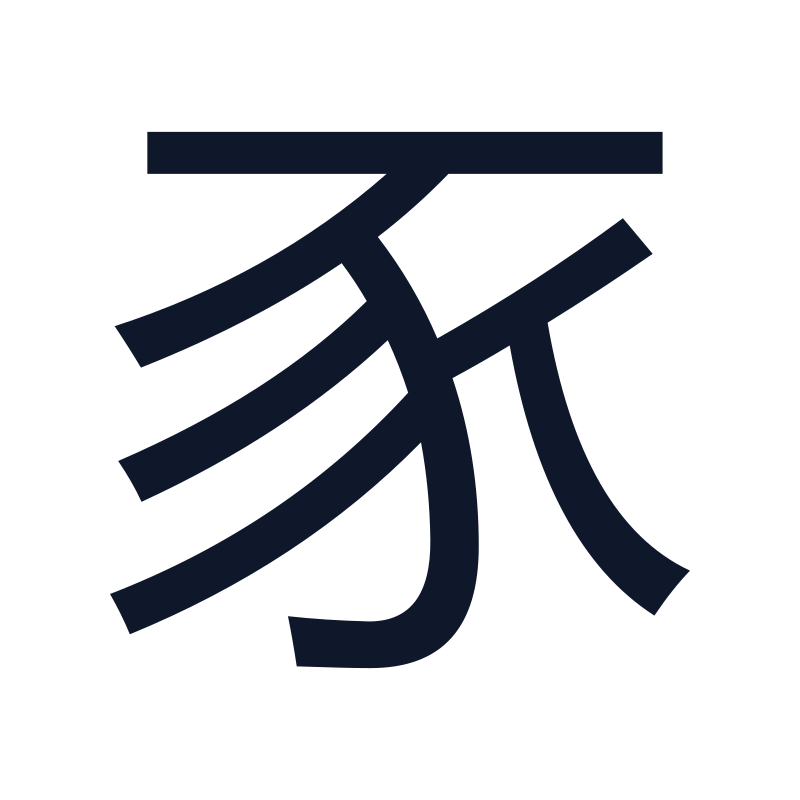 shǐ · U+8C55
豕
Round-bellied domestic swine with four legs
Kangxi Radical #152 豕 (shǐ, "Pig") is written with 7 calligraphic strokes. Originating in Shang Dynasty Oracle Bone (Jiǎgǔwén) and Zhou Bronze inscriptions (Jīnwén) to depict round-bellied domestic swine with four legs, it serves as a foundational semantic classifier in the 1716 Imperial Kangxi Dictionary. Frequent compound Hanzi characters governed by this radical include: 豚 (tún), 象 (xiàng), 豪 (háo).
#153 · 7 strokes
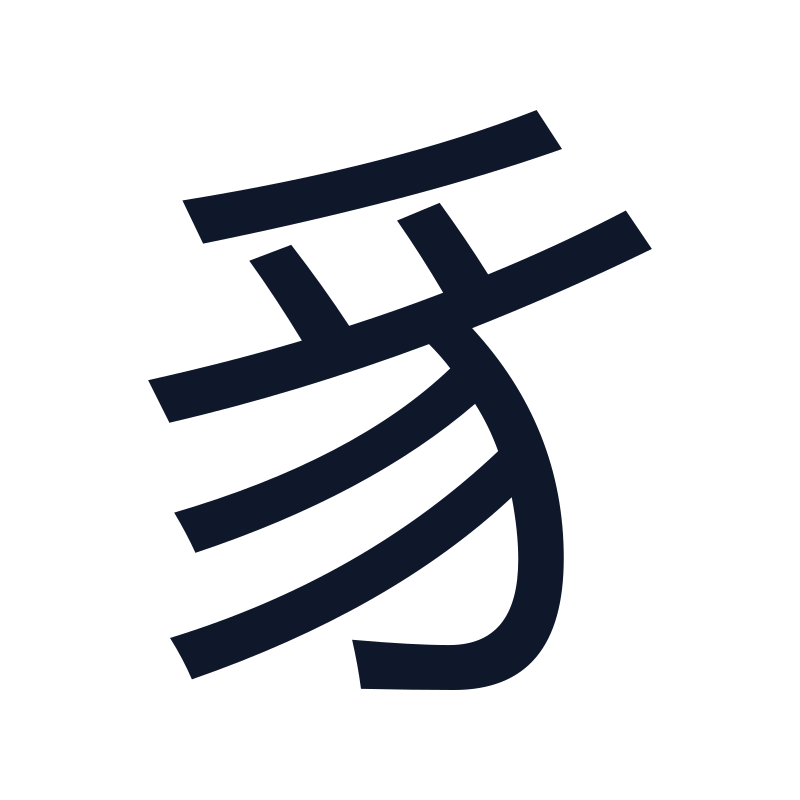 zhì · U+8C78
豸
Crouching feline or clawless wild predator
Kangxi Radical #153 豸 (zhì, "Badger") is written with 7 calligraphic strokes. Originating in Shang Dynasty Oracle Bone (Jiǎgǔwén) and Zhou Bronze inscriptions (Jīnwén) to depict crouching feline or clawless wild predator, it serves as a foundational semantic classifier in the 1716 Imperial Kangxi Dictionary. Frequent compound Hanzi characters governed by this radical include: 貌 (mào), 豹 (bào), 豺 (chái).
#154 · 7 strokes
 bèi · U+8C9D
貝
Cowrie seashell used as ancient currency, treasure
Kangxi Radical #154 貝 (bèi, "Shell") is written with 7 calligraphic strokes. Originating in Shang Dynasty Oracle Bone (Jiǎgǔwén) and Zhou Bronze inscriptions (Jīnwén) to depict cowrie seashell used as ancient currency, treasure, it serves as a foundational semantic classifier in the 1716 Imperial Kangxi Dictionary. Frequent compound Hanzi characters governed by this radical include: 贝 (bèi), 财 (cái), 贵 (guì), 买 (mǎi).
#155 · 7 strokes
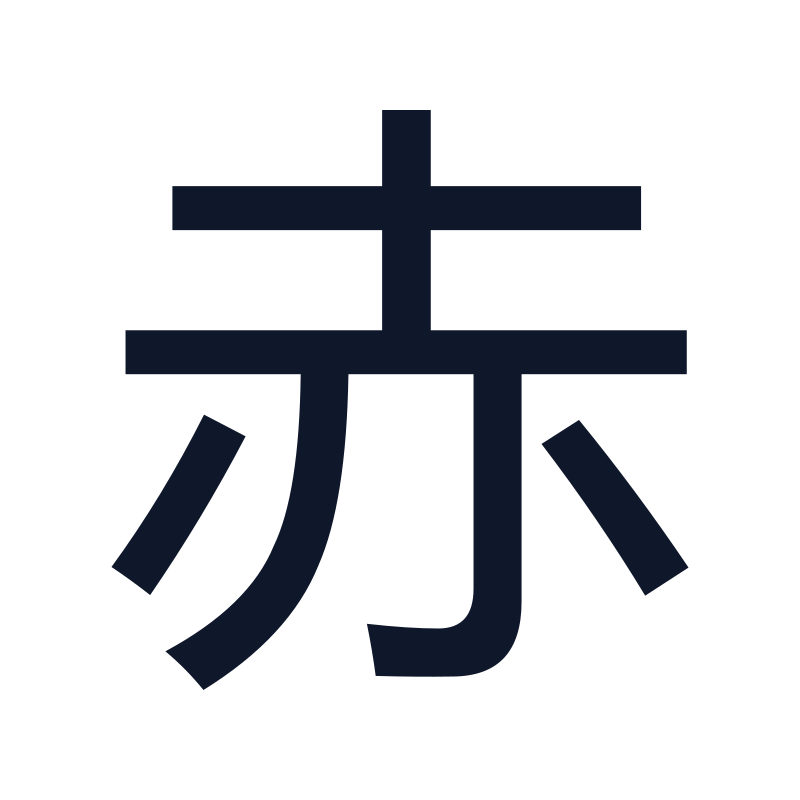 chì · U+8D64
赤
Person standing over a glowing fire, vermilion red
Kangxi Radical #155 赤 (chì, "Red") is written with 7 calligraphic strokes. Originating in Shang Dynasty Oracle Bone (Jiǎgǔwén) and Zhou Bronze inscriptions (Jīnwén) to depict person standing over a glowing fire, vermilion red, it serves as a foundational semantic classifier in the 1716 Imperial Kangxi Dictionary. Frequent compound Hanzi characters governed by this radical include: 赤 (chì), 赦 (shè), 赫 (hè).
#156 · 7 strokes
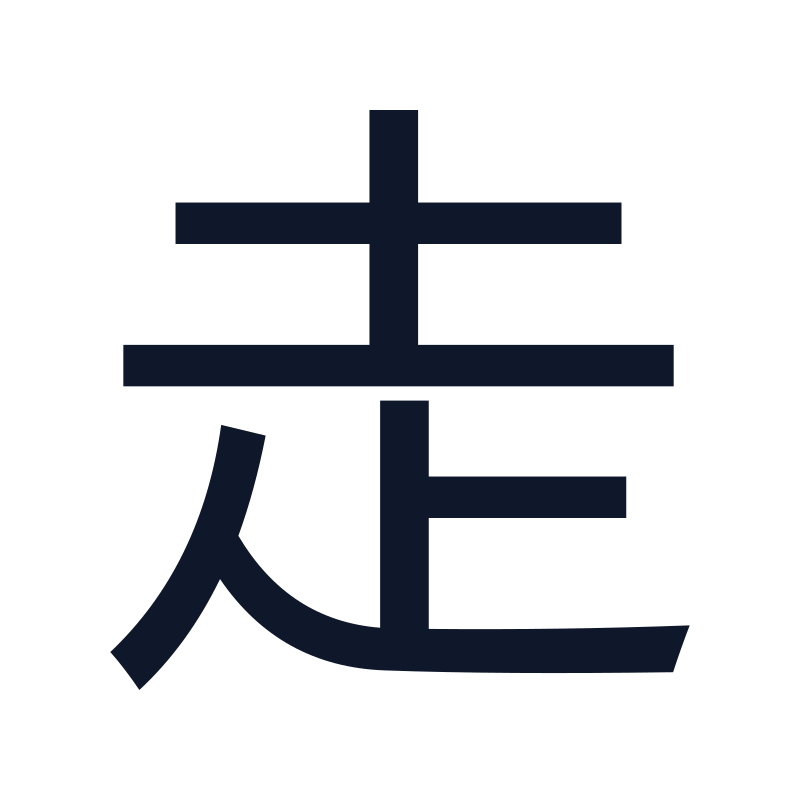 zǒu · U+8D70
走
Person swinging arms and striding briskly
Kangxi Radical #156 走 (zǒu, "Run") is written with 7 calligraphic strokes. Originating in Shang Dynasty Oracle Bone (Jiǎgǔwén) and Zhou Bronze inscriptions (Jīnwén) to depict person swinging arms and striding briskly, it serves as a foundational semantic classifier in the 1716 Imperial Kangxi Dictionary. Frequent compound Hanzi characters governed by this radical include: 走 (zǒu), 赶 (gǎn), 起 (qǐ), 超 (chāo).
#157 · 7 strokes
 zú · U+8DB3
足
Kneecap and lower foot, sufficiency, enough
Kangxi Radical #157 足 (zú, "Foot") is written with 7 calligraphic strokes. Originating in Shang Dynasty Oracle Bone (Jiǎgǔwén) and Zhou Bronze inscriptions (Jīnwén) to depict kneecap and lower foot, sufficiency, enough, it serves as a foundational semantic classifier in the 1716 Imperial Kangxi Dictionary. Frequent compound Hanzi characters governed by this radical include: 足 (zú), 跑 (pǎo), 跳 (tiào), 路 (lù).
#158 · 7 strokes
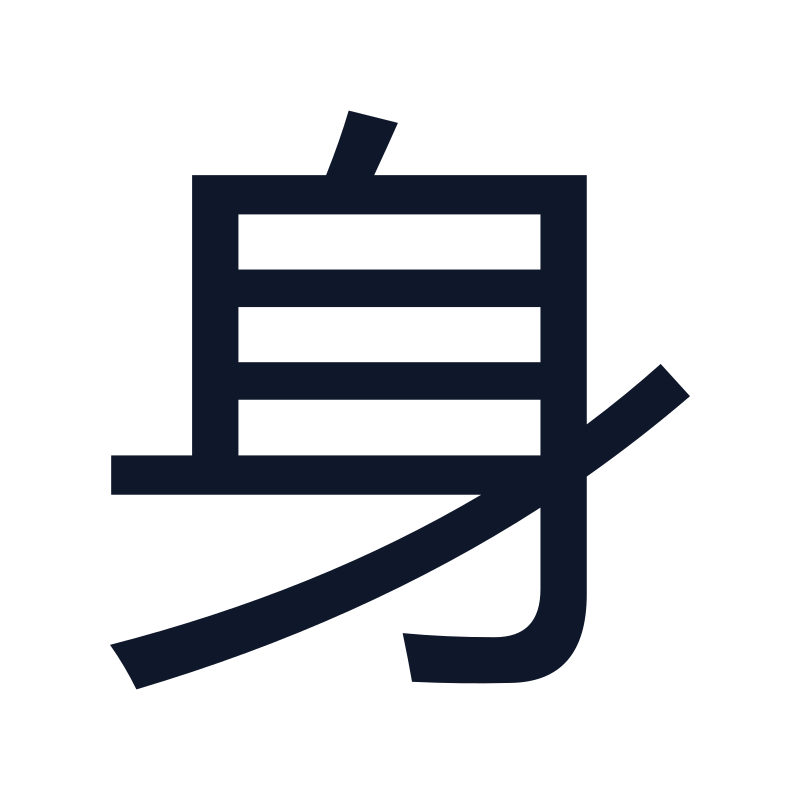 shēn · U+8EAB
身
Side profile of a human torso, oneself, life
Kangxi Radical #158 身 (shēn, "Body") is written with 7 calligraphic strokes. Originating in Shang Dynasty Oracle Bone (Jiǎgǔwén) and Zhou Bronze inscriptions (Jīnwén) to depict side profile of a human torso, oneself, life, it serves as a foundational semantic classifier in the 1716 Imperial Kangxi Dictionary. Frequent compound Hanzi characters governed by this radical include: 身 (shēn), 射 (shè), 躺 (tǎng).
#159 · 7 strokes
 chē · U+8ECA
車
Two-wheeled axle chariot viewed from above
Kangxi Radical #159 車 (chē, "Cart") is written with 7 calligraphic strokes. Originating in Shang Dynasty Oracle Bone (Jiǎgǔwén) and Zhou Bronze inscriptions (Jīnwén) to depict two-wheeled axle chariot viewed from above, it serves as a foundational semantic classifier in the 1716 Imperial Kangxi Dictionary. Frequent compound Hanzi characters governed by this radical include: 车 (chē), 轮 (lún), 轻 (qīng), 转 (zhuǎn).
#160 · 7 strokes
 xīn · U+8F9B
辛
Chisel needle, pungent bitter taste, hardship
Kangxi Radical #160 辛 (xīn, "Bitter") is written with 7 calligraphic strokes. Originating in Shang Dynasty Oracle Bone (Jiǎgǔwén) and Zhou Bronze inscriptions (Jīnwén) to depict chisel needle, pungent bitter taste, hardship, it serves as a foundational semantic classifier in the 1716 Imperial Kangxi Dictionary. Frequent compound Hanzi characters governed by this radical include: 辛 (xīn), 辞 (cí), 辨 (biàn), 辣 (là).
#161 · 7 strokes
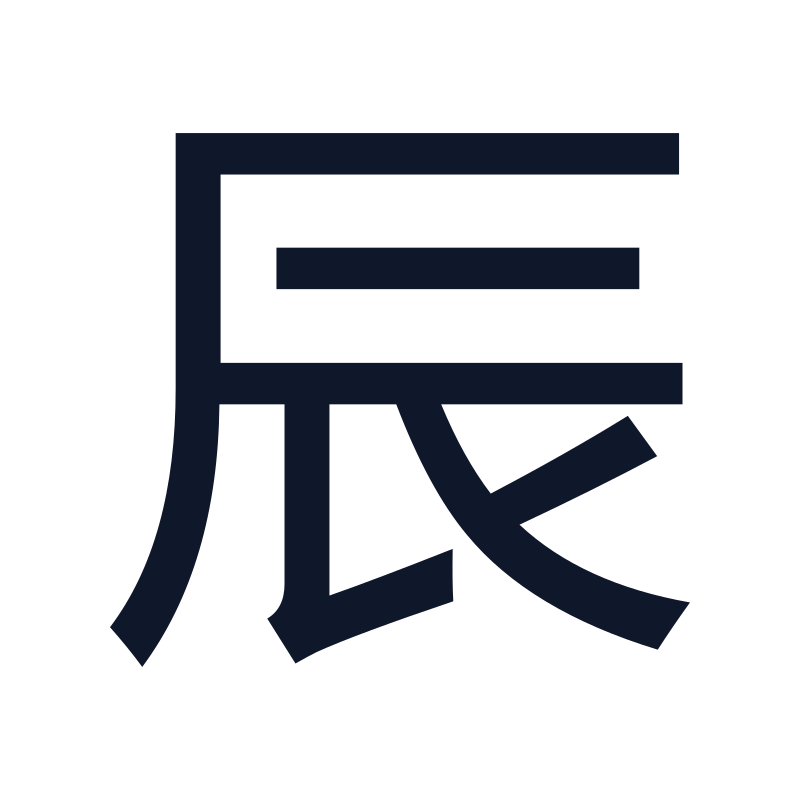 chén · U+8FB0
辰
Clam shell hoe cultivating fields at dawn, 5th branch
Kangxi Radical #161 辰 (chén, "Morning") is written with 7 calligraphic strokes. Originating in Shang Dynasty Oracle Bone (Jiǎgǔwén) and Zhou Bronze inscriptions (Jīnwén) to depict clam shell hoe cultivating fields at dawn, 5th branch, it serves as a foundational semantic classifier in the 1716 Imperial Kangxi Dictionary. Frequent compound Hanzi characters governed by this radical include: 辰 (chén), 辱 (rǔ), 唇 (chún).
#162 · 7 strokes
 chuò · U+8FB5
辵
Foot pausing and striding along a highway
Kangxi Radical #162 辵 (chuò, "Walk (Road)") is written with 7 calligraphic strokes. Originating in Shang Dynasty Oracle Bone (Jiǎgǔwén) and Zhou Bronze inscriptions (Jīnwén) to depict foot pausing and striding along a highway, it serves as a foundational semantic classifier in the 1716 Imperial Kangxi Dictionary. Frequent compound Hanzi characters governed by this radical include: 边 (biān), 远 (yuǎn), 近 (jìn), 道 (dào).
#163 · 7 strokes
 yì · U+9091
邑
Walled enclosure with a kneeling citizen, town
Kangxi Radical #163 邑 (yì, "City") is written with 7 calligraphic strokes. Originating in Shang Dynasty Oracle Bone (Jiǎgǔwén) and Zhou Bronze inscriptions (Jīnwén) to depict walled enclosure with a kneeling citizen, town, it serves as a foundational semantic classifier in the 1716 Imperial Kangxi Dictionary. Frequent compound Hanzi characters governed by this radical include: 那 (nà), 邦 (bāng), 郊 (jiāo), 部 (bù).
#164 · 7 strokes
 yǒu · U+9149
酉
Narrow-necked fermentation amphora for millet wine
Kangxi Radical #164 酉 (yǒu, "Wine") is written with 7 calligraphic strokes. Originating in Shang Dynasty Oracle Bone (Jiǎgǔwén) and Zhou Bronze inscriptions (Jīnwén) to depict narrow-necked fermentation amphora for millet wine, it serves as a foundational semantic classifier in the 1716 Imperial Kangxi Dictionary. Frequent compound Hanzi characters governed by this radical include: 酒 (jiǔ), 醉 (zuì), 醒 (xǐng), 酸 (suān).
#165 · 7 strokes
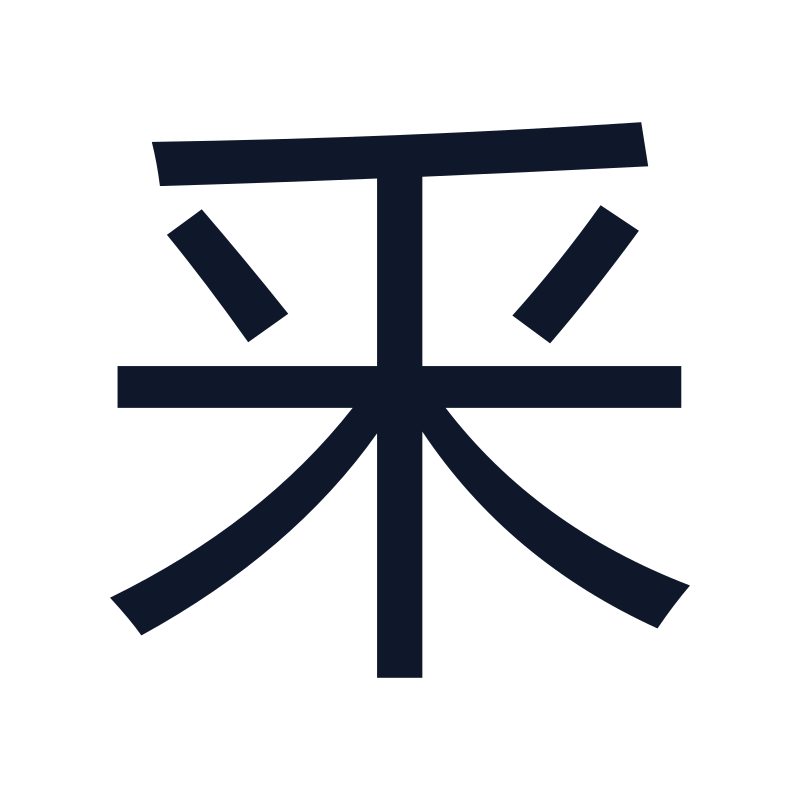 biàn · U+91C6
釆
Animal claw marks sorted and distinguished
Kangxi Radical #165 釆 (biàn, "Distinguish") is written with 7 calligraphic strokes. Originating in Shang Dynasty Oracle Bone (Jiǎgǔwén) and Zhou Bronze inscriptions (Jīnwén) to depict animal claw marks sorted and distinguished, it serves as a foundational semantic classifier in the 1716 Imperial Kangxi Dictionary. Frequent compound Hanzi characters governed by this radical include: 采 (cǎi), 释 (shì), 番 (fān).
#166 · 7 strokes
 lǐ · U+91CC
里
Earth below tilled fields, hamlet, Chinese mile
Kangxi Radical #166 里 (lǐ, "Village") is written with 7 calligraphic strokes. Originating in Shang Dynasty Oracle Bone (Jiǎgǔwén) and Zhou Bronze inscriptions (Jīnwén) to depict earth below tilled fields, hamlet, chinese mile, it serves as a foundational semantic classifier in the 1716 Imperial Kangxi Dictionary. Frequent compound Hanzi characters governed by this radical include: 里 (lǐ), 重 (zhòng), 野 (yě), 量 (liàng).
#167 · 8 strokes
 jīn · U+91D1
金
Metal nuggets gleaming inside earth beneath a cover
Kangxi Radical #167 金 (jīn, "Gold") is written with 8 calligraphic strokes. Originating in Shang Dynasty Oracle Bone (Jiǎgǔwén) and Zhou Bronze inscriptions (Jīnwén) to depict metal nuggets gleaming inside earth beneath a cover, it serves as a foundational semantic classifier in the 1716 Imperial Kangxi Dictionary. Frequent compound Hanzi characters governed by this radical include: 金 (jīn), 铁 (tiě), 银 (yín), 铜 (tóng).
#168 · 8 strokes
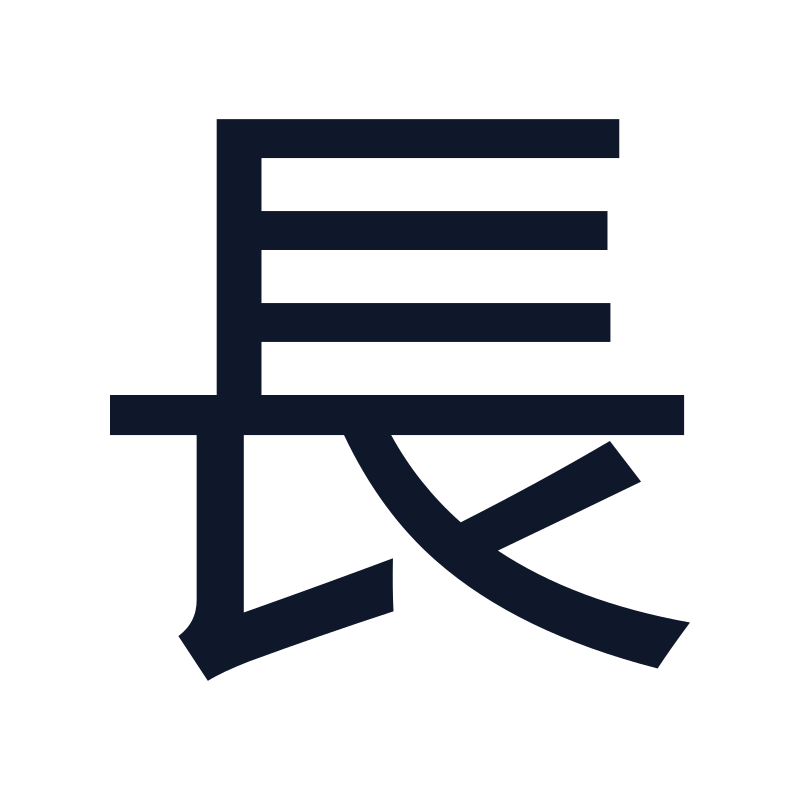 cháng · U+9577
長
Flowing long hair pinned with a brooch, enduring
Kangxi Radical #168 長 (cháng, "Long") is written with 8 calligraphic strokes. Originating in Shang Dynasty Oracle Bone (Jiǎgǔwén) and Zhou Bronze inscriptions (Jīnwén) to depict flowing long hair pinned with a brooch, enduring, it serves as a foundational semantic classifier in the 1716 Imperial Kangxi Dictionary. Frequent compound Hanzi characters governed by this radical include: 长 (cháng), 套 (tào).
#169 · 8 strokes
 mén · U+9580
門
Twin swinging leaves of a grand city gate
Kangxi Radical #169 門 (mén, "Gate") is written with 8 calligraphic strokes. Originating in Shang Dynasty Oracle Bone (Jiǎgǔwén) and Zhou Bronze inscriptions (Jīnwén) to depict twin swinging leaves of a grand city gate, it serves as a foundational semantic classifier in the 1716 Imperial Kangxi Dictionary. Frequent compound Hanzi characters governed by this radical include: 门 (mén), 间 (jiān), 闻 (wén), 闭 (bì).
#170 · 8 strokes
 fù · U+961C
阜
Terraced earthen steps ascending a hillside
Kangxi Radical #170 阜 (fù, "Mound") is written with 8 calligraphic strokes. Originating in Shang Dynasty Oracle Bone (Jiǎgǔwén) and Zhou Bronze inscriptions (Jīnwén) to depict terraced earthen steps ascending a hillside, it serves as a foundational semantic classifier in the 1716 Imperial Kangxi Dictionary. Frequent compound Hanzi characters governed by this radical include: 防 (fáng), 阳 (yáng), 阴 (yīn), 院 (yuàn).
#171 · 8 strokes
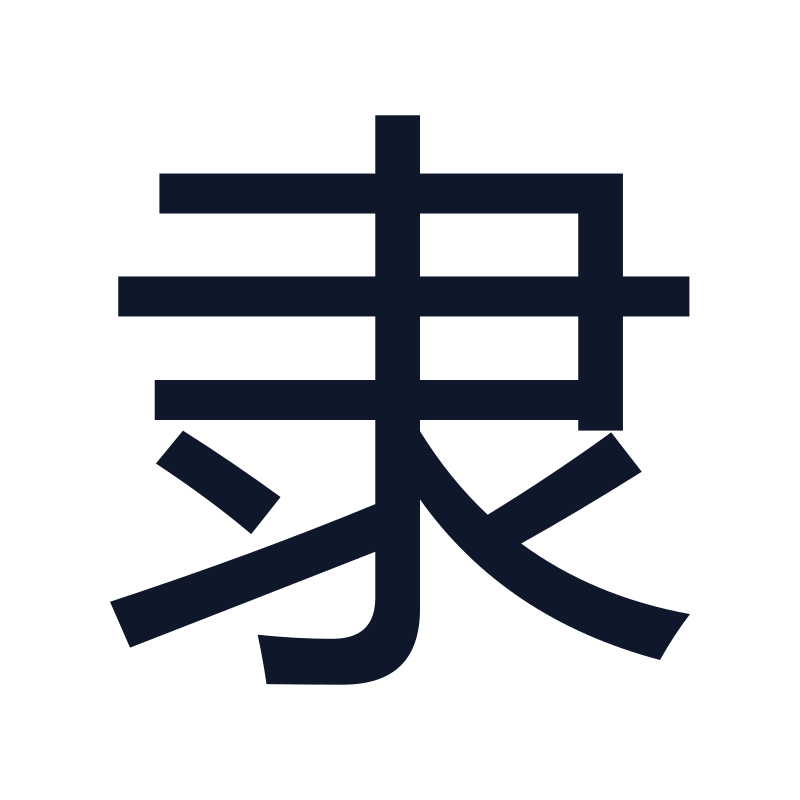 dài · U+96B6
隶
Right hand catching up to a tail from behind
Kangxi Radical #171 隶 (dài, "Reach") is written with 8 calligraphic strokes. Originating in Shang Dynasty Oracle Bone (Jiǎgǔwén) and Zhou Bronze inscriptions (Jīnwén) to depict right hand catching up to a tail from behind, it serves as a foundational semantic classifier in the 1716 Imperial Kangxi Dictionary. Frequent compound Hanzi characters governed by this radical include: 隶 (lì), 逮 (dài).
#172 · 8 strokes
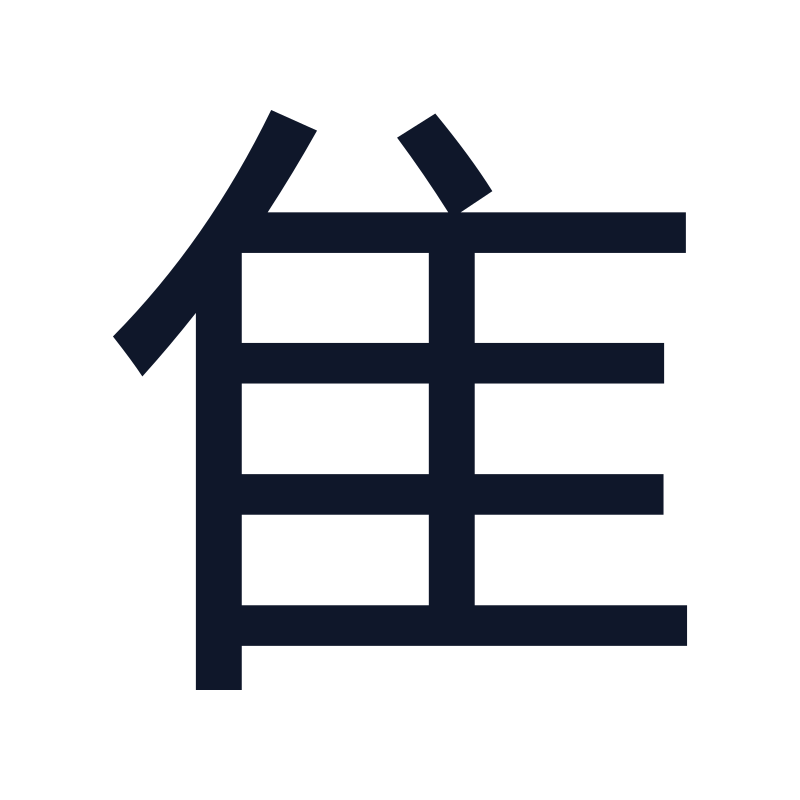 zhuī · U+96B9
隹
Plump songbird perched with folded wings
Kangxi Radical #172 隹 (zhuī, "Short-Tailed Bird") is written with 8 calligraphic strokes. Originating in Shang Dynasty Oracle Bone (Jiǎgǔwén) and Zhou Bronze inscriptions (Jīnwén) to depict plump songbird perched with folded wings, it serves as a foundational semantic classifier in the 1716 Imperial Kangxi Dictionary. Frequent compound Hanzi characters governed by this radical include: 难 (nán), 集 (jí), 雅 (yǎ), 雄 (xióng).
#173 · 8 strokes
 yǔ · U+96E8
雨
Water droplets falling from heavy cloud canopy
Kangxi Radical #173 雨 (yǔ, "Rain") is written with 8 calligraphic strokes. Originating in Shang Dynasty Oracle Bone (Jiǎgǔwén) and Zhou Bronze inscriptions (Jīnwén) to depict water droplets falling from heavy cloud canopy, it serves as a foundational semantic classifier in the 1716 Imperial Kangxi Dictionary. Frequent compound Hanzi characters governed by this radical include: 雨 (yǔ), 雪 (xuě), 雷 (léi), 雾 (wù).
#174 · 8 strokes
 qīng · U+9751
靑
Lush plant growth above a mineral cinnabar well
Kangxi Radical #174 靑 (qīng, "Blue-Green") is written with 8 calligraphic strokes. Originating in Shang Dynasty Oracle Bone (Jiǎgǔwén) and Zhou Bronze inscriptions (Jīnwén) to depict lush plant growth above a mineral cinnabar well, it serves as a foundational semantic classifier in the 1716 Imperial Kangxi Dictionary. Frequent compound Hanzi characters governed by this radical include: 青 (qīng), 静 (jìng), 靛 (diàn).
#175 · 8 strokes
 fēi · U+975E
非
Two wings turned back-to-back in opposition
Kangxi Radical #175 非 (fēi, "Wrong") is written with 8 calligraphic strokes. Originating in Shang Dynasty Oracle Bone (Jiǎgǔwén) and Zhou Bronze inscriptions (Jīnwén) to depict two wings turned back-to-back in opposition, it serves as a foundational semantic classifier in the 1716 Imperial Kangxi Dictionary. Frequent compound Hanzi characters governed by this radical include: 非 (fēi), 靠 (kào), 靡 (mí).
#176 · 9 strokes
 miàn · U+9762
面
Human face framing a central eye, surface
Kangxi Radical #176 面 (miàn, "Face") is written with 9 calligraphic strokes. Originating in Shang Dynasty Oracle Bone (Jiǎgǔwén) and Zhou Bronze inscriptions (Jīnwén) to depict human face framing a central eye, surface, it serves as a foundational semantic classifier in the 1716 Imperial Kangxi Dictionary. Frequent compound Hanzi characters governed by this radical include: 面 (miàn), 腼 (miǎn).
#177 · 9 strokes
 gé · U+9769
革
Stretched animal hide scraped and tanned, reform
Kangxi Radical #177 革 (gé, "Leather") is written with 9 calligraphic strokes. Originating in Shang Dynasty Oracle Bone (Jiǎgǔwén) and Zhou Bronze inscriptions (Jīnwén) to depict stretched animal hide scraped and tanned, reform, it serves as a foundational semantic classifier in the 1716 Imperial Kangxi Dictionary. Frequent compound Hanzi characters governed by this radical include: 革 (gé), 鞋 (xié), 鞍 (ān), 鞭 (biān).
#178 · 9 strokes
 wéi · U+97CB
韋
Feet patrolling around a walled city, soft hide
Kangxi Radical #178 韋 (wéi, "Tanned Leather") is written with 9 calligraphic strokes. Originating in Shang Dynasty Oracle Bone (Jiǎgǔwén) and Zhou Bronze inscriptions (Jīnwén) to depict feet patrolling around a walled city, soft hide, it serves as a foundational semantic classifier in the 1716 Imperial Kangxi Dictionary. Frequent compound Hanzi characters governed by this radical include: 韦 (wéi), 韧 (rèn), 韩 (hán).
#179 · 9 strokes
 jiǔ · U+97ED
韭
Cluster of fragrant wild chives growing from soil
Kangxi Radical #179 韭 (jiǔ, "Leek") is written with 9 calligraphic strokes. Originating in Shang Dynasty Oracle Bone (Jiǎgǔwén) and Zhou Bronze inscriptions (Jīnwén) to depict cluster of fragrant wild chives growing from soil, it serves as a foundational semantic classifier in the 1716 Imperial Kangxi Dictionary. Frequent compound Hanzi characters governed by this radical include: 韭 (jiǔ).
#180 · 9 strokes
 yīn · U+97F3
音
Musical note vibrating from a mouth, tone
Kangxi Radical #180 音 (yīn, "Sound") is written with 9 calligraphic strokes. Originating in Shang Dynasty Oracle Bone (Jiǎgǔwén) and Zhou Bronze inscriptions (Jīnwén) to depict musical note vibrating from a mouth, tone, it serves as a foundational semantic classifier in the 1716 Imperial Kangxi Dictionary. Frequent compound Hanzi characters governed by this radical include: 音 (yīn), 韵 (yùn), 响 (xiǎng), 韶 (sháo).
#181 · 9 strokes
 yè · U+9801
頁
Prominent human head above a kneeling body, page
Kangxi Radical #181 頁 (yè, "Leaf (Page)") is written with 9 calligraphic strokes. Originating in Shang Dynasty Oracle Bone (Jiǎgǔwén) and Zhou Bronze inscriptions (Jīnwén) to depict prominent human head above a kneeling body, page, it serves as a foundational semantic classifier in the 1716 Imperial Kangxi Dictionary. Frequent compound Hanzi characters governed by this radical include: 页 (yè), 顶 (dǐng), 顺 (shùn), 颜 (yán).
#182 · 9 strokes
 fēng · U+98A8
風
Swirling air currents carrying spring insects
Kangxi Radical #182 風 (fēng, "Wind") is written with 9 calligraphic strokes. Originating in Shang Dynasty Oracle Bone (Jiǎgǔwén) and Zhou Bronze inscriptions (Jīnwén) to depict swirling air currents carrying spring insects, it serves as a foundational semantic classifier in the 1716 Imperial Kangxi Dictionary. Frequent compound Hanzi characters governed by this radical include: 风 (fēng), 飘 (piāo), 飙 (biāo).
#183 · 9 strokes
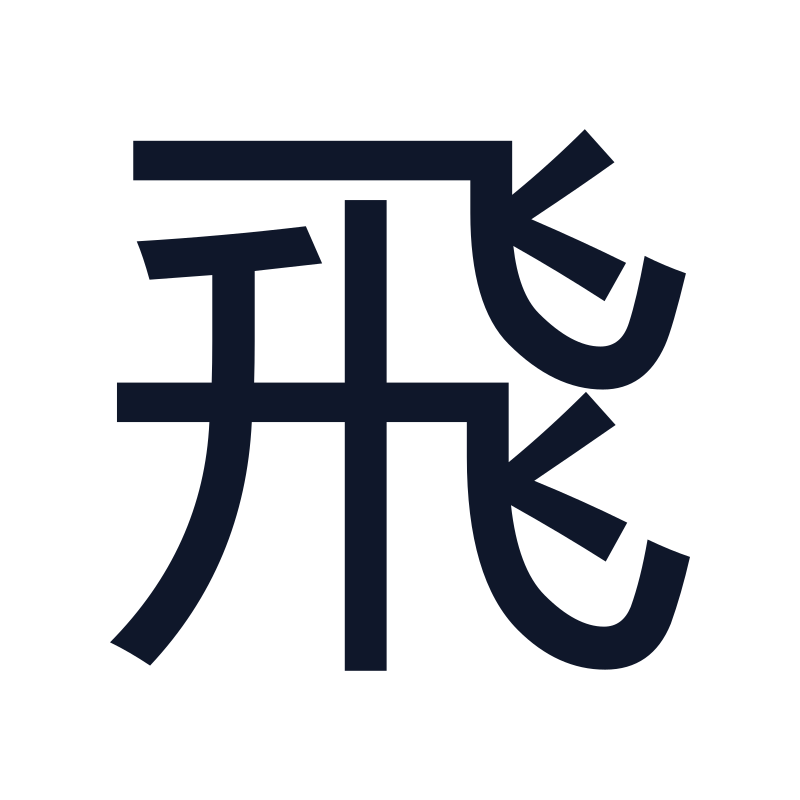 fēi · U+98DB
飛
Soaring bird beating its twin wings upward
Kangxi Radical #183 飛 (fēi, "Fly") is written with 9 calligraphic strokes. Originating in Shang Dynasty Oracle Bone (Jiǎgǔwén) and Zhou Bronze inscriptions (Jīnwén) to depict soaring bird beating its twin wings upward, it serves as a foundational semantic classifier in the 1716 Imperial Kangxi Dictionary. Frequent compound Hanzi characters governed by this radical include: 飞 (fēi).
#184 · 9 strokes
 shí · U+98DF
食
Covered fragrant rice vessel, nourishment, meal
Kangxi Radical #184 食 (shí, "Eat (Food)") is written with 9 calligraphic strokes. Originating in Shang Dynasty Oracle Bone (Jiǎgǔwén) and Zhou Bronze inscriptions (Jīnwén) to depict covered fragrant rice vessel, nourishment, meal, it serves as a foundational semantic classifier in the 1716 Imperial Kangxi Dictionary. Frequent compound Hanzi characters governed by this radical include: 食 (shí), 饭 (fàn), 饮 (yǐn), 饿 (è).
#185 · 9 strokes
 shǒu · U+9996
首
Human head crowned with hair and eyebrows, chief
Kangxi Radical #185 首 (shǒu, "Head") is written with 9 calligraphic strokes. Originating in Shang Dynasty Oracle Bone (Jiǎgǔwén) and Zhou Bronze inscriptions (Jīnwén) to depict human head crowned with hair and eyebrows, chief, it serves as a foundational semantic classifier in the 1716 Imperial Kangxi Dictionary. Frequent compound Hanzi characters governed by this radical include: 首 (shǒu), 馗 (kuí).
#186 · 9 strokes
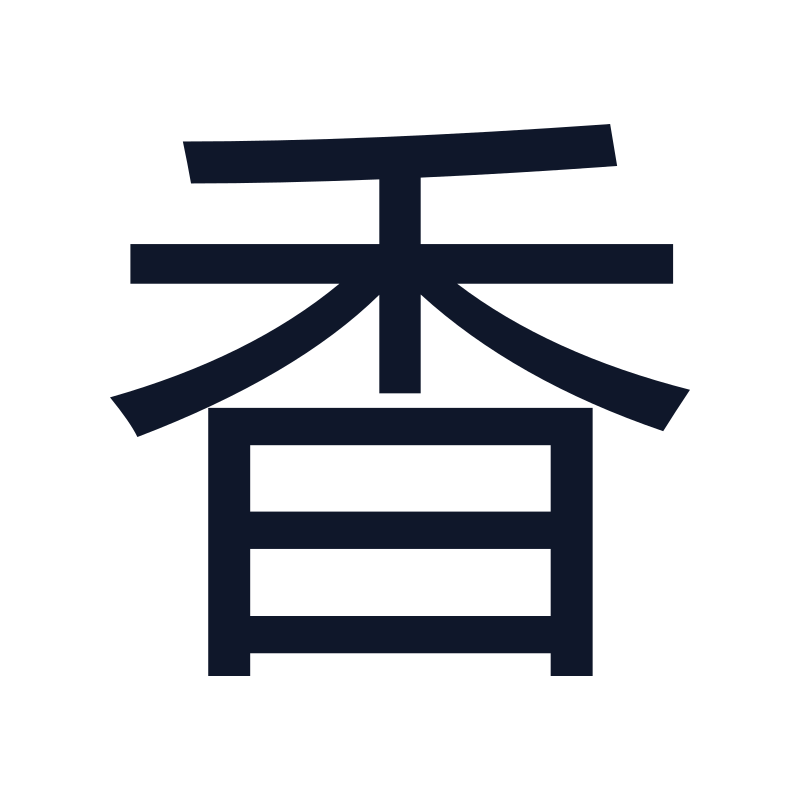 xiāng · U+9999
香
Sweet aroma of ripe grain simmering in a pot
Kangxi Radical #186 香 (xiāng, "Fragrant") is written with 9 calligraphic strokes. Originating in Shang Dynasty Oracle Bone (Jiǎgǔwén) and Zhou Bronze inscriptions (Jīnwén) to depict sweet aroma of ripe grain simmering in a pot, it serves as a foundational semantic classifier in the 1716 Imperial Kangxi Dictionary. Frequent compound Hanzi characters governed by this radical include: 香 (xiāng), 馨 (xīn), 馥 (fù).
#187 · 10 strokes
 mǎ · U+99AC
馬
Galloping steed with flowing mane and four hooves
Kangxi Radical #187 馬 (mǎ, "Horse") is written with 10 calligraphic strokes. Originating in Shang Dynasty Oracle Bone (Jiǎgǔwén) and Zhou Bronze inscriptions (Jīnwén) to depict galloping steed with flowing mane and four hooves, it serves as a foundational semantic classifier in the 1716 Imperial Kangxi Dictionary. Frequent compound Hanzi characters governed by this radical include: 马 (mǎ), 骑 (qí), 驾 (jià), 骏 (jùn).
#188 · 10 strokes
 gǔ · U+9AA8
骨
Jointed skeletal bone with flesh beneath
Kangxi Radical #188 骨 (gǔ, "Bone") is written with 10 calligraphic strokes. Originating in Shang Dynasty Oracle Bone (Jiǎgǔwén) and Zhou Bronze inscriptions (Jīnwén) to depict jointed skeletal bone with flesh beneath, it serves as a foundational semantic classifier in the 1716 Imperial Kangxi Dictionary. Frequent compound Hanzi characters governed by this radical include: 骨 (gǔ), 髓 (suǐ), 骷 (kū).
#189 · 10 strokes
 gāo · U+9AD8
高
Lofty multi-story watchtower pavilion
Kangxi Radical #189 高 (gāo, "Tall") is written with 10 calligraphic strokes. Originating in Shang Dynasty Oracle Bone (Jiǎgǔwén) and Zhou Bronze inscriptions (Jīnwén) to depict lofty multi-story watchtower pavilion, it serves as a foundational semantic classifier in the 1716 Imperial Kangxi Dictionary. Frequent compound Hanzi characters governed by this radical include: 高 (gāo).
#190 · 10 strokes
 biāo · U+9ADF
髟
Long flowing locks of hair on a head
Kangxi Radical #190 髟 (biāo, "Hair") is written with 10 calligraphic strokes. Originating in Shang Dynasty Oracle Bone (Jiǎgǔwén) and Zhou Bronze inscriptions (Jīnwén) to depict long flowing locks of hair on a head, it serves as a foundational semantic classifier in the 1716 Imperial Kangxi Dictionary. Frequent compound Hanzi characters governed by this radical include: 鬓 (bìn), 鬃 (zōng), 髯 (rán).
#191 · 10 strokes
 dòu · U+9B25
鬥
Two warriors grappling hand-to-hand in combat
Kangxi Radical #191 鬥 (dòu, "Fight") is written with 10 calligraphic strokes. Originating in Shang Dynasty Oracle Bone (Jiǎgǔwén) and Zhou Bronze inscriptions (Jīnwén) to depict two warriors grappling hand-to-hand in combat, it serves as a foundational semantic classifier in the 1716 Imperial Kangxi Dictionary. Frequent compound Hanzi characters governed by this radical include: 斗 (dòu), 闹 (nào), 哄 (hōng).
#192 · 10 strokes
 chàng · U+9B2F
鬯
Spiced black millet wine mixed with fragrant herbs
Kangxi Radical #192 鬯 (chàng, "Sacrificial Wine") is written with 10 calligraphic strokes. Originating in Shang Dynasty Oracle Bone (Jiǎgǔwén) and Zhou Bronze inscriptions (Jīnwén) to depict spiced black millet wine mixed with fragrant herbs, it serves as a foundational semantic classifier in the 1716 Imperial Kangxi Dictionary. Frequent compound Hanzi characters governed by this radical include: 鬯 (chàng), 郁 (yù).
#193 · 10 strokes
 lì · U+9B32
鬲
Hollow-legged bronze tripod cooking vessel
Kangxi Radical #193 鬲 (lì, "Cauldron") is written with 10 calligraphic strokes. Originating in Shang Dynasty Oracle Bone (Jiǎgǔwén) and Zhou Bronze inscriptions (Jīnwén) to depict hollow-legged bronze tripod cooking vessel, it serves as a foundational semantic classifier in the 1716 Imperial Kangxi Dictionary. Frequent compound Hanzi characters governed by this radical include: 鬲 (lì), 融 (róng), 鬻 (yù).
#194 · 10 strokes
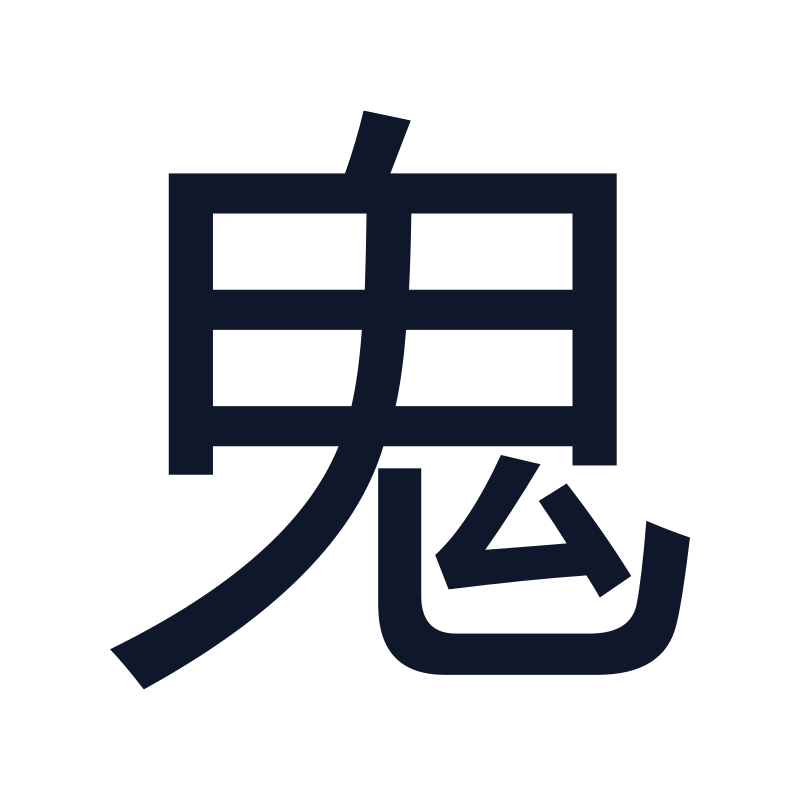 guǐ · U+9B3C
鬼
Masked ancestral spirit figure, phantom
Kangxi Radical #194 鬼 (guǐ, "Ghost") is written with 10 calligraphic strokes. Originating in Shang Dynasty Oracle Bone (Jiǎgǔwén) and Zhou Bronze inscriptions (Jīnwén) to depict masked ancestral spirit figure, phantom, it serves as a foundational semantic classifier in the 1716 Imperial Kangxi Dictionary. Frequent compound Hanzi characters governed by this radical include: 鬼 (guǐ), 魂 (hún), 魄 (pò), 魔 (mó).
#195 · 11 strokes
 yú · U+9B5A
魚
Scaled fish with head, fins and forked tail
Kangxi Radical #195 魚 (yú, "Fish") is written with 11 calligraphic strokes. Originating in Shang Dynasty Oracle Bone (Jiǎgǔwén) and Zhou Bronze inscriptions (Jīnwén) to depict scaled fish with head, fins and forked tail, it serves as a foundational semantic classifier in the 1716 Imperial Kangxi Dictionary. Frequent compound Hanzi characters governed by this radical include: 鱼 (yú), 鲜 (xiān), 鲤 (lǐ), 鲸 (jīng).
#196 · 11 strokes
 niǎo · U+9CE5
鳥
Long-tailed crested bird with talons and beak
Kangxi Radical #196 鳥 (niǎo, "Bird") is written with 11 calligraphic strokes. Originating in Shang Dynasty Oracle Bone (Jiǎgǔwén) and Zhou Bronze inscriptions (Jīnwén) to depict long-tailed crested bird with talons and beak, it serves as a foundational semantic classifier in the 1716 Imperial Kangxi Dictionary. Frequent compound Hanzi characters governed by this radical include: 鸟 (niǎo), 鸡 (jī), 鸭 (yā), 鹰 (yīng).
#197 · 11 strokes
 lǔ · U+9E75
鹵
Salt crystals evaporated in a woven brine basket
Kangxi Radical #197 鹵 (lǔ, "Salt") is written with 11 calligraphic strokes. Originating in Shang Dynasty Oracle Bone (Jiǎgǔwén) and Zhou Bronze inscriptions (Jīnwén) to depict salt crystals evaporated in a woven brine basket, it serves as a foundational semantic classifier in the 1716 Imperial Kangxi Dictionary. Frequent compound Hanzi characters governed by this radical include: 卤 (lǔ), 咸 (xián), 盐 (yán).
#198 · 11 strokes
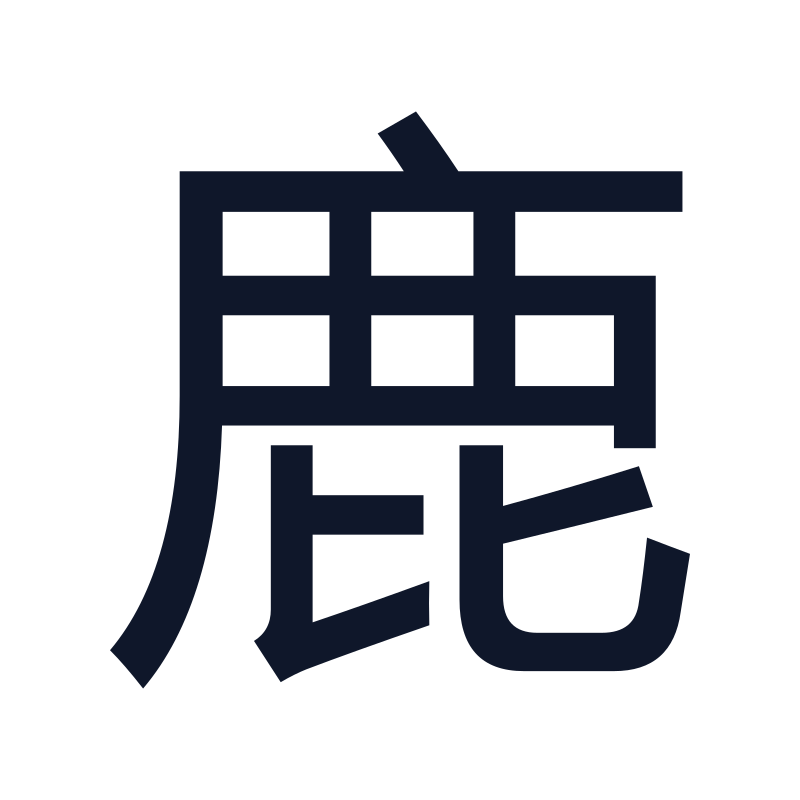 lù · U+9E7F
鹿
Graceful stag crowned with branching antlers
Kangxi Radical #198 鹿 (lù, "Deer") is written with 11 calligraphic strokes. Originating in Shang Dynasty Oracle Bone (Jiǎgǔwén) and Zhou Bronze inscriptions (Jīnwén) to depict graceful stag crowned with branching antlers, it serves as a foundational semantic classifier in the 1716 Imperial Kangxi Dictionary. Frequent compound Hanzi characters governed by this radical include: 鹿 (lù), 麟 (lín), 麓 (lù).
#199 · 11 strokes
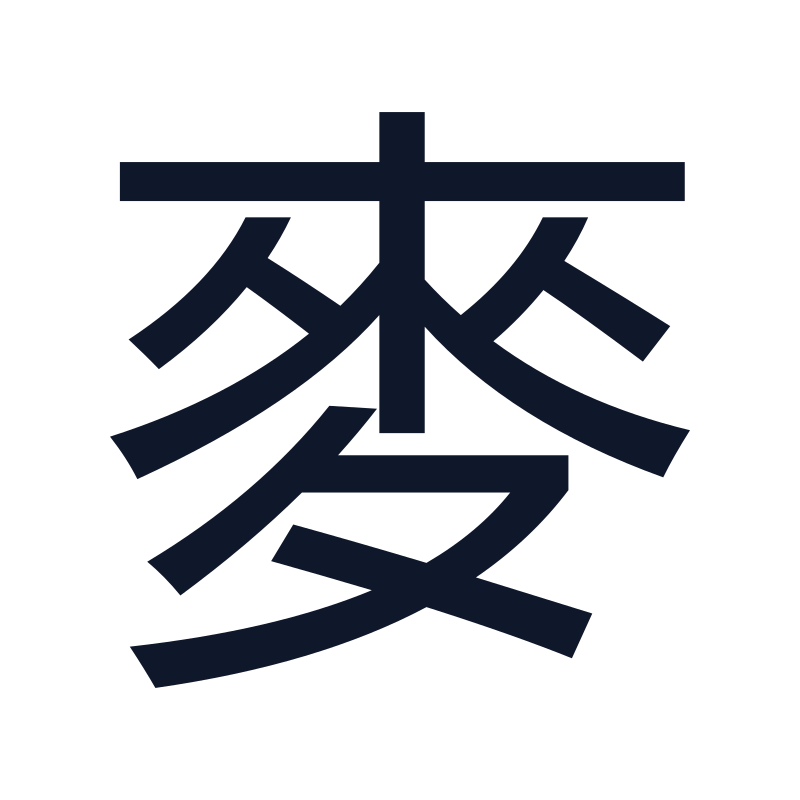 mài · U+9EA5
麥
Bearded wheat grain brought down from heaven
Kangxi Radical #199 麥 (mài, "Wheat") is written with 11 calligraphic strokes. Originating in Shang Dynasty Oracle Bone (Jiǎgǔwén) and Zhou Bronze inscriptions (Jīnwén) to depict bearded wheat grain brought down from heaven, it serves as a foundational semantic classifier in the 1716 Imperial Kangxi Dictionary. Frequent compound Hanzi characters governed by this radical include: 麦 (mài), 麸 (fū), 麴 (qū).
#200 · 11 strokes
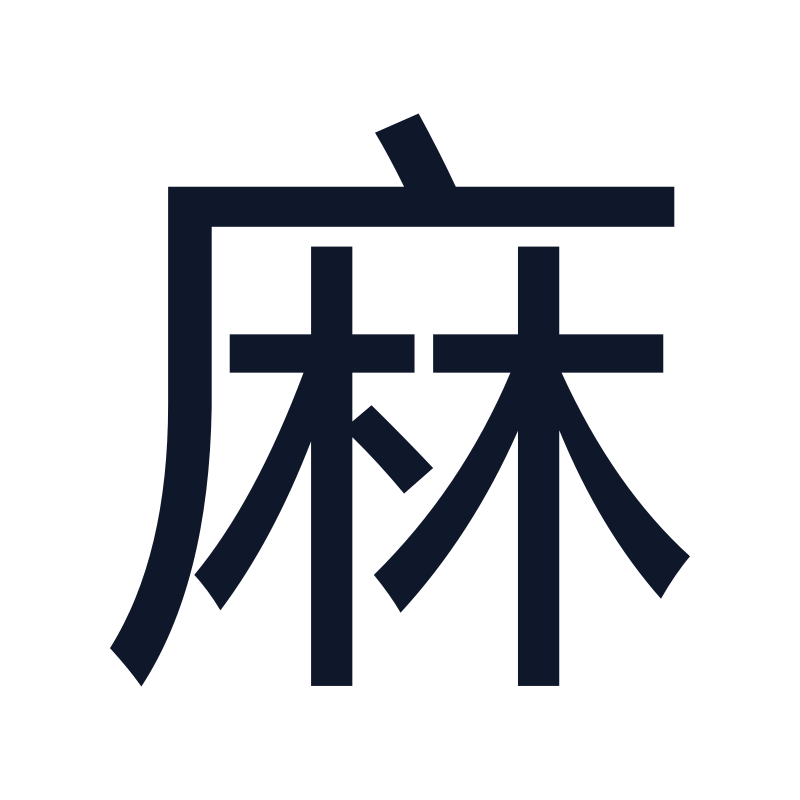 má · U+9EBB
麻
Peeled hemp fibers drying under a shed roof
Kangxi Radical #200 麻 (má, "Hemp") is written with 11 calligraphic strokes. Originating in Shang Dynasty Oracle Bone (Jiǎgǔwén) and Zhou Bronze inscriptions (Jīnwén) to depict peeled hemp fibers drying under a shed roof, it serves as a foundational semantic classifier in the 1716 Imperial Kangxi Dictionary. Frequent compound Hanzi characters governed by this radical include: 麻 (má), 摩 (mó), 魔 (mó).
#201 · 12 strokes
 huáng · U+9EC3
黃
Golden loess earth and glowing jade pendant
Kangxi Radical #201 黃 (huáng, "Yellow") is written with 12 calligraphic strokes. Originating in Shang Dynasty Oracle Bone (Jiǎgǔwén) and Zhou Bronze inscriptions (Jīnwén) to depict golden loess earth and glowing jade pendant, it serves as a foundational semantic classifier in the 1716 Imperial Kangxi Dictionary. Frequent compound Hanzi characters governed by this radical include: 黄 (huáng).
#202 · 12 strokes
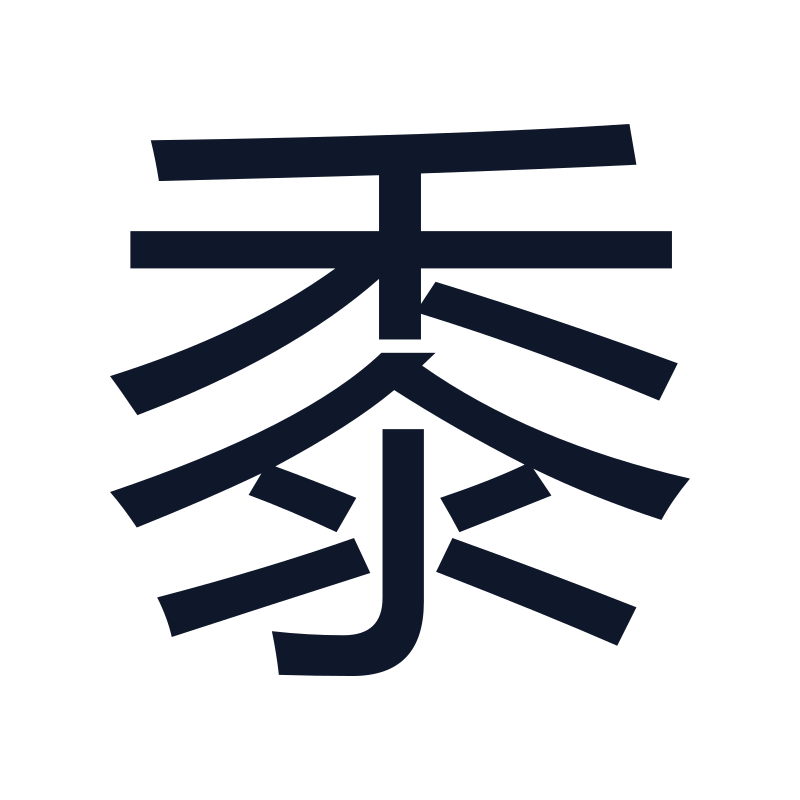 shǔ · U+9ECD
黍
Sticky broomcorn millet stalks growing in water
Kangxi Radical #202 黍 (shǔ, "Millet") is written with 12 calligraphic strokes. Originating in Shang Dynasty Oracle Bone (Jiǎgǔwén) and Zhou Bronze inscriptions (Jīnwén) to depict sticky broomcorn millet stalks growing in water, it serves as a foundational semantic classifier in the 1716 Imperial Kangxi Dictionary. Frequent compound Hanzi characters governed by this radical include: 黍 (shǔ), 黎 (lí), 黏 (nián).
#203 · 12 strokes
 hēi · U+9ED1
黑
Soot deposited around a smoky chimney window
Kangxi Radical #203 黑 (hēi, "Black") is written with 12 calligraphic strokes. Originating in Shang Dynasty Oracle Bone (Jiǎgǔwén) and Zhou Bronze inscriptions (Jīnwén) to depict soot deposited around a smoky chimney window, it serves as a foundational semantic classifier in the 1716 Imperial Kangxi Dictionary. Frequent compound Hanzi characters governed by this radical include: 黑 (hēi), 默 (mò), 点 (diǎn), 党 (dǎng).
#204 · 12 strokes
 zhǐ · U+9EF9
黹
Intricately stitched needlework patterns on silk
Kangxi Radical #204 黹 (zhǐ, "Embroidery") is written with 12 calligraphic strokes. Originating in Shang Dynasty Oracle Bone (Jiǎgǔwén) and Zhou Bronze inscriptions (Jīnwén) to depict intricately stitched needlework patterns on silk, it serves as a foundational semantic classifier in the 1716 Imperial Kangxi Dictionary. Frequent compound Hanzi characters governed by this radical include: 黹 (zhǐ), 黻 (fú).
#205 · 13 strokes
 mǐn · U+9EFD
黽
Broad-bellied amphibious frog seen from above
Kangxi Radical #205 黽 (mǐn, "Frog") is written with 13 calligraphic strokes. Originating in Shang Dynasty Oracle Bone (Jiǎgǔwén) and Zhou Bronze inscriptions (Jīnwén) to depict broad-bellied amphibious frog seen from above, it serves as a foundational semantic classifier in the 1716 Imperial Kangxi Dictionary. Frequent compound Hanzi characters governed by this radical include: 黾 (mǐn), 蛙 (wā), 鳖 (biē).
#206 · 13 strokes
 dǐng · U+9F0E
鼎
Sacred royal bronze tripod vessel of state power
Kangxi Radical #206 鼎 (dǐng, "Tripod") is written with 13 calligraphic strokes. Originating in Shang Dynasty Oracle Bone (Jiǎgǔwén) and Zhou Bronze inscriptions (Jīnwén) to depict sacred royal bronze tripod vessel of state power, it serves as a foundational semantic classifier in the 1716 Imperial Kangxi Dictionary. Frequent compound Hanzi characters governed by this radical include: 鼎 (dǐng), 鼐 (nài).
#207 · 13 strokes
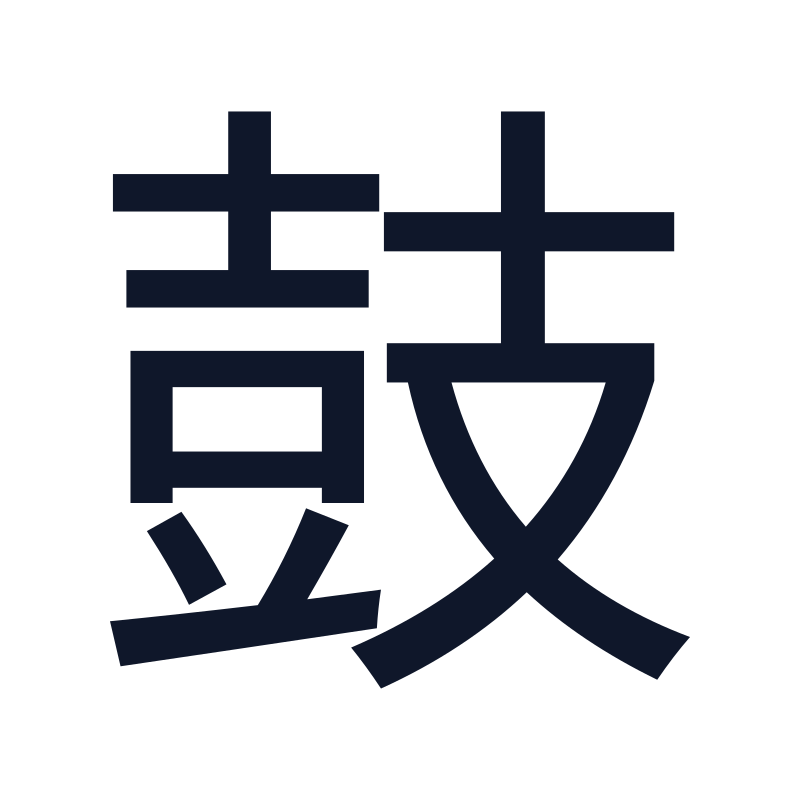 gǔ · U+9F13
鼓
Mounted ceremonial war drum struck with a mallet
Kangxi Radical #207 鼓 (gǔ, "Drum") is written with 13 calligraphic strokes. Originating in Shang Dynasty Oracle Bone (Jiǎgǔwén) and Zhou Bronze inscriptions (Jīnwén) to depict mounted ceremonial war drum struck with a mallet, it serves as a foundational semantic classifier in the 1716 Imperial Kangxi Dictionary. Frequent compound Hanzi characters governed by this radical include: 鼓 (gǔ), 鼕 (dōng).
#208 · 13 strokes
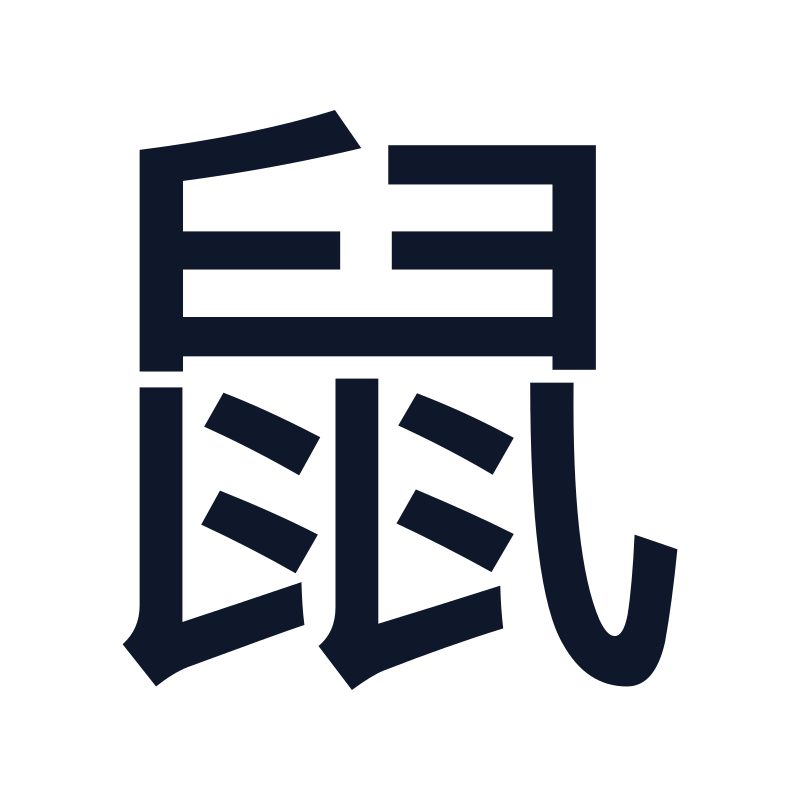 shǔ · U+9F20
鼠
Sharp-toothed rodent with whiskers and long tail
Kangxi Radical #208 鼠 (shǔ, "Rat") is written with 13 calligraphic strokes. Originating in Shang Dynasty Oracle Bone (Jiǎgǔwén) and Zhou Bronze inscriptions (Jīnwén) to depict sharp-toothed rodent with whiskers and long tail, it serves as a foundational semantic classifier in the 1716 Imperial Kangxi Dictionary. Frequent compound Hanzi characters governed by this radical include: 鼠 (shǔ), 鼬 (yòu).
#209 · 14 strokes
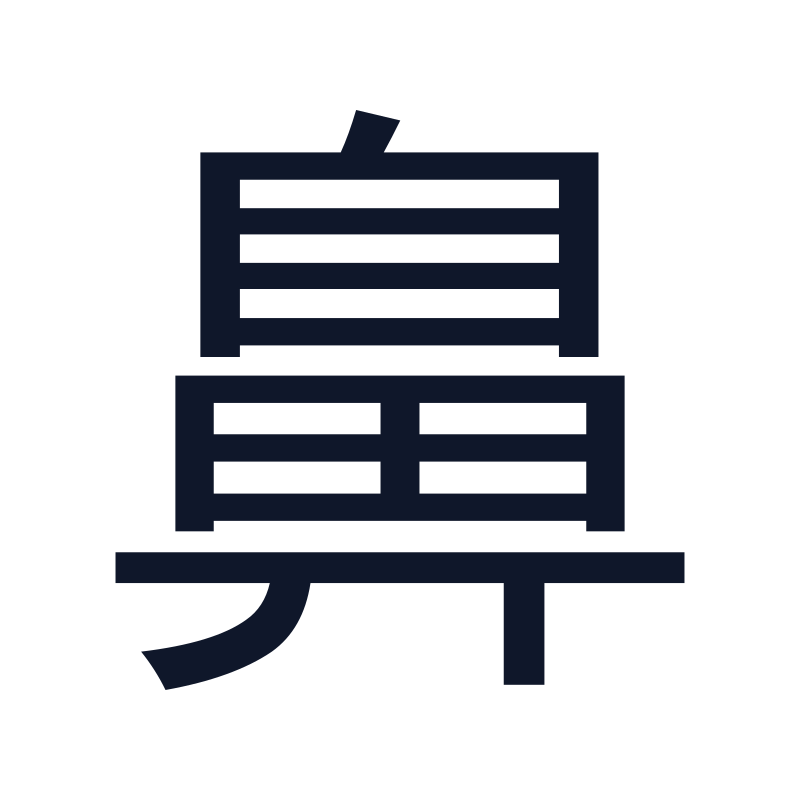 bí · U+9F3B
鼻
Detailed anatomical nose bridge and nostrils
Kangxi Radical #209 鼻 (bí, "Nose") is written with 14 calligraphic strokes. Originating in Shang Dynasty Oracle Bone (Jiǎgǔwén) and Zhou Bronze inscriptions (Jīnwén) to depict detailed anatomical nose bridge and nostrils, it serves as a foundational semantic classifier in the 1716 Imperial Kangxi Dictionary. Frequent compound Hanzi characters governed by this radical include: 鼻 (bí), 鼾 (hān).
#210 · 14 strokes
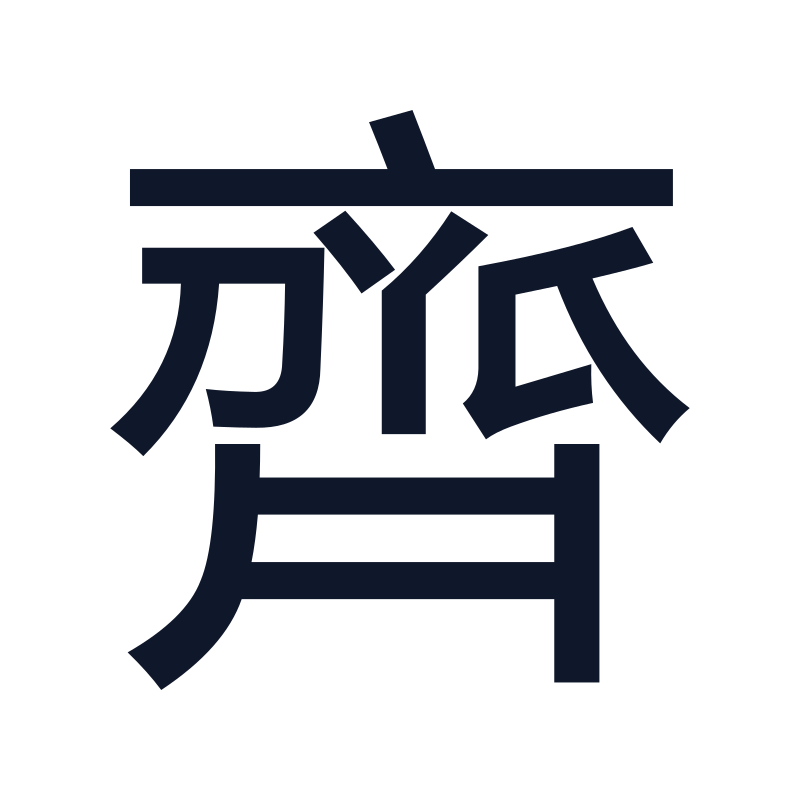 qí · U+9F4A
齊
Three grain heads growing to the exact same height
Kangxi Radical #210 齊 (qí, "Even") is written with 14 calligraphic strokes. Originating in Shang Dynasty Oracle Bone (Jiǎgǔwén) and Zhou Bronze inscriptions (Jīnwén) to depict three grain heads growing to the exact same height, it serves as a foundational semantic classifier in the 1716 Imperial Kangxi Dictionary. Frequent compound Hanzi characters governed by this radical include: 齐 (qí), 斋 (zhāi), 剂 (jì).
#211 · 15 strokes
 chǐ · U+9F52
齒
Row of upper and lower incisors inside the mouth
Kangxi Radical #211 齒 (chǐ, "Tooth") is written with 15 calligraphic strokes. Originating in Shang Dynasty Oracle Bone (Jiǎgǔwén) and Zhou Bronze inscriptions (Jīnwén) to depict row of upper and lower incisors inside the mouth, it serves as a foundational semantic classifier in the 1716 Imperial Kangxi Dictionary. Frequent compound Hanzi characters governed by this radical include: 齿 (chǐ), 龄 (líng), 龈 (yín).
#212 · 16 strokes
 lóng · U+9F8D
龍
Horned celestial dragon soaring through clouds
Kangxi Radical #212 龍 (lóng, "Dragon") is written with 16 calligraphic strokes. Originating in Shang Dynasty Oracle Bone (Jiǎgǔwén) and Zhou Bronze inscriptions (Jīnwén) to depict horned celestial dragon soaring through clouds, it serves as a foundational semantic classifier in the 1716 Imperial Kangxi Dictionary. Frequent compound Hanzi characters governed by this radical include: 龙 (lóng), 龚 (gōng), 龛 (kān).
#213 · 16 strokes
 guī · U+9F9C
龜
Armored tortoise shell with claws and tail, longevity
Kangxi Radical #213 龜 (guī, "Turtle") is written with 16 calligraphic strokes. Originating in Shang Dynasty Oracle Bone (Jiǎgǔwén) and Zhou Bronze inscriptions (Jīnwén) to depict armored tortoise shell with claws and tail, longevity, it serves as a foundational semantic classifier in the 1716 Imperial Kangxi Dictionary. Frequent compound Hanzi characters governed by this radical include: 龟 (guī).
#214 · 17 strokes
 yuè · U+9FA0
龠
Ancient ritual flute, music, harmony
Kangxi Radical #214 龠 (yuè, "Flute") is written with 17 calligraphic strokes. Originating in Shang Dynasty Oracle Bone (Jiǎgǔwén) and Zhou Bronze inscriptions (Jīnwén) to depict ancient ritual flute, music, harmony, it serves as a foundational semantic classifier in the 1716 Imperial Kangxi Dictionary. Frequent compound Hanzi characters governed by this radical include: 龠 (yuè), 龢 (hé).
