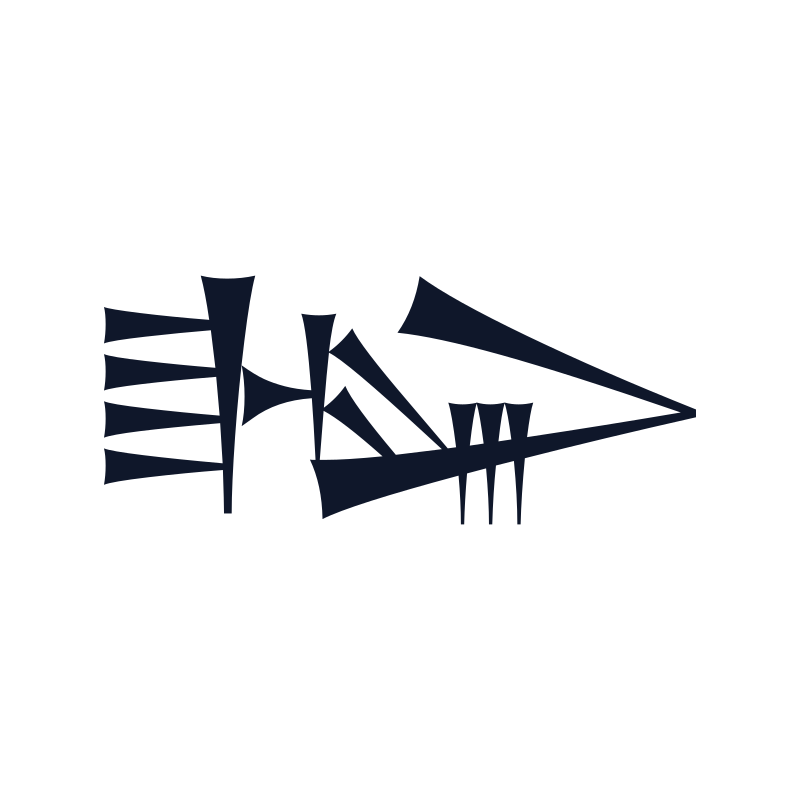
 LUGAL · U+12217
𒈗
king, sovereign
A masterful compound ideogram formed by merging two signs: LU₂ ('man' or 'person') and GAL ('great'), literally translating to 'Great Man' in Sumerian and read as 'šarru' ('king') in Akkadian. In the visual Neo-Assyrian and Babylonian form, the horizontal wedges at the left crown the sign like a royal diadem. It appears prominently on royal cylinder seals, victory stelae, boundary stones (kudurru), and the famous Law Code of Hammurabi.
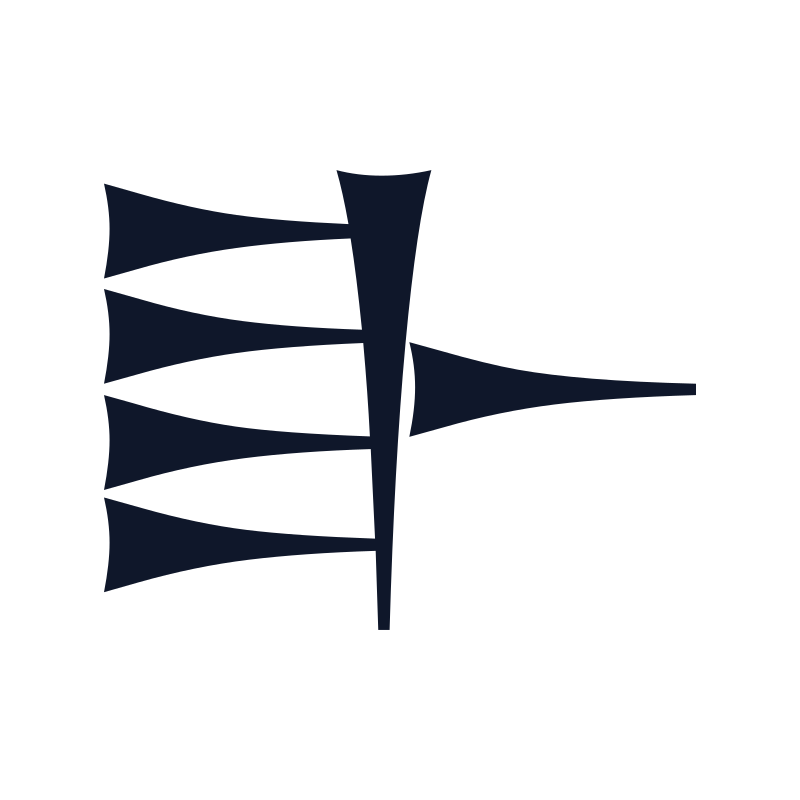 GAL · U+120F2
𒃲
great, large
One of the most frequent signs in the entire Sumero-Akkadian corpus, GAL (Akkadian 'rabû') means 'great', 'large', or 'chief', and also functions as the phonetic syllable 'gal'. In administrative, military, and temple records, it was appended to titles to denote the highest-ranking official—such as GAL.DUB.SAR ('Chief Scribe') or GAL.UKKIN ('Commander of the Assembly'). Its balanced geometry of horizontal wedges intersecting a vertical stem makes it a classic example of monumental cuneiform calligraphy.
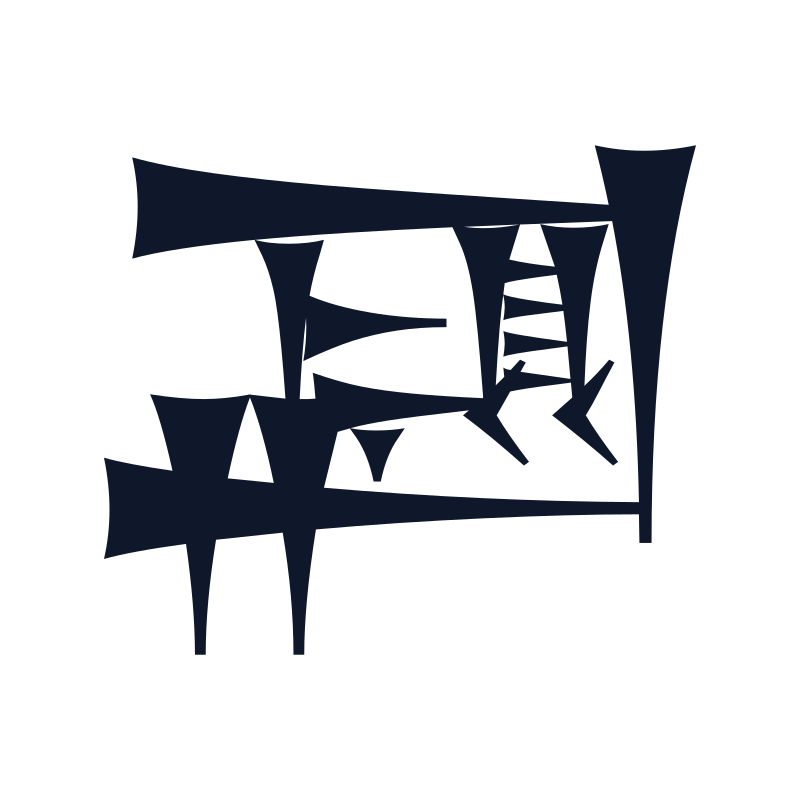 MEN (GA₂×ME.EN) · U+120DE
𒃞
royal crown, diadem
Formed in Unicode as a reduplicated royal sign (LUGAL over LUGAL) or the horned headdress emblem, MEN (Akkadian 'agû') designates the sacred royal crown or horned divine tiara of Mesopotamia. In Sumerian royal hymns and coronation rituals in cities like Ur and Nippur, the 'men-kù' ('pure crown') was bestowed directly by the high gods An and Enlil upon the rightful ruler as a symbol of legitimate sovereignty over the land.
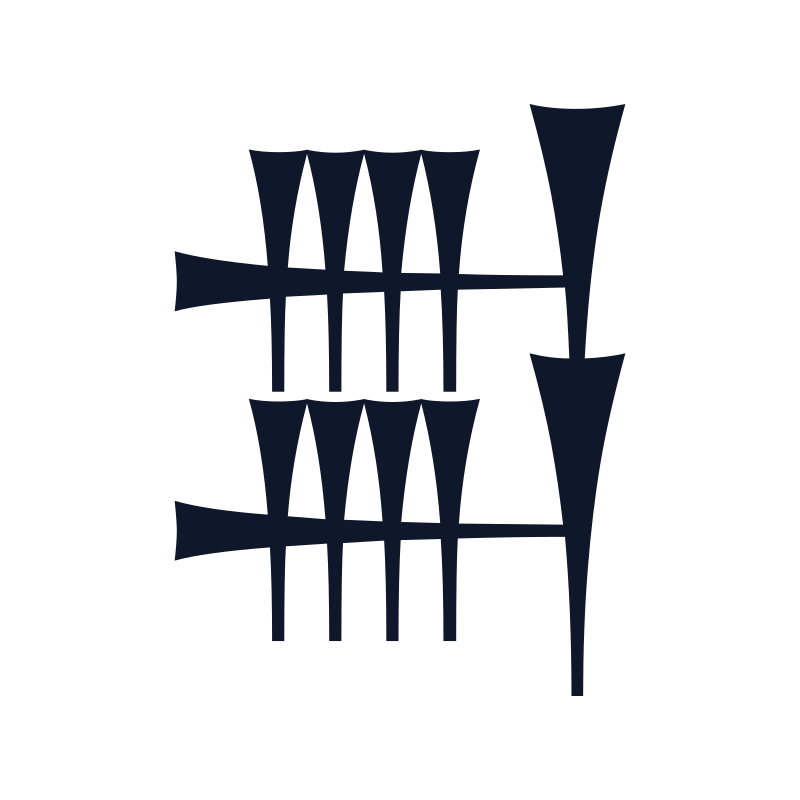 NIR · U+1226A
𒉪
sovereign prince, trust
Constructed by doubling the noble sign NUN ('prince') one above the other, NIR (Akkadian 'etellu') signifies a preeminent lord, sovereign ruler, or hero, and in compound verbs ('nir-ĝál') means 'to trust' or 'to have authority'. When preceded by the stone determinative NA₄, it designated prized banded agate or onyx ('hulālu') imported from Meluhha and Elam for royal jewelry and divine statues. Phonetically it writes the syllable 'nir'.
 DI / SILIM · U+12072
𒁲
legal judgment, peace
One of the pillars of Mesopotamian law and diplomacy: when read as DI (Akkadian 'dīnu'), this sign means 'legal judgment', 'lawsuit', or 'verdict'—forming 'di-ku₅' ('judge') on the famous black basalt stele of Hammurabi. When read as SILIM (Akkadian 'šulmu', cognate with Hebrew 'shalom' and Arabic 'salām'), it means 'peace', 'health', 'completeness', and 'reconciliation', appearing in the opening greeting of almost every Babylonian letter. Phonetically it writes the syllable 'di' (and 'de').
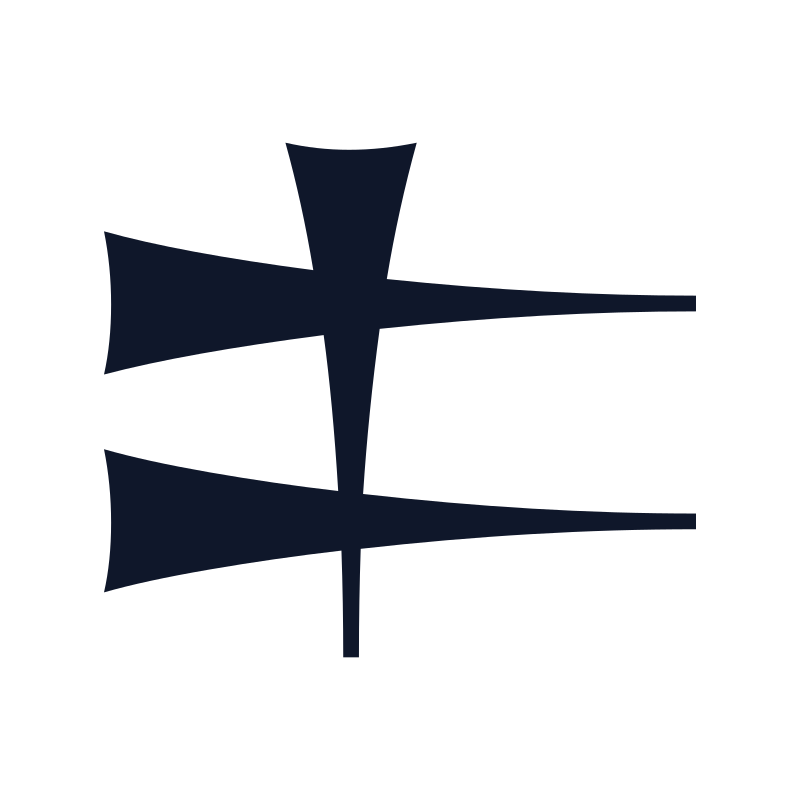 PA / GIDRU · U+1227A
𒉺
royal scepter, overseer
Originating from a pictogram of a leafy tree branch or ceremonial staff, this sign symbolizes executive authority in Mesopotamia. Read as GIDRU (Akkadian 'haṭṭu'), it means the royal scepter of justice handed by the gods to the king; read as UGULA (Akkadian 'aklu' or 'waklu'), it means 'overseer', 'foreman', or 'commander' in administrative tablets; and read as PA, it means 'tree branch', 'feather/wing' ('pa-mušen'), and writes the common phonetic syllable 'pa'.
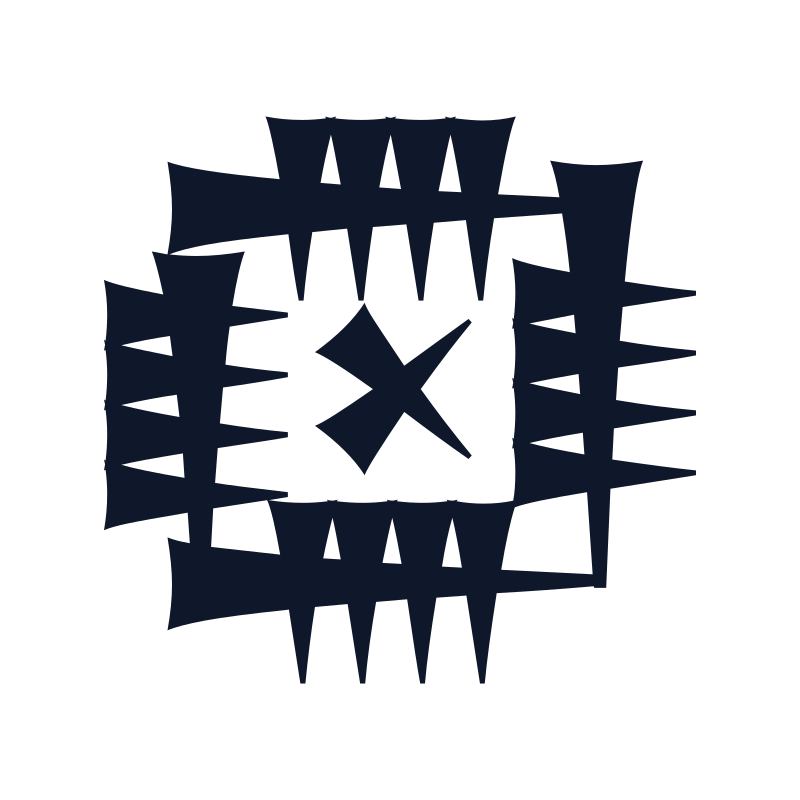 BARA₂ · U+12048
𒁈
raised throne-dais, sacred shrine
Depicting an ornate stepped platform or canopy enclosure, BARA₂ (Akkadian 'parakku') designates the raised brick throne-dais inside the innermost cella of a Mesopotamian temple where the cult statue of the deity or the consecrated king sat in state. By extension, 'bara₂' also meant 'ruler' or 'sovereign monarch' (as in the royal title 'bara₂-mah', 'exalted dais/sovereign'). In the Babylonian calendar, the first month of the New Year (Nisannu) was written ITI.BARA₂.ZAG.GAR ('Month of taking seat on the sanctuary dais').
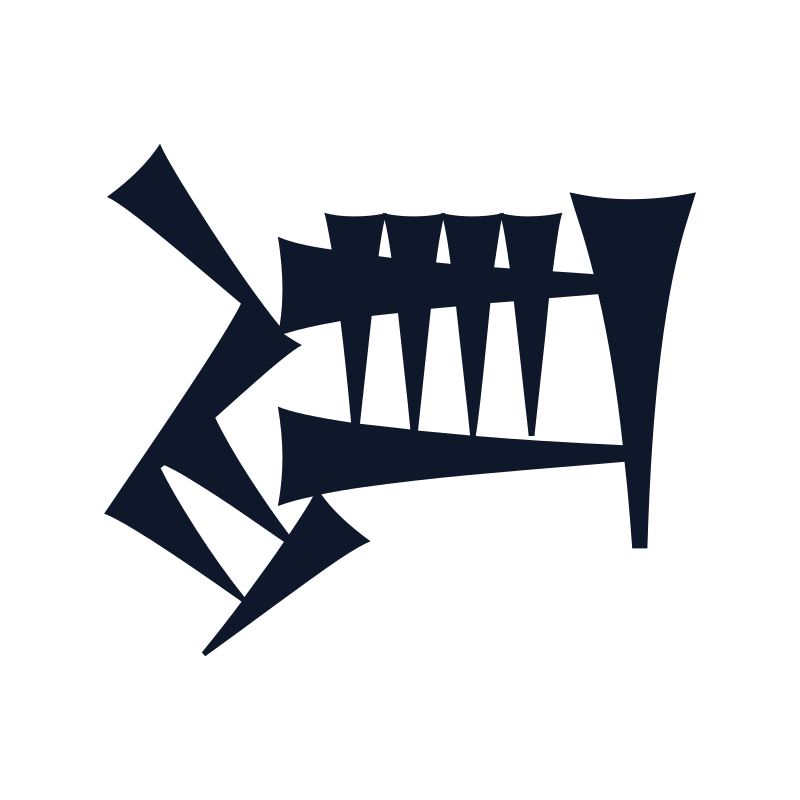 DUN / ŠUL · U+12084
𒂄
noble hero, young warrior
Read as ŠUL (Akkadian 'eṭlu'), this sign portrays a young man in the prime of physical strength—a 'hero', 'valiant warrior', or 'noble youth'—and forms the royal name of King Šulgi of Ur, the greatest patron of Sumerian literature and schools, as well as the title of the sun god Utu ('šul-utul'). Read as DUN (Akkadian 'herû'), it means 'to dig canals' or 'turn the soil'. Phonetically it writes the syllables 'šul' and 'dun'.
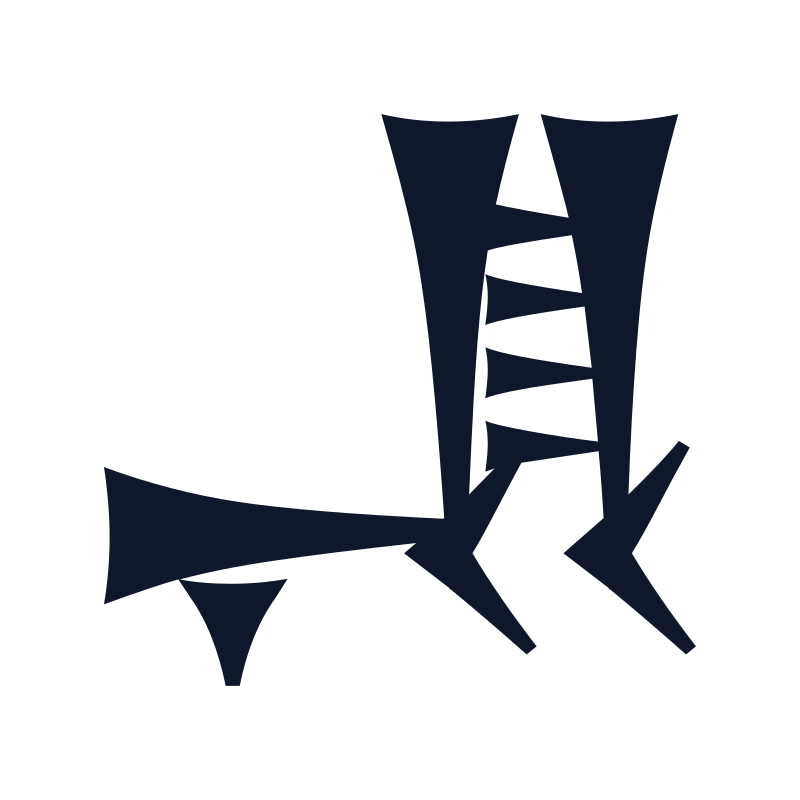 EN · U+12097
𒂗
lord, high priest/priestess
One of the noblest signs in Mesopotamian history: originating from an archaic Uruk pictogram of a ceremonial throne-platform with a backrest, EN (Akkadian 'bēlu', 'lord/master', and 'ēnu', 'high priest') was the title of the supreme ruler-priest of Uruk and of the royal High Priestess of the Moon God at Ur—most famously Enheduanna, daughter of Sargon and world history's first known named author. It begins the names of great gods like Enlil ('Lord Wind') and Enki ('Lord Earth'), and phonetically writes the syllable 'en'.
 GAM / GUR₂ · U+120F5
𒃵
to bow down, curved throwing-stick
Formed by two intersecting diagonal wedges evoking a bent posture or curved crook, GAM (and GUR₂, Akkadian 'kanāšu' and 'kadādu') means 'to bow down in reverence' before a deity or king, or 'to subdue enemies at one's feet'. Read as ZUBI (Akkadian 'gamlu'), it designates the sacred curved staff or throwing-stick of the gods (and the constellation Auriga, MUL.GAM). In Babylonian astronomy and mathematics, GAM also served as a diagonal separator sign, and phonetically writes 'gam' and 'kam₂'.
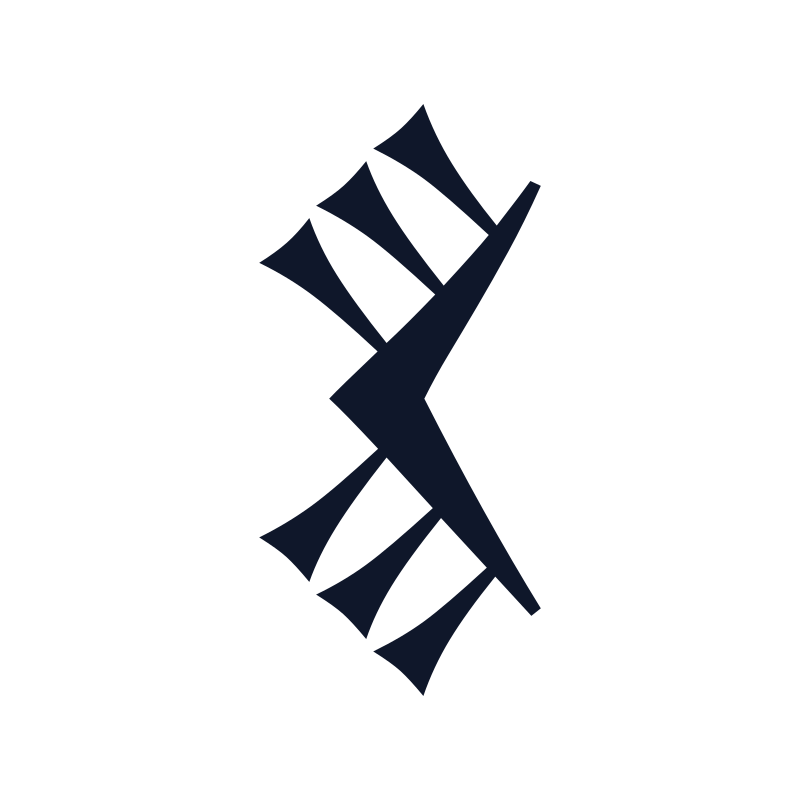 GAŠAN · U+120FD
𒃽
sovereign lady, queen
Originally formed as a stately gunû-augmented royal sign, GAŠAN is the Emesal ('women's / liturgical dialect') Sumerian equivalent of NIN, meaning 'Lady', 'Queen', or 'Sovereign Mistress' (Akkadian 'bēltu' and 'šarratu'). In liturgical temple laments and love hymns sung by 'gala' priests, the great goddesses Inanna, Ninhursag, and Ninlil were addressed as 'Gašan-an-na' ('Queen of Heaven') and 'Gašan-mah' ('Exalted Lady').
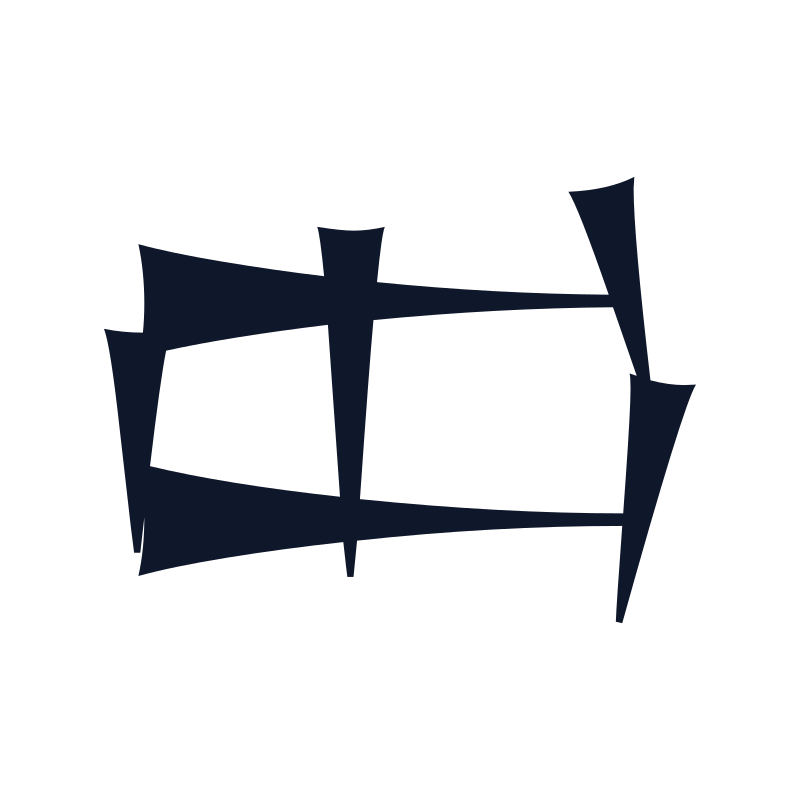 KAL / DAN / LAMMA · U+12197
𒆗
mighty, strong
A powerhouse sign of royal inscriptions: read as KALAG or DAN (Akkadian dannu), it means 'mighty, strong, powerful' (as in LUGAL KALAG.GA, 'mighty king'); read as KAL, it means 'precious or rare'; read as GURUŠ (Akkadian eṭlu), it denotes an able-bodied young man. Preceded by the divine determinative (dLAMMA, Akkadian lamassu), it names the famous winged human-headed bull or protective tutelary deity guarding palace gates.
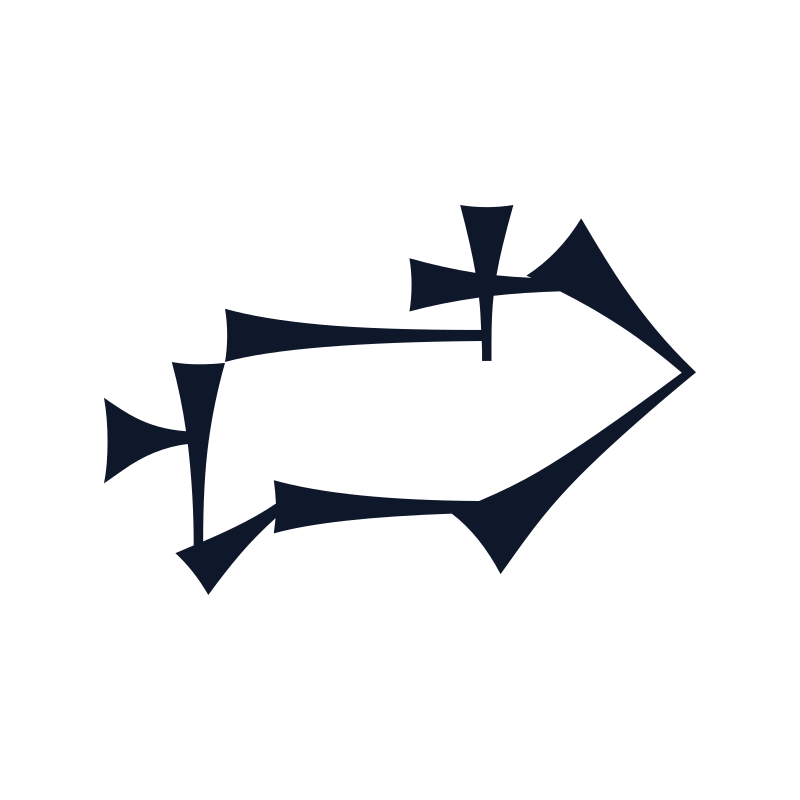 MAH · U+12224
𒈤
exalted, supreme
One of the noblest adjectives in Sumerian royal and religious literature, MAH (Akkadian ṣīru, rabû) means 'exalted, supreme, majestic, sublime, or preeminent'. It appears in divine names like Dingir-mah / Ninmah ('Exalted Lady', the mother goddess), temple names like E-mah ('Exalted House'), and the mythical dragon Mušhuššu / MUŠ.MAH ('Supreme Serpent').
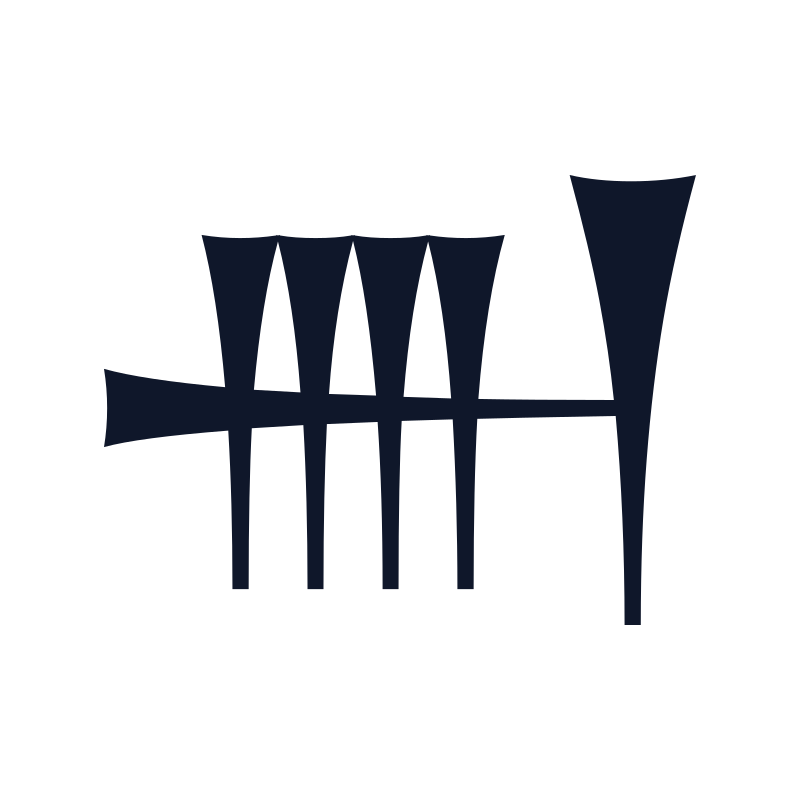 NUN / ERIDU · U+12263
𒉣
prince, noble
Meaning 'prince, noble, foremost, or royal ruler' (Akkadian rubû), NUN is intimately tied to Enki/Ea, the god of wisdom and subterranean sweet waters (the Abzu). With the place determinative (NUN.KI), it writes the name of Eridu—the oldest city in Sumerian tradition, seat of Enki's temple E-abzu, and birthplace of Mesopotamian civilization.
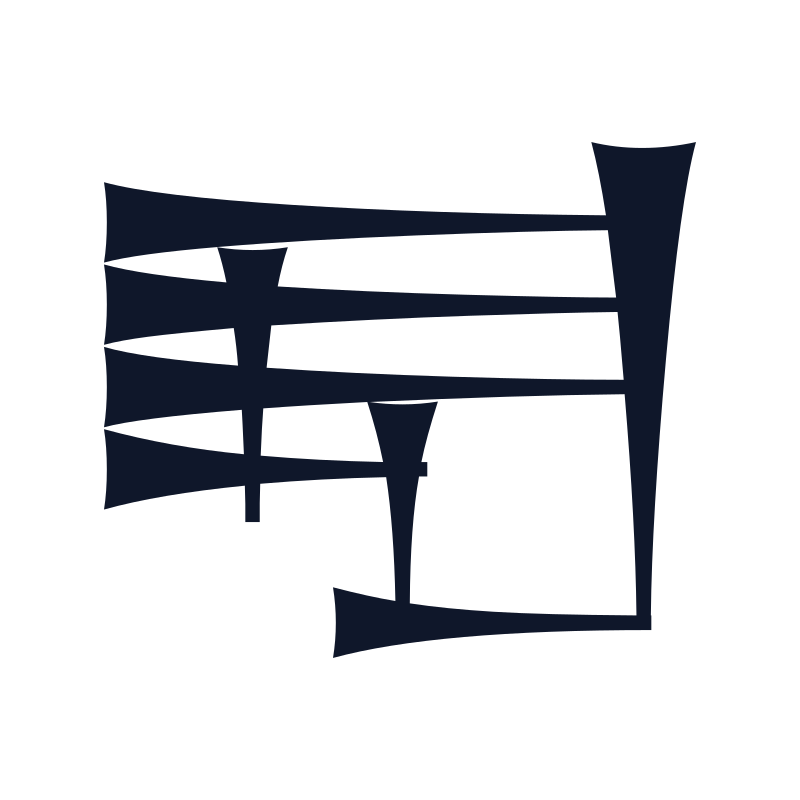 ŠID / SANGA · U+122C3
𒋃
to count, reckon
A cornerstone sign of Mesopotamian bureaucracy and mathematics: read as ŠID (Akkadian manû, minûtu; NÍG.ŠID = nikkassu), it means 'to count, calculate, settle financial accounts, or recite an incantation'. Read as SANGA (Akkadian šangû), it designates the chief temple administrator who oversaw those accounts, and read as LAG (Akkadian kirbānu), it means a lump or clod of clay.
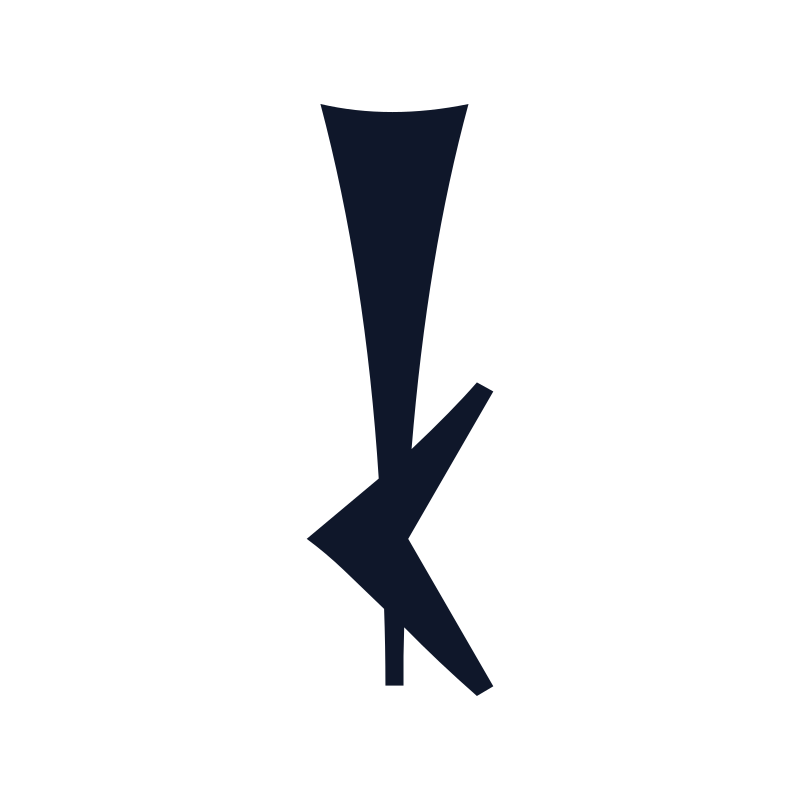 ŠU₂ (ŠÚ) · U+122D9
𒋙
to cover, sunset
Originally a pictograph of a dome or overarching sky covering the earth, ŠU₂ (Akkadian katāmu, sahāpu, erēbu) means 'to cover, overwhelm, darken, or set (of the sun and stars)'—hence denoting sunset and the West. Because the dome of heaven covers the entire world, ŠU₂ was adopted as the concise royal logogram for kiššatu ('the universe') in the imperial Assyrian and Babylonian title LUGAL ŠU₂ (šar kiššati, 'King of the Universe').
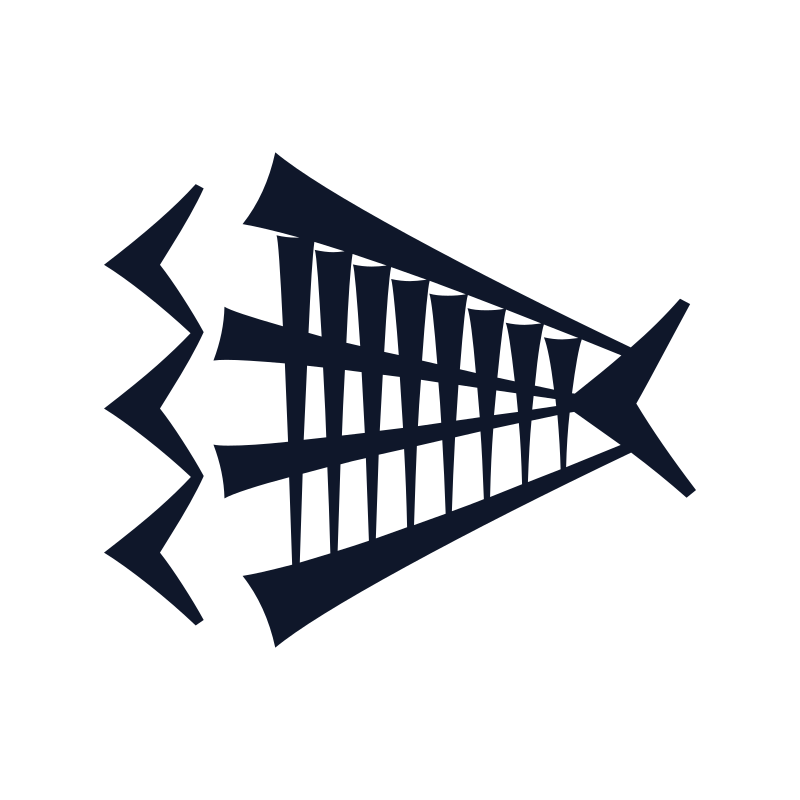 SUHUR · U+122E6
𒋦
giant Euphrates carp, crest
Denoting both a tuft, crest, or palm-tree crown (Akkadian qimmatu) and, with the fish determinative (SUHUR.KU₆, Akkadian purādu), the giant barbel carp of the Euphrates and Tigris rivers. Combined with MAŠ₂ ('goat'), SUHUR.MAŠ₂.KU₆ (Akkadian suhurmāšu) names the mythical amphibious 'Goat-Fish' of the wisdom god Enki/Ea—the direct Babylonian ancestor of our zodiac sign Capricorn.
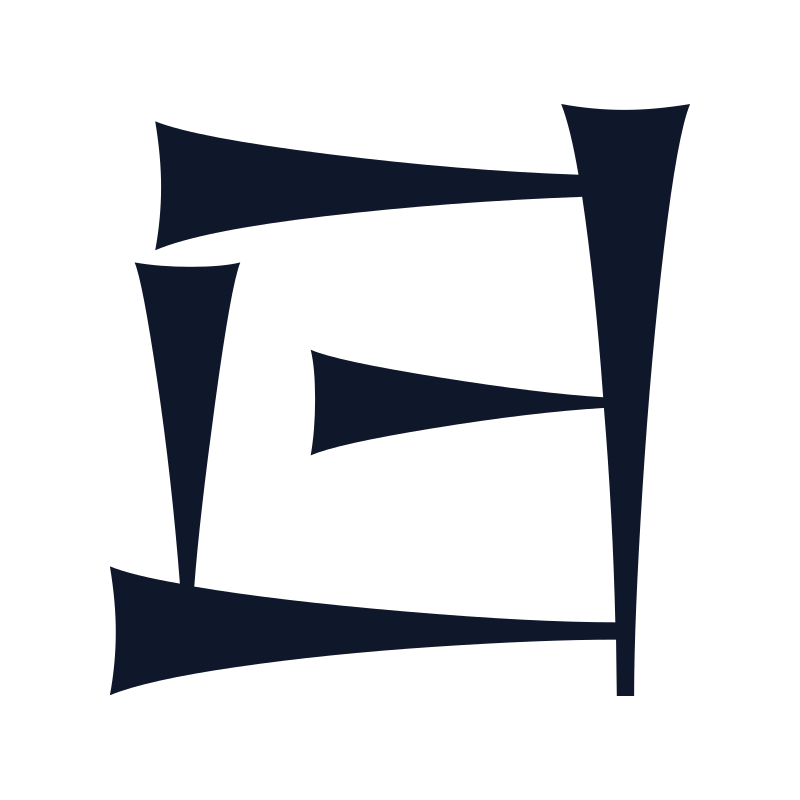 DUR₂ (TUŠ) · U+12089
𒂉
to sit enthroned, dwell
Originally a variant of the seat sign KU with internal strokes, this sign read as TUŠ or DUR₂ (Akkadian ašābu, šubtu) means 'to sit down, sit enthroned, dwell, or reside' as well as 'seat, dwelling, or foundation'. With the wood determinative (GIŠ.DUR₂), it also denotes a wooden board or bench.
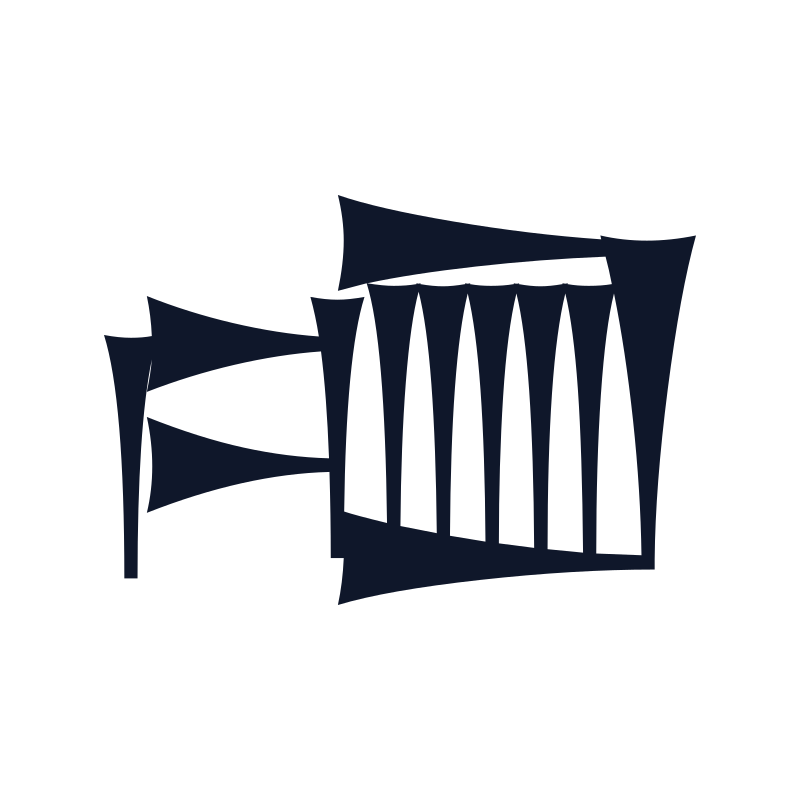 MES / MIŠ · U+12229
𒈩
noble hero, princely youth
Read as MES (Akkadian eṭlu, māru), this sign means 'noble youth, princely hero, or firstborn son'—immortalized in Early Dynastic royal names from the Royal Cemetery of Ur such as Meskalamdug ('Hero of the Good Land') and Mesannepada ('Hero Chosen by An'). With the wood determinative (GIŠ.MES, Akkadian mēsu), it names the sacred hackberry/ebony-like tree termed in myth 'the flesh of the gods', and phonetically reads /mes/ and /miš/.
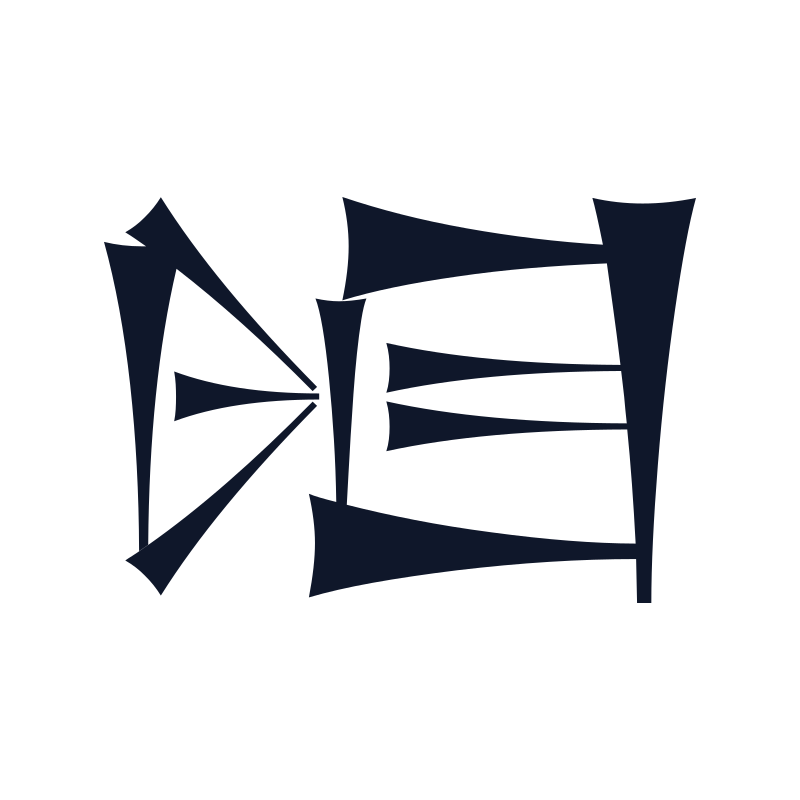 NIN / EREŠ (MUNUS.TUG₂) · U+1238F
𒎏
queen, sovereign lady
Formed as a ligature of MUNUS ('woman', 𒊩) and TUG₂ ('royal robe/veil', 𒌆), NIN (also read EREŠ, Akkadian bēltu and šarratu) is the supreme Sumerian title for 'Queen, Lady, Mistress, or Sovereign Goddess'. It opens the names of dozens of major Mesopotamian deities and rulers, including Ninlil ('Lady of the Wind'), Ninhursag ('Lady of the Mountain'), Ninkasi ('Lady of Beer'), Ereshkigal ('Queen of the Great Below'), and Ninurta.
 TAR · U+122FB
𒋻
to cut, decide
Cuneiform sign TAR or KUD (Borger MZL 19, U+122FB), originally depicting a blade cutting across a line. Logographically it means 'to cut', 'to separate', or 'to decree fate/judgment' (Sumerian kud, tar; Akkadian parāsu, nakāsu), especially in the compound nam-tar ('to decree destiny'), and also reads sila ('street' or 'liter measure').
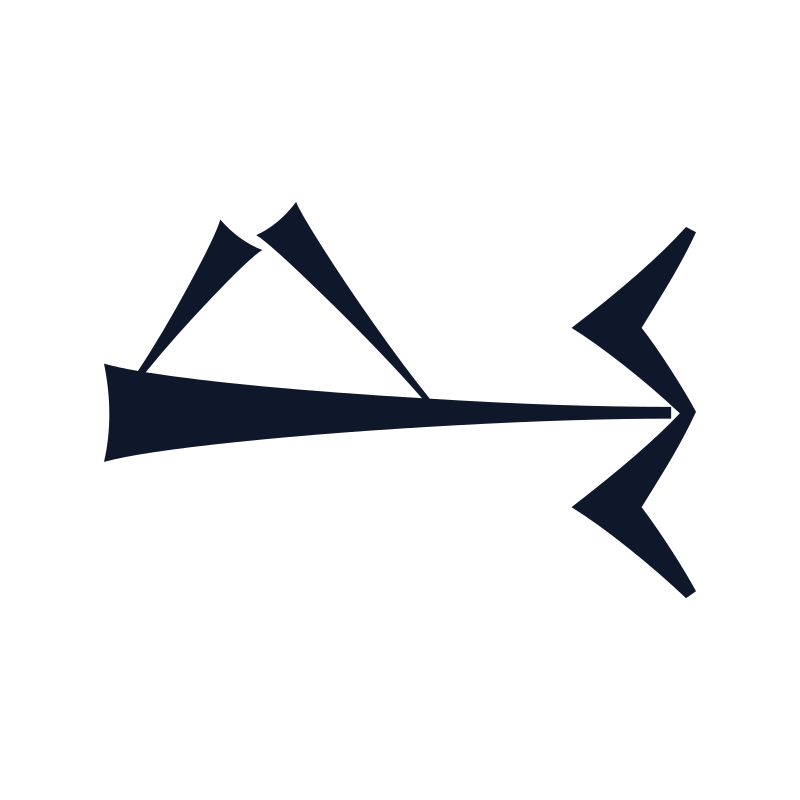 URI3 · U+12336
𒌶
standard, guard, brother
Cuneiform sign URI₃ / ŠEŠ (Borger MZL 535, U+12336), originally depicting a sacred temple standard or gatepost with a banner. It means 'standard, emblem' (urin; Akkadian urinnu), 'to guard, protect' (uru₃; Akkadian naṣāru), 'brother' (šeš; Akkadian aḫu), and writes the name of the city of Ur (Urim₂/₅).
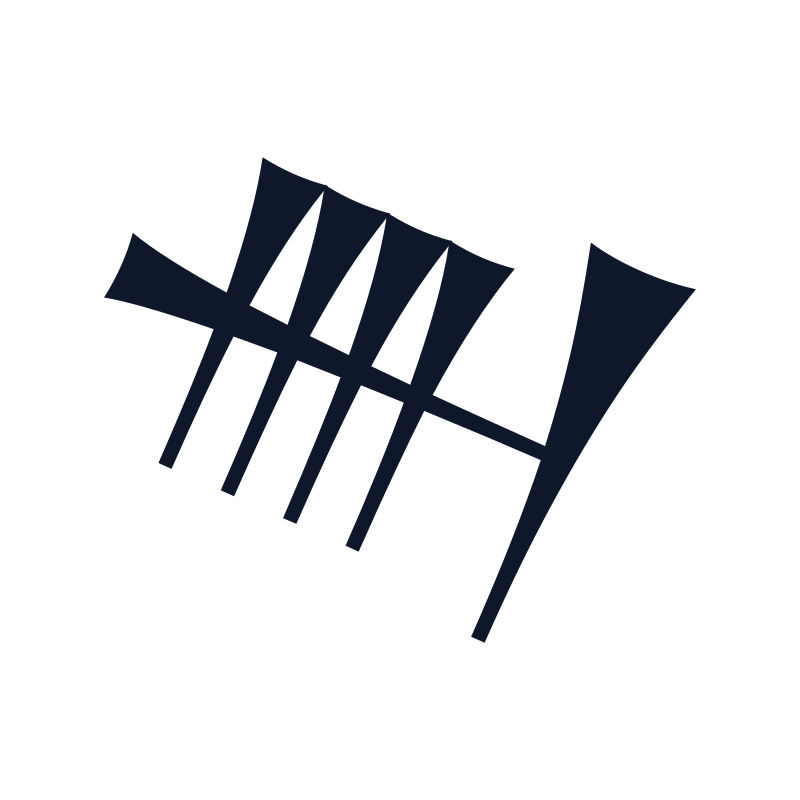 NUN_TENU · U+12269
𒉩
prince, noble
Cuneiform sign NUN-tenû (Borger MZL 144, U+12269), the slanted (tenû) graphic variant of the princely sign NUN, attested in Babylonian lexical tablets and compound ideograms connected with nobility and temple service.
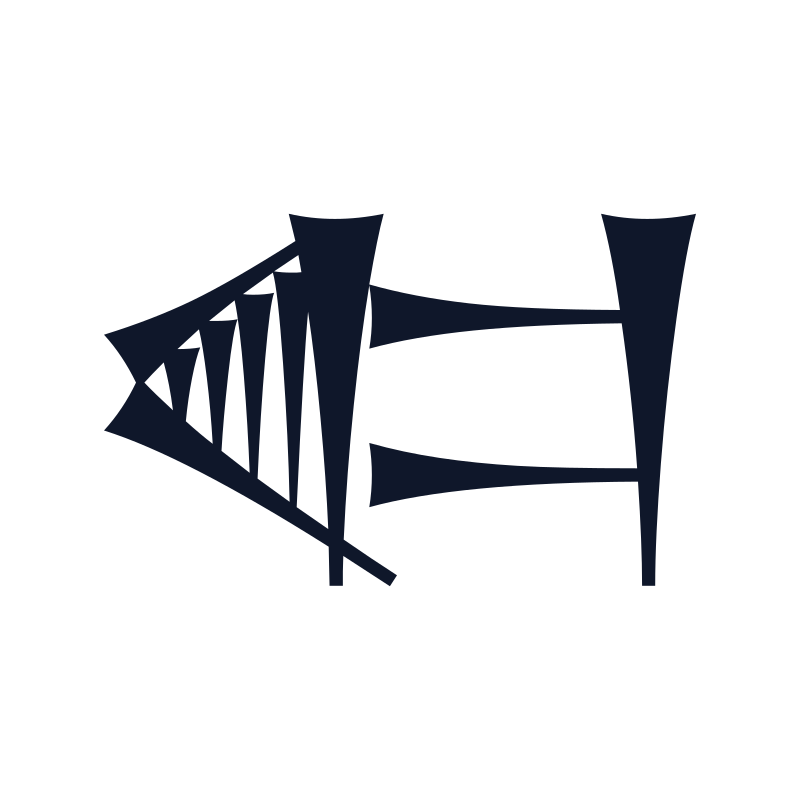 DUL3 · U+122A8
𒊨
protective shade, canopy
Cuneiform sign SAG-gunû, read DUL₃ (Borger MZL 228, U+122A8), ornamenting the head sign SAG with gunû strokes. It means 'protective shade, canopy, divine aegis' (Sumerian dul₃, an-dul₃; Akkadian ṣulūlu, andullu), frequent in royal personal names praising a god's protection.
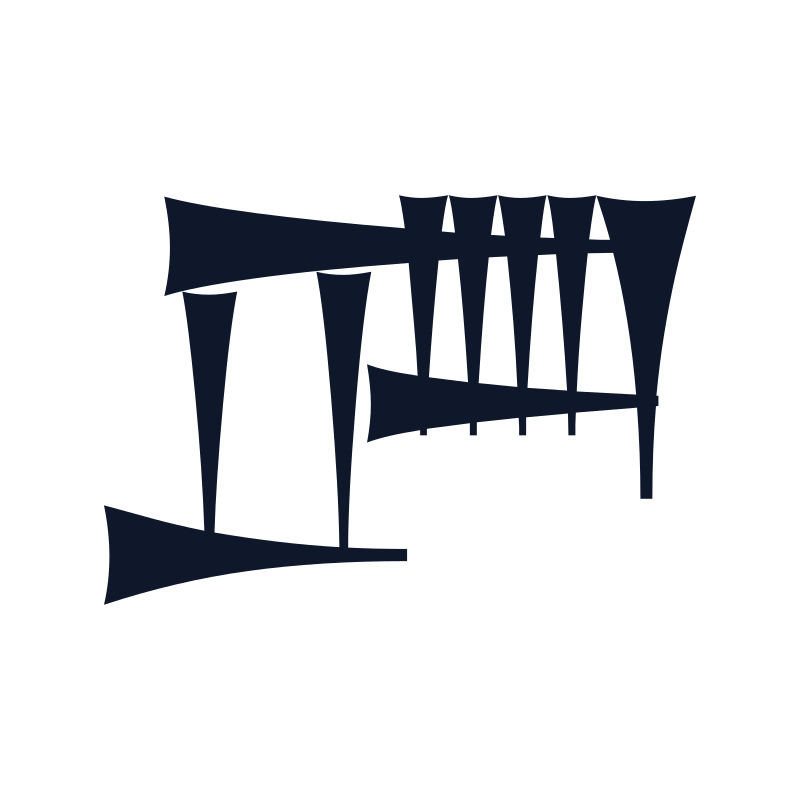 ALAM · U+12086
𒂆
statue, image
Cuneiform sign DUN₃-gunû, read ALAM or ALAN (Borger MZL 359, U+12086). It is the primary Sumerian logogram for a 'statue, sculpted image, royal monument, or physical form' (Sumerian alan, alam; Akkadian ṣalmu, lānu), ubiquitous in Gudea's statue inscriptions and royal stelae.
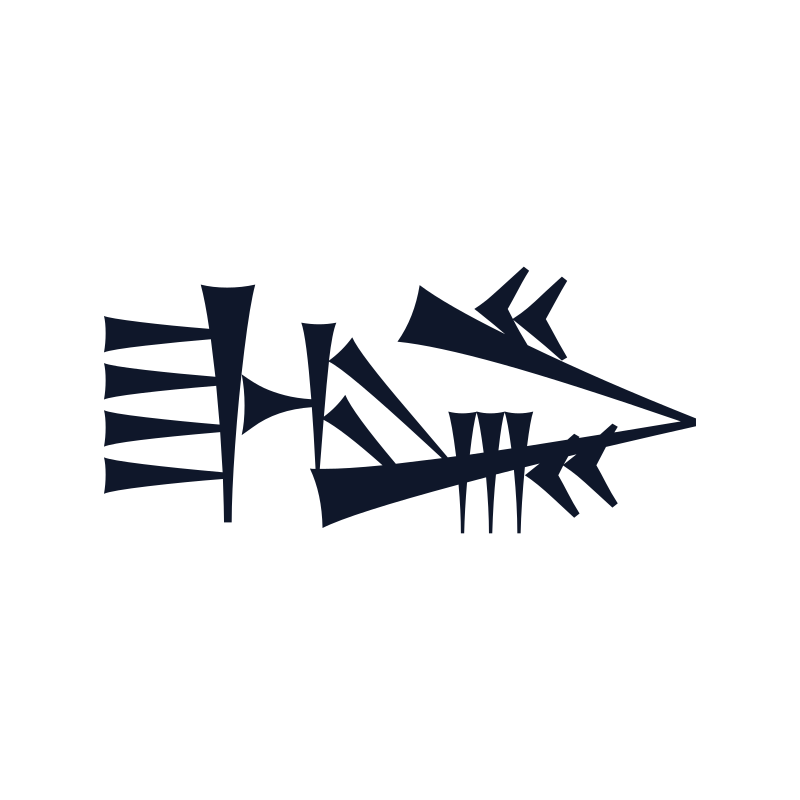 LUGAL_SHESHIG · U+1221A
𒈚
sovereign king, monarch
Cuneiform sign LUGAL-šešig (U+1221A), augmenting the royal logogram LUGAL ('king') with šešig strokes in Mesopotamian lexical lists to denote supreme kingship or an exalted ruler.
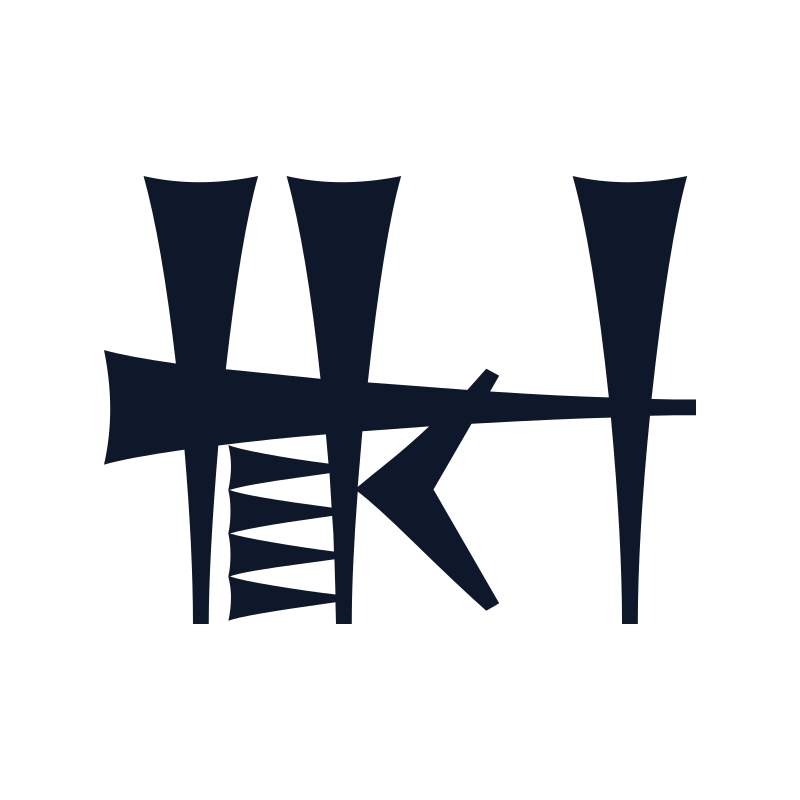 SUH · U+1223D
𒈽
diadem, ornament, choose
Cuneiform sign MUŠ₃-gunû, read SUḪ (Borger MZL 160, U+1223D), ornamenting the Inanna emblem MUŠ₃ with gunû strokes. It denotes a 'jeweled crown, diadem, or pectoral ornament' (Sumerian suḫ, suḫ-keš₂; Akkadian tiqnu) and the verb 'to choose, select the finest' (Akkadian nasāqu).
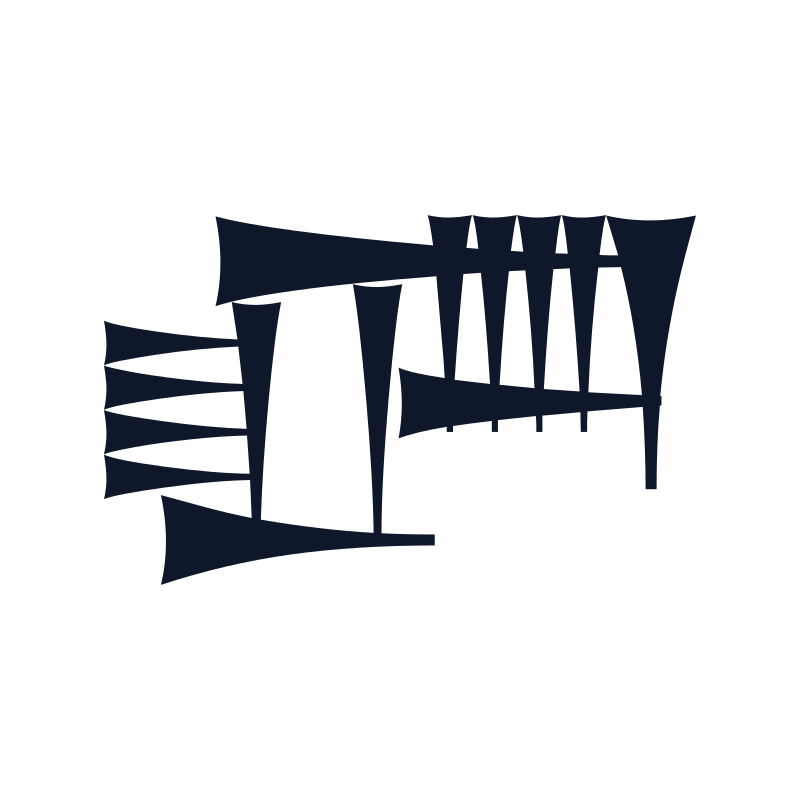 MIR · U+12087
𒂇
crown, storm, herald
Important cuneiform sign DUN₃-gunû-gunû, read MIR, AGA₃, or NIMGIR (Borger MZL 546, U+12087). As aga₃/mir it denotes a 'royal crown, tiara' (Akkadian agû); as mir it means 'fierce storm, north wind, wrath, or horned viper' (Akkadian meḫû, ištānu, uzzu); as nimgir it means 'city herald' (Akkadian nāgiru); and phonetically it writes the syllable mir.
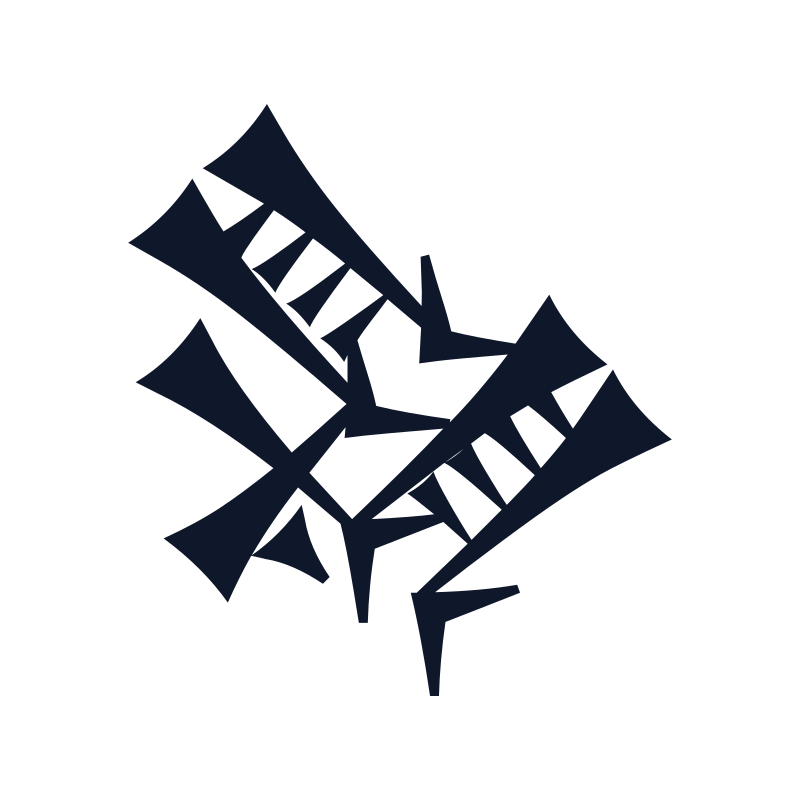 EN_CROSS_EN · U+1209B
𒂛
mutual dominion, lords
Cuneiform sign EN crossing EN (U+1209B), a symmetrical compound ideogram formed by two intersecting EN ('lord, high priest') signs in Babylonian scholarly lexical lists.
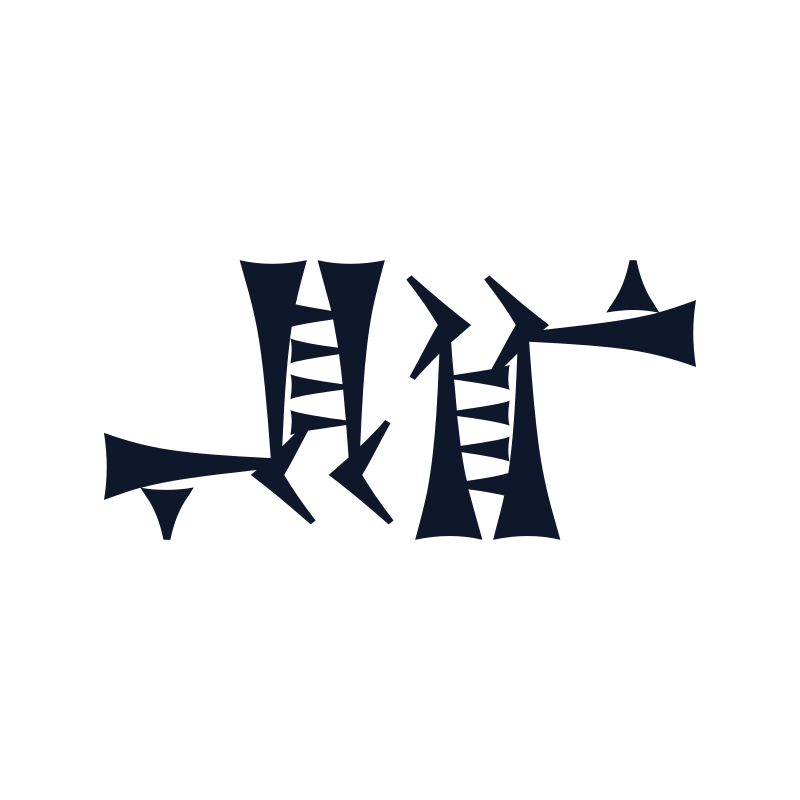 EN_OPP_EN · U+1209C
𒂜
opposing lords, council
Cuneiform sign EN opposing EN (U+1209C), depicting two EN ('lord') signs facing one another in mirror symmetry, preserved in Babylonian lexical lists.
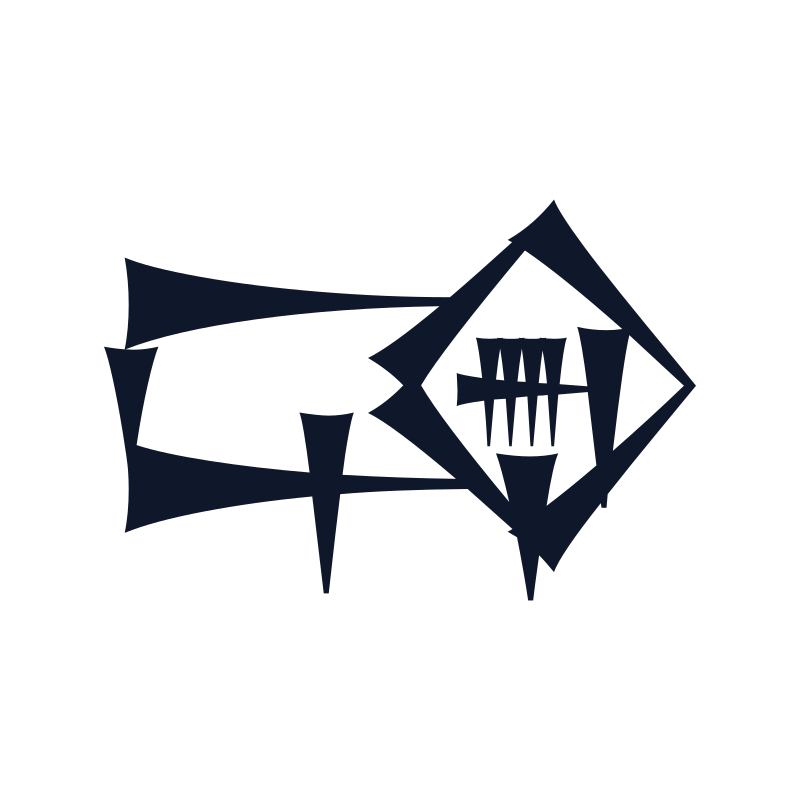 GU2_NUN · U+1211B
𒄛
princely collar, embankment
Cuneiform sign GU₂×NUN (Borger MZL 190, U+1211B), combining GU₂ ('neck, riverbank') with NUN ('princely, great') in Babylonian lexical traditions.
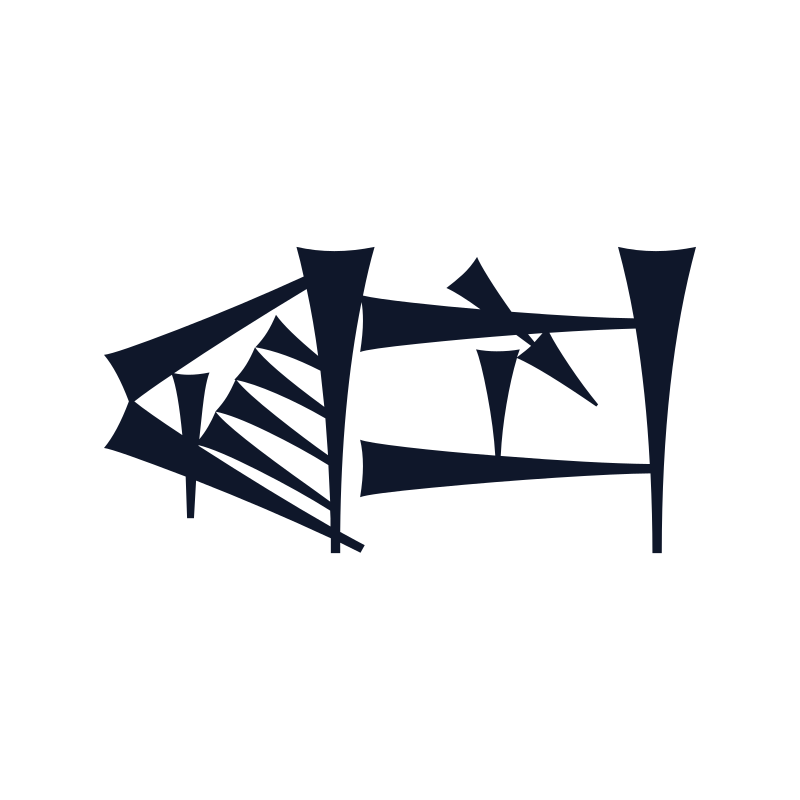 KA×TAR · U+12186
𒆆
praise, decisive word, verdict
KA×TAR (𒆆) combines KA ('mouth, word') with an inscribed TAR ('to cut, decide, judge'). Closely connected to the Sumerian compound `ka-tar` ('praise, glory', Akkadian `dalīlu`) and oral legal decisions, it signifies a definitive pronouncement or exalted praise.
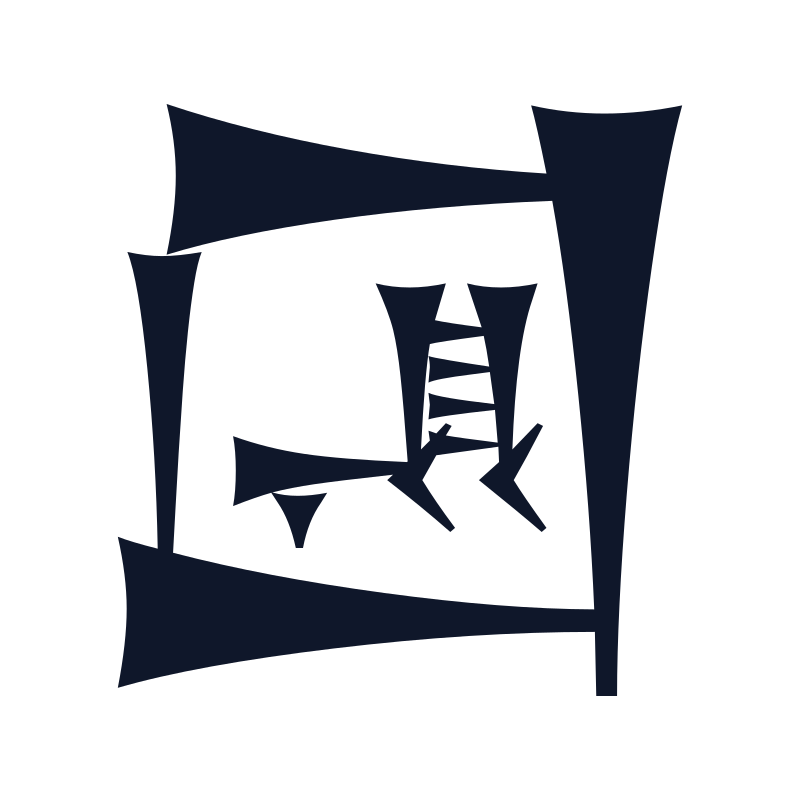 LAGAB×EN · U+121C3
𒇃
lordly precinct, cloister
LAGAB×EN (𒇃) places the sign EN ('lord, high priest/priestess') inside the enclosure LAGAB. Attested in Babylonian lexical compendia, it signifies the walled precinct or sacred cloister of an `en`-priest or ruler.
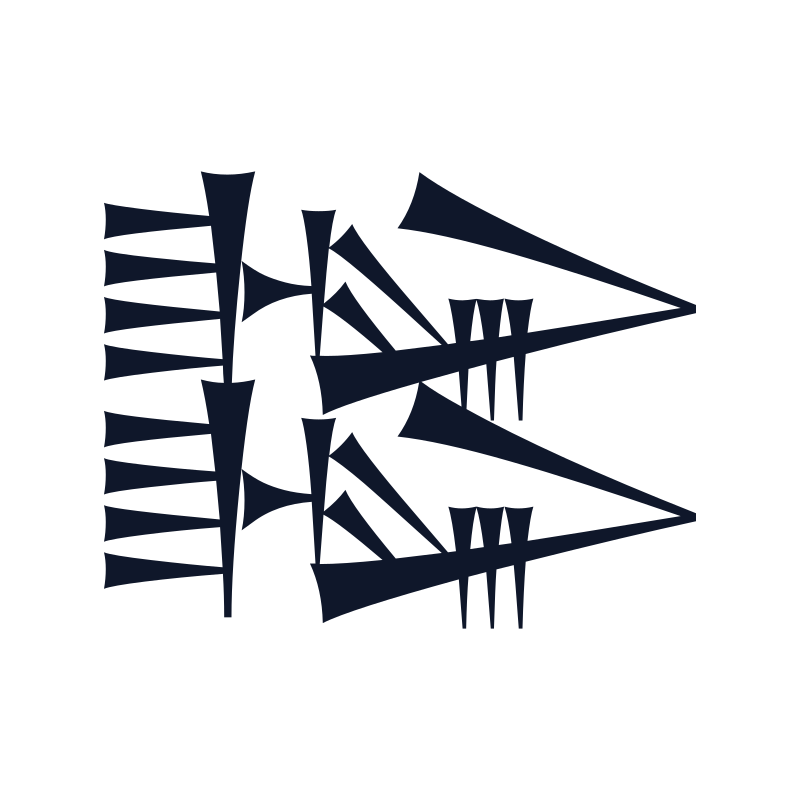 LUGAL/LUGAL · U+12218
𒈘
all kings, king of kings
LUGAL OVER LUGAL (𒈘) is the vertically reduplicated form of LUGAL ('king'). Expressing collective plurality (`lugal-lugal`, Akkadian `šarrānu`), it denotes 'all kings, monarchs of the lands' or supreme sovereignty ('king of kings').
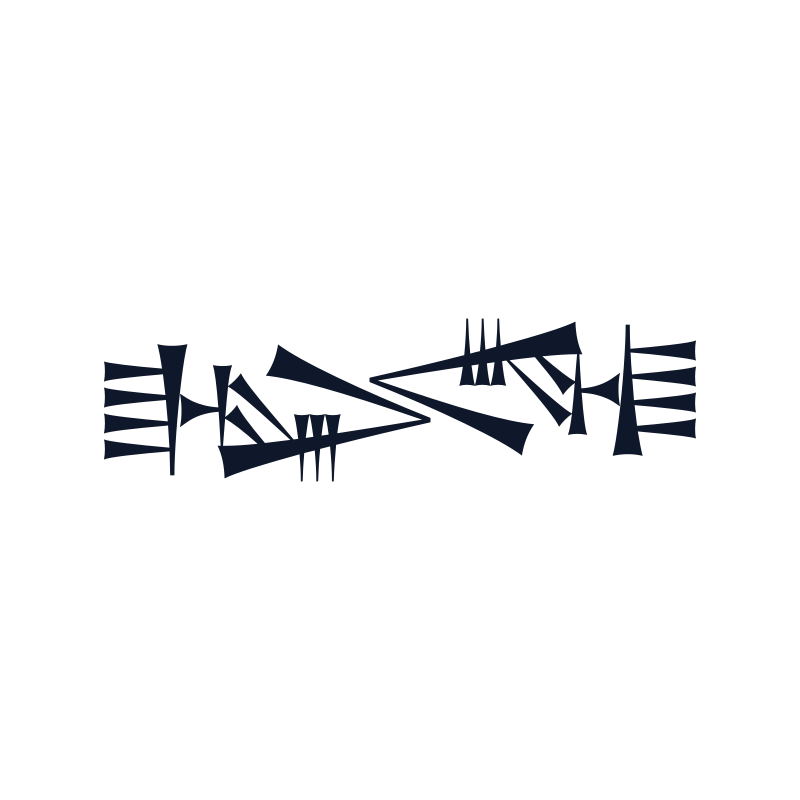 LUGAL.LUGAL · U+12219
𒈙
rival kings, equal monarchs
LUGAL OPPOSING LUGAL (𒈙) places two LUGAL ('king') signs facing one another. In Mesopotamian lexical and historical-omen traditions, it depicts two monarchs confronting each other in war or meeting as equal sovereigns (`šarru mehri šarri`) in diplomacy.
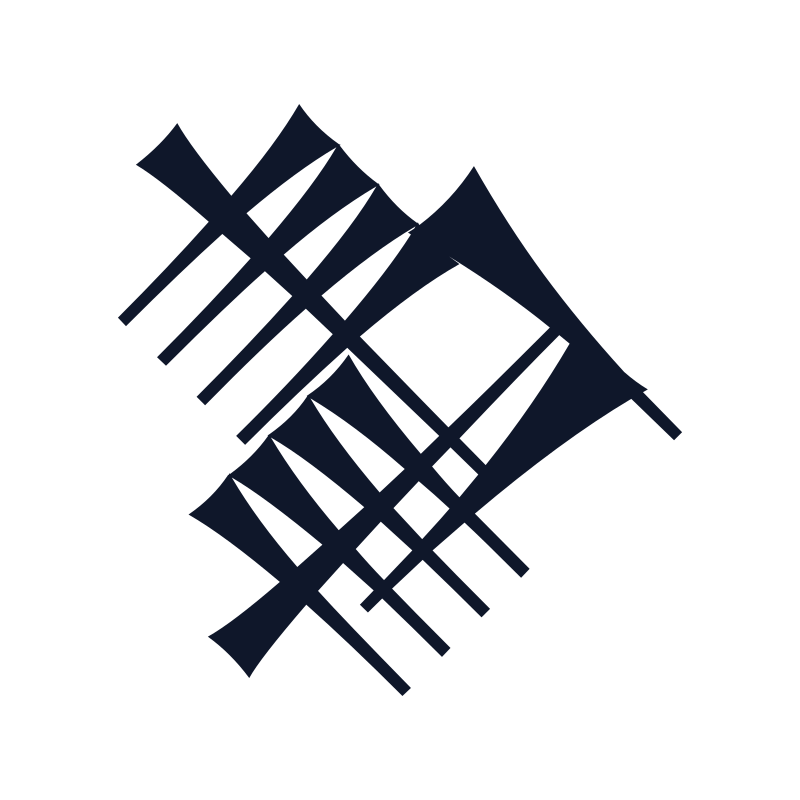 NUN×NUN · U+1226B
𒉫
noble assembly, princes
NUN CROSSING NUN (𒉫) is a symmetric compound glyph formed by two intersecting NUN ('prince, noble, lord') signs. In Mesopotamian lexical lists, it denotes contending princes, an assembly of nobles (`rubû`), or an ornate crossed architectural motif.
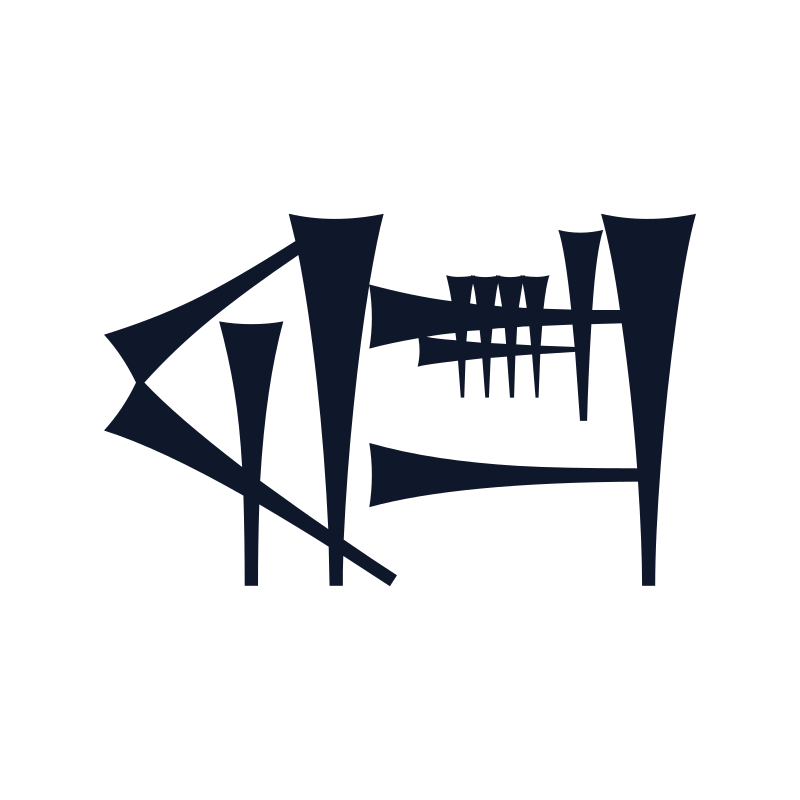 DILIB3 · U+1229E
𒊞
princely head, noble locks
SAG×NUN (𒊞, read `dilib₃` in lexical lists) combines SAG ('head, foremost') with an inscribed NUN ('prince, noble'). It denotes a princely or exalted head, long flowing locks of hair (`ugu-dilib`), or a supreme chieftain (`sag-nun`).
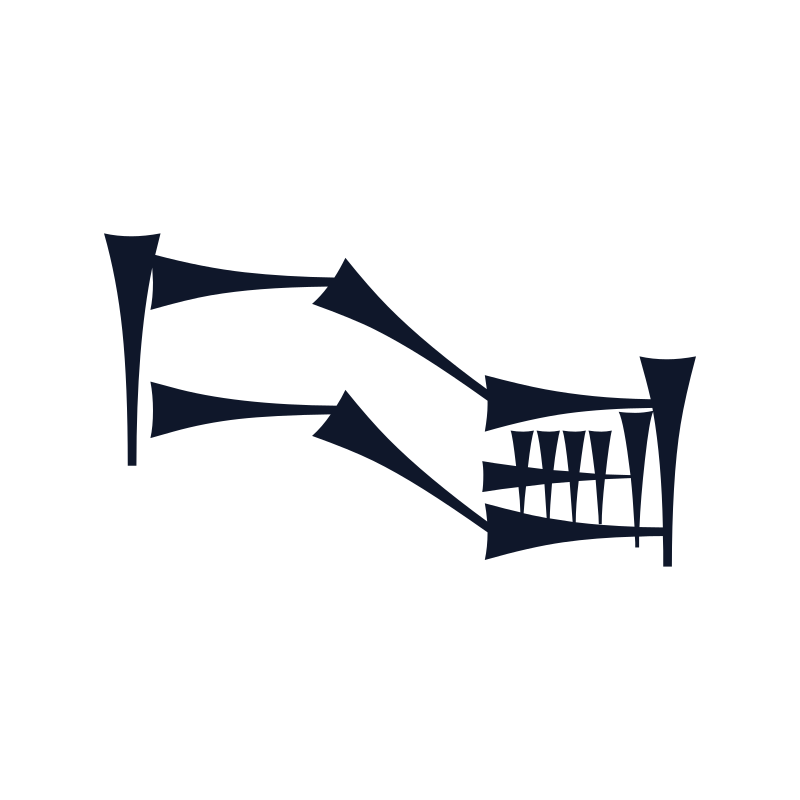 UR2×NUN · U+12330
𒌰
noble foundation, royal root
UR₂×NUN (𒌰) combines UR₂ ('root, foundation, lap, thighs'; Akkadian `išdu`, `sūnu`) with NUN ('prince, noble'). In Sumerian hymnic and lexical contexts, it evokes a firm royal foundation, noble ancestry, or being nurtured on a princely lap.
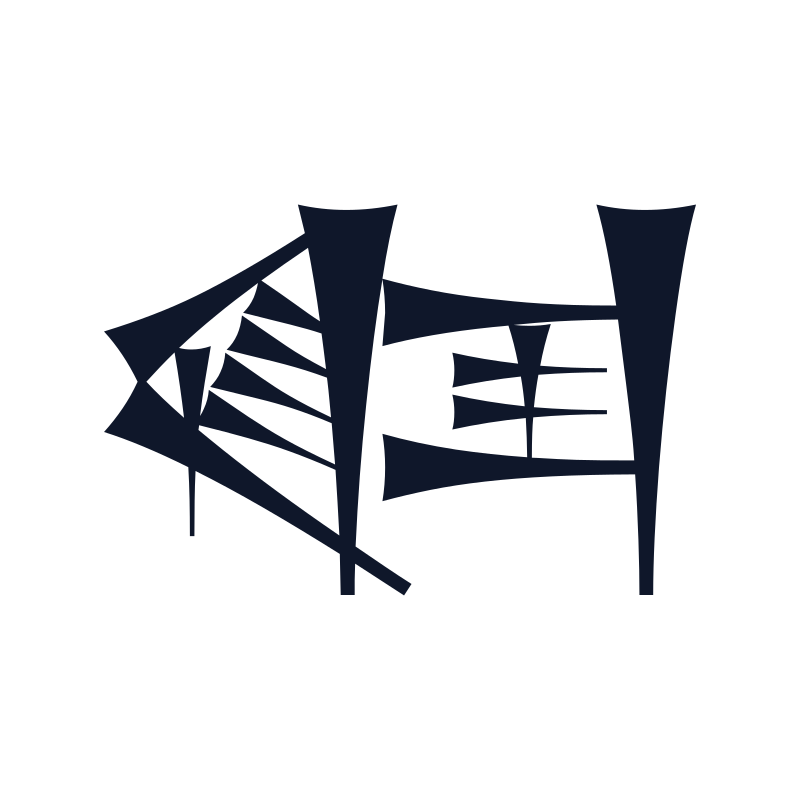 KA×PA · U+12384
𒎄
command, decree, order
KA×PA (𒎄) encloses PA ('scepter, overseer, branch') within KA ('mouth, word, command'). In Mesopotamian lexical lists, it signifies an authoritative spoken order, an overseer's directive, or an official decree.
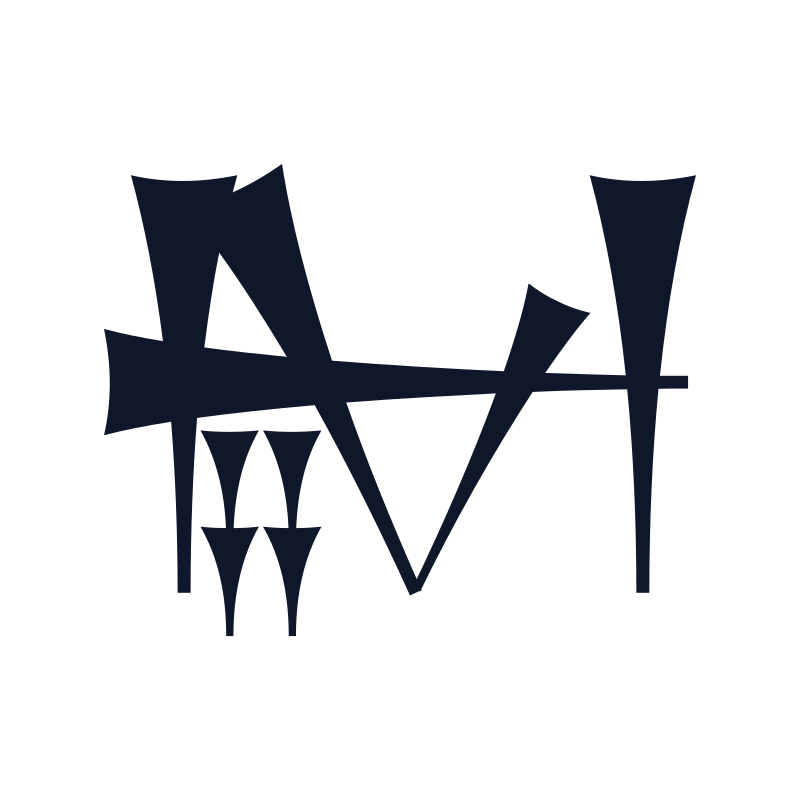 SUH · U+1238D
𒎍
jeweled crown, diadem
SUH (𒎍, structurally MUŠ₃×ZA, 'Inanna's headband + precious stone/lapis') is the Sumerian logogram for a 'jeweled crown, diadem, necklace, or royal ornament' (Akkadian `tiqnu`, `erimmatu`), as well as the verb 'to choose, select' (`suh`).
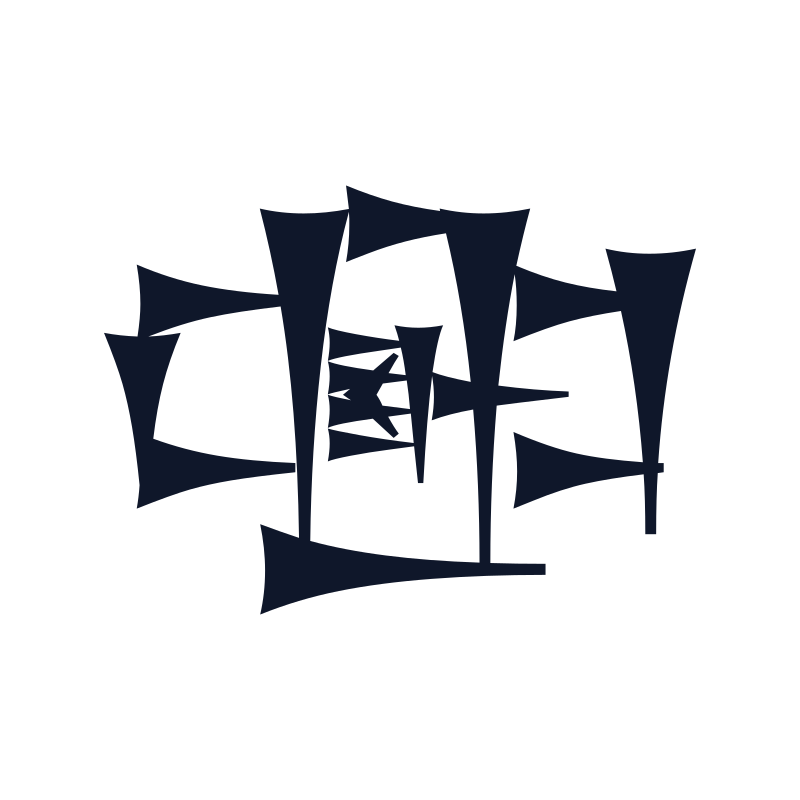 UBARA · U+120AB
𒂫
divine protection, civic privilege
EZEN×IGI-gunû (𒂫) is a classical graphic variant of UBARA (Akkadian kidinnu, kidinnūtu), formed by placing IGI-gunû (𒅇 / SIG₇, radiant watching eye) inside EZEN (𒂦). It signifies 'divine protection', 'sanctuary privilege', or the protected legal status granted to citizens of sacred temple cities and foreign guests under royal patronage.
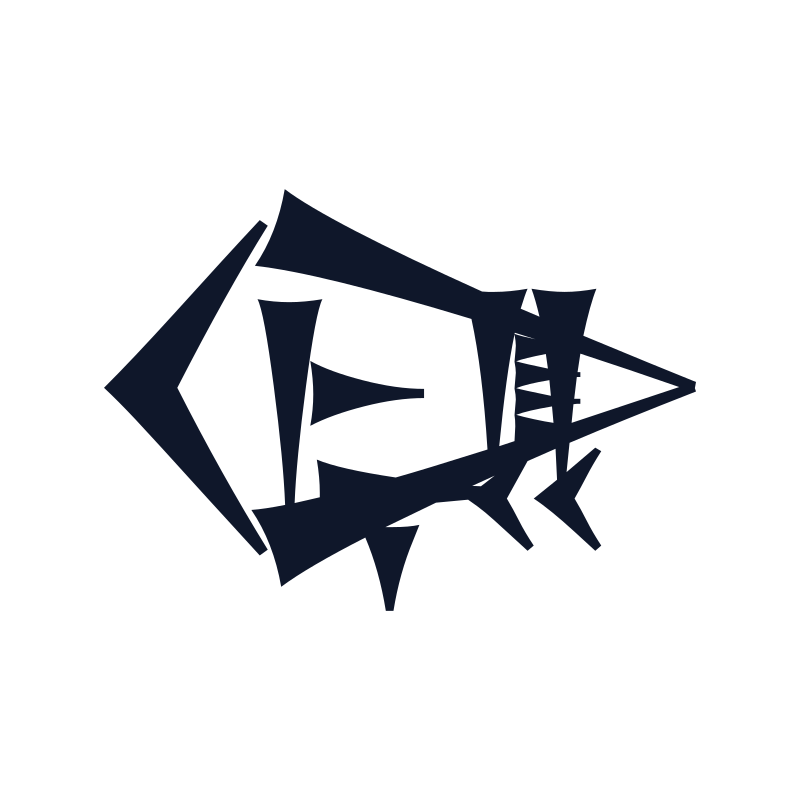 AB2xME.EN · U+12019
𒀙
crowned sacred cow, royal tiara
AB₂×ME.EN (𒀙) places the two signs ME (𒈨, divine office) and EN (𒂗, lord)—which together spell MEN (𒈥, crown)—inside the horned head frame AB₂ (𒀖, cow). In Sumerian-Akkadian lexical lists, it serves as an ornate variant of MEN (crown or tiara) and an epithet of mother goddesses revered as the crowned sacred cow of heaven.
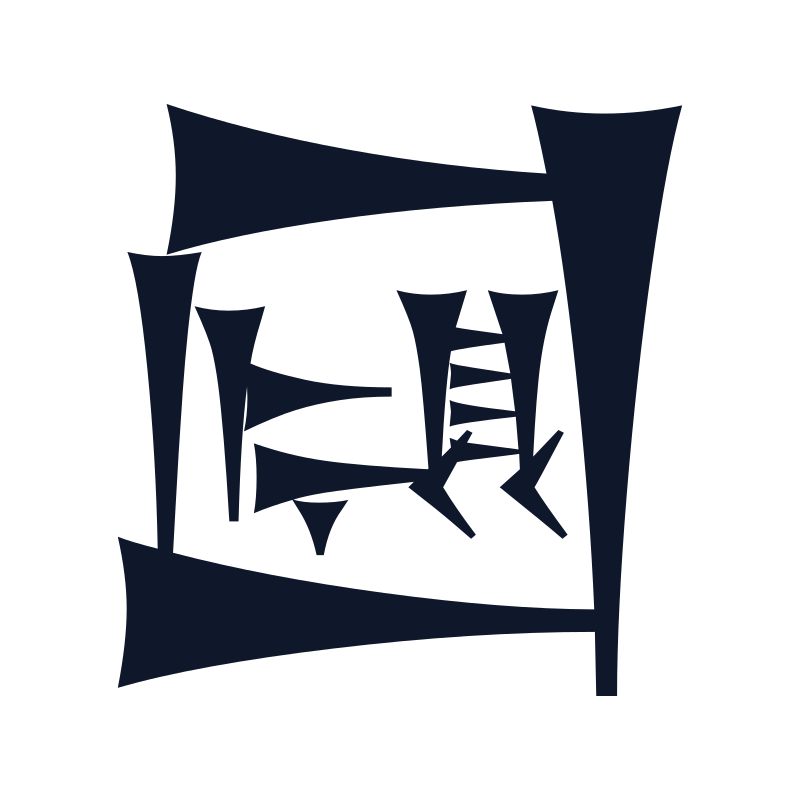 LAGABxME.EN · U+121D9
𒇙
circular diadem, crown band
LAGAB×ME.EN (𒇙) encloses the two signs ME (𒈨) and EN (𒂗)—which together spell MEN (crown)—within the circular ring sign LAGAB (𒇉). In Babylonian lexical lists (Ea I), it represents a circular royal headband, diadem, or ring-shaped crown worn as an emblem of sovereignty.
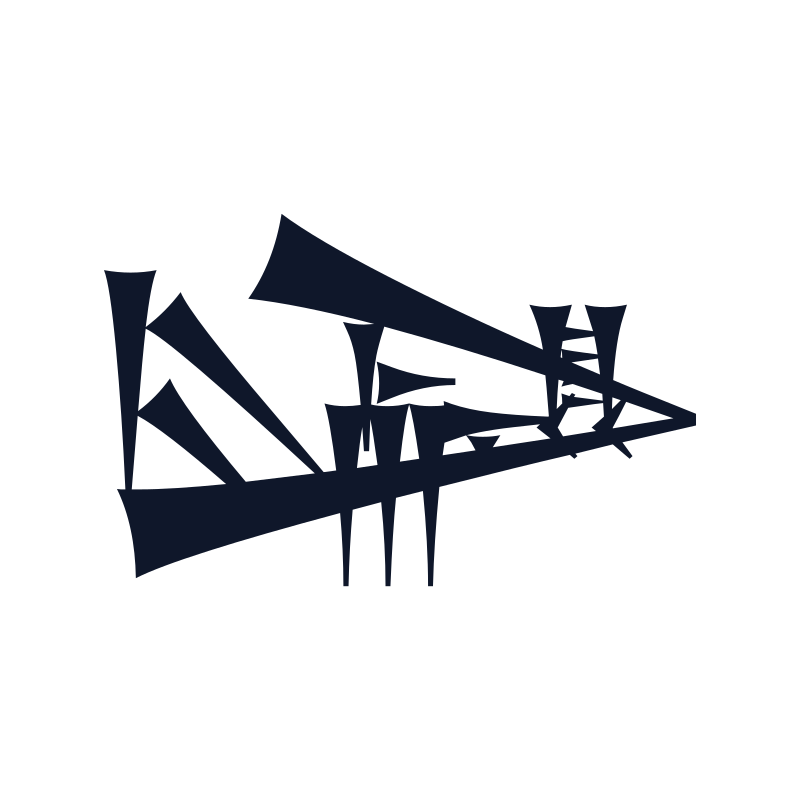 LU2xME.EN · U+1220B
𒈋
crowned dignitary, tiara-bearer
LU₂×ME.EN (𒈋) combines the human ideogram LU₂ (𒇽, person) with ME.EN (𒈨𒂗, men, royal crown or cultic tiara). In the Mesopotamian lexical series Lu, it designates a crowned monarch, a high priest wearing the sacred men headdress, or a royal crown-bearer.
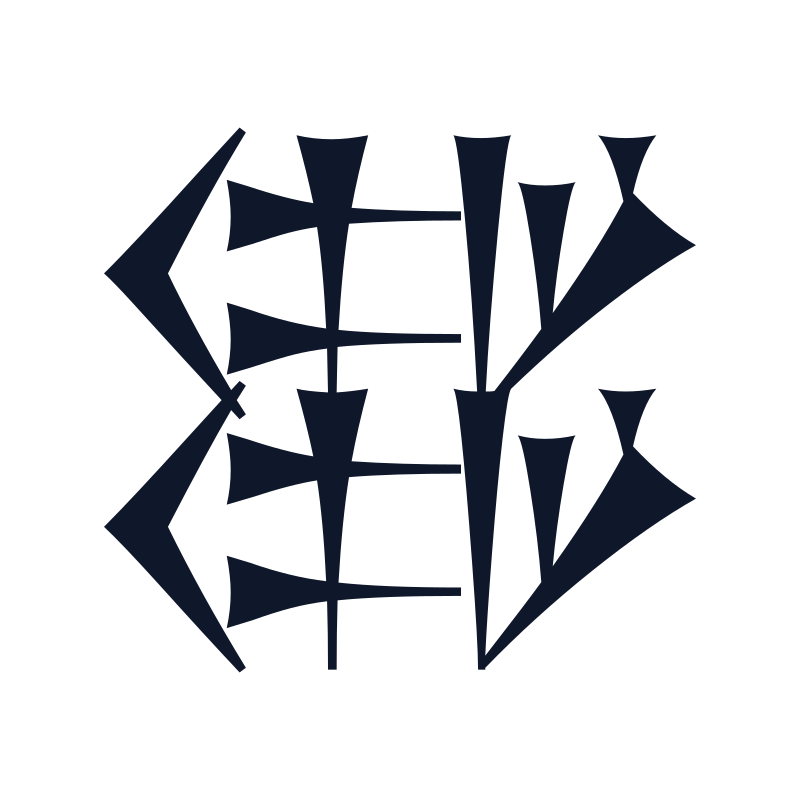 U.PA.GAR · U+1230E
𒌎
overseer's provision, noble rank
U/U PA/PA GAR/GAR (𒌎) combines vertically stacked pairs of U (𒌋, ten or lord), PA (𒉺, staff, scepter, or overseer, ugula), and GAR (𒃻, bread ration or placement). In Mesopotamian lexical lists, it represents an expanded reduplicated form of U.PA.GAR, denoting high administrative authority and chief overseers' rations.
