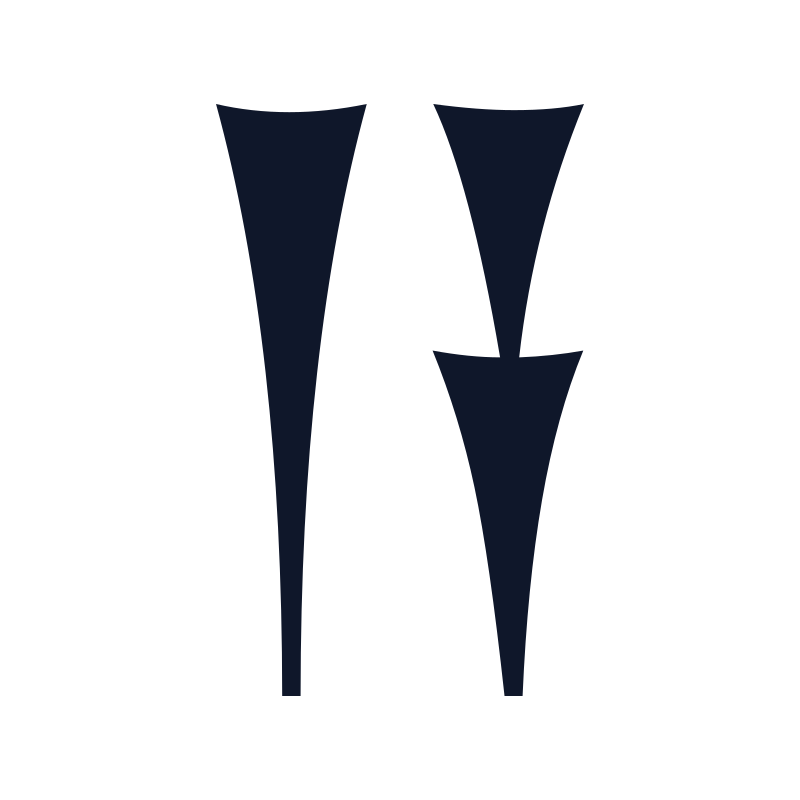
 A · U+12000
𒀀
water, seed
The very first sign of the Unicode Cuneiform block (U+12000), 'A' originated from two wavy lines depicting flowing water in prehistoric Uruk tablets. In Sumerian it means 'water' (Akkadian 'mû'), 'canal', or 'tears', and by metaphorical extension 'semen', 'seed', 'progeny', and 'heir' (Akkadian 'aplu'—as seen in royal names like Ashurbanipal and Nebuchadnezzar). Phonetically, it is the primary sign used to write the vowel 'a' across all Mesopotamian languages.
 U₂ · U+12311
𒌑
plant, medicinal herb
Derived from a clear botanical pictogram of a sprouting plant with blades of grass rising from a root line, U₂ (pronounced 'ú' in Sumerian and 'šammu' in Akkadian) means 'plant', 'herb', 'grass', or 'vegetal food'. In the Royal Library of Ashurbanipal at Nineveh, medical and pharmacological tablets placed U₂ as a silent determinative before hundreds of healing herbs, roots, and remedies. Phonetically, it is one of the most common ways to write the vowel 'u' in names and words.
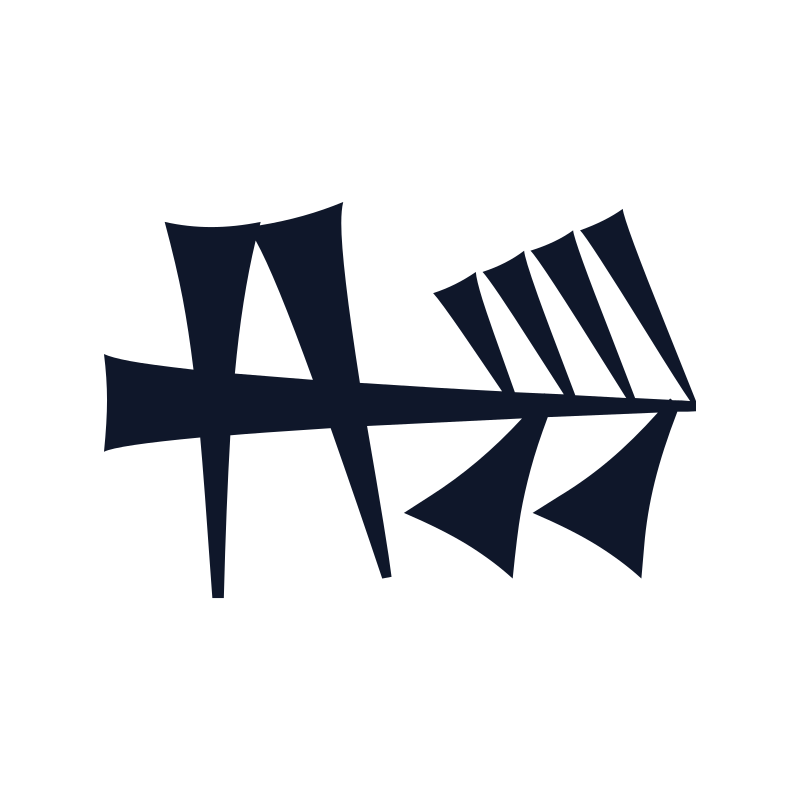 GI · U+12100
𒄀
marsh reed, scribal stylus
Originating from a drawing of a tall marsh reed stalk with leafy nodes, GI (Akkadian 'qanû'—the direct ancestor of Greek 'kanōn' and English 'cane' and 'canon') was the material from which Mesopotamian scribes cut their triangular writing styluses ('gi-dub-ba') and measured lengths of 6 cubits (~3 meters). As a homophone (GI / GI.NA, Akkadian 'kīnu'), it meant 'firm', 'true', and 'legitimate'—famously appearing in the name of King Sargon ('Šarru-kīn', 'The King is Legitimate'). Phonetically it writes the syllable 'gi' (and 'ge').
 KI · U+121A0
𒆠
earth, place
Originating from a cross-hatched oval representing the flat expanse of the inhabited earth crisscrossed by irrigation canals, KI (Akkadian 'erṣetu' for earth/underworld and 'ašru' for place) is the earthly counterpart to AN ('heaven'). Together, AN and KI formed the primordial cosmic pair in Sumerian mythology, separated by the air god Enlil. Scribes placed KI as a silent post-determinative at the end of every city, country, and geographic name—such as KÁ.DINGIR.RA.KI (Babylon), UNUG.KI (Uruk), and ŠUMER.KI—and phonetically it writes 'ki' and 'qi'.
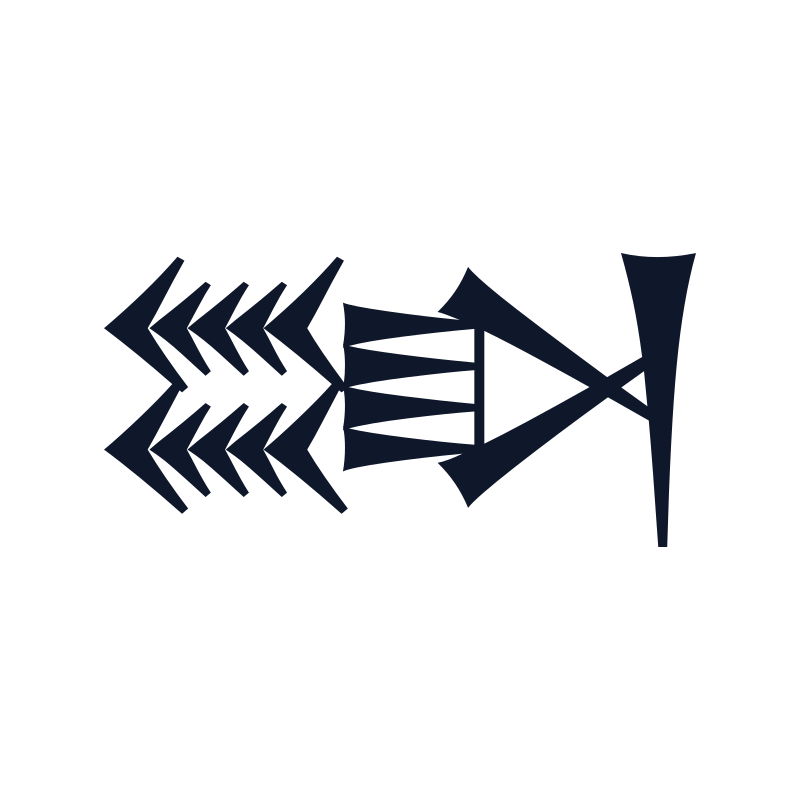 LI · U+121F7
𒇷
aromatic juniper, pure incense oil
When preceded by the tree determinative GIŠ (GIŠ.LI, Akkadian 'burāšu'), this sign designates the aromatic mountain juniper tree, whose resin and needles were burned in Mesopotamian temple censers to purify ritual spaces and appease the gods. In Sumerian, 'ì-li' meant fine pressed oil, and in the name of the chief god Enlil (𒀭𒂗𒆤), the sign LI often served as a phonetic complement. Across all cuneiform periods, it is the primary sign for the syllables 'li' and 'le'.
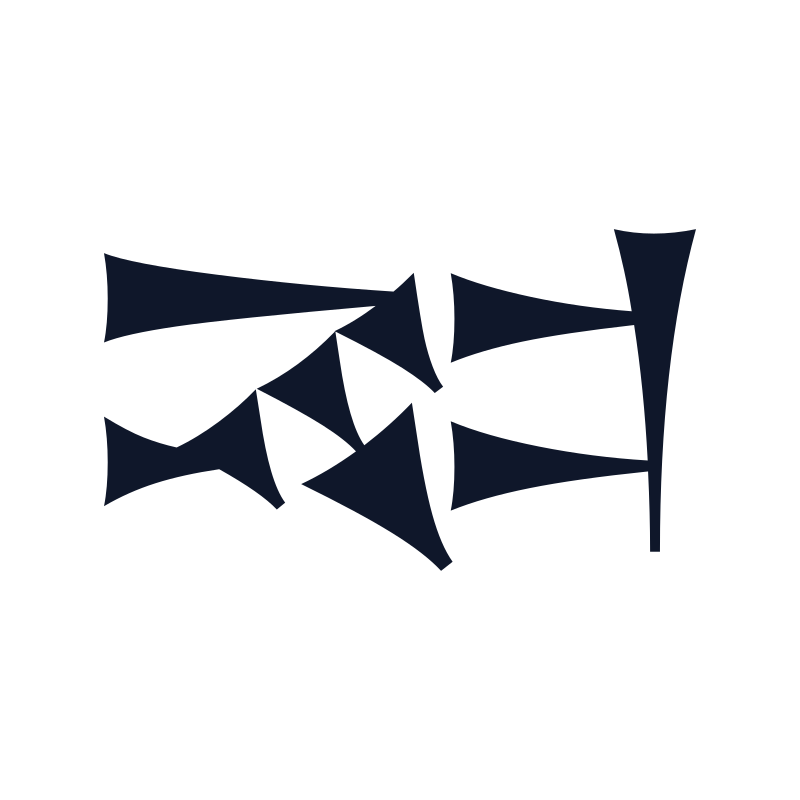 NE / IZI · U+12248
𒉈
fire, brazier
Derived from an archaic pictogram of a clay brazier with flames and sparks rising from its top, this sign is the primary ideogram for fire and heat in Mesopotamia. Read in Sumerian as IZI ('fire', Akkadian 'išātu'), NE ('brazier' or 'glowing coals', Akkadian 'kinūnu'), and BIL or GIBIL ('to burn', 'roast', or 'be new/fresh', Akkadian 'qalû' and 'eššu'—also the name of the fire god Gibil/Girra). Phonetically, it writes both 'ne' in Akkadian and the very common prefix 'bí' in Sumerian.
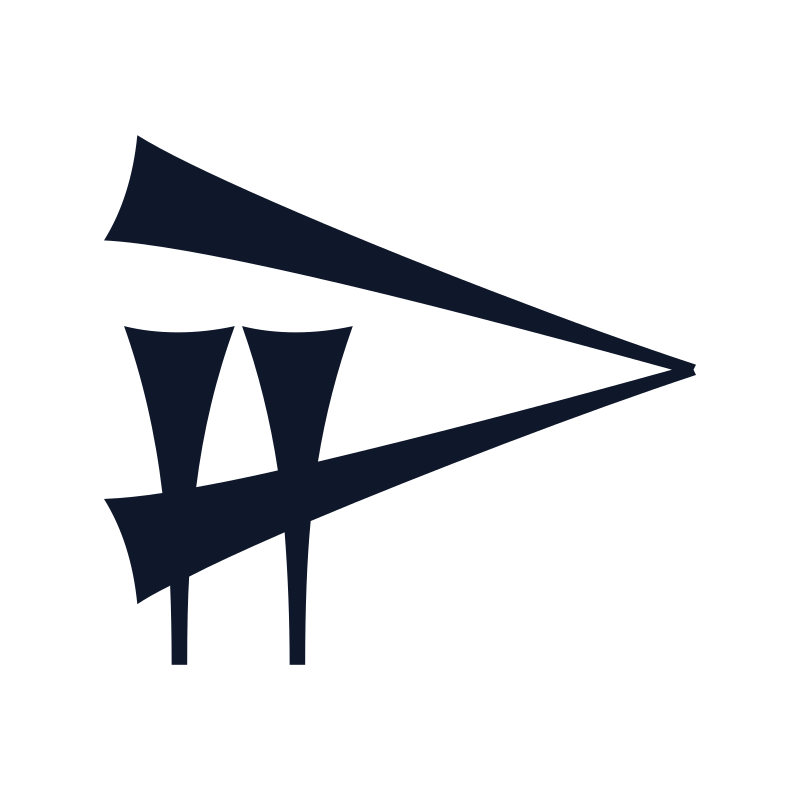 NI / I₃ · U+1224C
𒉌
sesame oil, sacred ointment
Originating from a pictogram of astone or clay oil jar, this sign read as I₃ (pronounced 'ì' in Sumerian, 'šamnu' in Akkadian) designates oil, fat, and ointment—one of the three economic essentials of ancient Mesopotamia alongside barley ('še') and wool ('síg'). Pressed sesame oil ('ì-giš') and clarified butter ('ì-nun') were used for cooking, oil lamps, anointing kings and brides, and temple divination. Read as NI, it meant 'awe-inspiring aura' ('ní') and serves as the universal sign for the syllable 'ni'.
 ŠE · U+122BA
𒊺
barley, grain harvest
Originating from a recognizable pictogram of a bearded ear of barley on a stalk, ŠE (Akkadian 'še'u') was the lifeblood of Mesopotamian civilization. Barley served not only as the daily staple for bread and beer, but also as the primary standard of value and wages before silver currency. In Babylonian metrology, 1 ŠE ('one grain', ~0.046 grams) was the smallest unit of weight (180 ŠE = 1 shekel) and length, and remains the historical ancestor of the modern troy 'grain' used for gold and medicine. Phonetically it writes the syllable 'še'.
 AB / EŠ₃ · U+1200A
𒀊
the sea, sacred shrine
Originating from an archaic Uruk pictogram of a sacred reed shrine on a raised platform, this sign was read as EŠ₃ ('sanctuary' or 'shrine', Akkadian 'ešertu') and AB ('the sea', Akkadian 'tâmtu'—as in 'a-ab-ba', the Persian Gulf, and 'AB.ZU', the subterranean freshwater ocean). In Semitic and Sumerian kinship terms ('ab-ba', Akkadian 'abu'), it also wrote 'father' or 'respected city elder', and in the Babylonian calendar gave its name to the fifth summer month, Abu. Phonetically it writes the closed syllables 'ab' and 'ap'.
 AŠ₂ / ZIZ₂ · U+1203E
𒀾
emmer wheat, solemn curse
Composed of six stacked oblique wedges, this sign was read as ZIZ₂ (Akkadian 'kunāšu') to designate ancient hulled emmer wheat (Triticum dicoccum), the prized grain used in Mesopotamia to bake fine temple cakes and brew sweet dark beer. Read as AŠ₂, it meant either 'curse' (Akkadian 'arratu'—inscribed at the end of boundary stones and royal stelae to warn anyone against erasing the king's name) or 'desire/need' (Akkadian 'hišihtu'), and phonetically writes the syllable 'aš₂'.
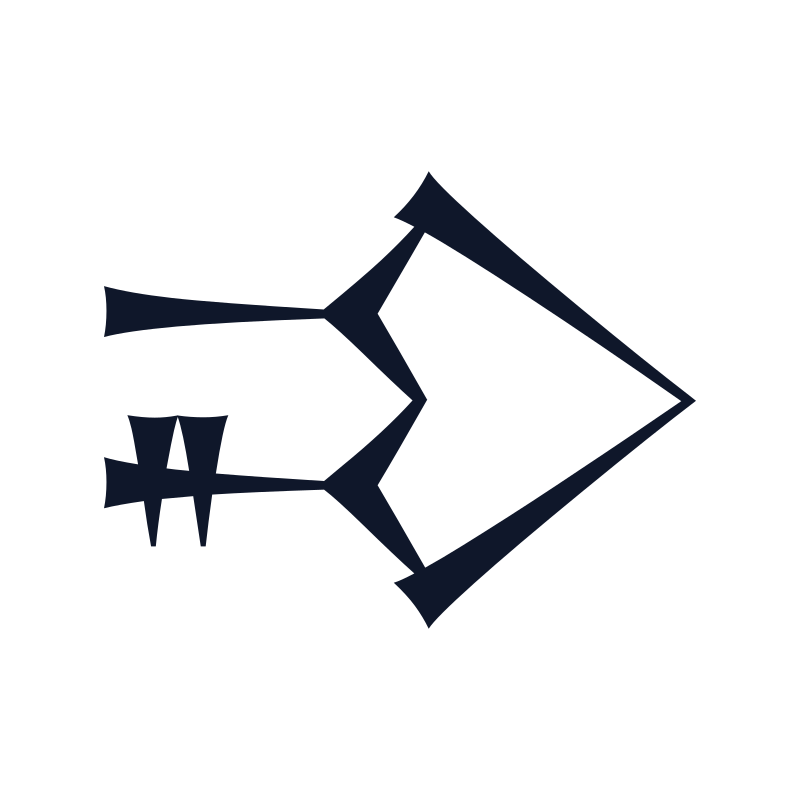 GEŠTIN · U+120FE
𒃾
grapevine, royal wine ('tree of life')
A ligature combining GIŠ ('tree/wood') and TIN ('life'), GEŠTIN literally translates in Sumerian to 'Tree of Life' and designates the grapevine, grapes, and wine (Akkadian 'karānu'). Because grapevines thrived in the cooler northern foothills of Syria, Anatolia, and the Zagros rather than the hot southern alluvial plain, wine in Sumer and Babylon was a luxury beverage of gods and kings, imported in sealed amphorae down the Euphrates.
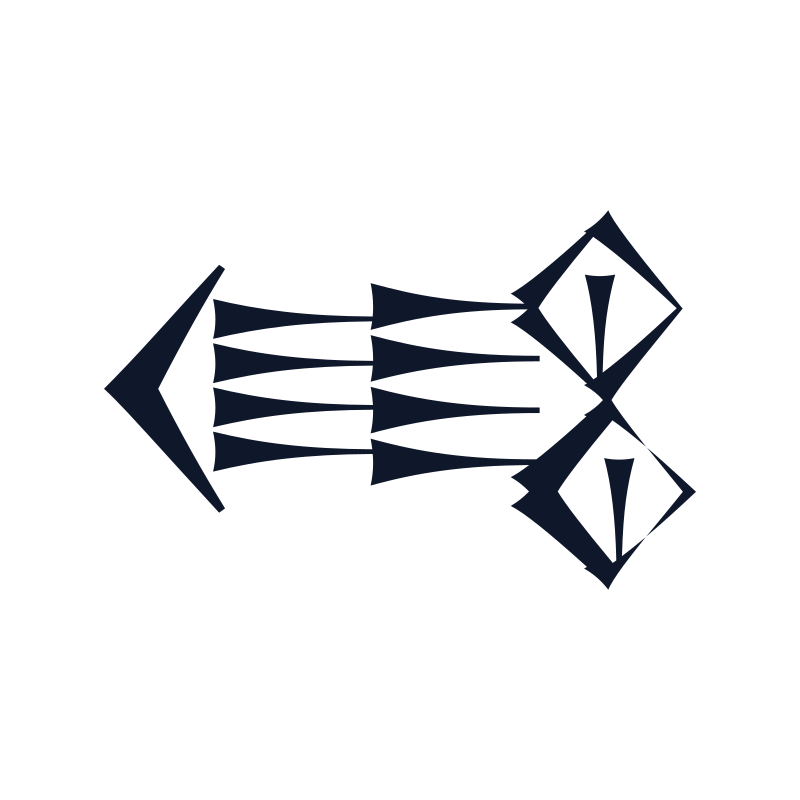 GIG / TU.RA · U+1237C
𒍼
illness, pain
Formed as a composite sign combining MI ('darkness/night') and NUN, GIG (Akkadian 'marṣu' for sick/painful and 'murṣu' for illness/disease) is the central sign of Babylonian medical diagnostic tablets ('Sakikkû'). Physicians ('asû') and exorcists ('āšipu') used it to record symptoms such as 'ša₃-gig' ('heartache / internal illness') and 'sag-gig' ('headache'). As an agricultural homophone, GIG (Akkadian 'kibtu') also designated fine bread wheat.
 GIŠ (ĜIŠ) · U+12111
𒄑
tree, wood
One of the five most frequently written determinatives in all of cuneiform: GIŠ (Sumerian 'ĝiš', Akkadian 'iṣu') means 'tree', 'wood', or 'timber', and was placed silently before the name of every tree species, fruit orchard ('giš-kiri₆'), piece of furniture ('giš-gu-za' = throne, 'giš-ná' = bed), chariot ('giš-gigir'), boat ('giš-má'), plow, and weapon. It also begins the Sumerian name of the hero Gilgamesh (𒀭𒄑𒉋𒂵𒈨𒌋𒌋𒌋, Bilgames), and phonetically writes 'giš', 'iz', 'is', and 'iṣ'.
 HAL · U+1212C
𒄬
sacred secret, oracle diviner (bārû)
Formed of two pairs of horizontal wedges side by side representing division into shares, HAL as a verb means 'to divide', 'distribute', or 'sift' (Akkadian 'zâzu'). In religious and scholarly contexts, HAL (Akkadian 'pirištu') means a 'sacred secret' or 'divine mystery' guarded by the gods, and LU₂.HAL (Akkadian 'bārû') was the standard logogram for the scholarly haruspex/diviner who read the secret will of Shamash and Adad in the sacrificial sheep's liver. Phonetically it writes the syllable 'hal'.
 IM / NI₂ · U+1214E
𒅎
wind, storm
Originating from a wind-rose cross of the four cardinal directions or a sail filled with wind, IM designates 'wind, storm, rain, and cardinal direction' (Akkadian šāru; divine logogram dIM for the storm god Ishkur/Adad) as well as 'clay and cuneiform clay tablet' (Akkadian ṭīdu, ṭuppu). Read as NI₂ (Akkadian puluhtu, ramānu), it means 'fearsome aura, awe, or self', and phonetically serves as /im/ and /em/.
 IN · U+12154
𒅔
straw, boundary
One of the most frequently written signs in Mesopotamian cuneiform, IN serves as the primary VC phonetic sign for /in/ (crucial for Sumerian verbal prefixes and Akkadian prepositions like ina). As a logogram, it denotes chopped straw or chaff used in mudbrick making (Akkadian tibnu) as well as a demarcated boundary or sector (pilku).
 IŠ / SAHAR · U+12156
𒅖
dust, earth
Read logographically as SAHAR (Akkadian eperu), this sign signifies loose earth, dust, silt, or sand—playing a major role in Mesopotamian canal-dredging calculations and poetic imagery of the Netherworld. Read as IŠ (Akkadian šadû), it means 'mountain' or 'steppe', while phonetically serving as the universal VC syllable /iš/ (including the Akkadian dative suffix -iš).
 KUL / NUMUN · U+121B0
𒆰
seed, offspring
Read logographically as NUMUN (Akkadian zēru), this sign means 'seed'—both agricultural grain sown in furrows and human progeny, offspring, or royal dynastic lineage (as in NUMUN LUGAL-LA, 'royal seed'). Phonetically, it serves across Akkadian and Sumerian texts as the CVC syllable /kul/ and /qul/.
 KUR · U+121B3
𒆳
mountain, country
Originally a three-peaked pictograph of the Zagros Mountains on Mesopotamia's eastern horizon, KUR means 'mountain' (Akkadian šadû), 'country or foreign land' (Akkadian mātu, also used as a pre-posed determinative for countries), 'the East', and in Sumerian myth 'the Netherworld' (KUR.NU.GI₄.A, 'Land of No Return'). Phonetically it reads /kur/, /mat/, /mad/, and /šad/.
 LAM · U+121F4
𒇴
almond/pistachio tree, to flourish
Read with the wood determinative (GIŠ.LAM, Akkadian lammu orikānu), this sign denotes an almond or terebinth/pistachio nut tree, and as a verb (Akkadian elēpu) it means 'to sprout, grow luxuriantly, or flourish'. In everyday Sumero-Akkadian writing, it is the universal CVC sign for the syllable /lam/.
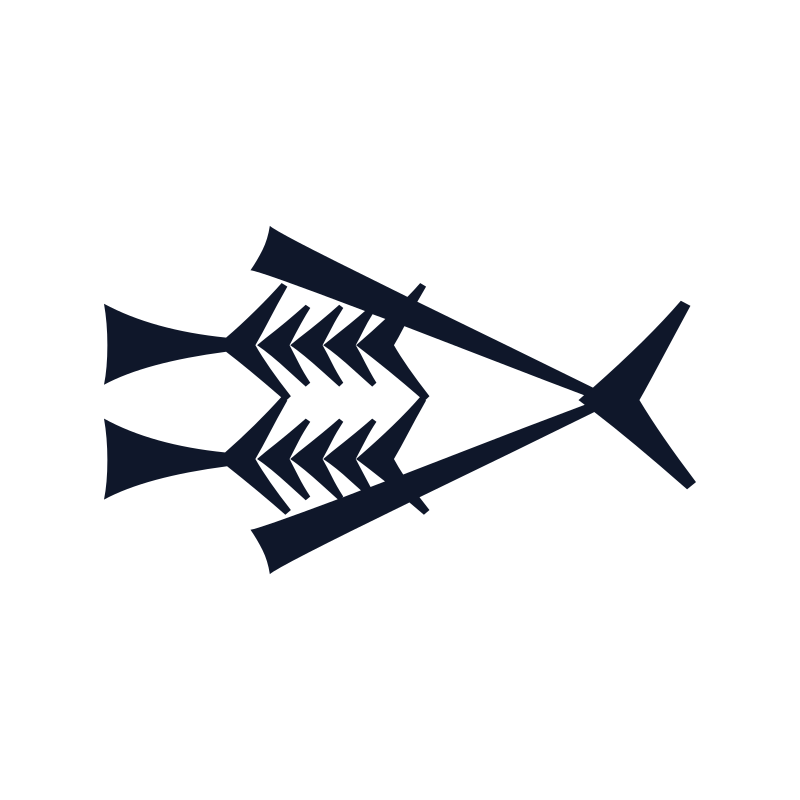 LIL · U+121F8
𒇸
wind, breeze
Used in Akkadian and Sumerian syllabic orthography for the CVC syllable /lil/ (as in lillu, 'fool' or nocturnal spirit, and in verbal forms of alālu / elēlu, 'to sing joyously or purify'). It is distinct from the wind-logogram LIL₂ (KID) used in the divine name Enlil.
 NU₁₁ (ŠIR) · U+12262
𒉢
light, radiance
Read as NU₁₁ (Akkadian nūru), this sign signifies 'light, firelight, or celestial radiance'—preserving in Sumerian writing an early Semitic loanword for light (nūru). Combined with the stone determinative and 'great' (NA₄.NU₁₁.GAL, Akkadian gišnugallu, literally 'Great Light Stone'), it names the prized translucent white calcite-alabaster used for temple statues and royal vessels.
 SAR / MU₂ · U+122AC
𒊬
to write (scribe), garden
Originally a pictograph of irrigated garden beds with sprouting plants, SAR (Akkadian kirû, mūšaru) means a vegetable garden or orchard, a standard land-area unit of 1 sar (36 square meters, '1 garden-plot'), and read as MU₂ (Akkadian banû, napāhu) 'to grow, sprout, or shine forth'. Because rows of cuneiform wedges resembled neatly planted garden furrows, SAR (Akkadian šaṭāru) also became the universal Sumerian verb 'to write'—forming DUB.SAR ('tablet-writer' = scribe).
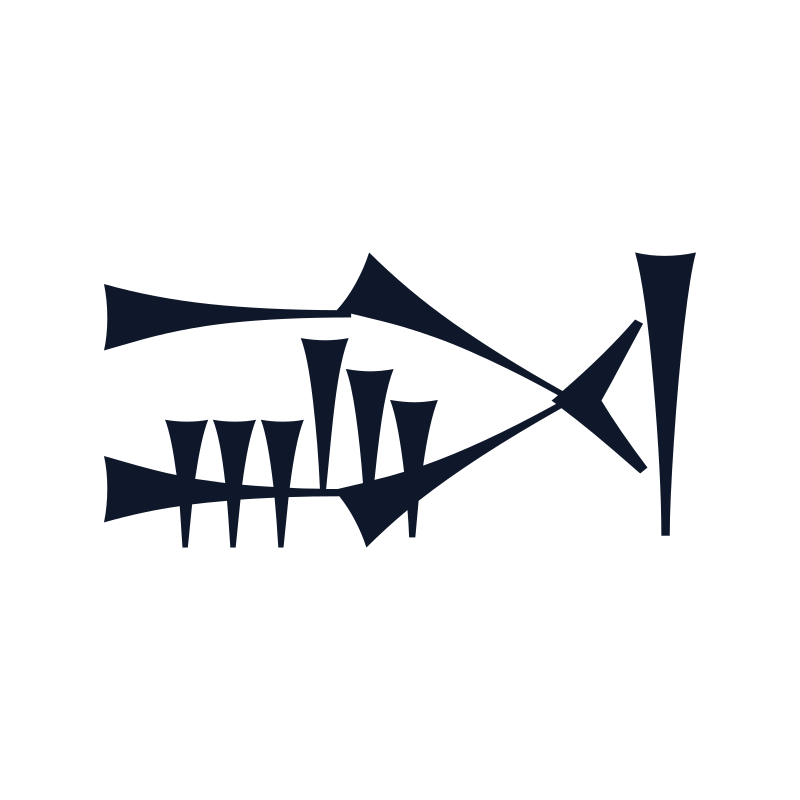 ŠIM / BAPPIR · U+122C6
𒋆
aromatic resin, incense
Originally a pointed vessel infused with herbs or malted grain, this sign has two celebrated readings: as ŠIM (Akkadian riqqu), it denotes fragrant resins, cedar and myrrh aromatics, incense, and perfumery (and serves as the determinative for aromatic plants). Read as BAPPIR (Akkadian bappiru), it names the spiced twice-baked malted barley bread used to ferment Mesopotamian beer (and LU₂.ŠIM = sirašû, 'master brewer').
 SUM / SZUM₂ · U+122E7
𒋧
to give, deliver
Originally a pictograph of a tied bundle of garlic or onions (Sumerian sum / šum₂, Akkadian šūmu), this sign was adopted by rebus for the fundamental Sumerian verb šum₂ / sum (Akkadian nadānu), meaning 'to give, grant, pay, or deliver'. It appears in virtually every Mesopotamian economic receipt, legal sale contract, and royal gift inscription, and phonetically writes /sum/ and /šum/.
 SUR · U+122E9
𒋩
to press oil/wine, spin thread
A rich action verb in Sumerian: SUR (Akkadian ṣahātu,ṭamû, zanānu, esēru) means 'to press out juice, sesame oil, or wine', 'to twist or spin wool into thread', 'to rain or pour down from the sky', and 'to demarcate a boundary ditch' (KI.SUR.RA). Phonetically it is the standard CVC sign for /sur/ and /šur/.
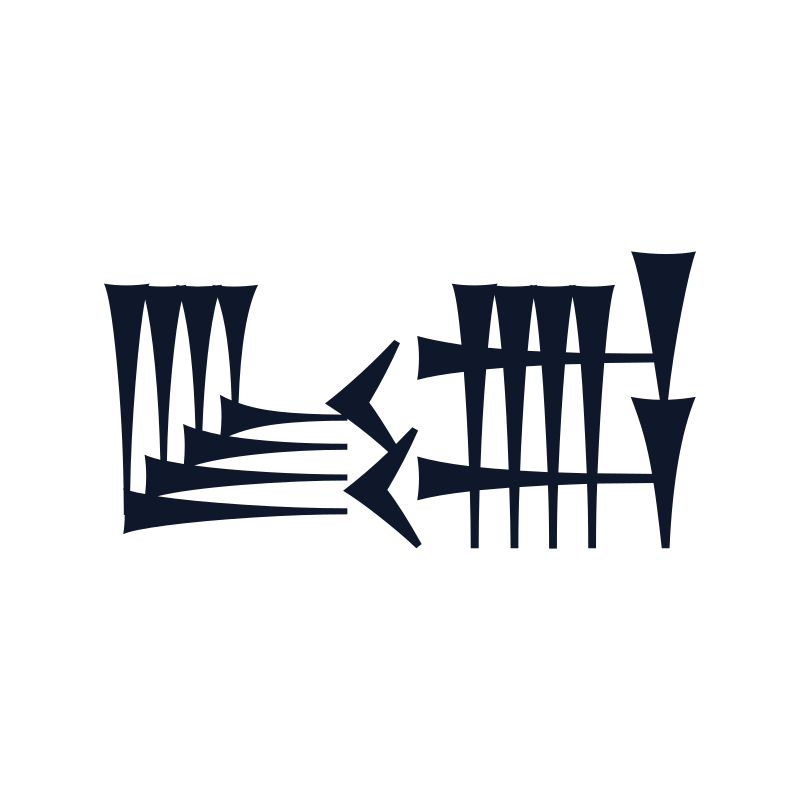 ŠA₆ (SA₆ / SAG₁₀) · U+122B7
𒊷
good, auspicious
Originally a pictograph of a fruiting crown of the date palm (which also gives the reading GIŠIMMAR, Akkadian gišimmaru, 'date palm'), this sign read as SA₆ / ŠA₆ / SAG₁₀ (Akkadian damāqu, damqu, SIG₅) is the primary Sumerian word for 'good, sweet, pleasing, fortunate, and divinely favorable'.
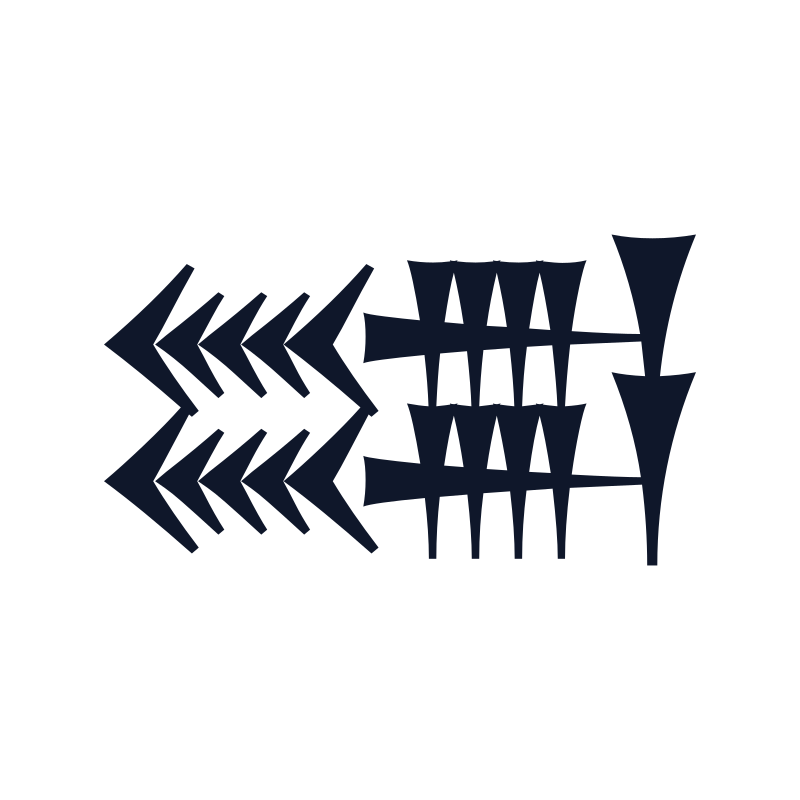 TIR · U+12301
𒌁
forest, woodland
Originally a pictograph of a dense stand of trees along a riverbank, TIR (Akkadian qištu) is the universal Sumerian word for 'forest, woodland, or sacred grove'. In the Epic of Gilgamesh, TIR GIŠ.ERIN (Akkadian qišti erēni) names the legendary Cedar Forest guarded by the monster Humbaba, while phonetically the sign writes the CVC syllable /tir/ and /ter/.
 UR₄ · U+12334
𒌴
to harvest, reap grain
A key seasonal agricultural verb in Sumerian: UR₄ (Akkadian eṣēdu, baqāmu, hamāmu) means 'to reap or harvest barley with a sickle' (ŠE.KIN.KU₅ / ŠE UR₄), 'to pluck or shear sheep's wool' (UDU UR₄), and in cosmic hymns 'to gather up and control all the divine powers (ME) of heaven and earth'.
 URI / AKKAD · U+12335
𒌵
the land of akkad (northern babylonia), vessel
In geographical and royal titulary, KI.URI (equated with Akkadian māt Akkadî) designates the northern Semitic-speaking half of the Mesopotamian plain—the Land of Akkad—paired for two millennia with Southern Sumer in the foundational royal title LUGAL KI.EN.GI KI.URI ('King of Sumer and Akkad'). In the first millennium BCE, KUR.URI also wrote the name of the highland kingdom of Urartu.
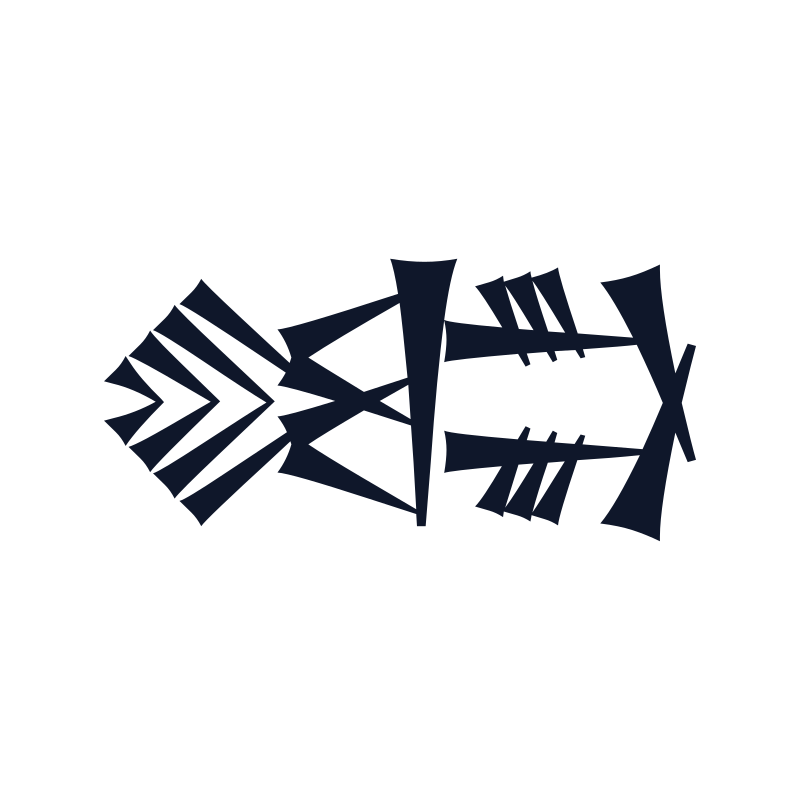 ASAL₂ (A.TU.GAB.LIŠ) · U+12037
𒀷
the Euphrates poplar tree
Preceded by the wood determinative (GIŠ.ASAL₂, Akkadian ṣarbatu), this complex sign designates the Euphrates poplar (Populus euphratica)—the resilient native tree lining the banks of the Tigris and Euphrates, prized in treeless southern Babylonia for roof beams, furniture, and temple construction.
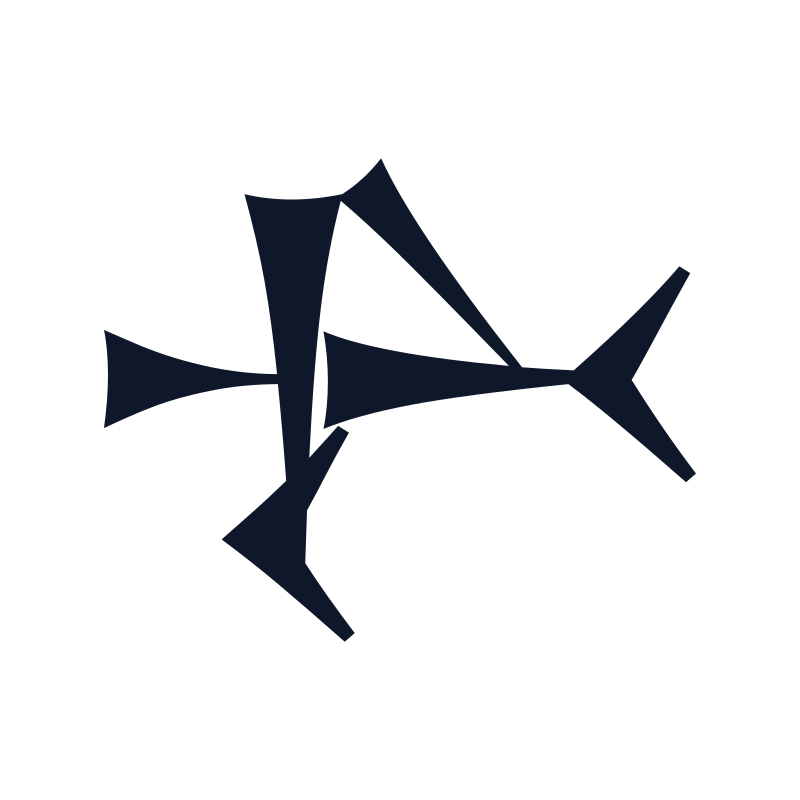 BULUG · U+12051
𒁑
boundary stela, sharp pin
Originally a pointed pictograph of a stake, bronze needle, or boundary stone driven into the ground, BULUG (loaned into Akkadian as pulukku) denotes a sharp pin, drill, demarcated border stela, or the cosmic boundaries of heaven and earth. Read as MUNU₄ (Akkadian buqlu), it also designates germinated barley malt used in Mesopotamian beer brewing.
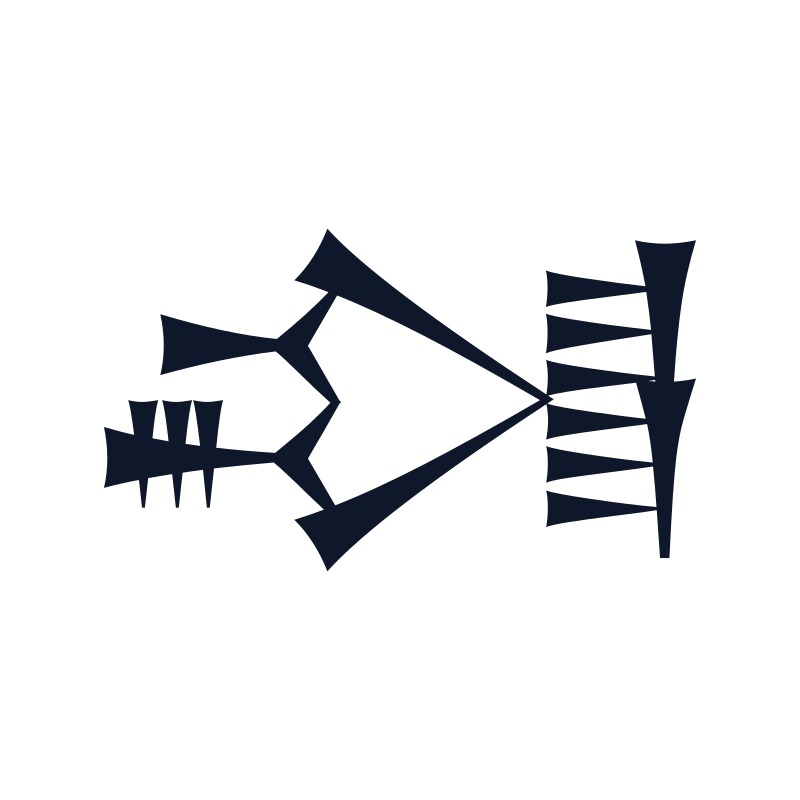 DUB₂ (TUP₂) · U+12080
𒂀
to make tremble, shake the earth
A dynamic verb of impact and vibration: DUB₂ (Akkadian napāṣu, tarāku, nâšu) means 'to strike down, smite, make the mountains and earth tremble (AN.KI DUB₂), beat a drum, or flutter wings'. Phonetically it also serves for the CVC syllable /dub₂/ and /tup₂/.
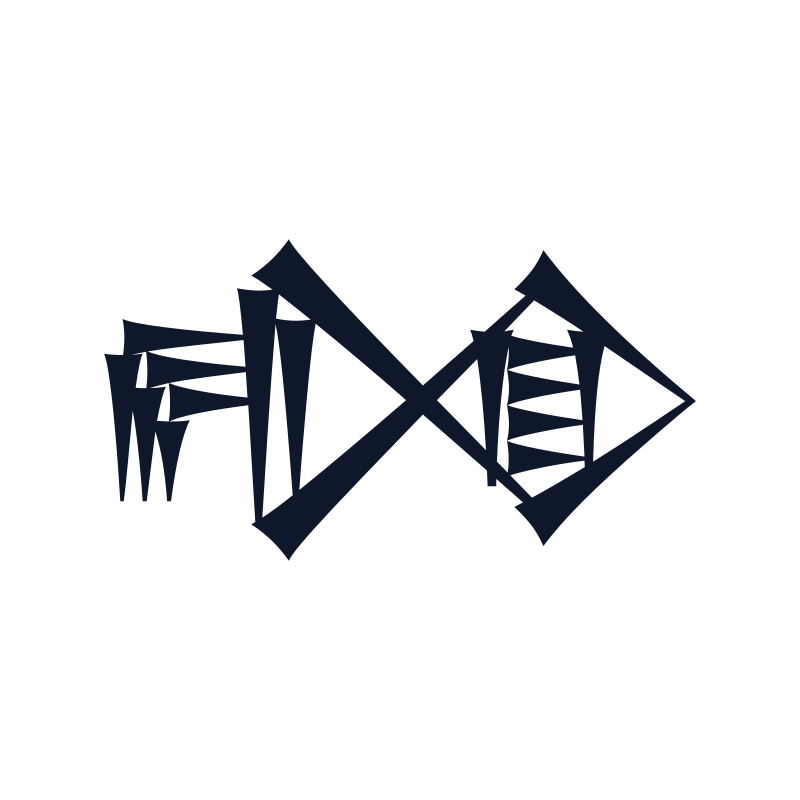 EDIN (EDEN) · U+12094
𒂔
the open steppe, wilderness
Originally a pictograph of an unirrigated stretch of open land beyond the canal network, EDIN / EDEN (Akkadian ṣēru—often discussed by scholars alongside the Biblical Hebrew word Eden) designates the open steppe, desert grazing land, or wild plain outside the city walls, where gazelles, lions, nomad tents, and Enkidu in the Epic of Gilgamesh roamed.
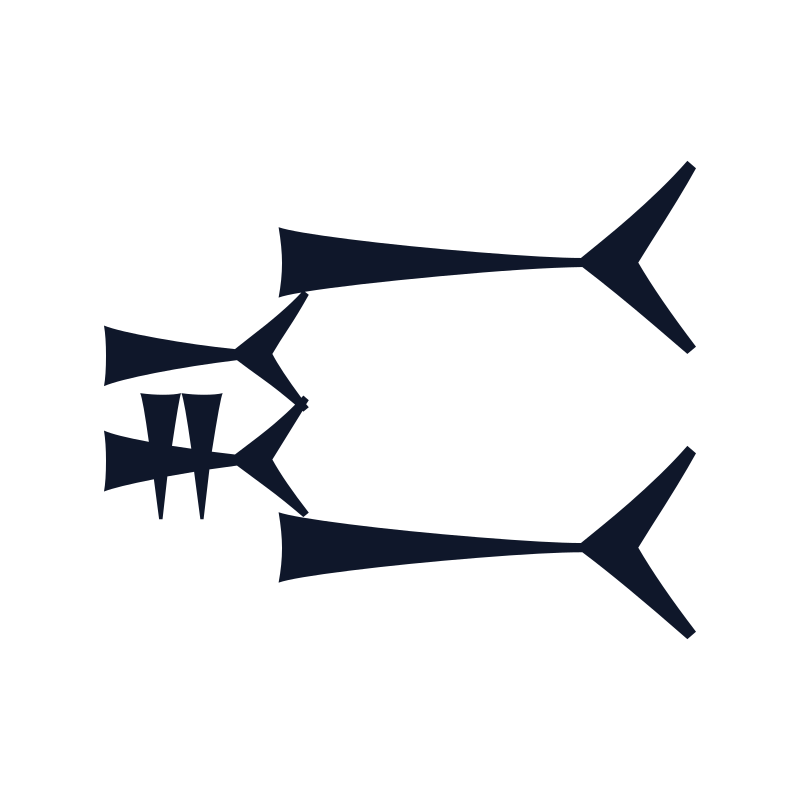 GUM (KUM) · U+12123
𒄣
to crush, pound grain
Originally a pictograph of a mortar and pestle, read logographically as GUM or GAZ₂ (Akkadian hašālu), this sign means 'to crush, pound, or bruise grain and herbs in a mortar'. Phonetically, it is the universal CVC sign across Akkadian and Sumerian for the syllables /kum/, /gum/, and /qum/.
 KU₇ · U+121AF
𒆯
sweet, honeyed
Closely related in form to the honey/date-syrup sign LAL₃, KU₇ (often reduplicated as KU₇.KU₇, Akkadian matqu, dašpu) is the Sumerian adjective and verb meaning 'sweet, honey-sweet, luscious'—used to describe mountain honey, ripe dates, sweet beer, freshwater springs, and the soothing voice of divine hymns.
 LU₃ · U+12216
𒈖
to stir up, trouble water
Read as LU₃ (Akkadian dalāhu), this verb means 'to stir up silt in water, make turbid, disturb peace, or throw into confusion'—applied both to muddy river floods and to troubled human hearts or political unrest.
 ZIG · U+12368
𒍨
flour, meal
Cuneiform sign ZIG or ZI₃ / ZID (Borger MZL 667, U+12368), representing ground grain, flour, or meal (Sumerian zid₂, zi₃; Akkadian qēmu). Flour offerings (zi₃-dub-dub) were central to Mesopotamian temple rituals, rationing lists, and divination ceremonies, while phonetically the sign serves for zig, zik, and zi₃.
 ZIZ2 · U+12369
𒍩
emmer wheat
Cuneiform sign ZIZ₂ (Borger MZL 548, U+12369), denoting emmer wheat (Triticum dicoccum; Sumerian ziz₂; Akkadian kunāšu), the second most important cereal crop in ancient Mesopotamia after barley (še), prized for brewing fine beer and baking ritual bread.
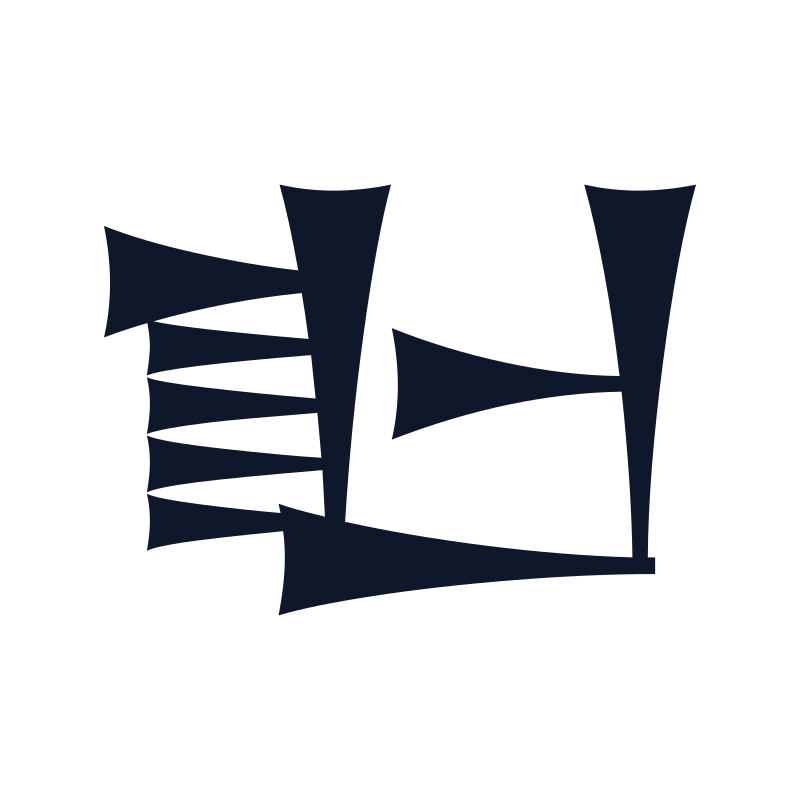 HASHHUR · U+12222
𒈢
apple, apple tree
Cuneiform sign MA-gunû, read ḪAŠḪUR (Borger MZL 553, U+12222), ornamenting the fig sign MA with gunû strokes. Usually preceded by the tree determinative GIŠ (giš-ḫašḫur), it is the Sumerian logogram for 'apple' and 'apple tree' (Akkadian šaḫšūru).
 SU4 · U+122DC
𒋜
red, brown
Cuneiform sign SI-gunû, read SU₄ or SA₅ (Borger MZL 186, U+122DC), formed by adding gunû strokes to the horn/radiance sign SI. It means 'to be red, reddish-brown, or ruddy' (Sumerian su₄, sa₅; Akkadian sāmu, pelû), often describing red gold, livestock, or the beard of deities, and serves as the syllable su₄.
 TA_GUNU · U+122EF
𒋯
honey, syrup
Cuneiform sign TA-gunû, also read LAL₃ (Borger MZL 248, U+122EF), an ornamented form of TA that serves in Sumerian and Akkadian texts as the logogram for 'honey' or 'rich date syrup' (Sumerian lal₃; Akkadian dišpu), a prized offering to the gods.
 UD_GUNU · U+12319
𒌙
mist, fog
Cuneiform sign UD-gunû (Borger MZL 605, U+12319), ornamenting the sun/day sign UD with gunû strokes to denote atmospheric phenomena such as mist, dense fog, or glowing storm clouds in Mesopotamian lexical and meteorological texts.
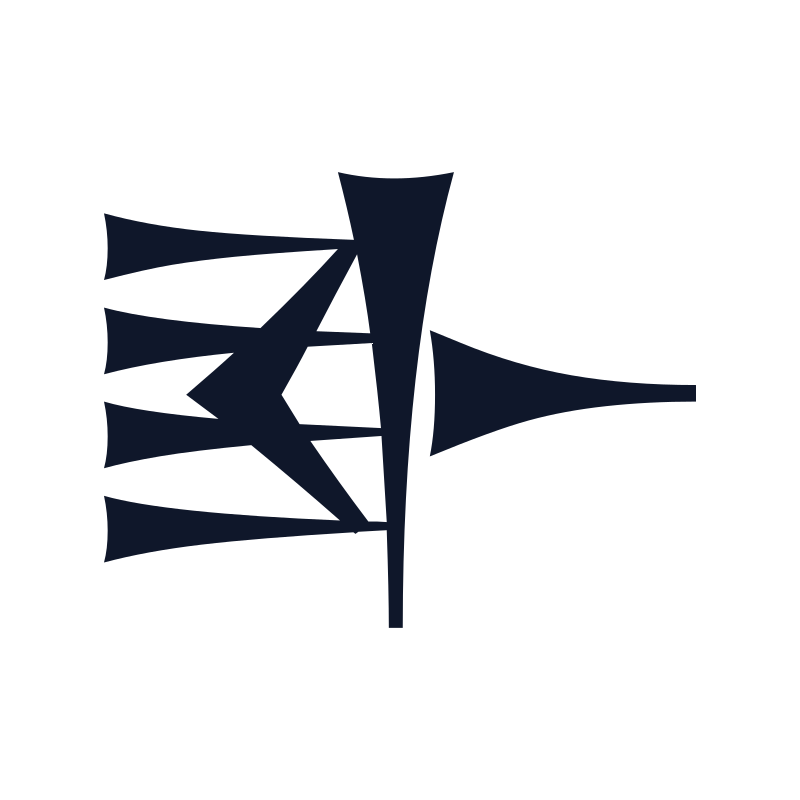 SIG7 · U+1214A
𒅊
green, yellow, verdant
Cuneiform sign IGI-gunû, read SIG₇ (Borger MZL 557, U+1214A), originally depicting an eye with prominent lashes or brow. It means 'green, yellow-green, pale' (Sumerian sig₇; Akkadian warqu) and 'verdant, flourishing, beautiful' (Akkadian banû), and in early metrological texts can also denote 10,000.
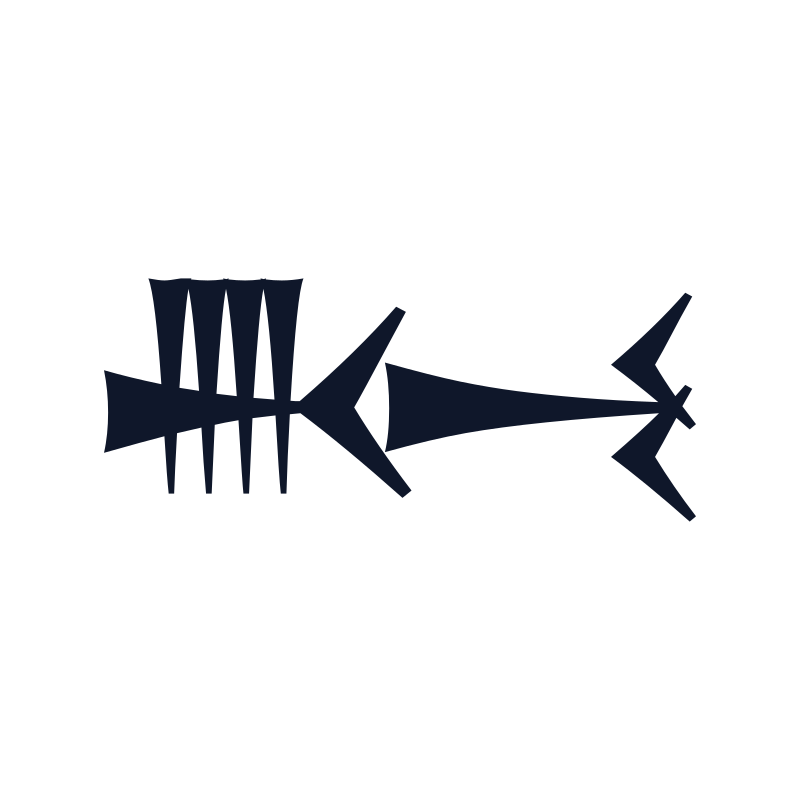 KUL_GUNU · U+121B1
𒆱
seed, offspring
Cuneiform sign KUL-gunû (Borger MZL 119, U+121B1), an ornamented gunû variant of the seed/offspring sign KUL/NUMUN, attested in Mesopotamian lexical lists for prolific seed, lineage, and agricultural sowing.
 GISH_TENU · U+12115
𒄕
timber, beam
Cuneiform sign GIŠ-tenû (Borger MZL 469, U+12115), the slanted (tenû) graphic form of GIŠ ('tree, wood, timber'), attested in Babylonian lexical lists and early administrative tablets for cut timber or wooden beams.
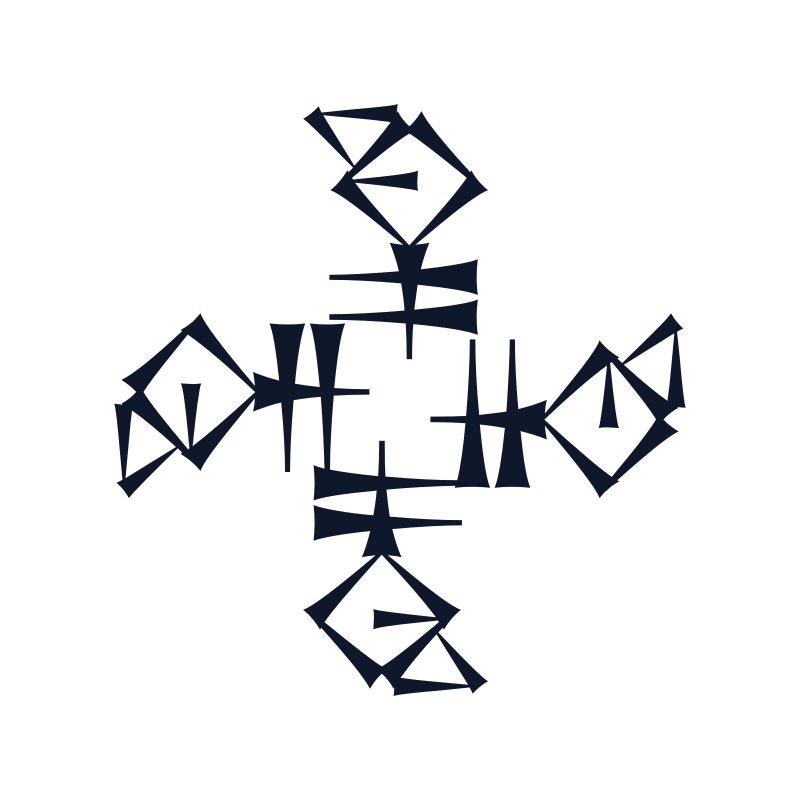 IM_SQUARED · U+12152
𒅒
four winds, directions
Cuneiform sign IM-squared (four wind signs IM arranged in a cross, Borger MZL 643, U+12152), representing the 'four cosmic winds' and the 'four cardinal directions' (Sumerian im-limmu₂-ba; Akkadian šārū erbetti).
 NAGA_INV · U+12241
𒉁
alkali, purification
Cuneiform sign NAGA-inverted (Borger MZL 294, U+12241), an inverted paleographic and lexical variant of the alkali/soapwort plant sign NAGA (Akkadian uḫūlu), associated with ritual washing and purification.
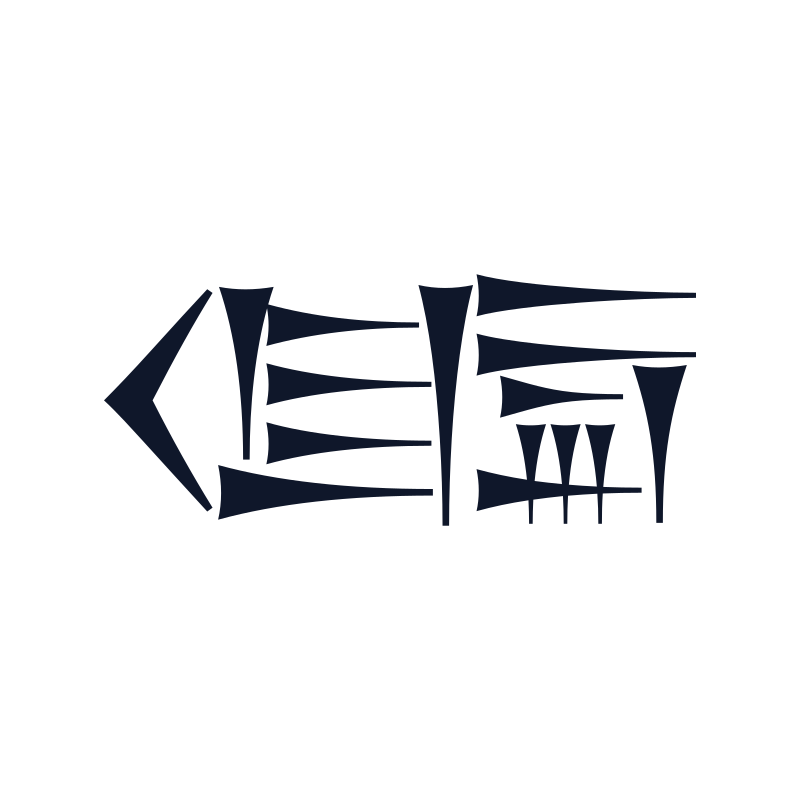 PESH2_AST · U+12394
𒎔
fig, womb
Cuneiform sign PEŠ₂-asterisk (U+12394), a Neo-Assyrian calligraphic variant of PEŠ₂ containing an inscribed star wedge, used for the syllable peš₂ and logographic meanings related to figs or teeming life.
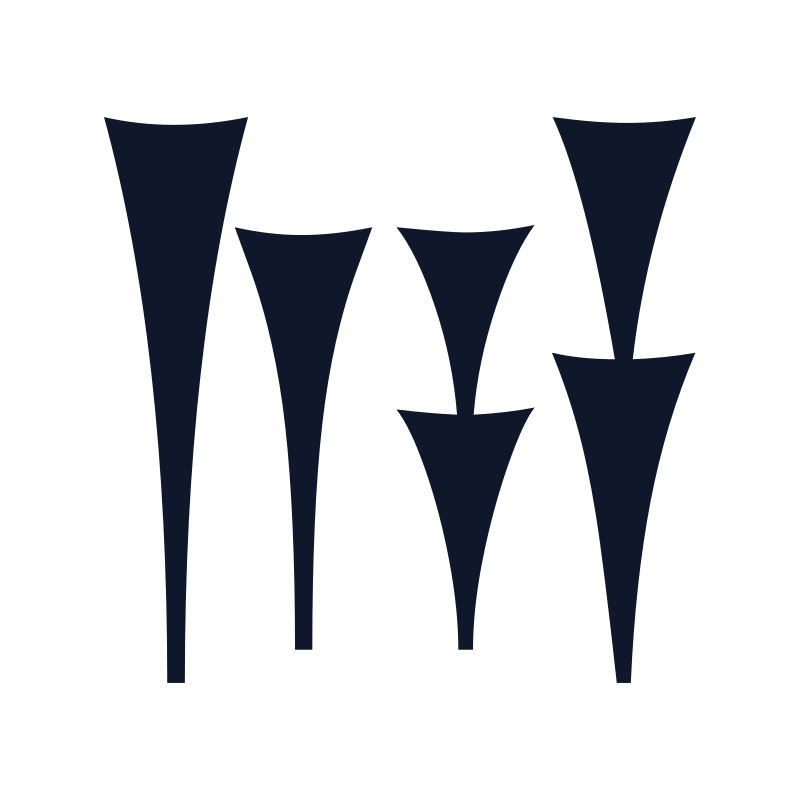 EDURU · U+12001
𒀁
village, moist
Cuneiform sign A×A, read EDURU or DURU₅ (Borger MZL 840, U+12001), formed by inscribing water A inside water A. It denotes a rural agricultural village or hamlet beside a canal (Sumerian e-duru₅; Akkadian kapru) as well as 'wet, irrigated, fresh' (duru₅; Akkadian raṭbu).
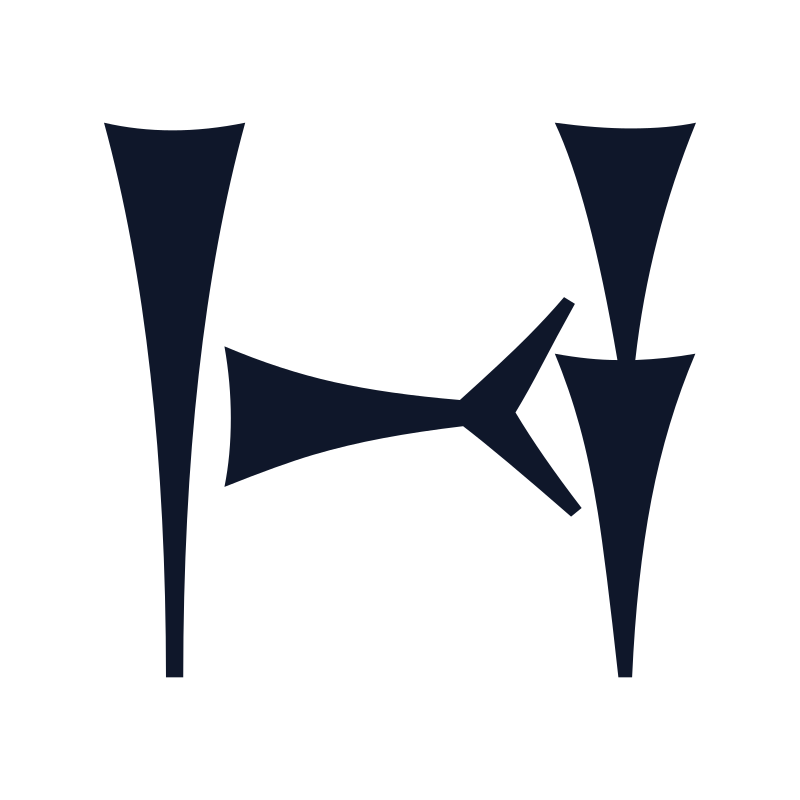 AGAM · U+12002
𒀂
marsh, stagnant water
Cuneiform sign A×BAD, read AGAM (Borger MZL 841, U+12002), combining water A with BAD ('open/distant/dead'). It denotes a 'marsh, reed lagoon, or stagnant pool of bitter water' (Sumerian agam; Akkadian agammu, mû marrūtu).
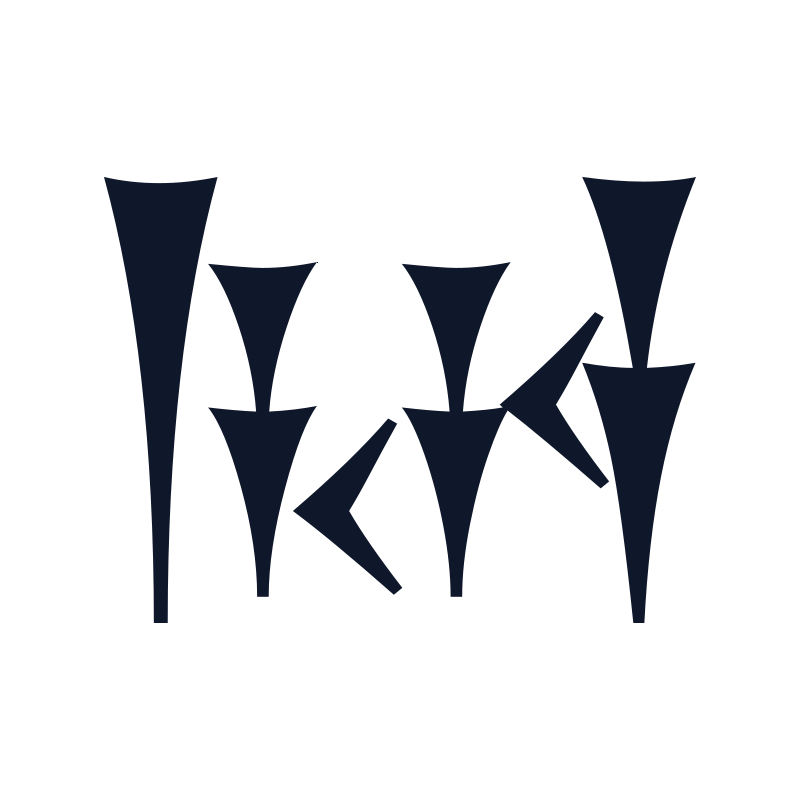 ZAH3 · U+12004
𒀄
fishpond, disappear
Cuneiform sign A×ḪA, read ZAḪ₃ (Borger MZL 846, U+12004), depicting a fish (ḪA) inside water (A). Just as a fish vanishes into deep water, it means 'to disappear, flee, be lost, run away' (Sumerian zaḫ₃; Akkadian ḫalāqu, nābutu), common in legal records of runaway workers.
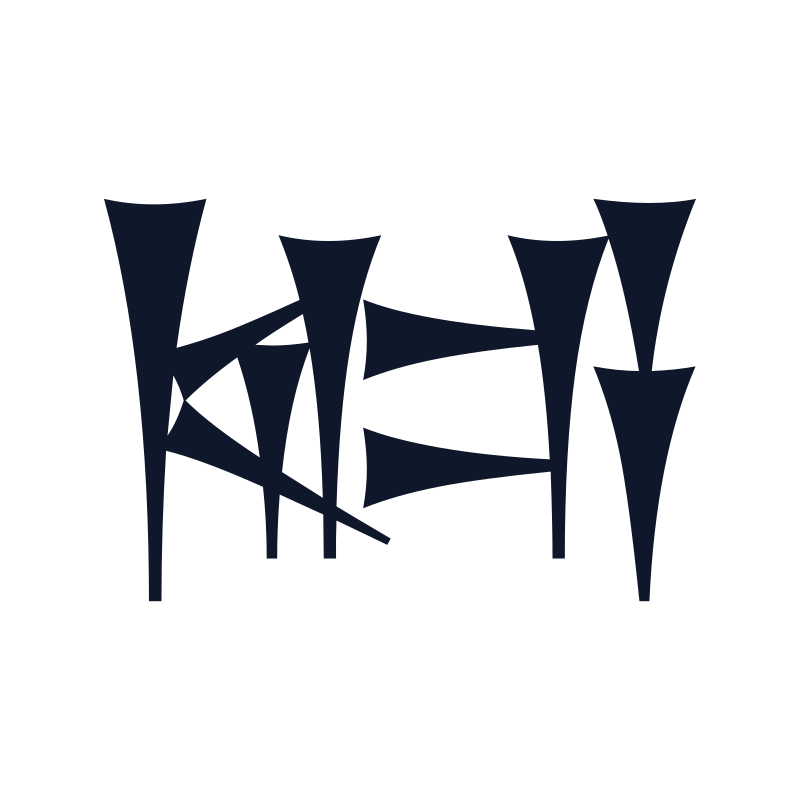 A_SAG · U+12008
𒀈
headwaters, spring
Cuneiform sign A×SAG (Borger MZL 844, U+12008), combining water A with head/front SAG to denote headwaters, the upper intake of a canal, or washing the head in lexical traditions.
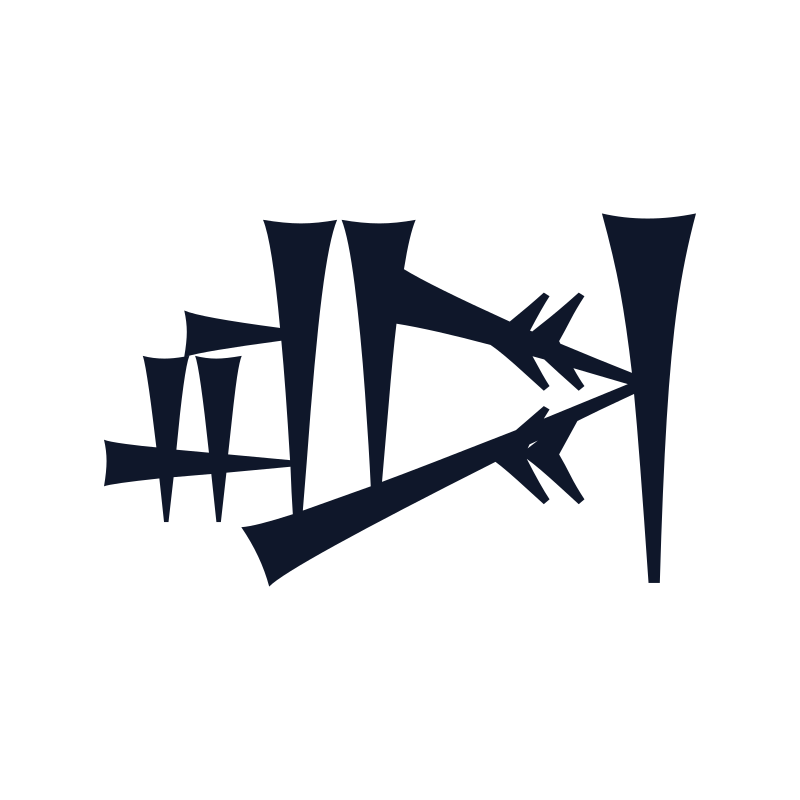 AL_SHE · U+12027
𒀧
grain cultivation
Cuneiform sign AL׊E (Borger MZL 478, U+12027), inscribing ŠE ('barley, grain') inside the hoe sign AL in Mesopotamian agricultural and lexical lists.
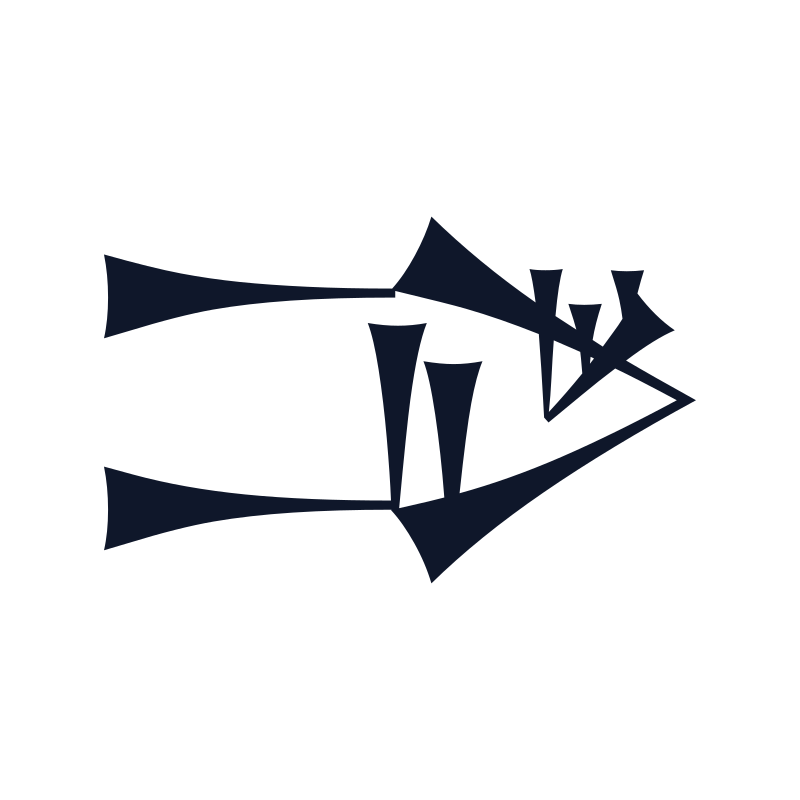 KURUN2 · U+1204B
𒁋
choice beer, beer-bread
Cuneiform sign BI×GAR, read KURUN₂ or BAPPIR (Borger MZL 362, U+1204B), combining the beer vessel BI with GAR ('bread'). As bappir (Akkadian bappiru) it denotes the twice-baked aromatic barley 'beer-bread' used to ferment Mesopotamian beer; as kurun₂ (Akkadian kurunnu) it denotes 'choice ceremonial beer or dark wine' offered to gods and kings.
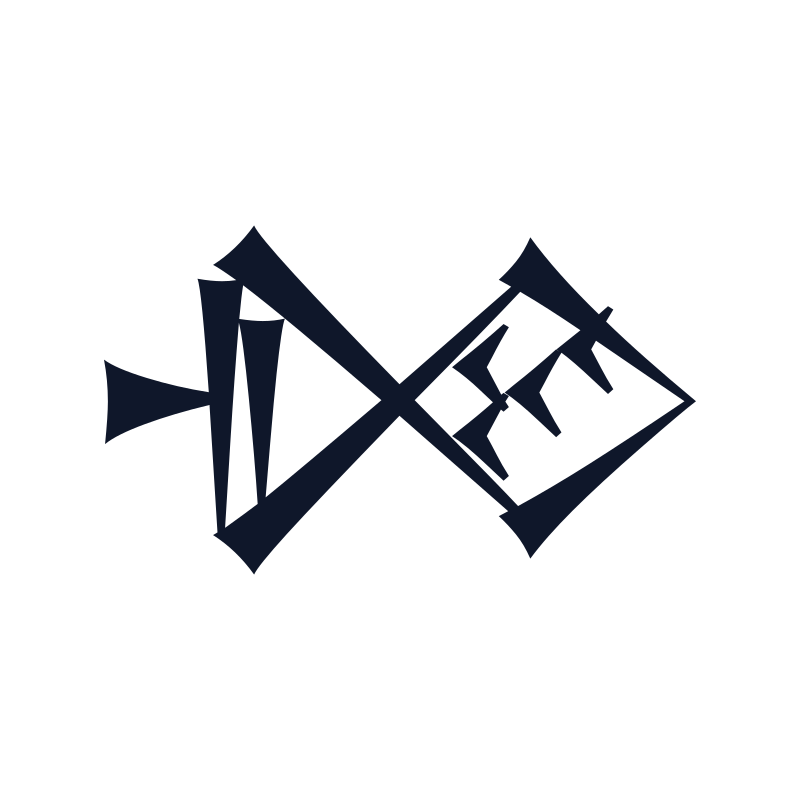 MUNU4 · U+12075
𒁵
barley malt
Cuneiform sign DIM׊E, read MUNU₄ (Borger MZL 165, U+12075), combining DIM with ŠE ('barley'). It is the standard Sumerian logogram for 'malt, sprouted barley' (Sumerian munu₄; Akkadian buqlu), a staple ingredient of Mesopotamian beer brewing, with the maltster called lu₂-munu₄-mu₂.
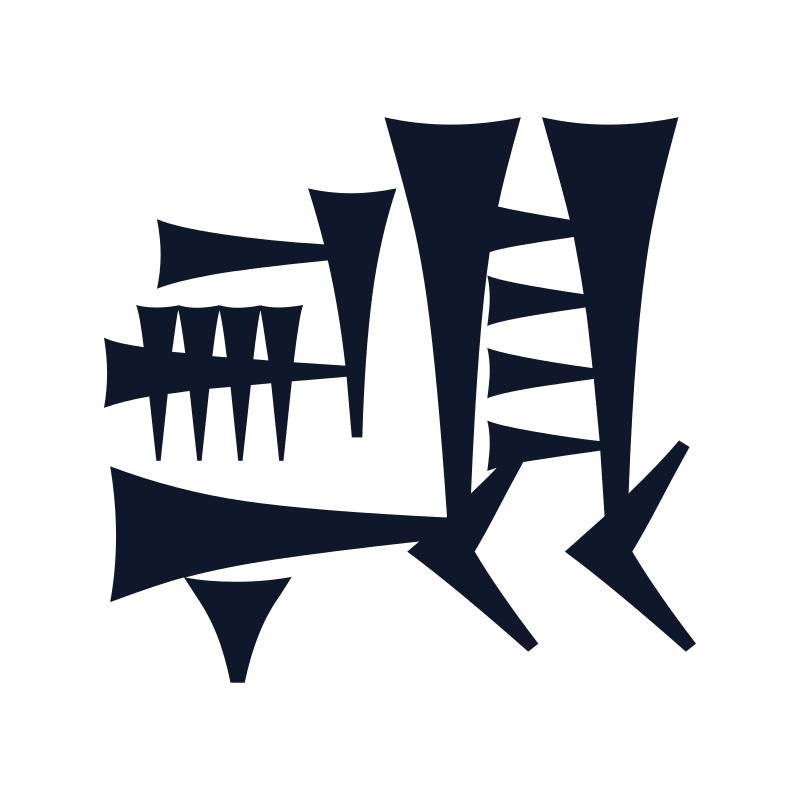 BURU14 · U+12098
𒂘
harvest, crop, summer
Cuneiform sign EN×GAN₂, read BURU₁₄ (Borger MZL 166, U+12098), combining EN ('lord') with GAN₂ ('cultivated field'). It is the universal Sumerian logogram for 'harvest, grain crop, and the summer harvest season' (Sumerian buru₁₄; Akkadian ebūru), constant in agricultural loan contracts ('to be repaid at harvest time', ina ebūri).
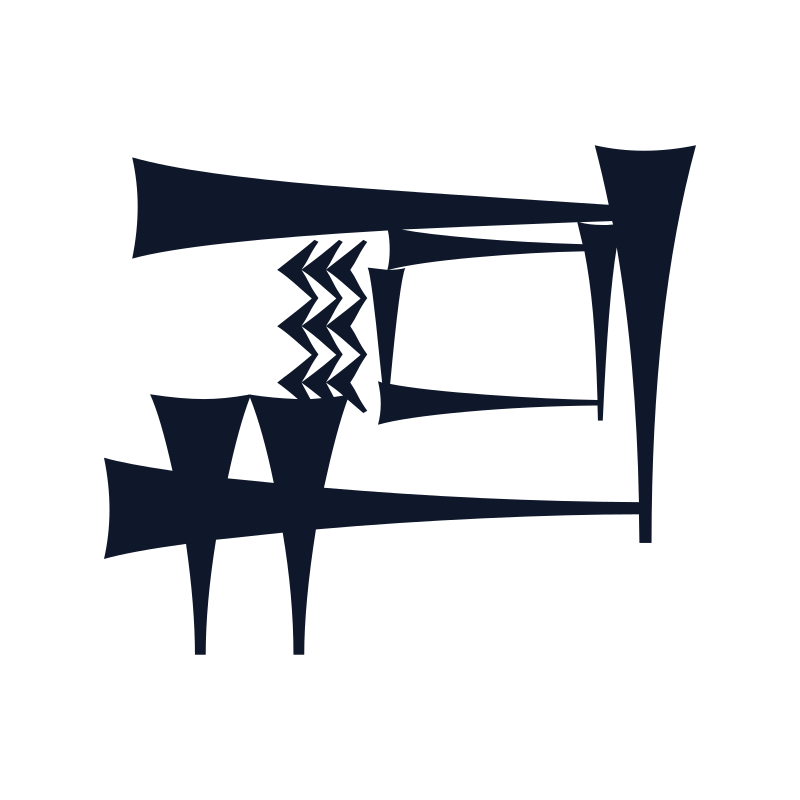 GA2_SAR · U+120E4
𒃤
enclosed garden, herb basket
Cuneiform sign GA₂×SAR (Borger MZL 421, U+120E4), inscribing SAR ('garden, vegetable plot, to write') inside GA₂ ('enclosure, basket') in Mesopotamian lexical traditions.
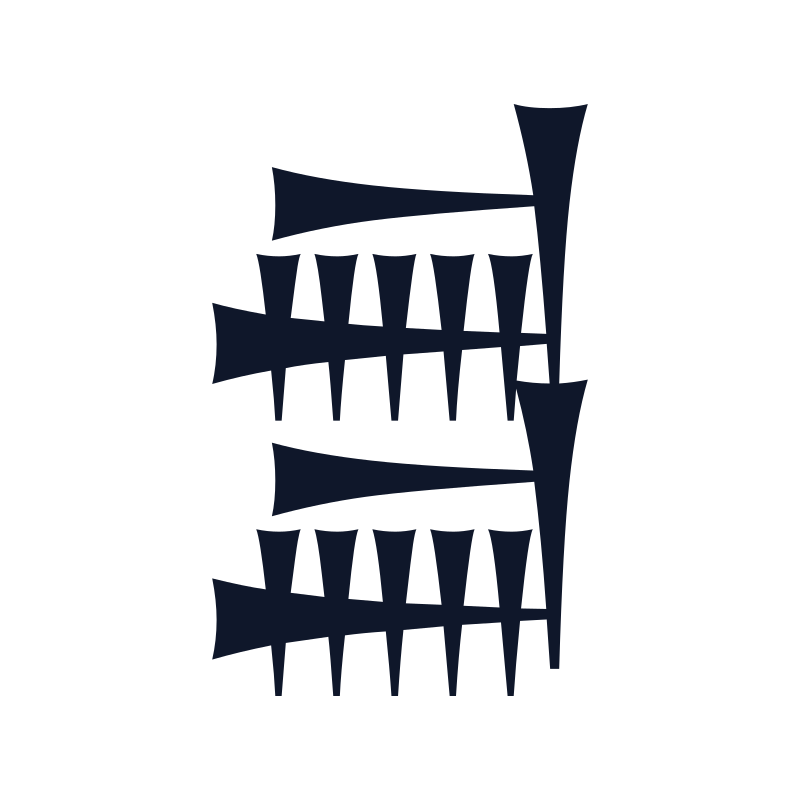 GAN2_GAN2 · U+120F9
𒃹
cultivated fields, lands
Cuneiform sign GAN₂/GAN₂ (two field signs GAN₂ stacked vertically, Borger MZL 195, U+120F9), denoting plural agricultural fields, surveyed land parcels, or broad expanses of arable land (Akkadian eqlēti).
 GAN2_CROSS_GAN2 · U+120FA
𒃺
crossed fields, parcels
Cuneiform sign GAN₂ crossing GAN₂ (U+120FA), formed by two intersecting field signs GAN₂, preserved in Babylonian lexical lists for cross-divided land plots.
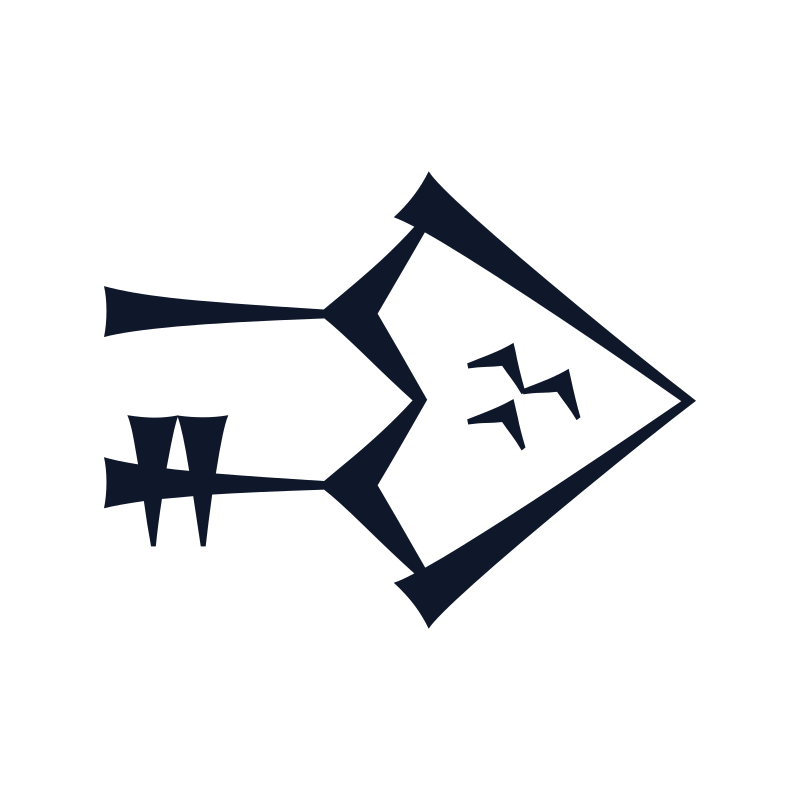 GESHTIN_KUR · U+120FF
𒃿
mountain wine, raisins
Cuneiform sign GEŠTIN×KUR (Borger MZL 346, U+120FF), combining GEŠTIN ('vine, grape, wine') with KUR ('mountain, highland') to denote highland wine or dried mountain grapes/raisins (Sumerian geštin-kur-ra; Akkadian karān šadî, muzīqu).
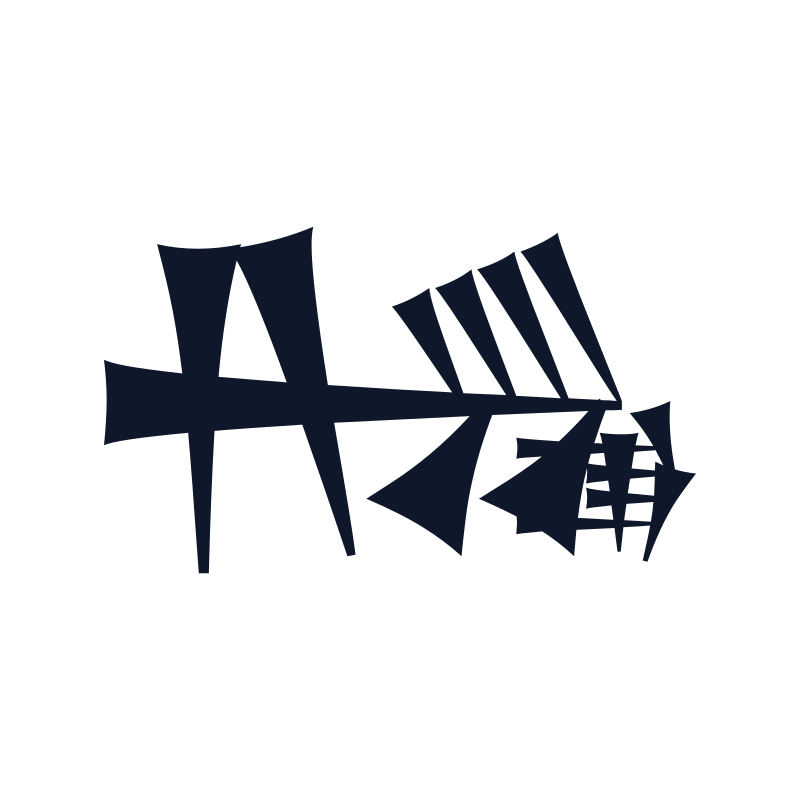 GI_E · U+12101
𒄁
canal reed, stalk
Cuneiform sign GI×E (Borger MZL 142, U+12101), combining GI ('reed') with E ('canal, ditch') in Babylonian lexical lists.
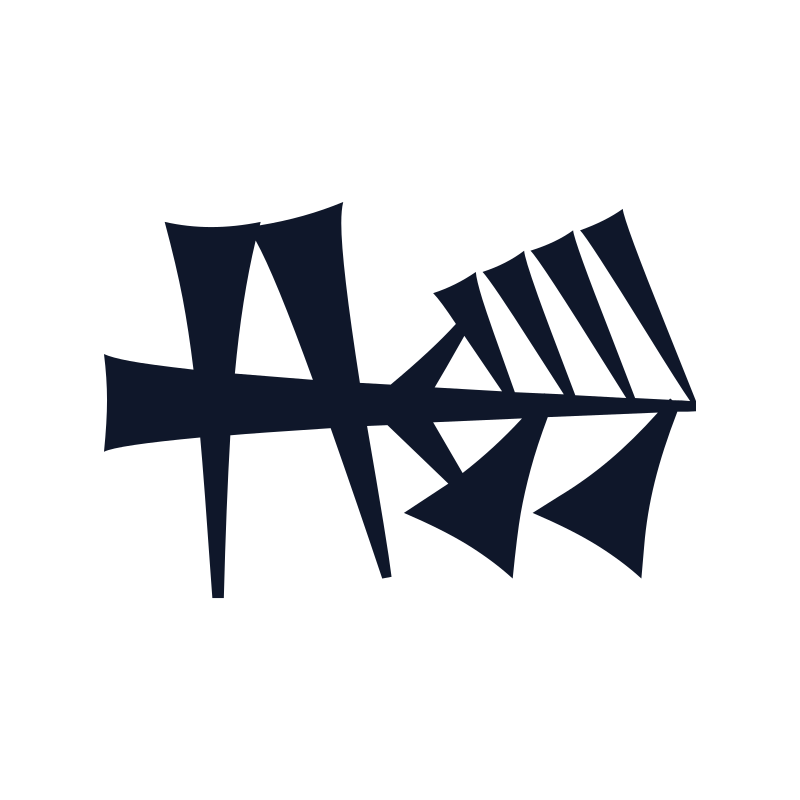 GI_U · U+12102
𒄂
reed bundle, sheaf
Cuneiform sign GI×U (Borger MZL 143, U+12102), combining the reed sign GI with the number ten (U) to denote a bundled unit of reeds in Mesopotamian lexical and administrative traditions.
 SUMUN2 · U+12113
𒄓
old wood, deadwood
Cuneiform sign GIŠ×BAD (Borger MZL 467, U+12113), combining GIŠ ('wood, tree') with BAD/SUMUN ('old, decayed, dead') to denote aged, dry, or worm-eaten timber (Akkadian iṣu labīru, išqippu).
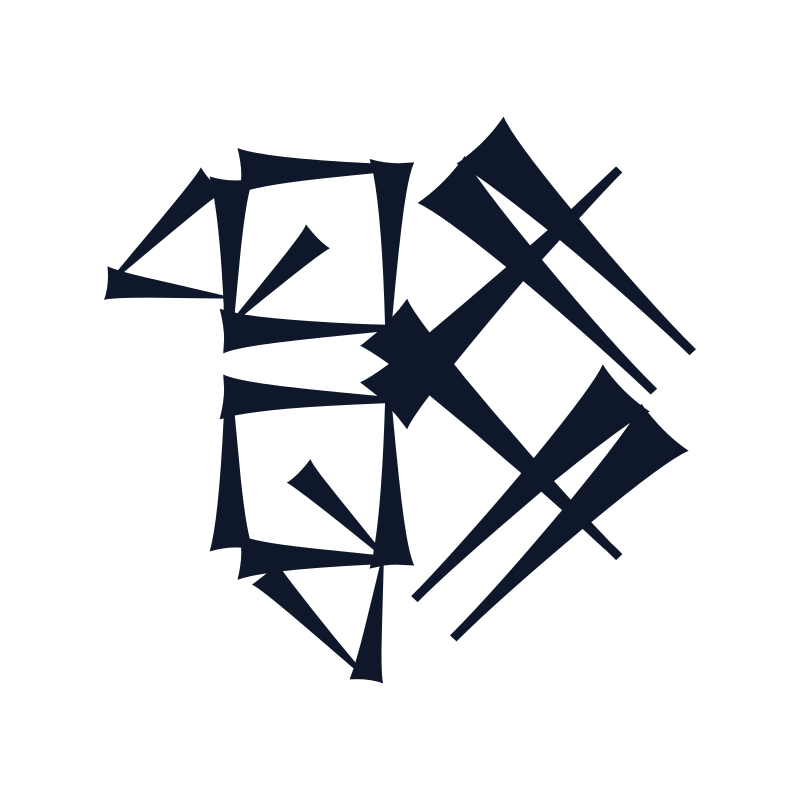 IM_CROSS_IM · U+12150
𒅐
whirlwind, crosswinds
Cuneiform sign IM crossing IM (Borger MZL 643, U+12150), formed by two intersecting wind signs IM to depict colliding crosswinds, a whirlwind, or a tempest (Akkadian ašamšūtu, meḫû).
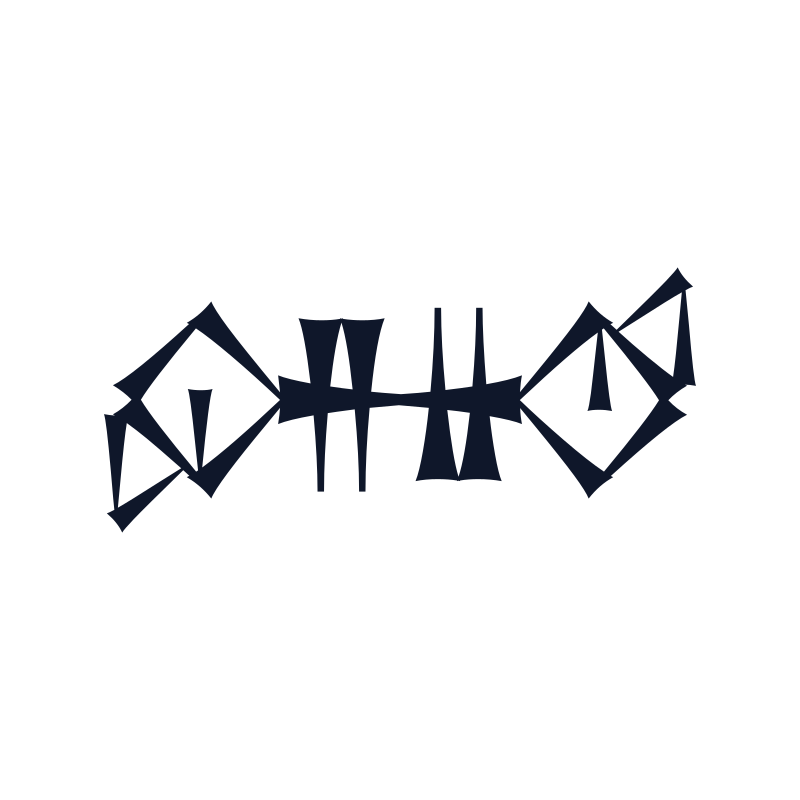 IM_OPP_IM · U+12151
𒅑
opposing winds, gale
Cuneiform sign IM opposing IM (Borger MZL 643, U+12151), depicting two wind signs IM facing each other in mirror symmetry to denote contrary winds or a storm.
 KI×BAD · U+121A1
𒆡
distant land, hollow ground
KI×BAD (𒆡) combines KI ('earth, place, ground') with an inscribed BAD ('to open, be distant, dead'). In Mesopotamian lexical lists, it denotes a remote territory, hollowed-out earth, or a chthonian realm associated with the underworld.
 HABRUD2 · U+121A2
𒆢
burrow, pit, hole
KI×U (𒆢) combines KI ('earth, ground') with the depression wedge U ('hole, pit'). Related to Sumerian `habrud` (Akkadian `hurru`), it represents an animal burrow, a cave, or a deep pit dug into the ground.
 KISLAH · U+121A3
𒆣
threshing floor, open lot
KISLAH (𒆣, structurally KI×UD, 'sun-dried ground') is the Sumerian logogram for a 'threshing floor' or 'vacant, uncultivated plot of land' (Akkadian `maškanu`, `nidûtu`). In agricultural and real-estate tablets, it designates the hard, dry open space where harvested grain was threshed and winnowed.
 KUR×KUR · U+121B4
𒆴
mountain ranges, all lands
KUR OPPOSING KUR (𒆴) places two KUR ('mountain, foreign land') signs facing each other symmetrically. Corresponding to the Sumerian collective `kur-kur` (Akkadian `mātātu`, `šadû`), it signifies mountain ranges, all foreign lands, or the entire inhabited world.
 SUG · U+121B9
𒆹
marsh, lagoon, pool
SUG (𒆹, structurally LAGAB×A, 'water enclosed in a basin') is the standard Sumerian logogram for 'marsh, swamp, reed bed, or lagoon' (Akkadian `appāru`, `ṣuṣû`). The southern Mesopotamian marshes (`sug`) were vital ecosystems supplying reeds, fish, and waterfowl to Sumerian cities.
 ZAR · U+121C5
𒇅
grain sheaf, harvest stack
ZAR (𒇅, structurally LAGAB×GAR or LAGAB×SUM) is a Sumerian logogram meaning 'sheaf of grain, pile of sheaves, or harvest stack' (Akkadian `zarru`, `nakmaru`). In agricultural hymns such as the Debate between Hoe and Plow, `zar du₈` describes piling up abundant sheaves at harvest time.
 LAGAB×KI · U+121CF
𒇏
enclosed ground, walled plot
LAGAB×KI (𒇏) combines the circular boundary sign LAGAB with an inscribed KI ('earth, ground, place'). In Mesopotamian lexical lists, it denotes a fenced or walled plot of land, a circumscribed district, or a foundation trench.
 LAGAB×KUL · U+121D2
𒇒
seed basket, seedbed
LAGAB×KUL (𒇒) encloses KUL ('seed, offspring', related to `numun`) within the container sign LAGAB. In agricultural and lexical lists, it designates a basket or storage bin for sowing seed, or an enclosed garden seedbed.
 ZAR2 · U+121E1
𒇡
bound sheaf, harvest bundle
ZAR₂ (𒇡, structurally LAGAB×SUM) combines LAGAB ('ring, bundle') with SUM ('to give; onion/garlic'). Functioning alongside LAGAB×GAR (`zar`), it denotes a bound sheaf of grain, a braided bundle of garlic or onions, or stacked agricultural produce.
 PU2 · U+121E5
𒇥
well, cistern, orchard
PU₂ or TUL₂ (𒇥, structurally LAGAB×U, 'depression inside a circular rim') is the primary Sumerian logogram for 'well, cistern, fountain, or deep pit' (Akkadian `būrtu`, `šuplu`). In combination with `kiri₆` (`pu₂-kiri₆`), it also designates a well-irrigated fruit orchard or palm grove.
 LAGAB×UD · U+121E9
𒇩
solar disk, bright ring
LAGAB×UD (𒇩) combines the circular ring LAGAB with an inscribed UD ('sun, day, white, shining'). In Mesopotamian lexical lists, it denotes a gleaming solar disk, a sunlit pool or clearing, or a white alabaster ring.
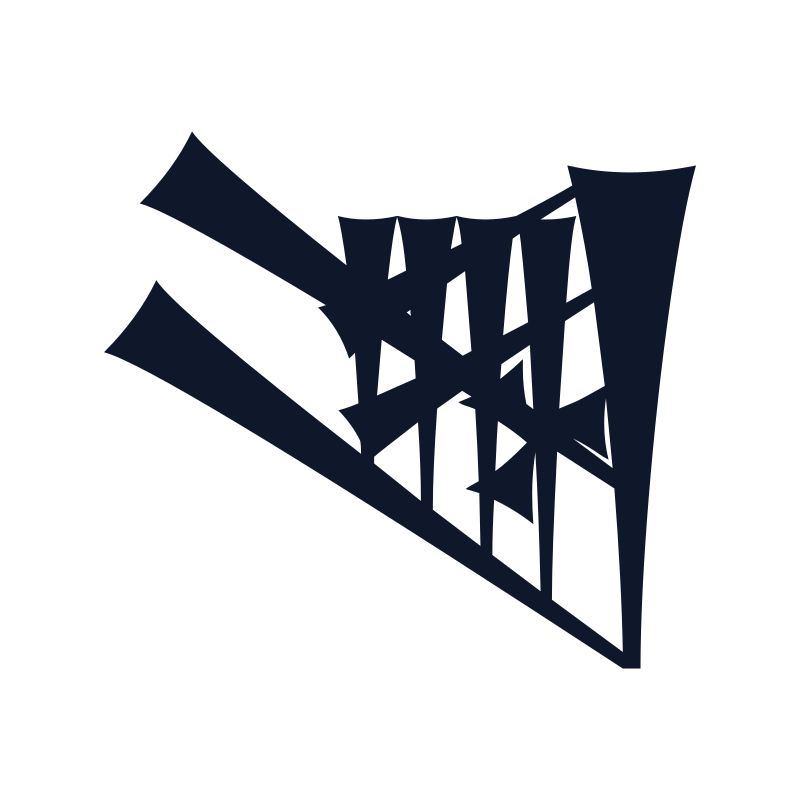 LAM×KUR · U+121F5
𒇵
mountain almond, pistachio
LAM×KUR (𒇵) combines LAM ('almond or pistachio tree, luxuriant growth'; Akkadian `lammu`, `buṭnu`) with KUR ('mountain, highland'). In archaic and lexical plant lists, it designates prized mountain nut-bearing trees native to the Zagros highlands.
 LUM/LUM · U+1221E
𒈞
luxuriant growth, abundant fruit
LUM OVER LUM (𒈞) is the vertically reduplicated form of LUM ('to grow luxuriantly, bear fruit, thrive'; Akkadian `unnubu`, `elēpu`). In Sumerian royal and temple hymns, `lum-lum` describes trees heavy with fruit, overflowing abundance, and flourishing vegetation.
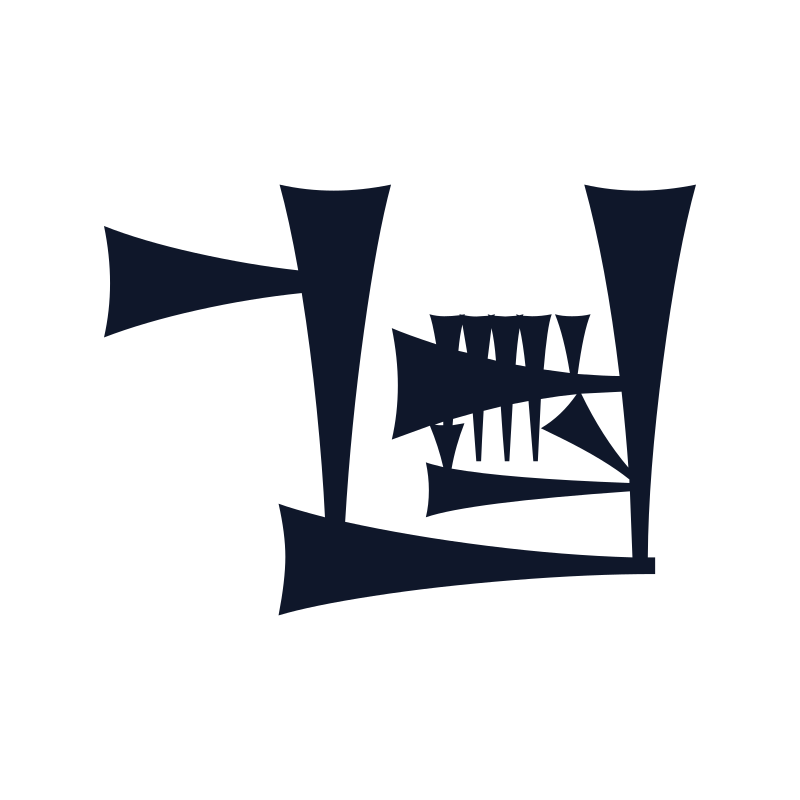 MA×TAK4 · U+12221
𒈡
preserved figs, dried fruit
MA×TAK₄ (𒈡) combines MA ('fig, fruit', related to `peš₃`) with TAK₄ ('to set aside, preserve, leave behind'). In early administrative and lexical traditions, it denotes dried or pressed figs stored away as long-lasting rations.
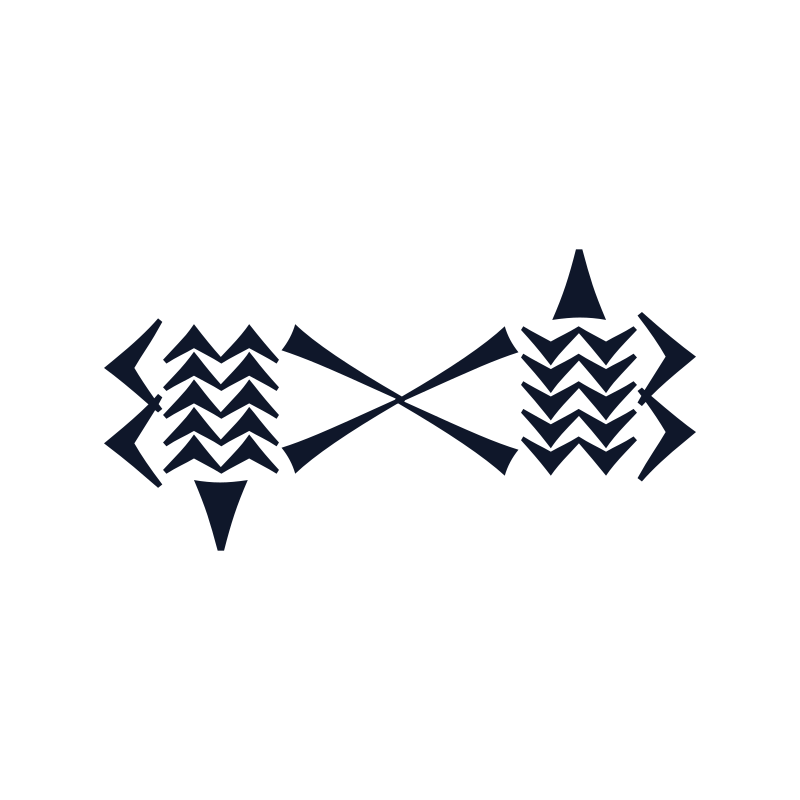 NAGA.NAGA · U+12243
𒉃
alkali plants, purification
NAGA OPPOSING NAGA (𒉃) places two NAGA ('alkali plant, potash, soapwort, mortar') signs facing each other. In Mesopotamian lexical and ritual traditions, it denotes abundant alkali plants used for soap and ritual cleansing, as well as a swirling dust storm (`dalhamun`).
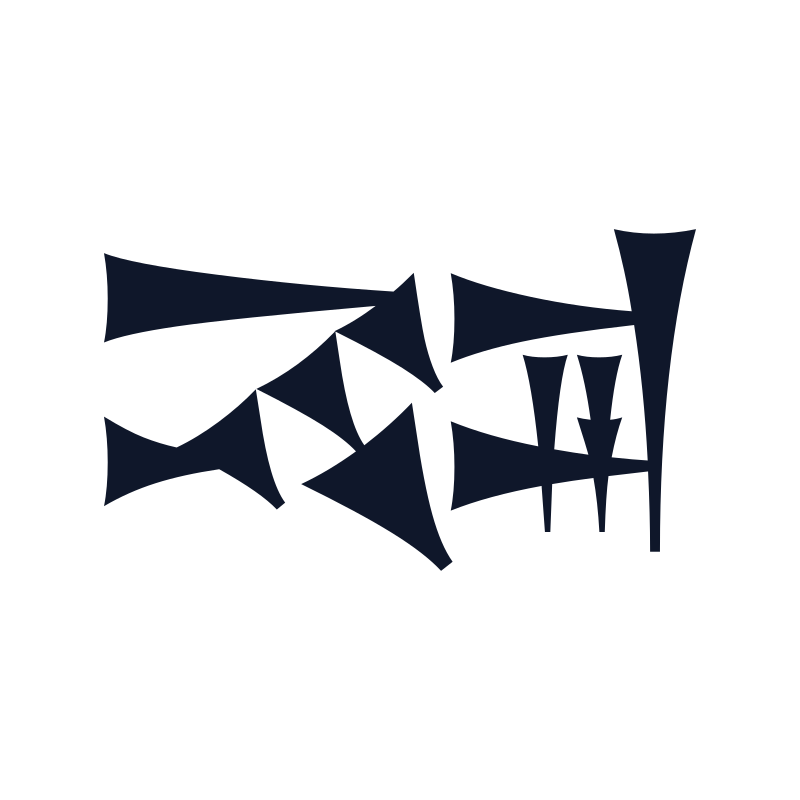 NE×A · U+12249
𒉉
boiling water, steam
NE×A (𒉉) combines NE ('fire, brazier, heat') with A ('water'). Graphically uniting fire and water, it represents boiling water, rising steam, scalding liquid, or quenching embers in Mesopotamian lexical lists.
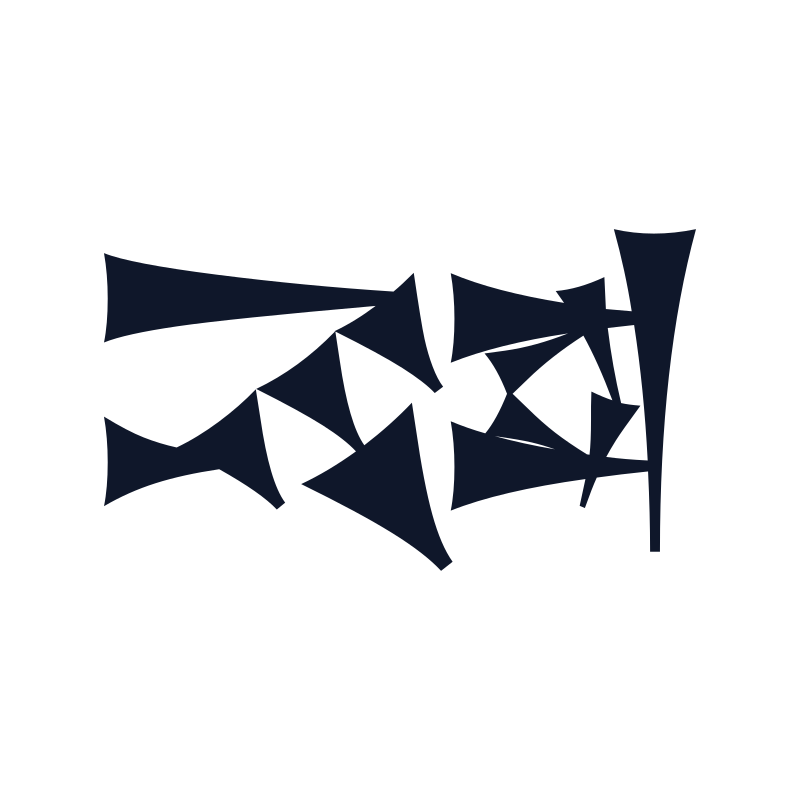 GIBIL2 · U+1224A
𒉊
blazing fire, bright flame
GIBIL₂ (𒉊, structurally NE×UD, 'fire + sun/bright') is a Sumerian logogram meaning 'blazing fire, bright flame, to burn, or to make new' (`gibil`, `bil`; Akkadian `qalû`, `edēšu`). It is also associated with Gibil (Girra), the Mesopotamian god of purifying fire and metallurgy.
 SHA3×GISH · U+122B1
𒊱
heartwood, tree pith, vigor
ŠA₃×GIŠ (𒊱) combines ŠA₃ ('heart, interior, core') with an inscribed GIŠ ('tree, wood, virility'). In Mesopotamian lexical lists, it denotes the inner heartwood or pith of a tree trunk (`ša₃-giš`) as well as physical virility.
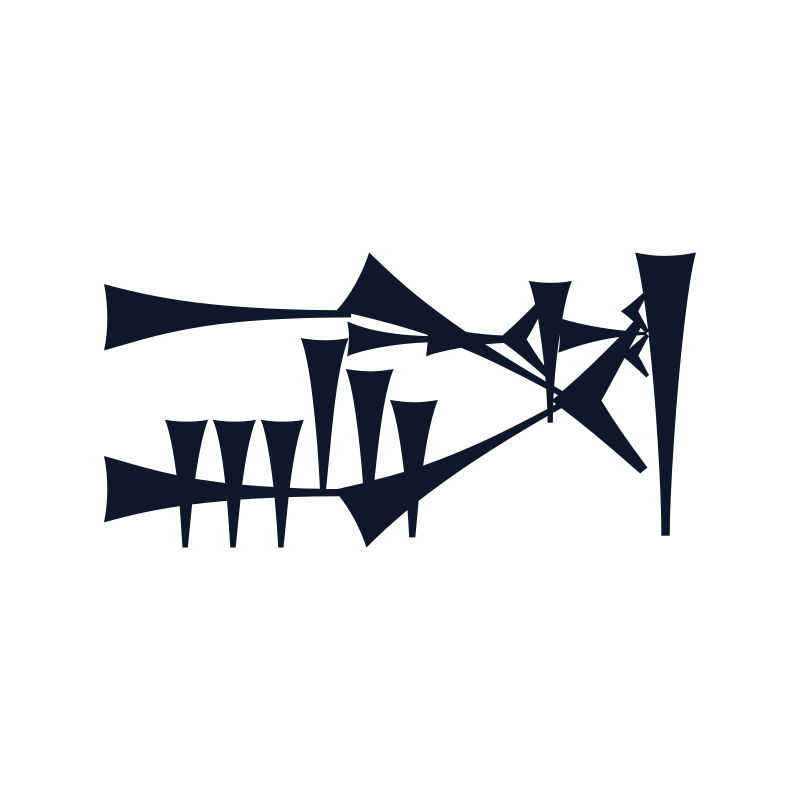 SHIM×BAL · U+122C8
𒋈
tapped resin, aromatic sap
ŠIM×BAL (𒋈) combines ŠIM ('aromatic tree, resin, spice') with BAL ('to pour out, decant, tap'). In Babylonian botanical and medical-ritual lists, it designates tapped aromatic tree resin or spiced libation beer.
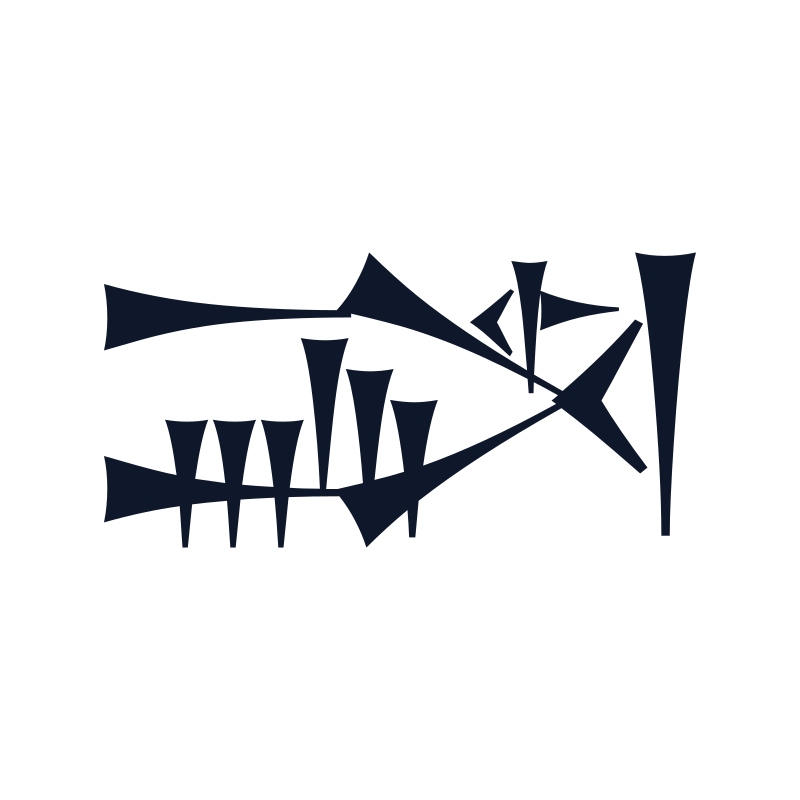 SHIM×IGI · U+122CC
𒋌
choice myrrh, tear resin
ŠIM×IGI (𒋌) combines ŠIM ('aromatic resin, incense') with IGI ('eye, front, first-quality'). In Mesopotamian pharmacology and incense recipes, it designates prime, translucent 'eye/tear-drop' beads of aromatic gum resin such as myrrh or bdellium.
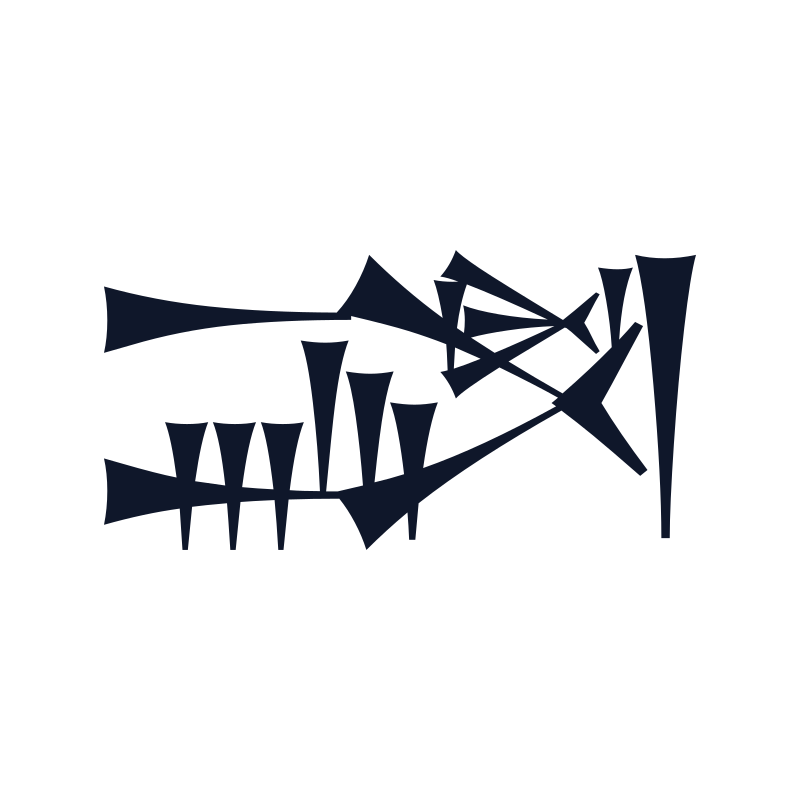 SHIM×KUSHU2 · U+122CE
𒋎
aromatic herb, medicinal spice
ŠIM×KUŠU₂ (𒋎) combines the aromatic determinative and vessel frame ŠIM with an inscribed KUŠU₂ sign. Attested in Mesopotamian lexical lists of aromatics and plants, it identifies a specialized fragrant herb or resin used in unguents and medicine.
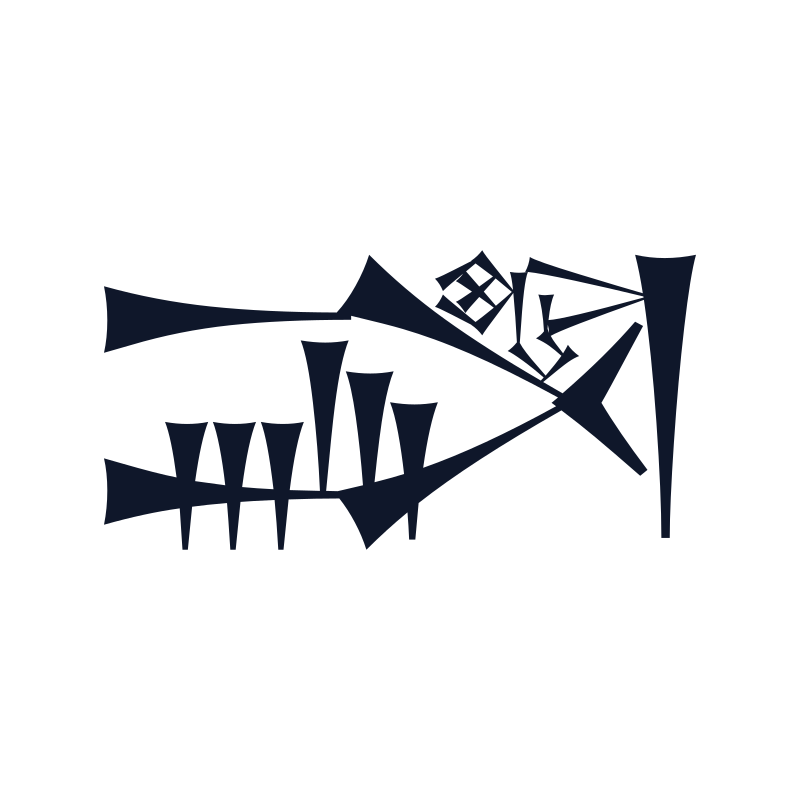 SHIM×LUL · U+122CF
𒋏
fragrant shrub, wild spice
ŠIM×LUL (𒋏) combines ŠIM ('aromatic plant, spice, resin') with an inscribed LUL sign. Recorded in Babylonian botanical and lexical compendia, it designates a wild aromatic plant or resinous shrub used in perfumery and ritual fumigation.
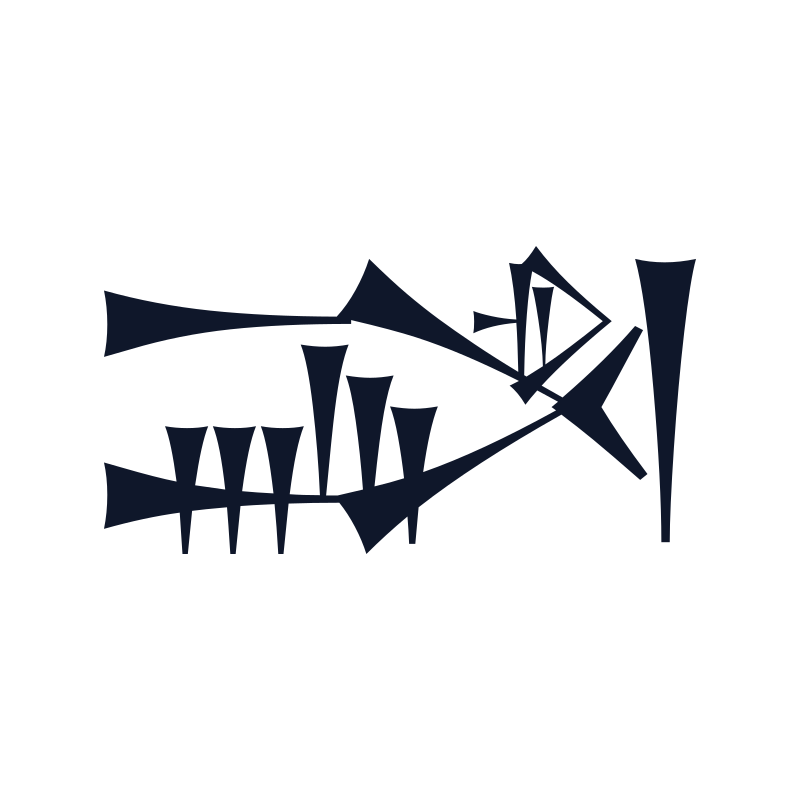 SHIM×MUG · U+122D0
𒋐
aromatic tree, sweet resin
ŠIM×MUG (𒋐, Sumerian `šim-mug`, Akkadian `ballukku`) is the logogram for a prized aromatic tree and its fragrant gum resin (often identified with styrax or sweetgum). It was widely used in Mesopotamian temple foundation deposits, sacred oils, and medical prescriptions.
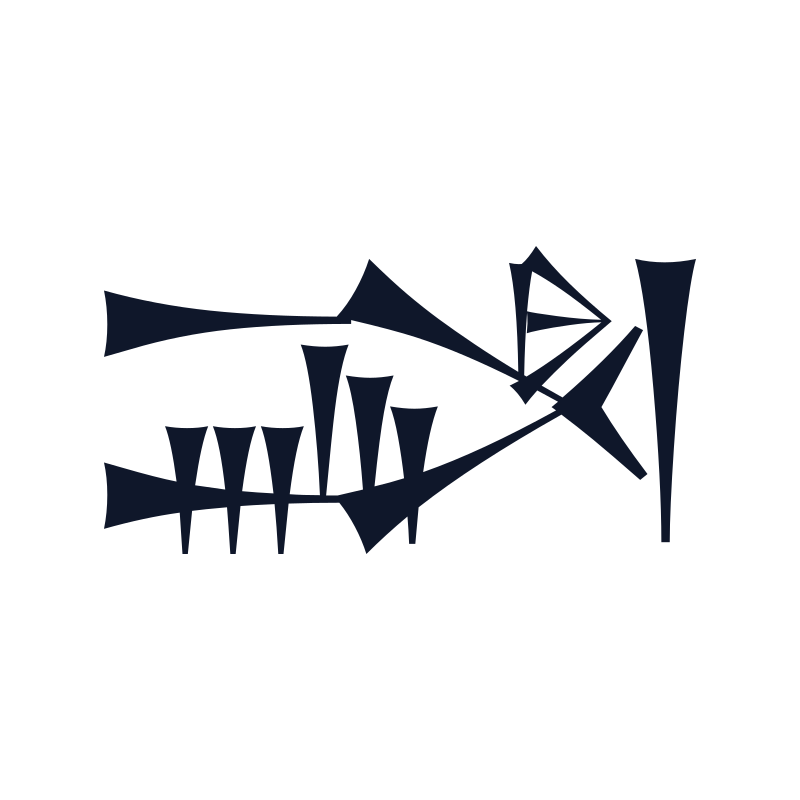 SHIM×SAL · U+122D1
𒋑
boxwood, fragrant evergreen
ŠIM×SAL (𒋑, Sumerian `šim-sal`, borrowed into Akkadian as `šimeššalû`) designates an aromatic evergreen shrub or tree—commonly identified as boxwood (`Buxus`) or a fragrant balm plant—valued both for its scented foliage in perfumery and its dense wood.
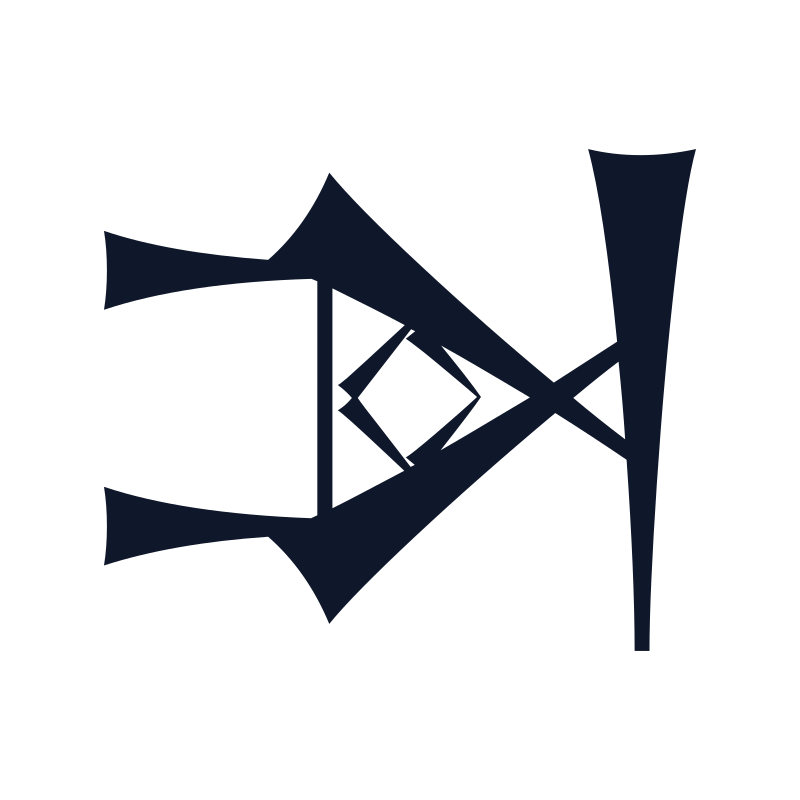 LAL3 · U+122ED
𒋭
honey, date syrup
LAL₃ (𒋭, structurally TA×HI, 'vessel + sweet/blended') is the standard Sumerian logogram for 'honey' and 'rich date syrup' (Akkadian `dišpu`). Paired constantly with ghee (`i₃-nun`) in temple foundation rituals and royal hymns, `lal₃` symbolizes pure abundance, sweetness, and divine favor.
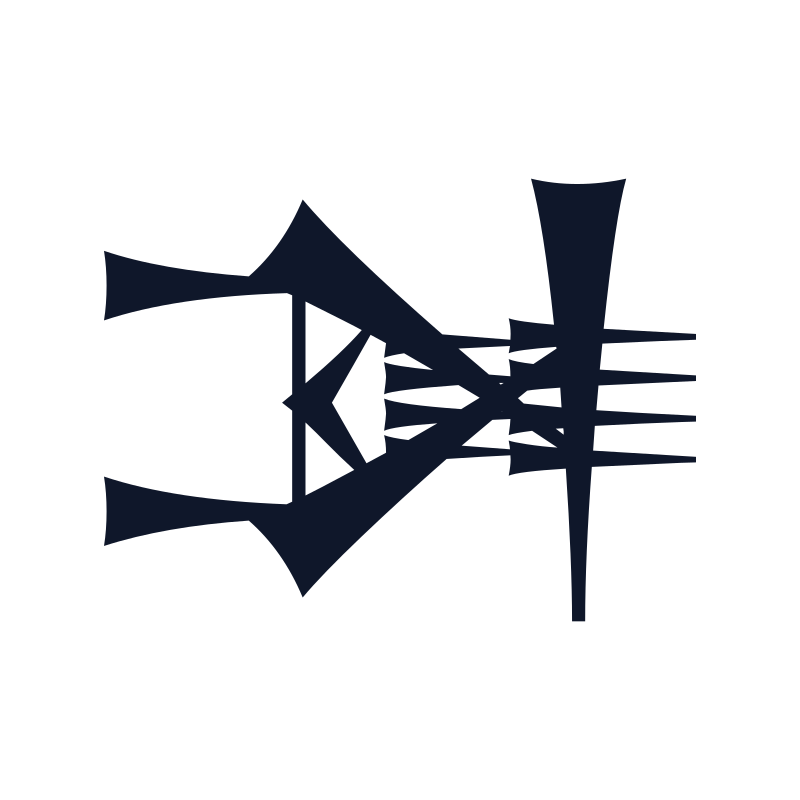 TA×MI · U+122EE
𒋮
darkened interior, shadow
TA×MI (𒋮) combines the frame sign TA with an inscribed MI ('night, darkness, black'). In Babylonian lexical lists, it denotes a darkened interior, a shaded recess, or dark-colored liquid in a vessel.
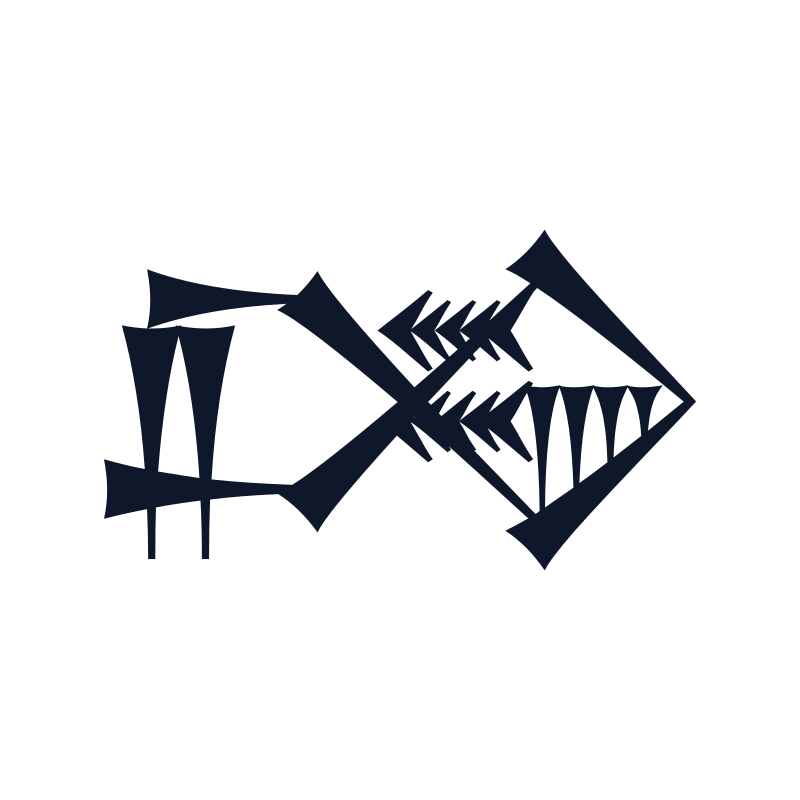 TAG×SHE · U+122F6
𒋶
thresh grain, pound barley
TAG׊E (𒋶) combines TAG ('to beat, strike, pound') with ŠE ('barley, grain'). In agricultural and lexical traditions, it denotes beating or threshing harvested grain sheaves and pounding barley in a mortar.
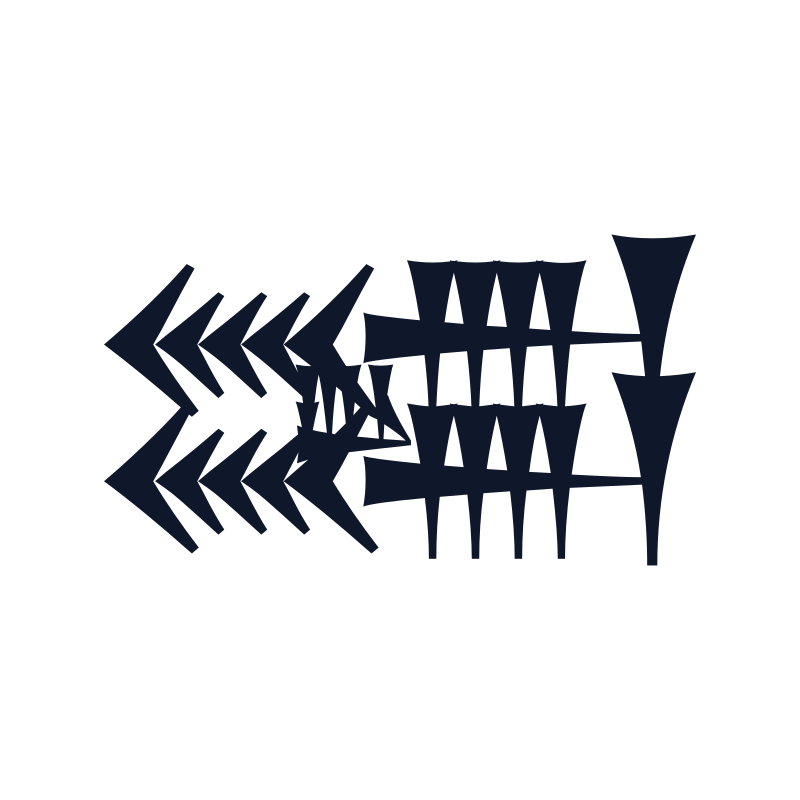 TIR×TAK4 · U+12302
𒌂
forest reserve, protected grove
TIR×TAK₄ (𒌂) combines TIR ('forest, grove, woodland'; Akkadian `qištu`) with TAK₄ ('to set aside, reserve, leave remaining'). In early administrative and lexical traditions, it denotes a reserved stand of timber or a managed forest tract.
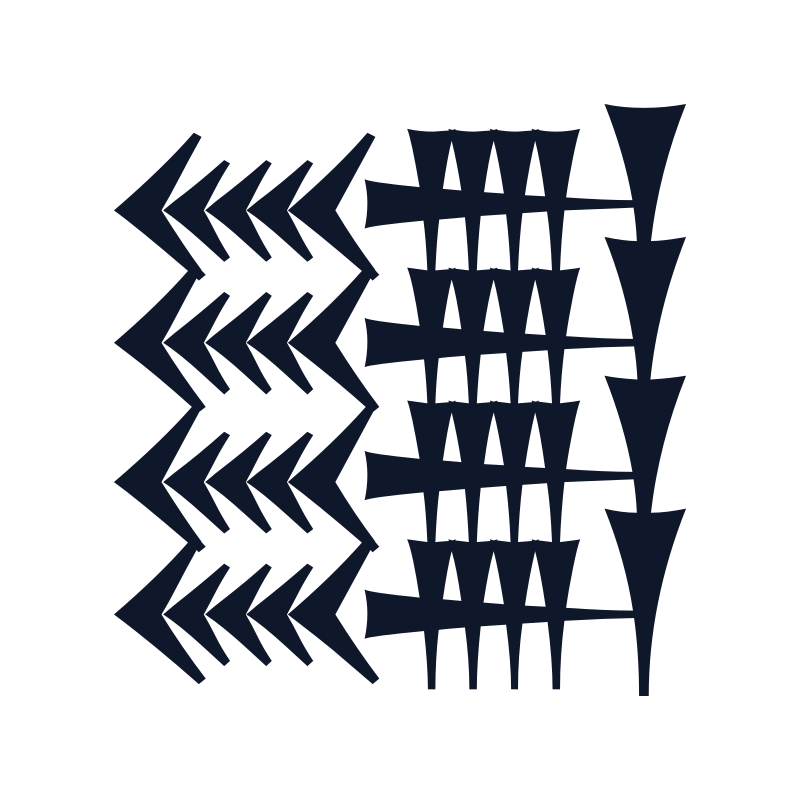 TIR/TIR · U+12303
𒌃
dense forests, woodlands
TIR OVER TIR (𒌃) is the vertically reduplicated form of TIR ('forest, grove'). Expressing collective plurality (`tir-tir`, Akkadian `qišātu`), it designates vast mountain forests, dense cedar woodlands, or multiple cultivated timber groves.
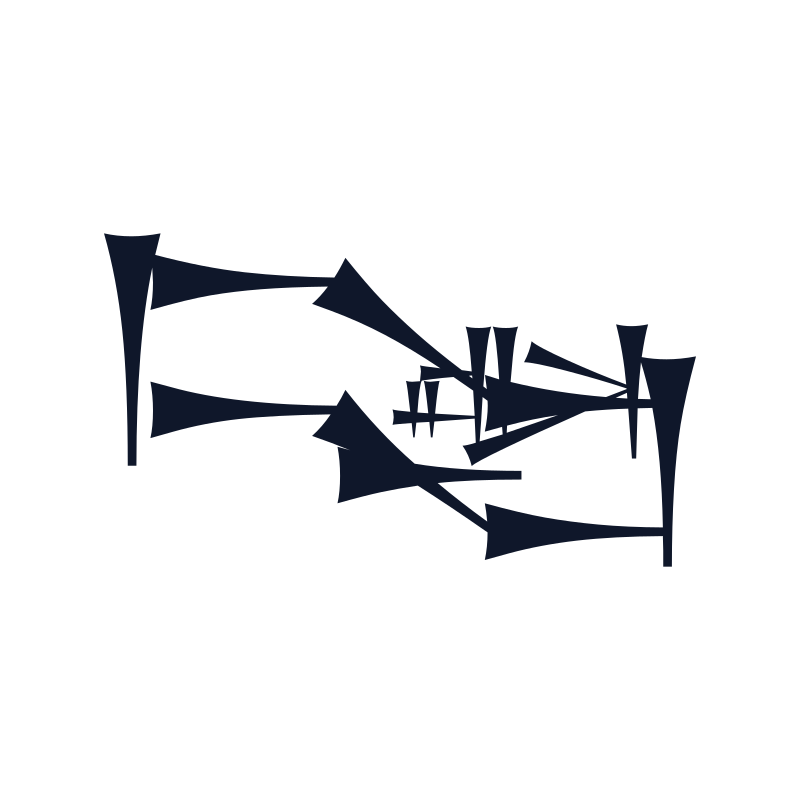 UR2×AL · U+1232E
𒌮
dig roots, uproot stumps
UR₂×AL (𒌮) combines UR₂ ('root, base, tree trunk'; Akkadian `išdu`) with AL ('hoe, pickaxe'). In Mesopotamian agricultural and lexical traditions, it denotes digging out tree roots and stumps with a hoe or excavating the base of a wall.
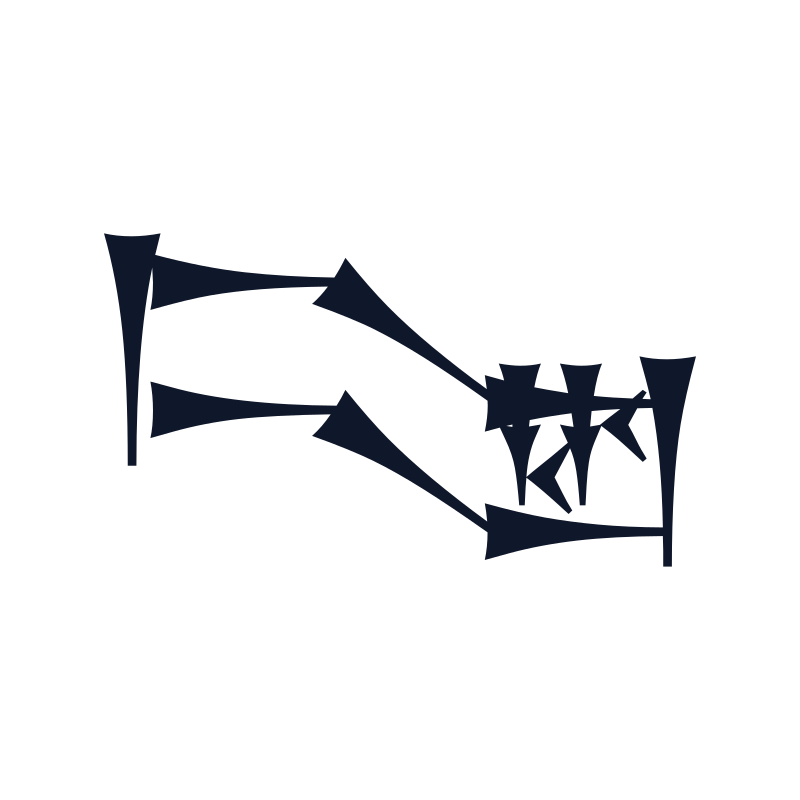 UR2×HA · U+1232F
𒌯
tree base, rootstock
UR₂×HA (𒌯) combines UR₂ ('root, base, lower trunk') with HA. Recorded in Babylonian lexical lists, it denotes a botanical rootstock, scaly palm-trunk base, or divided foundation.
 UR2×U2 · U+12331
𒌱
plant root, medicinal root
UR₂×U₂ (𒌱) combines UR₂ ('root, base') with U₂ ('plant, herb, grass'). In Mesopotamian botanical and medical texts (where `ur₂` = Akkadian `šuršu`, 'root'), it specifically designates the root of a medicinal plant dug up for healing potions.
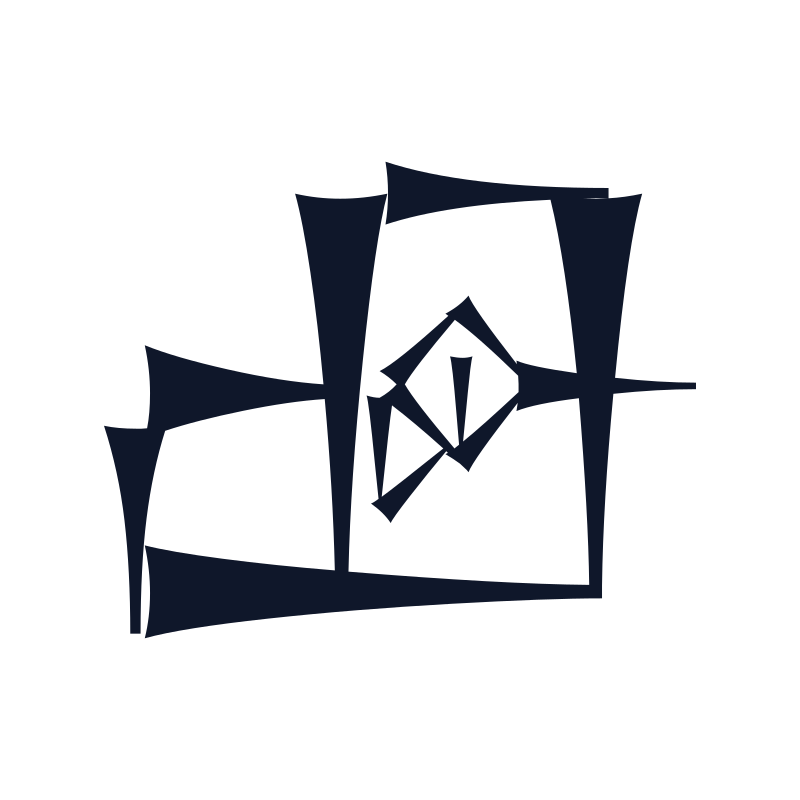 URU×IM · U+12343
𒍃
windstorm, tempest, cyclone
URU×IM (𒍃) combines URU ('flood-storm `uru₂`; city') with an inscribed IM ('wind, storm, rain'). In Sumerian and Akkadian meteorological and literary texts, it denotes a howling windstorm, cyclone, or tempest (`mehû`, `ašamšūtu`).
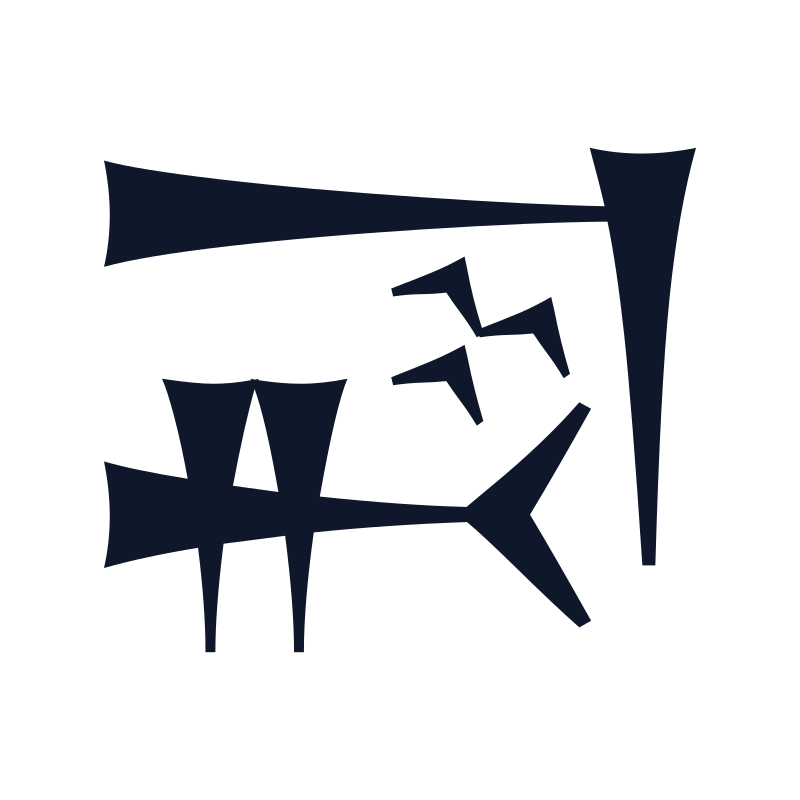 USH×KUR · U+12354
𒍔
mountain base, foothills
UŠ×KUR (𒍔) combines UŠ ('foundation, flank, border, adjacent side') with KUR ('mountain, foreign land'). It designates the lower base or foothills of a mountain range (`uš-kur`) or a frontier bordering highland territory.
 LAGAB×GI · U+12388
𒎈
reed fence, reed bundle
LAGAB×GI (𒎈) encloses GI ('reed, cane') inside the circular boundary LAGAB ('enclosure, ring, bundle'). In Mesopotamian rural architecture and lexical traditions, it represents a circular reed-mat fence, a wicker corral, or a bound bundle of reeds.
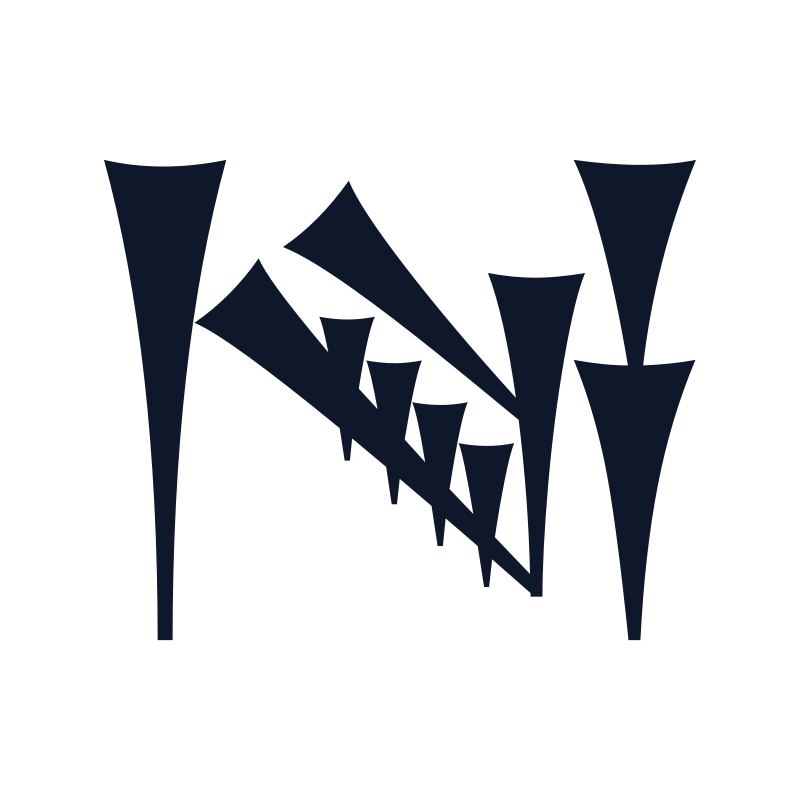 AGA3 · U+12003
𒀃
irrigated field, hamlet
A×GAN₂ TENU (𒀃, read `aga₃` or `eduruₓ`) combines A ('water, canal') with the slanted field sign GAN₂-tenû. In Sumerian administrative and lexical texts, it denotes an irrigated agricultural plot, a small rural hamlet by a canal, or service duty (`aga₃-us₂` variant).
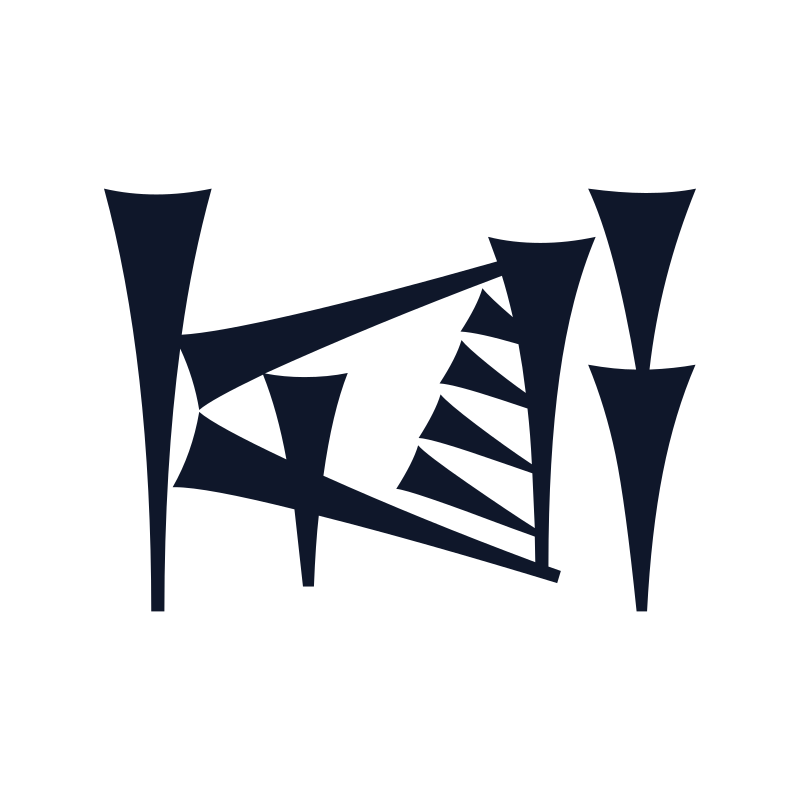 A×LAGAR-gunu · U+12006
𒀆
water reservoir, marsh channel
A×LAGAR GUNU (𒀆) combines A ('water') with the hatched (`gunû`) form of LAGAR (which also forms `du₆`, 'mound'). Attested in Babylonian lexical series, it denotes a water-filled basin, a marsh channel, or a mound surrounded by floodwaters.
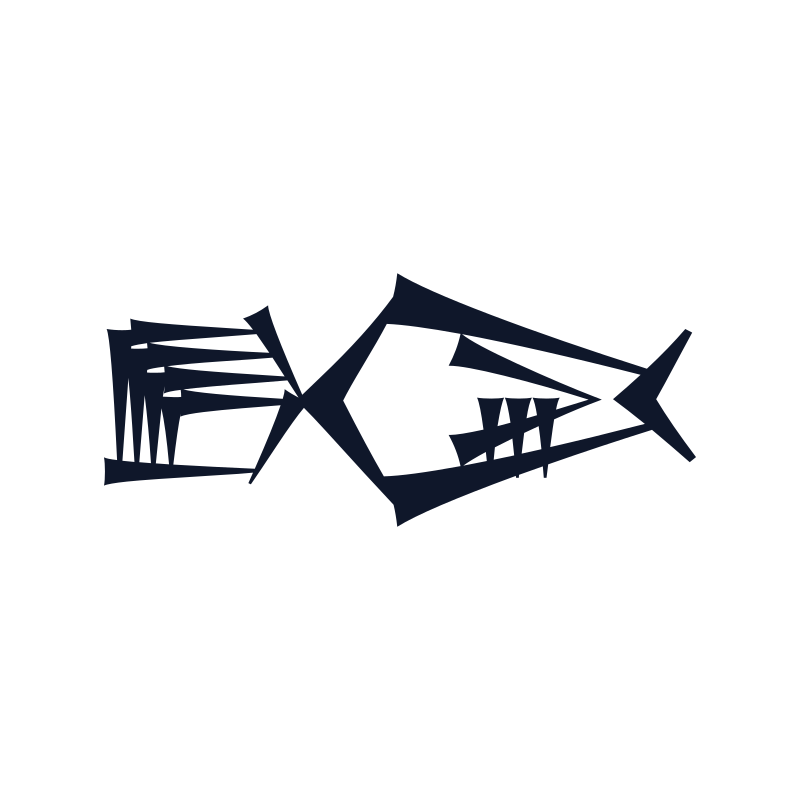 DAG.KISIM5xIR · U+12061
𒁡
sour whey, exudation, liquid
DAG KISIM₅×IR (𒁡) inscribes IR (𒅕, sweat, scent, or fluid secretion) inside the DAG.KISIM₅ (𒁙) container frame. In Babylonian lexical compendia, it refers to sour whey, pungent dairy exudations, or resinous plant secretions collected in jars. The inner IR element acts as both a phonetic complement and a semantic indicator of strong-smelling fluid.
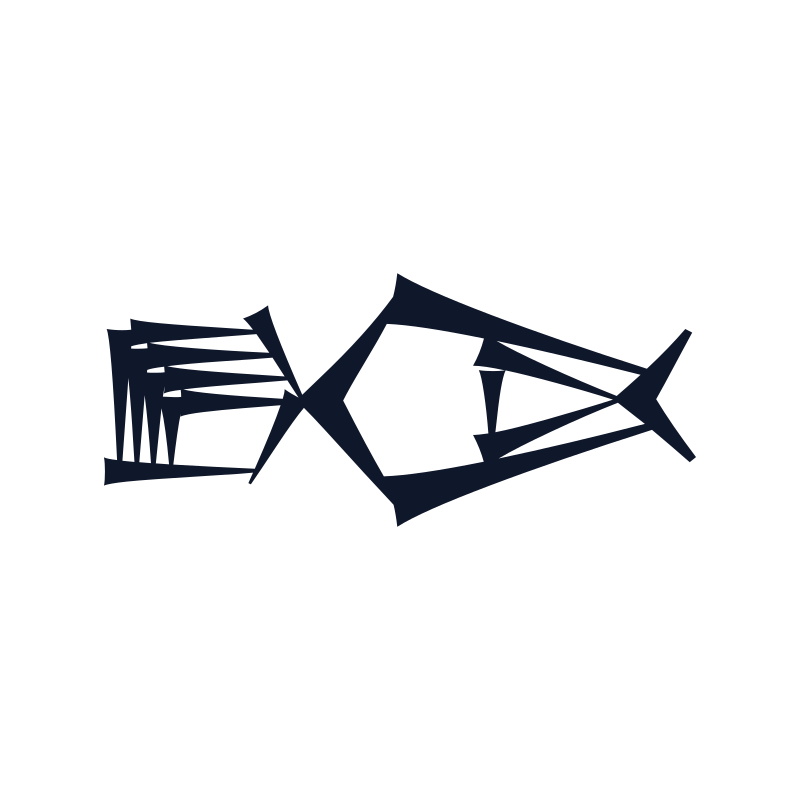 HARUB · U+12063
𒁣
carob pod, caterpillar, sprout
DAG KISIM₅×KAK (𒁣) places KAK (𒆕, peg or point) inside the DAG.KISIM₅ (𒁙) frame. In Mesopotamian lexical lists (such as Ea IV and Urra), it is read harub (Akkadian harūbu, carob tree or pod) as well as kisimx for a species of caterpillar or pupa whose segmented shell resembles a carob pod.
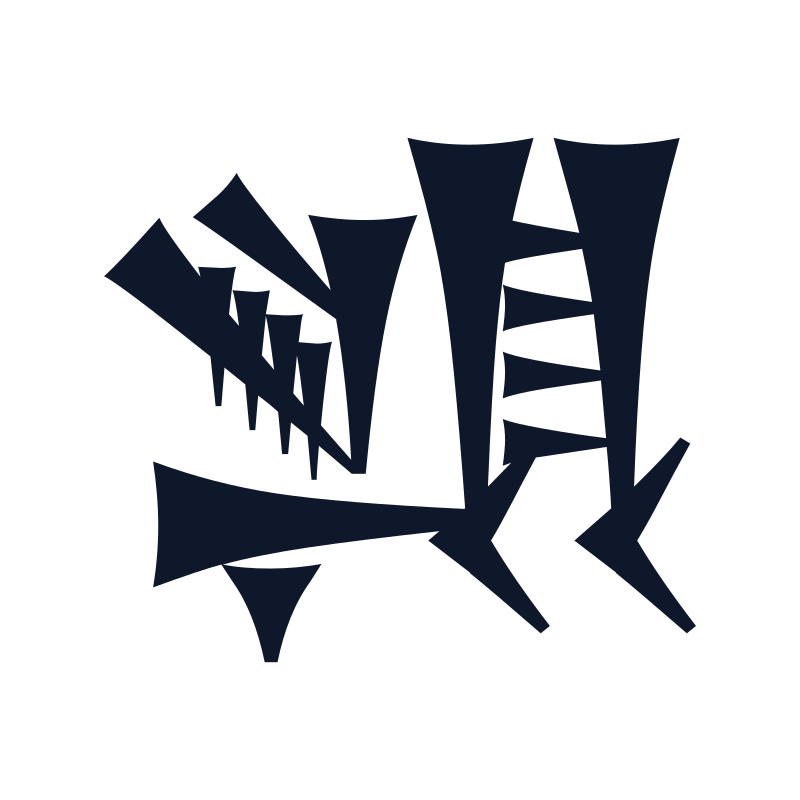 BURU14 · U+12099
𒂙
harvest, crop season, yield
EN×GAN₂-tenû (𒂙), read logographically as BURU₁₄ (Akkadian ebūru), embeds a tilted field sign GAN₂-tenû (𒃸) inside EN (𒂗, lord or time period). It means 'harvest', 'crop', or 'harvest season'—the pivotal economic period of the Mesopotamian agricultural calendar when barley was reaped and loans were repaid.
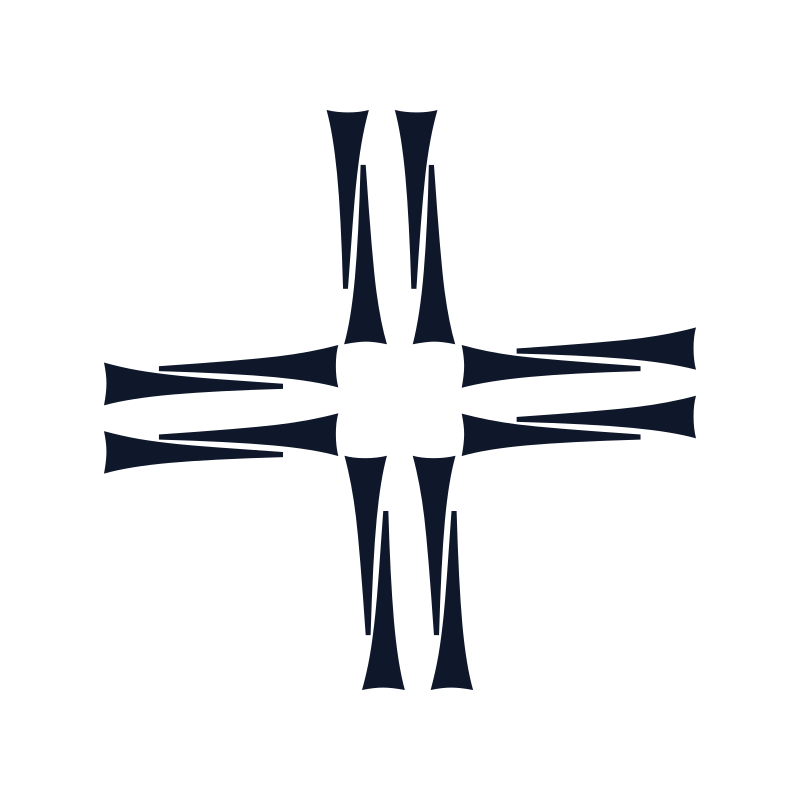 4xIDIM · U+12144
𒅄
subterranean springs, deep fountains
IDIM/IDIM SQUARED (𒅄) arranges four IDIM (𒅁, underground spring or heavy) signs in a symmetrical two-by-two grid. In Babylonian lexical traditions, this quadrupled grapheme intensifies the core meaning of IDIM, denoting abundant subterranean fountains, abyssal waters of the Apsu, or a multitude of gushing springs.
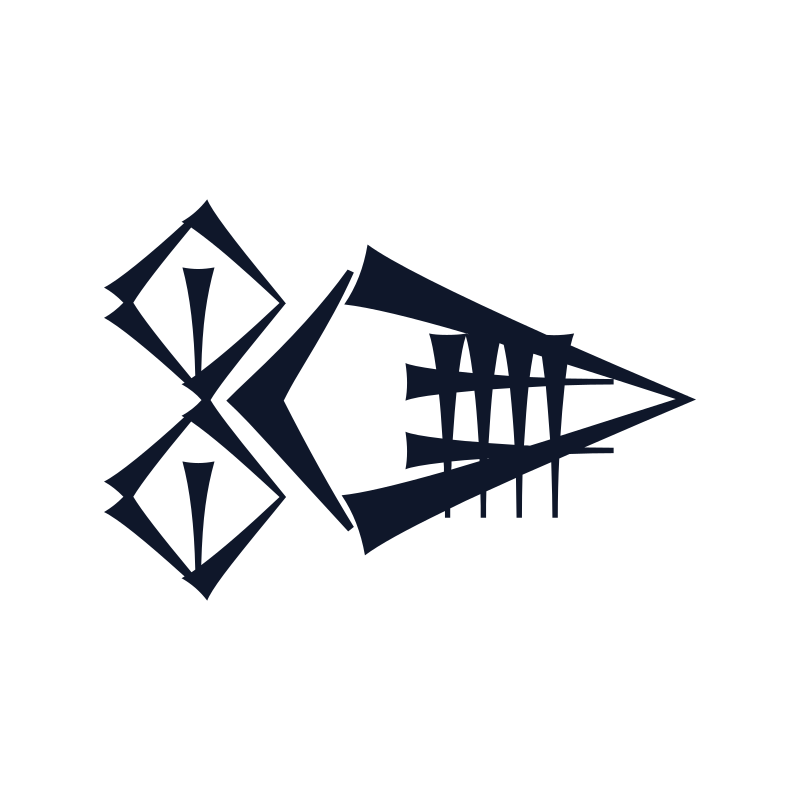 NUNUZ.AB2xU2 · U+12277
𒉷
herbal infusion vat, pasture larva
NUNUZ AB₂×U₂ (𒉷) places U₂ (𒌑, plant, herb, or grass) inside the NUNUZ.AB₂ (𒉭𒀖) ovoid frame. In Babylonian lexical lists, it refers either to a vessel used for steeping aromatic herbs in beer or milk, or to an herb-feeding insect larva found in pasturelands.
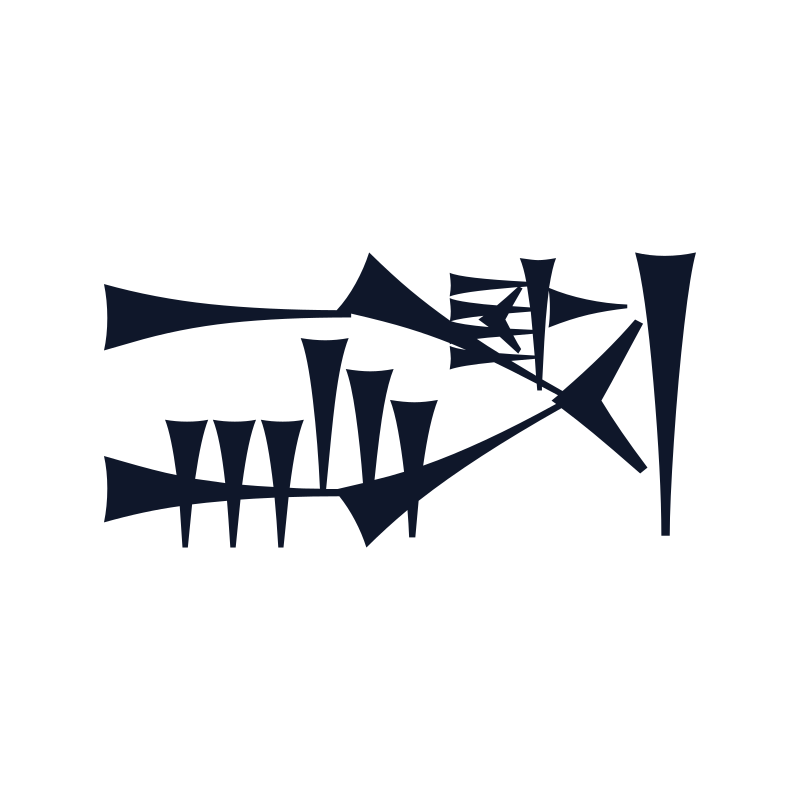 SHIMxIGI.GUNU · U+122CD
𒋍
fresh aromatic resin, green essence
ŠIM×IGI-gunû (𒋍) inscribes IGI-gunû / SIG₇ (𒅇, yellow-green, fresh, or radiant) inside ŠIM (𒋁, aromatic plant, resin, or brewer's herb). In Mesopotamian pharmacological and perfumery lists, it denotes fresh, pale-green aromatic resin or prime herbal extract used in temple incense and spiced beer.
 EZENxA.LAL · U+120A3
𒂣
Euphrates poplar, water basin
EZEN×A.LAL (𒂣) inscribes A (𒀀, water) and LAL (𒇲, to hang or balance) inside the EZEN (𒂦) frame. In Mesopotamian botanical and lexical traditions, it is a fuller graphic variant of ASAL₂ (𒀜 / 𒂡, Akkadian ṣarbatu), the Euphrates poplar tree whose drooping branches hang over riverbanks and canals.
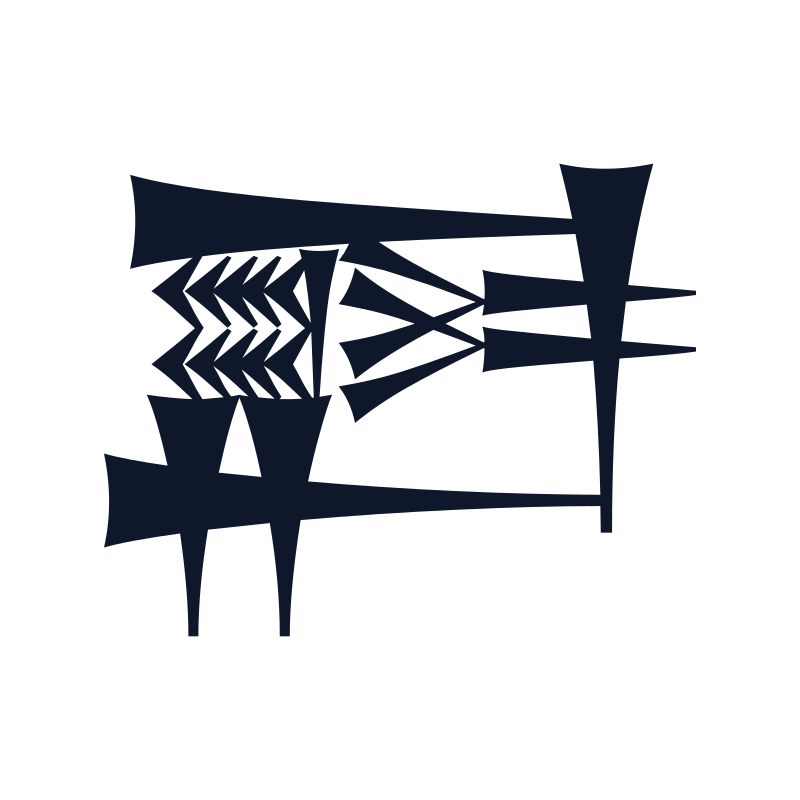 GA2xSHE.TUR · U+120E6
𒃦
seed-grain basket, fine barley bin
GA₂׊E.TUR (𒃦) places ŠE (𒊺, barley or grain) and TUR (𒌉, small or young) inside the reed-basket sign GA₂ (𒂷). In Babylonian agricultural and lexical tablets, it designates a basket or storage bin holding small-grained barley, seed corn, or finely crushed groats.
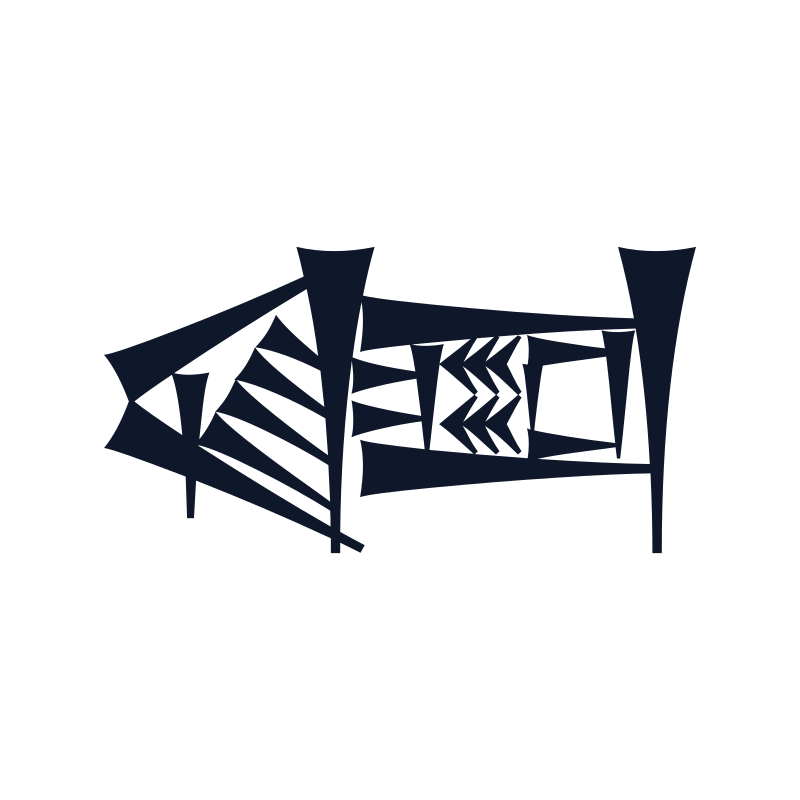 KAxGISH.SAR · U+12169
𒅩
orchard flavor, sweet fruit taste
KA×GIŠ.SAR (𒅩) places the compound logogram GIŠ.SAR (𒄑𒊬, kiri₆, orchard or date-palm garden) inside KA (𒅗, mouth or taste). In Mesopotamian lexical lists, it evokes the sweet flavor and fragrance of ripe orchard fruits tasted in the mouth or joyous acclaim resounding through a temple garden.
 LAGABxA.GAR · U+121BB
𒆻
irrigated basin, flooded meadow
LAGAB×A.GAR (𒆻) encloses A.GAR (𒀀𒃻, a-gar₃, irrigated agricultural tract or flooded meadow; Akkadian ugāru) within the circular dike sign LAGAB (𒇉). In Sumerian and Akkadian hydrological and lexical texts, it depicts a bunded basin or low-lying field where canal water was impounded to soak the soil before plowing.
 LAGABxA.LAL · U+121BC
𒆼
water cistern, reservoir, well
LAGAB×A.LAL (𒆼) places A (𒀀, water) and LAL (𒇲, to hang, balance, or draw up) inside the circular rim sign LAGAB (𒇉). In Babylonian lexical lists (Ea I), it denotes a well shaft, cistern, or reservoir from which water was raised with a counterweighted sweep (shaduf) or bucket.
 LAGABxSHE.SUM · U+121DC
𒇜
barley-sheaf stack, grain pile
LAGAB׊E.SUM (𒇜) places ŠE (𒊺, barley) and SUM (𒋧, to give or pile up) inside the circular frame LAGAB (𒇉). A fuller graphic counterpart of LAGAB×SUM (𒇛, zar), it denotes a circular stack of reaped barley sheaves piled on the threshing floor (Akkadian zarru).
 LAGABxSHU2.SHU2 · U+121E0
𒇠
covered pit, overcast horizon
LAGAB׊U₂.ŠU₂ (𒇠) inscribes a doubled ŠU₂ (𒋙, to cover, overwhelm, or darken) inside the circular sign LAGAB (𒇉). Preserved in the Babylonian lexical list Ea I as an intensive form of LAGAB׊U₂ (𒇟), it denotes a completely covered storage pit or an overcast circular horizon.
 LAGABxU.A · U+121E6
𒇦
water-filled hollow, marsh pool
LAGAB×U.A (𒇦) combines the circular rim LAGAB (𒇉) with U (𒌋, depression or hole, /buru/) and A (𒀀, water). Serving as a synthesis of LAGAB×U (𒇥, tul₂, well/pit) and LAGAB×A (𒆺, sug, marsh), it signifies a water-filled depression, spring hole, or marshy lagoon.
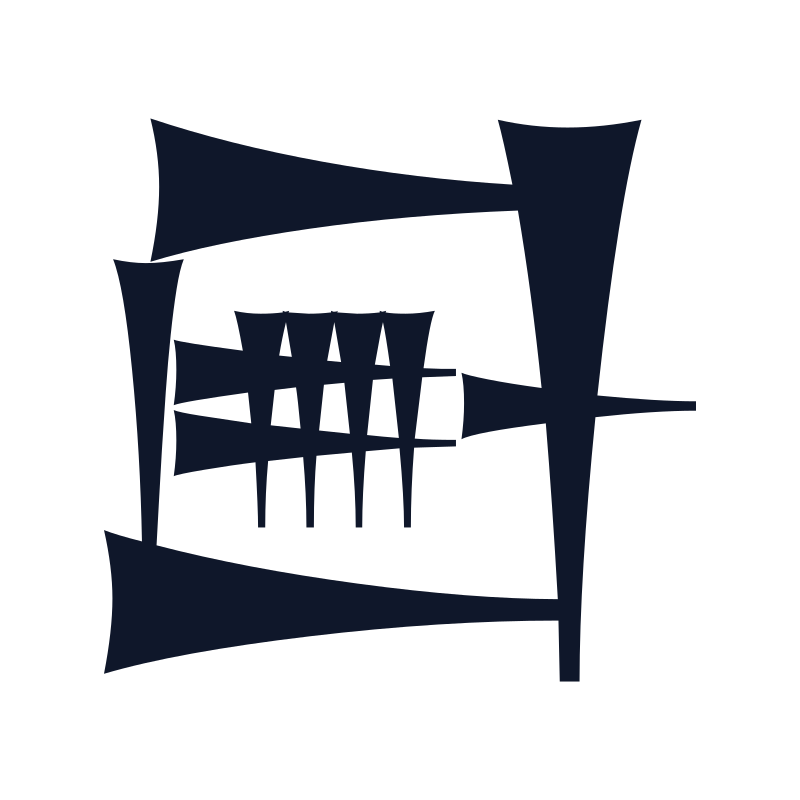 LAGABxU2.ASH · U+121E8
𒇨
fodder bale, grass-grown pool
LAGAB×U₂.AŠ (𒇨) places U₂ (𒌑, grass, herb, or pasture) and AŠ (𒀸, single wedge) inside the circular sign LAGAB (𒇉). In Babylonian lexical lists (Ea I), it denotes a tied round bale of pasture grass and brushwood or a marshy depression overgrown with sedge.
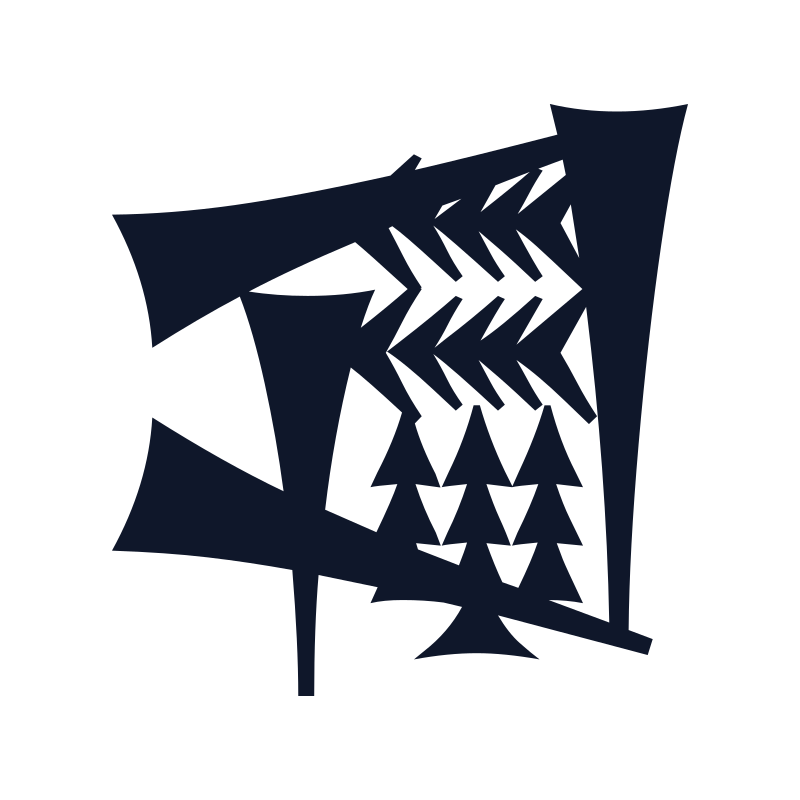 LAGARxSHE.SUM · U+121EE
𒇮
grain mound, temple store
LAGAR׊E.SUM (𒇮) inscribes ŠE (𒊺, barley) and SUM (𒋧, to give or heap up) inside the mound and granary frame LAGAR (𒇬). A fuller variant of LAGAR׊E (𒇭, du₆), it represents a high mound of threshed barley piled in the temple courtyard or an ancient settlement mound (tell).
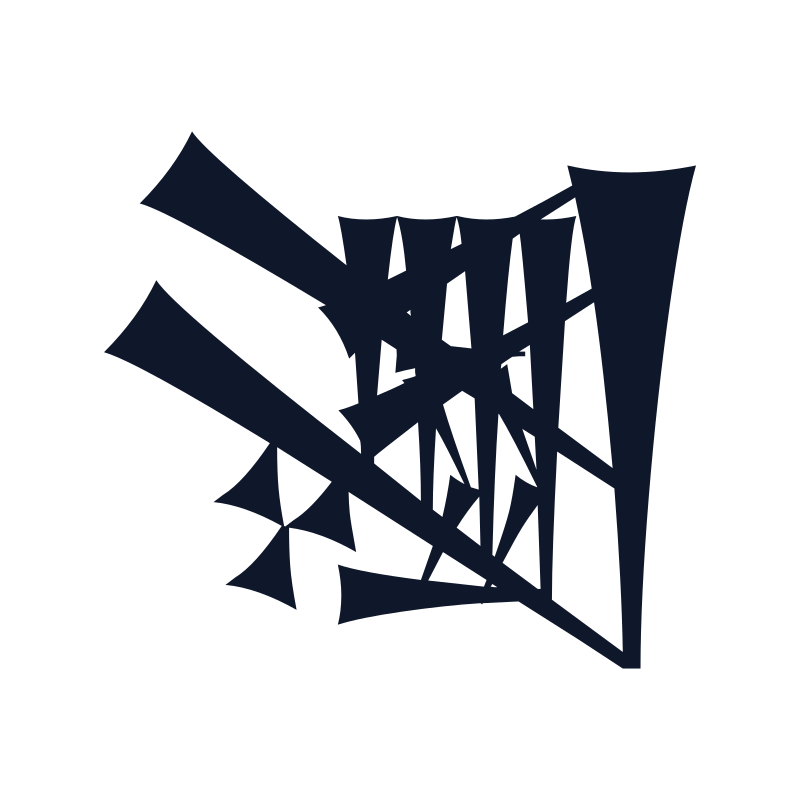 LAMxKUR.RU · U+121F6
𒇶
mountain almond, nut tree
LAM×KUR.RU (𒇶) combines LAM (𒇵, nut tree, almond/pistachio, or luxuriant growth; Akkadian lammu, buṭnu) with an inscribed KUR (𒆳, mountain) and phonetic RU (𒊒). In Mesopotamian botanical lists, it designates a wild almond or terebinth-pistachio tree native to the Zagros highlands.
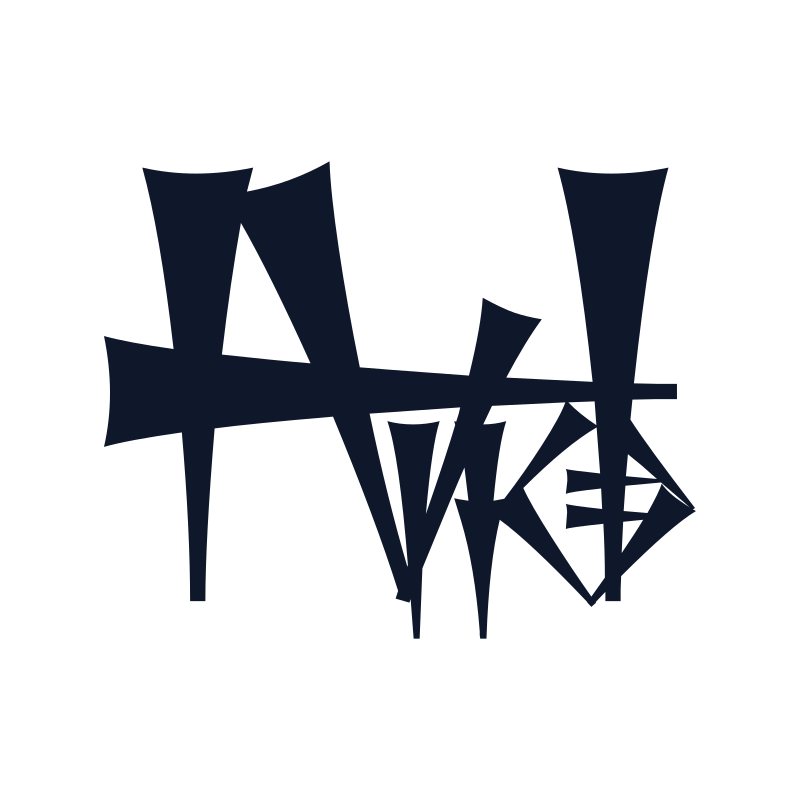 SHED7 · U+1223B
𒈻
coolness, refreshing water, soothe
MUŠ₃×A.DI (𒈻), read logographically as ŠED₇ (SHED₇) or SED, combines MUŠ₃ (𒈹) with A (𒀀, water) and DI (𒁲). In Sumerian and Akkadian texts, it means 'to be cool', 'cold water', 'winter chill', or 'to soothe a feverish heart' (Akkadian kaṣû, kūṣu, pašāhu).
 NINDA2xU2.ASH · U+1225E
𒉞
fodder trough, herb measure
NINDA₂×U₂.AŠ (𒉞) combines the NINDA₂ (𒉒, feeder, measuring vessel, or breeding bull) frame with U₂ (𒌑, grass, fodder, or herb) and AŠ (𒀸). In Babylonian lexical lists, it denotes a measured ration of dry fodder for stall-fed cattle or a feeding trough.
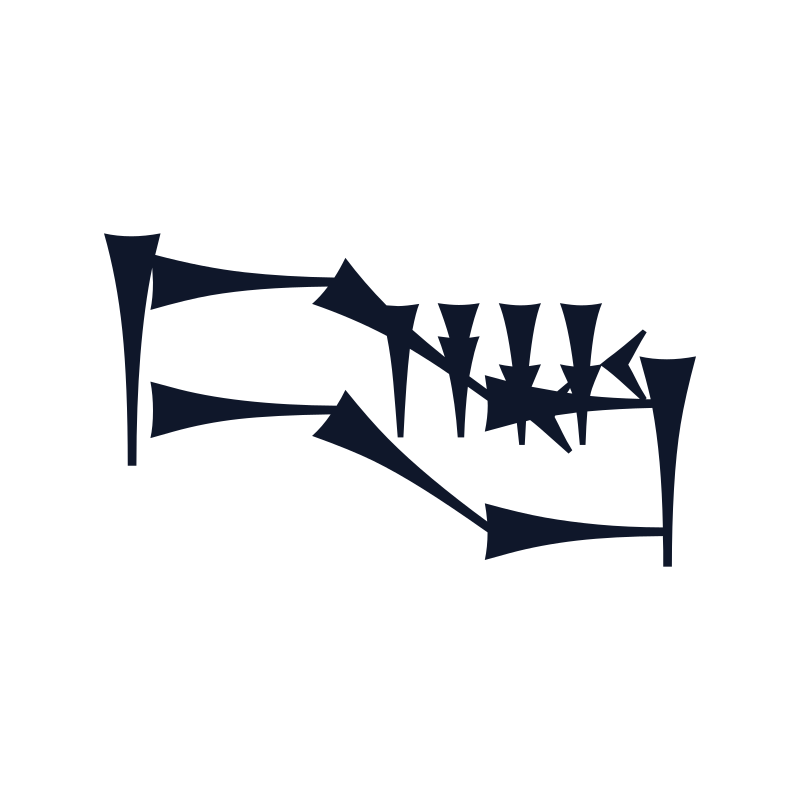 UR2xA.HA · U+1232C
𒌬
submerged roots, riverbank base
UR₂×A.HA (𒌬) places A (𒀀, water) and HA / KU₆ (𒄩, fish) inside UR₂ (𒌫, root, trunk base, or lap). In Babylonian lexical lists, it depicts tree roots or reed rhizomes submerged in fish-filled canal waters along the riverbanks.
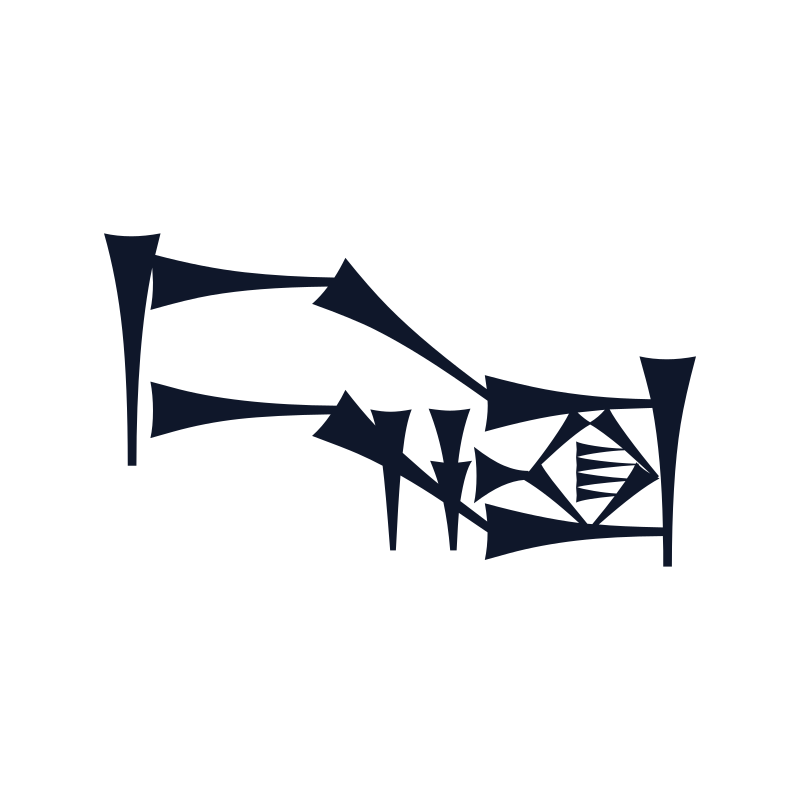 UR2xA.NA · U+1232D
𒌭
watered root, deep foundation
UR₂×A.NA (𒌭) inscribes A (𒀀, water) and NA (𒈾, stone or phonetic complement) inside UR₂ (𒌫, root or base). Preserved in Mesopotamian lexical series, it denotes a well-watered root system, a firm stone-and-earth foundation, or the generative loins.
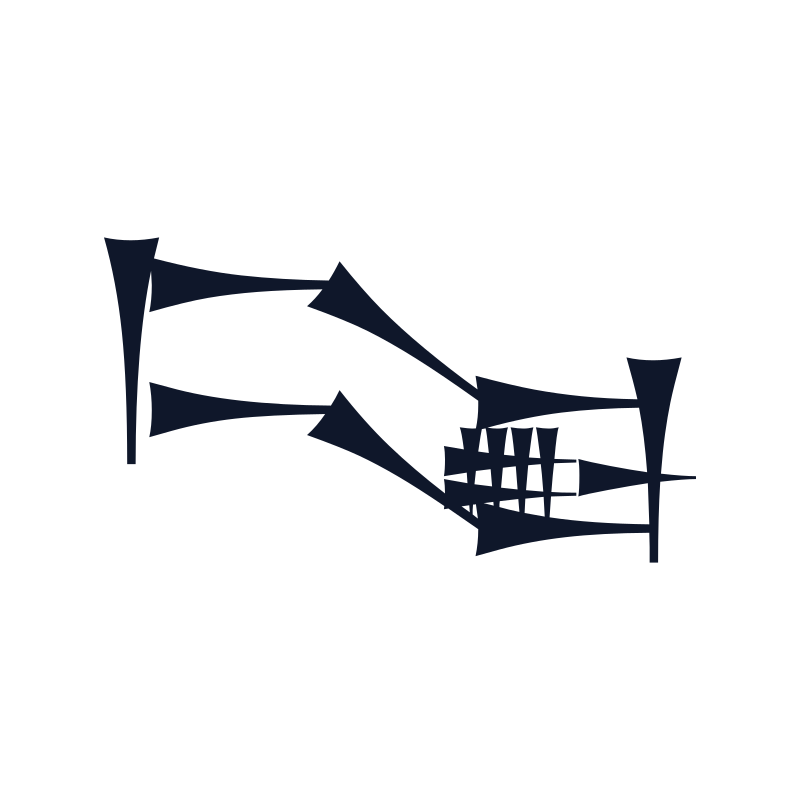 UR2xU2.ASH · U+12332
𒌲
single taproot, medicinal root
UR₂×U₂.AŠ (𒌲) combines UR₂ (𒌫, root) with U₂ (𒌑, plant or herb) and AŠ (𒀸, single or one). In Mesopotamian pharmacological and botanical lists, it designates a plant with a single prominent taproot or a medicinal herb root dug up for healing remedies.
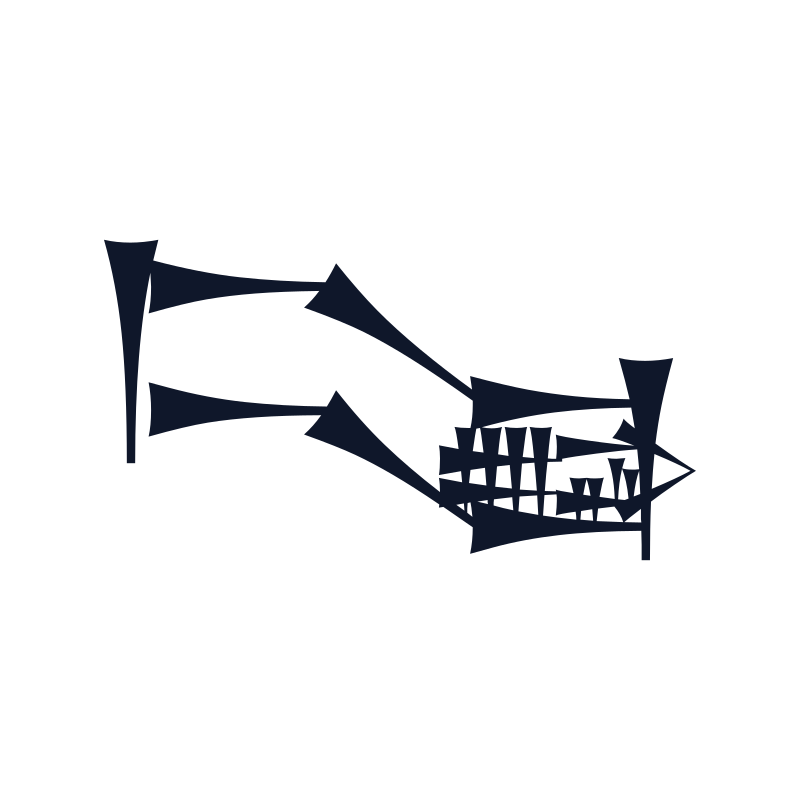 UR2xU2.BI · U+12333
𒌳
aromatic rootstock, herbal root
UR₂×U₂.BI (𒌳) encloses U₂ (𒌑, herb) and BI (𒁉, liquid or demonstrative pronoun) inside the root sign UR₂ (𒌫). Recorded in Babylonian lexical tablets, it denotes an aromatic rootstock or juicy plant root used to flavor infusions, unguents, and potions.
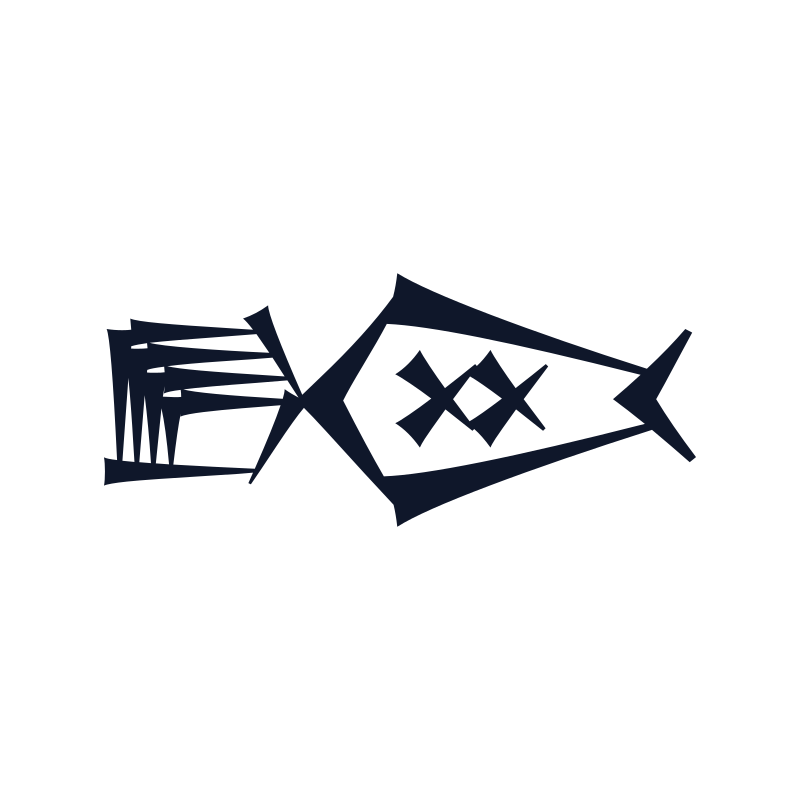 MUNU4 · U+12069
𒁩
sprouted malt, malting vat
DAG KISIM₅×PAP.PAP (𒁩), read logographically as MUNU₄ or BULUG₃, encloses doubled PAP (𒉽, sprout or cross) signs within the DAG.KISIM₅ (𒁙) vat frame. In Sumerian and Akkadian brewing texts, it means 'malt' or 'sprouted barley' (Akkadian buqlu), depicting germinating grain spread inside a malting trough.
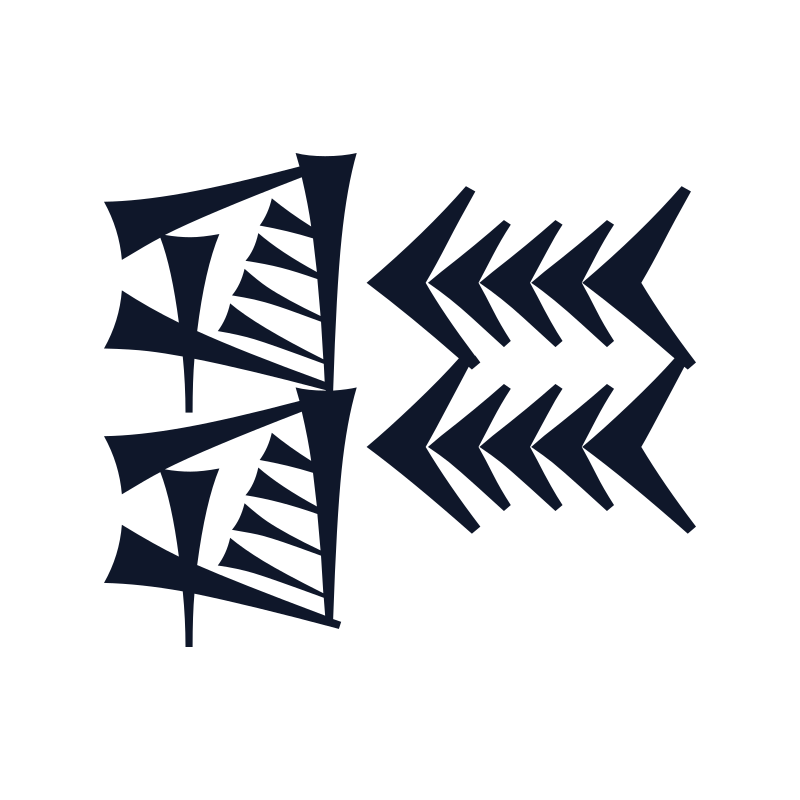 DU6.DU6.SHE · U+121F0
𒇰
twin barley mounds, grain heaps
LAGAR GUNU/LAGAR GUNU ŠE (𒇰) stacks two LAGAR-gunû (𒇯, du₆, mound or ruin hill) signs vertically alongside ŠE (𒊺, barley). In Mesopotamian agricultural and lexical traditions, this reduplicated compound represents towering twin heaps of threshed barley piled high after the harvest.
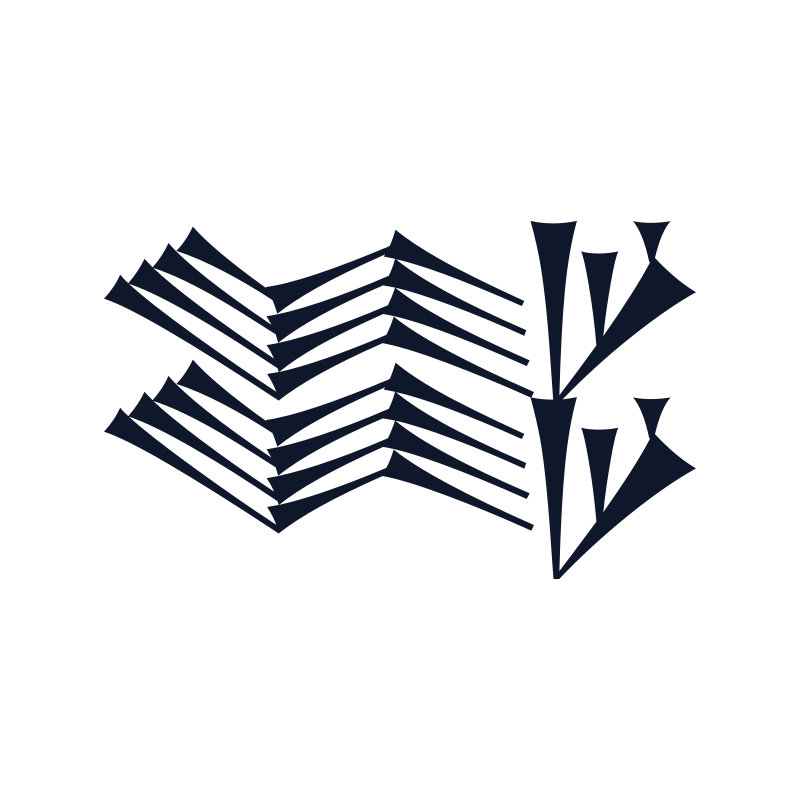 LUM.LUM.GAR.GAR · U+1221F
𒈟
abundant provisions, heaped food
LUM/LUM GAR/GAR (𒈟) pairs two vertically stacked LUM (𒈝, to thrive, fruit, or overflow) signs with two stacked GAR / NINDA (𒃻, bread or food ration) signs. Preserved in Babylonian lexical lists, this fourfold composition expresses overflowing culinary abundance and generously heaped temple offerings.
 ASAL · U+120A4
𒂤
Euphrates poplar, riverside tree
EZEN×A.LAL×LAL (𒂤) is an ornate graphic variant of EZEN×A.LAL (𒂣, asalx), combining A (𒀀, water) and reduplicated LAL×LAL (𒇲, hanging down) inside EZEN (𒂦). In Mesopotamian botanical lists, it designates the Euphrates poplar (Akkadian ṣarbatu), whose abundant foliage hangs over river channels.
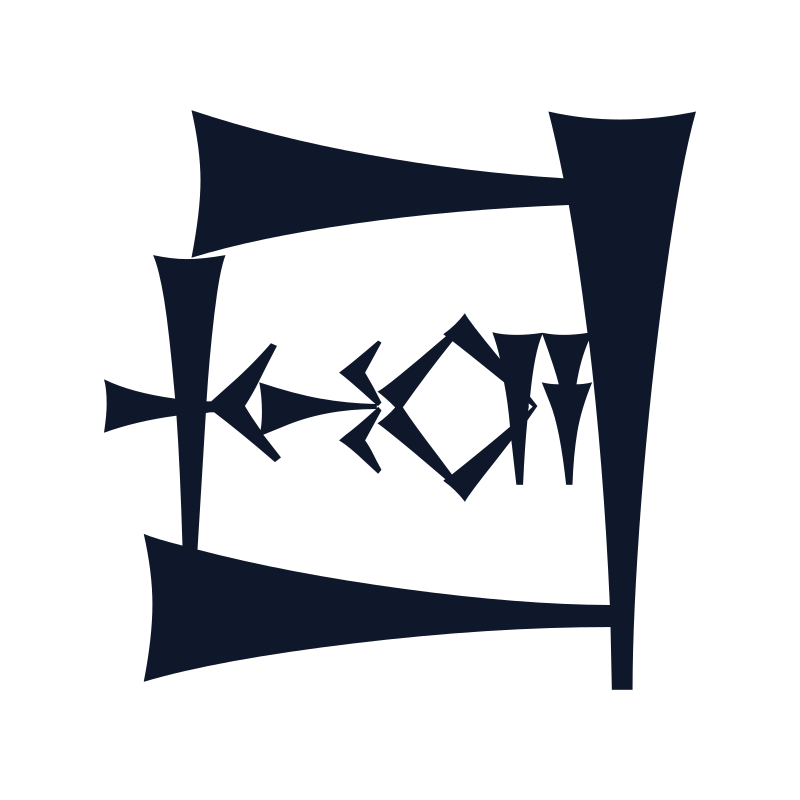 LAGABxKUL.HI.A · U+121D3
𒇓
assorted-seed basket, spawn pool
LAGAB×KUL.HI.A (𒇓) encloses KUL / NUMUN (𒆰, seed or offspring) together with the collective plural marker HI.A (𒄭𒀀, 'assorted' or 'various') inside LAGAB (𒇉). Literally meaning 'enclosure of assorted seeds' (numun-hi-a), it denotes either a sowing container of mixed garden seeds or a marsh pool teeming with fish spawn.
 BUL · U+121E7
𒇧
shake, winnow, deep well
LAGAB×U.U.U (𒇧), read logographically and syllabically as BUL (or PUL) and TUL₂, inscribes three U (𒌋) wedges inside the circular sign LAGAB (𒇉). In Sumerian and Akkadian texts, bul means 'to shake', 'to blow', 'to fan a fire', or 'to winnow grain' (Akkadian nâšu, napāhu), while as a variant of LAGAB×U (𒇥) it denotes a deep well or pit.
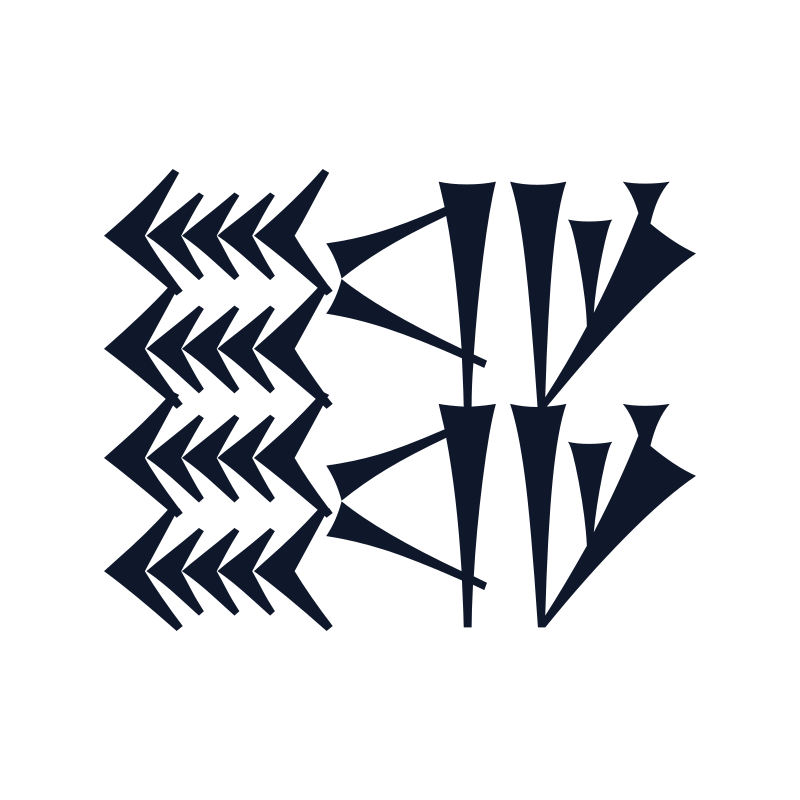 SHE.GAD.GAR · U+122BC
𒊼
barley, linen, and bread offerings
ŠE/ŠE GAD/GAD GAR/GAR (𒊼) unites vertically stacked pairs of ŠE (𒊺, barley), GAD (𒃰, flax or linen cloth), and GAR / NINDA (𒃻, bread). Preserved in Early Dynastic and Babylonian lexical lists, it represents a complete temple provisioning package of grain, fine linen, and baked loaves.
 SHE.TAB.GAR · U+122BD
𒊽
doubled barley and bread rations
ŠE/ŠE TAB/TAB GAR/GAR (𒊽) combines stacked pairs of ŠE (𒊺, barley), TAB (𒋰, double or twin), and GAR / NINDA (𒃻, bread or ration). Recorded alongside ŠE/ŠE GAD/GAD GAR/GAR (𒊼) in Mesopotamian lexical lists, it denotes doubled allocations of barley and bread loaves for festival banquets.
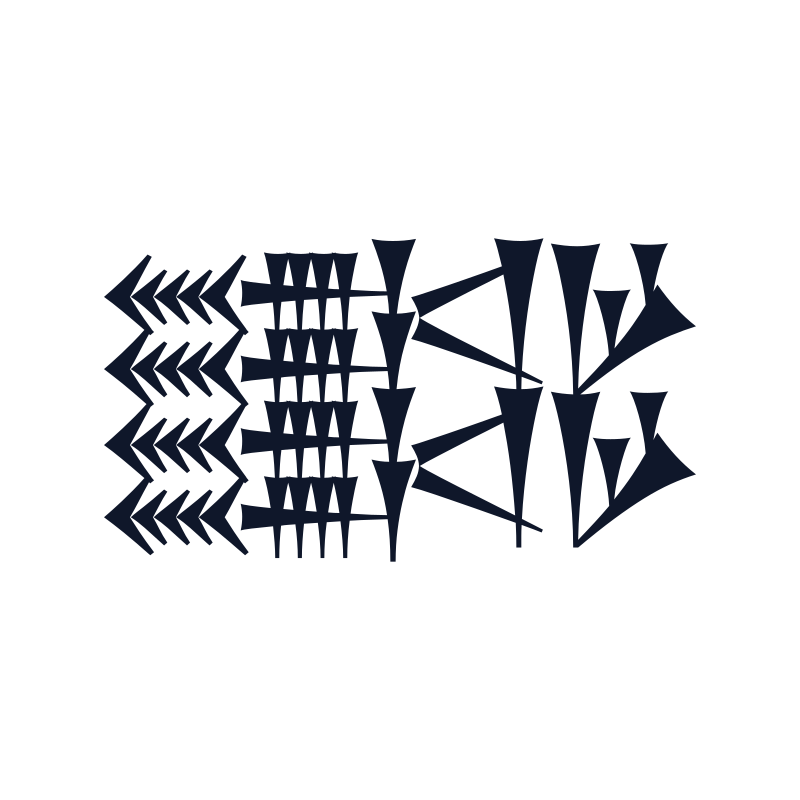 TIR.GAD.GAR · U+12304
𒌄
grove banquet, shaded canopy
TIR/TIR GAD/GAD GAR/GAR (𒌄) joins stacked pairs of TIR (𒌁, forest, sacred grove, or bower) with GAD/GAD (𒃰, linen cloths) and GAR/GAR (𒃻, bread offerings). Preserved in Early Dynastic and Babylonian sign lists, it depicts an open-air cultic feast set with linen-covered offering tables beneath a shaded grove or canopy.
