 I · U+1213F
𒄿
praise, exaltation
Composed of stacked horizontal wedges arranged in a rhythmic architectural column, the sign I originated from an early symbol representing five sprouting stalks or five fingers of the hand. In Sumerian hymns and temple liturgy, it carried the logographic meaning 'to praise' or 'to exalt' (Akkadian 'na'ādu'), and served as a verbal prefix in conjugated Sumerian verbs. Throughout Old Babylonian and Neo-Assyrian texts, it is the primary syllabic sign for the vowel 'i'.
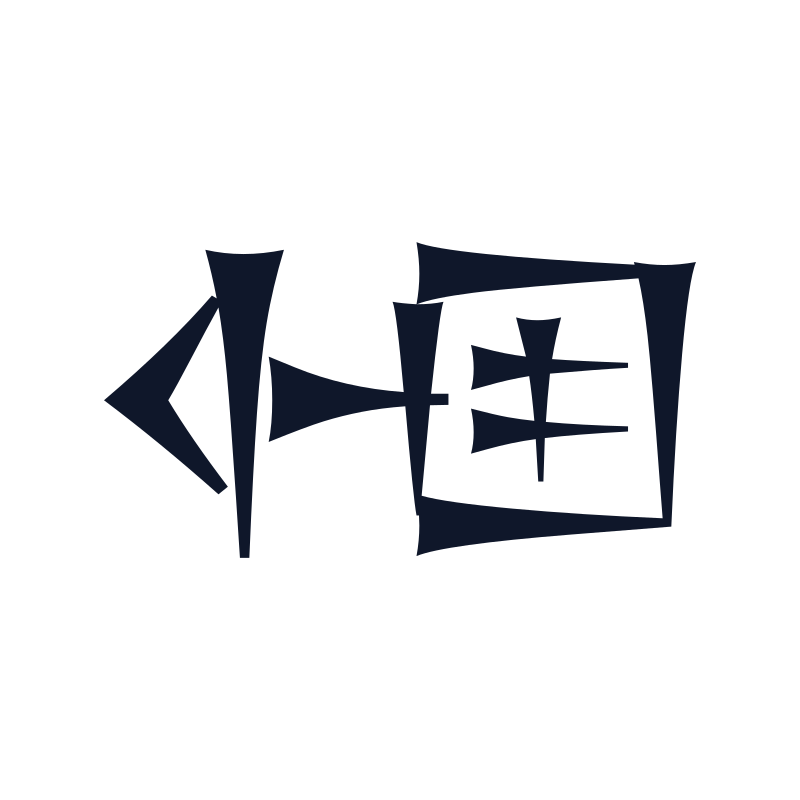 U₃ · U+12147
𒅇
conjunction 'and', sleep
Structurally formed as a composite of IGI ('eye') and DIB ('to pass' or 'hold'—as when sleep passes over the eyes), the sign U₃ originally denoted 'sleep' or 'slumber' (Akkadian 'šittu'). Because of its phonetic reading 'ù', scribes across Mesopotamia adopted it as the primary sign for the conjunction 'and' / 'moreover' to link clauses in diplomatic letters, laws, and royal chronicles. In the Amarna diplomatic archive and Babylonian letters, it opens countless sentences.
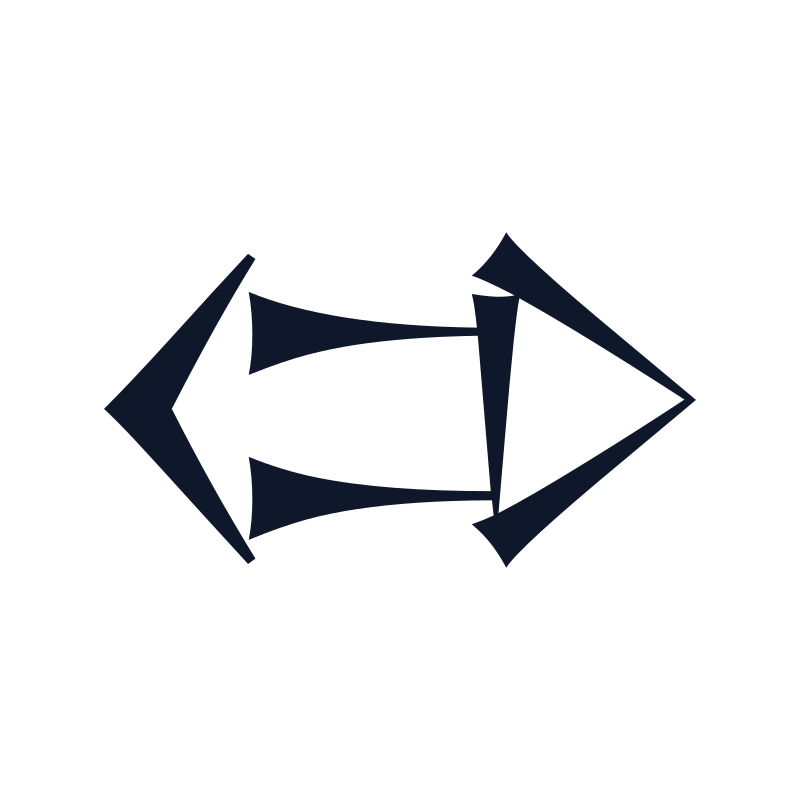 UL · U+1230C
𒌌
primeval time, blossom
Formed by combining the corner wedge U with GU₄ ('bull'), the sign UL (Akkadian 'ullû' and 'inbu') spans poetic concepts of cosmos and time. In Sumerian creation myths, the phrase 'u₄-ul-lí-a-ta' ('in those distant primeval days') opened accounts of the beginning of the universe, while in botanical and love poetry UL meant 'blossom', 'fruit', 'radiance', and 'joy'. Read as 'du₇', it meant 'to gore with horns' or 'to be perfect', and phonetically it writes the common syllable 'ul'.
 BA · U+12040
𒁀
to allot, bestow
One of the foundational open-syllable signs of the cuneiform syllabary, BA means 'to allot', 'to divide into shares', or 'to bestow as a gift' (Akkadian 'zâzu' and 'qiāšu'). In Sumerian temple economy tablets from Ur and Lagash, it appears constantly in ration lists ('še-ba' for barley rations, 'ì-ba' for oil rations, and 'síg-ba' for wool rations distributed to temple workers). Grammatically it also serves as a very common Sumerian verbal prefix.
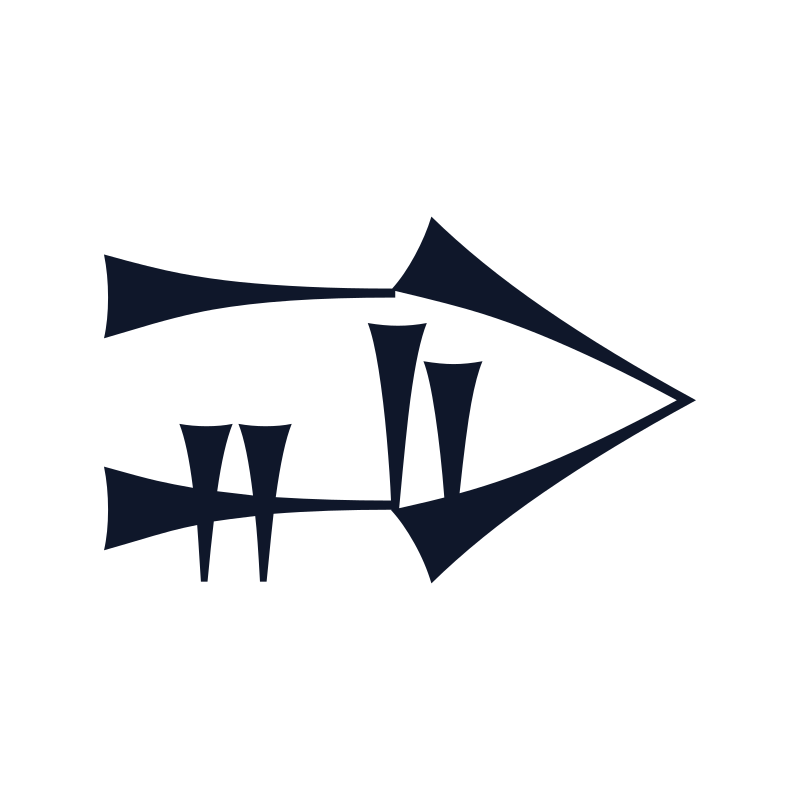 BI / KAŠ · U+12049
𒁉
barley beer, brewing vessel
Originating from an archaic Uruk pictogram of a pointed-bottom clay jar used for fermenting and storing beer, this sign was read logographically as KAŠ ('beer' in Sumerian, 'šikaru' in Akkadian). Beer brewed from malted barley and emmer wheat bread ('bappir') was the staple beverage of Mesopotamia, drunk through long reed straws and celebrated in the famous 'Hymn to Ninkasi', the Sumerian goddess of brewing. Phonetically, it is the primary sign for the syllable 'bi' (and 'be').
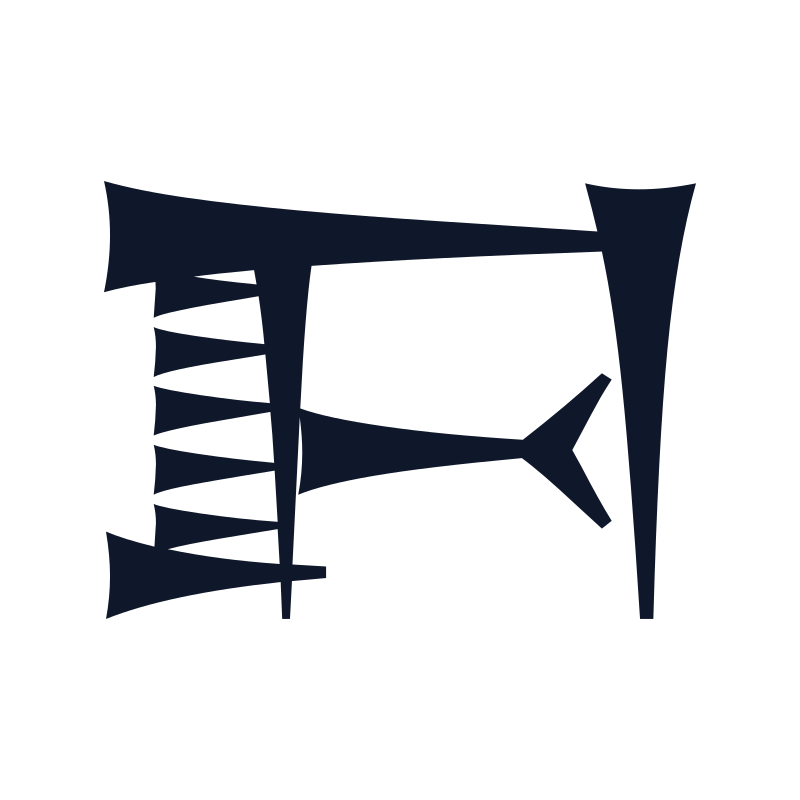 DA · U+12055
𒁕
arm, side
Evolved from a pictogram of a human arm and forearm with outspread fingers, DA (Akkadian 'idu' for arm/side and 'itti' for 'with') signifies physical proximity, protective embrace, and strength. In Sumerian grammar, the comitative case suffix '-da' ('with' or 'together with') is written with this sign, and in royal titles 'da-num₂' ('dannum') spelled 'mighty'—as in Sargon and Naram-Sin, 'the Mighty King'. Phonetically it is the universal sign for the syllable 'da'.
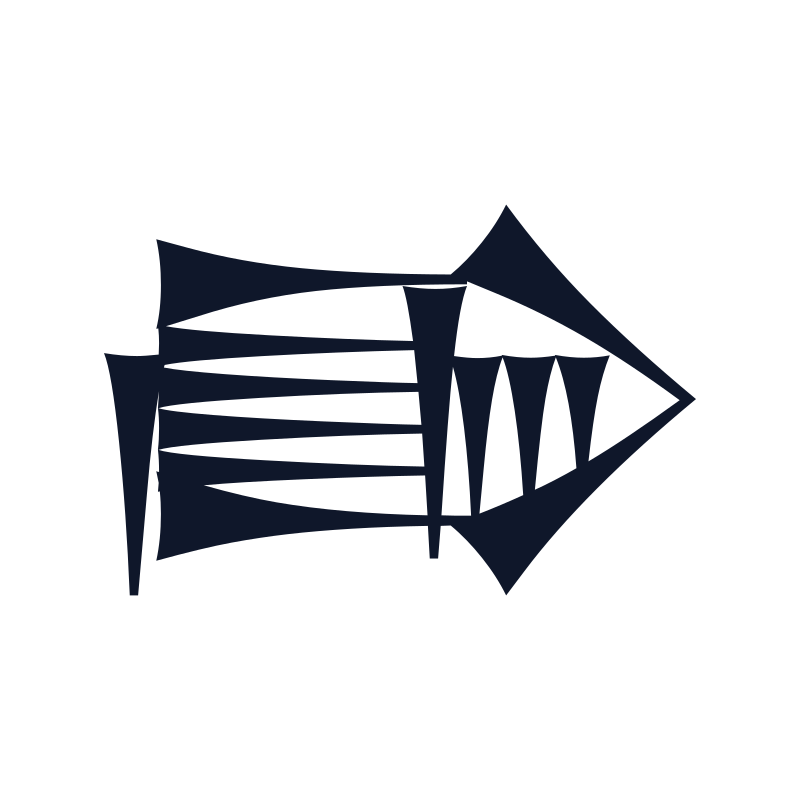 GA · U+120B5
𒂵
milk, dairy offerings
Derived from an early pictogram of a pointed dairy vessel with a spout or lid, GA (Akkadian 'šizbu') means 'milk' and forms the basis for all Sumerian dairy terminology—such as 'ga-àr' ('cheese') and 'amar-ga' ('suckling calf'). In royal mythology, Mesopotamian kings claimed to have been nourished at birth with the sacred milk of the mother goddess Ninhursag or Ishtar. Phonetically, GA is the primary cuneiform sign for the open syllable 'ga'.
 HI / DU₁₀ · U+1212D
𒄭
good, sweet
Evolved from a circular token representing a complete horizon or large vessel, this sign is extraordinarily rich in meaning. Read as DU₁₀ or DUG₃ (Akkadian 'ṭābu'), it means 'good', 'sweet', 'pleasing', or 'favorable' (as in sweet freshwater or a happy heart). Read as HI (Akkadian 'balālu'), it means 'to mix' or 'alloy' (as bronze is mixed from copper and tin), and as ŠAR₂ in Babylonian mathematics it represents 3,600 ($60^2$) and the entire universe ('kiššatu'). Phonetically it writes the syllable 'hi' (and 'he').
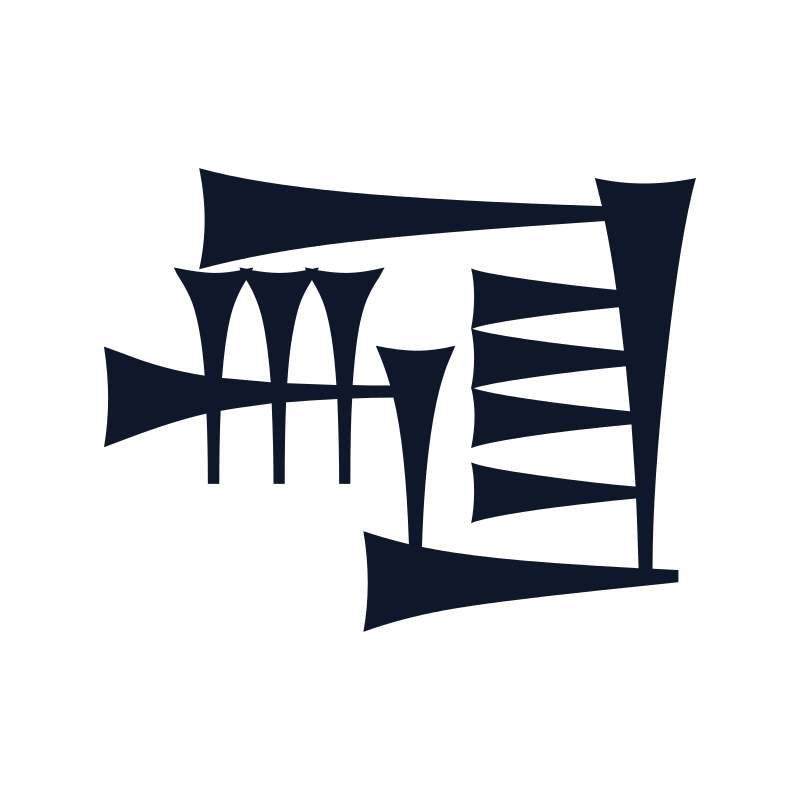 LA · U+121B7
𒆷
abundance, youthful charm
In Sumerian poetry and hymns to the goddess Inanna/Ishtar, LA (Akkadian 'lalû') signifies luxuriant abundance, youthful vigor, charm, and bliss ('hi-li'). Read logographically as ŠIKA (Akkadian 'haṣbu'), it means a baked clay potsherd. In Akkadian and Babylonian texts, the single sign LA constantly spells the negative particle 'lā' ('not' or 'without'—cognate with Arabic 'lā' and Hebrew 'lō'), making it one of the most frequent signs in legal codes and treaties.
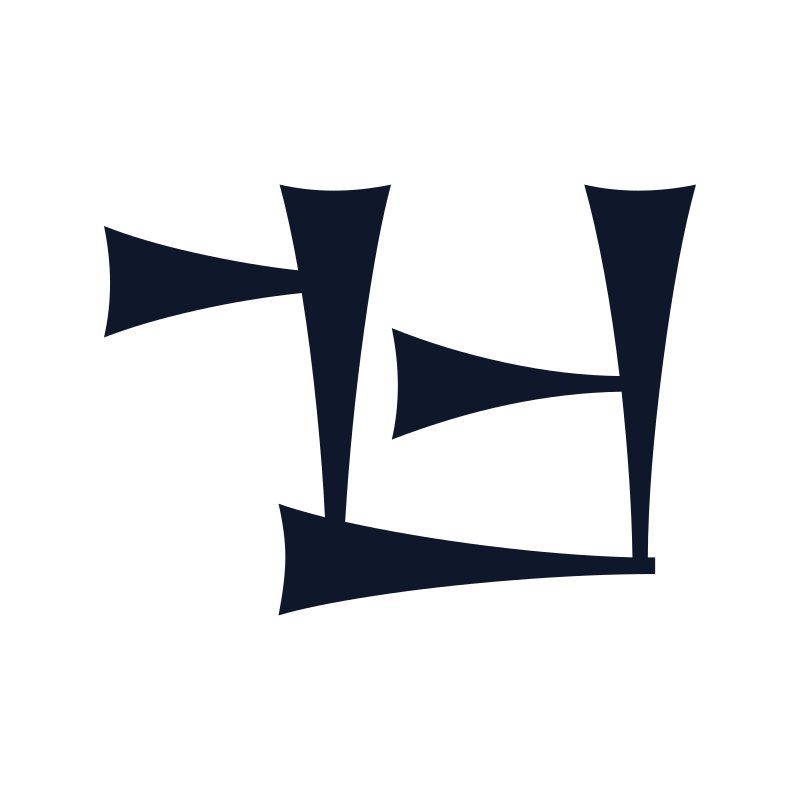 MA · U+12220
𒈠
fig tree, sweet fruit
When preceded by the tree determinative GIŠ and read as PEŠ₃ (Akkadian 'tittu'), this sign denotes the sweet fig tree and its dried fruit cakes, which were prized offerings at royal banquets and temple altars across Sumer and Babylonia. Read as MA (as in 'ma-da', Akkadian 'mātu'), it means 'land', 'region', or 'countryside'. In Akkadian grammar, '-ma' is the ubiquitous enclitic particle used for emphasis and coordinating verbs ('and then'), making MA one of the most frequent signs on clay tablets.
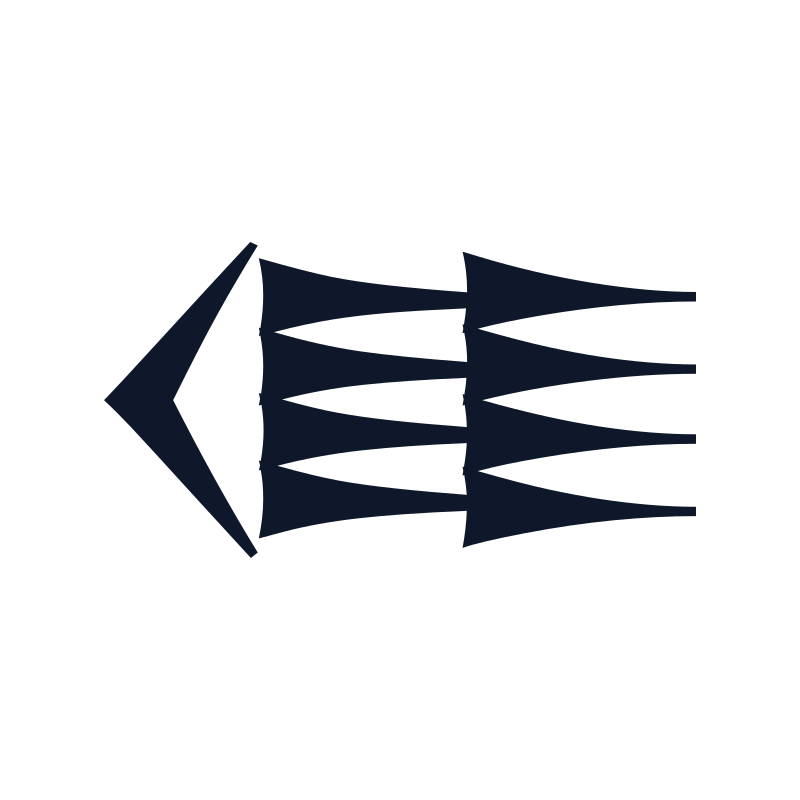 MI / GE₆ · U+1222A
𒈪
night, darkness
Originating from an archaic pictogram of the sky vault filled with dark hatching lines representing falling rain or nightfall shadows, this sign was read in Sumerian as GE₆ or MI ('night', 'darkness', or 'shade'; Akkadian 'mūšu' and 'ṣillu') and GIG ('black', Akkadian 'ṣalmu'). In the Sumerian self-designation 'saĝ-ge₆-ga' ('the black-headed people', Akkadian 'ṣalmat qaqqadi'), this exact sign follows SAG ('head'). Phonetically, it is the universal sign for the syllable 'mi'.
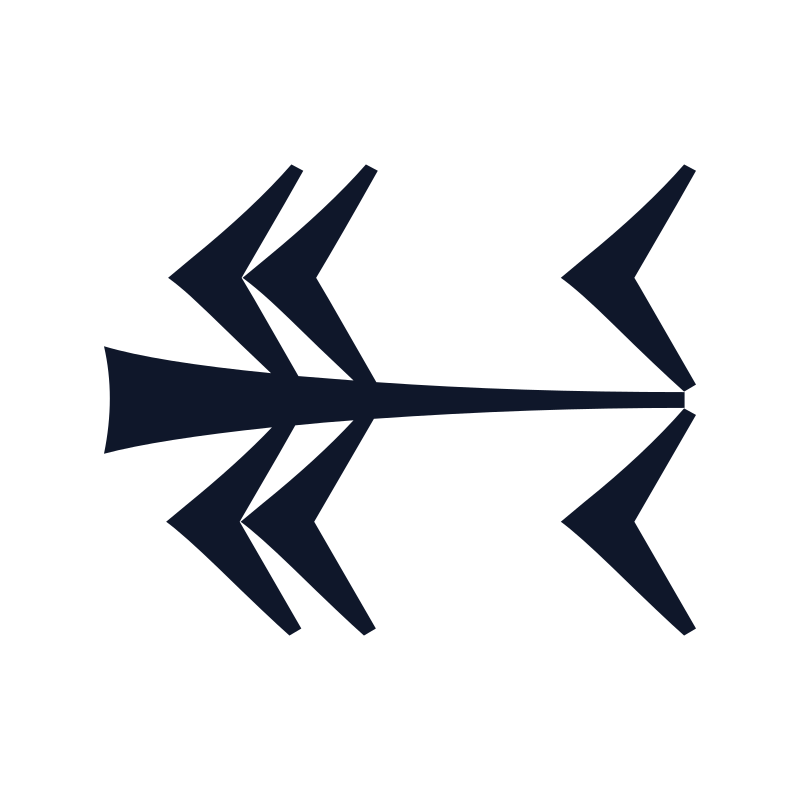 MU · U+1222C
𒈬
name, year
One of the most central signs of Mesopotamian civilization: in Sumerian, MU means both 'name' (Akkadian 'šumu'—cognate with Hebrew 'shem' and Arabic 'ism') and 'year' (Akkadian 'šattu'). For over a millennium, Sumerian and Babylonian kings dated legal tablets with 'Year-Names' beginning with MU (e.g., 'The year Hammurabi built the wall of Sippar'). In lexical and omen tablets, MU also counted each line of cuneiform text, meant 'to swear an oath by the king's name', and phonetically writes the syllable 'mu'.
 NA · U+1223E
𒈾
stone pestle, monumental stele
Originally depicting a smooth stone pestle or upright standing stone, NA forms the basis of 'na-rú-a' (Akkadian 'narû')—an inscribed royal stone stele or boundary monument erected in temples for eternity. In Sumerian literary texts, NA also designated a human being ('man') and aromatic incense smoke ('na-izi'), while in grammar it served as a nominalizing and locative suffix. Phonetically, it is the primary sign for the open syllable 'na' across all cuneiform languages.
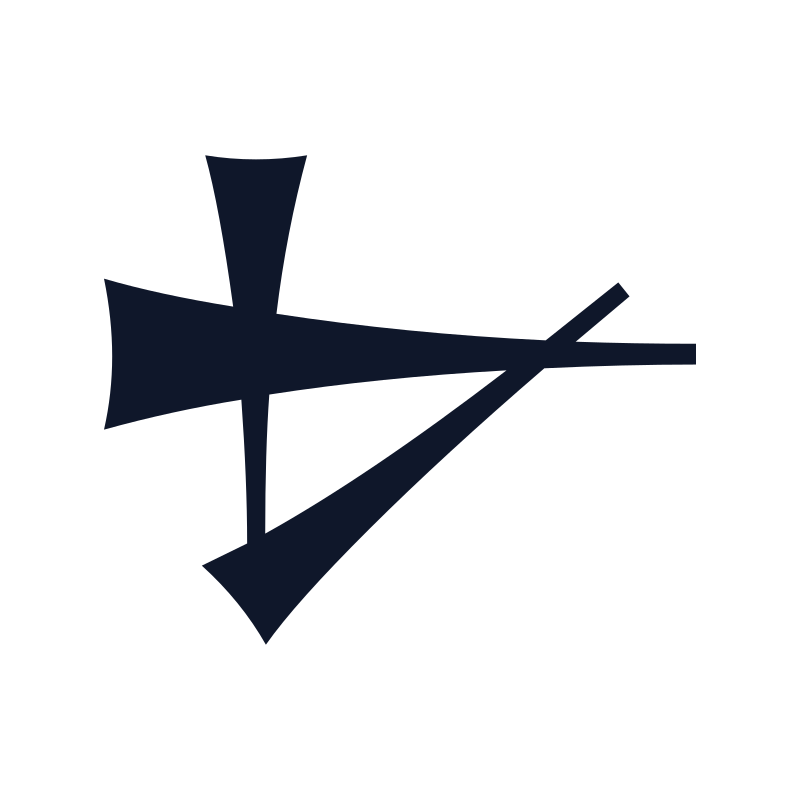 NU · U+12261
𒉡
negative particle 'not', royal statue
Simple yet indispensable: in Sumerian grammar, NU is the primary negative particle meaning 'not' or 'non-' (Akkadian 'lā' and 'ul'), prefixed to verbs and nouns (such as 'nam-tar nu-zu', 'unknowable fate'). As a noun, NU (Akkadian 'ṣalmu') means 'statue', 'sculpted image', or 'royal likeness' carved into rock reliefs and temple votive figures. In professional titles, 'nu-banda₃' designated a military captain or overseer, and phonetically the sign writes the syllable 'nu'.
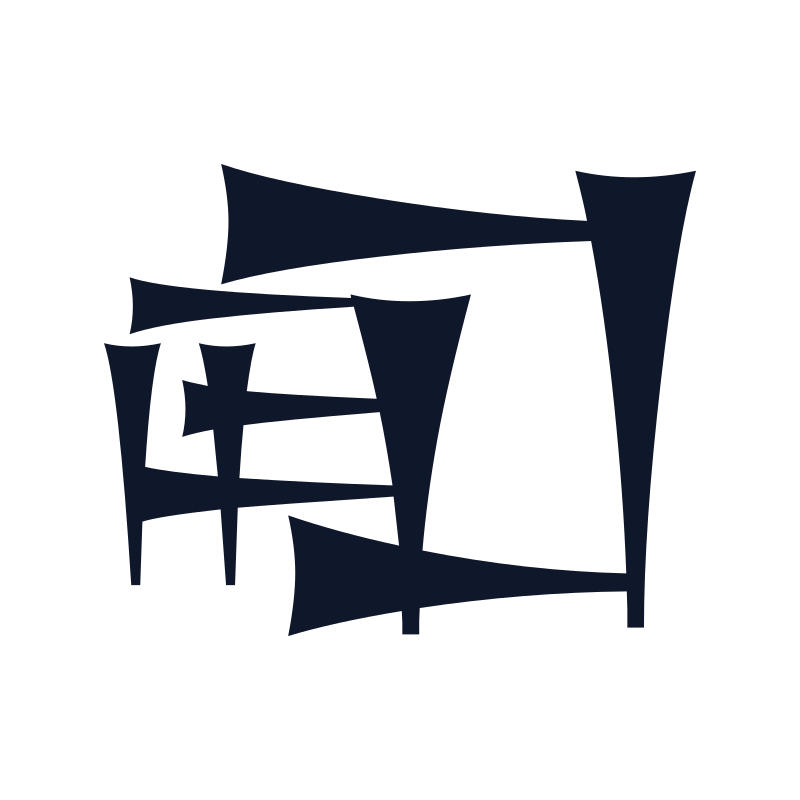 RA · U+1228F
𒊏
to strike, roll a cylinder seal
In Sumerian legal and administrative practice, the verb RA (Akkadian 'mahāṣu' and 'rahāṣu') meant 'to strike', 'to beat woven cloth', 'to inundate with floodwaters', and specifically 'to roll or impress a cylinder seal onto wet clay' ('kišib ra'). In Sumerian grammar, '-ra' is the dative case suffix ('to/for someone') written at the end of personal and divine names, and phonetically it is the primary sign for the syllable 'ra' (as in the name of Babylon, KÁ.DINGIR.RA.KI).
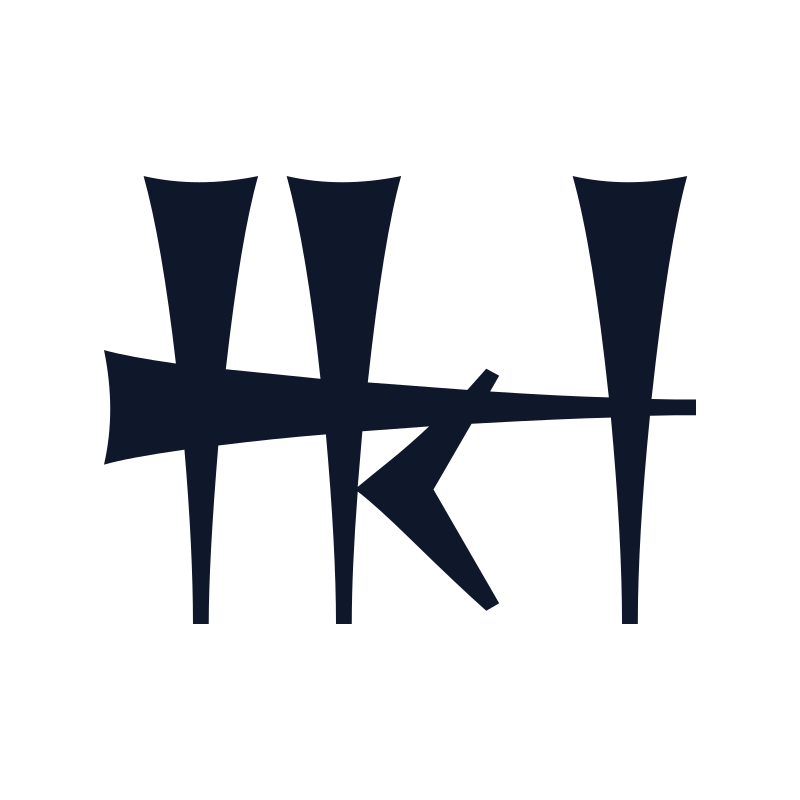 RI / DAL · U+12291
𒊑
to fly, blow like wind
A versatile sign with both open ('ri', 're') and closed ('dal', 'tal') syllabic readings. Read in Sumerian as DAL (Akkadian 'naprušu'), it means 'to fly' like a bird or winged deity, and in geometry ('dal') designates the dividing transversal line across a circle or field. Read as RI, it means 'to blow' (of the wind, 'im ri'), 'to cast or pour', and 'distant' ('ri-a'). Phonetically, it is the primary sign for the syllable 'ri' throughout all eras of cuneiform.
 RU / ŠUB · U+12292
𒊒
to dedicate a gift, throw
Derived from an archaic pictogram of a curved throwing stick or hunting boomerang ('giš-ilar'), this sign was read in Sumerian as ŠUB ('to throw', 'to fall', or 'to abandon'; Akkadian 'nadû' and 'maqātu'). When read as RU ('a mu-na-ru' in royal votive inscriptions, Akkadian 'šarāku'), it was the solemn dedicatory formula 'he dedicated as a gift to the god', carved onto thousands of temple statues, maceheads, and stone bowls. Phonetically it is the primary sign for the syllable 'ru'.
 SA · U+12293
𒊓
sinew, harp string
Derived from a pictogram of a knotted hunting net or bundle of animal tendons, SA has two primary Akkadian equivalents: 'šētu' ('net', like the divine battle-net of Ninurta and Marduk depicted on the Stele of the Vultures) and 'šer'ānu' ('sinew', 'blood vessel', 'pulse', or 'muscle'). Because musical strings were made of twisted gut sinews, Babylonian musicological tablets used SA to name the individual tuned strings of the royal lyre and harp. Phonetically it is the primary sign for the syllable 'sa'.
 SI · U+122DB
𒋛
horn, ray of light
Originating from an archaic pictogram of a curved animal horn, SI (Akkadian 'qarnu') signified both literal horns—such as the crescent horns of the Moon God Nanna/Sîn and the multi-horned crowns of Mesopotamian deities—and radiant beams of celestial light ('si-mú'). As a verb, SI (Akkadian 'malû') means 'to fill to the brim', and in the compound 'si-sá' (Akkadian 'ešēru') means 'to put in order', 'be straight', and 'administer justice'. Phonetically it is the primary sign for the syllable 'si' (and 'se').
 ŠA · U+122AD
𒊭
akkadian genitive, relative pronoun 'of / which'
One of the most statistically frequent signs in the entire Babylonian and Assyrian cuneiform corpus: in Akkadian, the standalone word 'ša' functions both as the preposition 'of' (expressing possession or royal titles, e.g., 'šarru ša kiššati', 'King of the Universe') and the relative pronoun 'who / which / that'. Phonetically, it is the primary sign for the syllable 'ša' in thousands of words, including 'šarru' ('king'), 'šamû' ('heaven'), and 'šamšu' ('sun').
 TA · U+122EB
𒋫
ablative suffix 'from / out of', character
In Sumerian grammar, TA is the fundamental ablative-instrumental case suffix ('-ta', Akkadian 'ištu' and 'ina') meaning 'from', 'out of', 'since' (in time expressions like 'u₄-bi-ta', 'from that day on'), or 'by means of'. In bilingual lexical lists, TA as a noun also carried the philosophical meaning 'nature' or 'essential character'. Across Sumerian, Akkadian, and Hittite cuneiform, it is the primary sign for the syllable 'ta'.
 ZU · U+1236A
𒍪
to know, wisdom
In Sumerian, ZU is the primary verb 'to know', 'to learn', and 'to be skilled in an art' (Akkadian 'idû' and 'lamādu'), as well as the noun 'wisdom' (Akkadian 'nēmequ'). Combined with A ('water'), it forms A.ZU (Akkadian 'asû')—literally 'Knower of Water (and bodily fluids)', the ancient Mesopotamian word for a physician/doctor! In grammar, '-zu' is the possessive suffix 'your', and in the cosmic ocean AB.ZU ('Apsû'), ZU represents the fathomless depths of divine wisdom. Phonetically it writes the syllable 'zu'.
 AK / AG · U+1201D
𒀝
to do, make
The fundamental Sumerian verb of action and creation: AK (Akkadian 'epēšu') means 'to do', 'to make', 'to build', or 'to perform a ritual', combining with nouns to form hundreds of verbs (such as 'kišib ak' = 'to seal', 'aš₂ ak' = 'to curse'). When preceded by the divine determinative (𒀭𒀝, DINGIR.AK), it was the sacred logogram for Nabû, the Babylonian patron god of scribes, wisdom, and cuneiform writing (celebrated in names like Nebuchadnezzar and Nabonidus). Phonetically it writes 'ak', 'ag', and 'aq'.
 BAR / MAŠ · U+12047
𒁇
half, twin
Formed simply by crossing one vertical wedge and one horizontal wedge at right angles, this sign visually represents division in two. Read as MAŠ, it means 'one-half' (1/2, Akkadian 'mišlu'), 'twin' (Akkadian 'tū'amu'—as in MUL.MAŠ.TAB.BA, the constellation Gemini), and in LU₂.HAL / MAŠ.MAŠ ('bārû' / 'āšipu') designates a diviner or exorcist priest. Read as BAR, it means 'outside', 'side', 'liver/mind', or 'to split/release', and phonetically writes 'bar', 'par', and 'maš'.
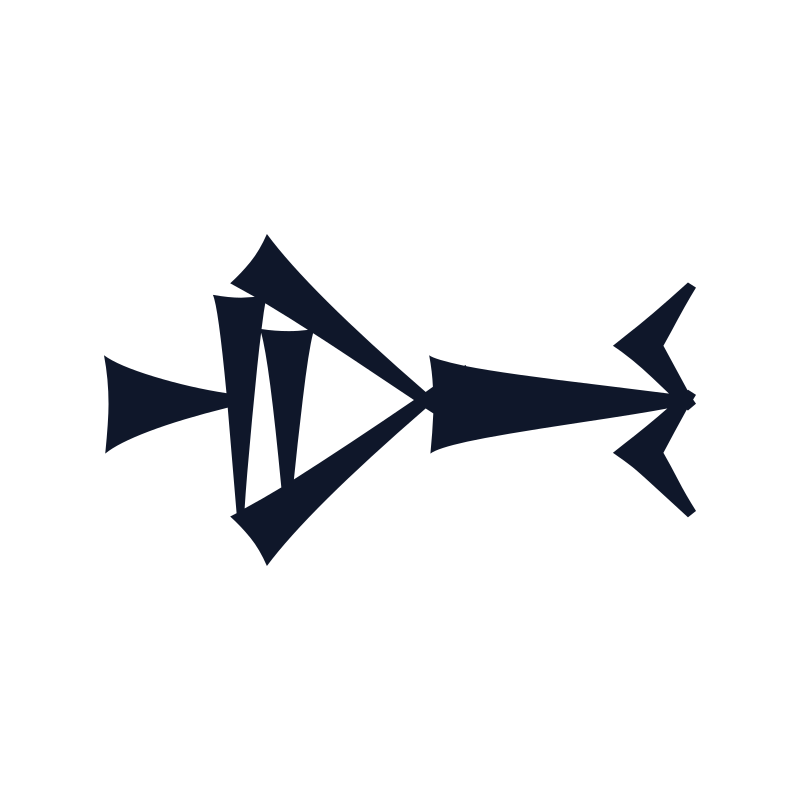 BUR₂ · U+12054
𒁔
to interpret dreams, omens
In Sumerian and Akkadian religious and scholarly literature, BUR₂ (Akkadian 'pašāru') means 'to untie', 'release from a spell or sin', 'spread out a reed mat', and specifically 'to interpret or solve a dream, riddle, or celestial omen' (as Gudea and Gilgamesh sought dream interpretations from goddesses). Read as SUN₅, it means 'humble' or 'reverent', and phonetically it writes the syllables 'bur₂' and 'pur₂'.
 DIB / DAB · U+12073
𒁳
to seize, hold fast
Derived from a grid-like enclosure representing a trap or holding pen, this sign has two major Sumerian verbal readings: DAB₅ (Akkadian 'ṣabātu'), meaning 'to seize', 'take hold of', 'capture', or 'accept into an account', and DIB (Akkadian 'etēqu' and 'bā'u'), meaning 'to pass along', 'walk past', or 'transgress'. In tablet colophons and school exercises, 'dub-dib' referred to an inscribed tablet board, and phonetically it writes 'dib', 'dab', and 'ṭib'.
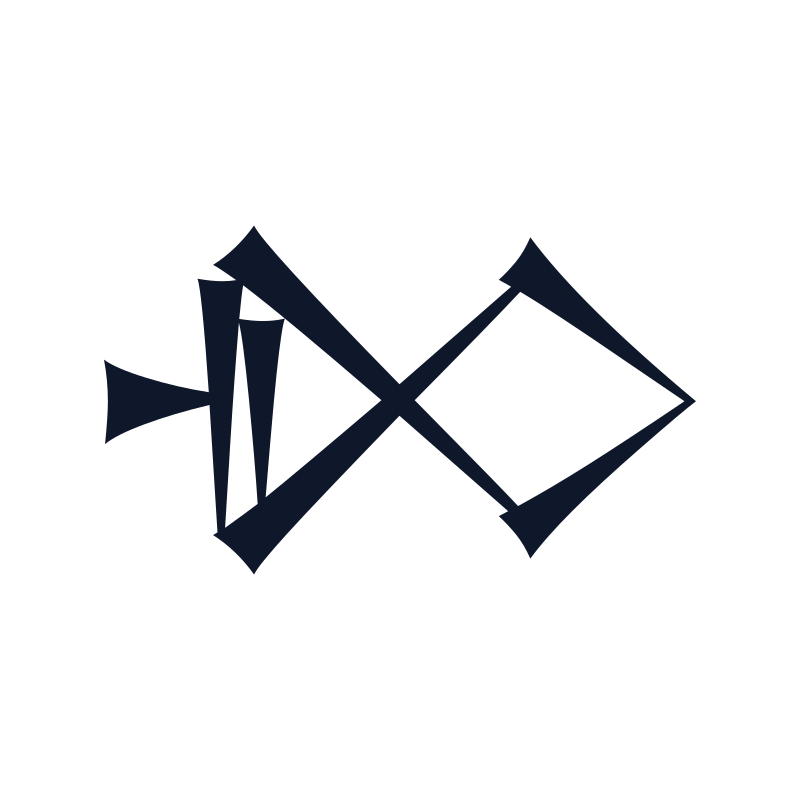 DIM · U+12074
𒁴
mooring post, cosmic pillar
Originating from a pictogram of a stout wooden mooring pole with side rings to which riverboats were tied, DIM (Akkadian 'makūtu' and 'riksu') means 'pillar', 'ship's mast', 'rope bond', or 'cosmic tie'. In Babylonian cosmology, temples were revered as 'dim-gal-kalam-ma' ('the great mooring post of the land') that anchored earth to heaven. In Akkadian grammar, '-tim' / '-dim' frequently writes the feminine genitive ending, making it a very common phonetic sign.
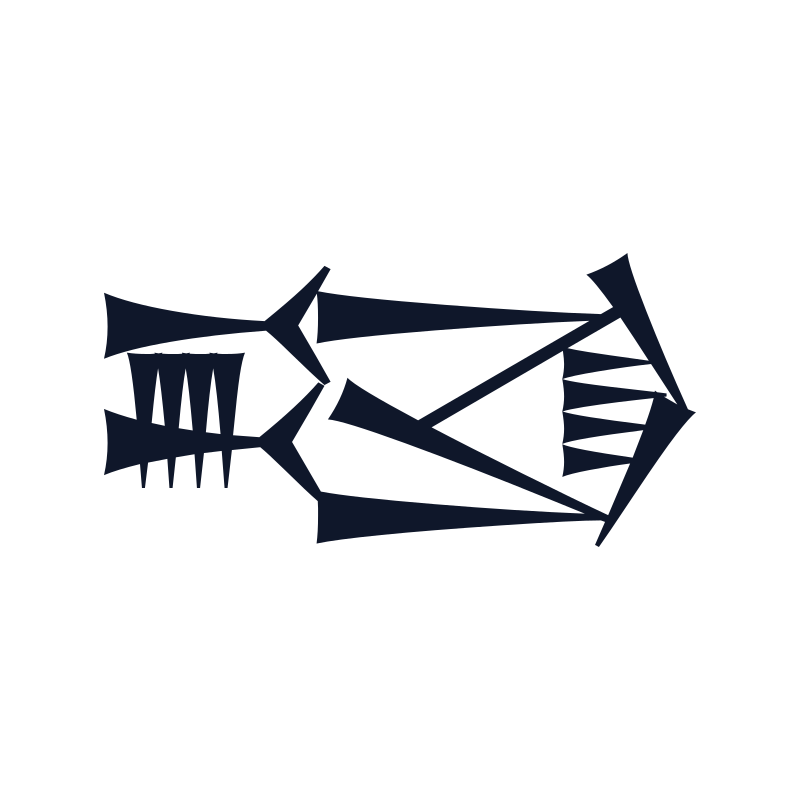 EGIR · U+12095
𒂕
back, rear
Fascinatingly reflecting the Mesopotamian view of time, EGIR (Akkadian 'warkatu' / 'arkatu') means spatially 'the back' or 'behind', and temporally 'afterward' or 'the future'—because to the Sumerians and Babylonians, the past lay visible in front of a person's eyes ('igi'), while the unknown future approached unseen from behind one's back ('egir')! In legal contracts, 'egir' also designated a person's estate, inheritance, or surviving heirs.
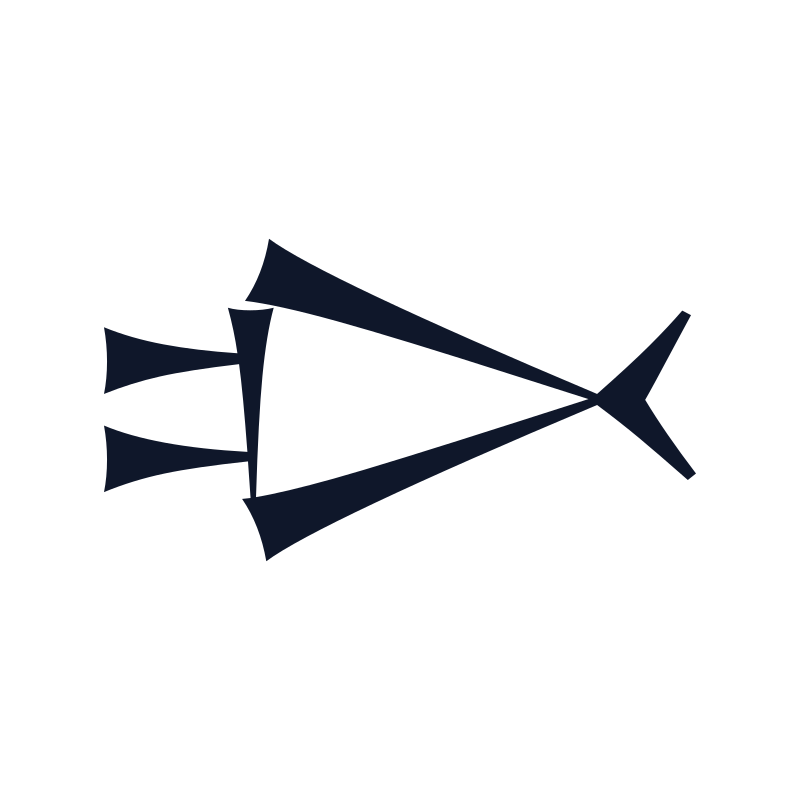 GALAM · U+120F4
𒃴
artfully wrought, skillful
Originally depicting a stepped architectural structure rising tier by tier like a ziggurat staircase, GALAM literally means 'to ascend by steps' and by metaphorical extension 'elaborate', 'artfully wrought', 'clever', and 'masterfully designed' (Akkadian 'naklu'). In Sumerian wisdom literature and royal hymns, 'nam-galam' praised the intricate craftsmanship of temples, musical compositions, and the ingenious plans of the god Enki.
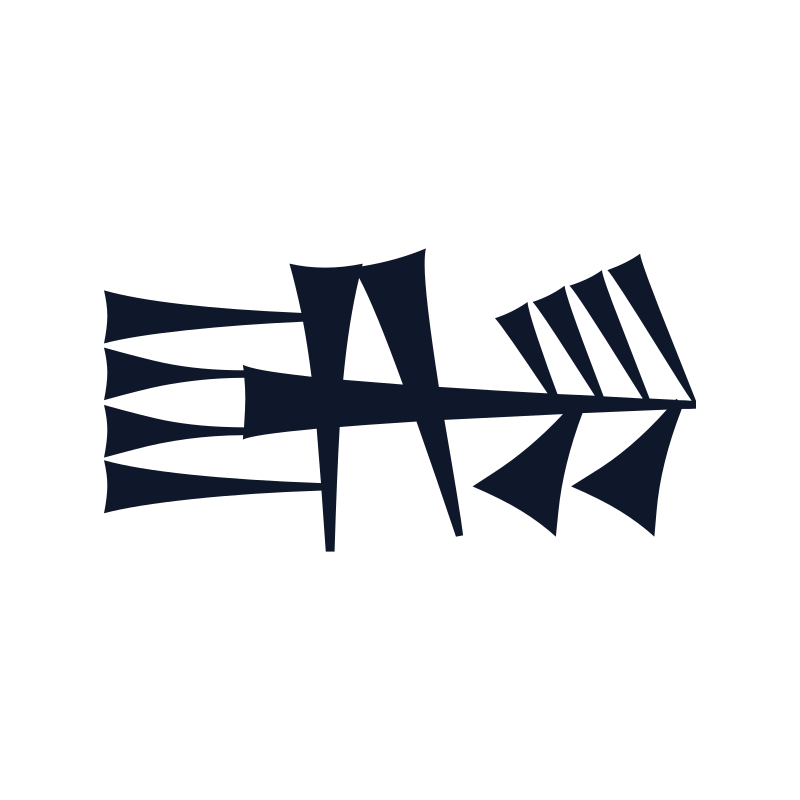 GI₄ · U+12104
𒄄
to return, answer
Formed as the gunû-augmented version of GI, the verb GI₄ (Akkadian 'târu' and 'apālu') means 'to turn back', 'return', 'restore to its rightful place', or 'answer'. Combined with LU₂ ('man'), it forms LU₂.KIN.GI₄.A (Akkadian 'mār šipri')—an ambassador, royal envoy, or diplomatic courier who carries a message and returns with the reply. In legal contracts, 'inim gi₄-gi₄' meant 'to contest or reopen a closed legal case', and phonetically it writes 'gi₄' and 'ge₄'.
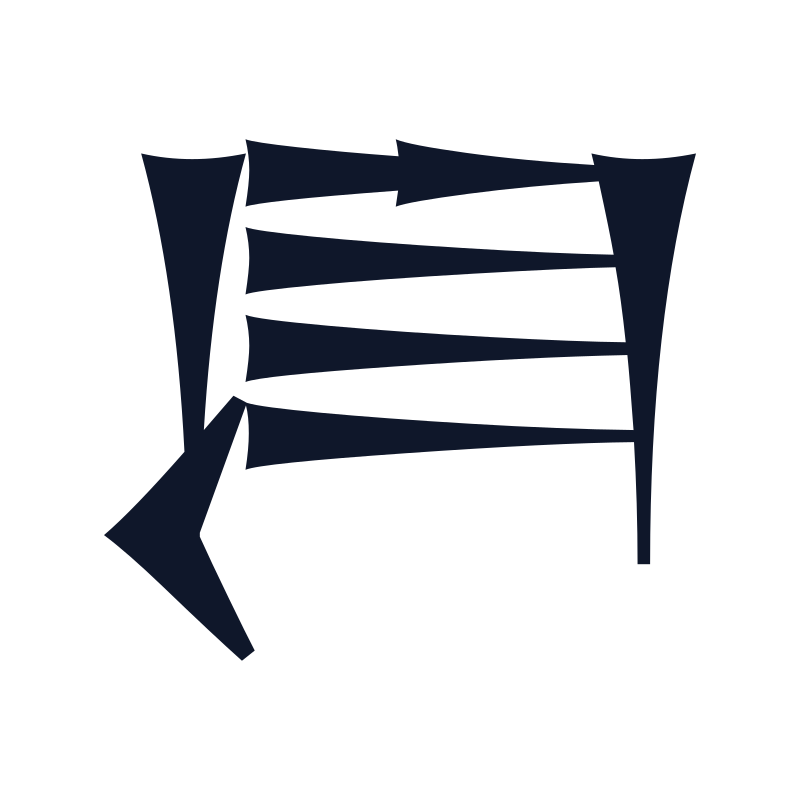 HUL₂ · U+1213E
𒄾
joy, to rejoice
Carefully distinguished by scribes from its homophone HUL ('evil'), the sign HUL₂ (pronounced 'húl' in Sumerian, 'hadû' and 'hidûtu' in Akkadian) means 'joy', 'gladness', 'to rejoice', and 'to beam with delight'. In Sumerian royal hymns and temple dedications, 'ša₃-húl-la' ('with a joyful heart') described how gods and citizens celebrated New Year festivals, royal coronations, and victorious returns.
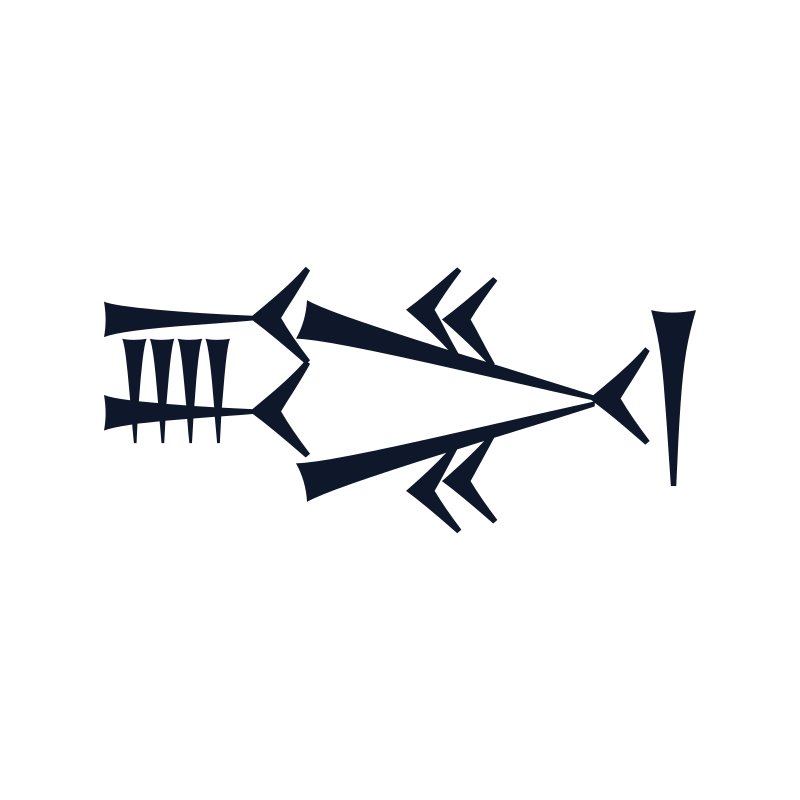 IL · U+1214B
𒅋
to lift, carry
A complex sign used primarily as the phonetic VC syllable /il/ in both Sumerian and Akkadian (notably in Akkadian forms related to ilu, 'god', and proper names). In administrative and lexical traditions, it also exchanges with IL₂ to express lifting, raising, or bearing loads (Akkadian našû).
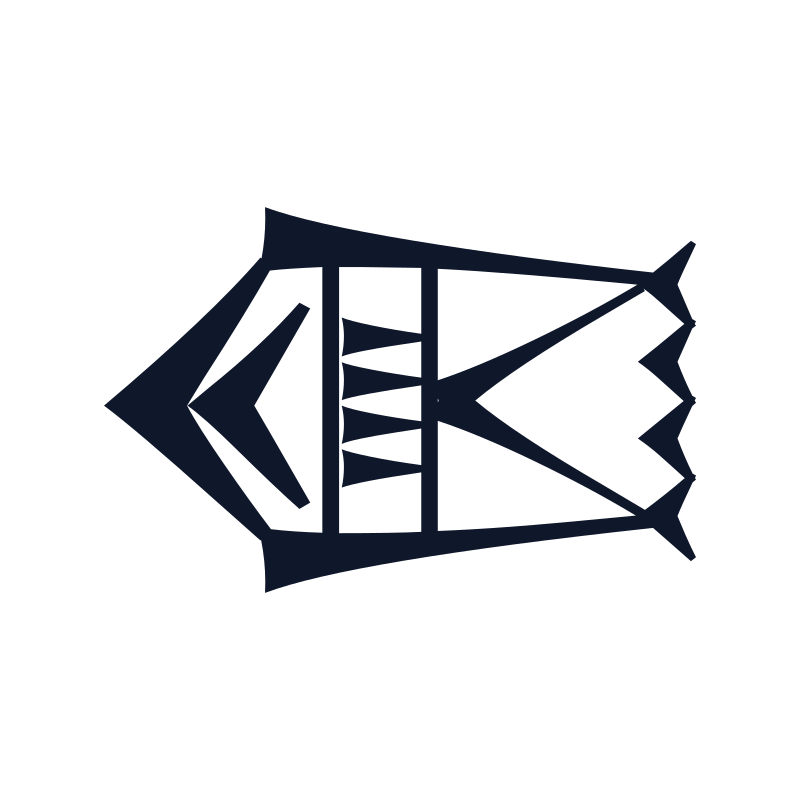 NA₂ / NU₂ · U+1223F
𒈿
bed, couch
Originally a pictograph of a wooden bedstead with legs and a woven mattress, this sign read as NU₂ (Akkadian utūlu, rabāṣu) is the standard Sumerian verb for 'to lie down, sleep, or rest', and with the wood determinative (GIŠ.NU₂, Akkadian eršu) it denotes a bed or ceremonial marriage couch.
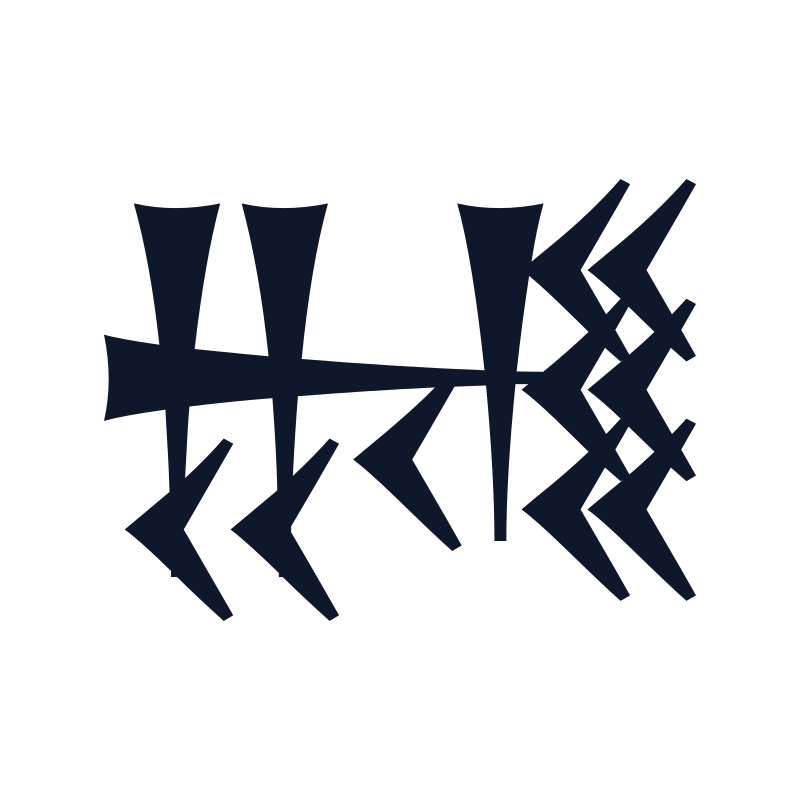 NAM / SIM · U+12246
𒉆
destiny, fate
Originally a pictograph of a flying swallow (Sumerian sim, Akkadian sinuntu), this sign was adopted by rebus for NAM (Akkadian šīmtu), meaning 'destiny, fate, or divine decree' (as in the Tablet of Destinies, DUB NAM.TAR.MEŠ). In Sumerian grammar, NAM- is also the universal prefix forming abstract nouns (e.g., NAM.LUGAL = 'kingship', NAM.TIL₃ = 'life', NAM.DUB.SAR = 'scribal art').
 NAM₂ / TUG₂ · U+12247
𒉇
lordship, rule
Recorded in Mesopotamian lexical lists with the reading NAM₂ and equated with Akkadian bēlūtu ('lordship, rule, dominion'), this sign expresses sovereign authority and administrative control in literary and archaic legal traditions.
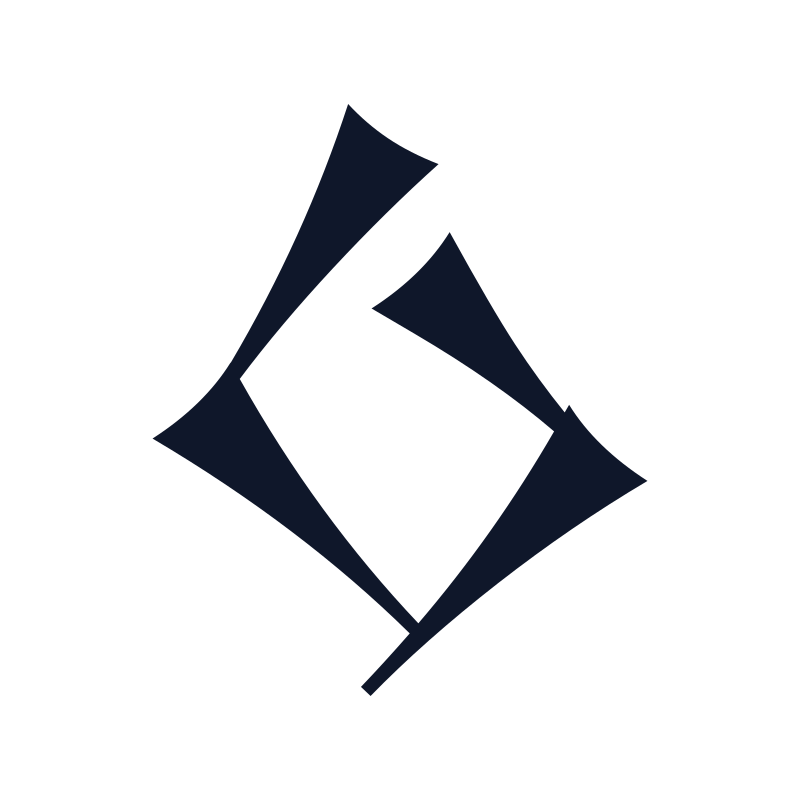 SIG · U+122DD
𒋝
weak, low
As a Sumerian adjective and verb, SIG (Akkadian enšu, qatnu, šaplu) means 'weak, frail, thin, narrow, low, or situated below'—contrasting with NIM ('high/upper', as in the 'Upper and Lower Seas', A.AB.BA IGI.NIM u SIG). Phonetically, it serves across Akkadian and Sumerian texts as the primary CVC sign for /sig/, /sik/, and /siq/.
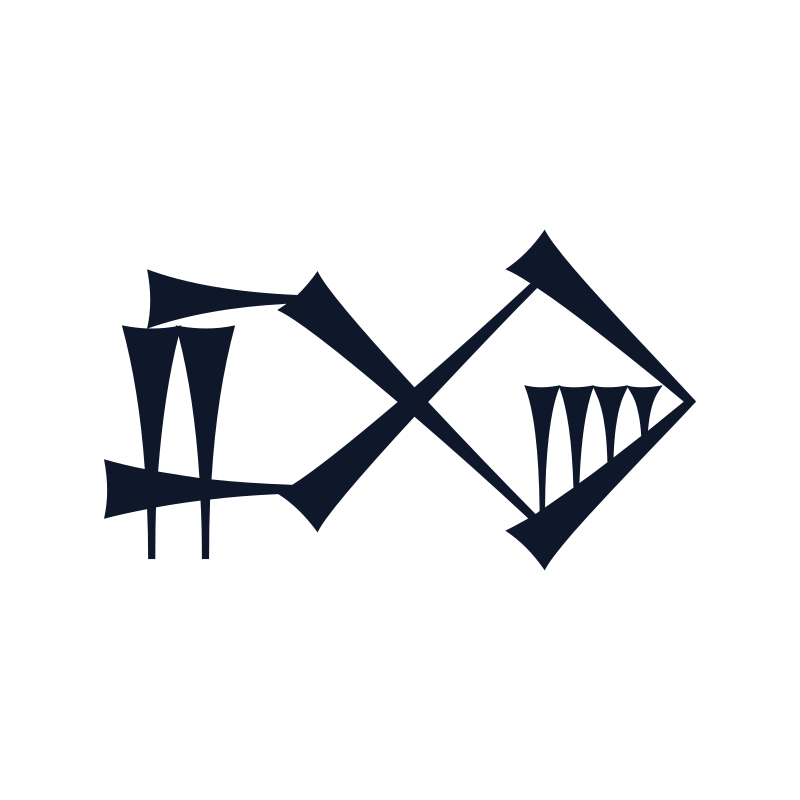 TAG / ŠUM · U+122F3
𒋳
to touch, weave
Read as TAG (Akkadian lapātu, mahāṣu, zu''unu), this sign means 'to touch, take hold of, strike the warp in weaving cloth, or adorn with precious inlay'. Read as ŠUM (Akkadian ṭabāhu), it means 'to slaughter or sacrifice an offering animal'. Phonetically, it serves as the standard CVC sign for /tag/, /tak/, /taq/, and /šum/.
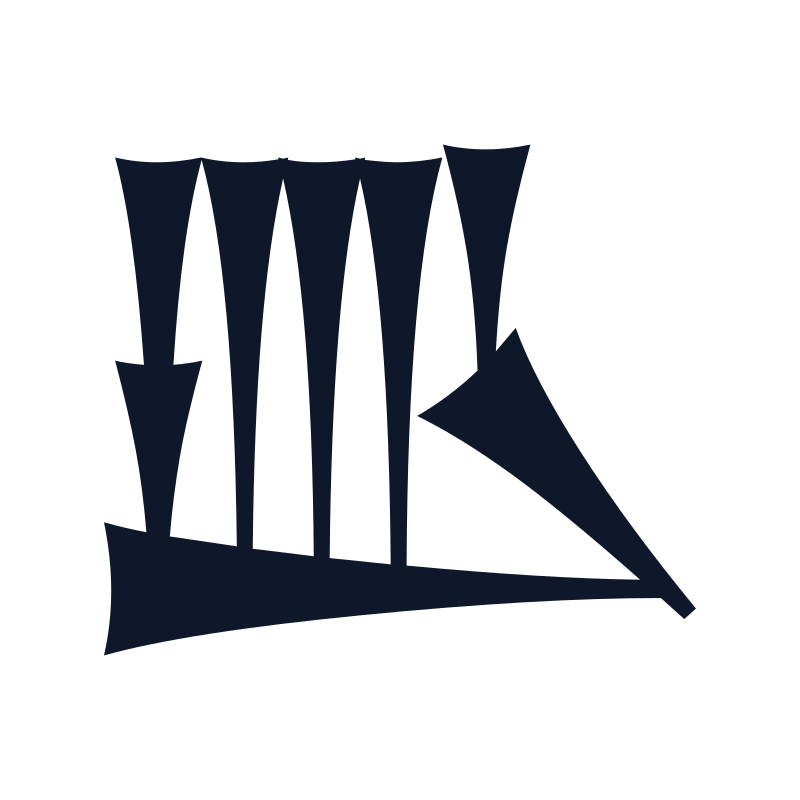 TAK₄ (KID₂) · U+122FA
𒋺
to leave behind, spare
Meaning 'to leave behind, set aside, abandon, or divorce a spouse' (Sumerian tak₄, Akkadian ezēbu), this sign is central to Mesopotamian family law (where DAM TAK₄ denotes divorcing a wife) and accounting (where LÁ.NI TAK₄.A marks ancarried-over balance). In personal names and prayers, ŠU.TAK₄ means 'to spare or save a life'.
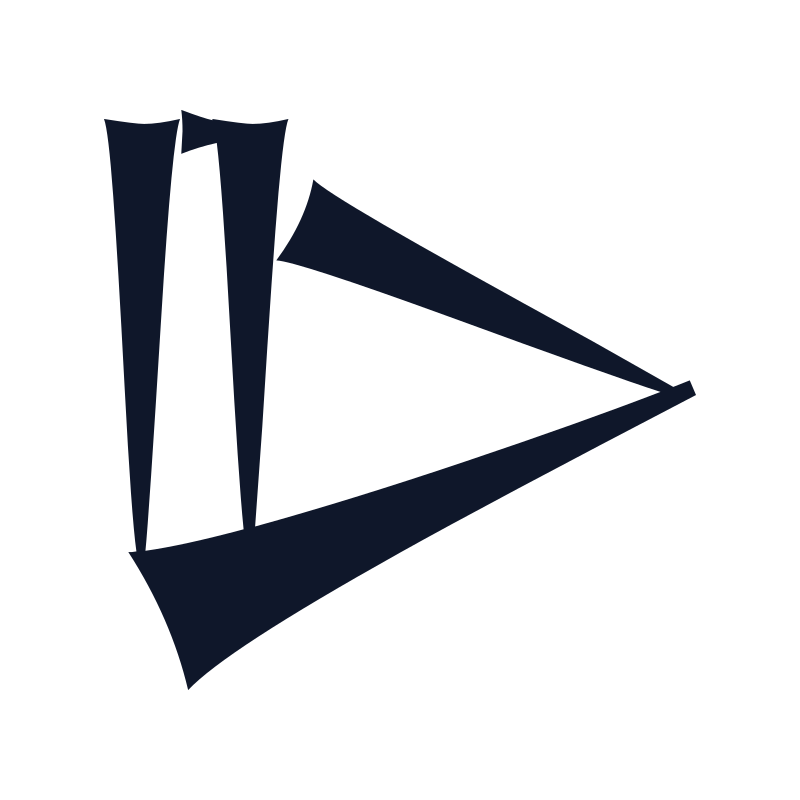 TUK (TUKU) · U+12307
𒌇
to have, possess
Since Sumerian lacked a simple verb 'to have' until TUKU emerged, this sign (Akkadian išû and rašû) became indispensable for expressing possession, acquiring wealth, or marrying a spouse (DAM TUKU). In legal loan contracts, the formula KI [Name]-TA ... BA.AN.TUKU ('he has against [Name]') identifies the creditor vs. the debtor (LU₂ NÍG.TUKU = 'wealthy person / creditor').
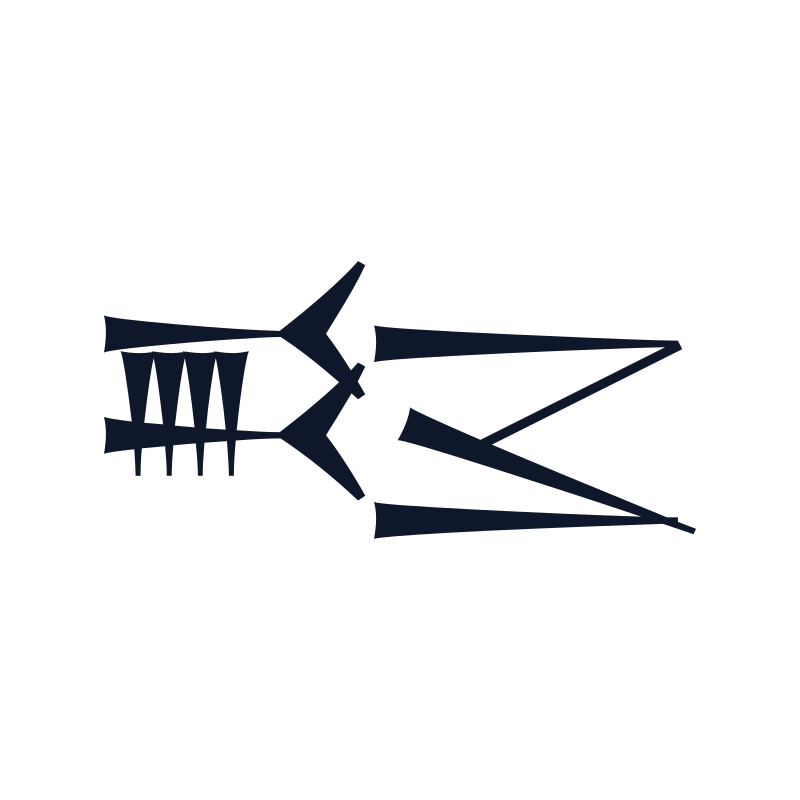 TUM / IB₂ · U+12308
𒌈
to bring, deliver
One of the most frequent signs in Akkadian because it writes the nominative singular mimation ending -tum on feminine nouns (such as šarratum, 'queen', or mātum, 'land'). As a Sumerian logogram read TUM₂ / DE₆ (Akkadian babālu), it means 'to bring, carry, or fetch', and read as IB₂ (Akkadian qablu, agāgu) it denotes the hips/loins or 'to be furious', as well as a common verbal prefix.
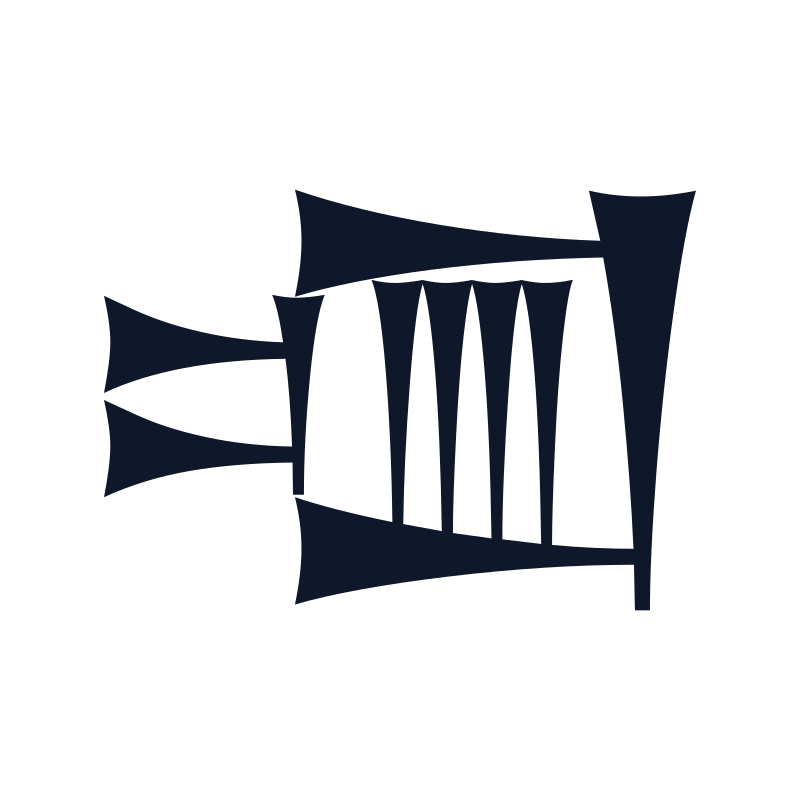 UM · U+1231D
𒌝
master scholar (ummia), sage
Crucial in Akkadian orthography as the standard VC syllable /um/ (marking the nominative singular mimation ending -um on masculine nouns, such as šarrum, 'king', or awīlum, 'citizen'). In Sumerian, the compound UM.MI.A (loaned into Akkadian as ummânu) designates the 'master scholar, chief professor of the tablet-house (Edubba), royal advisor, or master craftsman'.
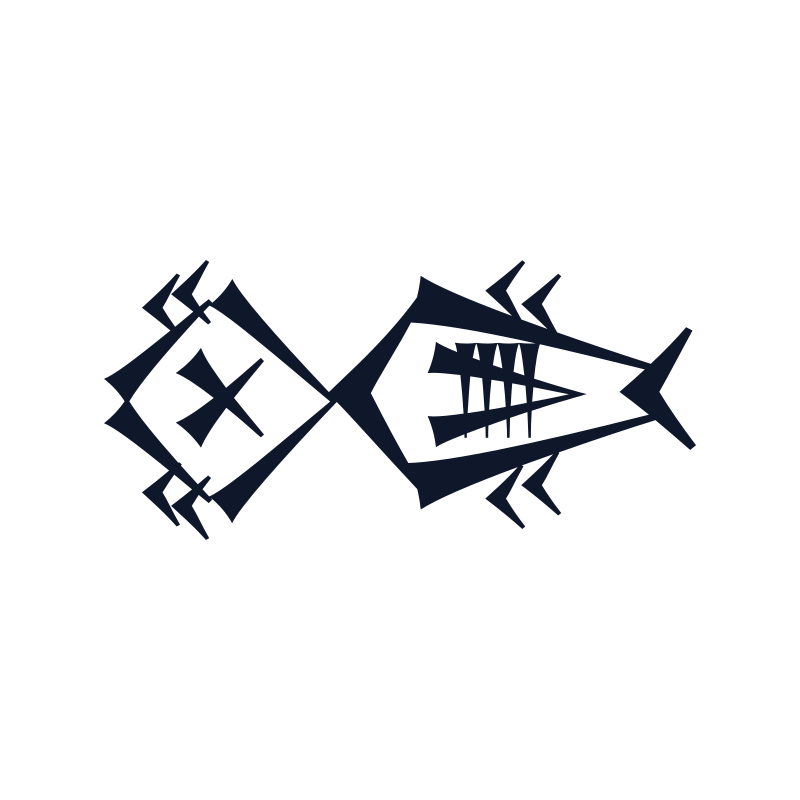 UZU · U+1235C
𒍜
flesh, meat
Originally a pictograph of a cut portion of meat or ribs, UZU (Akkadian šīru) means 'flesh, meat, body, or physical health' (and in divination, an 'omen feature' observed in the sacrificial entrails). Placed silently before nouns, UZU serves as the universal determinative for internal organs, muscles, and cuts of meat.
 ZIB · U+12366
𒍦
mark, brand
Denoting a visible mark, ownership brand, or painted sign (Sumerian zib, Akkadian šimtu), this sign is used in lexical lists and administrative texts, while phonetically serving across Akkadian and Sumerian orthography as the CVC syllable /zib/, /zip/, and /ṣip/ (notably in the celestial name Zibānītu, 'The Scales' = Libra).
 ALEPH (ʾ / AH) · U+1202A
𒀪
semitic glottal stop, laryngeal sign
Because Sumerian lacked the Semitic glottal stop and guttural consonants (ʾ, ʿ, ḥ, ġ), Babylonian and Assyrian scribes developed this dedicated graphic variant of the AH/IH/UH sign during the second millennium BCE specifically to represent the glottal stop /ʾ/ (Aleph) paired with any vowel (ʾa, ʾe, ʾi, ʾu, aʾ, iʾ, uʾ) in Akkadian and West Semitic words.
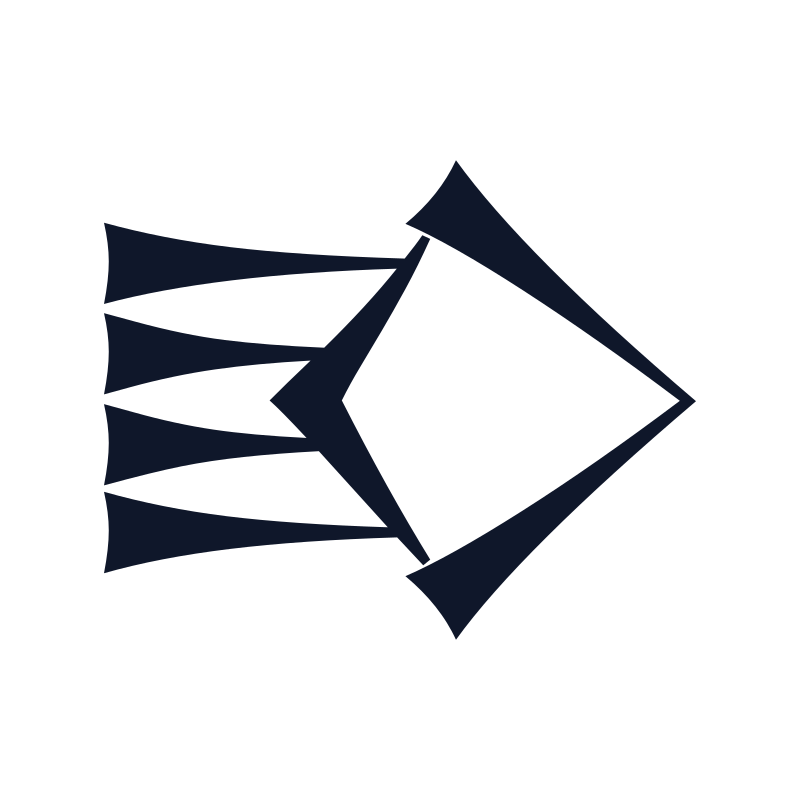 GAR₃ (QAR) · U+120FC
𒃼
ornamental knob, hilltop
Denoting a rounded knob, pommel, shield boss, hillock, or combed hairlock (Sumerian gar₃, Akkadian qarru, abbuttu), this sign is most frequently encountered across Akkadian cuneiform as the primary CVC phonetic sign for the emphatic syllable /qar/ (as in qarrādu, 'hero/warrior', and qarnu, 'horn').
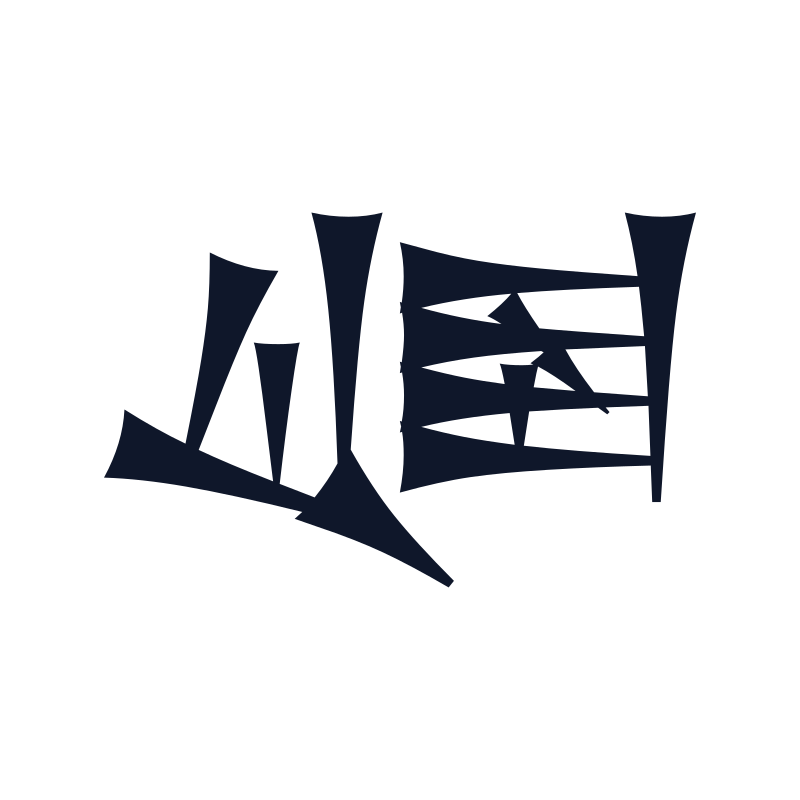 GIDIM · U+12107
𒄇
ancestral spirit, ghost
Read as GIDIM (loaned into or paired with Akkadian eṭemmu), this sign denotes the immortal shade or ancestral ghost that survives human death and descends to the Netherworld. In Mesopotamian belief, when a family faithfully performed monthly kispu offerings of cool water and bread and spoke the deceased's name, the GIDIM rested in peace and blessed the household; if neglected, it roamed as a restless ghost.
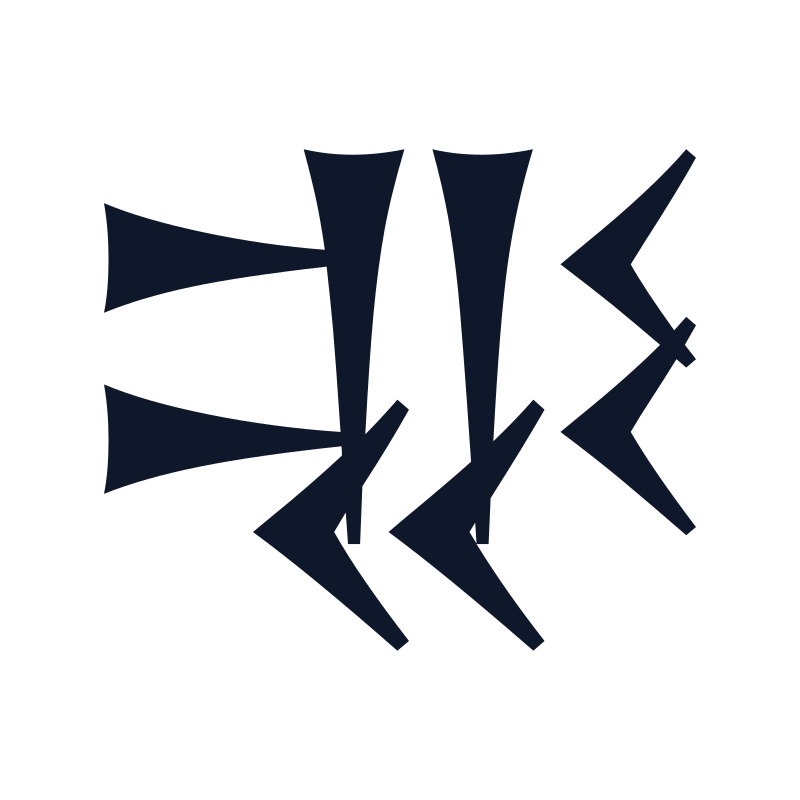 GURUN (BURU₁₄) · U+12127
𒄧
ripe fruit, blossom
Read as GURUN (Akkadian inbu), this sign denotes ripe orchard fruit, berries, or blossoms, and in Babylonian love poetry and royal epithets symbolizes youthful allure and fertility (while the Moon god Sin is praised as inbu ša ramānišu, 'the self-created fruit' that renews itself each month). Read as BURU₁₄ (Akkadian ebūru), it designates the spring/summer harvest season.
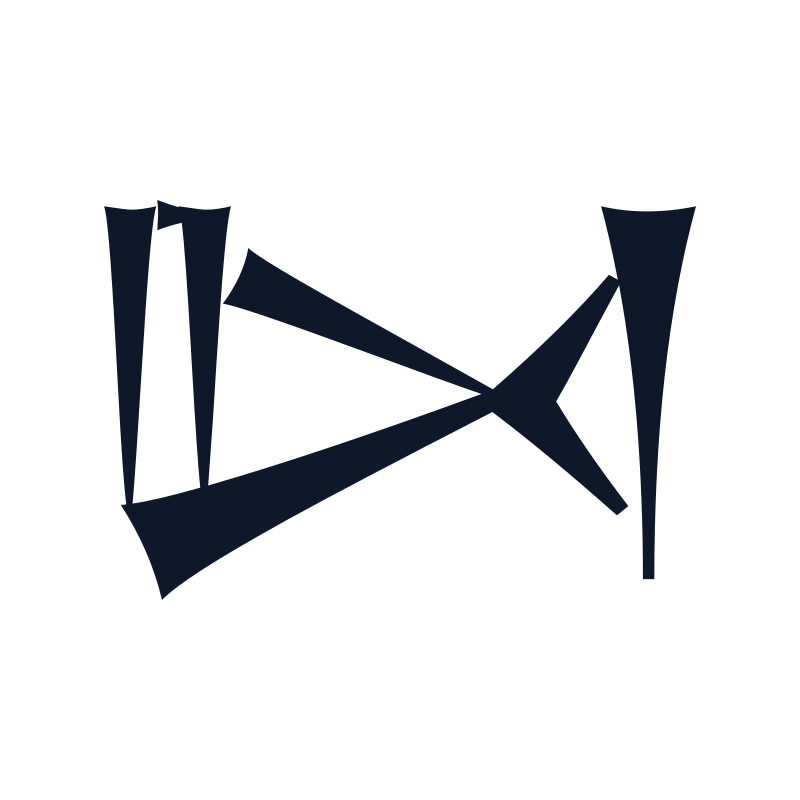 HUB₂ (TUKU₄) · U+12138
𒄸
to run, leap
Originally a gunû-augmented pictograph of a leg and foot in rapid motion, HUB₂ denotes the foot/hoof in movement: combined with DU ('to go'), HUB₂.DU / HUB₂.SAR (Akkadian lasāmu) means 'to run swiftly or gallop', while LU₂.HUB₂.BI (loaned into Akkadian as huppû) designates a cultic acrobat, tumbler, or ritual dancer performing at temple festivals.
 KAD₂ · U+12190
𒆐
to tie together, interlace
Attested in Early Dynastic and Old Babylonian lexical and administrative texts, KAD₂ (Akkadian kaṣāru) expresses the action of tying, knotting, or interlacing reeds and cords, and serves phonetically for the CVC syllable /kad₂/ and /kat₂/.
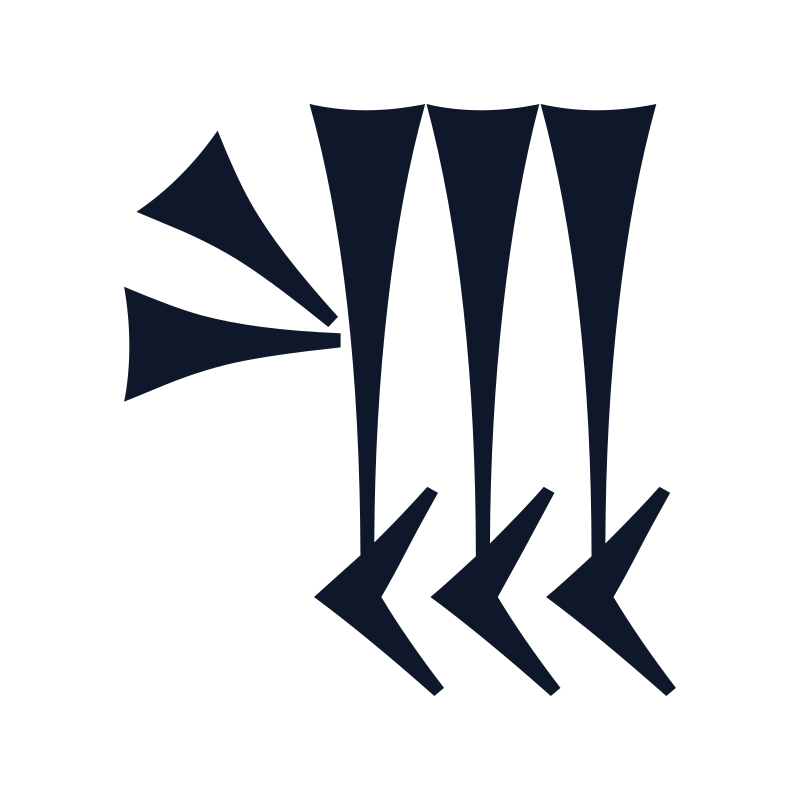 KAD₃ · U+12191
𒆑
greeting gift, present
Used in Mesopotamian syllabic orthography for /kad₃/ and /kat₃/ (notably in Akkadian kadrû, 'greeting gift or ceremonial present offered to a king or deity'), this sign preserves an archaic braided-cord motif in cuneiform paleography.
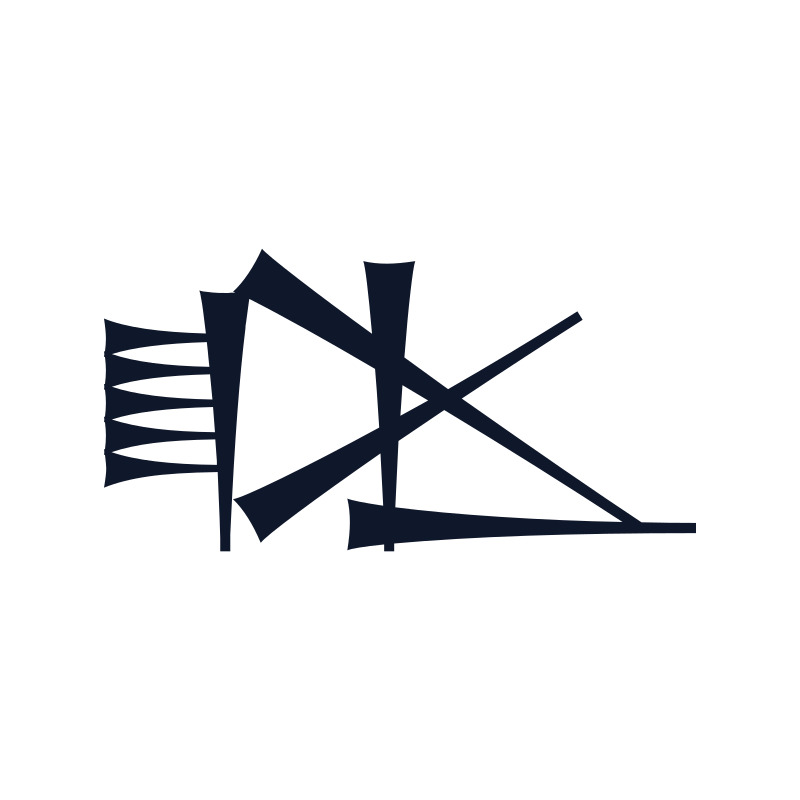 KAD₄ · U+12192
𒆒
interlaced pattern
Belonging to the paleographic series of KAD signs derived from woven mat and cord diagrams, KAD₄ is used in Old Akkadian, Ur III, and Babylonian texts for the CVC phonetic value /kad₄/ and /kat₄/.
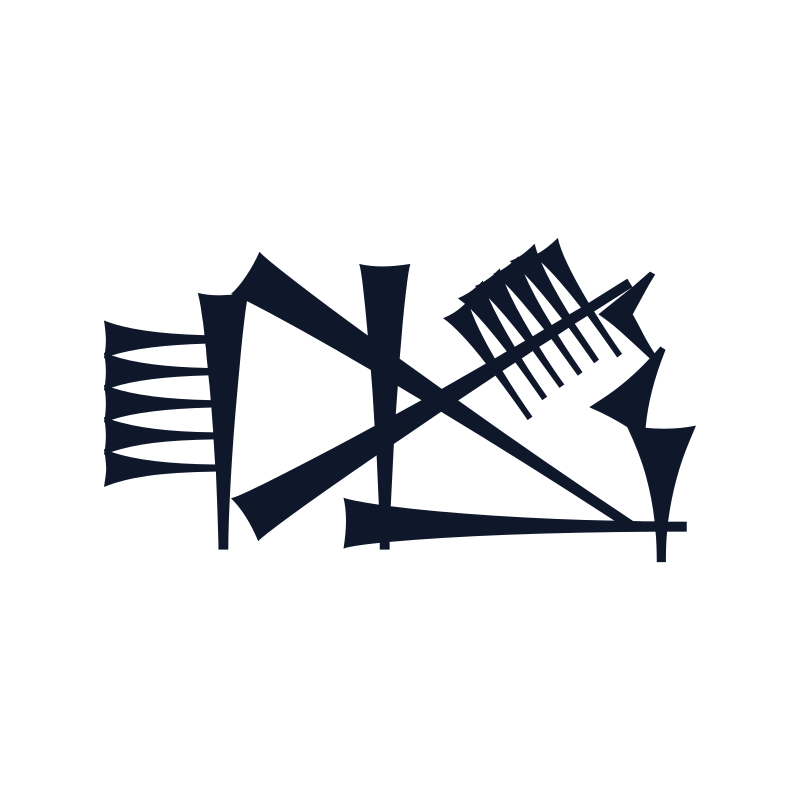 KAD₅ · U+12193
𒆓
to gather, collect
Recorded in Mesopotamian sign lists (such as Proto-Ea and Ea) with the reading KAD₅ and equated with Akkadian verbs of gathering and binding (hamāmu, kaṣāru), this sign also serves as the CVC phonetic sign /kad₅/ in royal and lexical inscriptions.
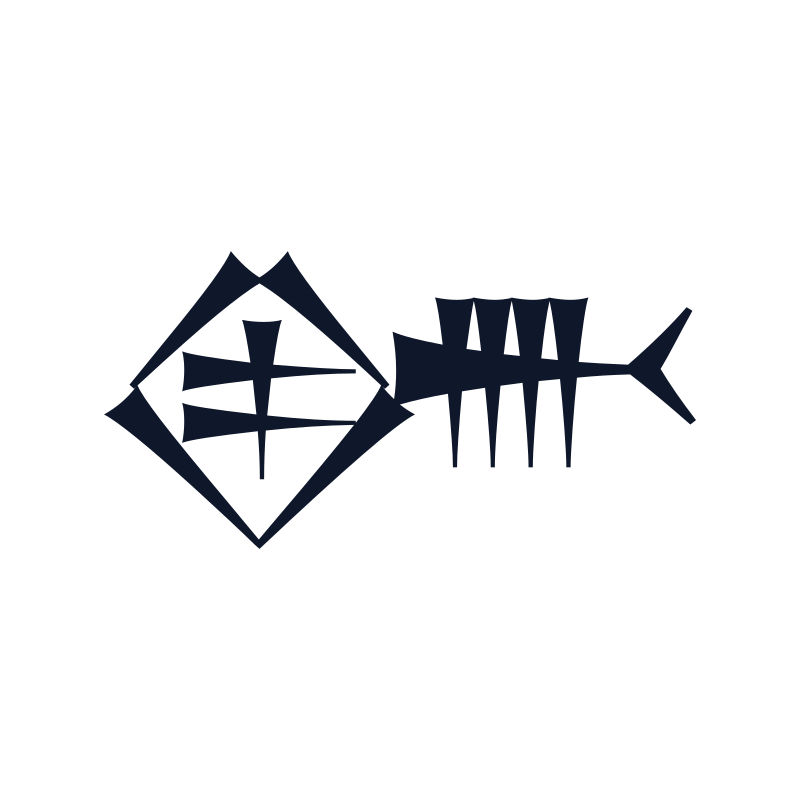 LAHŠU · U+121F1
𒇱
archaic enclosure, kiln
Formed as a composite enclosure sign in the LAGAB/AB family and recorded in Mesopotamian lexical sign lists with the reading LAHŠU, this sign designates a ritual furnace, kiln, or specialized architectural chamber.
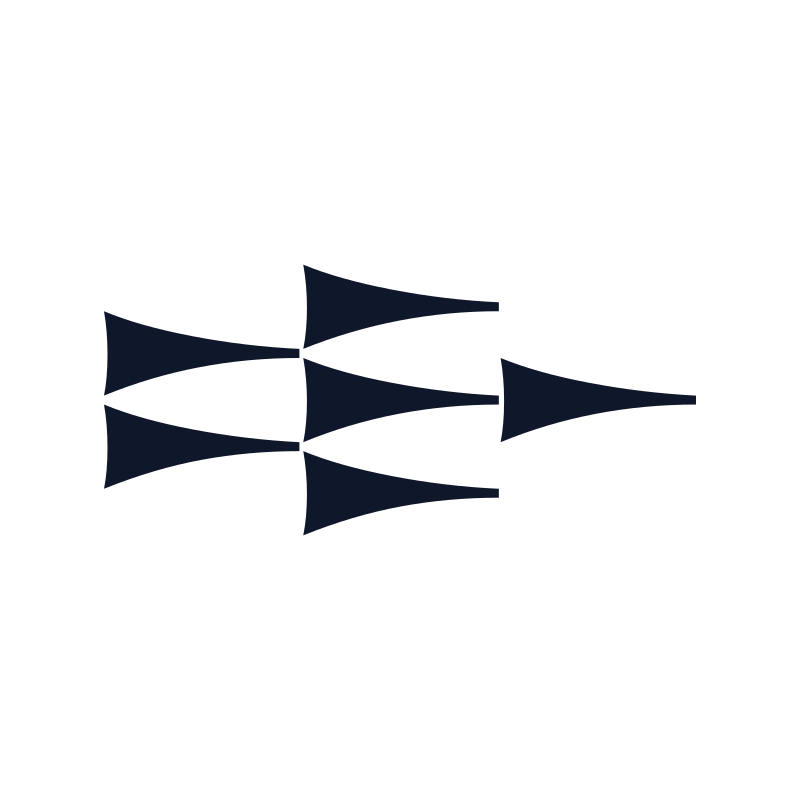 ŠAB₆ · U+122B8
𒊸
to hollow out, apportion
Recorded in Mesopotamian lexical sign lists as a variant of the ŠAB / PA.IB series, ŠAB₆ (Akkadian harāṣu, šabāṭu) expresses cutting away, hollowing out, deducting from a quantity, or apportioning shares.
 MEŠ (ME.EŠ) · U+1238C
𒎌
plural, multitude
Originating from the Sumerian enclitic copula plus 3rd-person plural suffix -me-eš ('they are', written ME + EŠ '3'), this sign fused into a single ligature MEŠ and became the universal post-posed plural marker across Babylonian, Assyrian, Hittite, and Urartian cuneiform (e.g., DINGIR.MEŠ = ilānū, 'gods'; LUGAL.MEŠ = šarrānū, 'kings'; KUR.KUR.MEŠ = 'lands').
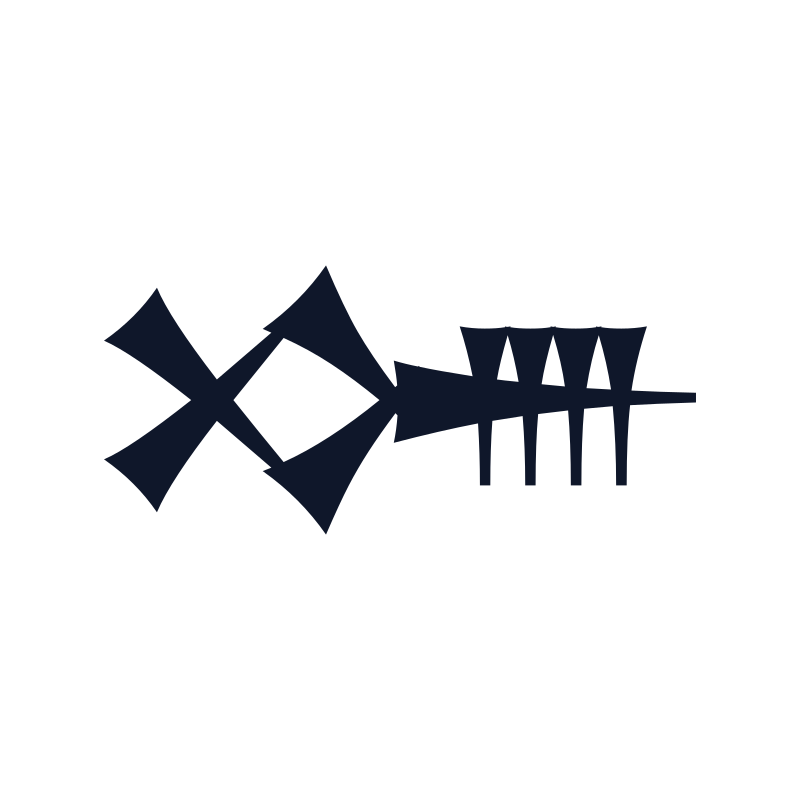 SUD · U+122E4
𒋤
distant, long
Cuneiform sign SUD (Borger MZL 584, U+122E4), an elongated modification of BU/GID₂ representing great distance, length of time, or sprinkling liquids (Sumerian sud, su₃; Akkadian nesû 'to be far', arāku 'to be long', salāḫu 'to sprinkle'). Frequently used in royal prayers wishing long life (ud-sud-ra₂) and as the phonetic syllable sud or su₃.
 TIL · U+12300
𒌀
complete, open
Highly polyvalent cuneiform sign TIL / BAD / UŠ₂ (Borger MZL 113, U+12300). Depending on context, it reads til ('to complete, bring to an end'; Akkadian gamāru, qatû), bad ('to open, remove, be distant'; Akkadian petû, nesû), sumun ('old, ancient wood'), or uš₂ ('blood, death'; Akkadian dāmu, mītu).
 ZUM · U+1236E
𒍮
to flow, revolve
Cuneiform sign ZUM (Borger MZL 889, U+1236E), used primarily as the closed phonetic syllable zum and șum in Akkadian and Sumerian texts. In lexical traditions it is associated with liquid seeping or revolving (Akkadian zâbu 'to ooze, dissolve') and administrative notations of gifts or grants (rig₇).
 TI2 · U+12397
𒎗
to approach, live
Cuneiform sign TI₂ (U+12397), an Old Akkadian and lexical syllabic sign representing the syllable ti₂ (and ṭi₂), also attested as a spelling variant for Sumerian te/ti ('to approach'; Akkadian ṭeḫû) and til₃ ('to live').
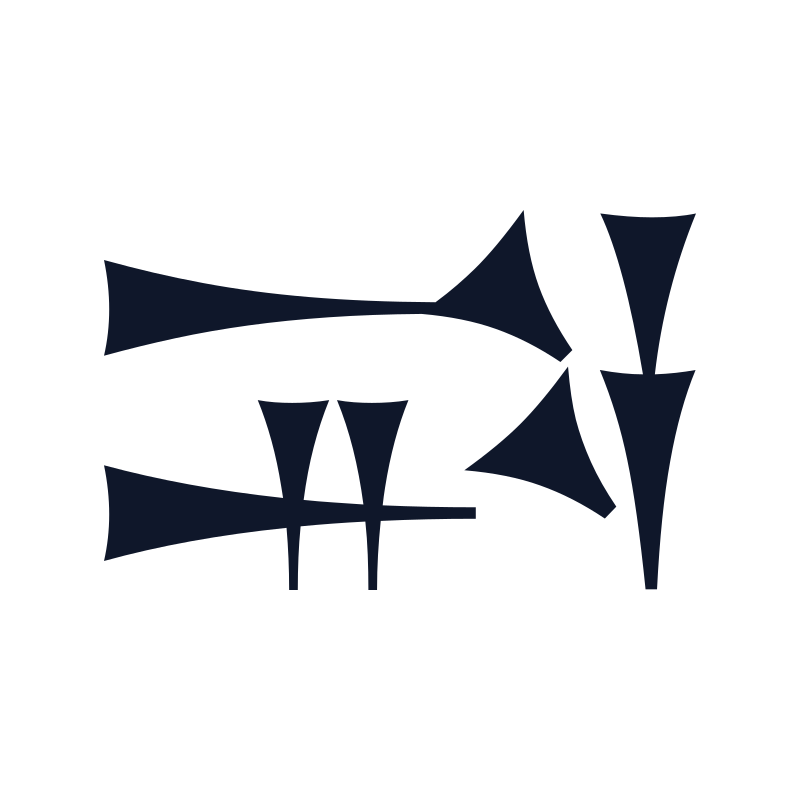 DAG3 · U+12374
𒍴
to leave, spread
Cuneiform sign DAG₃ (U+12374), a variant sign attested in Early Dynastic and Old Akkadian texts for the syllable dag₃ and logographic values connected with leaving behind, setting aside, or spreading out.
 GE22 · U+1237B
𒍻
reed, stalk
Cuneiform sign GE₂₂ (U+1237B), an archaic and lexical sign variant related to GI ('reed'), used in scholarly sign lists and early orthographic traditions to represent the phonetic syllable ge₂₂ / gi₂₂.
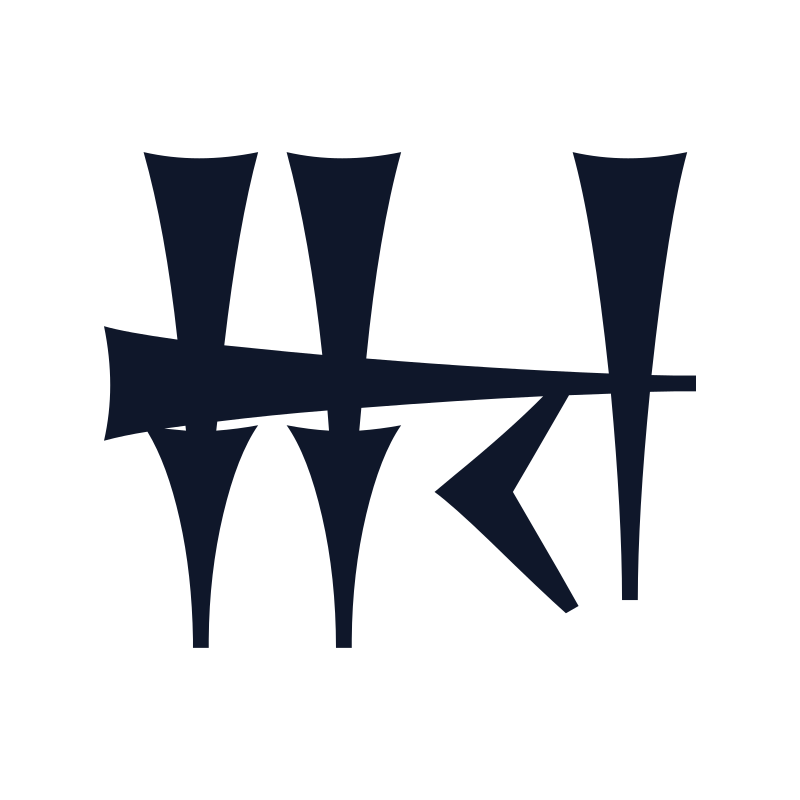 NAM_NUTILLU · U+12245
𒉅
incomplete fate, draft
Cuneiform sign NAM-nutillû (Borger MZL 135, U+12245), literally 'unfinished NAM' (Akkadian nutillû fromSumerian nu-til-la 'not completed'), a specialized paleographic entry in Babylonian scholarly sign lists (Ea II) showing the base strokes of NAM before final completion.
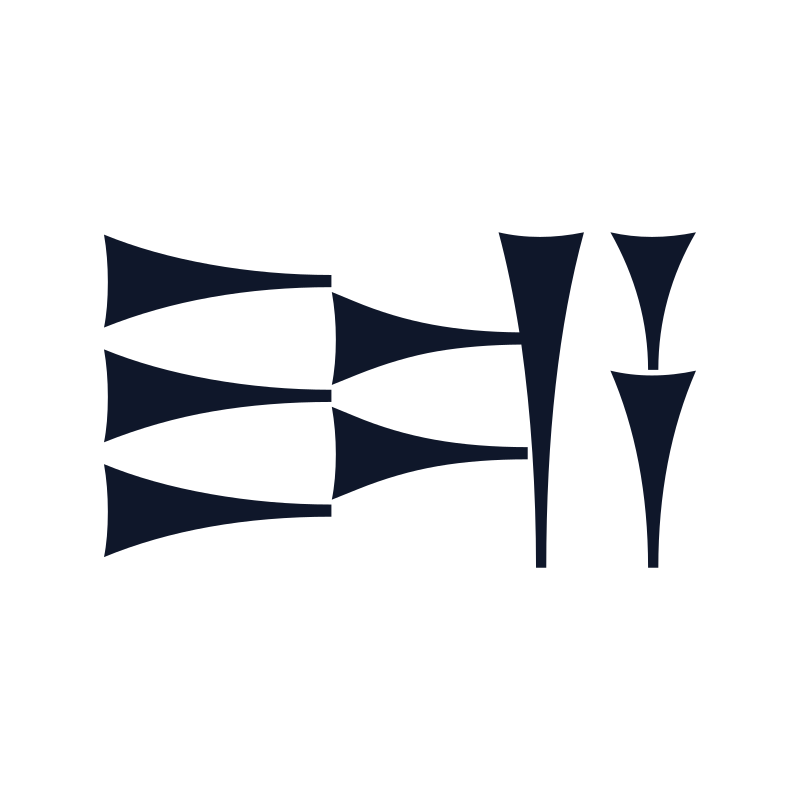 IA · U+12140
𒅀
my, mine
Cuneiform sign IA (ligature of I + A, Borger MZL 253, U+12140), one of the most frequent signs in Akkadian, Hittite, and Amarna letters. It writes the glide syllables ia/ya, iu/yu, ie/ye and the Akkadian first-person singular possessive suffix -ia ('my', as in bēlī-ia 'my lord', šarrī-ia 'my king').
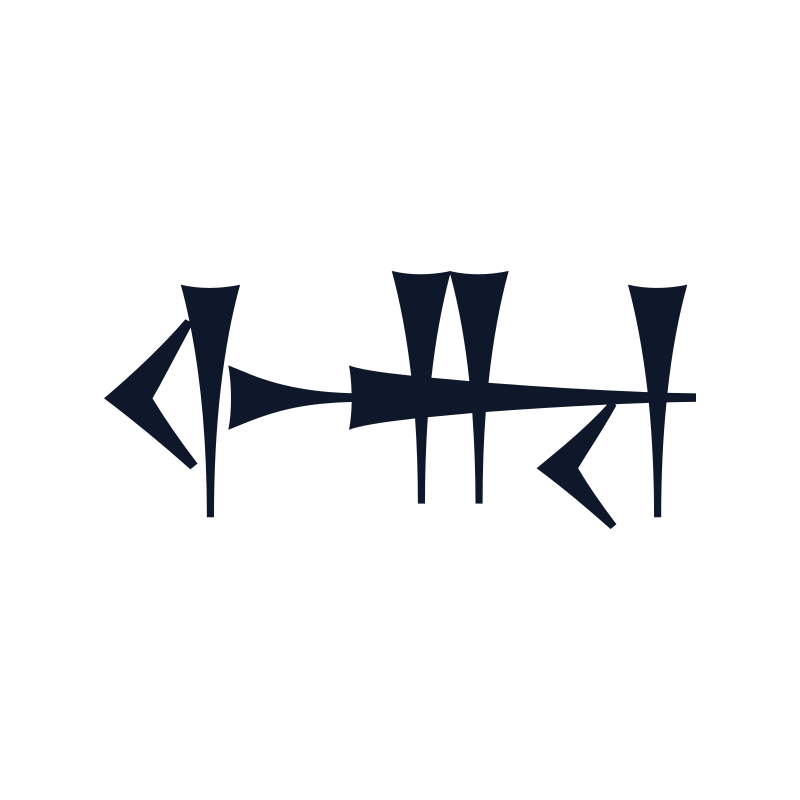 AR · U+12148
𒅈
praise, glory
Cuneiform sign AR or AR₂ (compound IGI+RI, Borger MZL 726, U+12148), the standard sign for the closed syllable ar across all periods of Akkadian and Sumerian. Logographically read ar₂, it means 'praise, glory, hymn of exaltation' (Akkadian tanittu, tēšû).
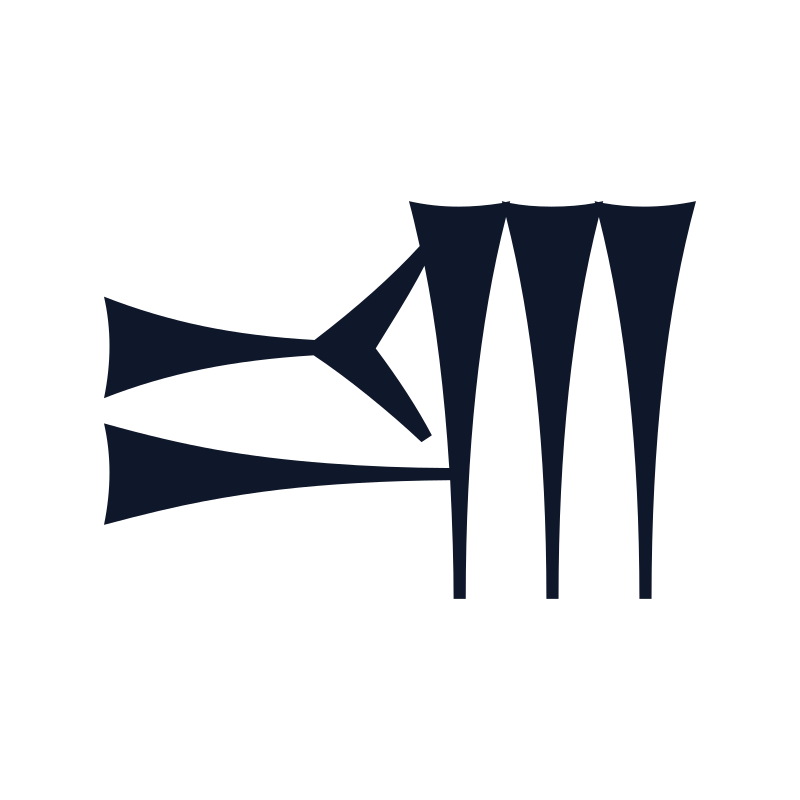 TA_AST · U+122EC
𒋬
from, out of
Cuneiform sign TA-asterisk (TA enclosing a star AN, Borger MZL 248, U+122EC), a calligraphic Neo-Assyrian variant of TA used in royal annals and library tablets for the syllable ta and the ablative preposition 'from' (Akkadian ištu, ultu).
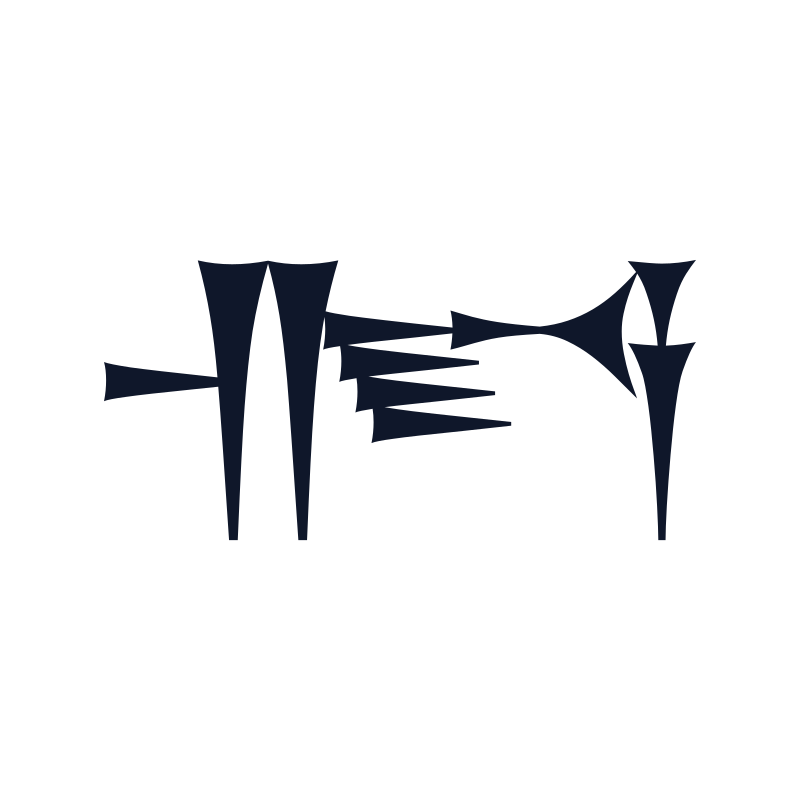 KAP · U+1236F
𒍯
treasury, left
Cuneiform sign KAP-Elamite (U+1236F), the distinctive Neo-Elamite and Royal Achaemenid Elamite form of KAB/KAP, heavily used in the Persepolis Fortification and Treasury tablets for the syllable kap and the Elamite term kapnuški ('treasury').
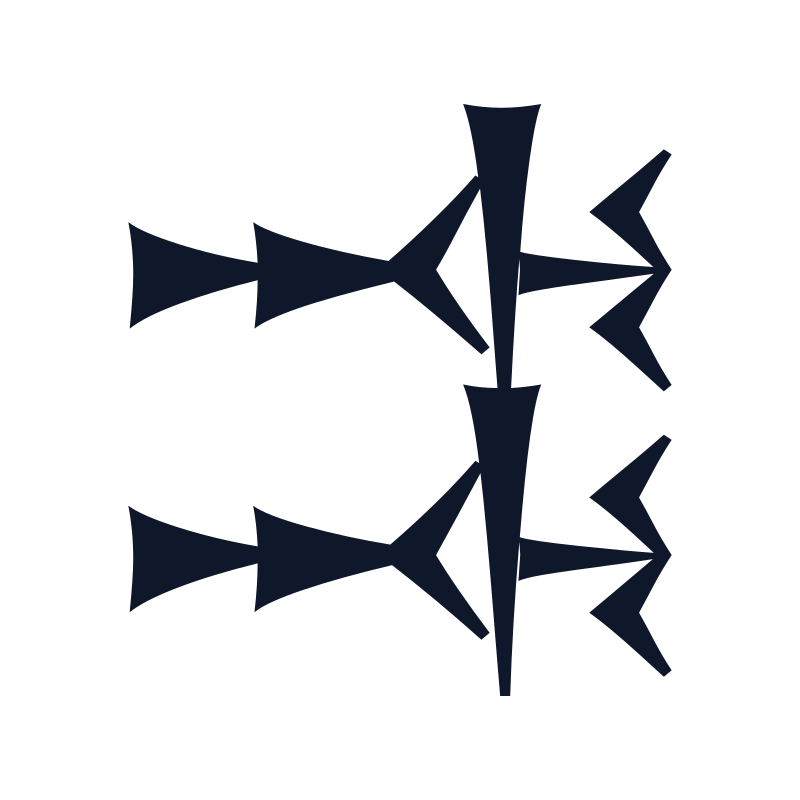 BAL_BAL · U+12045
𒁅
to alternate, converse
Cuneiform sign BAL/BAL (two BAL signs stacked vertically, Borger MZL 10, U+12045), representing reduplicated bal-bal ('to turn over repeatedly, alternate, converse'; Akkadian šutābulu, atmû) and the Sumerian literary genre bal-bal-e ('dialogue poem or chant').
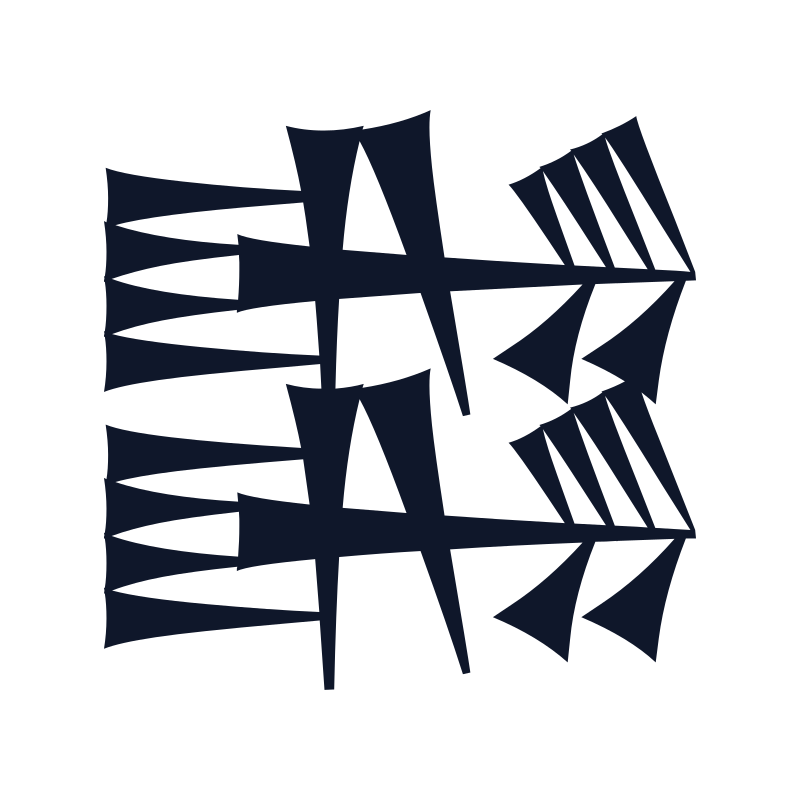 GI4_GI4 · U+12105
𒄅
to return, answer
Cuneiform sign GI₄/GI₄ (two GI₄ signs stacked vertically, Borger MZL 508, U+12105), expressing the reduplicated Sumerian verb gi₄-gi₄ ('to return repeatedly, restore, answer back in legal or poetic dialogue'; Akkadian târu, apālu).
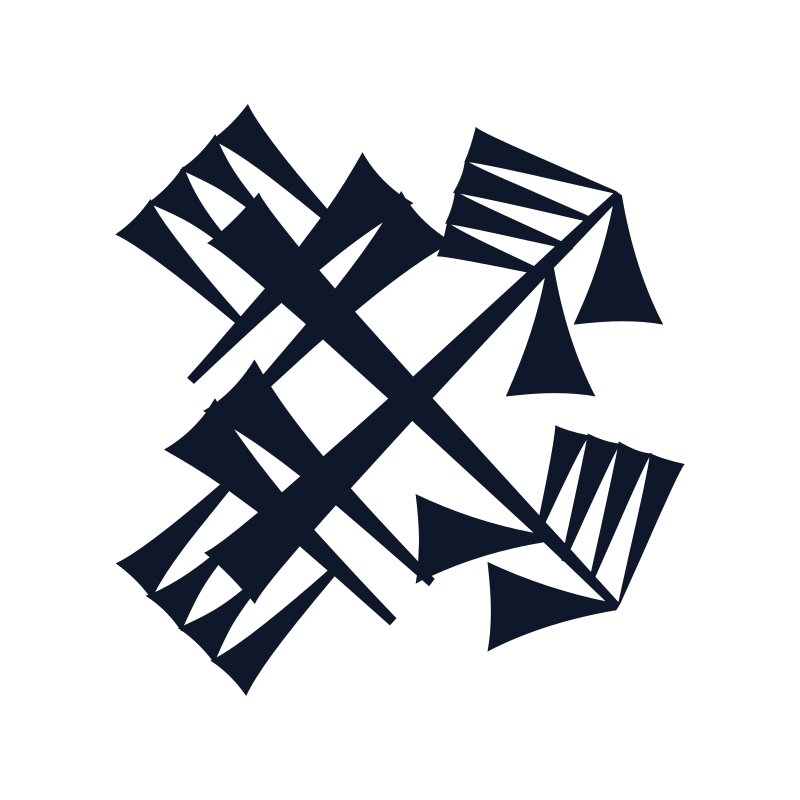 GI4_CROSS_GI4 · U+12106
𒄆
interchange, reciprocal
Cuneiform sign GI₄ crossing GI₄ (Borger MZL 509, U+12106), formed by two intersecting GI₄ ('to turn, return') signs in Babylonian lexical lists to symbolize reciprocal turning or mutual exchange.
 AH · U+12134
𒄴
insect, louse, spittle
Essential cuneiform sign ḪI×NUN, read AḪ, EḪ, IḪ, or UḪ (Borger MZL 635, U+12134). It is the universal phonetic sign for all four vowel+ḫ syllables (aḫ, eḫ, iḫ, uḫ) in Akkadian, Sumerian, and Hittite. Logographically read uḫ, it denotes 'insects, vermin, lice, fleas, or wood-worms' (Akkadian kalmatu, uplu,indu) as well as 'spittle, phlegm' (ru'tu).
 BIR · U+12135
𒄵
to scatter, kidney
Cuneiform sign ḪI׊E, read BIR (Borger MZL 641, U+12135), the primary phonetic sign for the syllable bir/pir. Logographically it means 'to scatter, disperse, shred' (Sumerian bir; Akkadian sapāḫu), 'kidney' (ellag₂/bir; Akkadian kalītu), a 'team of yoked draft animals' (Akkadian ṣimittu), and read erim₃ 'storehouse, treasury'.
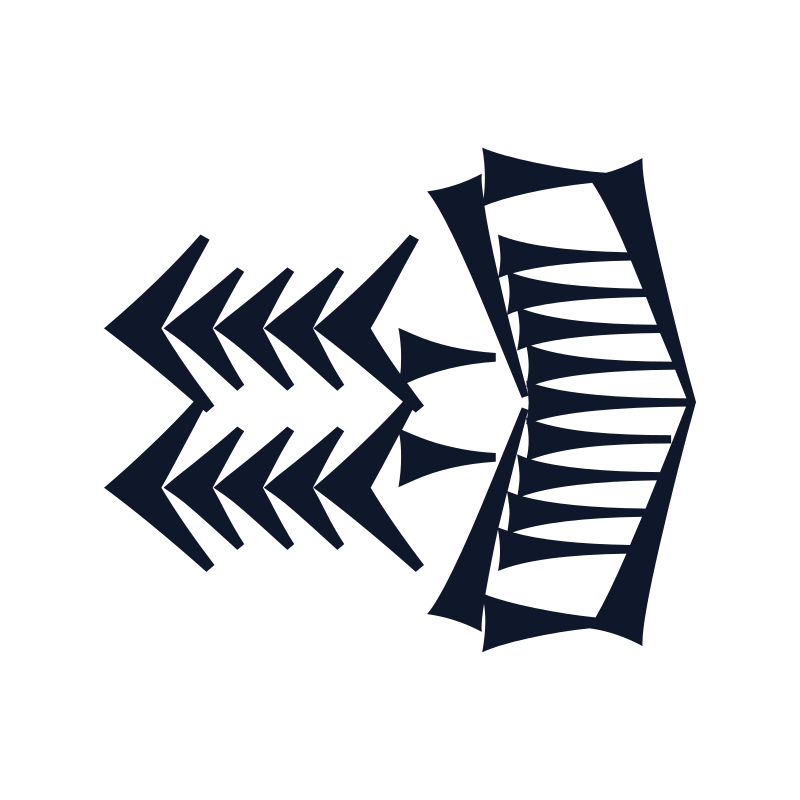 KU4 · U+121AE
𒆮
to enter, bring in
CUNEIFORM SIGN KU₄ VARIANT FORM (𒆮) is an attested paleographic and regional variant of the logogram KU₄ (`kur₉`, `tu`; Akkadian `erēbu`), meaning 'to enter, go in, or bring in'. In administrative records, the phrase `mu-ku₄` (`mu-kux(DU)`) designates official deliveries brought into the palace or temple.
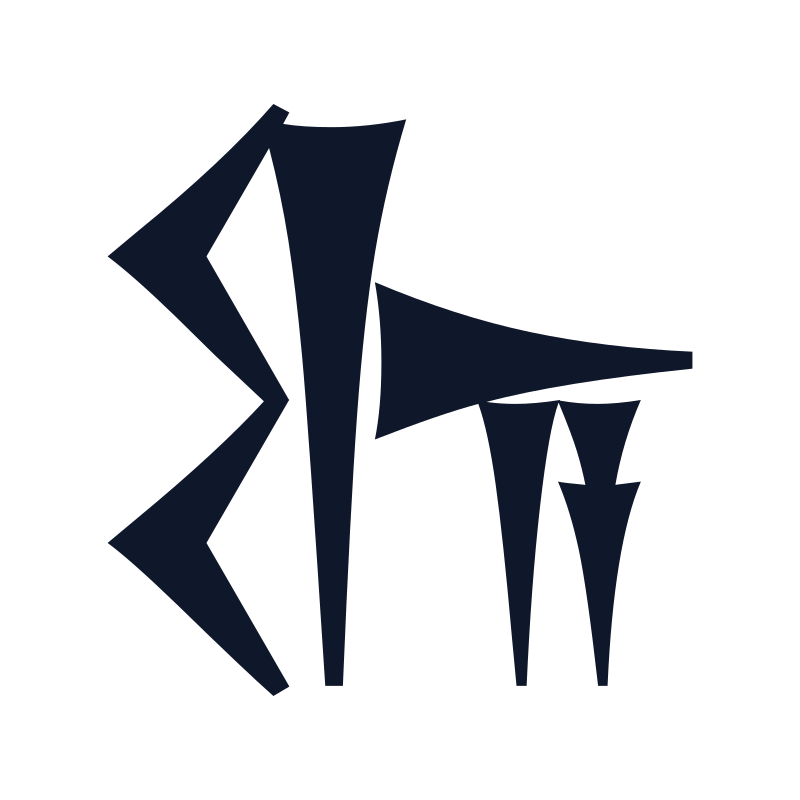 WA2 · U+12280
𒊀
phonetic wa, open ear
PI×A (𒊀) is a specialized cuneiform phonetic ligature combining PI (which carried the glides `wa, we, wi, wu`) with an inscribed vowel sign A. Developed by scribes in Old Babylonian, Hurrian, and Hittite traditions, it unambiguously specifies the syllable `wa` (`wa₂`).
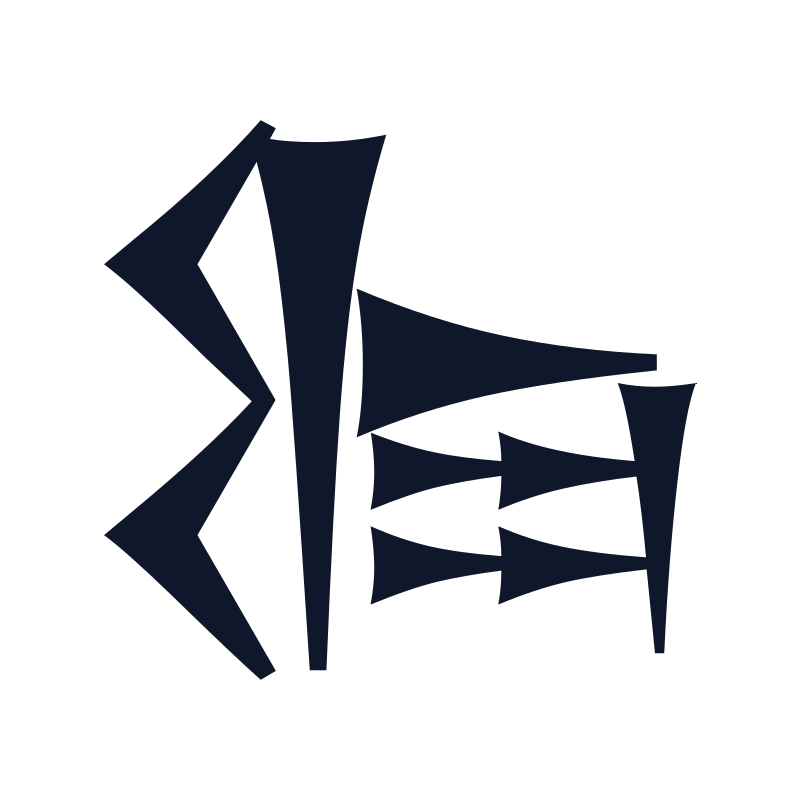 PI×AB · U+12281
𒊁
labial sound wab, listening
PI×AB (𒊁) combines the sign PI ('ear, understanding; labial glide `w-`') with AB. Used in Mesopotamian lexical and peripheral syllabaries, it represents a labialized syllabic combination (`wab`/`wap`) or an attentive ear in lexical lists.
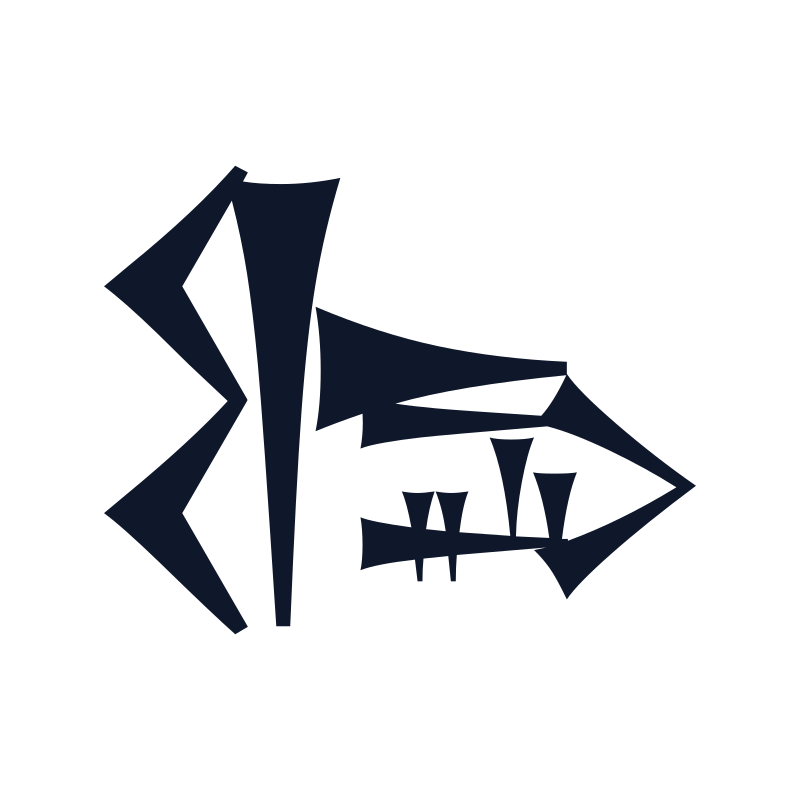 WI2 · U+12282
𒊂
phonetic wi, labial glide
PI×BI (𒊂) is a phonetic ligature combining PI (`w-`) with BI (`bi`/`be`) to express the front-vowel labial syllables `wi` or `we` (`wi₂`/`we₂`) in Old Babylonian, Mari, Hurrian, and Hittite cuneiform orthography.
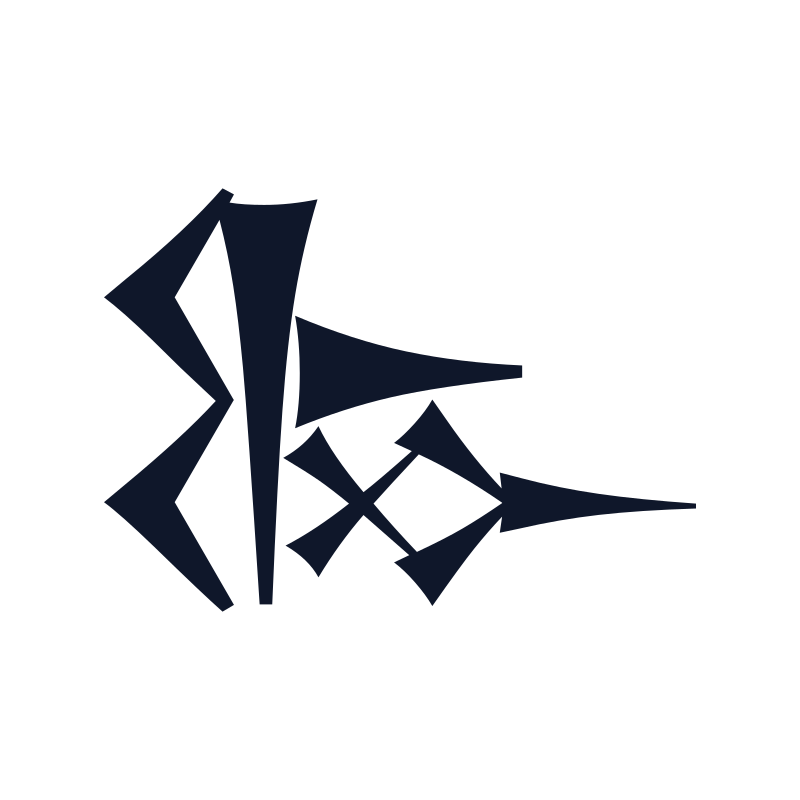 PI×BU · U+12283
𒊃
ear canal, phonetic wu
PI×BU (𒊃) combines PI ('ear; labial glide `w-`') with BU ('long, deep, pull'). It functions both as a phonetic ligature for the syllable `wu` and as a lexical compound denoting the deep passage of the ear canal.
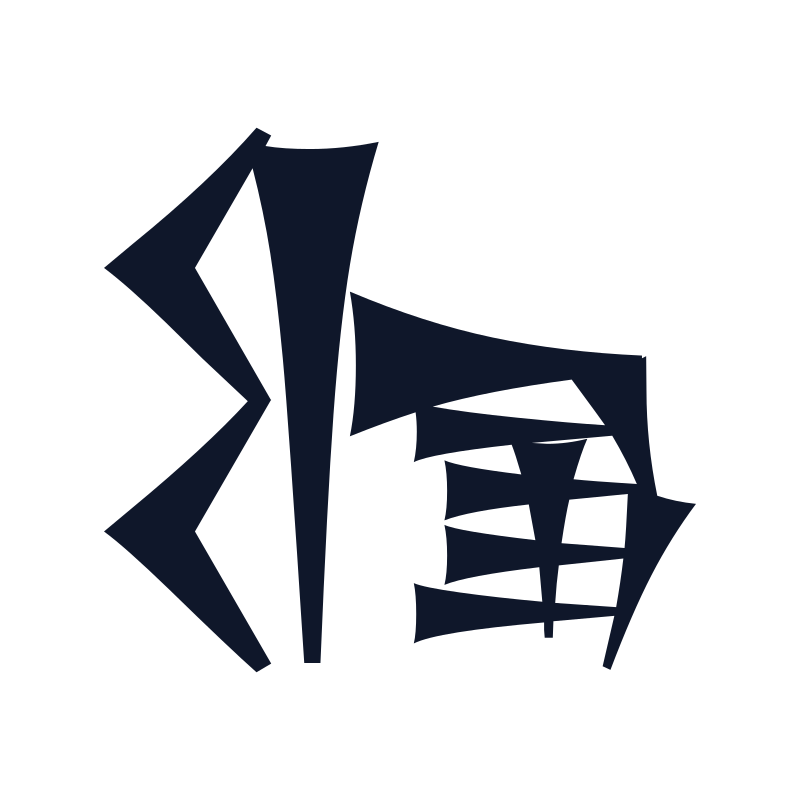 WE · U+12284
𒊄
phonetic we, vocalic glide
WE (𒊄, structurally PI×E) is the standard cuneiform phonetic ligature for the syllable `we`, formed by placing the vowel sign E inside or beside PI (`wa`). It was widely used in Old Babylonian, Hurrian (Mitanni), and Hittite tablets to distinguish `we` from `wa`, `wi`, and `wu`.
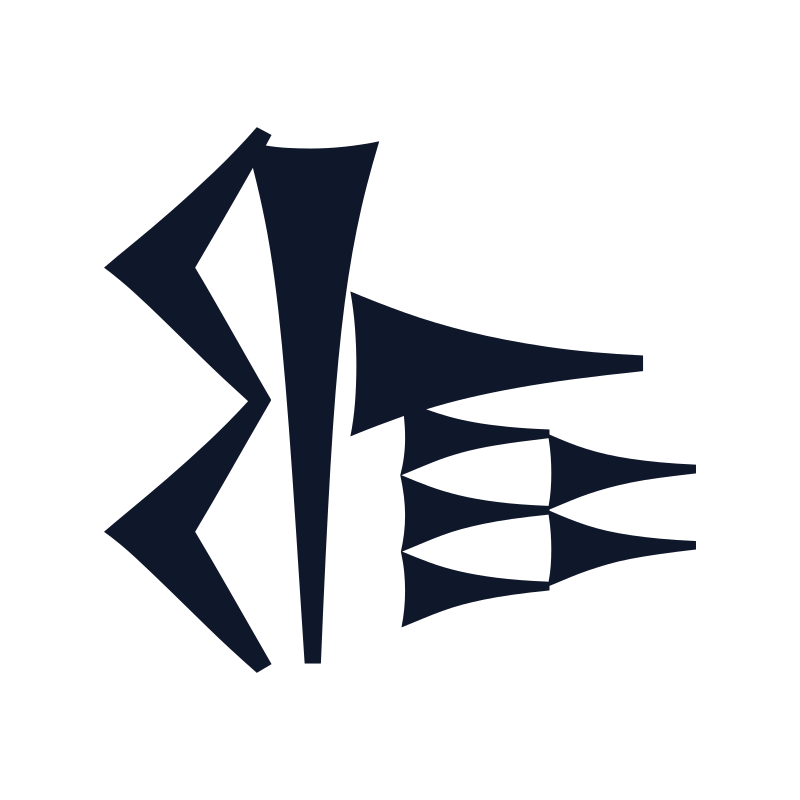 WI · U+12285
𒊅
phonetic wi, clear hearing
WI (𒊅, structurally PI×I) is the classic cuneiform phonetic ligature for the syllable `wi`, combining PI (`w-`) with the vowel sign I. It is especially common in Hittite (e.g., `wi-ya-na` = 'wine') and Hurrian royal correspondence.
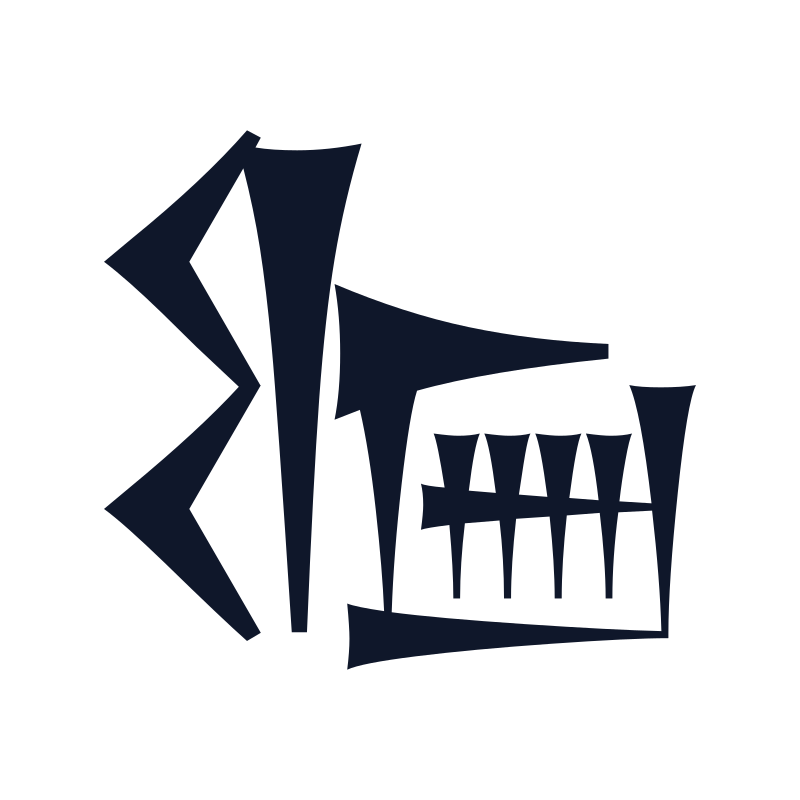 PI×IB · U+12286
𒊆
labial sound wib, perception
PI×IB (𒊆) combines PI ('ear, wisdom; labial glide `w-`') with IB. Attested in Mesopotamian lexical lists and scribal syllabaries, it represents the labialized syllable `wib`/`wip` or inner perception.
 WU · U+12287
𒊇
phonetic wu, ear opening
WU (𒊇, structurally PI×U) is the standard cuneiform phonetic ligature for the syllable `wu`, combining PI (`w-`) with the vowel sign U ('ten, depression'). It is widely attested in Old Babylonian, Mari, Hurrian, and Hittite texts to specify the back rounded vowel `u` after `w`.
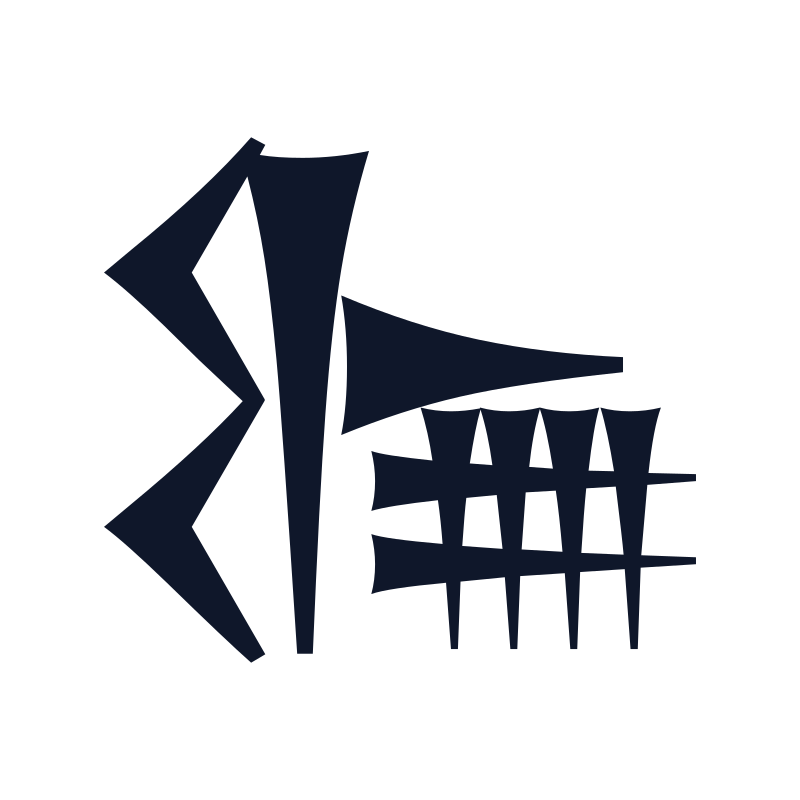 WU3 · U+12288
𒊈
phonetic wu, labial sound
WU₃ (𒊈, structurally PI×U₂) is a cuneiform phonetic ligature combining PI (`w-`) with the sign U₂ (`u₂`). Used alongside PI×U (`wu`) in Old Babylonian and peripheral syllabaries, it explicitly renders the syllable `wu`.
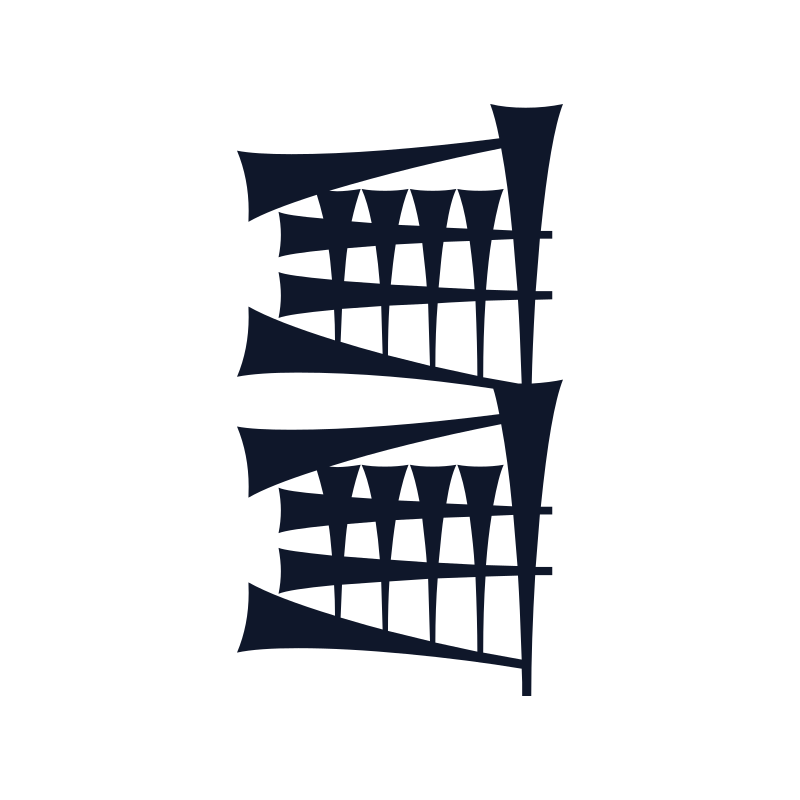 SU/SU · U+122E3
𒋣
submerge, overwhelm, repay
SU OVER SU (𒋣) is the vertically reduplicated form of SU (`su-su`). In Sumerian literary and legal texts, `su-su` means either 'to sink, submerge, overwhelm' (Akkadian `ṭebû`) or 'to replace, repay, make full restitution' for lost property (Akkadian `riābu`).
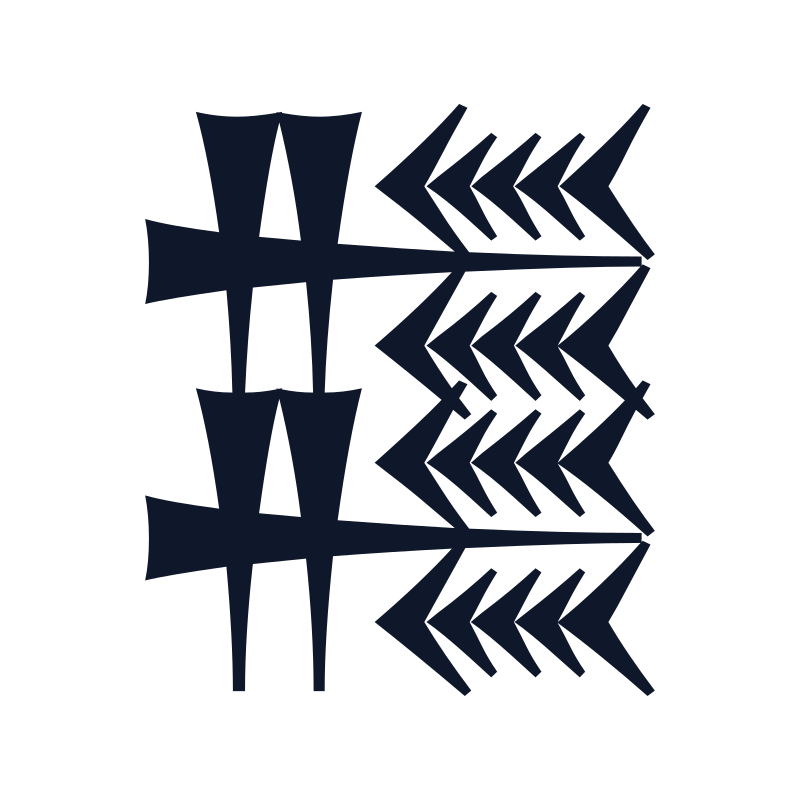 ZI/ZI · U+12364
𒍤
rise up, mobilize, expend
ZI OVER ZI (𒍤) is the vertically reduplicated form of ZI (`zi-zi`, `zig₃-zig₃`; Akkadian `tebû`, `nasāhu`). In Sumerian grammar, it serves as the plural/marû stem meaning 'to rise up, surge, mobilize troops' and in administrative tablets as 'to expend, disburse, deduct from an account' (`ba-zi`).
 ZIB · U+12367
𒍧
brand mark, token, tail
CUNEIFORM SIGN ZIB KABA TENU (𒍧) is the slanted (`tenû`) graphic variant of ZIB ('mark, brand, token, tail'; Akkadian `šimtu`, `zibbatu`). It is used both in lexical sign lists and as a syllabic sign for `zib` / `zip`.
