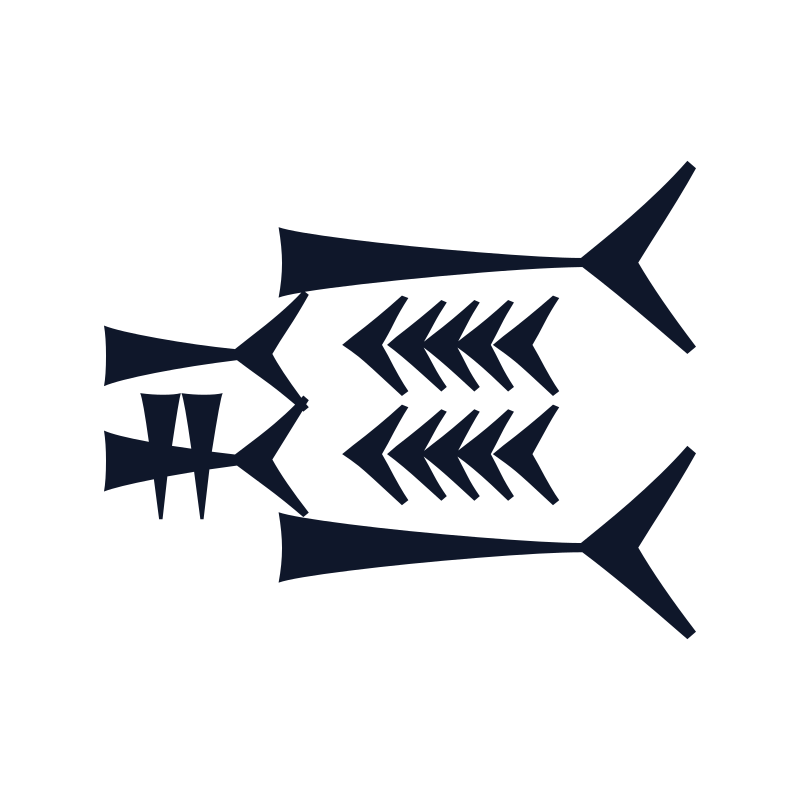
 GAZ · U+12124
𒄤
to crush, grind grain
An ingenious visual ideogram recognized in Unicode as 'GUM TIMES SHE': it combines GUM ('pestle' or 'pounder') with ŠE ('barley/grain'), depicting grain being crushed in a mortar. In economic and culinary tablets, GAZ (Akkadian 'hašālu') referred to crushing barley for beer brewing, groats, and flour, or breaking clay bricks and pots. In royal military annals and omen texts, it also carried the forceful meaning 'to smite', 'slay', or 'defeat' (Akkadian 'dâku'), and phonetically represents the syllable 'gaz'.
 HAR / HUR · U+1212F
𒄯
silver ring, millstone
A highly polyvalent sign derived from a circular enclosure with interior cross-strokes. Long before minted coins existed, Mesopotamian merchants used weighed coils and rings of silver called 'har' (Akkadian 'semeru') as currency; connected to this financial sphere, when read as 'ur₅' (Akkadian 'hubullu'), the sign meant an interest-bearing loan or debt obligation. Read as 'har' or 'kikkin', it meant a basalt grinding millstone, read as 'mur' (Akkadian 'hašû') it meant the lungs, and phonetically it is one of the most frequent signs for 'har', 'hur', and 'mur'.
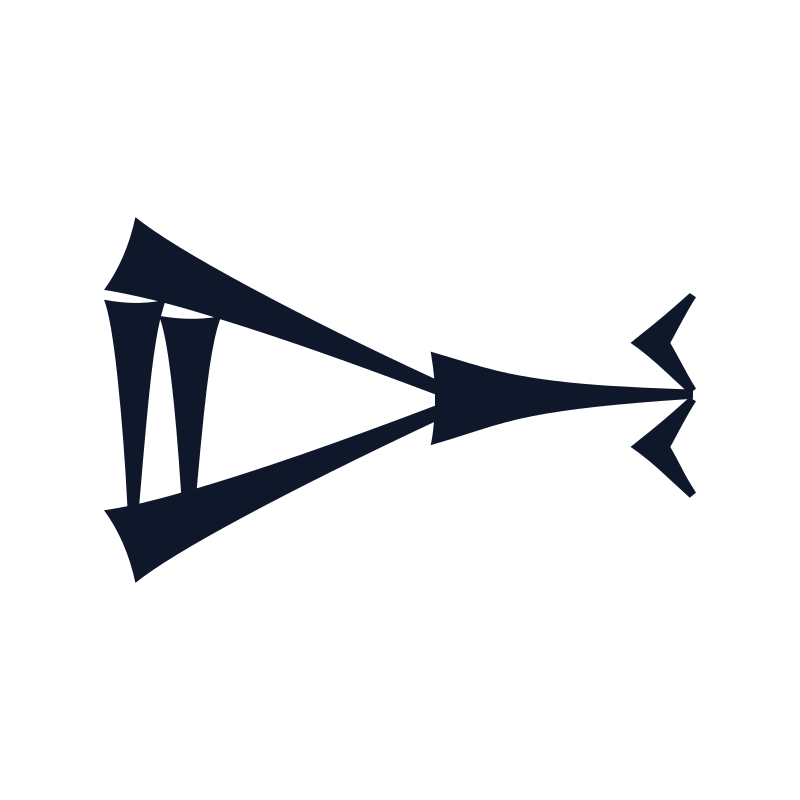 GU · U+12116
𒄖
flax thread, twisted cord
Originating from a pictogram of twisted flax fibers or a hank of spun thread, GU (Akkadian 'qû') means 'flax', 'linen thread', 'cord', or 'snare net'. Fine linen textiles ('gada') spun from 'gu' were reserved for clothing the statues of the gods and high priests in Sumerian and Babylonian temples, while in medical texts 'gu' also referred to anatomical sinews and cords. Phonetically, it is the primary sign for the syllable 'gu' (and 'qu').
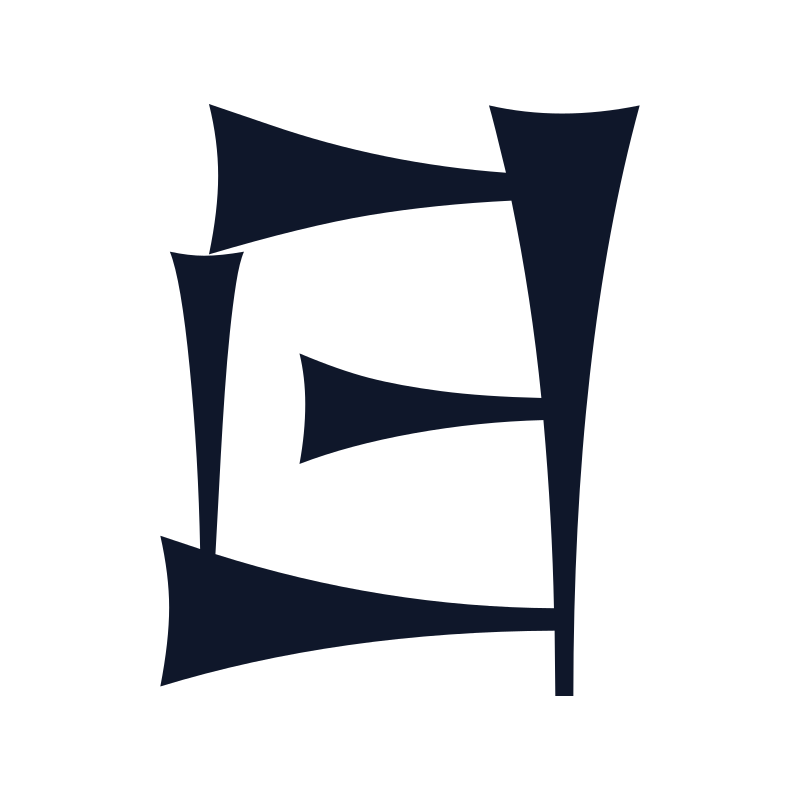 KU / TUKUL · U+121AA
𒆪
sacred mace, weapon
Merging two ancient signs in Neo-Assyrian script, KU carries vital military and domestic meanings. Preceded by the wood determinative GIŠ (GIŠ.TUKUL, Akkadian 'kakku'), it means 'weapon' or 'ceremonial stone mace'—such as Sharur, the speaking mace of the warrior god Ninurta, and in divination tablets the 'weapon-mark' found on a sacrificial sheep's liver. Read as TUŠ or DUR₂ (Akkadian 'ašābu'), it means 'to sit down', 'dwell', or 'occupy a royal throne', and phonetically it writes the syllable 'ku'.
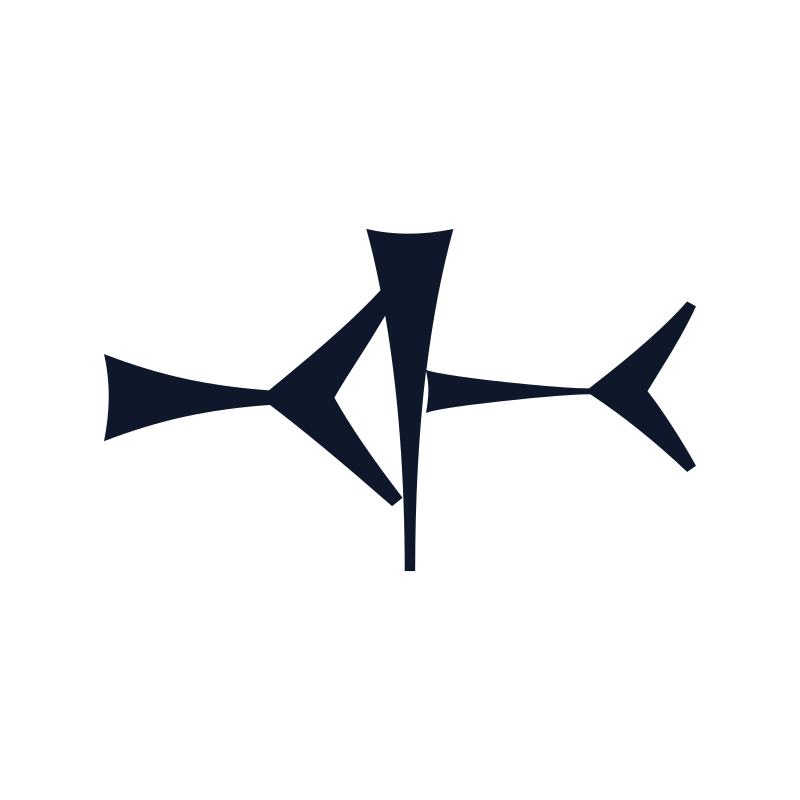 TI / TIL₃ · U+122FE
𒋾
life, to live
Derived from an early pictogram of a feathered arrow, the sign TI is famous in comparative mythology for its Sumerian double meaning: 'ti' meant both 'rib' (Akkadian 'ṣēlu') and 'life / to make live' (TIL₃ / TI.LA, Akkadian 'balāṭu'). In the Sumerian myth of Enki and Ninhursag, the goddess created to heal Enki's aching rib was named 'Nin-ti'—a royal pun meaning both 'Lady of the Rib' and 'Lady Who Makes Live' (anticipating the Biblical story of Eve). Phonetically it is the primary sign for the syllable 'ti'.
 ZA / NA₄ · U+1235D
𒍝
precious stone
Composed of four clean vertical wedges arranged in a two-by-two square representing cut stone blocks or polished beads, this sign was read as NA₄ ('stone' in Sumerian, 'abnu' in Akkadian) and ZA ('gemstone' or 'bead'). Scribes placed NA₄ as a silent determinative before all minerals, rocks, cylinder seals, stone weights, and jewels—most famously ZA.GÌN ('na₄-za-gìn', Akkadian 'uqnû'), the deep blue Afghan lapis lazuli prized above gold across Mesopotamia. Phonetically it writes the syllable 'za' (and 'ṣa').
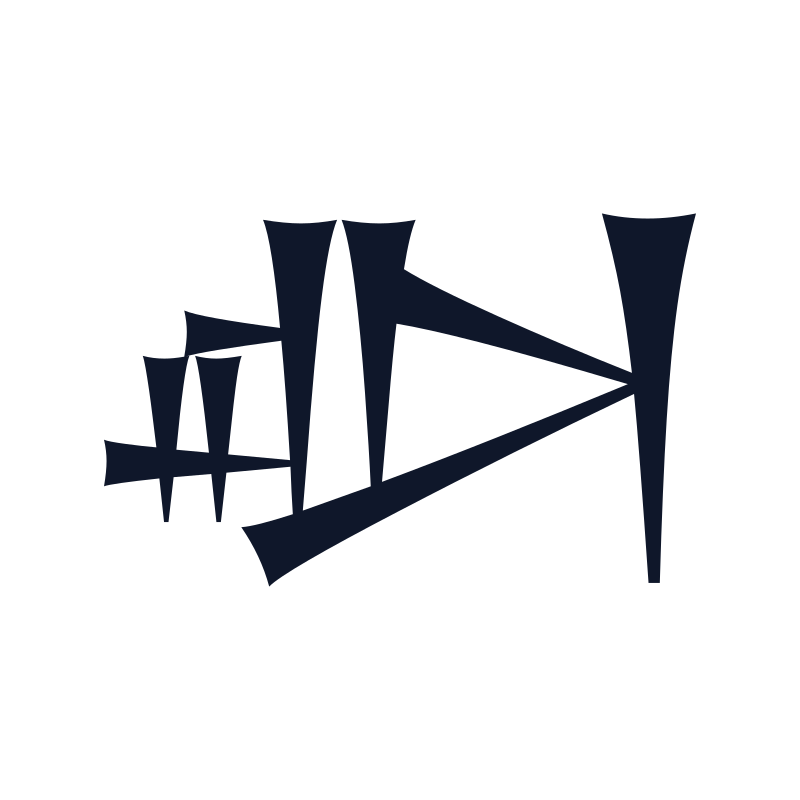 AL · U+12020
𒀠
the sumerian hoe, pickaxe
Originating from a clear pictogram of a broad-bladed wooden and bronze agricultural hoe (GIŠ.AL, Akkadian 'allu'), this tool was so revered in Mesopotamia that the chief god Enlil composed a cosmic creation poem—'The Song of the Hoe'—celebrating how the hoe separated heaven from earth, built temples, dug irrigation canals, and shaped the first humans from clay. In Sumerian grammar, 'al-' is also the stative verbal prefix, and phonetically the sign writes the syllable 'al'.
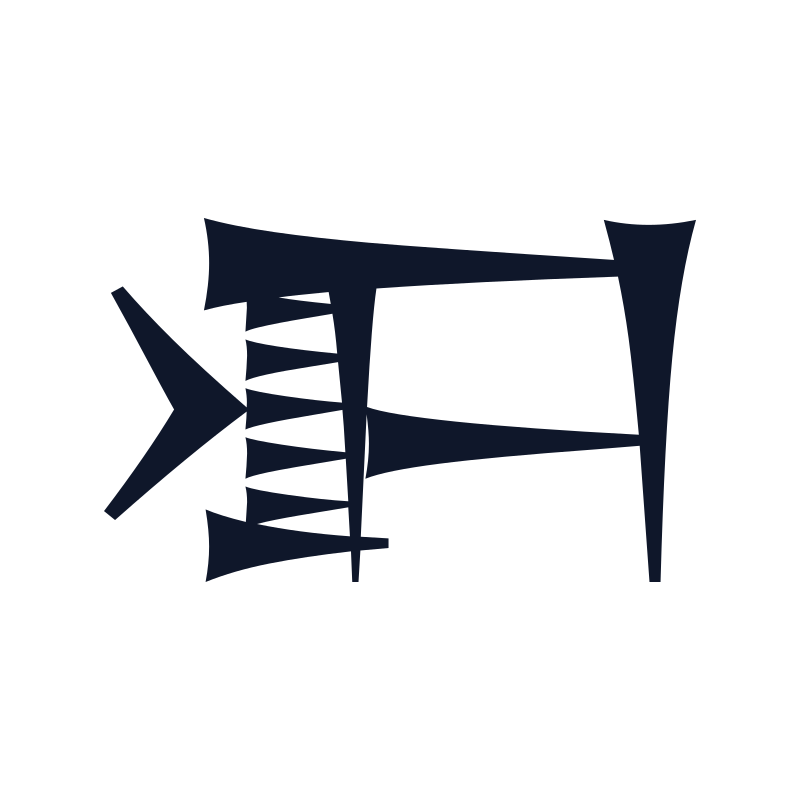 APIN / ENGAR · U+12033
𒀳
seeder-plow, master farmer
Depicting the greatest technological invention of Sumerian agriculture—the ox-drawn seeder-plow equipped with a vertical funnel that dropped barley seeds directly into the furrow as it plowed—this sign was read as APIN ('plow', Akkadian 'epinnu'), ENGAR ('master farmer', Akkadian 'ikkaru'), and URU₄ ('to plow and sow', Akkadian 'erēšu'). In Babylonian astronomy, MUL.APIN ('The Plow Constellation', Triangulum and Andromeda) was the first constellation of the northern sky.
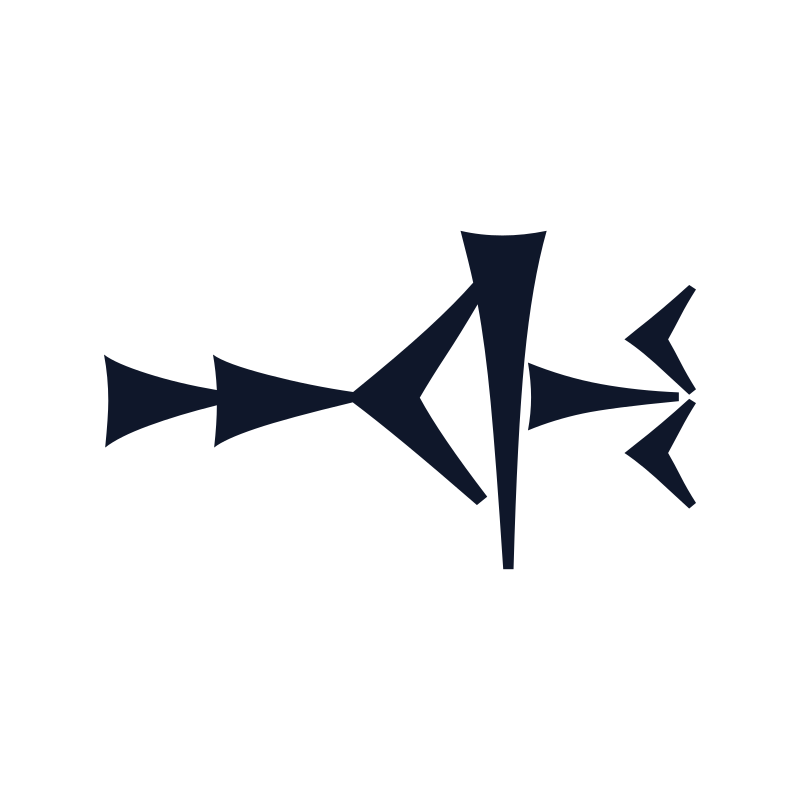 BAL · U+12044
𒁄
royal reign, dynasty
Derived from an archaic pictogram of a weighted drop-spindle used for spinning thread (GIŠ.BAL, Akkadian 'pilakku'—an emblem of the goddess Inanna/Ishtar, who spun the threads of human destiny), the verb BAL means 'to revolve', 'turn over', or 'cross a river'. In the Sumerian King List and Babylonian chronicles, BAL (Akkadian 'palû') designated the 'turn of office' or 'reign/dynasty' granted to a city before kingship rotated to the next capital. It also meant 'to pour a liquid libation' (Akkadian 'naqû') and writes the syllable 'bal' / 'pal'.
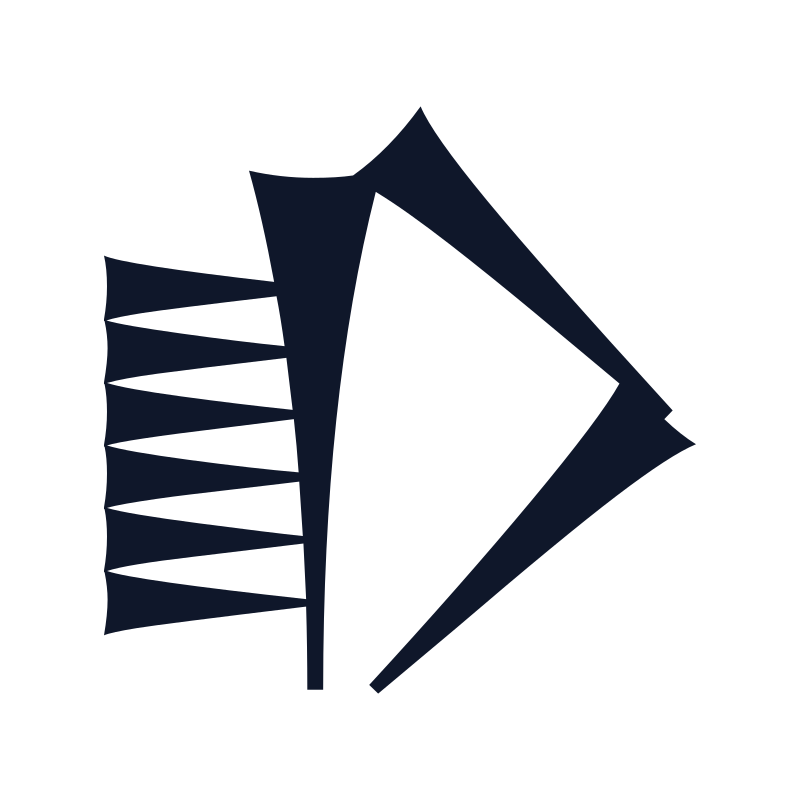 BUR · U+12053
𒁓
ceremonial stone bowl, land area unit
Originating from a pictogram of a carved stone offering bowl (Akkadian 'pūru'), kings of Early Dynastic Sumer and Akkad frequently dedicated inscribed alabaster and diorite 'bur' vessels in temples for pouring libations. In Babylonian land surveying, 1 BUR₃ (equal to 18 IKU, ~6.48 hectares or 16 acres) was the standard large unit of agricultural field area—calculated as the land a single seeder-plow team could cultivate in one season. Phonetically it writes the syllables 'bur' and 'pur'.
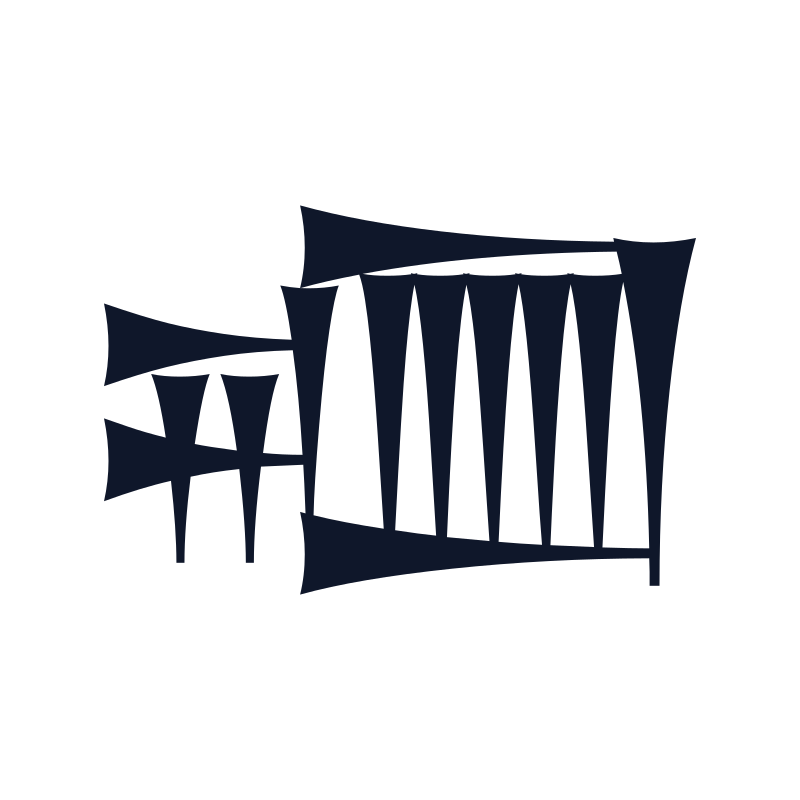 DUB · U+1207E
𒁾
inscribed clay tablet, document
Originating from a rectangular pictogram ruled into columns representing an inscribed clay tablet held in a scribe's hand, DUB (Akkadian 'ṭuppu') is the emblem of literacy itself. Combined with SAR ('to write'), it forms DUB.SAR (Akkadian 'ṭupšarru')—the honored Mesopotamian scribe educated in the 'edubba' ('Tablet House' school). As a verb, DUB (Akkadian 'šapāku') also means 'to heap up grain' or 'pour out metal', and phonetically writes 'dub', 'tub', and 'ṭup'.
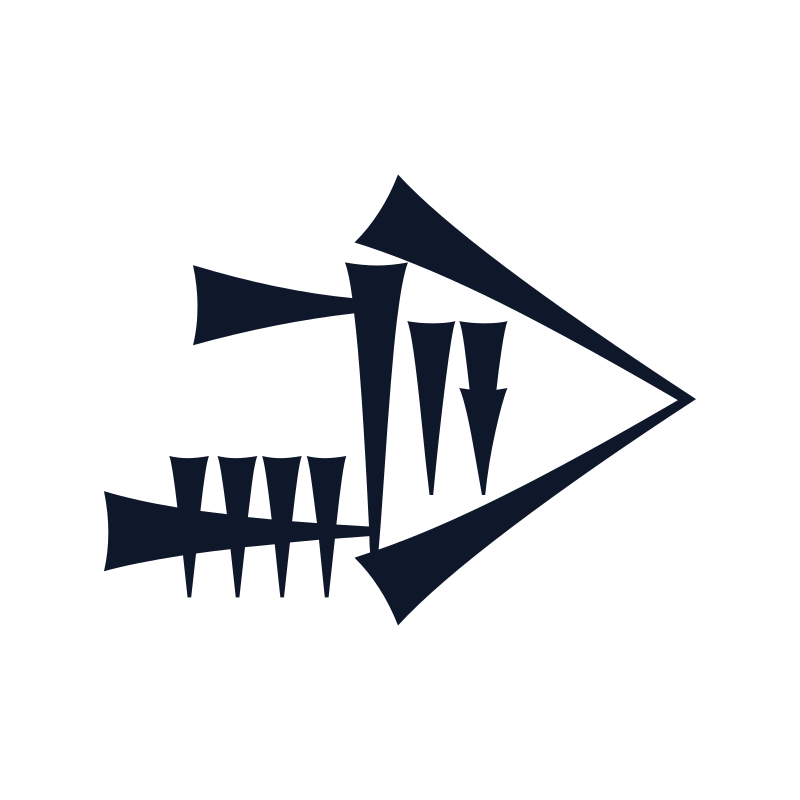 DUG · U+12081
𒂁
ceramic vessel, clay jar
Derived from a profile drawing of a round-bellied earthenware jar with a narrow neck and rim, DUG (Akkadian 'karpatu') means 'clay pot' or 'ceramic vessel'. Scribes placed it as a silent determinative before the names of all pottery containers, storage jars, goblets, and brewing vats, and in economic tablets 1 DUG also functioned as a standard liquid capacity measure (~30 liters of beer, wine, or oil). Phonetically it writes 'dug' and 'lud'.
 GAD / GADA · U+120F0
𒃰
pure linen cloth, priestly robe
Derived from an archaic pictogram of a woven piece of cloth with fringes or a vertical loom, GADA (Akkadian 'kitû'—the ancient Near Eastern word that entered Greek as 'chitōn' and English as 'cotton') designates fine white linen woven from flax. Because linen was cooler and considered ritually purer than sheep's wool, 'gada' garments were worn by Sumerian and Babylonian temple priests ('gudu₄-abzu') and draped over divine statues. Phonetically it writes 'gad', 'gat', and 'kat'.
 GAR / NINDA · U+120FB
𒃻
daily bread, property ('thing')
Derived from the earliest Uruk bevel-rimmed clay ration bowl ('ninda') used to distribute daily bread and grain to workers, this sign is a cornerstone of cuneiform writing. Read as NINDA (Akkadian 'akalu'), it means 'bread' or 'food'; read as NIG₂ (or NÍG, Akkadian 'mimma' / 'būšu'), it means 'thing', 'possession', or 'treasure' and forms abstract nouns like NIG₂.SI.SA₂ ('justice') and NIG₂.BA ('gift'). Read as GAR (Akkadian 'šakānu'), it means 'to place/establish', and phonetically writes 'gar', 'qar', and 'ša₂'.
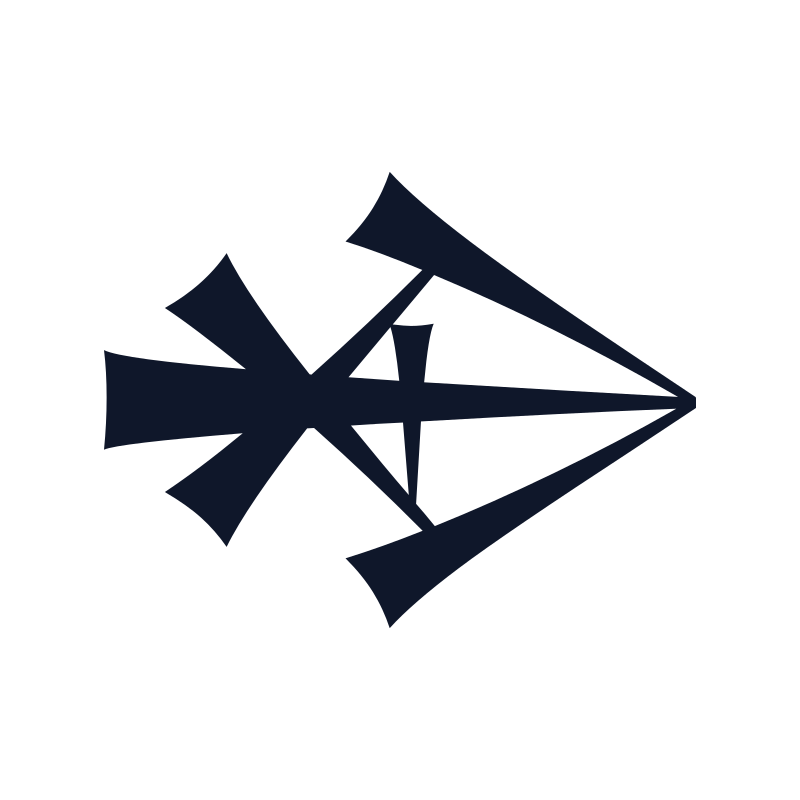 GIR₂ · U+12108
𒄈
bronze dagger, scalpel
Originating from a sharp-pointed pictogram of a double-edged bronze dagger blade with a hilt, GIR₂ (Akkadian 'paṭru') means 'dagger', 'sword', or 'butcher's knife', and in Hammurabi's Law Code designates the bronze surgical lancet ('gir₂-ni-gag', 'karzillu') used by physicians for eye operations. By visual metaphor of a flashing sting or blade, GIR₂ also means a flash of lightning (Akkadian 'birqu') and in 'gir₂-tab' ('stinger-pincher', Akkadian 'zuqaqīpu') designates the scorpion and the zodiac sign Scorpio.
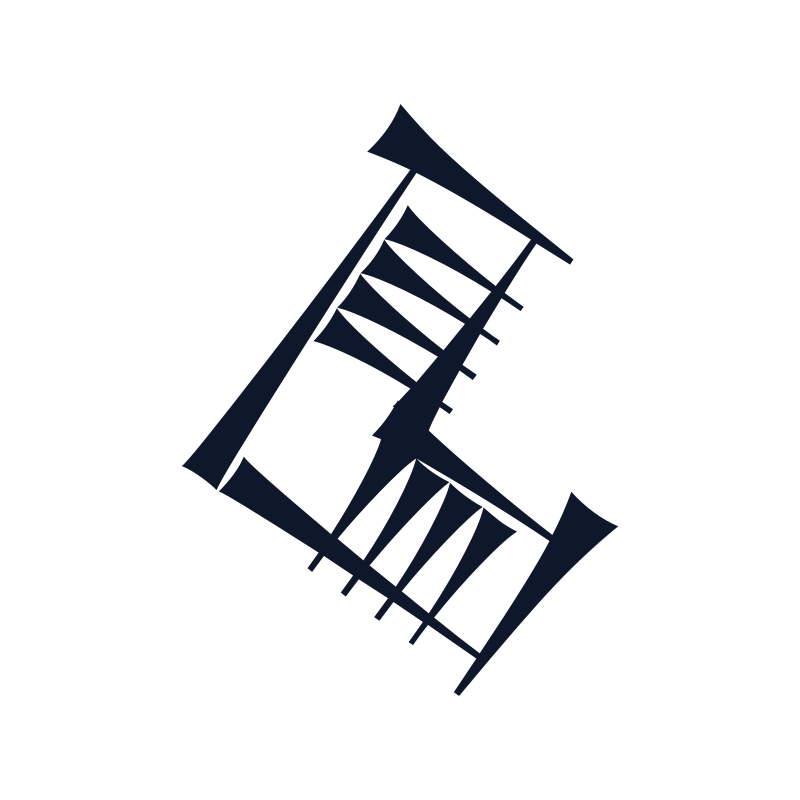 KU₃ (KUG) · U+121AC
𒆬
pure, sacred
Meaning 'pure, radiant, holy, and ritually clean' (Sumerian kug / ku₃, Akkadian ellu), this sign also represents precious metal. Combined with BABBAR ('white/shining'), KU₃.BABBAR (Akkadian kaspu) is the universal logogram for silver and money throughout the Ancient Near East; combined with GI ('yellow/reddish'), KU₃.GI (Akkadian hurāṣu) is the logogram for gold.
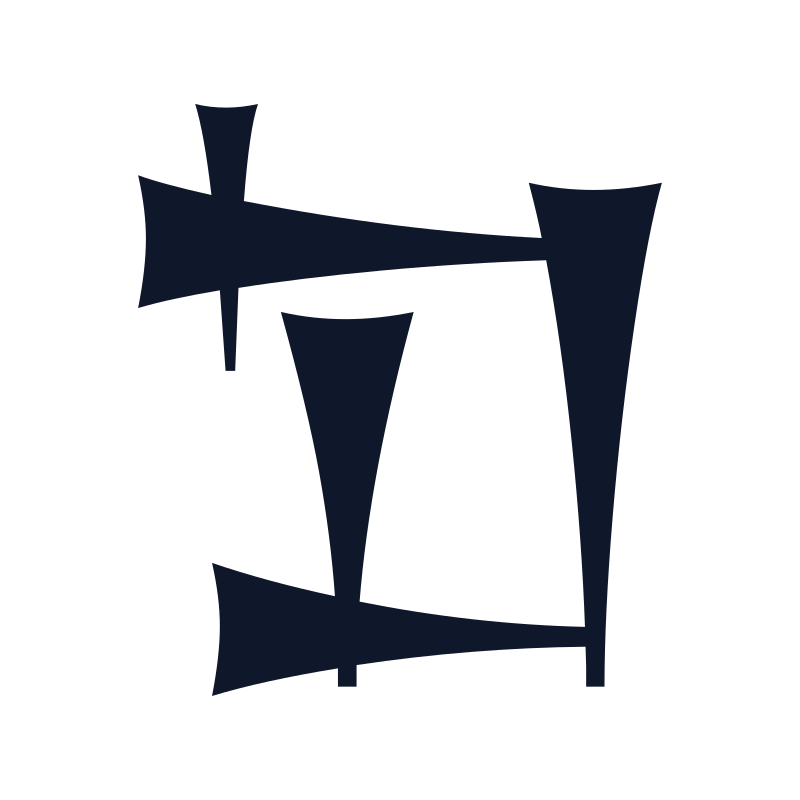 MA₂ (MÁ) · U+12223
𒈣
ship, river boat
Originally a curved profile pictograph of a high-prowed Mesopotamian reed or timber vessel, MA₂ (Akkadian eleppu) is the universal logogram for a boat, cargo ship, or ceremonial divine barge. River transport along the Euphrates, Tigris, and irrigation canals was the lifeblood of Sumerian commerce and religious festivals (such as the crescent-moon barge MA₂.GUR₈ of the Moon god Nanna).
 MAR · U+12225
𒈥
spade, wagon
Originally a pictograph of a triangular-bladed Mesopotamian spade or shovel (GIŠ.MAR, Akkadian marru—the sacred emblem of the god Marduk) or a four-wheeled wagon, MAR also writes the famous compound MAR.TU (Akkadian Amurru), designating the 'West', the west wind, and the Amorite peoples of Syria and the Levant. Phonetically it is the standard CVC sign for /mar/.
 PAD / ŠUK · U+1227B
𒉻
food ration, bread offering
Formed as a reduced portion of the bread/food sign NINDA, PAD (Akkadian kasāpu, kusāpu) means 'to break bread into pieces' or 'a bite of bread'. Read as ŠUK or ŠUKU (Akkadian kurummatu), it is the universal administrative logogram for daily or monthly food rations and subsistence land allotments issued to temple personnel, soldiers, and royal messengers.
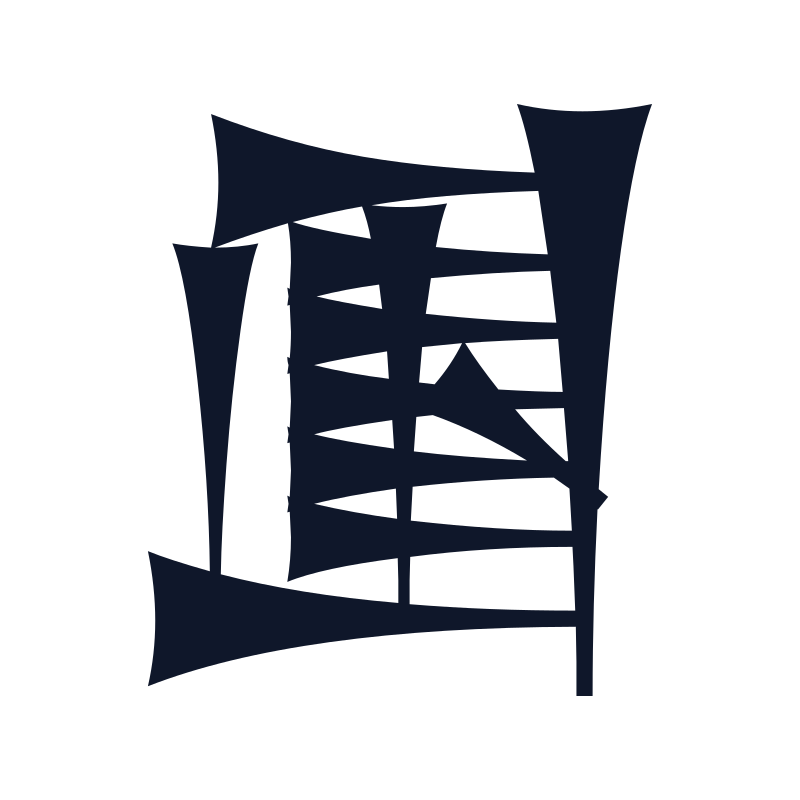 SIK₂ (SIG₂) · U+122E0
𒋠
sheep's wool, fleece
Originally a cross-hatched pictograph of combed wool fibers, SIK₂ / SIKI (Akkadian šīpātu, šārtu) denotes sheep's wool, fleece, or body hair, and serves as the determinative for varieties of wool and yarn. Wool production and weaving formed Mesopotamia's largest export industry, employing thousands of women in temple textile workshops.
 TUG₂ (TÚG) · U+12306
𒌆
woven garment, robe
Originally a square pictograph of a folded fringed woollen cloak, TUG₂ (Akkadian ṣubātu) is the universal logogram for a woven garment, robe, or textile cloth. Placed silently before nouns, it serves across thousands of economic tablets from Ur, Lagash, and Assur as the determinative classifying every type of tunic, royal vestment, and linen or woollen fabric.
 ZI₃ (ZÌ / ZID₂) · U+12365
𒍥
ground flour, meal
Representing ground grain, ZI₃ / ZID₂ (Akkadian qēmu) is the universal logogram for barley or emmer wheat flour—the daily staple ground on basalt saddle-querns in every Mesopotamian household and millhouse (E₂.HAR.RA). In religious rites, fine white flour (ZI₃.DUB.DUB.BU) was poured in small heaps before the gods to invoke peace and protection.
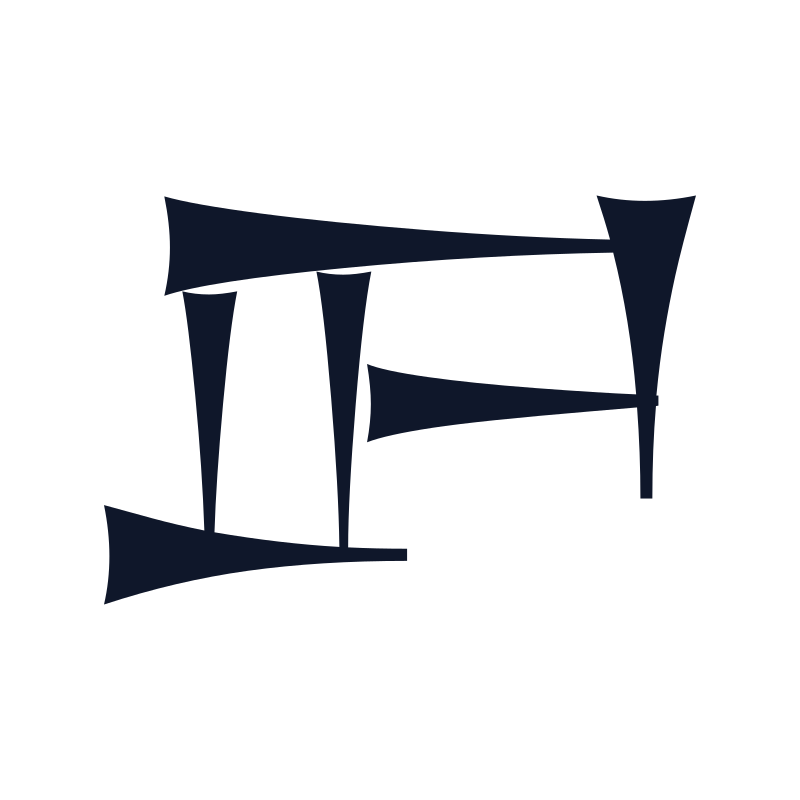 DUN₃ (TUN₃ / GIN₂) · U+12085
𒂅
silver shekel weight (~8.3 g), battle-axe
Originally a pictograph of a bronze socketed axe-head (Sumerian tun₃ / aga₃, Akkadian pāšu), this sign read as GIN₂ (Akkadian šiqlu—the direct ancestor of the Biblical Hebrew shekel) became the universal monetary and weight unit of the Ancient Near East: 1 shekel = 1/60th of a mina (approx. 8.33 grams of silver) and 1/60th of a sar of land.
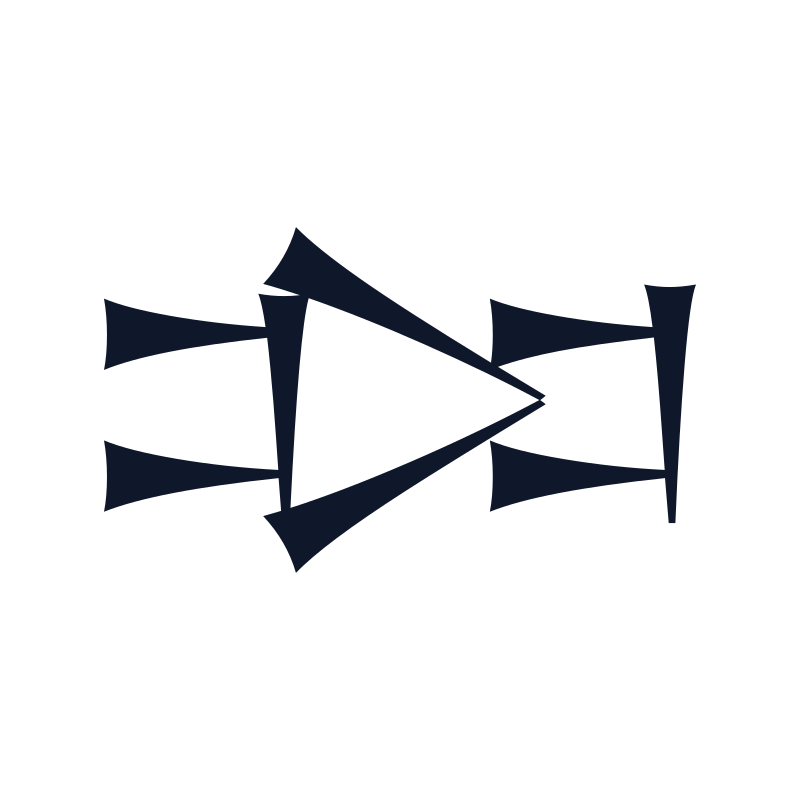 GISAL · U+12110
𒄐
boat oar, steering paddle
With the wood determinative (GIŠ.GISAL, loaned into Akkadian as gišallu), this sign designates the broad-bladed wooden oar or steering paddle used by Mesopotamian boatmen to propel and guide cargo ships and sacred barges along the Euphrates and Tigris.
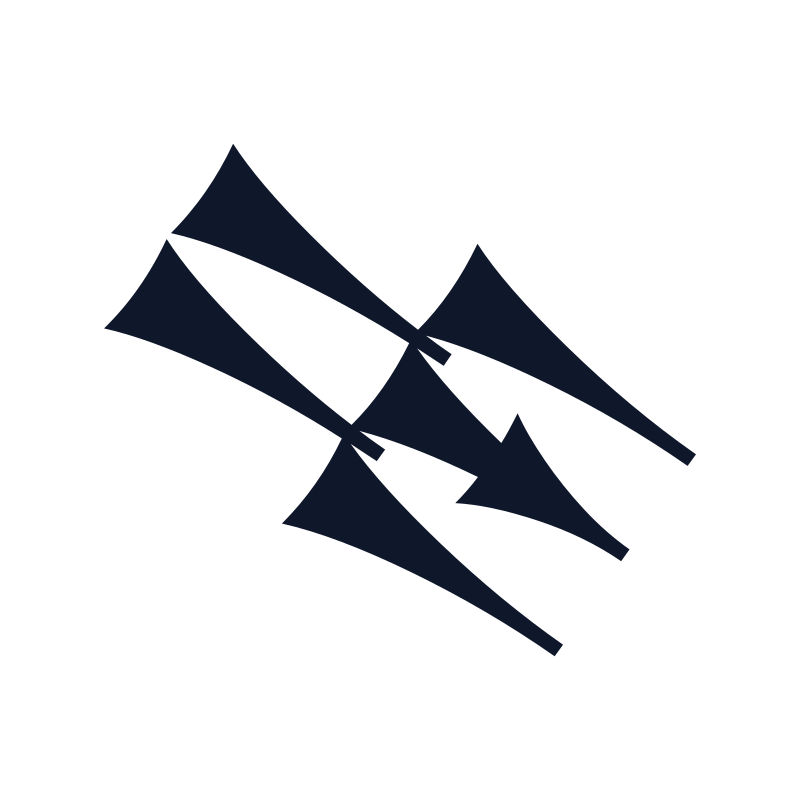 KAM₂ · U+1219A
𒆚
to desire, request
Equated in Mesopotamian lexical traditions with Akkadian erēšu ('to desire, request, or ask of a deity/king') and kamû, KAM₂ also functions as a phonetic sign for the CVC syllable /kam₂/ and /qam₂/.
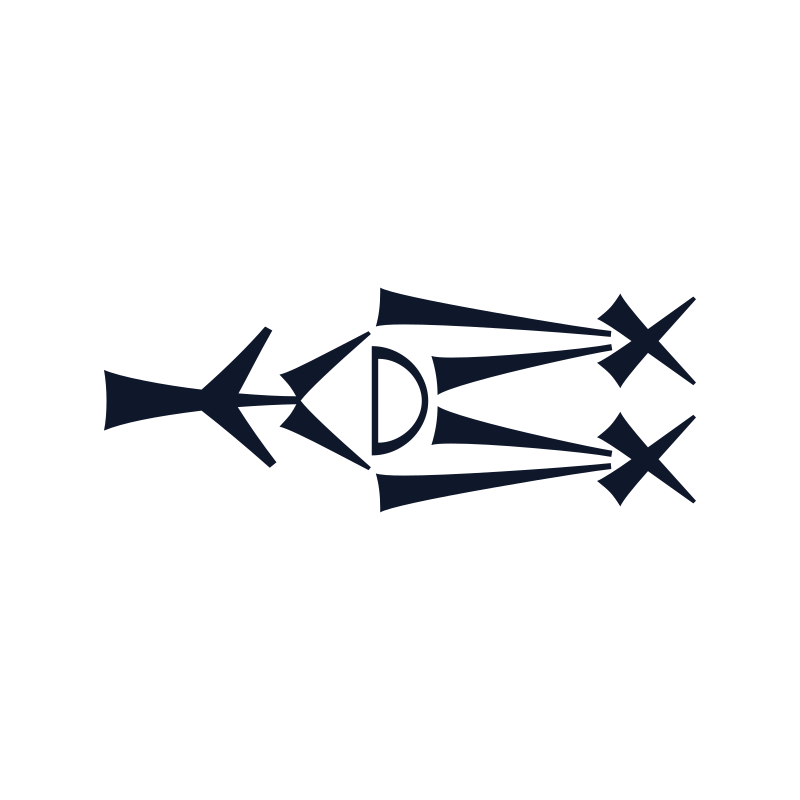 KAM₄ · U+1219B
𒆛
vessel variant
A paleographic variant in the KAM/UDU.GAG vessel series, KAM₄ is attested in Mesopotamian lexical lists and used in cuneiform orthography for the CVC syllable /kam₄/ and /qam₄/.
 KIN (KIG₂) · U+121A5
𒆥
work, craftwork
A central sign of Mesopotamian industry and diplomacy: read as KIN / KIG₂ (Akkadian šipru, šē'u), it means 'work, construction project, skilled craftwork, or task', as well as 'message, mission' (LU₂.KIN.GI₄.A = mār šipri, 'royal ambassador/messenger'), and 'to seek or divine an omen'. Read as GUR₁₀ (Akkadian nigallu), it denotes a harvesting sickle (naming the 6th Babylonian month ITI.KIN.dINANNA = Ulūlu). Phonetically it reads /kin/ and /qi₂/.
 MUG · U+1222E
𒈮
combed tow, coarse wool fiber
In Mesopotamian textile accounting, MUG (loaned into Akkadian as mukku) designates low-grade combed wool waste, tow, or flax oakum separated during carding, while anatomically it can refer to the female pudendum/womb (Akkadian biṣṣūru). Phonetically it is the primary CVC sign for /mug/, /muk/, and /muq/.
 PAN (BAN) · U+1227C
𒉼
composite battle bow, bow-star of Ishtar
Originally a curved pictograph of a strung composite bow, PAN / BAN (with the wood determinative GIŠ.PAN, Akkadian qaštu) is the universal logogram for the warrior's bow (LU₂.GIŠ.PAN = archer, and E₂.GIŠ.PAN = bīt qašti, a military bow-fief estate in Neo-Babylonian law). In astronomy and the Epic of Creation (Enūma Eliš), MUL.PAN ('The Bow Star') is the celestial bow of Anu and Ishtar set in the southern sky (Canis Major/Puppis).
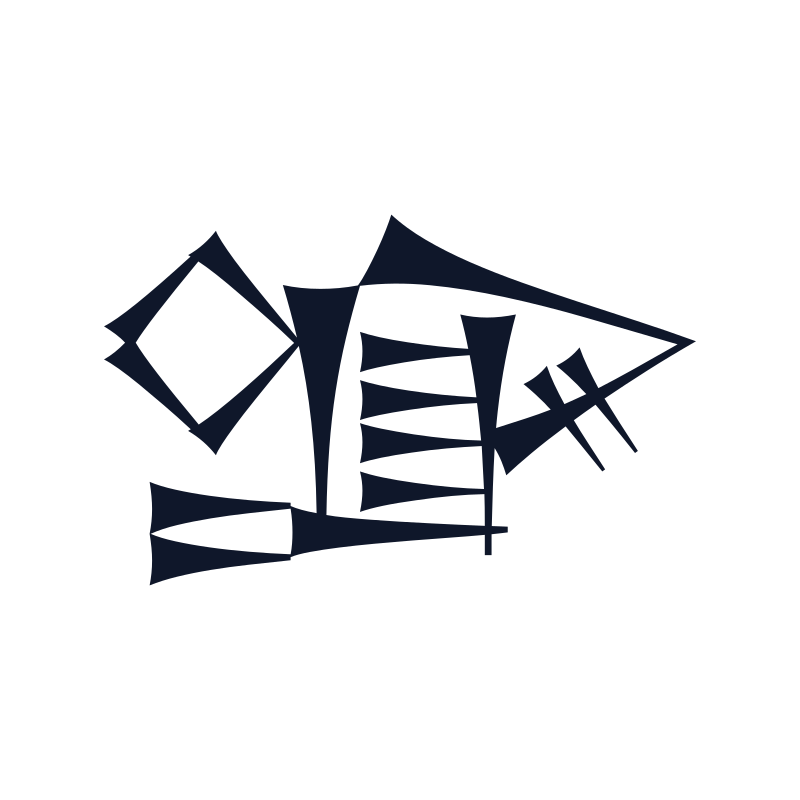 HUŠ (GIR₃ gunû) · U+1237D
𒍽
fierce, furious
Formed as the gunû-intensified variant of the lion/foot sign GIR₃, HUŠ combines two vivid meanings: 'fierce, furious, terrible, awe-inspiring' (Akkadian ezzu) and 'fiery red, reddish-gleaming' (Akkadian ruššû, particularly describing pure reddish gold: KU₃.GI HUŠ.A = hurāṣu ruššû). It is famous as the second element in MUŠ.HUŠ (mušhuššu, 'Furious Red Serpent-Dragon' of Babylon).
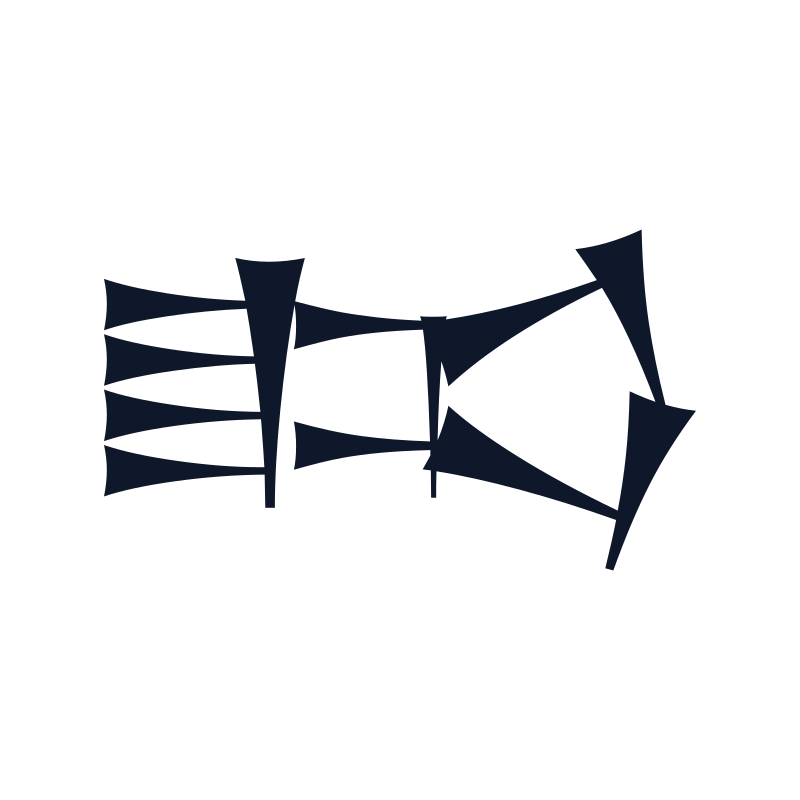 UMUM · U+12323
𒌣
wisdom, craft
Cuneiform sign UMUM or UMUN₂ (U+12323), a lexical logogram denoting technical skill, scholarly wisdom, and workshop mastery (Sumerian umun₂; Akkadian mummu 'creative wisdom, workshop'). In Babylonian cosmology Mummu personified the primeval craft and divine intellect associated with Enki/Ea.
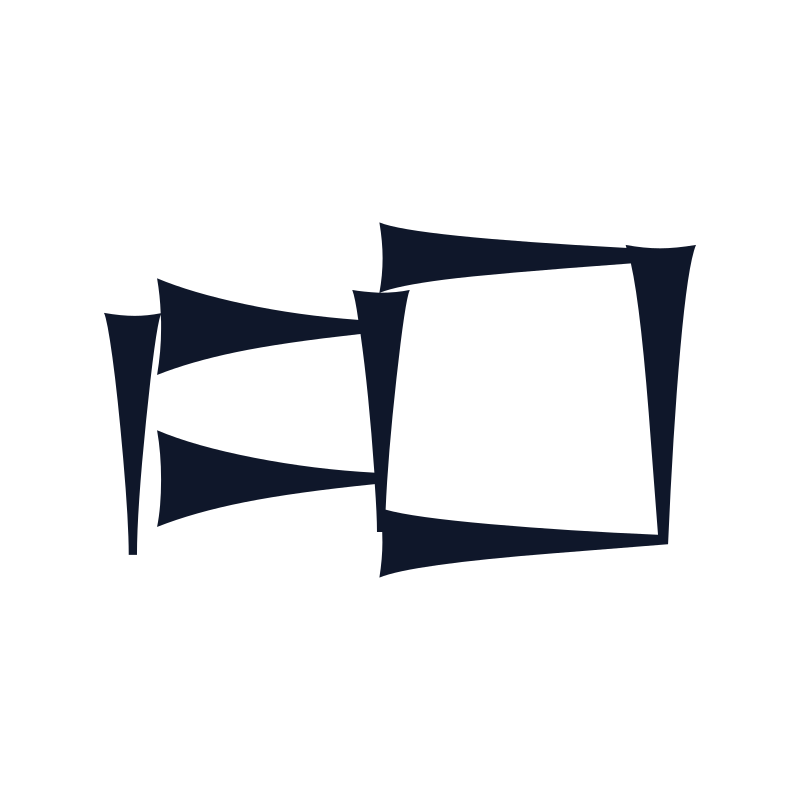 URUDA · U+1234F
𒍏
copper, metal
Cuneiform sign URUDA or URUDU (Borger MZL 230, U+1234F), the primary logogram for 'copper' (Sumerian uruda/urudu; Akkadian erû), originally depicting a copper ingot or smelted vessel. It also functions as the semantic classifier (determinative) placed before names of copper and metal implements.
 ZUBUR · U+1236D
𒍭
wagon, servant
Cuneiform sign ZUBUR (U+1236D), a lexical variant connected with ŠUBUR, denoting a heavy wheeled wagon or agricultural implement as well as a household servant or northern Subarian designation in Mesopotamian lexical lists.
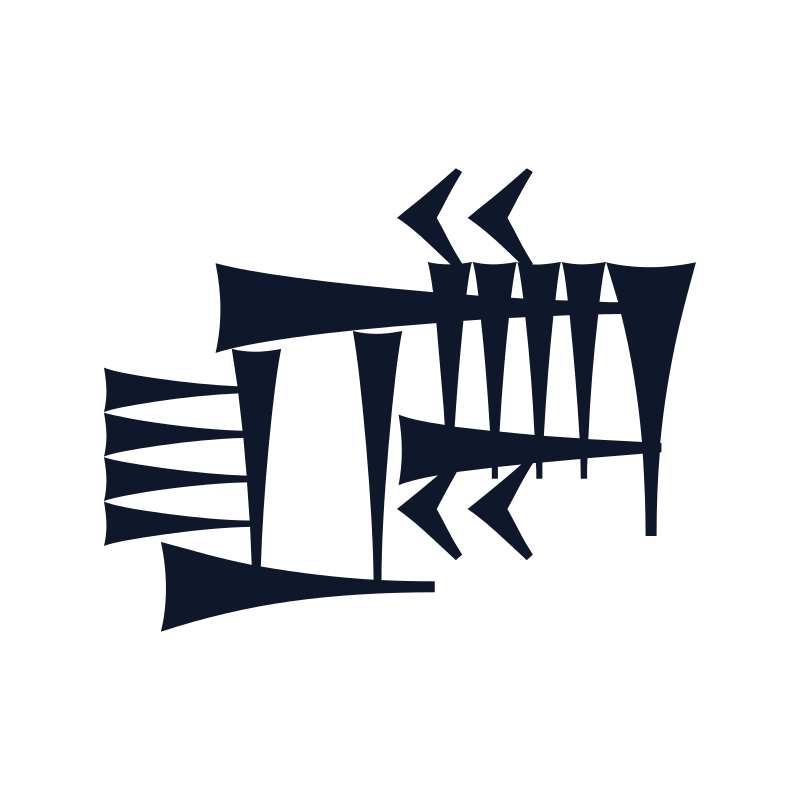 DUN4 · U+12088
𒂈
to weave, dig
Cuneiform sign DUN₄ (Borger MZL 837, U+12088), a technical Sumerian verb meaning 'to lay the warp on a loom' in textile production or 'to dig ditches and furrows' (Sumerian dun, dun₄; Akkadian šatû 'to weave', ḫarāru 'to dig').
 SUD2 · U+122E5
𒋥
to grind, pray
Cuneiform sign SUD₂ or ŠUD₂ (Borger MZL 585, U+122E5), denoting 'to grind, crush, pound' (Sumerian sud₂; Akkadian ḫašālu, sâku) when processing grain or minerals, and read šud₂ ('prayer, blessing'; Akkadian ikribu) in religious formulas.
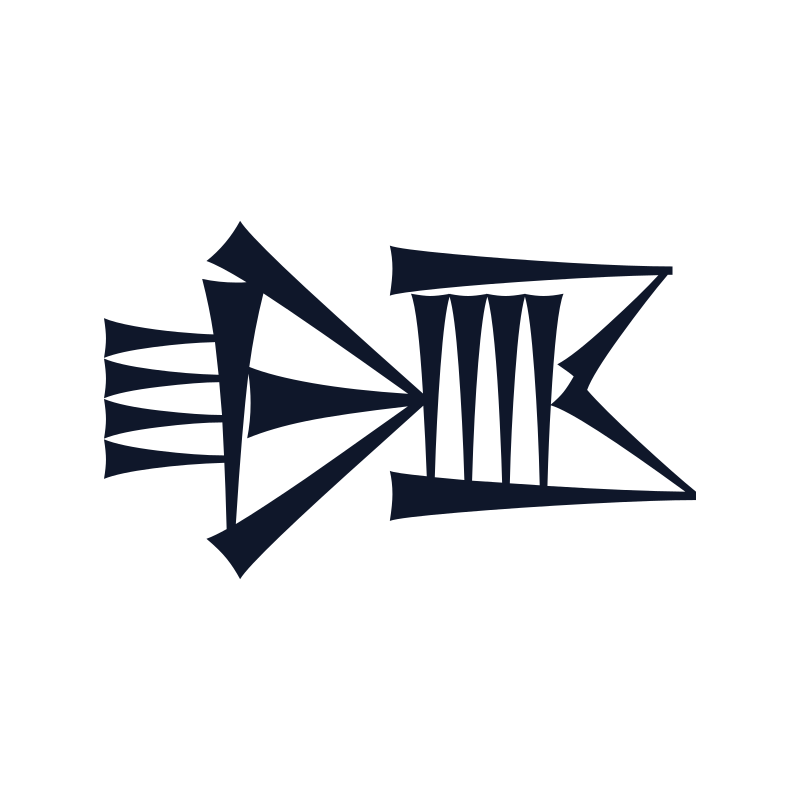 KWU318 · U+121B6
𒆶
carved piece, token
Cuneiform sign KWU 318 (U+121B6), cataloged in the Babylonian sign list of Koldewey, Weissbach, and Ungnad, occurring in administrative and lexical tablets as a graphic variant related to TAK₄ / KID₂ ('to leave behind, pinch off clay').
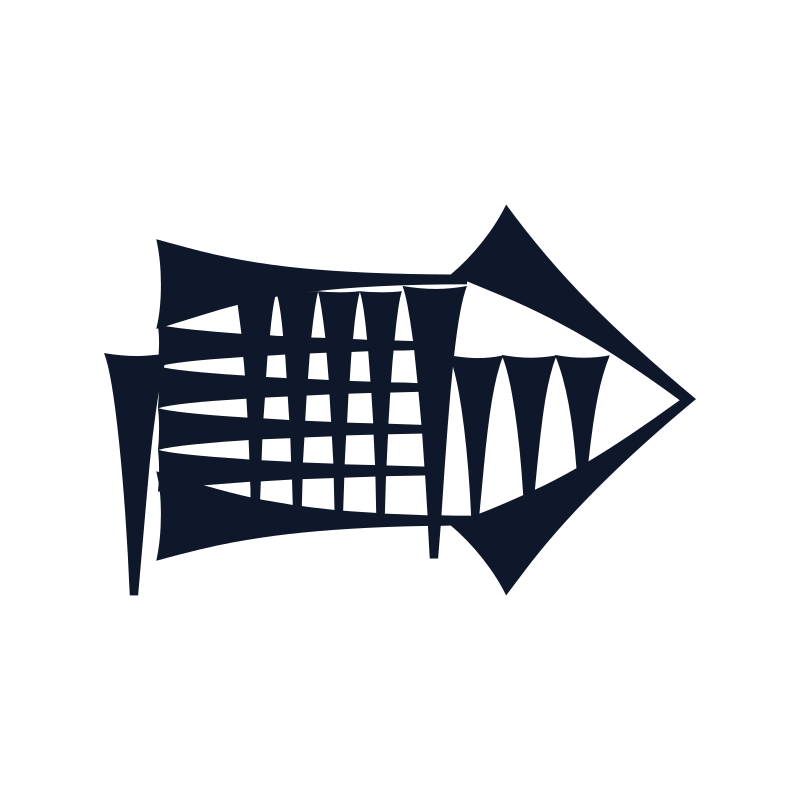 GAR3 · U+120B6
𒂶
knob, cream
Cuneiform sign GA-gunû, read GAR₃ or QAR (Borger MZL 492, U+120B6). Derived from GA ('milk'), it denotes 'cream, rich dairy fat' as well as a 'rounded knob, metal boss, or weapon pommel', and serves in Akkadian as a common syllabic sign for gar₃ and qar.
 ZADIM · U+1222F
𒈯
lapidary, gem-cutter
Cuneiform sign MUG-gunû, read ZADIM (Borger MZL 20, U+1222F), the Sumerian logogram for a 'lapidary, stone-cutter, cylinder-seal engraver, or bow-maker' (Sumerian zadim; Akkadian zadimmu, sasinnu), a master craftsman who worked with lapis lazuli, carnelian, and stone.
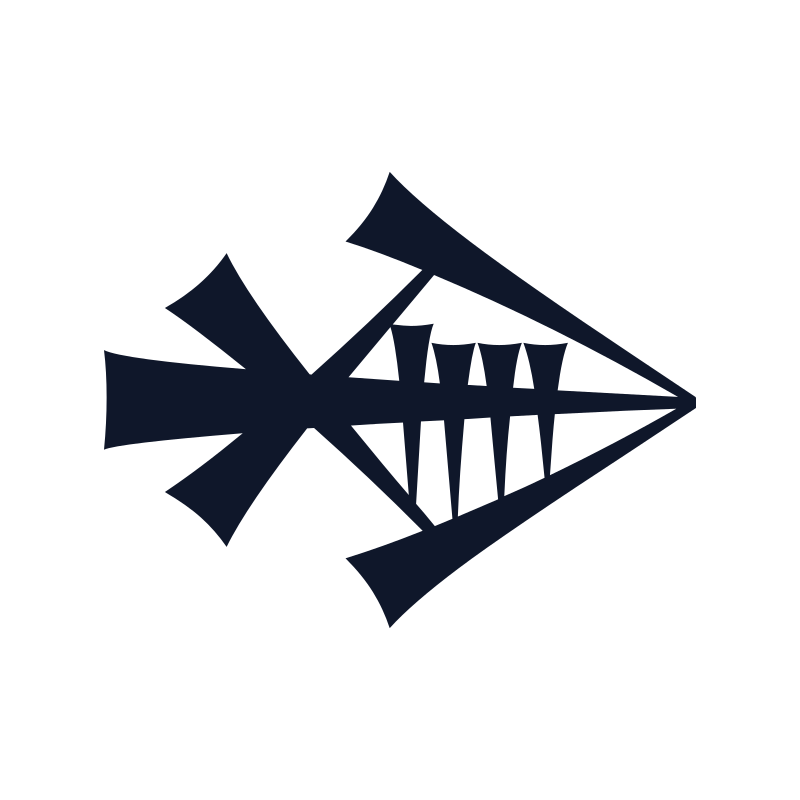 UL4 · U+12109
𒄉
sword, to hasten
Cuneiform sign GIR₂-gunû, read UL₄ (Borger MZL 9, U+12109), formed by adding gunû strokes to the dagger sign GIR₂. It denotes a heavy sword or butcher's blade (Akkadian namṣaru) as well as the verb ul₄ ('to hasten, hurry, terrify'; Akkadian arāḫu, pirittu).
 MEZE · U+1201B
𒀛
ritual drum, tambourine
Cuneiform sign AB₂×TAK₄, read MEZE (Borger MZL 674, U+1201B), denoting a cowhide-covered ritual frame drum or bronze percussion instrument (Sumerian meze; Akkadian manzû, mazû) played by gala/kalû priests during temple ceremonies.
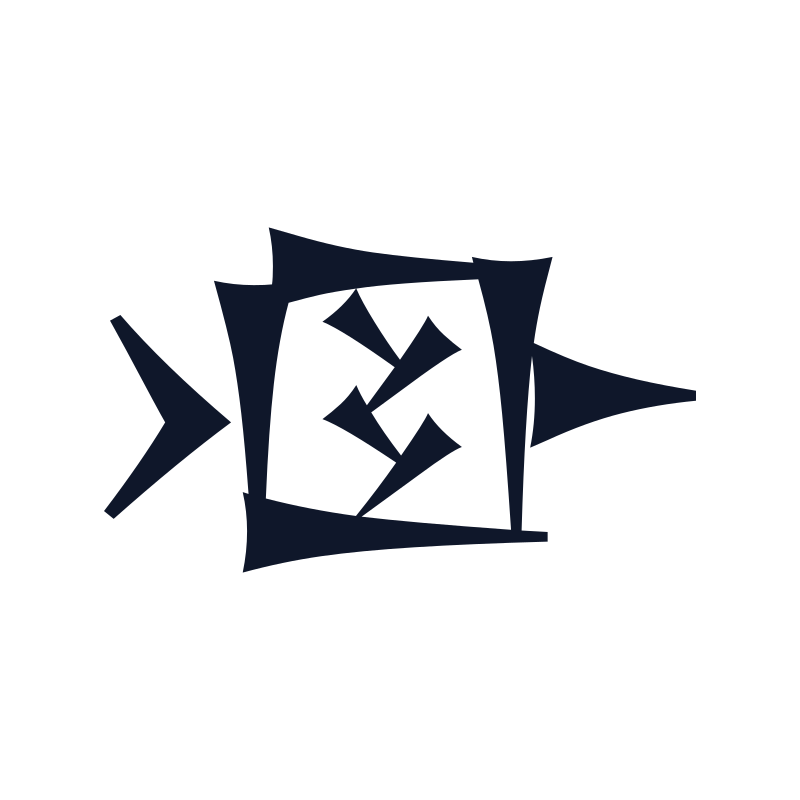 ME3 · U+1201E
𒀞
battle, combat, war
Cuneiform sign AK×ERIN₂, read ME₃ (Borger MZL 168, U+1201E), a compound ideogram combining AK ('to do, make') + ERIN₂ ('troops, soldiers'). It is the primary Sumerian logogram for 'battle, combat, pitched warfare' (Sumerian me₃; Akkadian tāḫāzu).
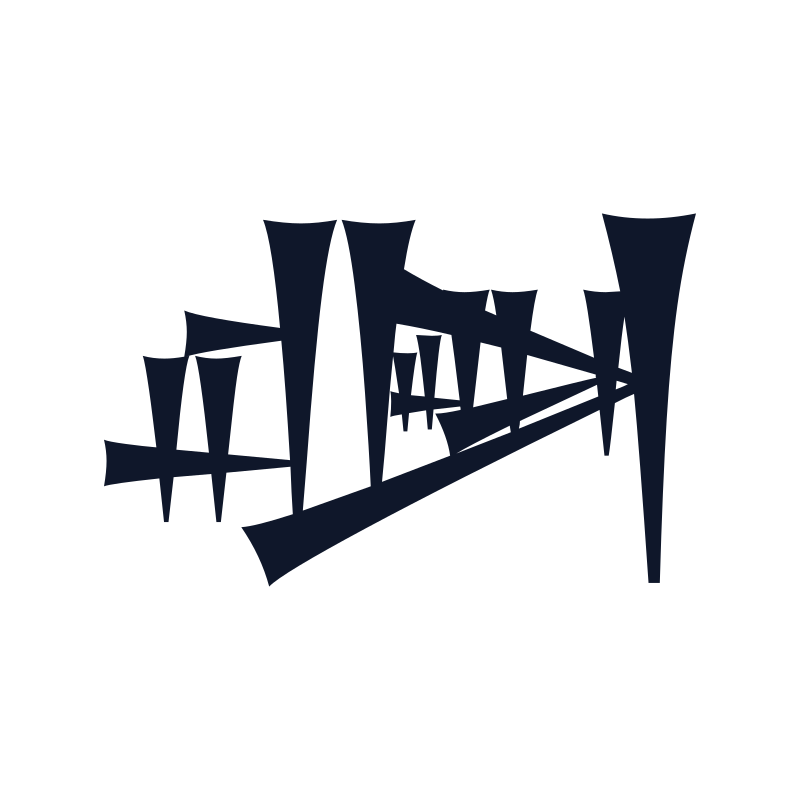 AL_AL · U+12021
𒀡
double hoe, mattock
Cuneiform sign AL×AL (Borger MZL 480, U+12021), inscribing the hoe sign AL inside another AL, preserved in Babylonian lexical lists of agricultural and earthworking tools.
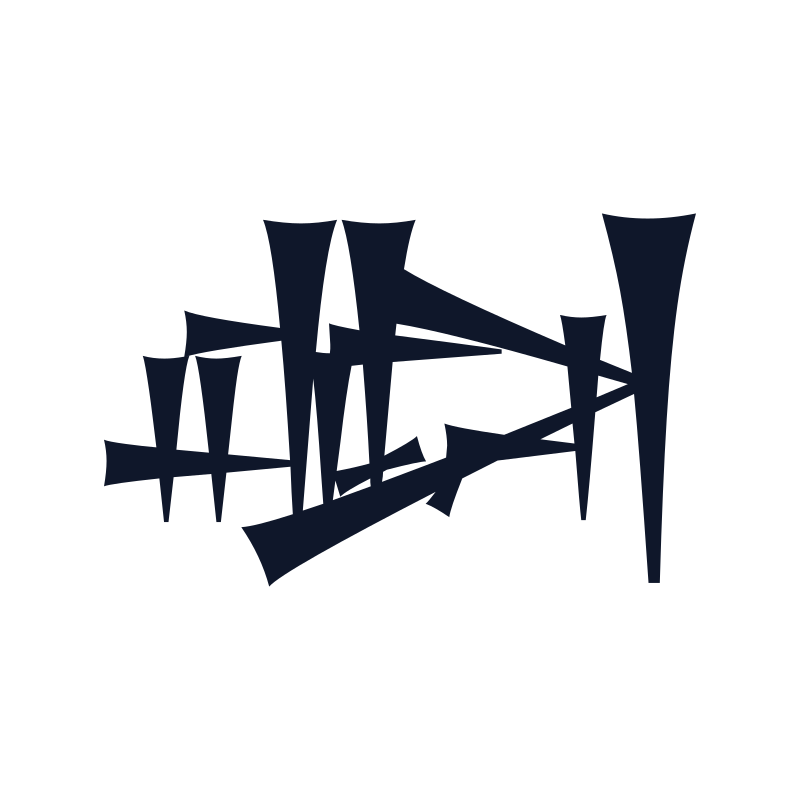 AL_DIM2 · U+12022
𒀢
fashioned tool, hoe
Cuneiform sign AL×DIM₂ (Borger MZL 477, U+12022), combining the hoe sign AL with DIM₂ ('to fashion, build') in Mesopotamian lexical series.
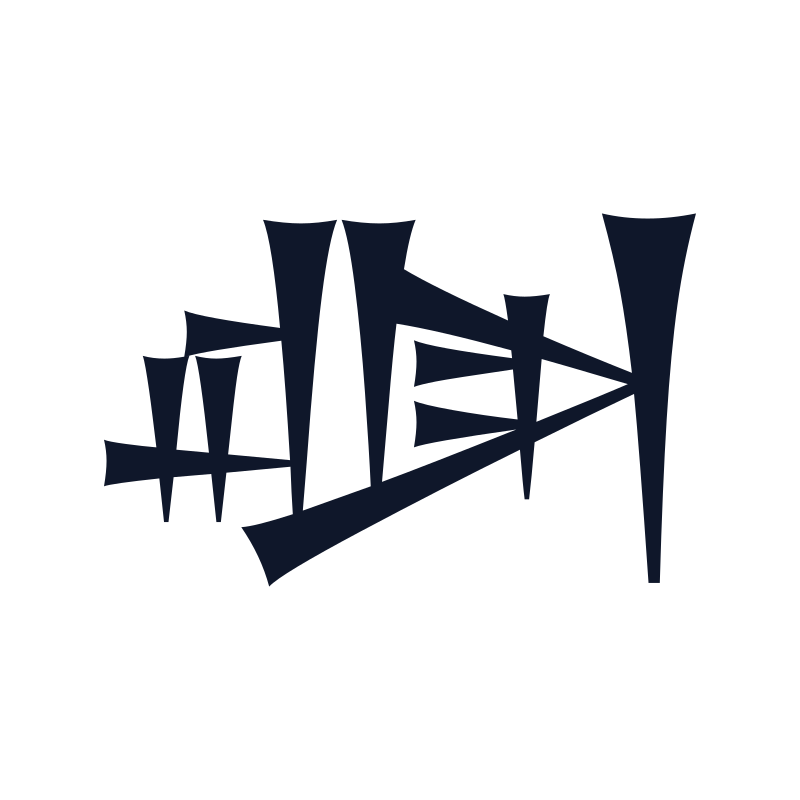 AL_GISH · U+12023
𒀣
wooden hoe, spade
Cuneiform sign AL×GIŠ (Borger MZL 476, U+12023), inscribing GIŠ ('wood') inside the hoe sign AL to denote a wooden mattock or agricultural tool.
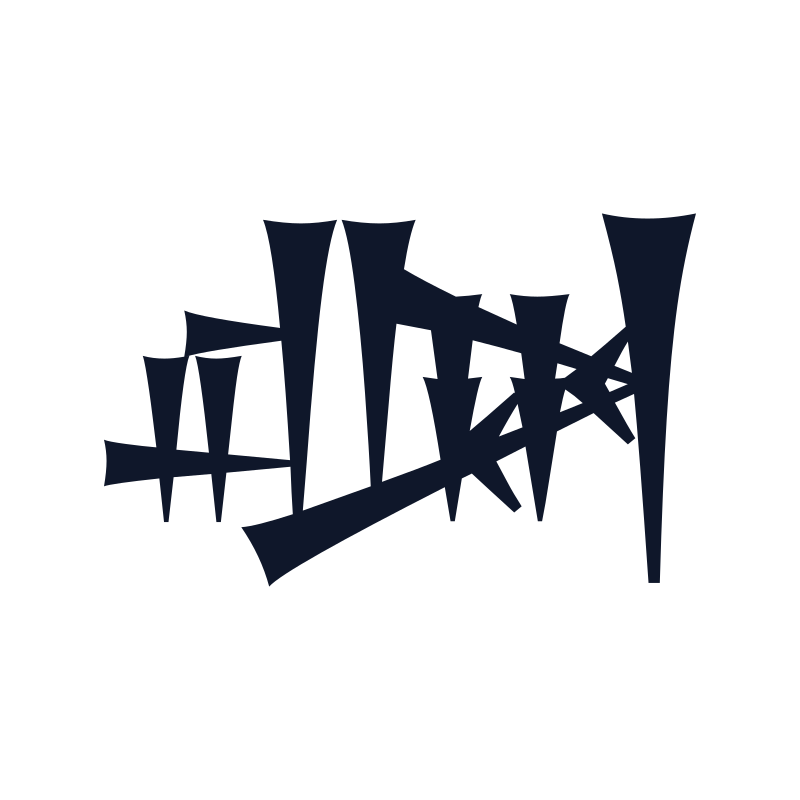 AL_HA · U+12024
𒀤
fish trap, basket
Cuneiform sign AL×ḪA (Borger MZL 482, U+12024), combining AL with the fish sign ḪA in Mesopotamian lexical lists to denote a reed fish-trap or weir basket.
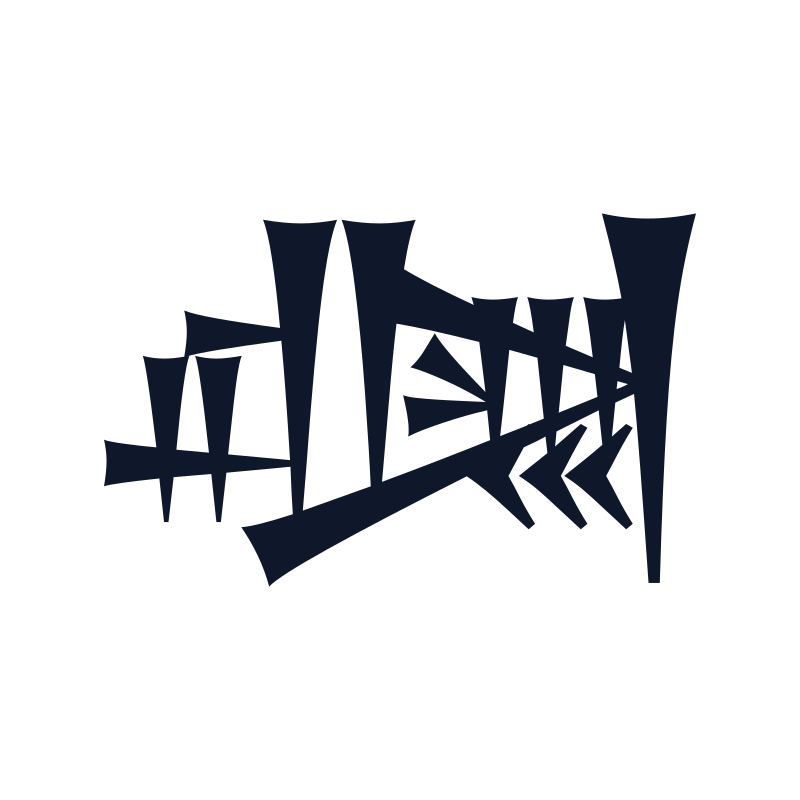 AL_KAD3 · U+12025
𒀥
woven mat, basketry
Cuneiform sign AL×KAD₃ (Borger MZL 475, U+12025), combining AL with KAD₃ ('to tie, weave mats'), attested in Babylonian lexical lists of reed and basketry crafts.
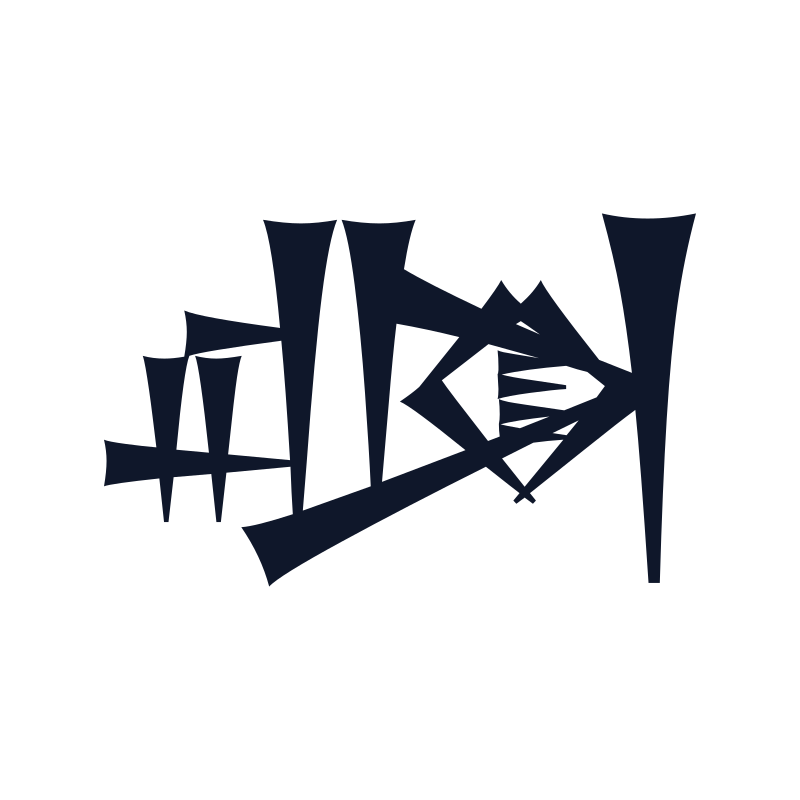 AL_KI · U+12026
𒀦
earth-digging, trenching
Cuneiform sign AL×KI (Borger MZL 481, U+12026), inscribing KI ('earth, ground') inside the hoe sign AL to express breaking ground or digging earth in lexical traditions.
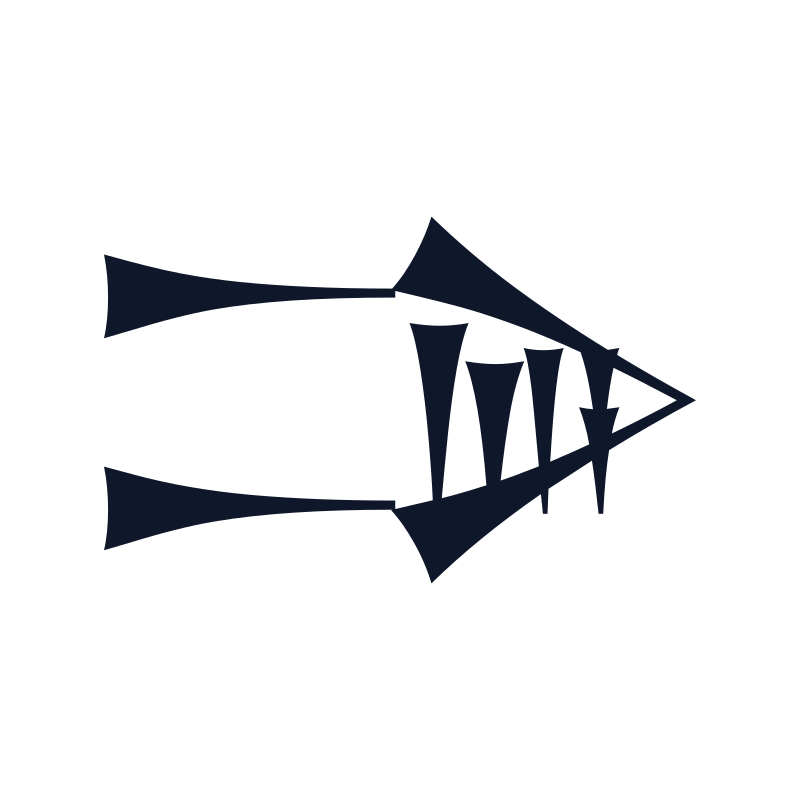 BI_A · U+1204A
𒁊
watered beer, drink
Cuneiform sign BI×A (Borger MZL 360, U+1204A), inscribing the water sign A inside the beer-jar sign BI/KAŠ to denote diluted beer or a mixed liquid ration in Mesopotamian brewing and lexical texts.
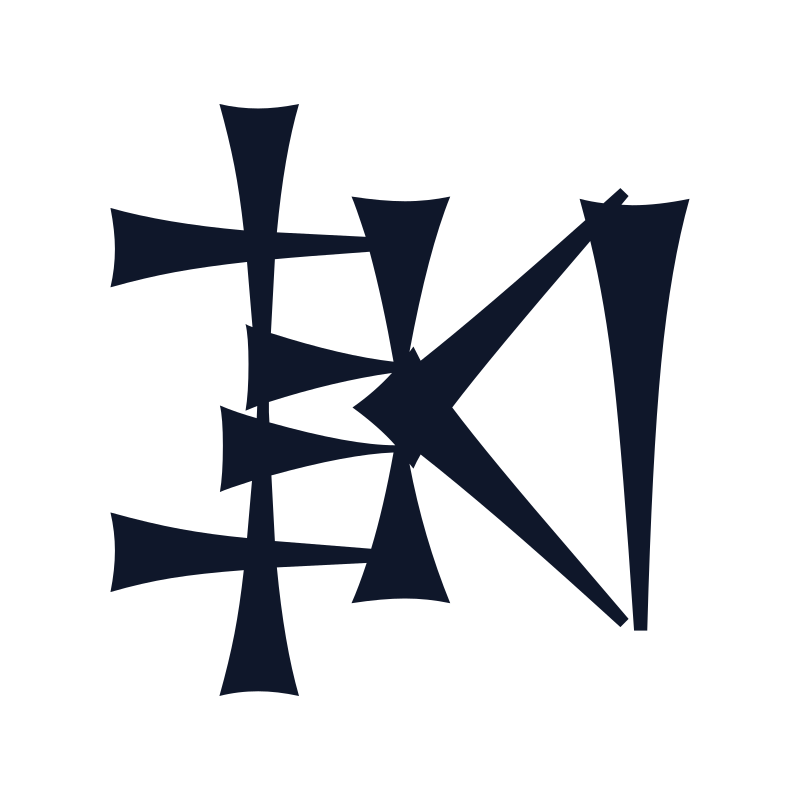 BU_CROSS_BU · U+12050
𒁐
crossed cords, intertwined
Cuneiform sign BU crossing BU (Borger MZL 583, U+12050), formed by two elongated BU/GID₂ signs intersecting at right angles, preserved in Babylonian lexical lists.
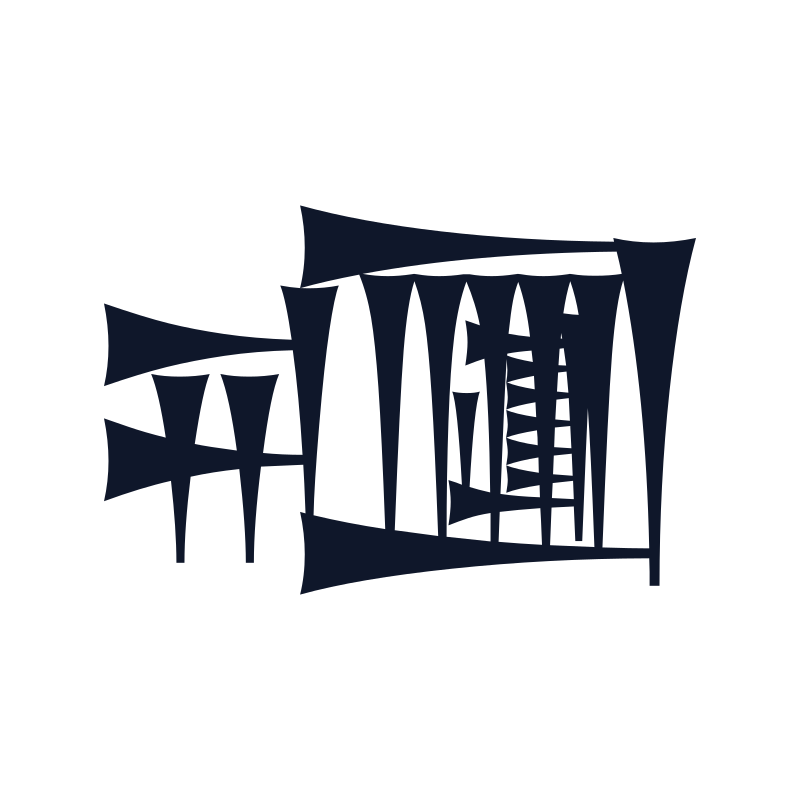 DUB_ESH2 · U+1207F
𒁿
survey tablet, cord
Cuneiform sign DUB×EŠ₂ (Borger MZL 243, U+1207F), inscribing the measuring-cord sign EŠ₂ inside the clay-tablet sign DUB, attested in Mesopotamian lexical lists of scribal and land-surveying terms.
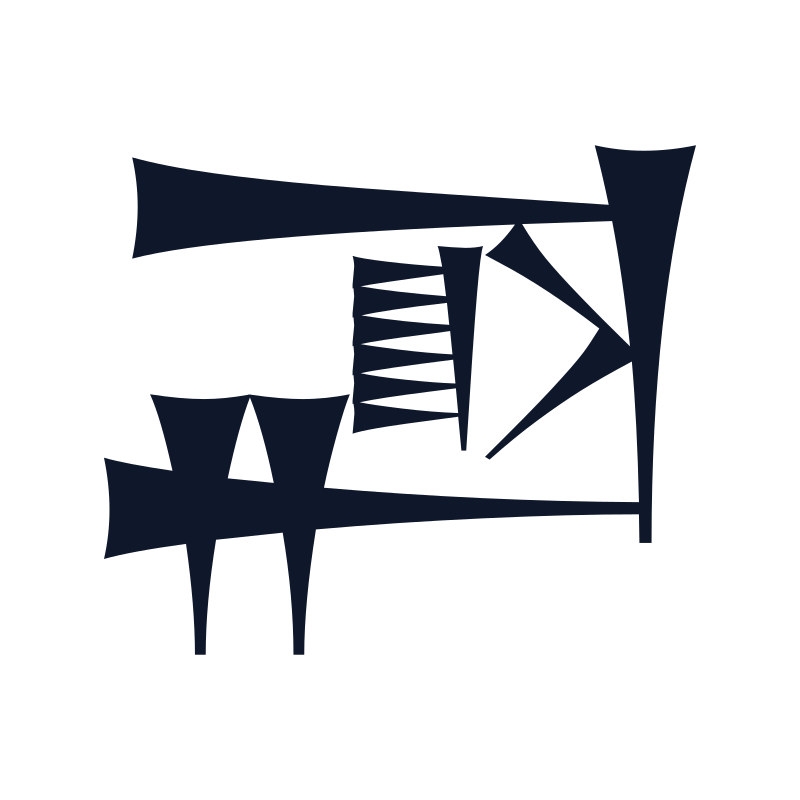 GA2_BUR · U+120C1
𒃁
vessel chest, basket
Cuneiform sign GA₂×BUR (Borger MZL 411, U+120C1), inscribing the stone-bowl sign BUR inside the container/basket sign GA₂/PISAN in Mesopotamian lexical lists.
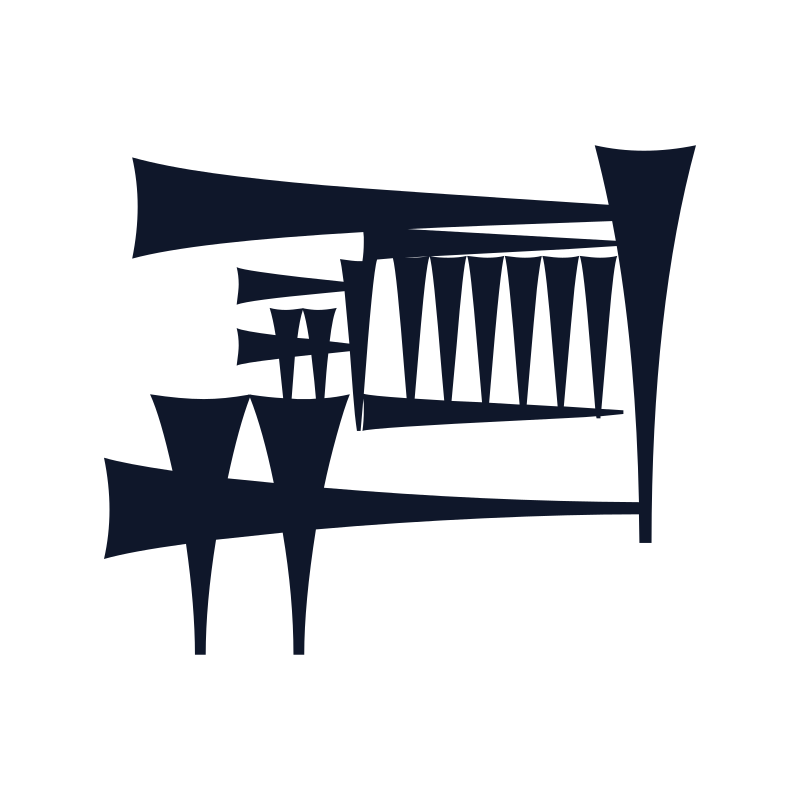 SHADUBBA · U+120C6
𒃆
tablet basket, archivist
Cuneiform sign GA₂×DUB, read ŠADUBBA or PISAN-DUB-BA (Borger MZL 417, U+120C6), depicting a clay tablet (DUB) inside a container/basket (GA₂/PISAN). It denotes an archival 'tablet basket' as well as the high administrative official 'chief accountant/archivist' (Sumerian ša₃-dub-ba; Akkadian šandabakku, later the title of the governor of Nippur).
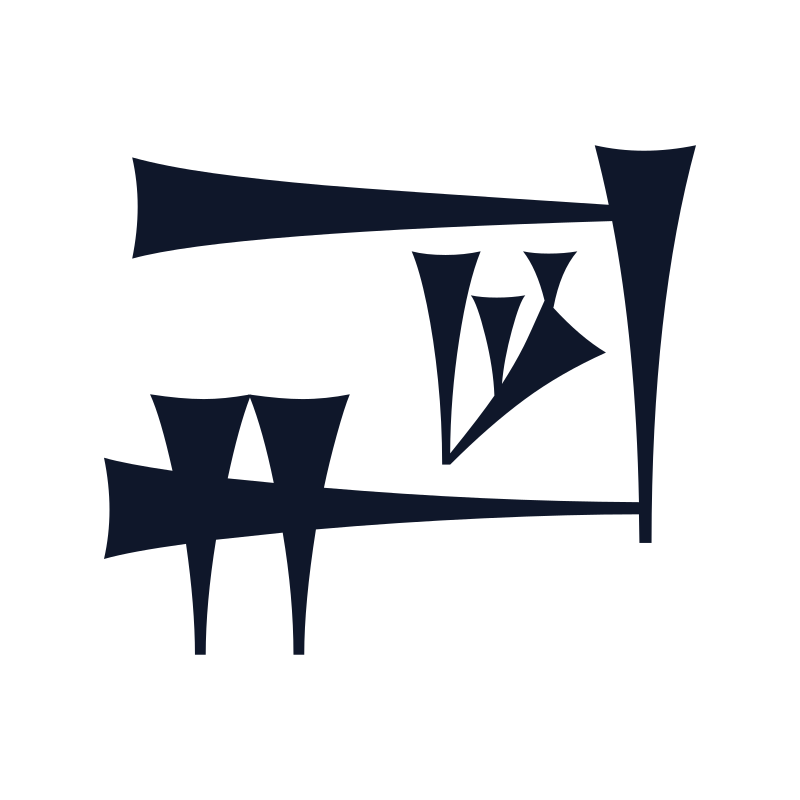 GA2_GAR · U+120CC
𒃌
bread basket, food chest
Cuneiform sign GA₂×GAR (Borger MZL 439, U+120CC), inscribing GAR ('bread, food') inside the container/basket sign GA₂/PISAN to denote a bread basket or provision chest.
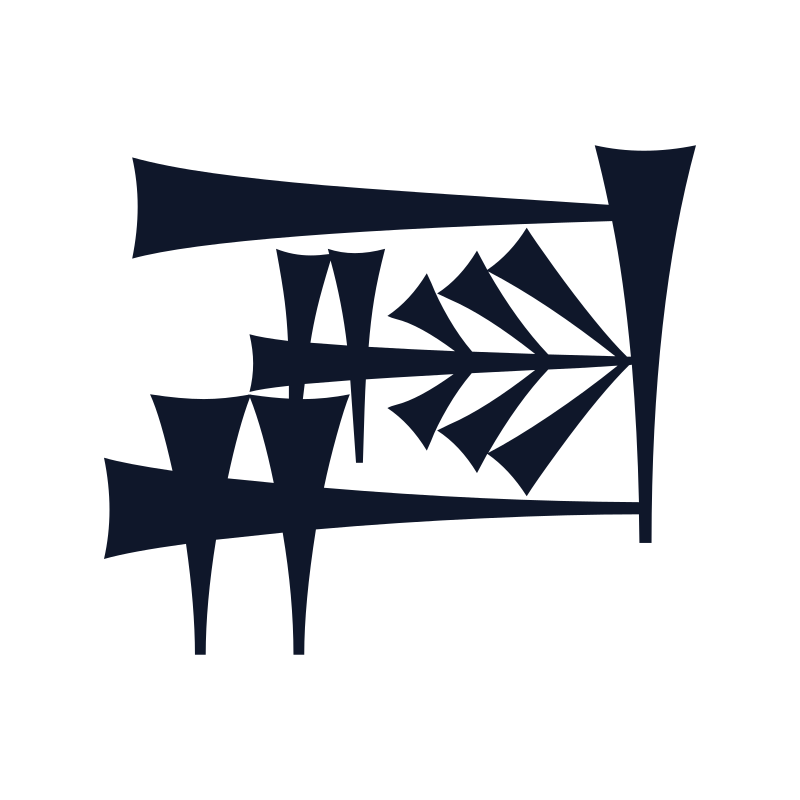 GA2_GI · U+120CD
𒃍
reed basket, hamper
Cuneiform sign GA₂×GI (Borger MZL 415, U+120CD), inscribing GI ('reed') inside GA₂ ('container') to denote a woven reed basket or wicker storage box (Sumerian gi-pisan; Akkadian pisannu).
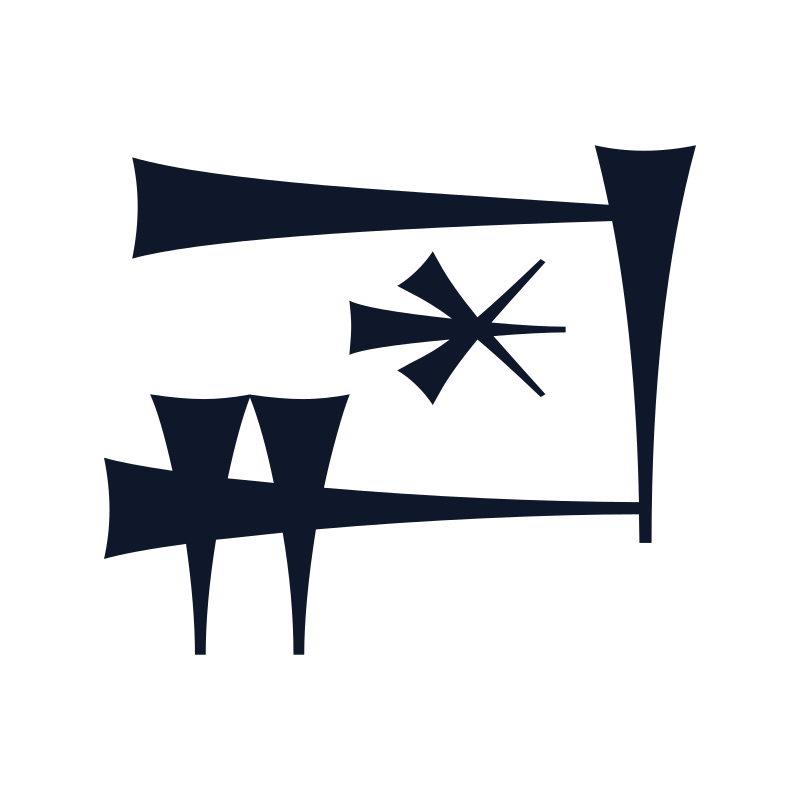 GA2_HAL · U+120D2
𒃒
strainer basket, chest
Cuneiform sign GA₂×ḪAL (Borger MZL 409, U+120D2), inscribing ḪAL ('to divide, strain, secret') inside the container sign GA₂/PISAN in Mesopotamian lexical series.
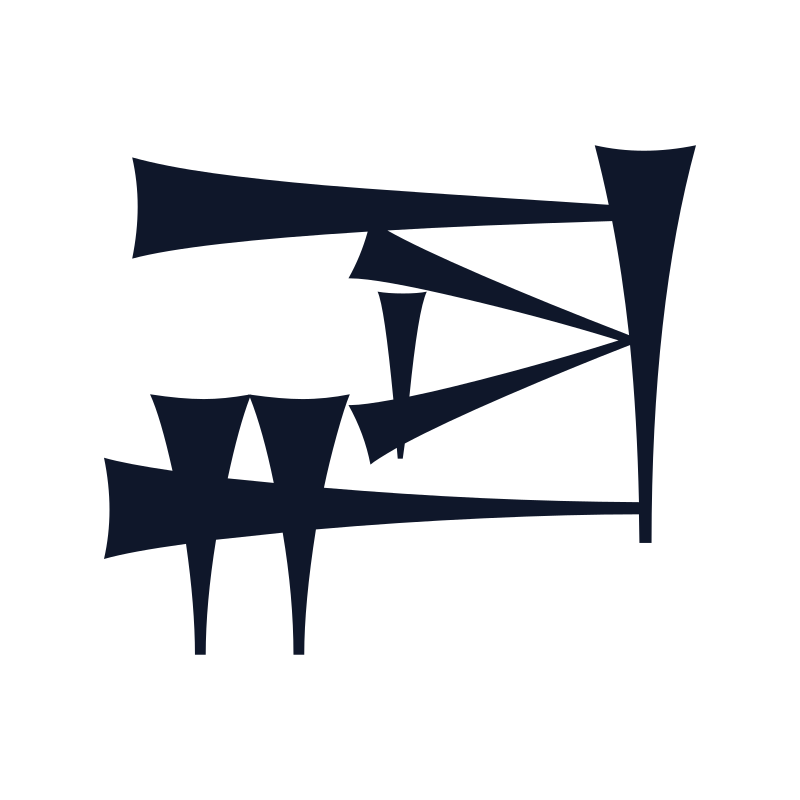 GA2_KAK · U+120D8
𒃘
fastened chest, box
Cuneiform sign GA₂×KAK (Borger MZL 426, U+120D8), inscribing KAK ('peg, nail, to build') inside GA₂ ('container, room') to denote a peg-locked storage chest or constructed chamber.
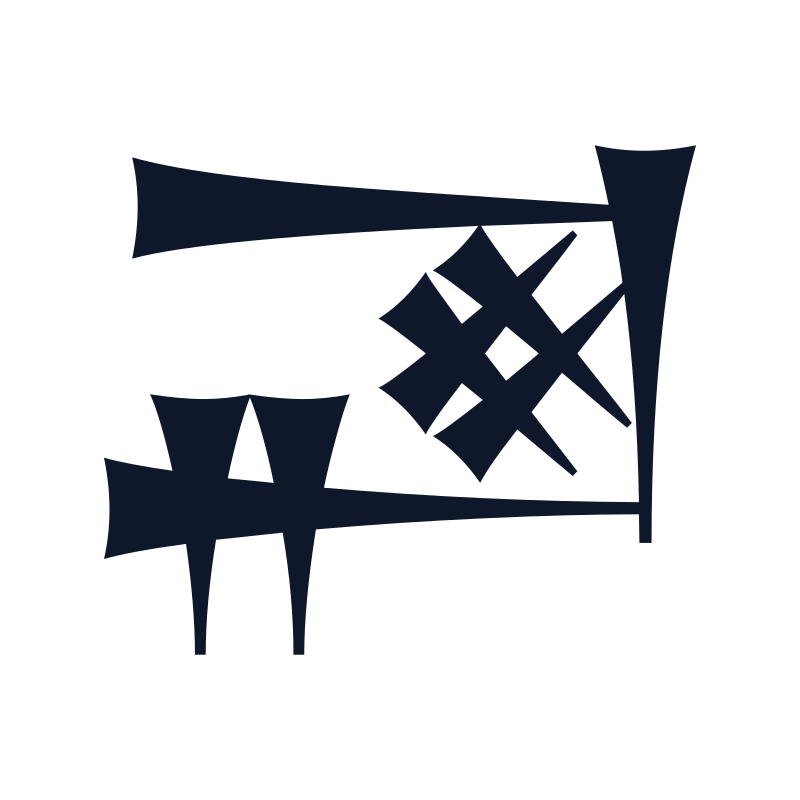 GA2_KASKAL · U+120D9
𒃙
travel basket, caravan box
Cuneiform sign GA₂×KASKAL (Borger MZL 424, U+120D9), combining GA₂ ('basket, container') with KASKAL ('road, expedition, caravan') to denote a travel hamper or expedition supply chest.
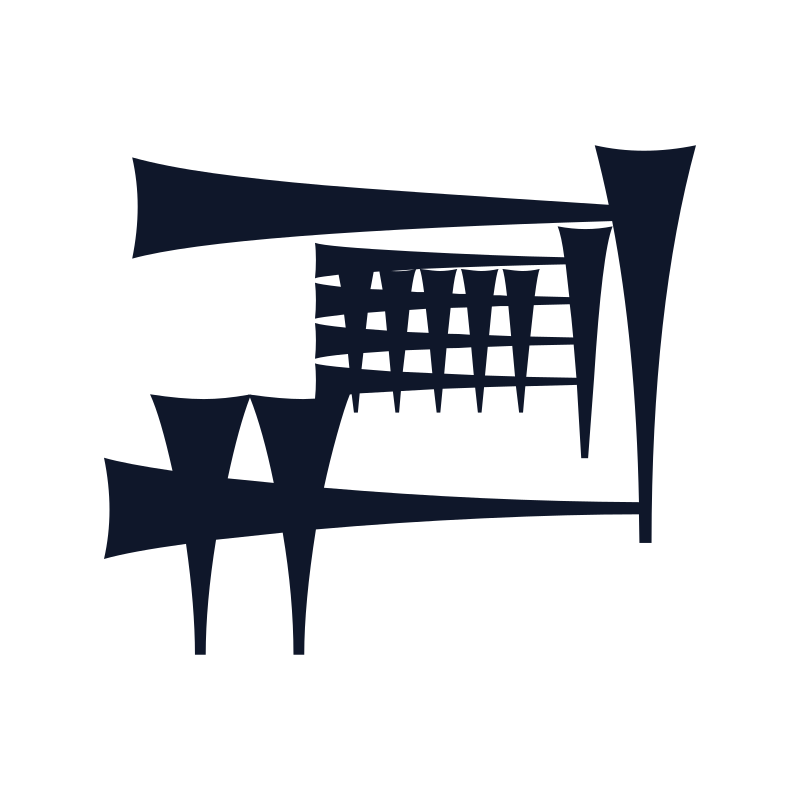 GA2_KID · U+120DA
𒃚
reed-mat basket
Cuneiform sign GA₂×KID (Borger MZL 430, U+120DA), inscribing the woven reed-mat sign KID inside the basket/container sign GA₂/PISAN in Mesopotamian lexical lists.
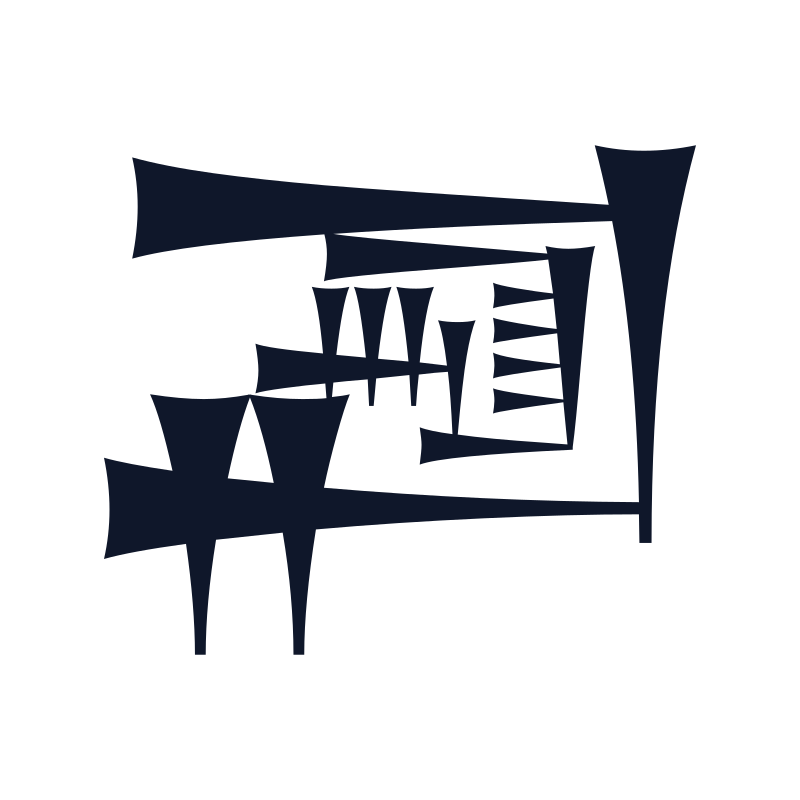 GA2_LA · U+120DD
𒃝
hanging basket, container
Cuneiform sign GA₂×LA (Borger MZL 413, U+120DD), combining GA₂ ('basket, container') with LA ('to hang, suspend, weigh') in Babylonian lexical traditions.
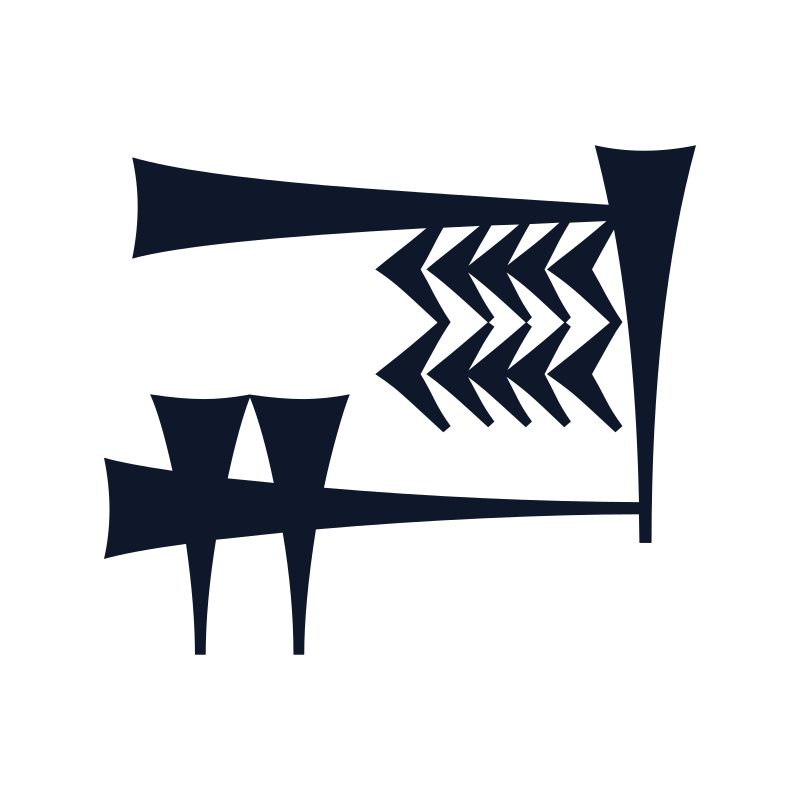 ESHLUG · U+120E5
𒃥
grain bin, barley basket
Cuneiform sign GA₂׊E, read EŠLUG (Borger MZL 427, U+120E5), inscribing ŠE ('barley, grain') inside the container/basket sign GA₂/PISAN to denote a grain storage bin or woven barley basket (Akkadian našpaku).
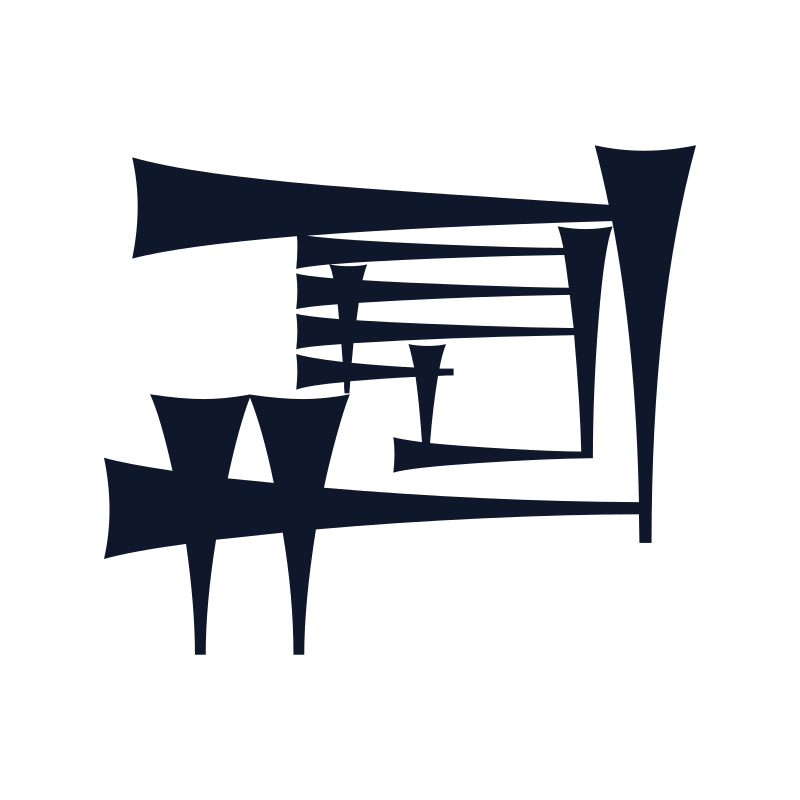 GA2_SHID · U+120E7
𒃧
account basket, audit box
Cuneiform sign GA₂׊ID (Borger MZL 429, U+120E7), inscribing ŠID ('to count, reckon, account tablet') inside the container sign GA₂/PISAN, denoting an archival basket for balanced accounts.
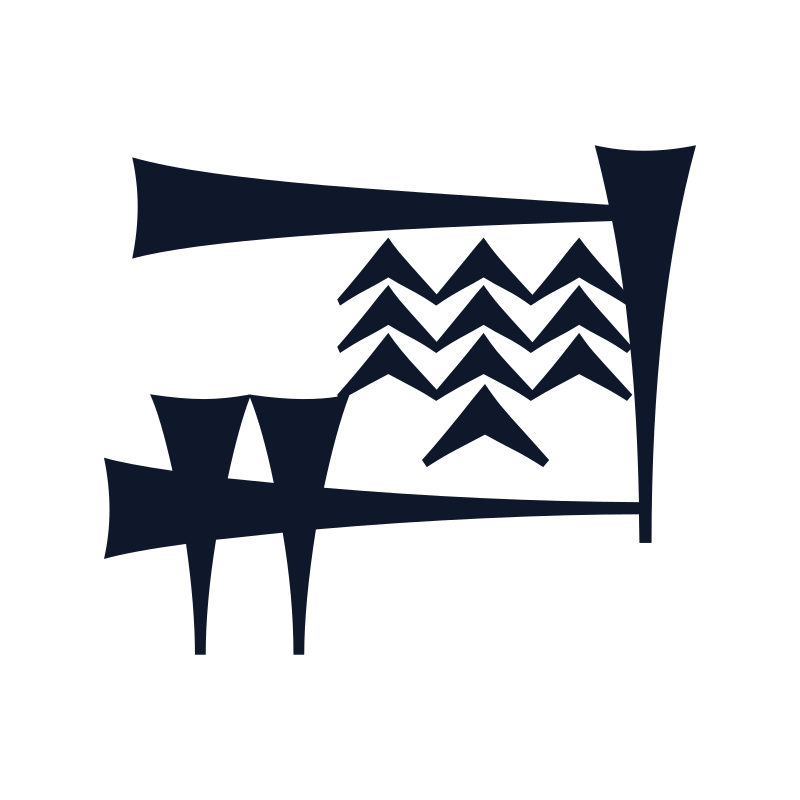 GA2_SUM · U+120E8
𒃨
ration basket, bulb hamper
Cuneiform sign GA₂×SUM (Borger MZL 423, U+120E8), inscribing SUM ('garlic, onion, to give rations') inside the basket sign GA₂/PISAN in Mesopotamian administrative and lexical traditions.
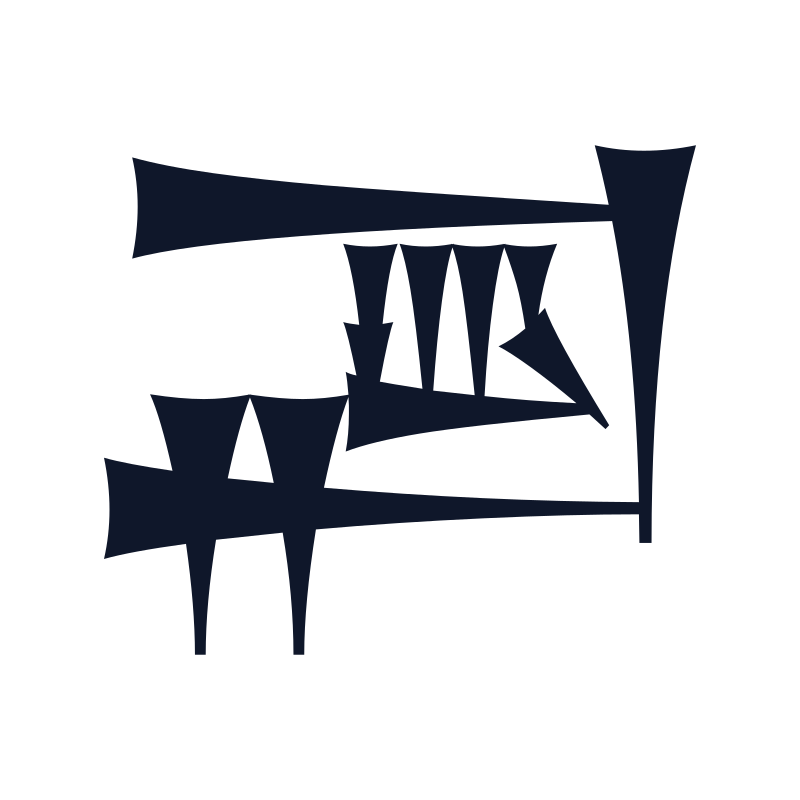 GA2_TAK4 · U+120E9
𒃩
reserve basket, chest
Cuneiform sign GA₂×TAK₄ (Borger MZL 410, U+120E9), combining GA₂ ('basket, container') with TAK₄ ('to leave over, set aside') in Babylonian lexical lists.
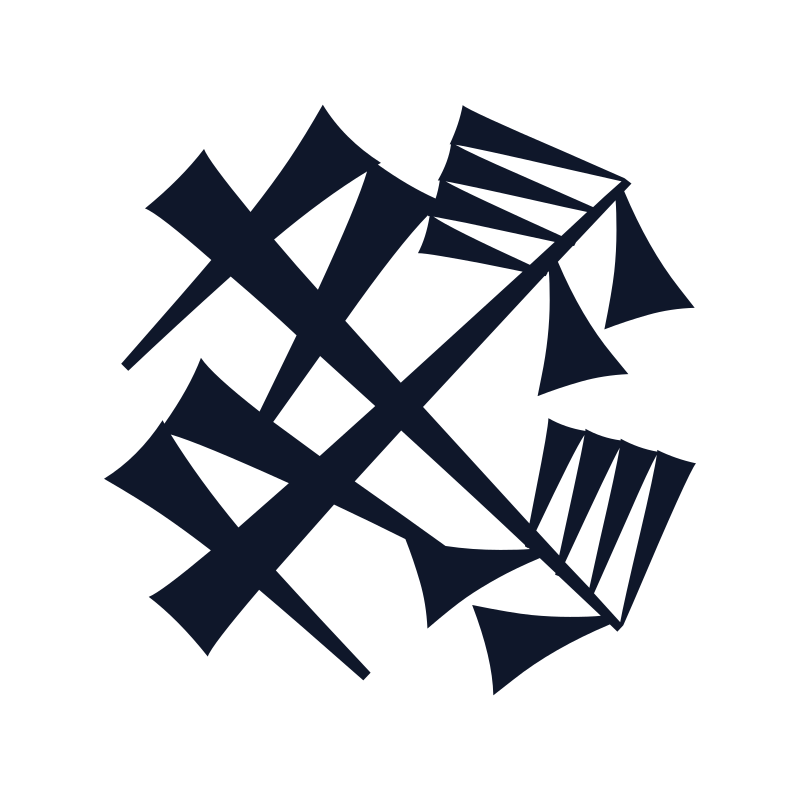 GIL · U+12103
𒄃
to cross, block, rope
Cuneiform sign GI crossing GI, read GIL, GILIM, or GIB (Borger MZL 140, U+12103), depicting two reeds laid across each other. It means 'to lie across, block, bar the way' (Sumerian gib, gilim; Akkadian parāku, egēru), 'twisted reed rope' (Akkadian kilīlu, ḫannāqu), and 'destruction' (šaḫluqtu), while serving as the primary syllable gil.
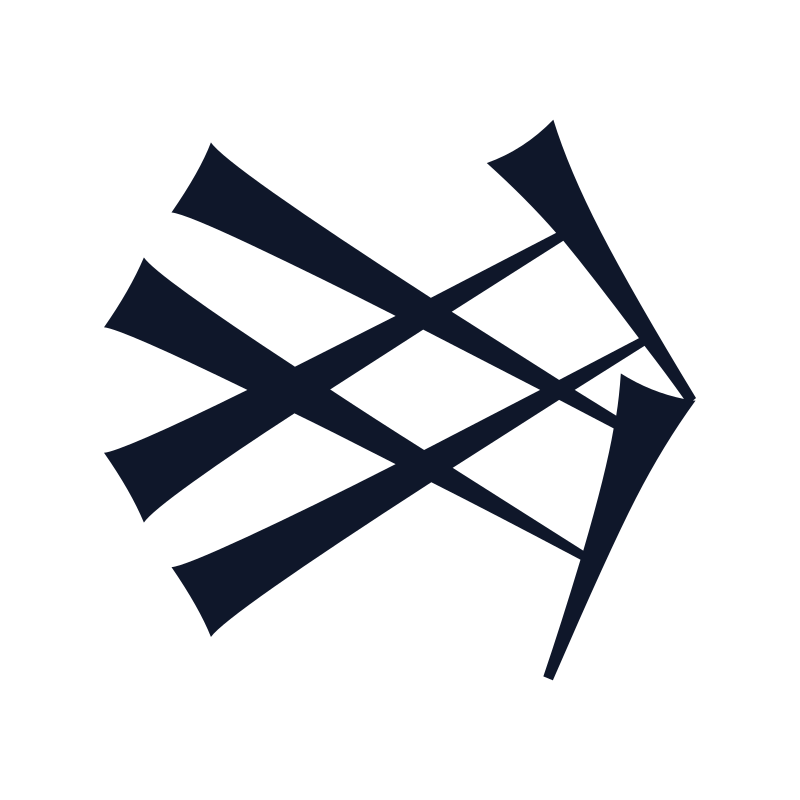 GISH_CROSS_GISH · U+12112
𒄒
crossed beams, barrier
Cuneiform sign GIŠ crossing GIŠ (Borger MZL 468, U+12112), formed by two wood/beam signs GIŠ intersecting at right angles to denote crossed timbers, a wooden lattice, or a barred gate.
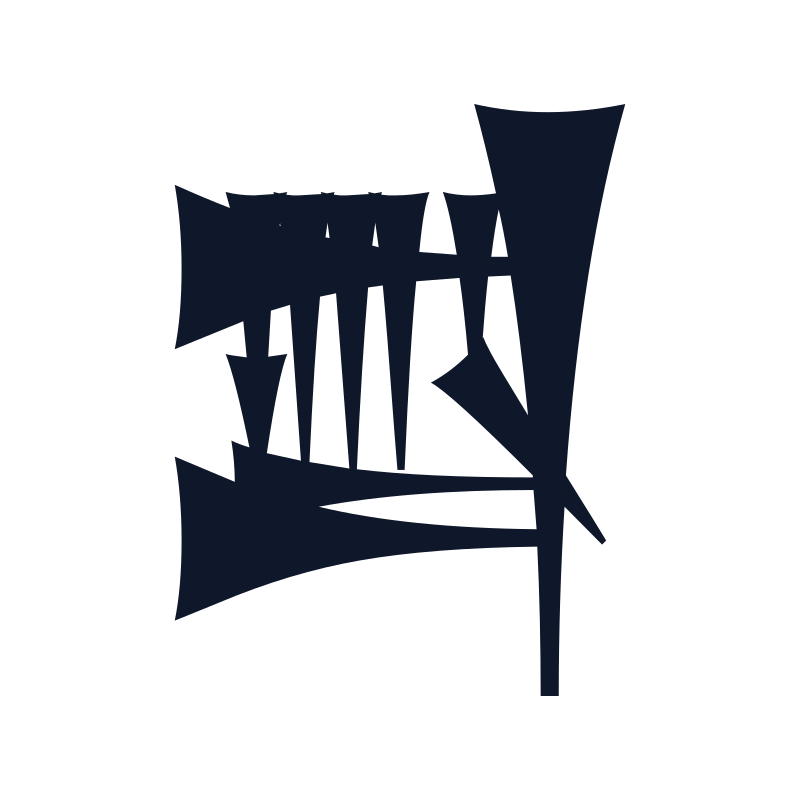 GISH_TAK4 · U+12114
𒄔
carved wood, block
Cuneiform sign GIŠ×TAK₄ (Borger MZL 466, U+12114), combining GIŠ ('wood') with TAK₄ ('to cut off, leave behind') in Babylonian lexical lists of carpentry and weaving implements.
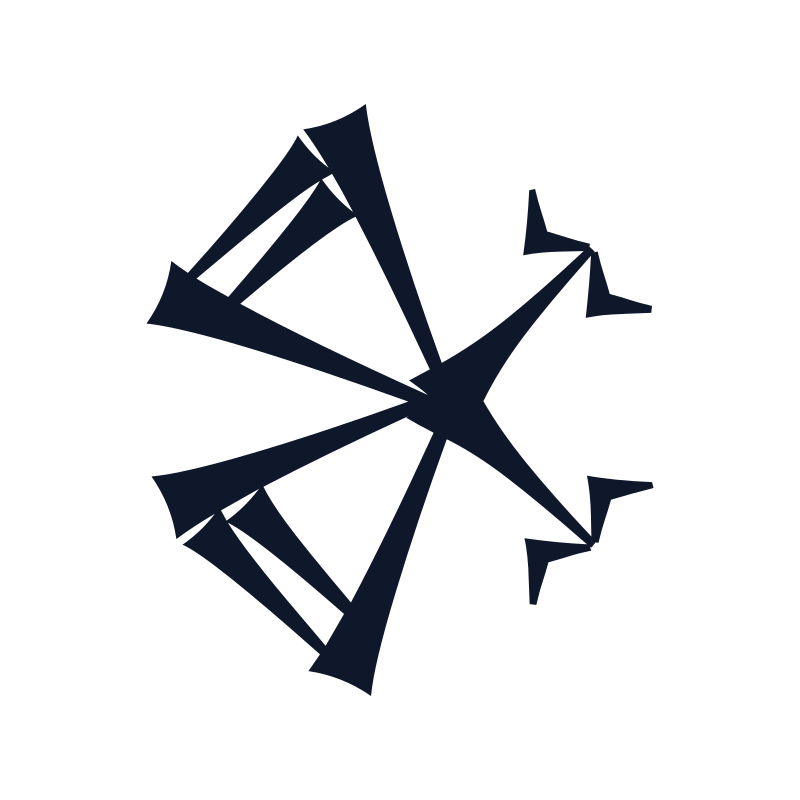 GU_CROSS_GU · U+12117
𒄗
crossed threads, mesh
Cuneiform sign GU crossing GU (Borger MZL 892, U+12117), formed by two intersecting flax-thread signs GU to depict woven mesh, knotted netting, or crossed cords.
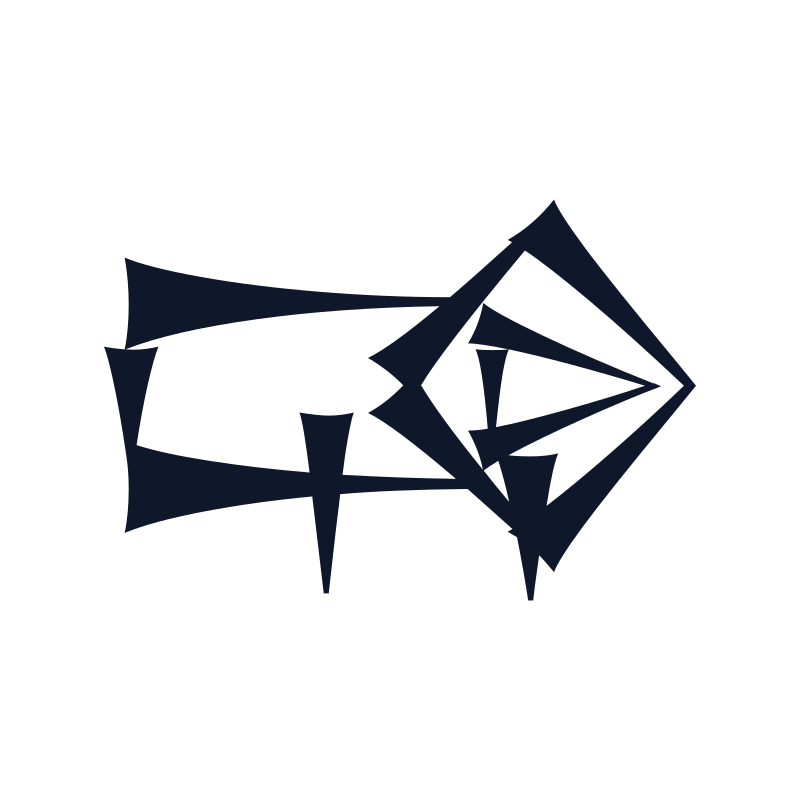 GU2_KAK · U+12119
𒄙
neck-stock, collar
Cuneiform sign GU₂×KAK (Borger MZL 188, U+12119), inscribing KAK ('peg, pin') inside GU₂ ('neck, bank'), denoting a pegged neck-stock, collar, or reinforced embankment in lexical lists.
 HI_GAD · U+12132
𒄲
linen vat, vessel
Cuneiform sign ḪI×GAD (Borger MZL 638, U+12132), inscribing the linen/flax sign GAD inside ḪI ('to mix, steep') in Babylonian lexical lists.
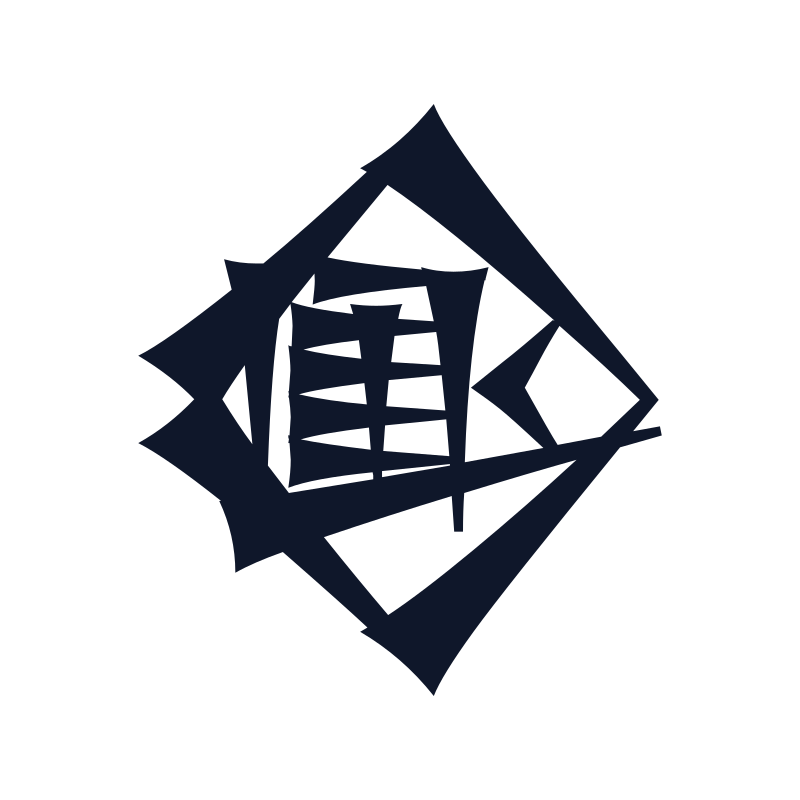 HI_KIN · U+12133
𒄳
preparation, craft work
Cuneiform sign ḪI×KIN (Borger MZL 642, U+12133), combining ḪI ('to mix, season') with KIN ('work, task, sickle') in Mesopotamian lexical series.
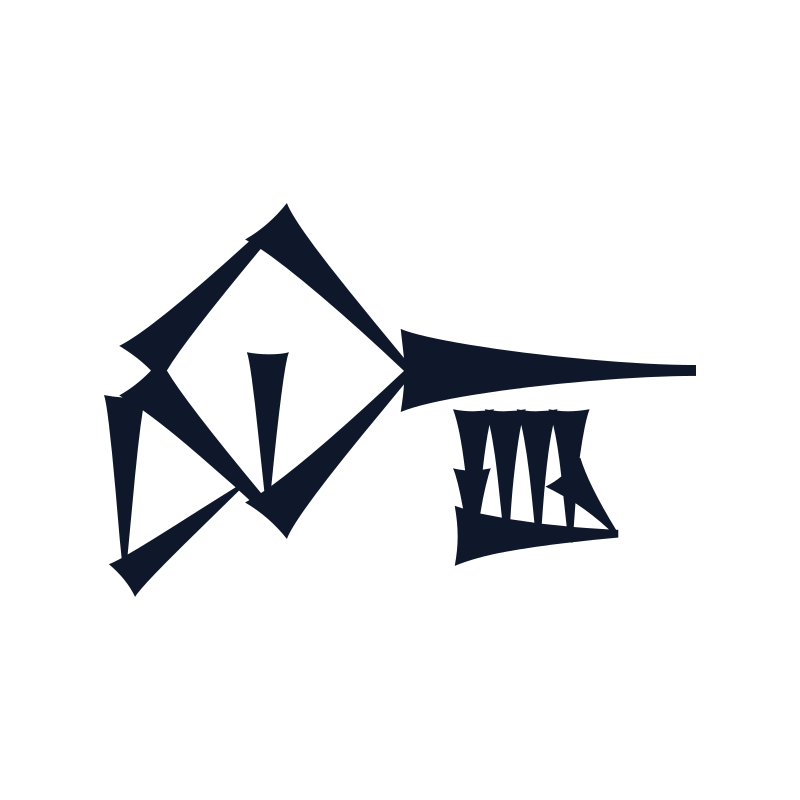 IM_TAK4 · U+1214F
𒅏
pinched clay, lump
Cuneiform sign IM×TAK₄ (Borger MZL 644, U+1214F), combining IM ('clay, mud') with TAK₄ ('to pinch off, leave over'). It denotes pinching off a lump of wet clay (Akkadian karāṣu, kirṣu)—a motif famous in Mesopotamian creation myths where humanity is fashioned from pinched clay—as well as a clay sealing tag.
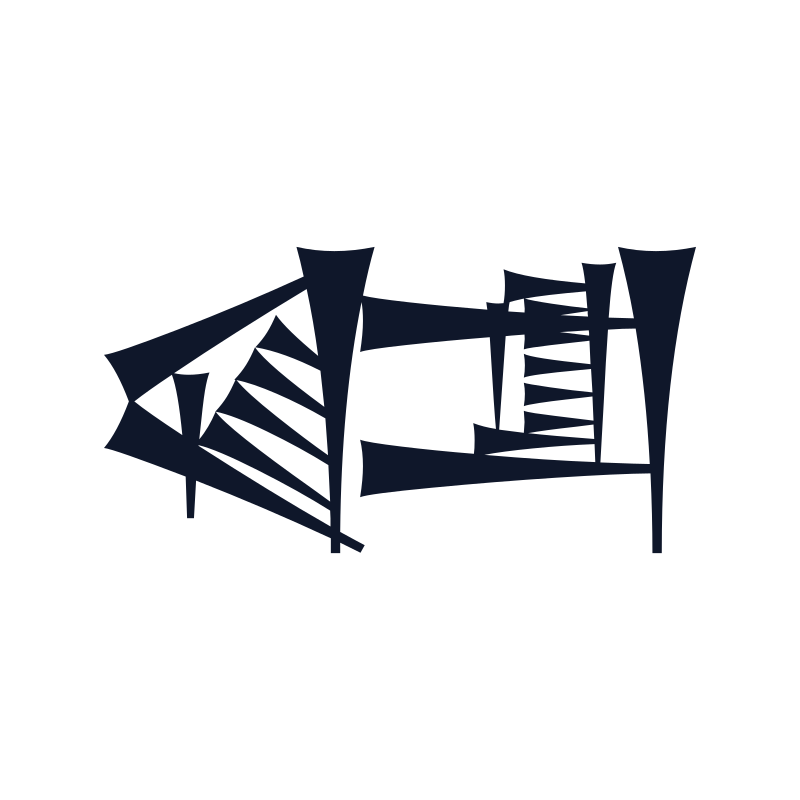 KA_ESH2 · U+12161
𒅡
bridle, halter, bit
Cuneiform sign KA×EŠ₂ (Borger MZL 66, U+12161), combining KA ('mouth, nose') with EŠ₂ ('rope, cord') to depict a halter, bridle, or nose-rope used to lead animals or captives (Akkadian ṣerretu, rappu).
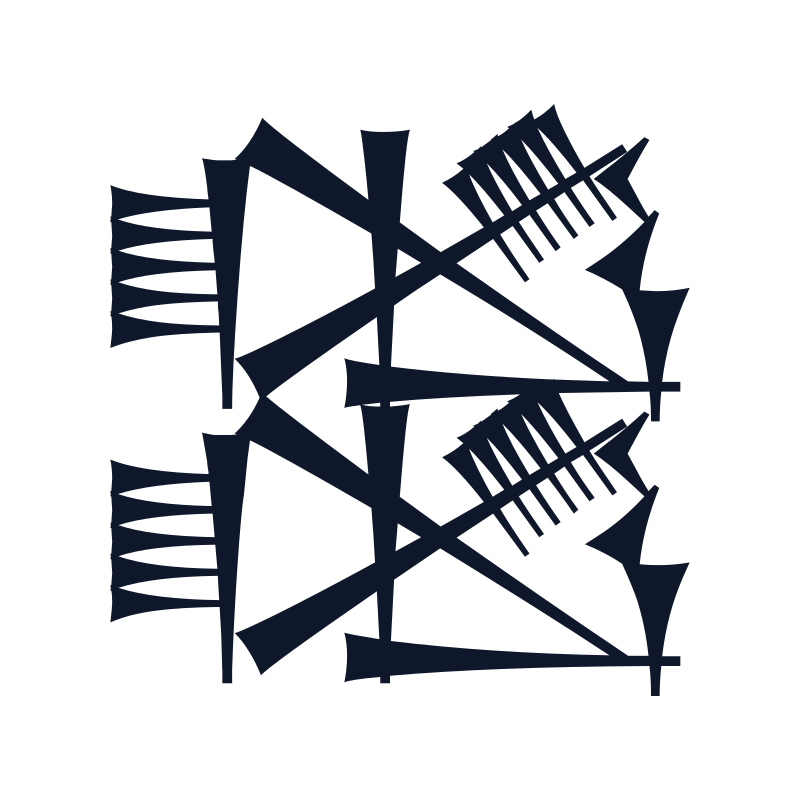 KAD5/KAD5 · U+12194
𒆔
intertwined bindings, weave
KAD₅ OVER KAD₅ (𒆔) is a vertically reduplicated form of the sign KAD₅ ('to tie, weave, gather'). In Sumerian and Akkadian lexical lists, the doubled sign emphasizes tightly woven reed mats, bound bundles, or assembling things together.
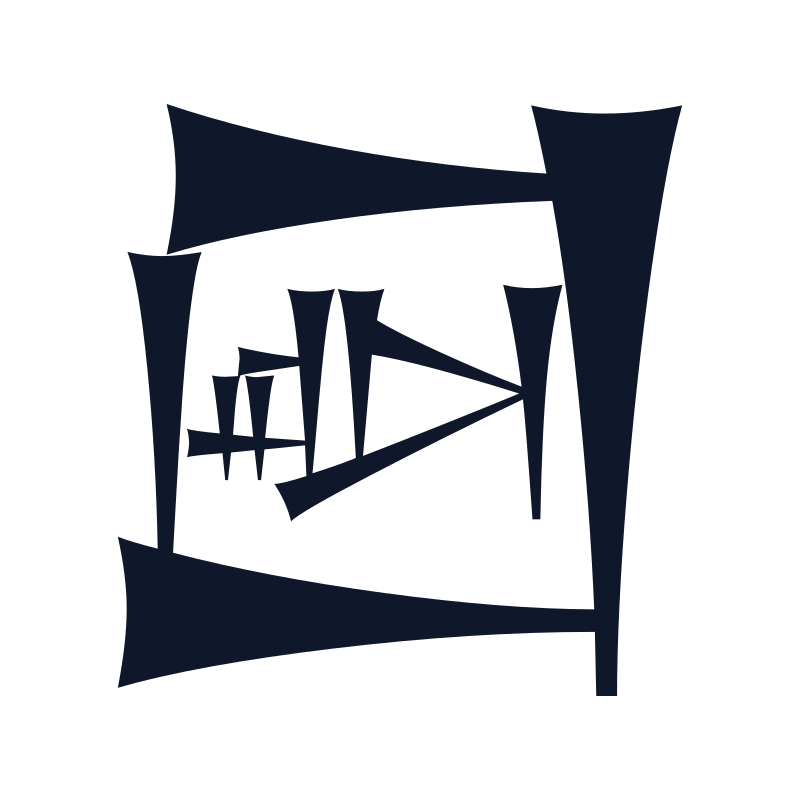 LAGAB×AL · U+121BD
𒆽
excavated pit, hoed plot
LAGAB×AL (𒆽) combines the circular enclosure sign LAGAB with an inscribed AL ('hoe, pickaxe'). Recorded in the Babylonian lexical series Ea I, it represents a pit dug with a hoe, a cultivated garden bed, or a clay mixing pit.
 GIGIR · U+121C0
𒇀
chariot, war wagon, wheel
GIGIR (𒇀, structurally LAGAB×BAD) is the classic Sumerian logogram for 'chariot' or 'wheeled wagon' (usually written `giš-gigir`, Akkadian `narkabtu`). Originating as a pictograph of a circular wheel with axle and crossbars, it also designates the Chariot constellation (`mul-gigir` in Taurus/Auriga).
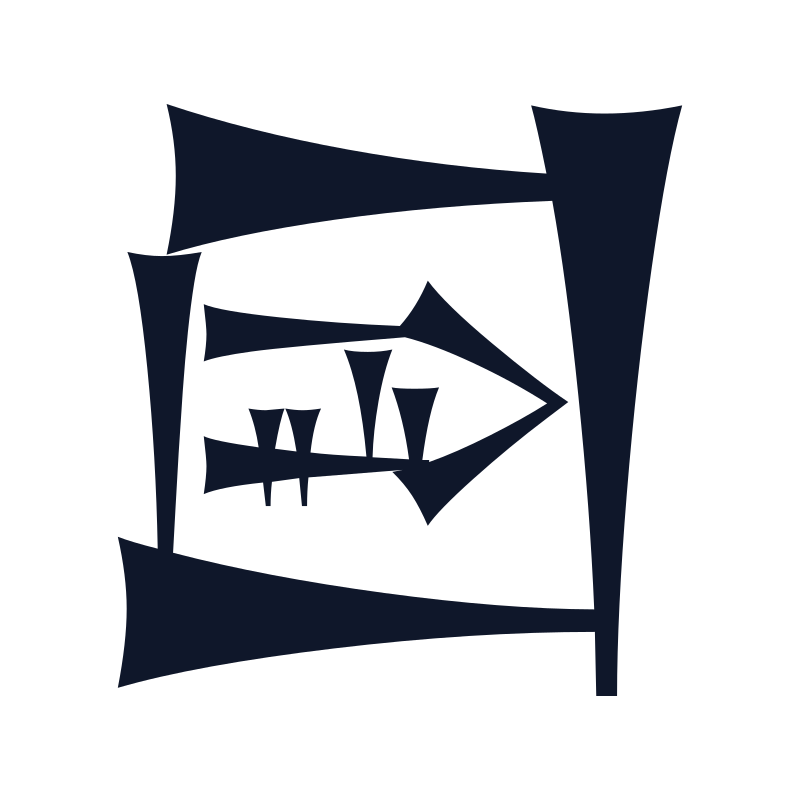 LAGAB×BI · U+121C1
𒇁
beer vat, brewing tub
LAGAB×BI (𒇁) combines the circular container sign LAGAB with an inscribed BI ('beer, strong drink'). In Mesopotamian lexical lists, it denotes a large brewing vat, fermentation basin, or beer storage reservoir.
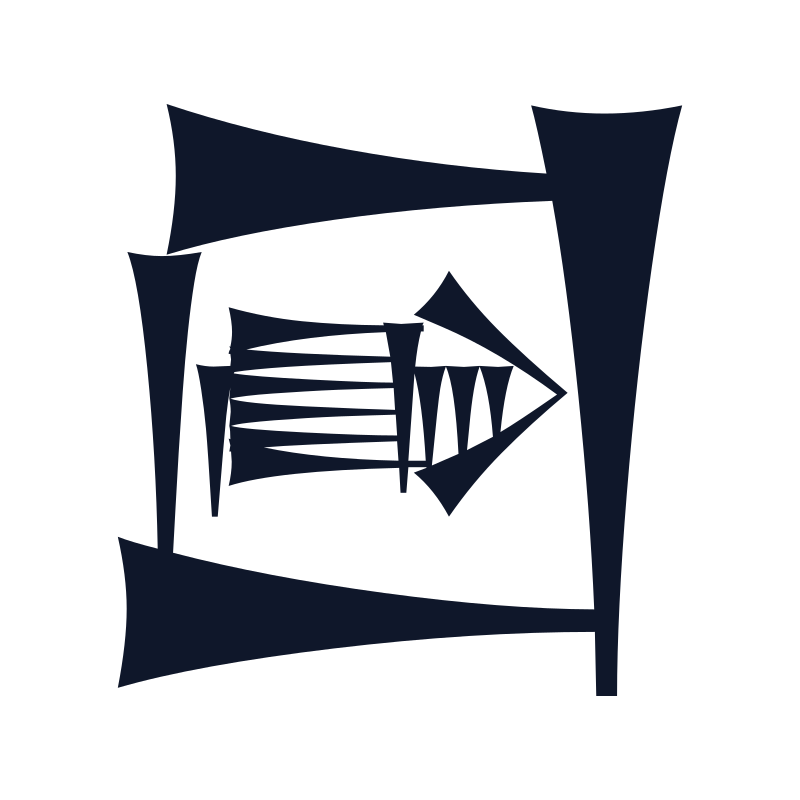 LAGAB×GA · U+121C4
𒇄
milk churn, dairy vat
LAGAB×GA (𒇄) combines the container sign LAGAB with an inscribed GA ('milk, dairy'). In Sumerian and Akkadian lexical traditions, it represents a dairy vessel, milk churn, or round mold used for processing butter and cheese.
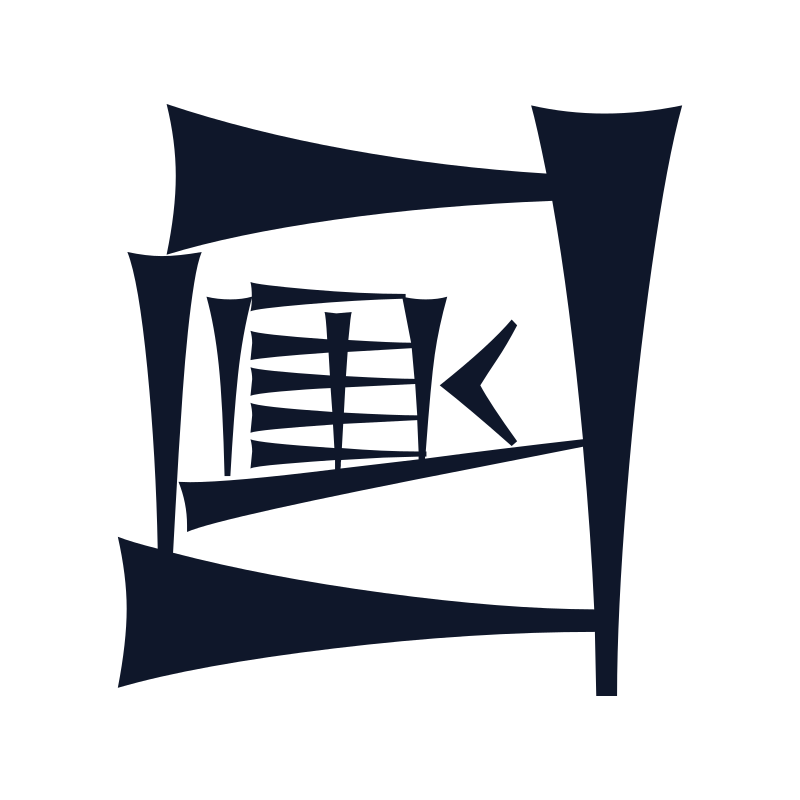 LAGAB×KIN · U+121D0
𒇐
harvest bundle, work yard
LAGAB×KIN (𒇐) places KIN ('work, task, sickle, harvest') inside the enclosure sign LAGAB. Attested in Babylonian lexical series, it refers to a bundle of reaped grain gathered with a sickle or an enclosed craft workyard.
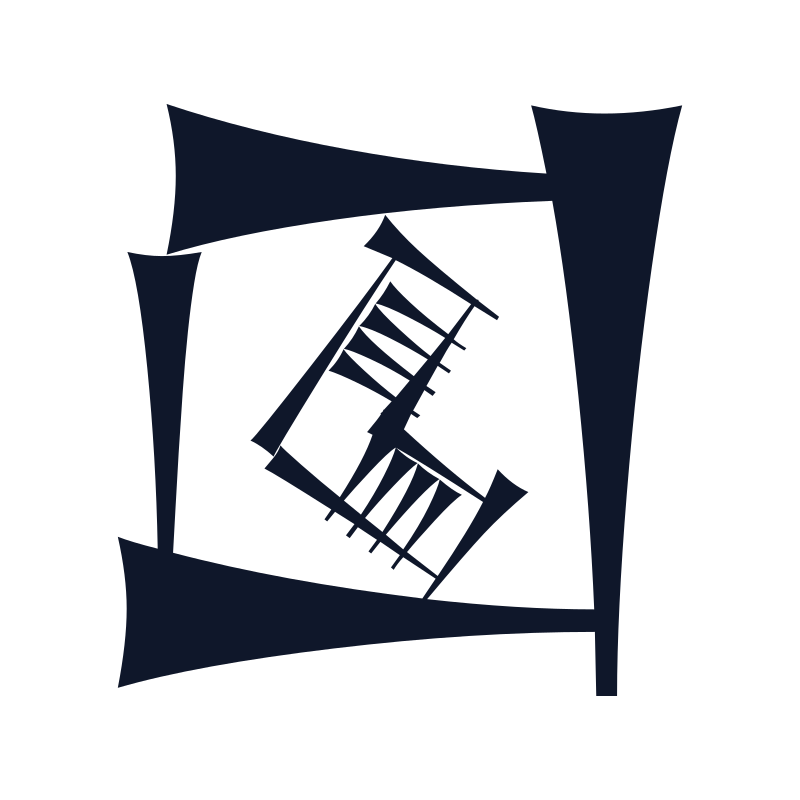 LAGAB×KU3 · U+121D1
𒇑
silver chest, treasury box
LAGAB×KU₃ (𒇑) combines the ring and container sign LAGAB with an inscribed KU₃ ('silver, precious metal, pure'). In Mesopotamian lexical traditions, it denotes a sealed silver coffer, a ring of silver bullion (`har ku₃-babbar`), or a temple treasury box.
 LAGAB×LISH · U+121D5
𒇕
deep bowl, offering platter
LAGAB×LIŠ (𒇕) combines the circular rim sign LAGAB with an inscribed LIŠ / DILIM₂ ('spoon, shallow bowl, dish'). In Mesopotamian lexical lists, it denotes a deep round platter, offering basin, or ladle receptable.
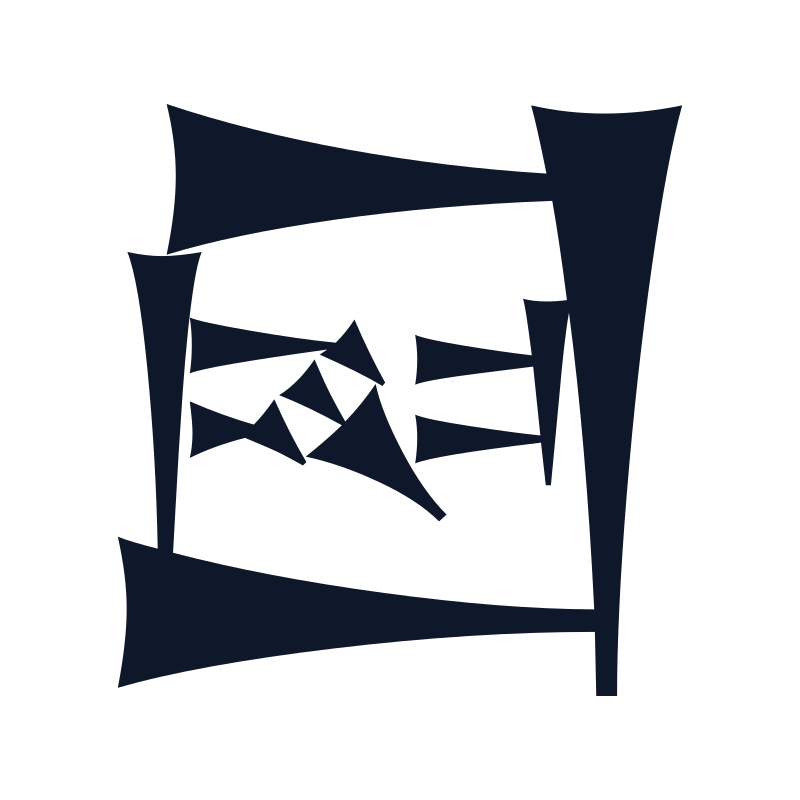 LAGAB×NE · U+121DB
𒇛
fire pit, round kiln
LAGAB×NE (𒇛) combines the circular chamber sign LAGAB with an inscribed NE ('fire, glowing coals, brazier'). In Mesopotamian craft and lexical texts, it represents a round firing kiln, smelting furnace, or sunken hearth pit.
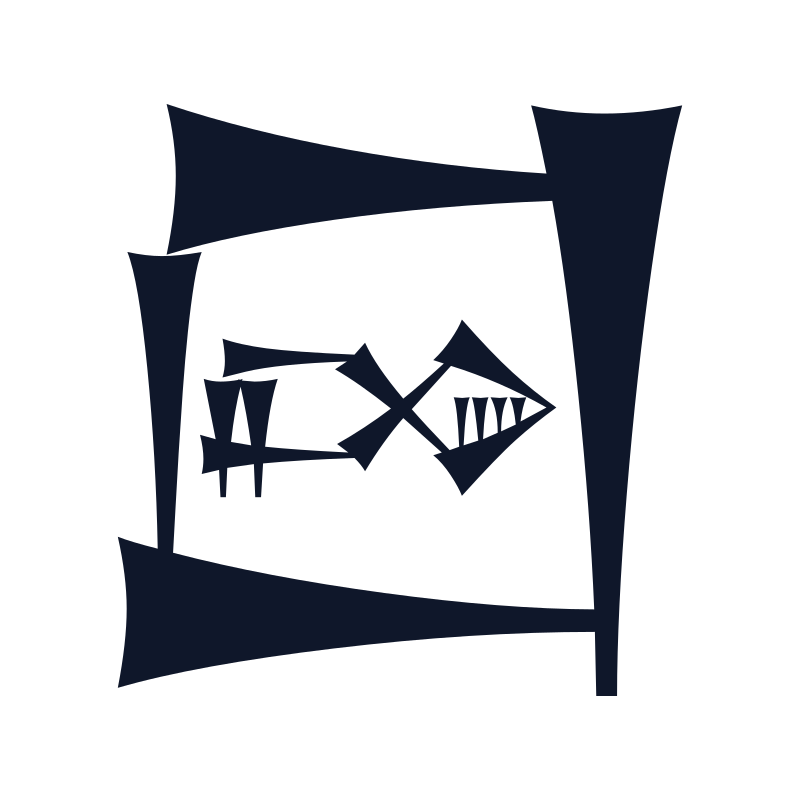 LAGAB×TAG · U+121E2
𒇢
woven basket, fuller's basin
LAGAB×TAG (𒇢) combines the container sign LAGAB with an inscribed TAG ('to weave, beat, strike, touch'). In Mesopotamian craft and lexical traditions, it denotes a tightly woven round basket, a fuller's tub for beating cloth, or a hammered metal ring.
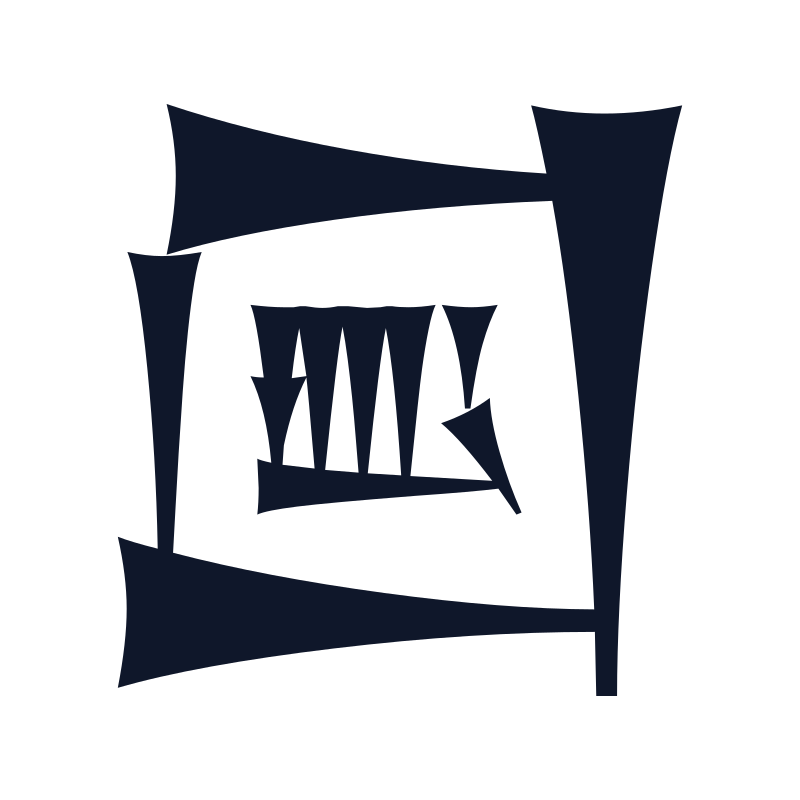 LAGAB×TAK4 · U+121E3
𒇣
reserve bin, saved portion
LAGAB×TAK₄ (𒇣) places TAK₄ ('to leave behind, set aside, remain') inside the container sign LAGAB. In administrative and lexical traditions, it signifies a container holding reserved stock, a leftover balance (`ib₂-tak₄`), or set-aside provisions.
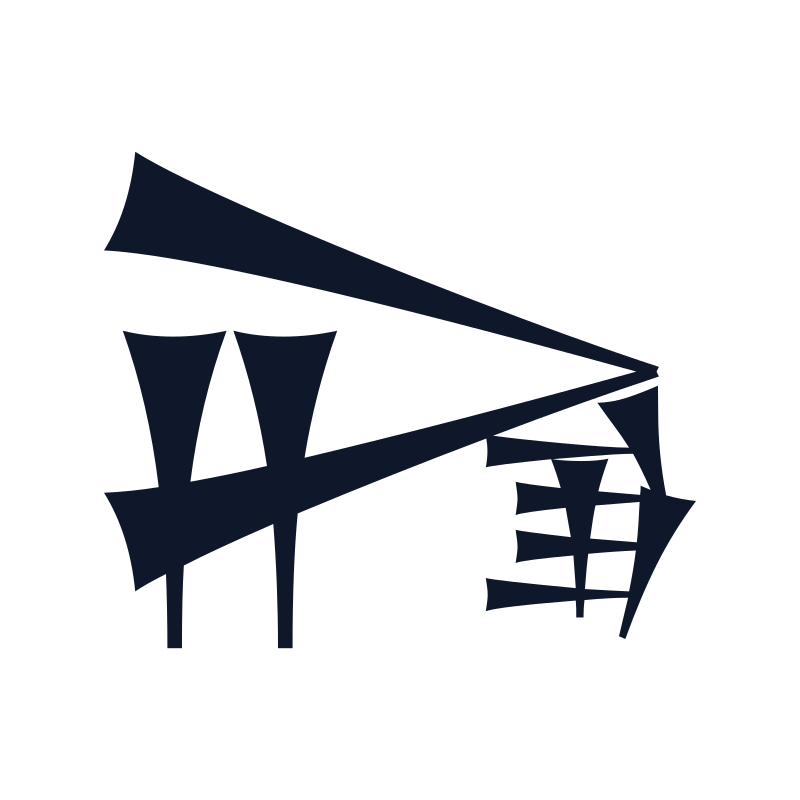 NI×E · U+1224D
𒉍
pressed oil, unguent
NI×E (𒉍) combines NI / I₃ ('oil, fat, cream') with E ('to issue forth, extract; canal'). Attested in Mesopotamian lexical lists, it denotes extracted or poured oil, fine unguent, or an oil allotment.
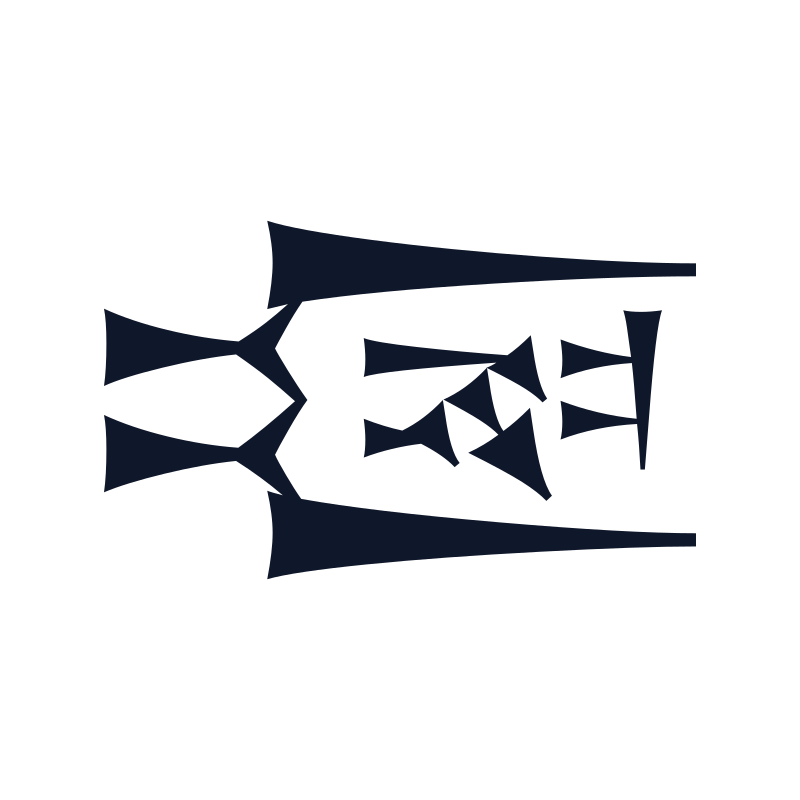 NINDA2×NE · U+12258
𒉘
censer, heated crucible
NINDA₂×NE (𒉘) combines the vessel sign NINDA₂ with an inscribed NE ('fire, glowing coals, incense brazier'). In Mesopotamian ritual and craft traditions, it denotes a portable censer, a heated melting crucible, or an ember pot.
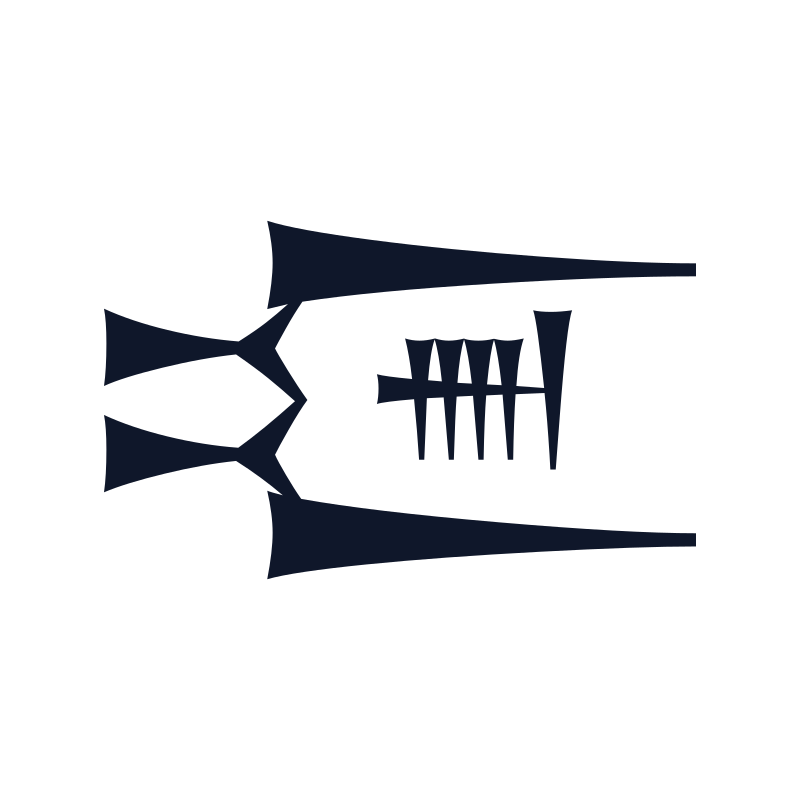 NINDA2×NUN · U+12259
𒉙
princely vessel, ritual drum
NINDA₂×NUN (𒉙) encloses NUN ('prince, noble, great') inside the vessel sign NINDA₂. In Babylonian lexical lists, it denotes a noble ceremonial vessel, a bronze temple drum (`meze`), or a large dairy churn.
 NINDA2×SHE · U+1225A
𒉚
seeder funnel, grain hopper
NINDA₂׊E (𒉚) combines NINDA₂ ('seed-funnel, measuring vessel'; Akkadian `ittû`) with an inscribed ŠE ('barley, grain'). It graphically depicts Mesopotamian agriculture's famous invention: the seed-funnel attached to the seeder-plow (`giš-apin`), which dropped barley seeds evenly into the furrow.
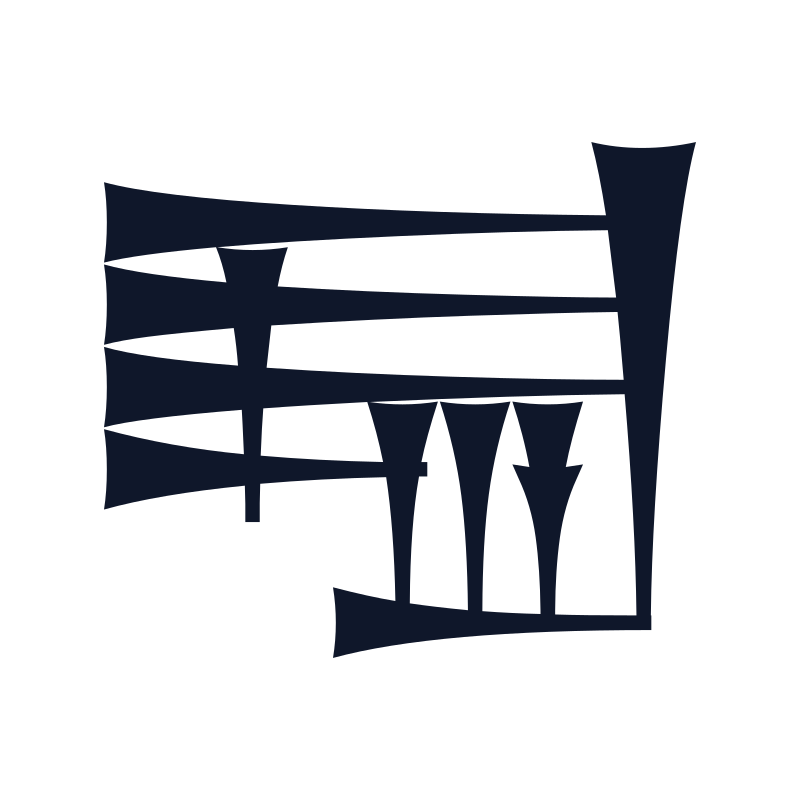 SHID×A · U+122C4
𒋄
scribe, kneaded dough
ŠID×A (𒋄) combines ŠID ('to count, reckon, knead') with A ('water'). In Mesopotamian lexical traditions, it denotes both moistened clay or kneaded dough (`līšu`) and a scribe or accountant (`umbisag₂`, Akkadian `ṭupšarru`) who prepares wet clay tablets for writing.
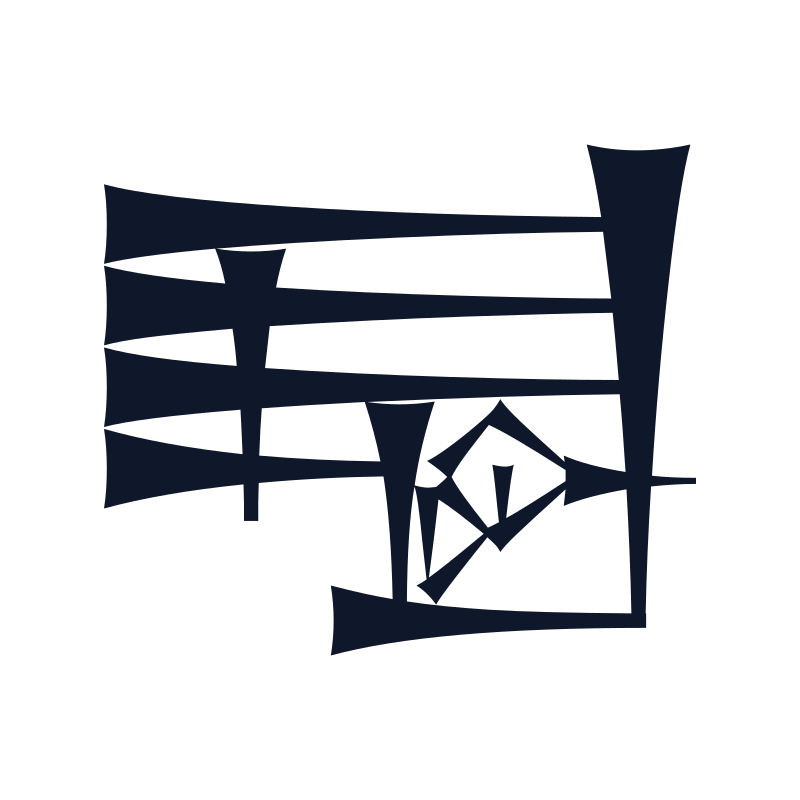 LAG · U+122C5
𒋅
lump of clay, clod of earth
LAG (𒋅, structurally ŠID×IM, 'kneading/counting + clay') is the Sumerian logogram for a 'lump of clay' or 'clod of earth' (Akkadian `kurbannu`, `kirbānu`). In scribal school (`edubba`) texts and legal rituals (such as breaking a clod of earth), `lag` represents raw formed clay.
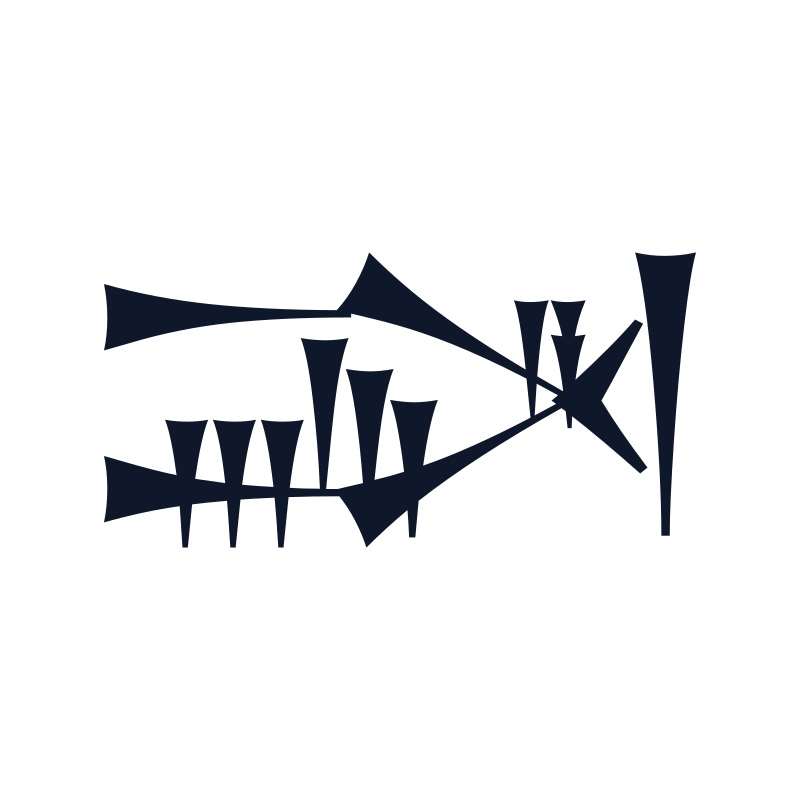 SHIM×A · U+122C7
𒋇
aromatic infusion, wort
ŠIM×A (𒋇) combines ŠIM ('aromatic herb, resin, brewer's vat') with A ('water, liquid'). In Mesopotamian perfumery and brewing texts, it denotes an aromatic herbal infusion, scented water, or liquid brewer's mash.
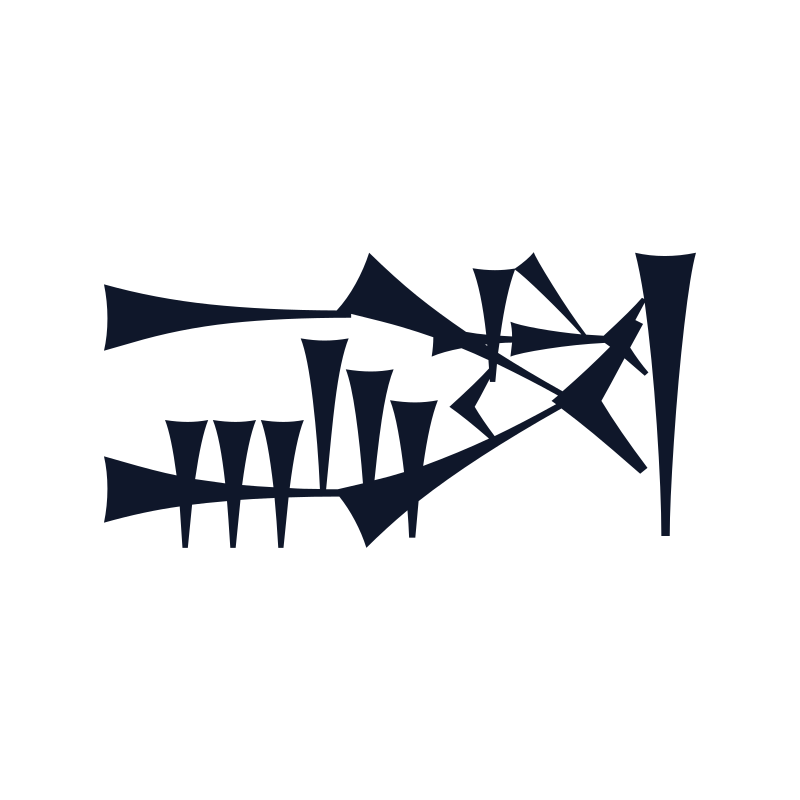 SHIM×BULUG · U+122C9
𒋉
malted beer-bread, malt
ŠIM×BULUG (𒋉) combines the brewing sign ŠIM with BULUG / MUNU₄ ('malt, sprouted barley'; Akkadian `buqlu`). In Sumerian brewing accounts and the Hymn to Ninkasi, malt and aromatic beer-bread (`bappir`) are the two essential pillars of beer production.
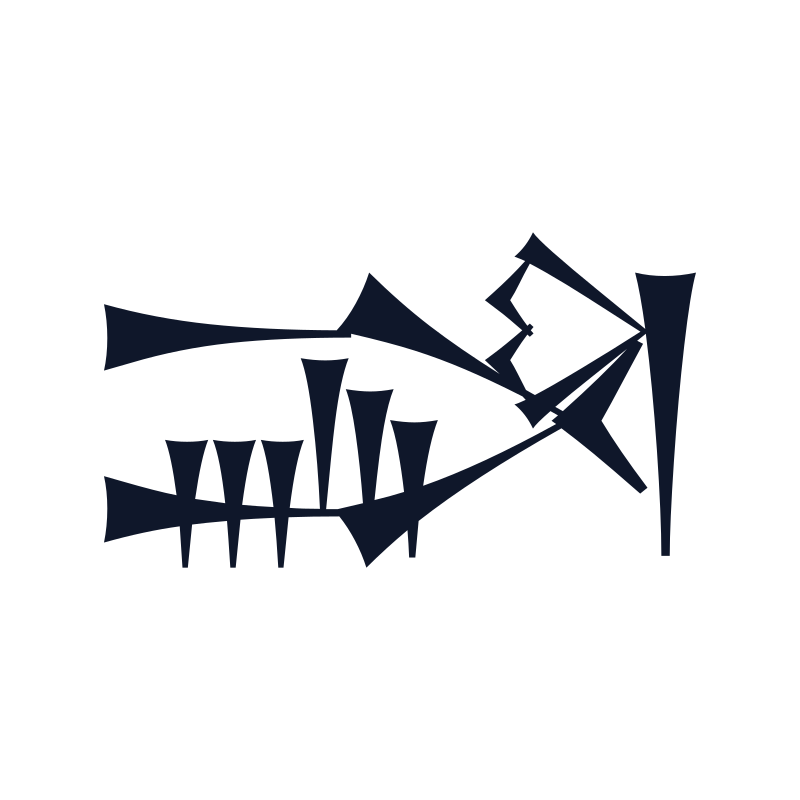 SHIM×DIN · U+122CA
𒋊
spiced wine, aromatic beer
ŠIM×DIN (𒋊) combines ŠIM ('aromatics, herbs, brewing') with DIN ('fine wine, choice beer', related to `kurun₂` / `gestin`). It denotes herb-infused wine or premium spiced beer served at royal banquets and temple feasts.
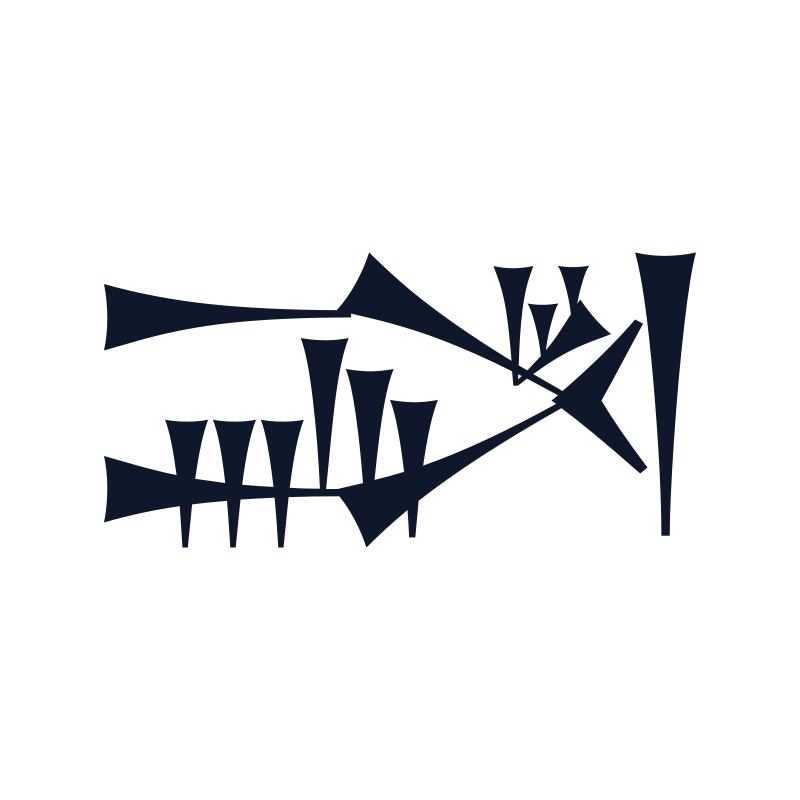 BAPPIR · U+122CB
𒋋
beer-bread, brewing loaf
BAPPIR (𒋋, structurally ŠIM×GAR, 'brewing aromatics + bread') is the standard Sumerian logogram for 'beer-bread' (Akkadian `bappiru`). Twice-baked loaves of malted barley and aromatic herbs (`bappir`) were stored in temple granaries and crumbled into water to ferment Mesopotamian beer.
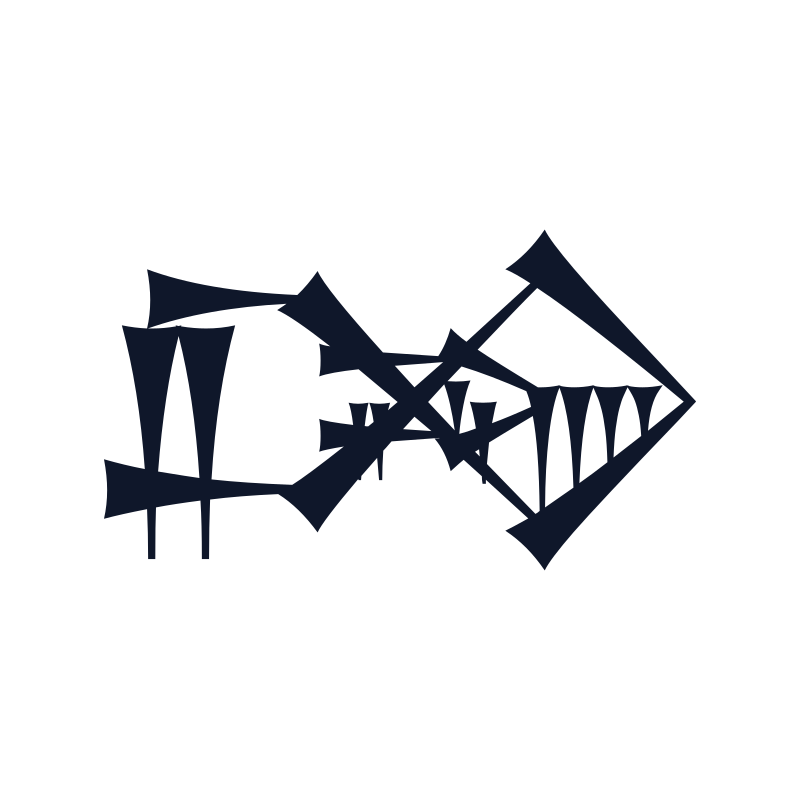 TAG×BI · U+122F4
𒋴
strain mash, brew beer
TAG×BI (𒋴) combines TAG ('to touch, beat, weave, process') with BI ('beer, strong drink'). Recorded in Mesopotamian lexical traditions, it denotes working with beer mash or straining fermented liquid.
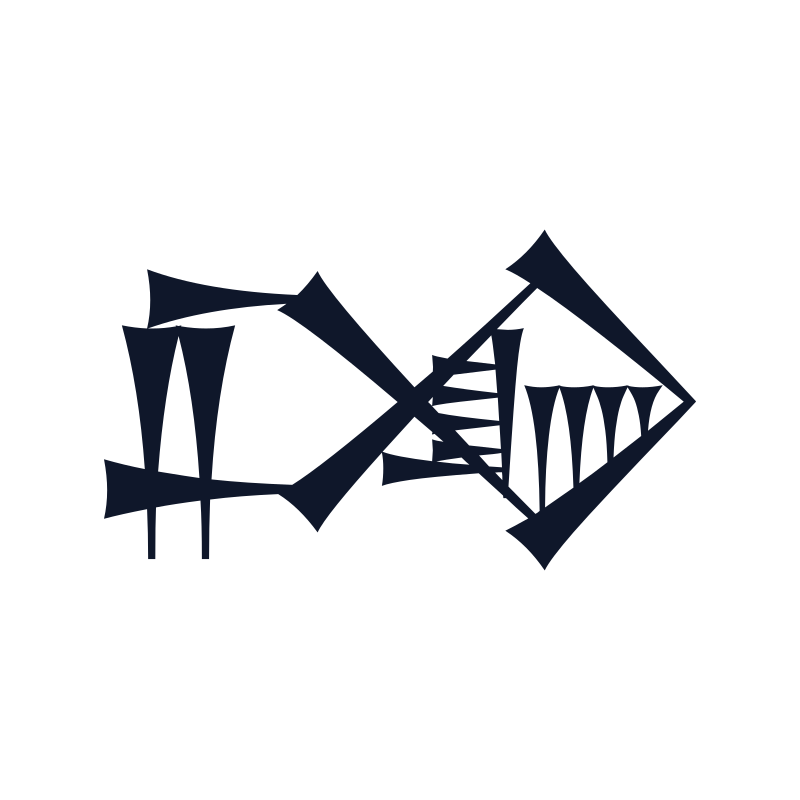 TAG×SHU · U+122F7
𒋷
touch with hand, adorn
TAG׊U (𒋷) combines TAG ('to touch, handle, craft') with ŠU ('hand'). Corresponding to the common Sumerian compound verb `šu-tag` (`šu...tag`, Akkadian `lapātu`, `za'ānu`), it means both 'to touch with the hand' and 'to richly adorn or overlay' statues and temples with gold and gems.
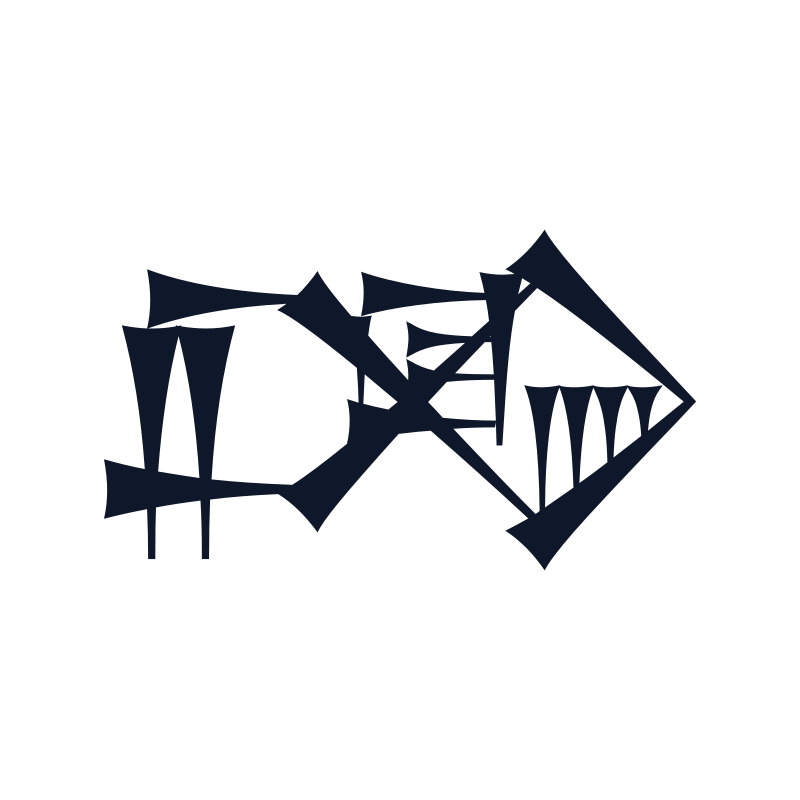 TAG×TUG2 · U+122F8
𒋸
weave cloth, textile craft
TAG×TUG₂ (𒋸) combines TAG ('to beat the weft, weave') with TUG₂ ('cloth, garment, textile'). Corresponding to the Sumerian technical phrase `tug₂ tag` (Akkadian `mahāṣu`), it designates beating the weft threads on a loom to weave dense woolen or linen cloth.
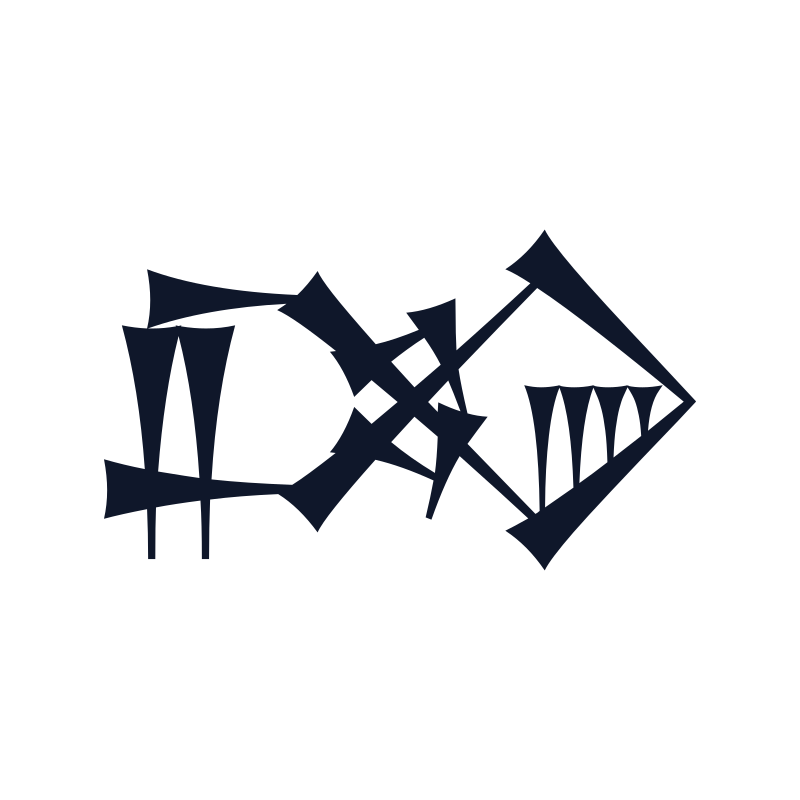 TAG×UD · U+122F9
𒋹
bleach cloth, sun-dry
TAG×UD (𒋹) combines TAG ('to weave, beat cloth, touch') with UD ('sun, day, white, bright'). In Mesopotamian textile and lexical traditions, it denotes bleaching and sun-drying woven cloth or striking a bright finish.
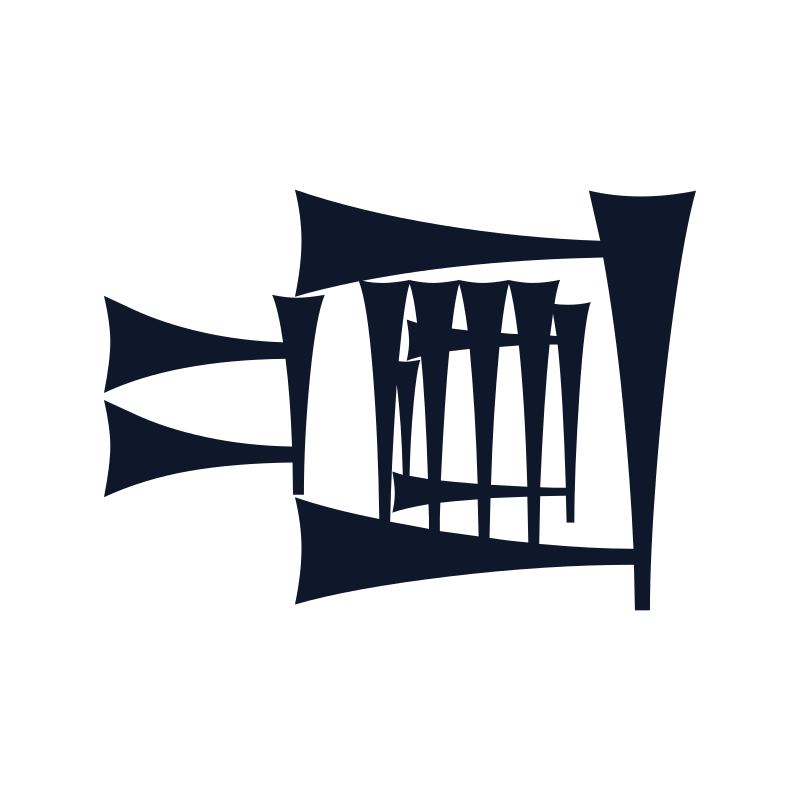 UM×LAGAB · U+1231E
𒌞
round tablet, clay disk
UM×LAGAB (𒌞) combines UM ('clay tablet, reed strap') with an inscribed LAGAB ('circle, round block'). In Mesopotamian scribal and lexical traditions, it denotes a round, bun-shaped student practice tablet used in the `edubba` scribal schools.
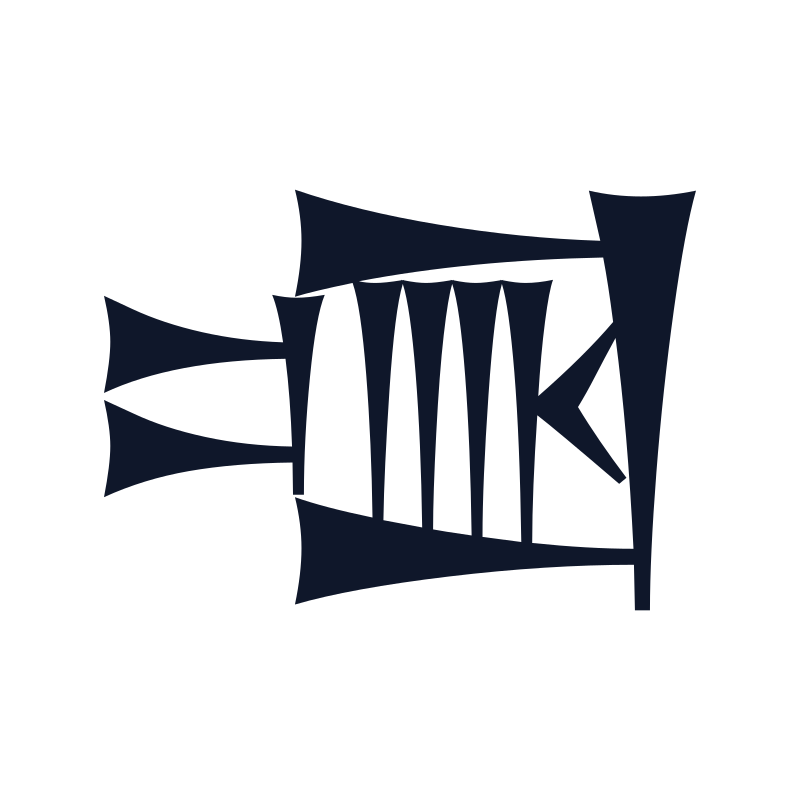 UM×U · U+12321
𒌡
tablet indentation, hollow
UM×U (𒌡) encloses the depression wedge U ('hole, ten') within UM ('clay tablet'). In Mesopotamian scribal and lexical traditions, it denotes a round stylus indentation or firing hole pressed into a clay tablet.
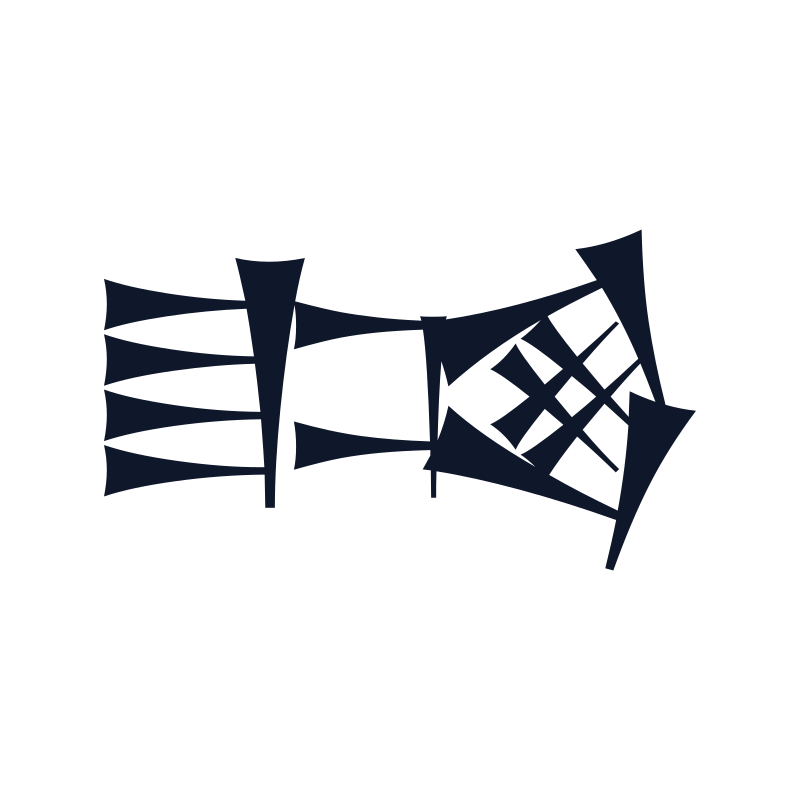 UMUM×KASKAL · U+12324
𒌤
craft workshop, forge, skill
UMUM×KASKAL (𒌤) is a compound form of UMUN₂ ('knowledge, skill, craft workshop, forge'; Akkadian `mummu`, `nēmequ`) with KASKAL. In Mesopotamian lexical traditions, it denotes a center of technical craftsmanship, a metalworking forge, or scholarly ingenuity.
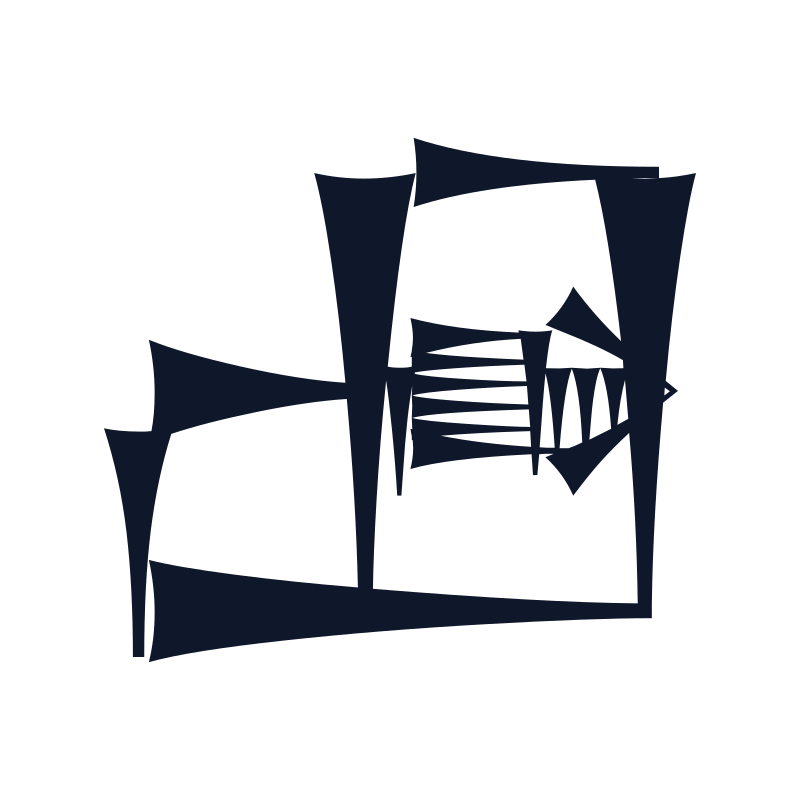 SHAKIR3 · U+1233C
𒌼
butter churn, dairy vessel
ŠAKIR₃ (𒌼, structurally URU×GA, containing GA = 'milk') is the Sumerian logogram for a 'butter churn' (`dug-šakir₃`, Akkadian `šakīru`, `namāṣu`). In sacred herdsman hymns to Dumuzi and Nanna-Suen, the rhythmic rocking and humming of the holy churn (`šakir₃ ku₃`) is a celebrated symbol of pastoral prosperity.
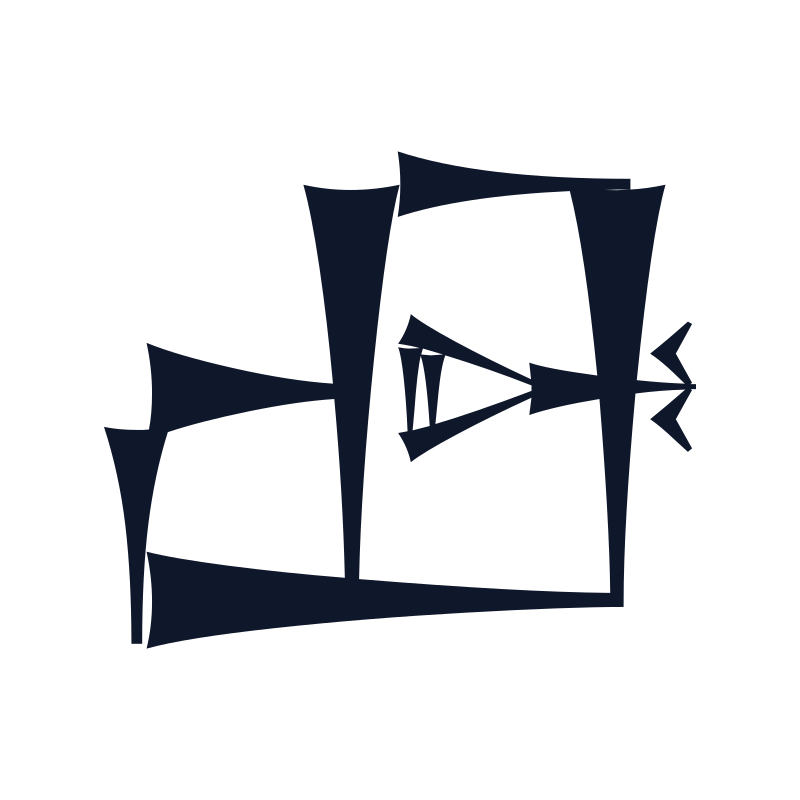 GUR5 · U+12340
𒍀
cut down, prune, chop
GUR₅ (𒍀, structurally URU×GU) is a Sumerian logogram meaning 'to cut down, chop, lop off, prune, or weed' (`gur₅`, `guru₅`; Akkadian `kasāmu`, `kapāru`). In agricultural and literary texts, it describes clearing reeds and brushwood or stripping branches.
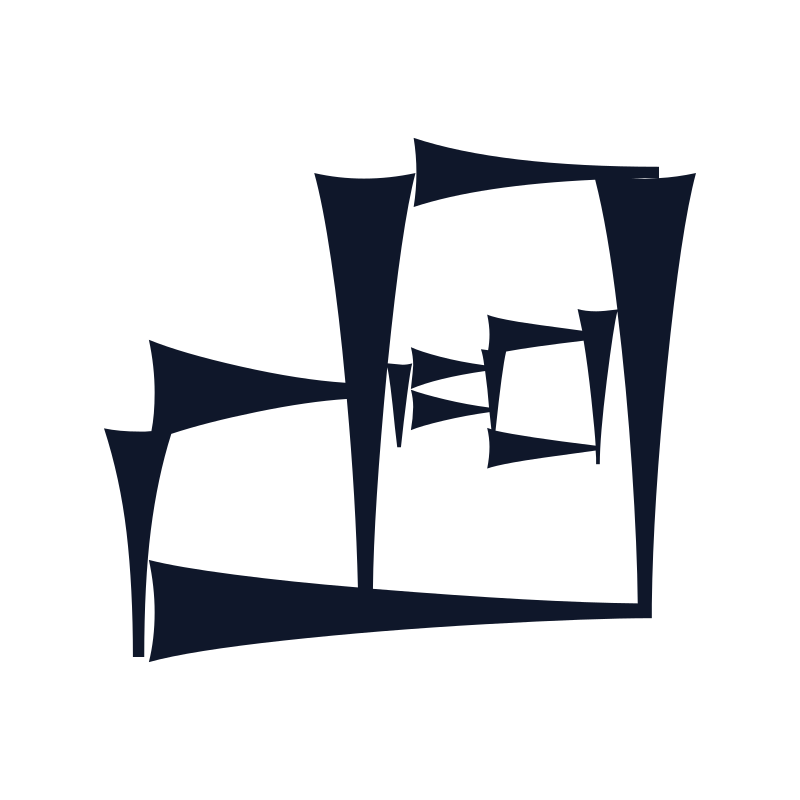 BANSHUR · U+1234E
𒍎
offering table, dining table
BANŠUR (𒍎, structurally URU×URUDA, often preceded by `giš`) is the standard Sumerian logogram for 'table, dining tray, or temple offering table' (Akkadian `paššūru`). In temple rituals, lavish food and drink offerings were set upon the `giš-banšur` before the cult statues of the gods.
 URUDA×U · U+12350
𒍐
copper cauldron, ingot
URUDA×U (𒍐) combines URUDA ('copper'; Akkadian `erû`) with the depression and numeral wedge U ('hollow, ten'). In early metallurgical and lexical records, it denotes a hollow copper cauldron or a ten-unit copper weight/ingot.
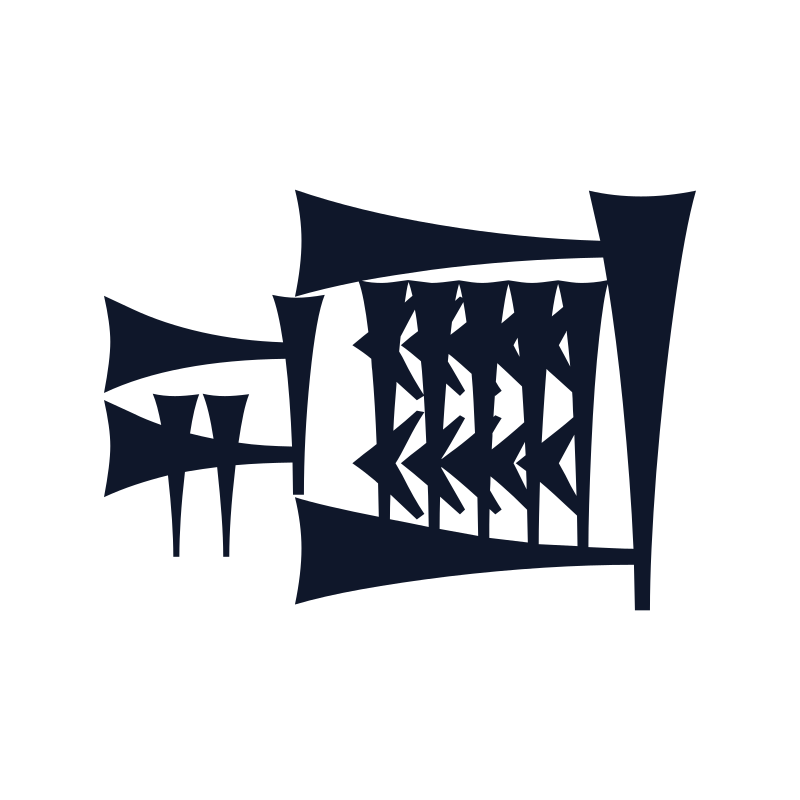 DUB×SHE · U+12376
𒍶
grain tablet, heaped barley
DUB׊E (𒍶) combines DUB ('clay tablet; to heap up, pour out') with an inscribed ŠE ('barley, grain'). In Mesopotamian administrative and lexical traditions, it denotes either a tablet recording barley accounts (`dub-še`) or pouring grain into a storage heap (`še dub`).
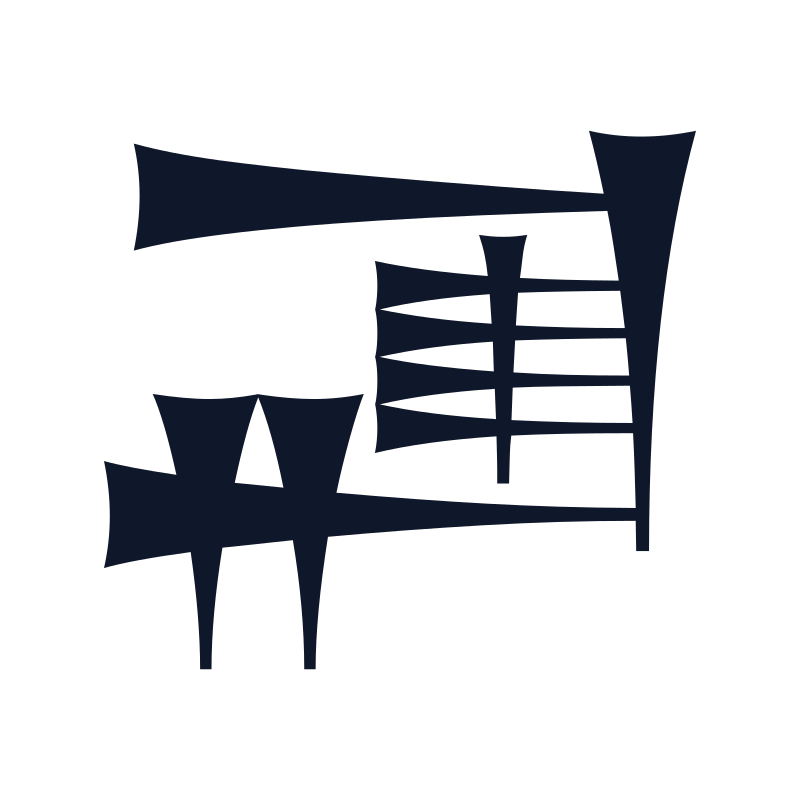 GA2×ASH2 · U+1237A
𒍺
emmer-wheat bin, grain chest
GA₂×AŠ₂ (𒍺) combines the container and building frame GA₂ ('box, basket, storehouse') with an inscribed AŠ₂ ('emmer wheat', Sumerian `ziz₂`, Akkadian `kunāšu`). In administrative and lexical traditions, it denotes a granary bin or storage chest for emmer wheat.
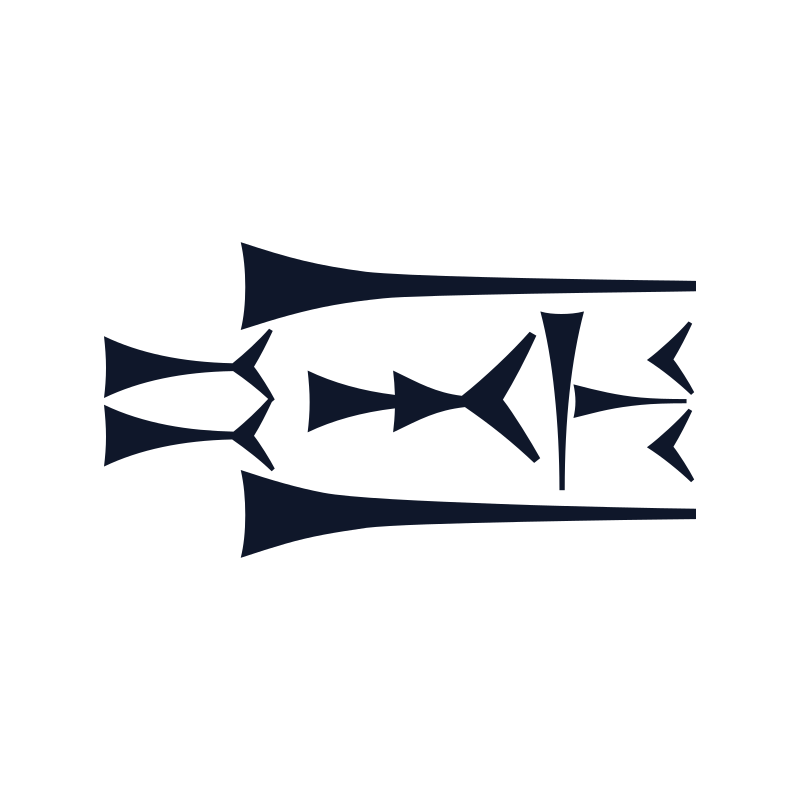 NINDA2×BAL · U+12391
𒎑
pouring funnel, libation jar
NINDA₂×BAL (𒎑) combines the funnel and measuring vessel sign NINDA₂ with an inscribed BAL ('to pour out, libate, transfer'). In Mesopotamian ritual and metrological lists, it denotes a funnel or vessel used for pouring liquid offerings and transferring measured rations.
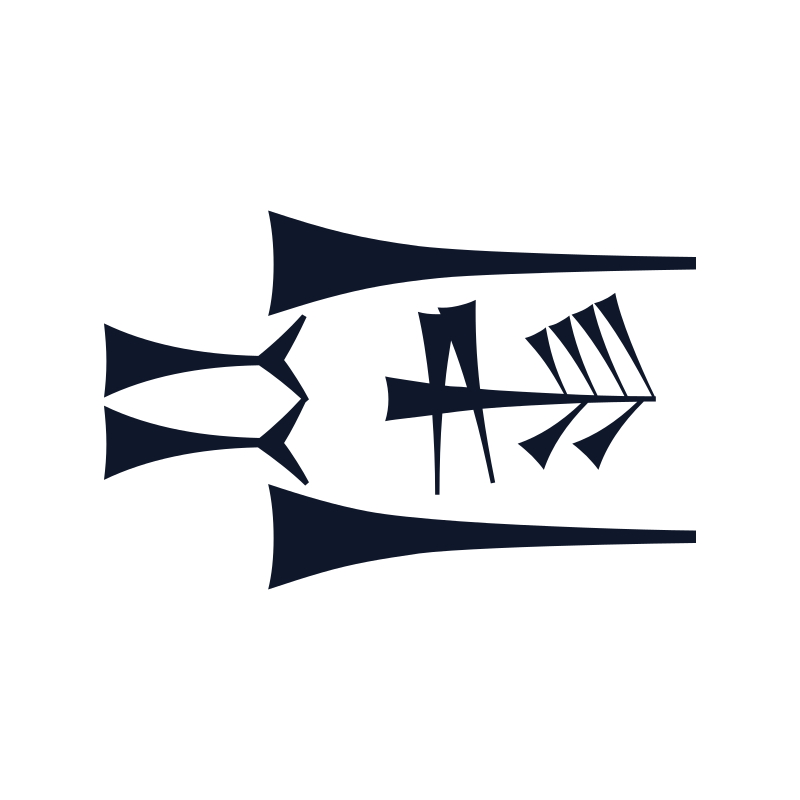 NINDA2×GI · U+12392
𒎒
reed seed-tube, true measure
NINDA₂×GI (𒎒) combines NINDA₂ ('seed-funnel, measuring vessel') with GI ('reed; firm, true, verified'). It denotes both the hollow reed drop-tube of a Mesopotamian seeder-plow (`ittû`) and an officially verified, standard measuring vessel.
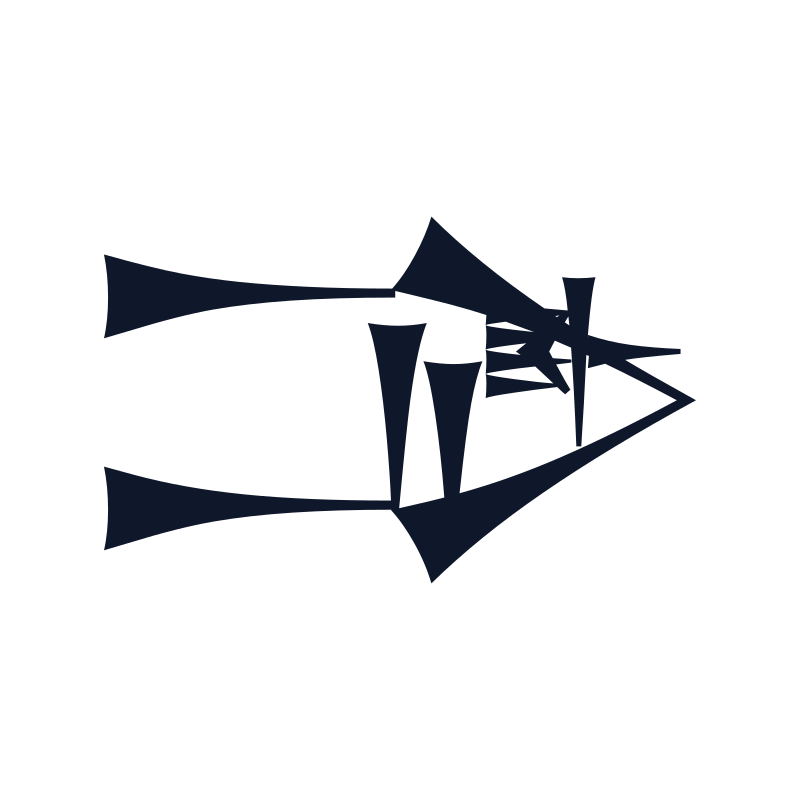 BI×IGI-gunu · U+1204C
𒁌
clarified beer, choice brew
BI×IGI GUNU (𒁌) combines BI / KAŠ ('beer') with the hatched eye sign IGI-gunû ('bright, clear, select'). In Mesopotamian brewing and lexical traditions, it designates clarified, first-quality beer strained for royal and divine tables.
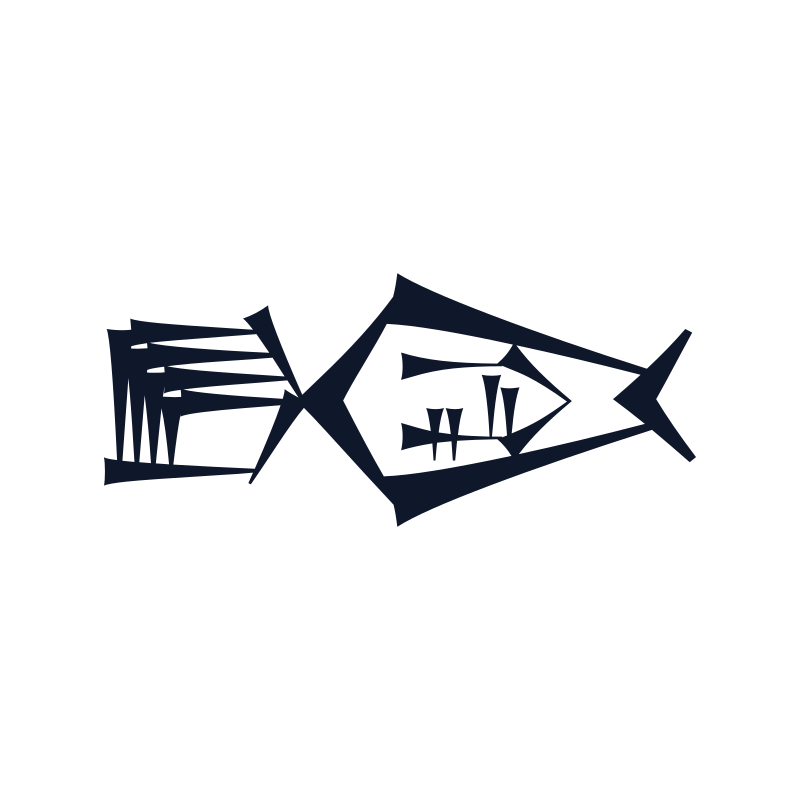 DAG.KISIM5xBI · U+1205A
𒁚
fermented dairy vat, vessel
DAG KISIM₅×BI (𒁚) is a compound cuneiform sign formed by inscribing BI (𒁉, beer or liquid) inside the DAG.KISIM₅ (𒁙) enclosure frame. In Babylonian lexical lists, it denotes specialized vessels or vats used for fermented dairy products and curdled liquids in temple creameries. Scribes preserved the grapheme in the Ea IV sign list to classify pastoral and brewing containers.
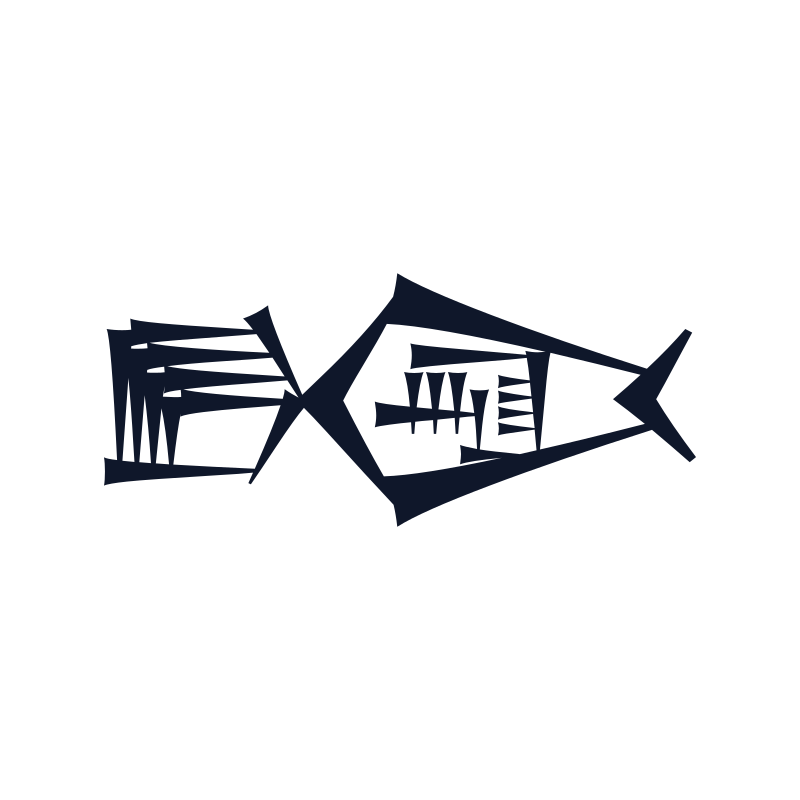 DAG.KISIM5xLA · U+12064
𒁤
suspended churn, curd bag
DAG KISIM₅×LA (𒁤) combines DAG.KISIM₅ (𒁙) with LA (𒆷, to hang or suspend). In Babylonian lexical series, it denotes a suspended dairy skin, hanging churn, or straining bag used by herdsmen to drain whey from curds, as well as a hanging insect cocoon. The internal LA sign directly indicates the suspended position of the container.
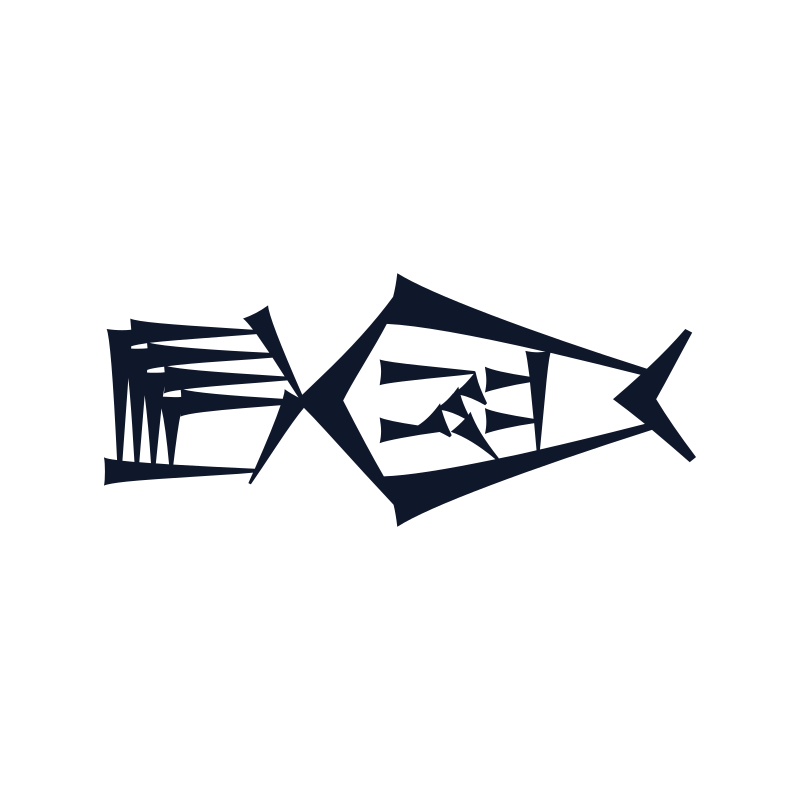 DAG.KISIM5xNE · U+12068
𒁨
heated dairy kettle, scalded curd
DAG KISIM₅×NE (𒁨) combines the DAG.KISIM₅ (𒁙) vessel frame with NE / IZI (𒉈, fire, brazier, or heat). In Mesopotamian lexical lists, it refers to a dairy cauldron or vat in which milk and whey were heated over a brazier to clarify butter (ghee) and preserve dry cheese. The internal fire sign highlights thermal processing in temple kitchens.
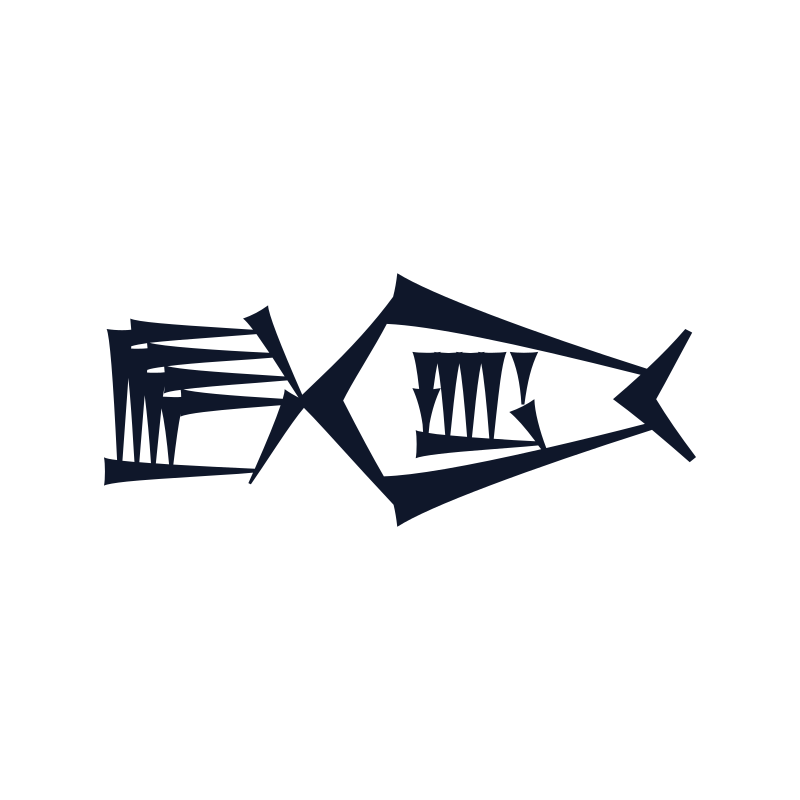 KISIM5 · U+1206B
𒁫
sour milk, curd mold, whey
DAG KISIM₅×TAK₄ (𒁫), a fuller graphic variant of KISIM₅, inscribes TAK₄ (𒋺, to leave behind or mold) inside the DAG.KISIM₅ (𒁙) container. In Sumerian and Akkadian texts, it denotes soured milk, drained curds, or molded cheese cakes (Akkadian kisīmu) set aside for preservation and temple offerings.
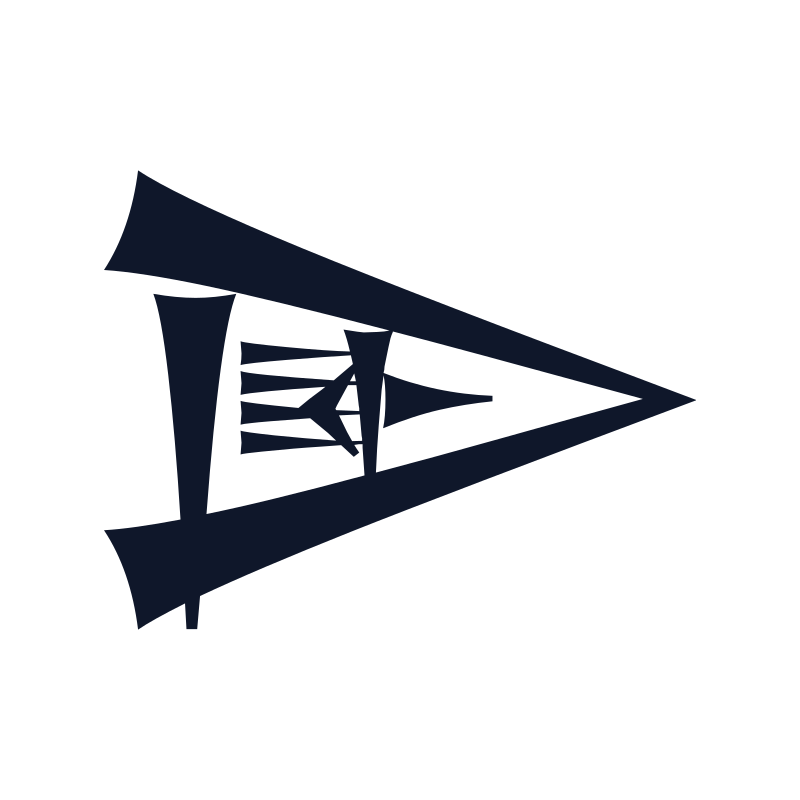 KAKxIGI.GUNU · U+12196
𒆖
ornate peg, foundation nail
KAK×IGI-gunû (𒆖) combines KAK (𒆕, peg, nail, or weapon cone) with an inscribed IGI-gunû (𒅇 / SIG₇, radiant eye or inlaid decoration). Recorded in Babylonian sign lists, it represents a gleaming or eye-inlaid ceremonial peg driven into temple walls to secure divine ownership and ward off evil.
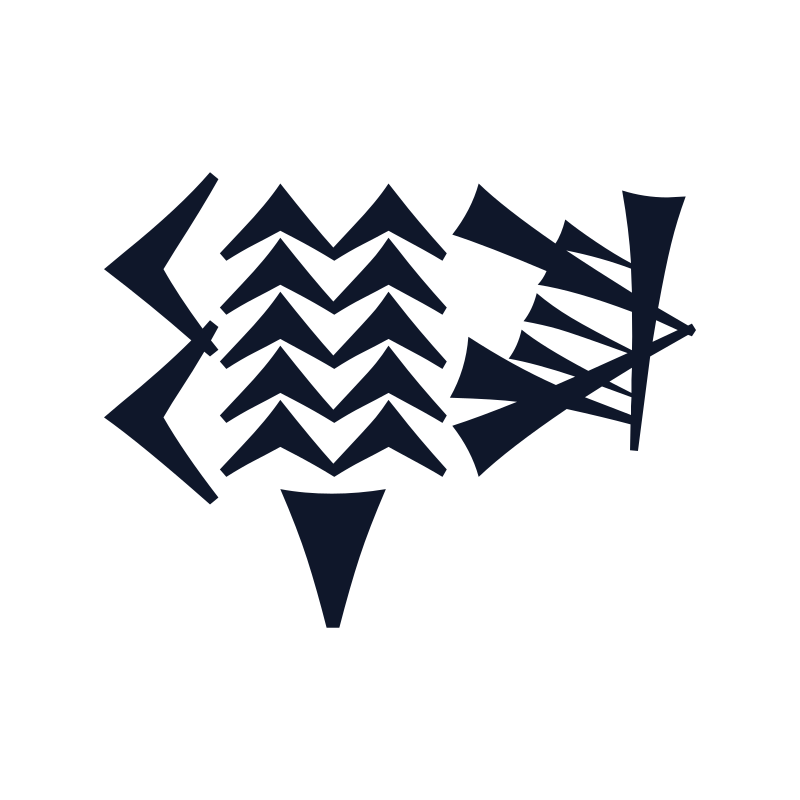 NAGAxSHU.TENU · U+12242
𒉂
alkaline hand-washing, cleansing
NAGA׊U-tenû (𒉂) combines NAGA (𒉀, potash, soapwort, or alkaline soda) with a tilted ŠU (𒋗, hand) sign. In Mesopotamian ritual and lexical texts, it represents scrubbing the hands with plant-ash alkali and oil—the standard method of personal hygiene and cultic purification before entering a temple.
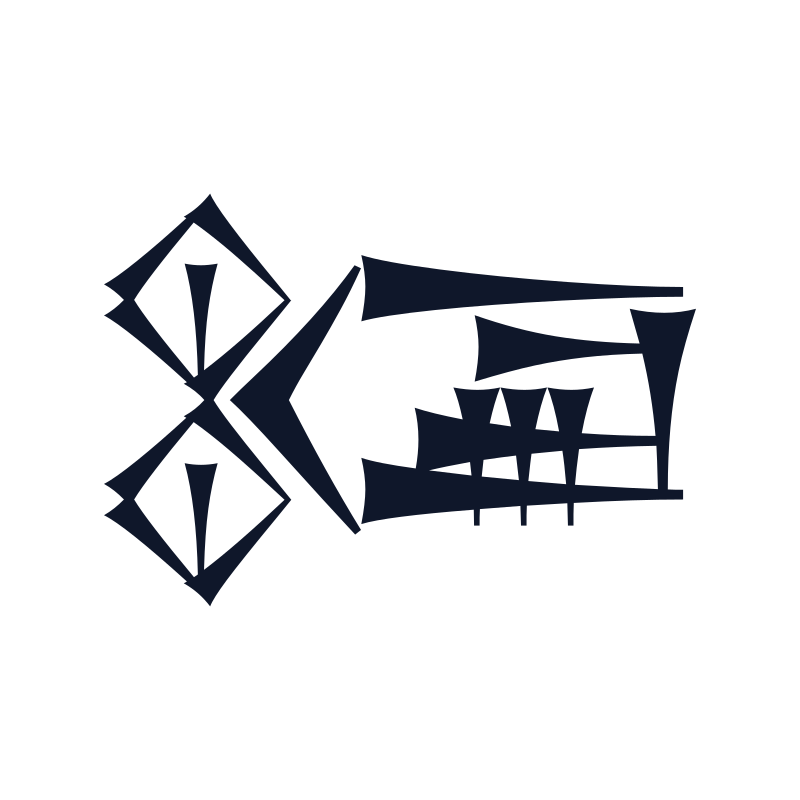 NUNUZ.AB2xASHGAB · U+1226E
𒉮
leather-clad vat, ovoid vessel
NUNUZ AB₂×AŠGAB (𒉮) belongs to the NUNUZ.AB₂ (𒉭𒀖, ovoid container or brood-vessel) sign family and encloses AŠGAB (𒀿, leatherworker or tanned hide). In Mesopotamian lexical lists, it designates an ovoid storage jar or brewing vat reinforced with a leather casing, as well as a hard-shelled beetle or pupa.
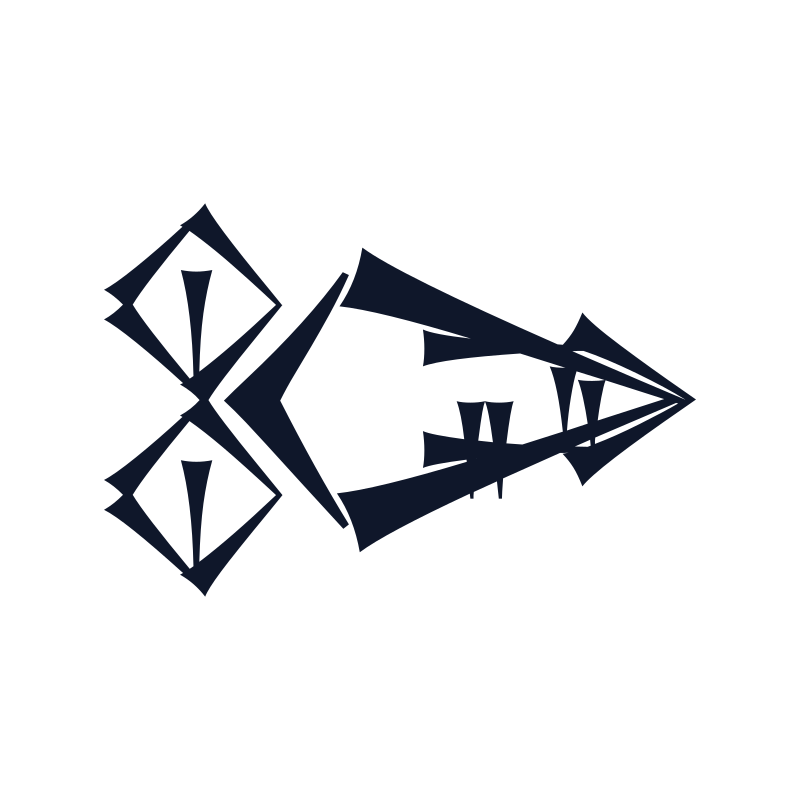 LAHTAN · U+1226F
𒉯
large beer vat, brewing jar
NUNUZ AB₂×BI (𒉯), read logographically as LAHTAN (Akkadian lahtanu), combines the ovoid NUNUZ.AB₂ (𒉭𒀖) vessel frame with an inscribed BI / KAŠ (𒁉, beer). It denotes a large ceramic beer vat placed beneath the mash tun to collect filtered wort during Mesopotamian brewing, famously celebrated in the Hymn to Ninkasi.
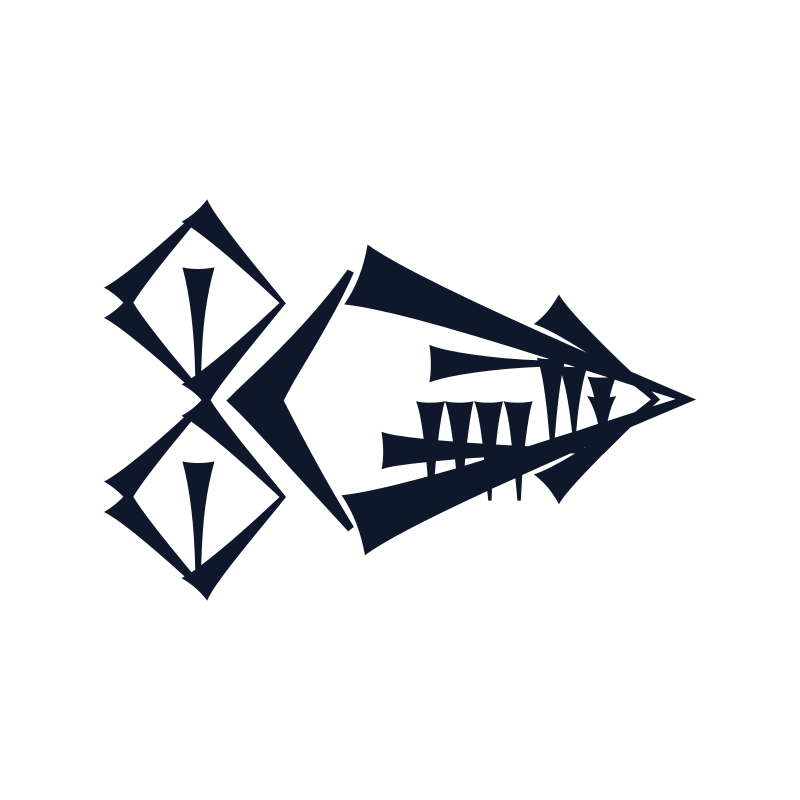 LAHTAN2 · U+12270
𒉰
ceramic beer vat, earthenware jar
NUNUZ AB₂×DUG (𒉰), read logographically as LAHTAN₂, inscribes DUG (𒁺, clay pot or ceramic vessel) inside the NUNUZ.AB₂ (𒉭𒀖) ovoid frame. It is an explicit graphic variant of LAHTAN (𒉯), emphasizing that the large collector vat used for brewing beer and storing liquids was crafted of fired earthenware.
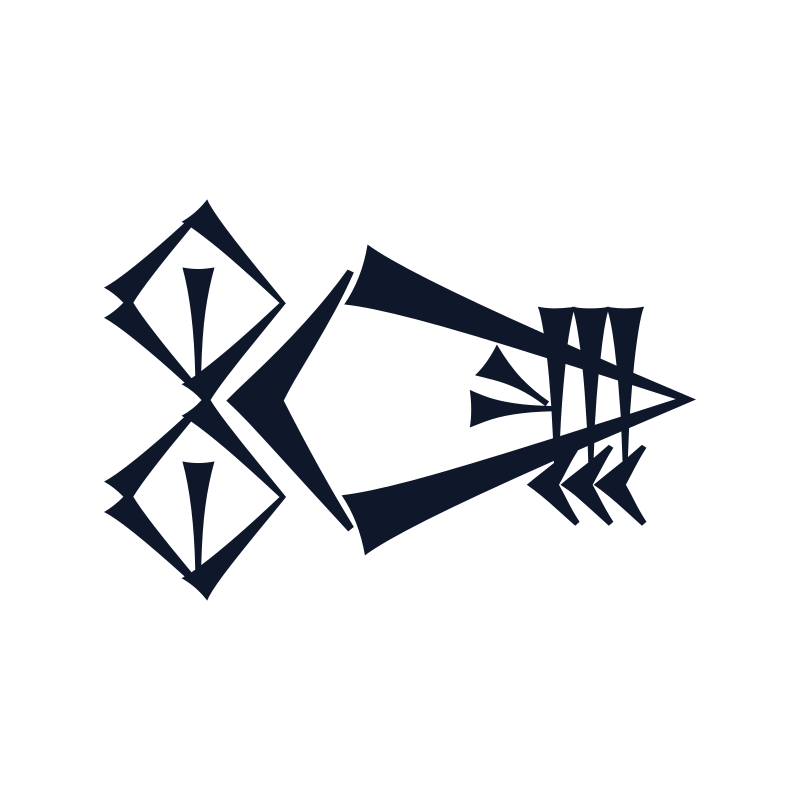 NUNUZ.AB2xKAD3 · U+12273
𒉳
wicker-wrapped jar, woven cocoon
NUNUZ AB₂×KAD₃ (𒉳) combines the ovoid NUNUZ.AB₂ (𒉭𒀖) container with KAD₃ (𒆐, to tie, weave, or plait). In Mesopotamian lexical series, it describes an ovoid earthenware vessel protected by a plaited reed or cord casing, as well as a tightly spun insect cocoon.
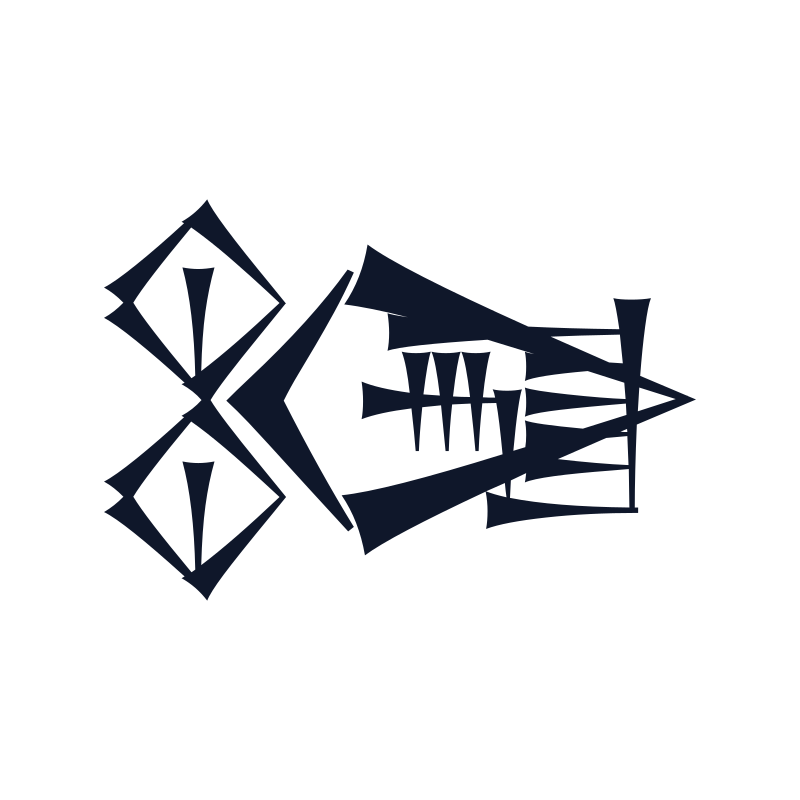 NUNUZ.AB2xLA · U+12274
𒉴
suspended vessel, hanging cocoon
NUNUZ AB₂×LA (𒉴) inscribes LA (𒆷, to hang or suspend) inside the NUNUZ.AB₂ (𒉭𒀖) ovoid frame. Like DAG.KISIM₅×LA (𒁤), it designates a round-bottomed jar or dairy vessel suspended in a rope sling from ceiling beams to keep liquids cool, or an insect chrysalis hanging from a branch.
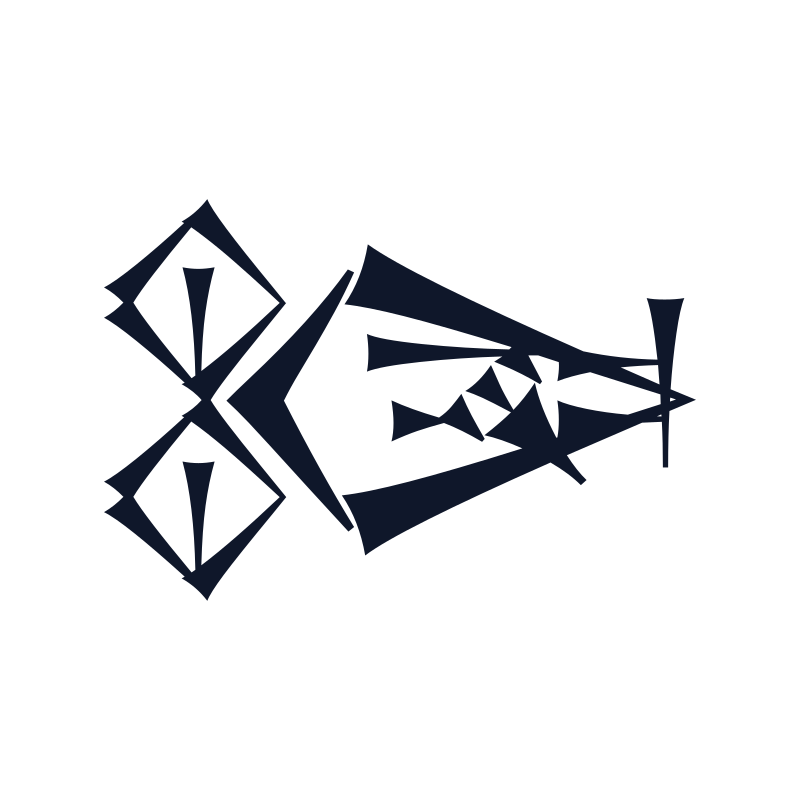 NUNUZ.AB2xNE · U+12275
𒉵
heated brewing vat, boiling jar
NUNUZ AB₂×NE (𒉵) places NE / IZI (𒉈, brazier, ember, or heat) inside the NUNUZ.AB₂ (𒉭𒀖) vessel sign. In Babylonian lexical lists, it refers to a large ovoid brewing or dairy vat warmed over glowing embers to promote fermentation and mashing.
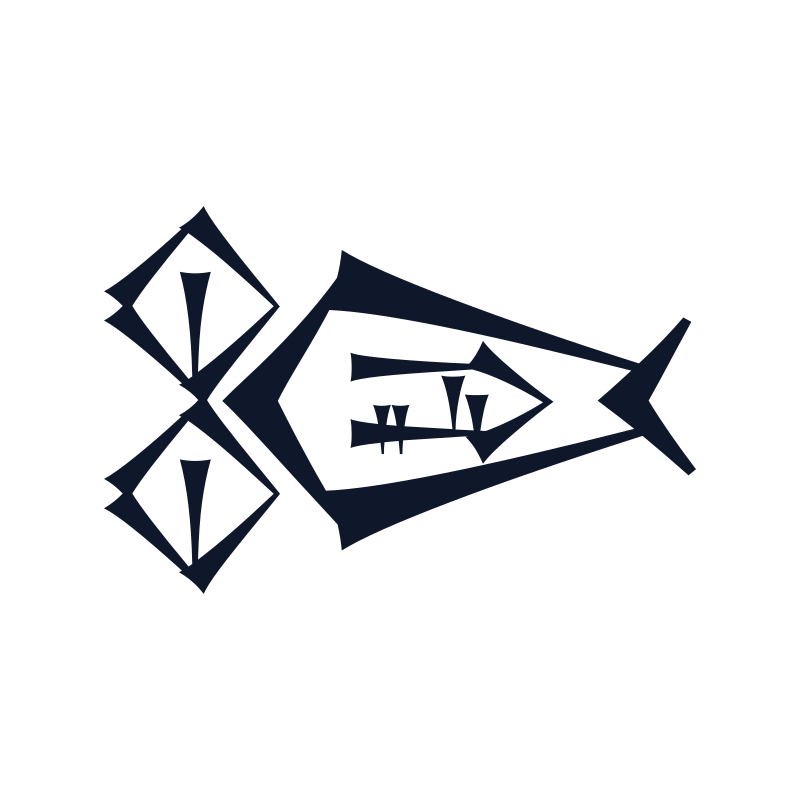 NUNUZ.KISIM5xBI · U+12278
𒉸
ovoid fermentation vat, collector
NUNUZ KISIM₅×BI (𒉸) merges the ovoid prefix NUNUZ (𒉭) with KISIM₅×BI (𒁚, fermented liquid vat). Recorded in Babylonian sign compendia as an orthographic counterpart of NUNUZ AB₂×BI (𒉯, lahtan), it denotes a large round-bellied collector vat for fermenting beer or cultured milk.
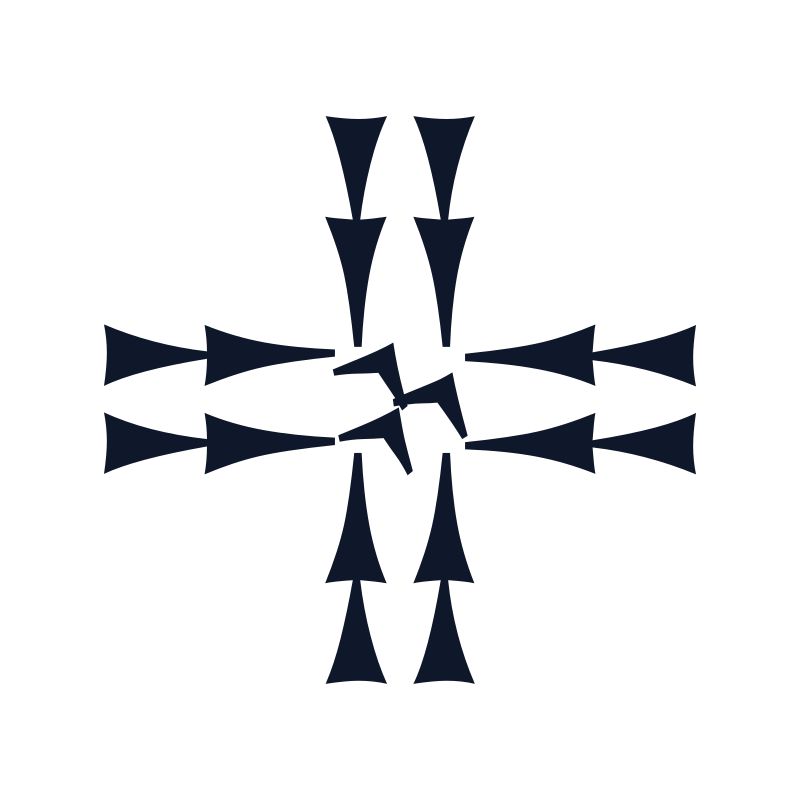 4ZAxKUR · U+1235F
𒍟
mountain gemstones, lapis quarry
ZA SQUARED×KUR (𒍟) arranges four ZA (𒍝, bead or precious stone) signs in a square around KUR (𒆳, mountain or foreign highland). Preserved in Mesopotamian sign lists, it vividly depicts precious stones—such as lapis lazuli and carnelian—extracted from the eastern mountains of Badakhshan and Iran.
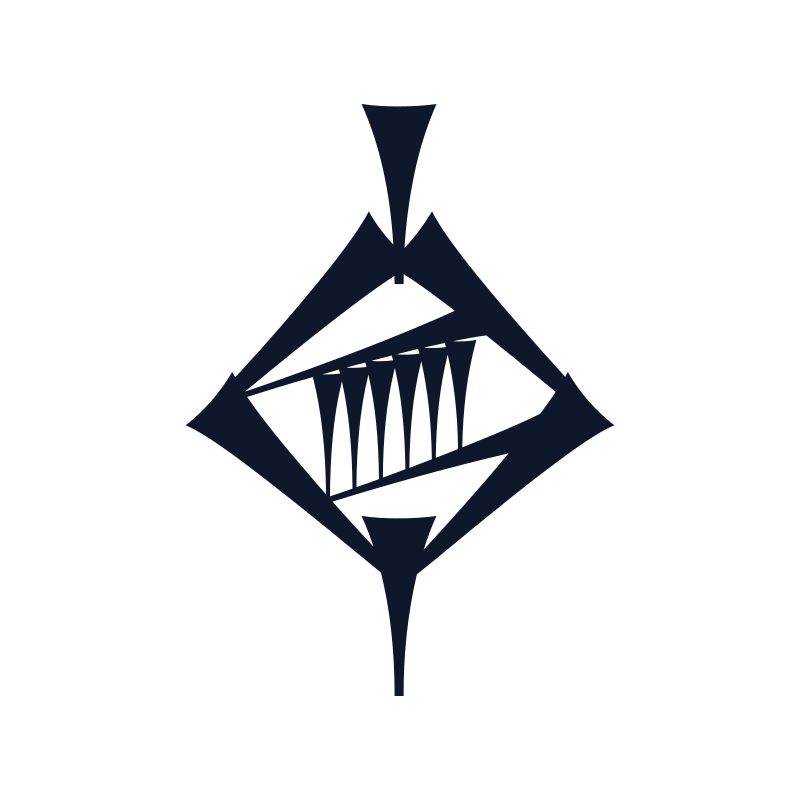 NU11.TENU · U+12393
𒎓
alabaster, translucent stone, light
NU₁₁ ROTATED NINETY DEGREES (𒎓) is the vertical paleographic orientation of NU₁₁ (𒉡 / 𒌓, light or alabaster) preserved in monumental inscriptions and scholarly sign lists. When preceded by GIŠ (as giš-nu₁₁) or NA₄, it designates 'light' (Akkadian nūru) and translucent white 'alabaster' (Akkadian gišnugallu) carved into temple lamps and ritual vessels.
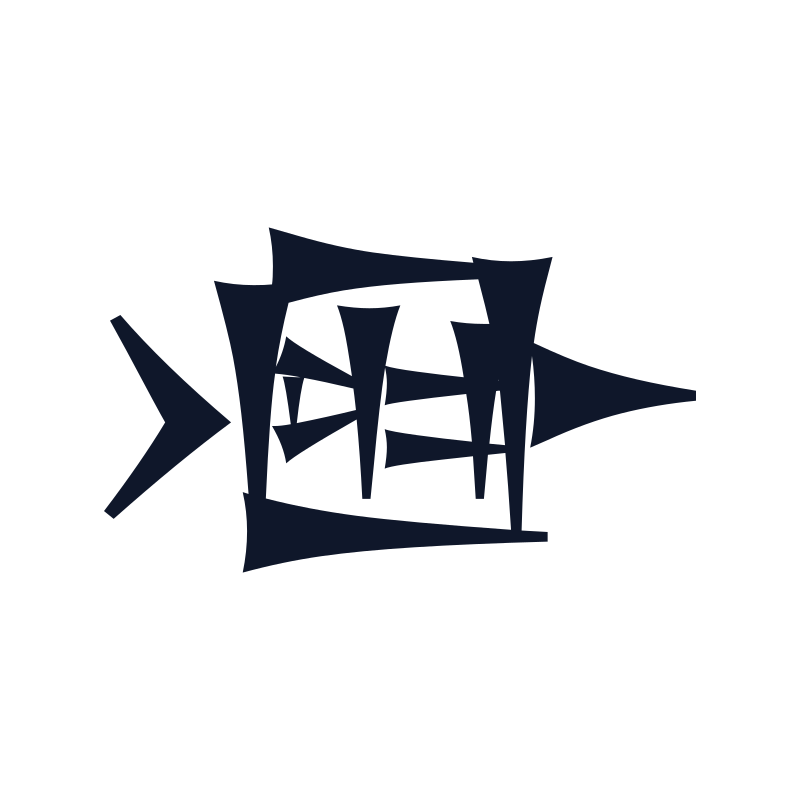 AKxSHITA.GISH · U+1201F
𒀟
ceremonial mace, weapon craft
AK׊ITA.GIŠ (𒀟) is a complex compound sign combining AK (𒀝, to make, do, or perform) with ŠITA (ceremonial mace or weapon) and GIŠ (𒄑, wood or shaft). Attested in Early Dynastic and Babylonian lexical lists, it denotes fashioning or wielding a shafted mace in martial and cultic ceremonies.
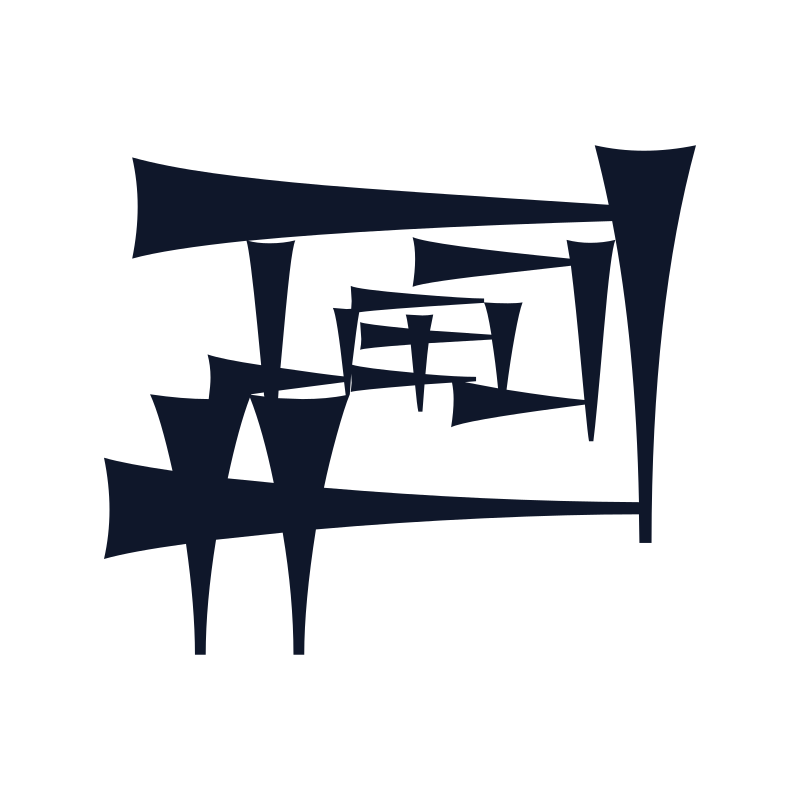 GA2xBAR.RA · U+120C0
𒃀
fleece basket, smelting crucible
GA₂×BAR.RA (𒃀) places BAR (𒁇, fleece, outside, or to refine metal) together with its phonetic complement RA (𒊏) inside the container sign GA₂ (𒂷). In Mesopotamian lexical lists, it designates either a woven basket for shorn wool fleeces or a furnace crucible used to refine silver and copper.
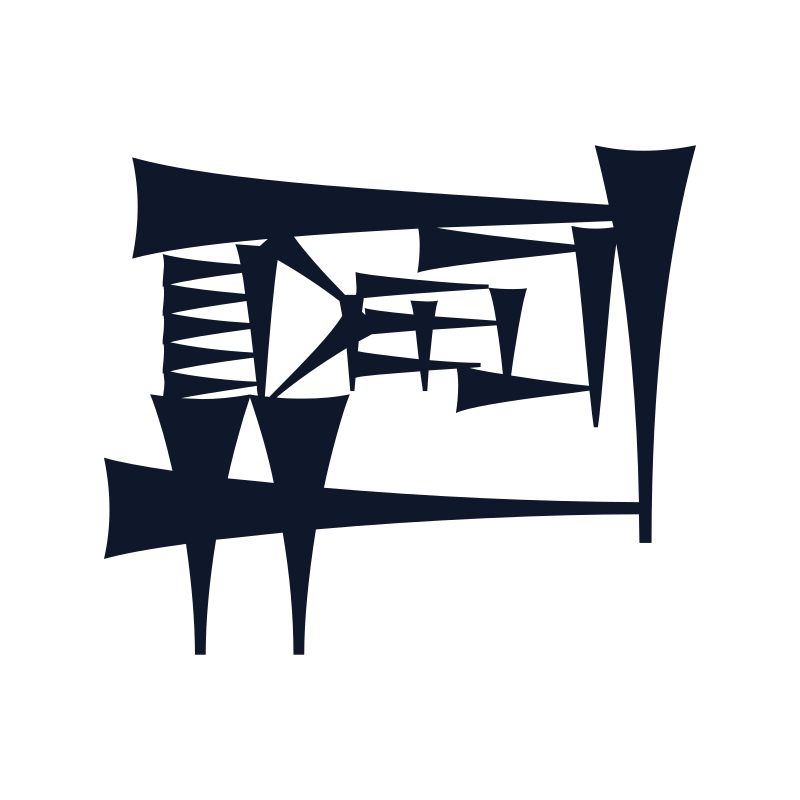 BUR2 · U+120C2
𒃂
vessel chest, unbind, release
GA₂×BUR.RA (𒃂) encloses BUR (𒁓, stone offering bowl, /bur/) and its phonetic complement RA (𒊏) within GA₂ (𒂷, chest or chamber). In Sumerian and Akkadian lexical texts, it denotes a temple storage chest for stone offering bowls, and phonetically serves as a fuller spelling of bur₂ (to unpack, release, or explain; Akkadian pašāru).
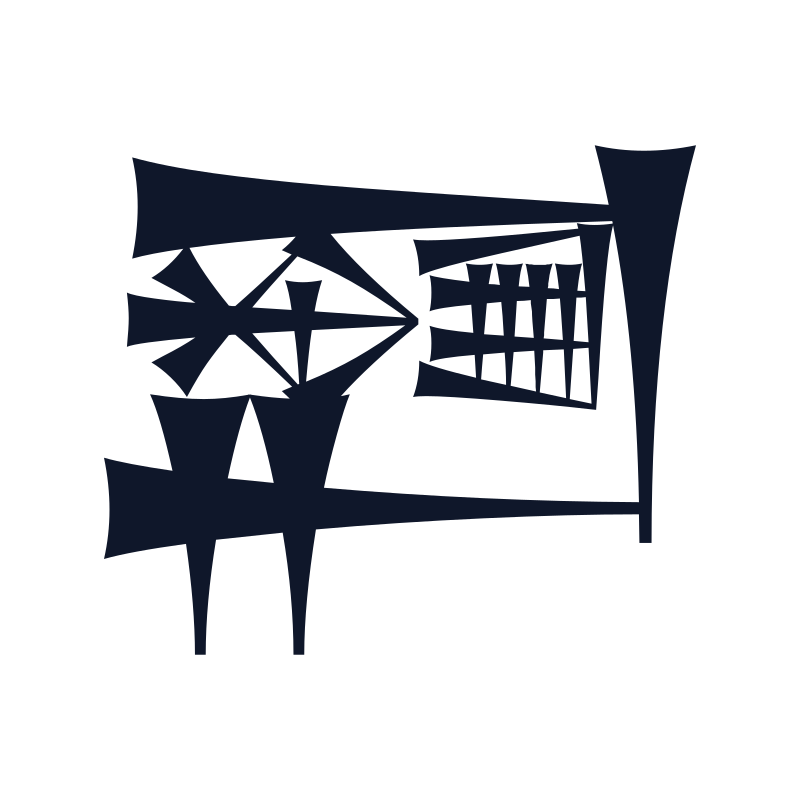 GA2xGIR2.SU · U+120D0
𒃐
leather scabbard, blade case
GA₂×GIR₂.SU (𒃐) encloses GIR₂ (𒄈, dagger or knife blade) and SU (𒋢, leather or skin) within the container sign GA₂ (𒂷). In Mesopotamian lexical lists, it literally depicts a leather sheath or case for knives and daggers, and also echoes the name of the sacred Sumerian city of Girsu.
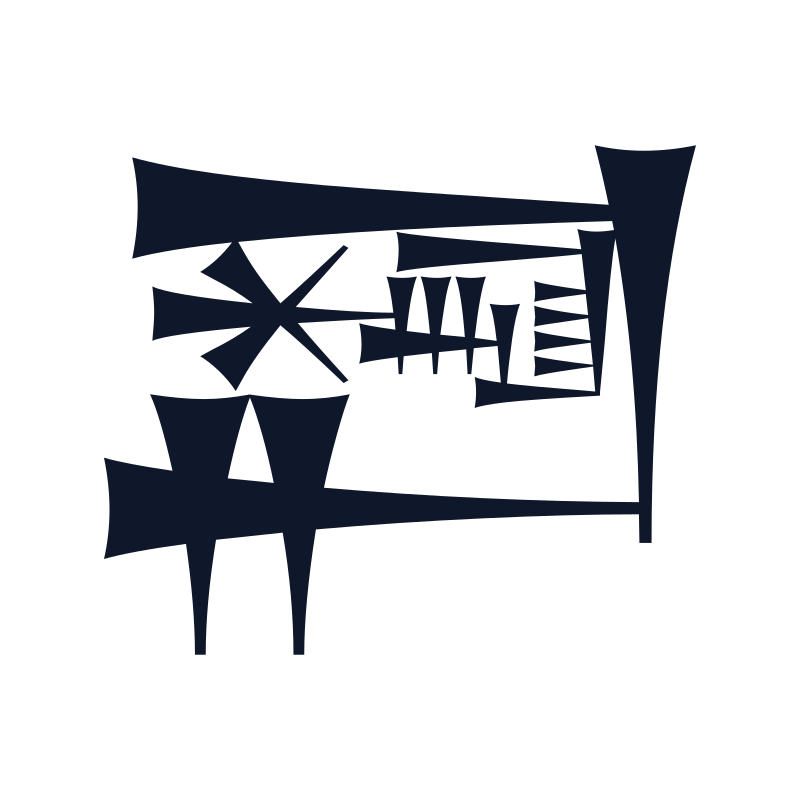 GA2xHAL.LA · U+120D3
𒃓
dividing basket, ration sieve
GA₂×HAL.LA (𒃓) inscribes HAL (𒄠, to divide, apportion, or sieve) and its phonetic complement LA (𒆷) inside GA₂ (𒂷, basket or box). In Babylonian lexical lists, it denotes a perforated basketry sieve or a container used to divide and distribute grain shares.
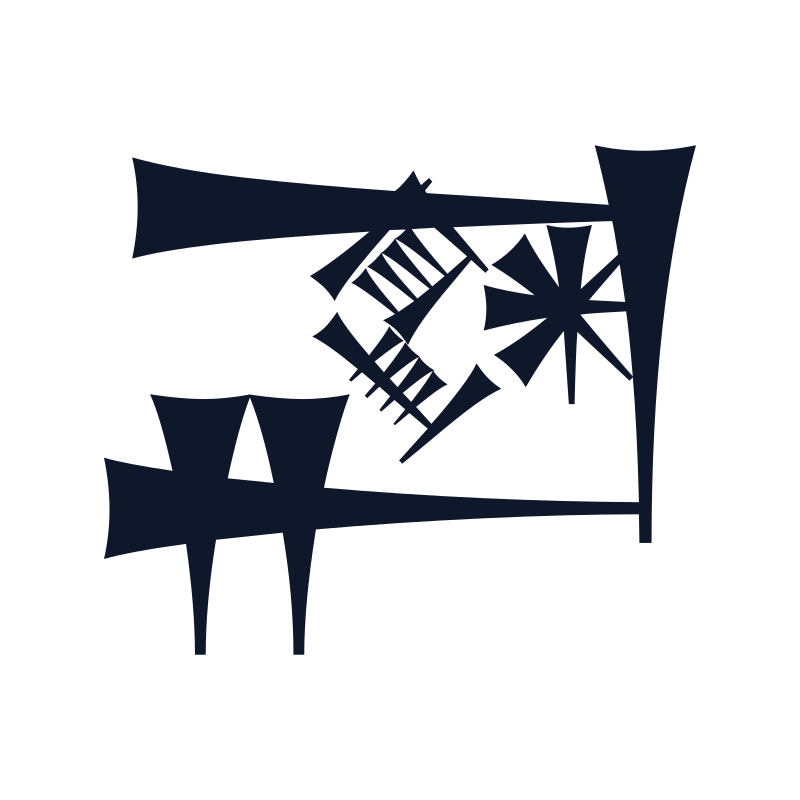 GA2xKU3.AN · U+120DC
𒃜
sacred metal treasury, bullion chest
GA₂×KU₃.AN (𒃜) places KU₃.AN (𒆬𒀭, literally 'sky-metal'—meteoric iron, tin, or sacred refined silver; Akkadian amūtu, annaku) inside the treasury chest sign GA₂ (𒂷). Preserved in Babylonian lexical lists, it denotes a locked temple strongbox or treasury vault containing precious celestial metals.
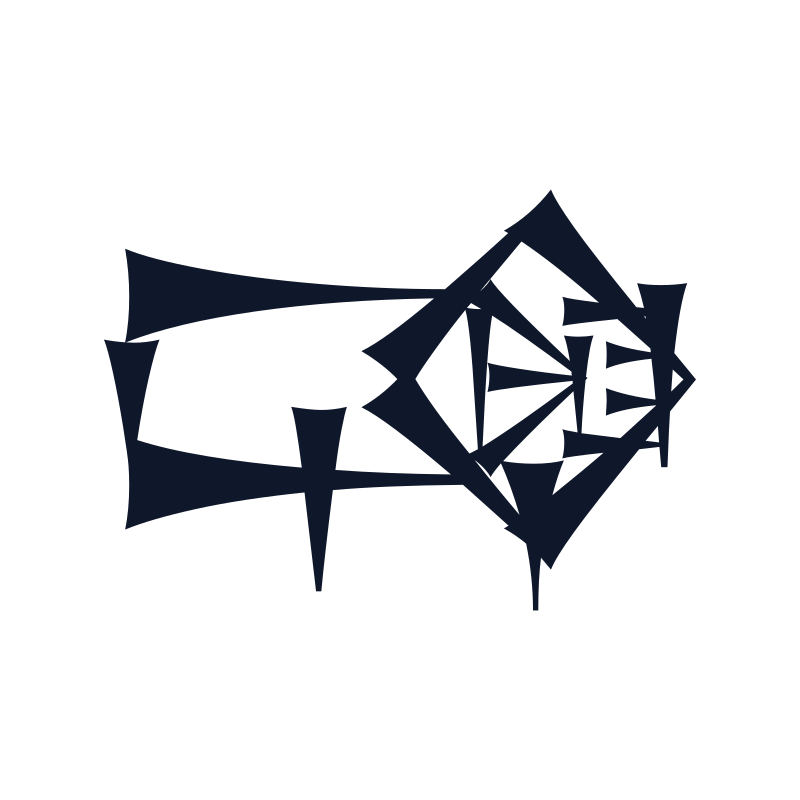 GU2xSAL.TUG2 · U+1211C
𒄜
noblewoman's mantle, neck-cloak
GU₂×SAL.TUG₂ (𒄜) combines GU₂ (𒄘, neck or shoulders) with SAL.TUG₂ (𒊩𒌆, nin₉ / egi, noblewoman or lady's garment). In Sumerian and Akkadian textile lists, it designates a fine wool mantle, neck-wrap, or ceremonial cape (related to gu₂-è, Akkadian nahlaptu) worn draped over the shoulders.
 LAGABxASH.ZIDA.TENU · U+121BF
𒆿
socketed mace-head, depression
LAGAB×AŠ ZIDA TENU (𒆿) encloses a single wedge slanted to the right (AŠ zida-tenû) within the square or circular frame LAGAB (𒇉). Preserved in the Babylonian sign list Ea I, it documents paleographic variations of pierced stone mace-heads, wooden blocks, and sunken pits.
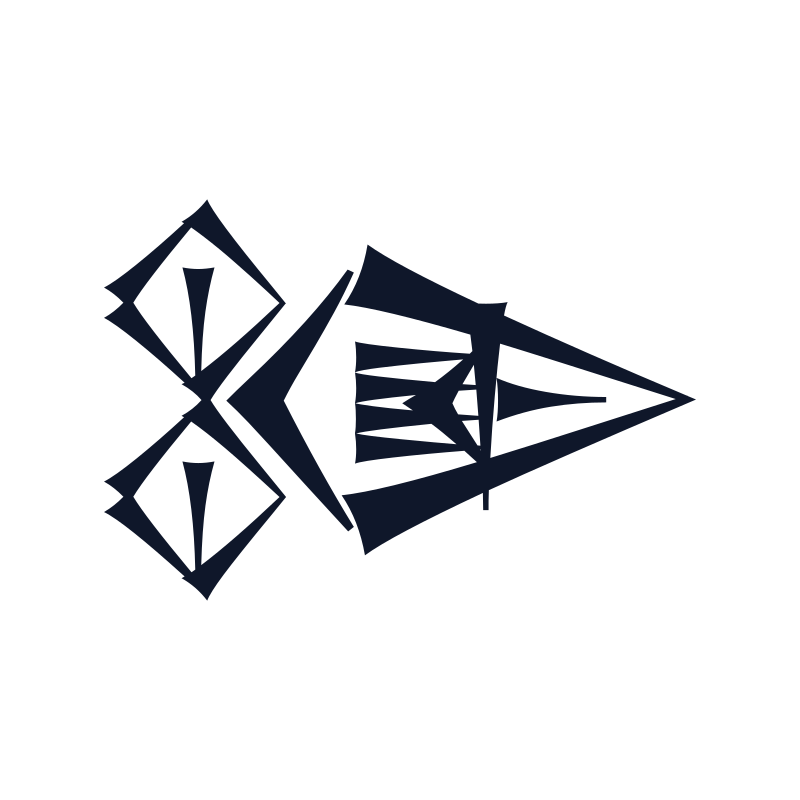 NUNUZ.AB2xIGI.GUNU · U+12272
𒉲
eye-agate bead, speckled ovoid
NUNUZ AB₂×IGI GUNU (𒉲) places IGI-gunû / SIG₇ (𒅇, radiant eye or yellow-green) inside the ovoid NUNUZ.AB₂ (𒉭𒀖, bead, egg, or vat) compound. In Mesopotamian lapidary and lexical traditions, it designates an ovoid eye-stone bead (banded agate prized as an amulet), a speckled egg, or a green-glazed jar.
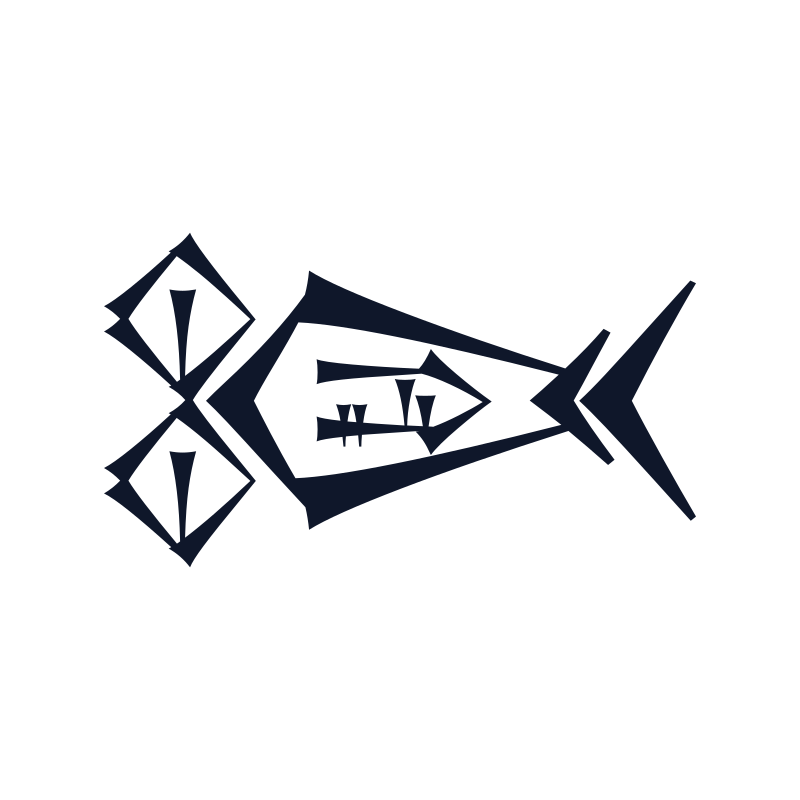 NUNUZ.KISIM5xBI.U · U+12279
𒉹
ten-measure brewing vat, jar
NUNUZ KISIM₅×BI U (𒉹) augments the ovoid beer-vat sign NUNUZ.KISIM₅×BI (𒉸, lahtan) with the numeral U (𒌋, ten). In Babylonian lexical and metrological lists, it specifies a large collector vat holding ten standard measures (such as ten sila₃ or ten ban₂) of brewed beer.
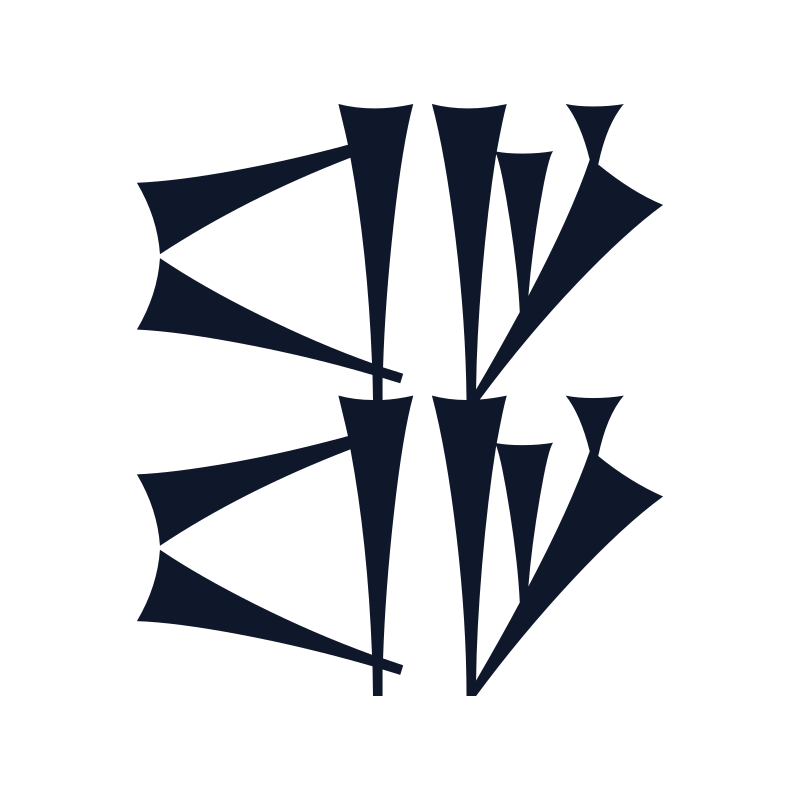 GAD.GAD.GAR.GAR · U+120F1
𒃱
linen-draped offerings, provisions
GAD/GAD GAR/GAR (𒃱) combines two vertically stacked GAD (𒃰, flax or linen cloth) signs with two stacked GAR / NINDA (𒃻, bread or food offering) signs. Preserved in Mesopotamian lexical lists, it depicts multiple loaves or food offerings arrayed on folded linen cloths for temple rituals.
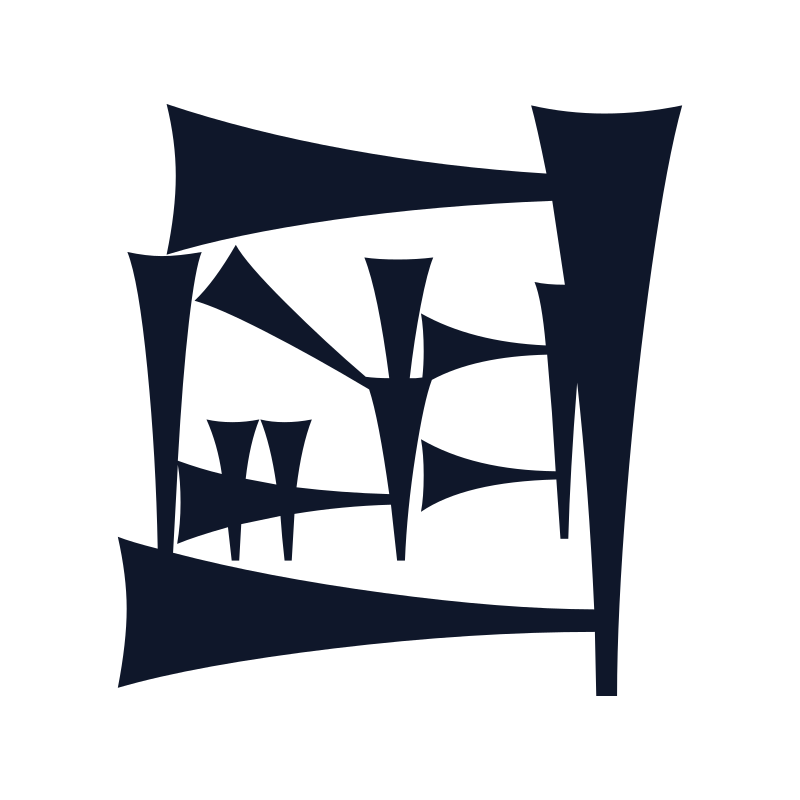 LAGABxSHITA.GISH.TENU · U+121DE
𒇞
ring-mounted mace, cultic scepter
LAGAB׊ITA.GIŠ TENU (𒇞) encloses ŠITA (ceremonial mace or priest) and a tilted GIŠ (𒄑, wooden shaft) inside the circular ring sign LAGAB (𒇉). Recorded in the Babylonian sign list Ea I alongside LAGAB׊ITA.GIŠ.ERIN₂ (𒇝), it depicts a shafted mace-head or sacred weapon standard mounted inside a ring.
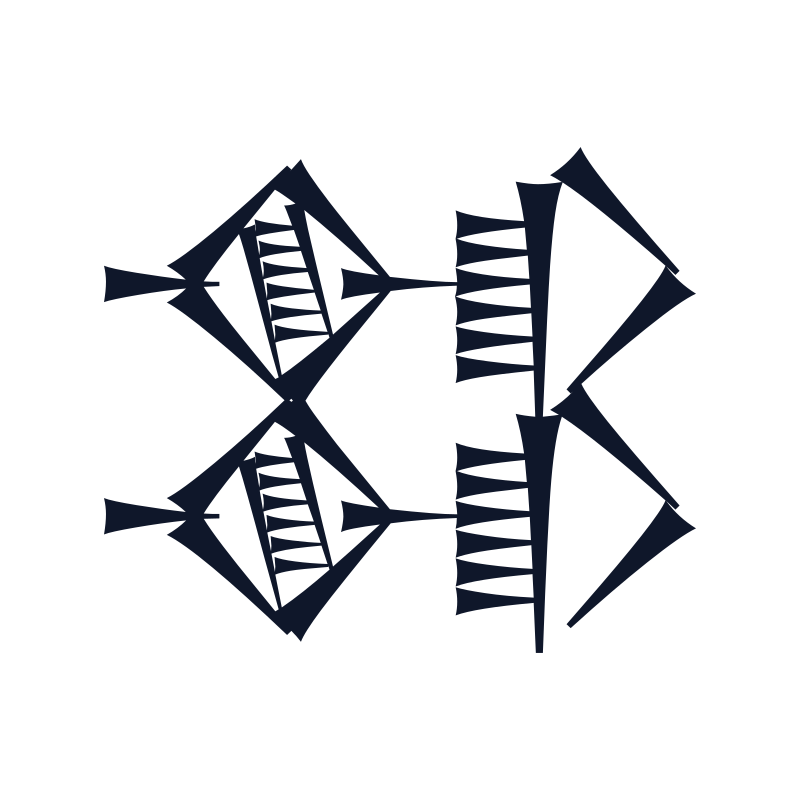 SHIR.SHIR.BUR.BUR · U+122D5
𒋕
alabaster bowls, stone vessels
ŠIR/ŠIR BUR/BUR (𒋕) pairs two vertically stacked ŠIR / NU₁₁ (𒋓, alabaster, light, or testicle/bulb) signs with two stacked BUR (𒁓, carved stone bowl) signs. Recorded in Mesopotamian lexical lists, it denotes a set of translucent alabaster offering bowls (bur-nu₁₁) dedicated in temple sanctuaries.
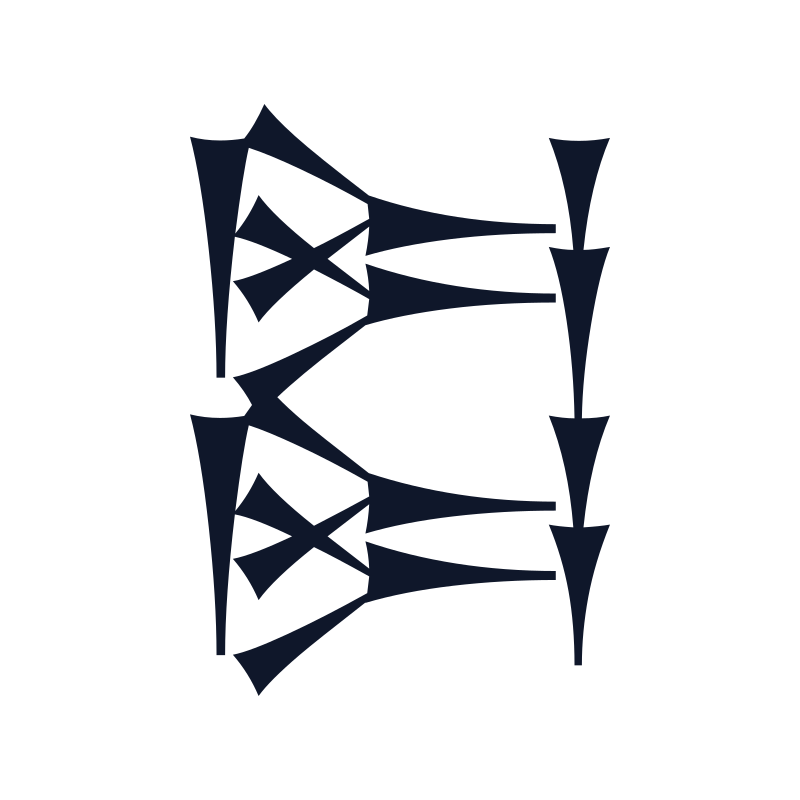 TUR.TUR.ZA.ZA · U+1230A
𒌊
fine gemstone beads, small jewels
TUR/TUR ZA/ZA (𒌊) combines two vertically stacked TUR (𒌉, small or minute, tur-tur) signs with two stacked ZA (𒍝, bead or precious stone) signs. In Mesopotamian lapidary and lexical traditions, it designates tiny gemstone beads, stone granules, or beaded necklaces strung from small lapis and carnelian stones.
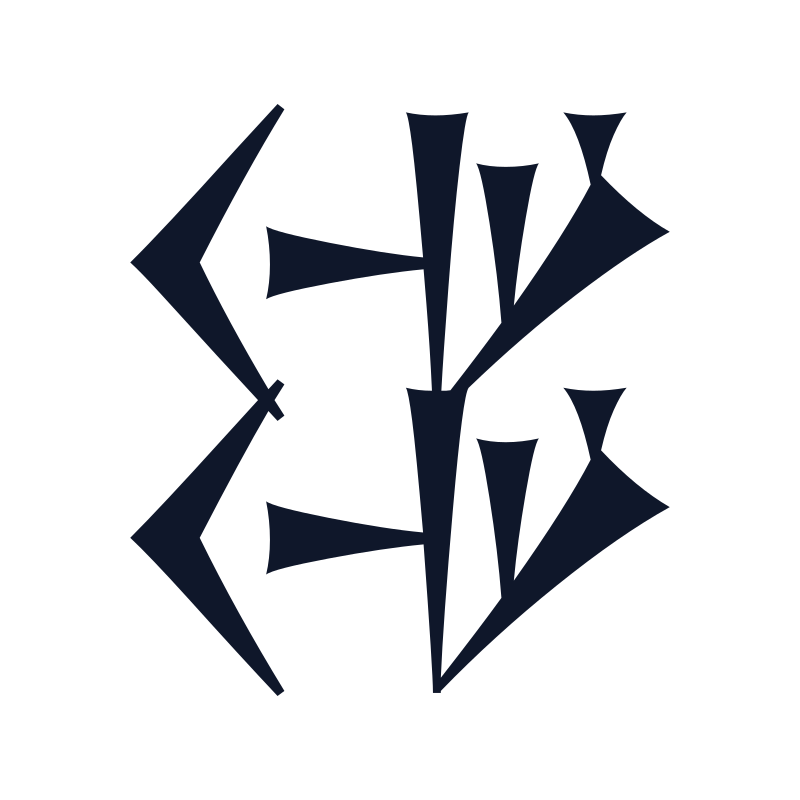 U.U.SUR.SUR · U+1230F
𒌏
pressed streams, spun cords
U/U SUR/SUR (𒌏) pairs two stacked U (𒌋) signs with two stacked SUR (𒋩, to press out juice/oil, spin thread, or mark a boundary ditch). In Babylonian lexical lists, this reduplicated compound expresses continuous pressing of oil or beer, twisting of multi-ply cords, or parallel drainage channels.
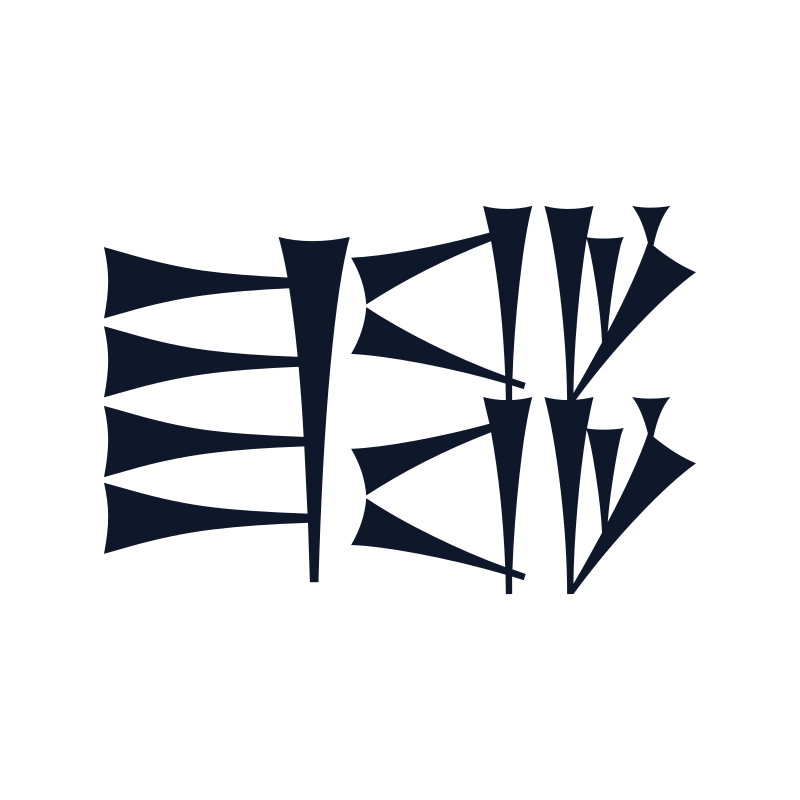 GAL.GAD.GAR · U+120F3
𒃳
grand banquet table, steward
GAL GAD/GAD GAR/GAR (𒃳) prefixes GAL (𒃲, great or chief) to the compound sign GAD/GAD GAR/GAR (𒃱, linen cloths and bread offerings). In Early Dynastic and Babylonian lexical lists, it denotes either a grand ceremonial banquet table draped with fine linen or the chief steward overseeing temple table linens and loaves.
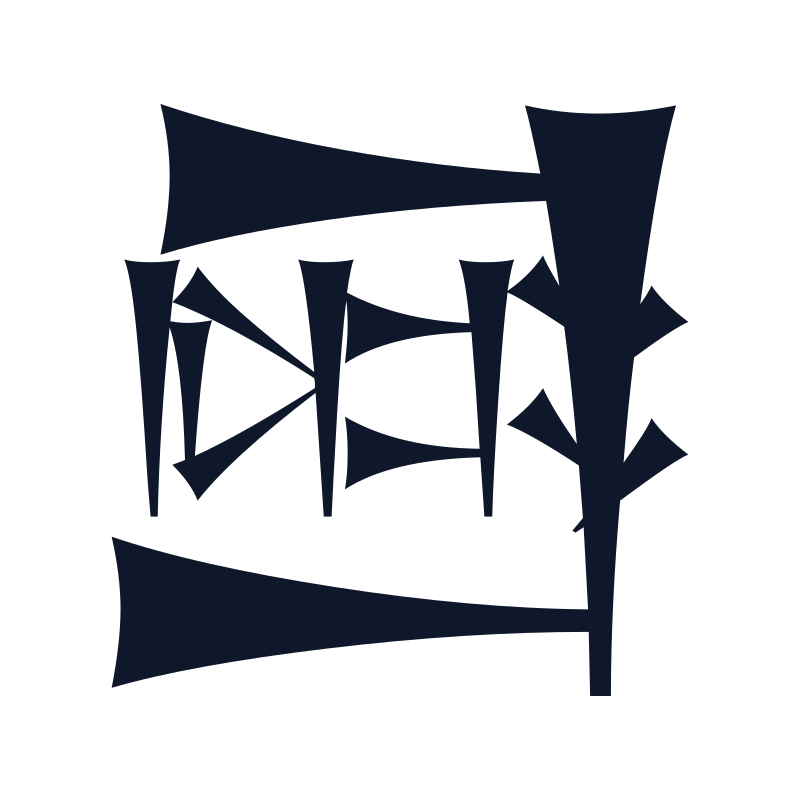 LAGABxSHITA.GISH.ERIN2 · U+121DD
𒇝
troop mace standard, battle emblem
LAGAB׊ITA.GIŠ.ERIN₂ (𒇝) places ŠITA (ceremonial mace), GIŠ (𒄑, wood), and ERIN₂ (𒂟, troops or yoked team) inside the circular ring sign LAGAB (𒇉). Preserved in the Babylonian sign list Ea I, it depicts a ring-mounted battle mace carried at the head of marching troops (erin₂).
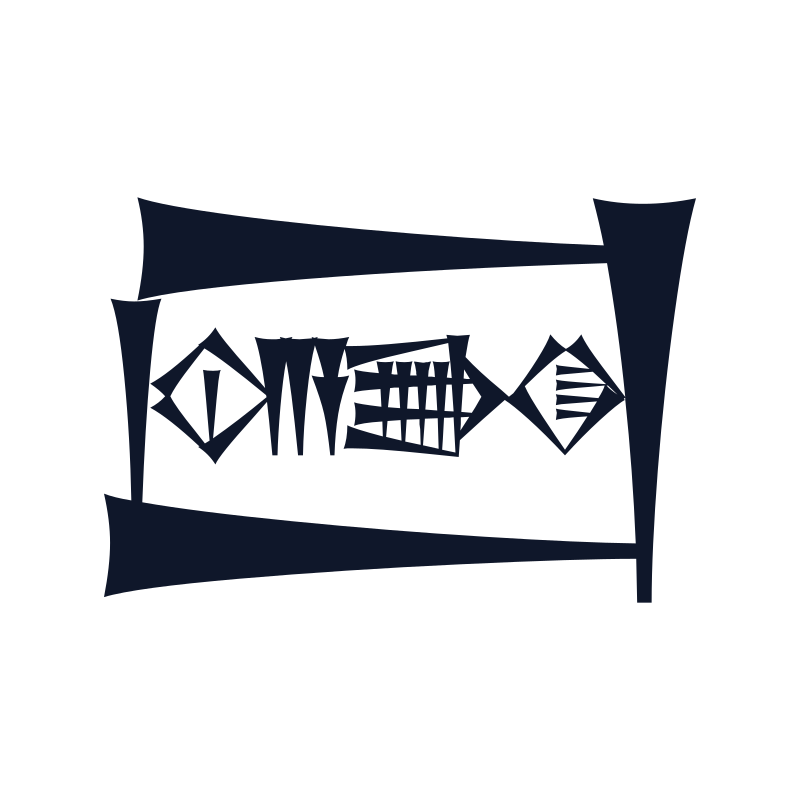 LAGABxTE.A.SU.NA · U+121E4
𒇤
hide-lined basin, lustration vat
LAGAB×TE.A.SU.NA (𒇤) is a five-element compound sign enclosing TE (𒋼, cheek or membrane), A (𒀀, water), SU (𒋢, leather or hide), and NA (𒈾, stone) within the circular frame LAGAB (𒇉). Recorded in the Babylonian lexical series Ea I, it denotes a specialized leather-lined water basin or stone-weighted soaking vat used by tanners and priests.
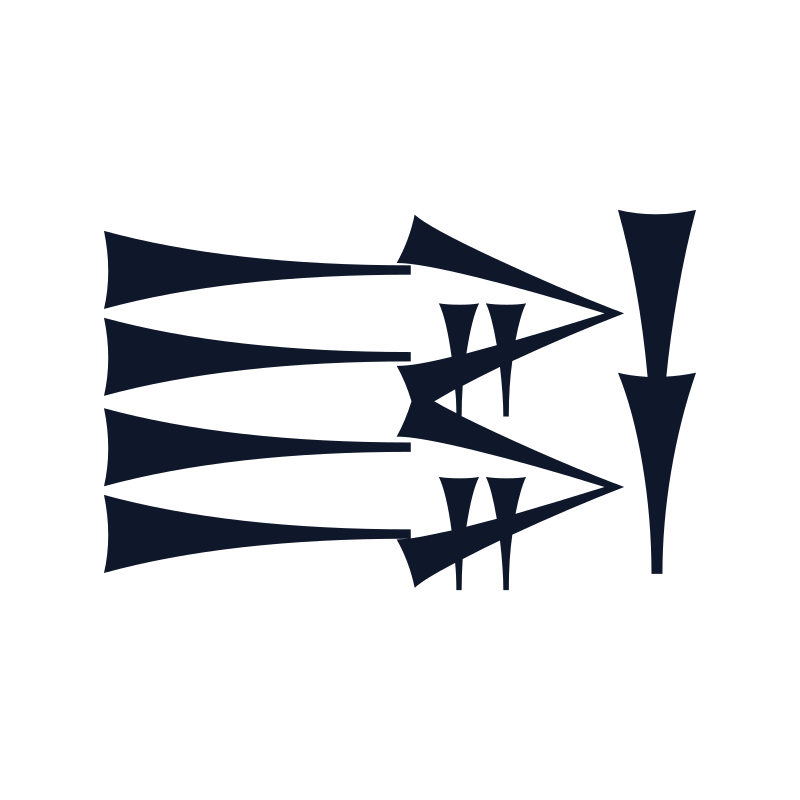 TAB.NI.DISH · U+122F1
𒋱
paired oil rations, unguent jars
TAB/TAB NI/NI DIŠ/DIŠ (𒋱) stacks pairs of TAB (𒋰, double or pair), NI / I₃ (𒉌, oil or fat), and DIŠ (𒁹, single unit). In Mesopotamian administrative and lexical traditions, it signifies paired unit-measures of sesame oil or clarified butter issued as temple and palace rations.
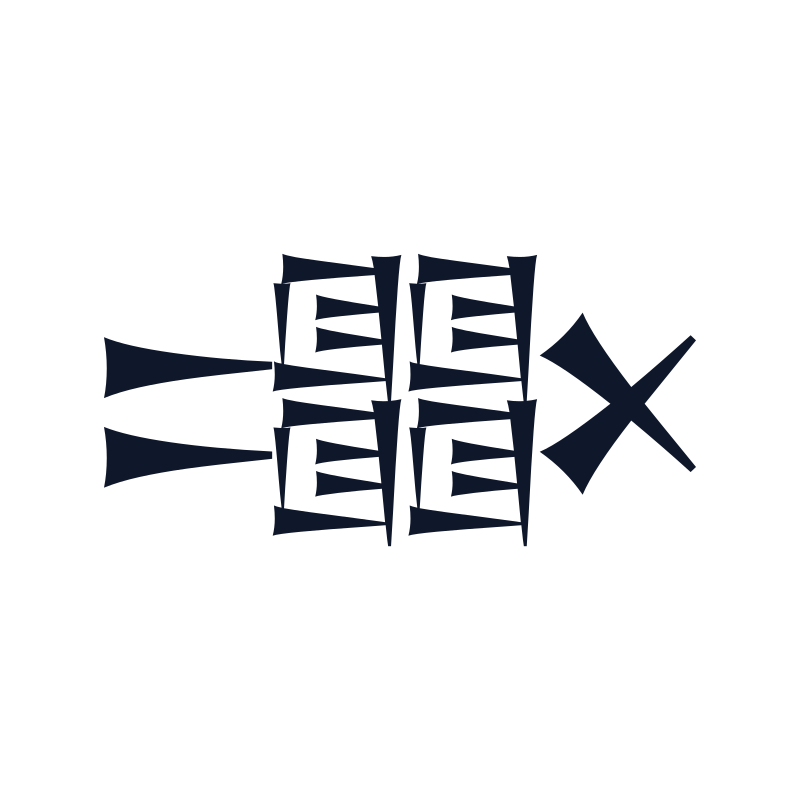 ASH.TUG2.PAP · U+1203B
𒀻
stacked woollen robes, cloth bolts
AŠ/AŠ TUG₂/TUG₂ TUG₂/TUG₂ PAP (𒀻) is an intricate seven-element compound combining stacked AŠ (𒀸) wedges, four TUG₂ (𒌆, woollen garment or textile) signs arranged in two columns, and PAP (𒉽, chief or cross-bound). Preserved in archaic and Babylonian lexical traditions, it depicts stacked bolts of prime woollen textiles in a palace or temple wardrobe.
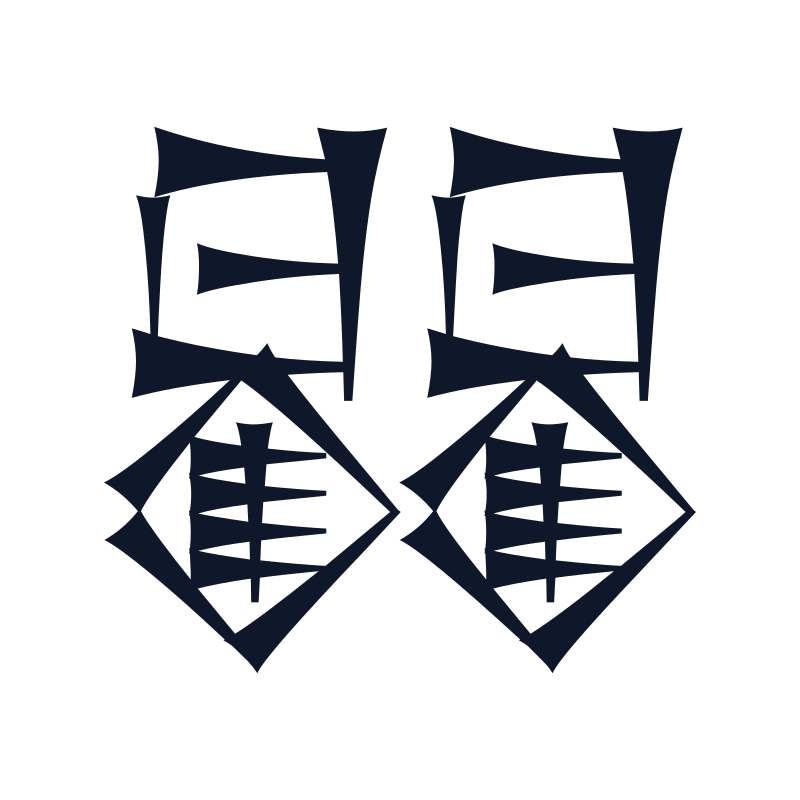 KU.SUHUR.KU.SUHUR · U+121AB
𒆫
fringed girdle, tufted sash
KU/HI×AŠ₂ KU/HI×AŠ₂ (𒆫) repeats a vertical pair of KU / TUG₂ (𒆪, garment or cloth) over HI×AŠ₂ (𒄭×𒀾, dara₂ / suhur, tuft, braid, or belt). Preserved in Babylonian lexical lists, it denotes a double-wrapped ceremonial girdle or fringed woollen sash worn by priests and rulers.
 3ASHx3ASH · U+1203D
𒀽
lattice grid, woven screen
AŠ/AŠ/AŠ CROSSING AŠ/AŠ/AŠ (𒀽) intersects three horizontal wedges with three vertical wedges to form a symmetrical 3×3 grid. In Early Dynastic and Babylonian paleography, it depicts a woven reed lattice screen, a cross-hatched gaming or surveying grid, or the strung frame of a musical instrument.
